We’ve all been there. That late-night trip to the kitchen for a glass of water, trying to be as quiet as a mouse, only to be betrayed by that one, unmistakable creeeak. For Richmond homeowners, it’s a familiar sound. If you’ve been searching for squeaky floor repair near me, you’re not alone. The good news is that annoying squeak is rarely a sign of a major problem and is often a straightforward fix that can bring peace and quiet back to your home.
That Unmistakable Squeak In Your Richmond Home
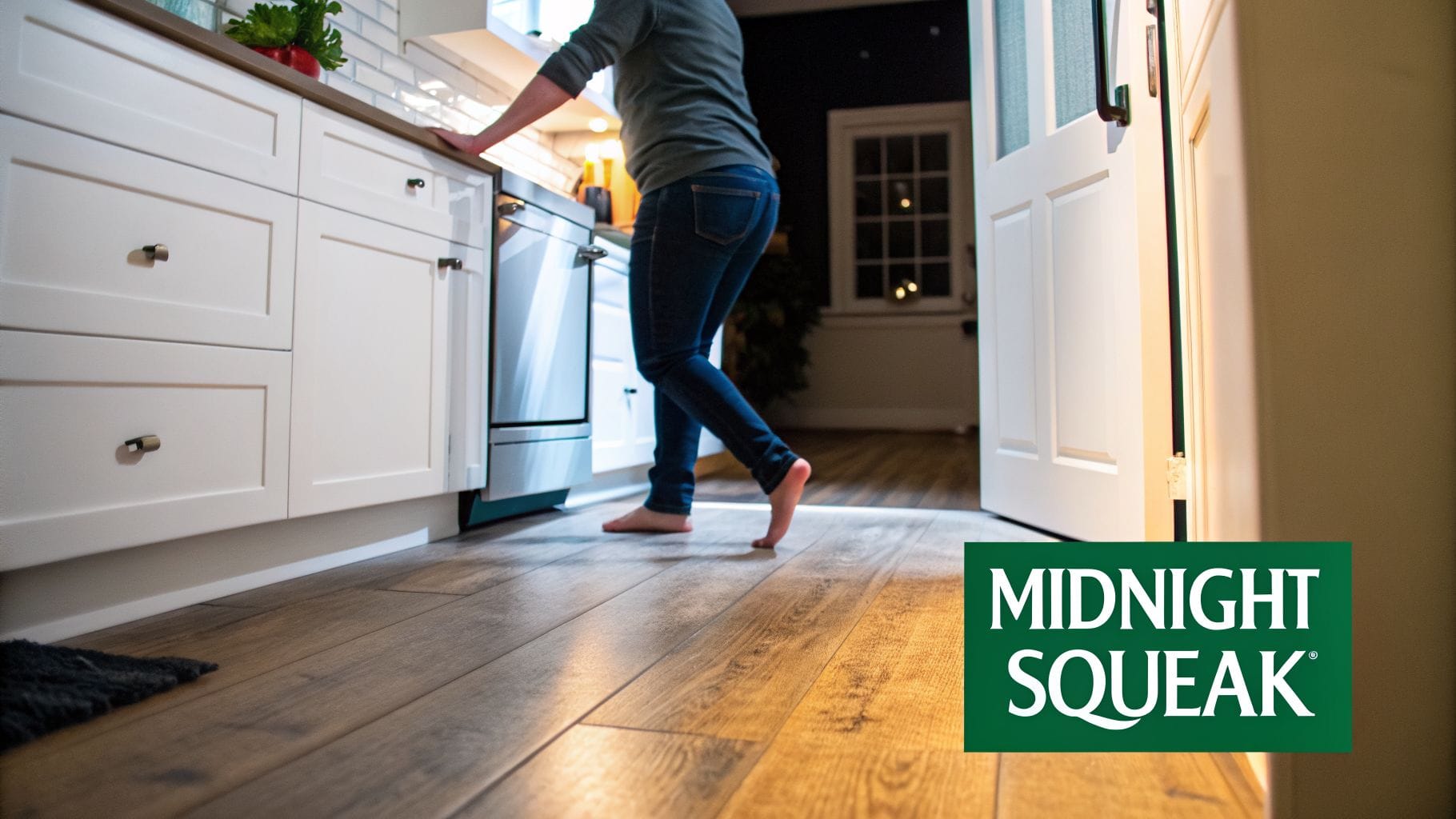
It usually starts with a single spot. Maybe it’s in a high-traffic hallway or right in the middle of the living room. At first, you just learn to step around it. But soon, that one squeak seems to invite its friends, turning your quiet home into a noisy obstacle course.
This isn't just bad luck—it's often a direct result of living in Virginia. Our distinct seasons, with their muggy summers and dry winters, cause hardwood to constantly expand and contract. It’s what wood is supposed to do. This natural movement, however, can eventually loosen the fasteners holding the floorboards to the subfloor. When you step on a board, it moves just enough to rub against a neighboring board or a nail, creating that all-too-familiar sound.
To help you get to the bottom of your noisy floors, here’s a quick guide to the most common culprits we see in homes from the Fan District to Short Pump.
Quick Guide to Squeaky Floor Causes
| Common Cause | What It Means | Typical Location |
|---|---|---|
| Seasonal Gaps | Wood has expanded or contracted, creating small gaps between boards that cause friction. | Throughout the floor, often more noticeable in certain seasons. |
| Loose Subfloor | The subfloor (the plywood layer beneath your hardwood) has separated from the floor joists. | Larger areas, often feels a bit "bouncy" or "spongy." |
| Improper Nailing | The nails used to install the flooring have loosened over time or are rubbing against the board. | Isolated spots, often a sharp and metallic "creak." |
| Joist Issues | The wooden beams that support your floor are twisting, shrinking, or have gaps around them. | Can be widespread; may require access from a basement or crawlspace to diagnose. |
Understanding what's happening beneath your feet is the first step toward a quiet solution.
Squeaky floors are an extremely common issue, especially in homes over 20 years old where this seasonal wood movement has had plenty of time to work its magic. This trend is well-documented along the U.S. East Coast, and our own Richmond, VA area is no exception. In fact, the National Wood Flooring Association (NWFA) has noted that calls for these types of repairs have been on the rise, a trend expected to continue based on the 2026 hardwood industry outlook.
Key Takeaway: A squeaky floor is rarely a sign of a major structural failure. More often than not, it's a simple mechanical issue caused by friction, gaps, or seasonal changes that are very common in the Richmond, VA climate.
The best part is that you have options. From simple DIY tricks for a minor squeak to professional hardwood floor repair, quieting your floors is completely achievable. At Buff & Coat, we've spent over 15 years helping homeowners in Richmond, Midlothian, and Henrico solve this exact problem. We know these floors, we know this climate, and we know how to fix the squeak.
If you're unsure what's causing your floor to squeak, Buff & Coat can take a look and give you an honest recommendation. Call 804-392-1114 or request a free estimate today.
Understanding The Root Causes Of A Squeaky Floor
To silence a squeaky floor for good, you have to play detective first. That irritating noise isn’t random—it's your floor telling you exactly where something is wrong. After 15+ years of repairing floors here in the Richmond area, we’ve gotten pretty good at figuring out what they’re saying.
The number one culprit, especially with Virginia's swinging seasons, is the very nature of wood itself. Your hardwood floor is a natural material, and it’s always responding to the world around it.
Wood's Response To Virginia's Climate
Think of your floorboards like a collection of tiny sponges. During our sticky Richmond summers, they soak up moisture from the humid air and swell just a little. Come winter, the dry air makes them release that moisture and shrink back down. This subtle expansion and contraction is totally normal.
But over the years, that constant movement can slowly work the nails and fasteners loose from the subfloor. Now, when you step on that spot, the board presses down and rubs against its neighbor or the shank of a nail. That’s the squeak you hear.
Expert Insight: Friction is the true enemy of a quiet floor. Every squeak, creak, and groan is just the sound of two hard surfaces—wood on wood, or wood on metal—rubbing together under pressure.
Other Common Structural Causes
While our Virginia climate is a major player, other issues can cause a ruckus underfoot, too. Pinpointing these is a key step in any professional squeaky floor repair.
Gaps Below the Floor: Your hardwood is installed over a subfloor (like plywood), which sits on top of large support beams called joists. If a tiny gap opens up between the subfloor and a joist, the floor will flex and squeak every time you step on that spot.
Installation Issues: Sometimes, the problem goes all the way back to day one. If the original installers used the wrong fasteners, didn't use enough of them, or failed to properly secure the subfloor, squeaks are practically guaranteed to show up eventually.
Solid vs. Engineered Wood: Even the type of flooring matters. Solid hardwood planks expand and contract more as a single unit. Engineered hardwood is built in layers to be more stable, but its planks can still squeak if the locking system or adhesive between layers starts to fail.
Getting the diagnosis right is everything. The fix for a board rubbing its neighbor is completely different from the solution for a gap over a floor joist. This is exactly why we always start by finding the true source of the sound. To dive deeper into this, you can learn more about what causes hardwood floors to creak in our detailed guide.
Here at Buff & Coat, we don't believe in one-size-fits-all solutions. We take the time to figure out what’s really going on with your floor to make sure our repair is a permanent one.
Simple DIY Fixes For Minor Floor Squeaks
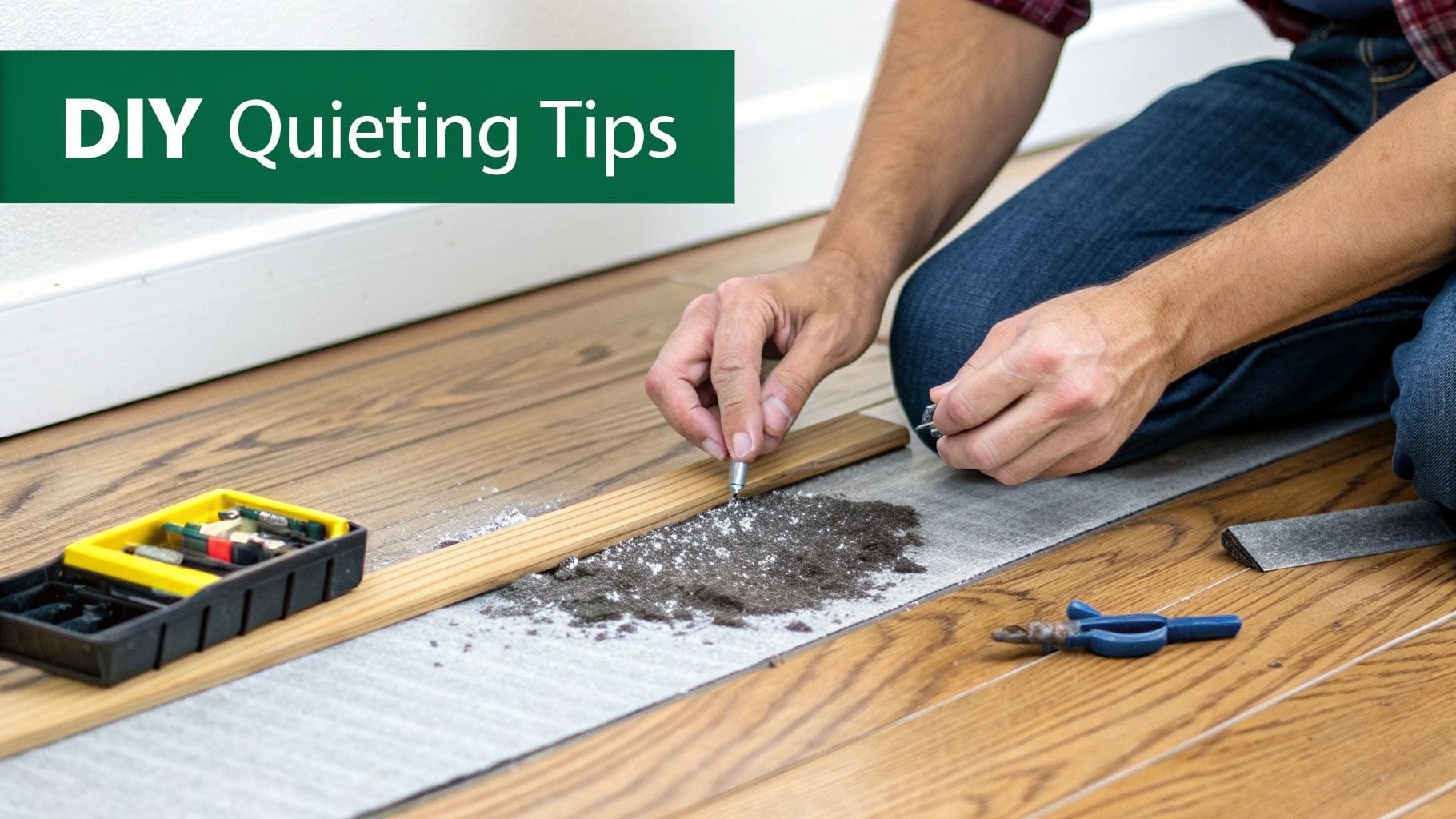
That one annoying squeak doesn't always mean you need to pick up the phone and call a pro. For those small, isolated noises, you'd be surprised what a little DIY know-how can accomplish. We're always happy to share a few of the quick-and-easy tricks we've picked up over the years.
If the culprit is friction between two floorboards rubbing together, a dry lubricant can be your best friend. A small amount of powdered graphite or even talcum powder can be worked into the seam. This fine powder acts as a tiny cushion, often silencing the squeak right away. Just go easy—a little goes a long way.
For Squeaks Caused By Gaps
Sometimes the problem isn't between the boards but underneath them. If you have a basement or crawlspace, you’re in luck. The best way to tackle this is with a partner; have someone walk on the squeaky spot above while you listen from below to pinpoint the exact source of the noise.
If you spot a small gap between the subfloor and a floor joist, a carpenter's shim is the perfect fix. These are just small, tapered pieces of wood designed to fill tiny spaces.
- Coat the shim with a bit of wood glue.
- Gently tap it into the gap until it feels snug.
- Whatever you do, do not force it in. Jamming it too hard can actually lift the floorboards, and you'll just be trading one problem for another.
For a solution you can use from above, specialty kits can do the trick. A product like the Squeeeeek No More system uses a clever jig and scored screws to pull a loose floorboard tight against the subfloor. Once it's secure, the screw head snaps off cleanly below the surface, leaving no visible hole. It's a great option for floors with carpeting or when you can't get underneath.
Our Honest Advice: These kits are designed to secure loose floorboards to a plywood subfloor. We’ve found they are much less effective for widespread squeaking or on floors that were installed directly over a concrete slab.
What Not To Do
While we love a good DIY fix, there are a few common "solutions" you should absolutely avoid. The biggest mistake we see is trying to nail or screw a board down from the top using long nails or standard screws. Without the right tools and technique, you're more likely to split the hardwood, create an ugly, permanent hole, or—even worse—hit hidden plumbing or electrical lines.
Of course, the best fix is prevention. Learning how to properly maintain hardwood floors can stop many of these issues before they even start. But if your DIY attempts don't quiet things down, that’s a clear sign it’s time for a professional to take a look.
When To Call A Pro For Squeaky Floor Repair
A good DIY fix is perfect for a single, pesky squeak. But after years in this business, we've seen firsthand how a noisy floor can be a symptom of a larger issue. Knowing when to put down the tools and pick up the phone can save you a world of time, money, and frustration.
Think of it like this: DIY methods are first aid for your floor. They're perfect for the small stuff. But when the problem seems to be coming from deep within, you need a specialist—in this case, a seasoned flooring professional.
Red Flags That Signal A Deeper Problem
Keep an ear out for these tell-tale signs. They often point to problems with the subfloor or even the home's structure, which go way beyond simple friction between floorboards.
- Widespread Squeaking: If it's not just one spot but an entire hallway or room groaning under your feet, that’s a big clue. This usually means the subfloor has separated from the joists in multiple areas.
- Bouncing or Soft Spots: Does the floor feel noticeably "spongy" or soft when you walk on it? This is a major red flag. That bounce indicates a serious lack of support from below, and no amount of powder or shims is going to solve it.
- Recurring Squeaks: You thought you fixed it, and for a week, you had peace and quiet. Now the squeak is back, maybe even louder than before. This almost always means you only treated the symptom, not the root cause.
- No Access from Below: If the squeaky area is over a finished basement, another floor, or a concrete slab, your DIY options are very limited. A professional has the right tools to perform an effective hardwood floor repair in Richmond VA from above without damaging your beautiful floors.
When you run into these more complicated issues, it's always best to get an expert opinion. For extensive problems that might touch on structural elements, you might also consider professional home repair services to ensure a solid, lasting solution.
Ultimately, a professional assessment is your safest bet. We provide free, no-obligation estimates where we can diagnose the real problem and give you honest, straightforward advice. If you'd like to dig deeper into all the potential causes and fixes, you might be interested in our complete guide to squeaky floor repair.
Our Approach to Squeaky Floor Repair
When you call Buff & Coat about a squeaky floor, you're tapping into over 15 years of hands-on experience. This isn't about guesswork; it's a careful, diagnostic process that begins the moment we step into your Richmond home for a free estimate.
The first thing we do is listen—not just to you, but to your floors. We'll have you walk us through the noisy spots so our technicians can hear the specific sounds and feel the movement underfoot. That initial walkthrough tells us a lot, helping us figure out if we’re dealing with simple board-on-board friction, gaps over the subfloor, or something deeper.
This handy flowchart breaks down how to think about your squeak problem.
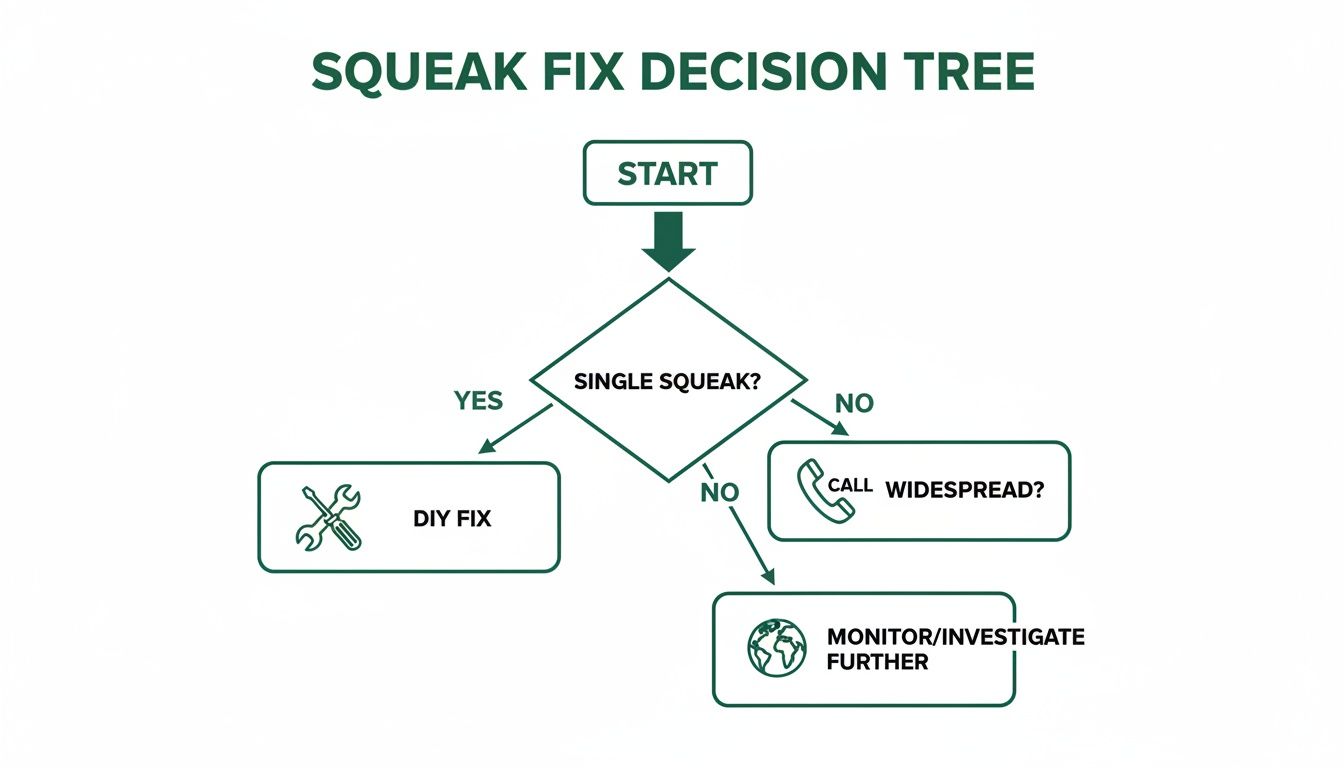
As you can see, a single, isolated squeak might be a weekend DIY project. But if you're dealing with widespread noise, it’s a clear sign you need a professional to get to the root of the problem.
The Right Repair For Your Floor
Once we've pinpointed the cause, we map out a repair strategy that makes sense for your specific floor. We don’t believe in a one-size-fits-all fix. Instead, we tailor the method to the problem.
Working From Above: If we can’t get underneath the floor, we use specialized trim-head screws. These are designed to pull a loose board tight against the subfloor without splitting the wood. Their tiny heads are practically invisible once we fill them.
Working From Below: An accessible basement or crawlspace is ideal. From here, we can tackle squeaks right at the source, often by inserting glued shims to fill gaps between the subfloor and joists or by adding reinforcing blocks for extra stability.
Our primary goal is always to stabilize the entire floor system. Eliminating that tiny bit of movement is the only way to get a quiet floor that lasts.
To help you understand the different approaches, here's a quick comparison of common squeaky floor repair methods.
Squeaky Floor Repair Options Compared
| Repair Method | Best For | Pros | Cons / When to Avoid |
|---|---|---|---|
| Specialized Screws | Loose boards with no basement access. | Fast, effective, and minimally invasive. | Not for widespread issues; can be visible if not filled properly. |
| Shims & Bracing | Gaps between subfloor and joists. | A permanent fix that addresses the source of the movement. | Requires access from below (basement or crawlspace). |
| Graphite or Talcum Powder | Minor board-on-board friction. | Quick, easy DIY solution for a single spot. | Temporary fix; messy and ineffective for structural issues. |
| Construction Adhesive | Gaps accessible from below. | Creates a strong, lasting bond to prevent movement. | Can be messy; requires access and proper application. |
Ultimately, choosing the right method depends entirely on what's causing the noise.
Combining Repairs With Refinishing
A lot of homeowners call us about squeaks right when they’re also thinking about refinishing their floors. This is the perfect time to do both. We can perform a comprehensive hardwood floor repair right before we start our signature Buff & Coat service or a full sand-and-refinish project.
Bundling the services creates a completely seamless process. Our dustless sanding system keeps your home pristine as we prep the surface, and the final finish coat gives you a flawless, uniform look across the entire floor, including the newly repaired areas. It’s the most efficient way to get a floor that’s both beautiful and silent.
By offering free in-home estimates and flexible scheduling, Buff & Coat makes professional wood floor repair service accessible for homeowners from Henrico to Midlothian.
Richmond homeowners: get a fast, free quote for your squeaky floor repair. Call 804-392-1114.
Why Richmond Homeowners Choose Buff & Coat
When you're searching for squeaky floor repair near me, you're looking for more than a quick fix. You need a local team you can count on, someone who understands the unique character of homes in our area. For homeowners across Richmond, Midlothian, and Central Virginia, Buff & Coat is that trusted partner.
We're not a big, faceless franchise. We're a local, owner-operated business built right here. With over 15 years of hands-on experience, we know exactly what floors in Henrico, Chesterfield, and Glen Allen go through—from the seasonal humidity shifts to the quirks of older construction. That deep-rooted local knowledge is why our repairs don't just work; they last.
Here’s why your neighbors consistently choose us for their flooring projects:
- 15+ Years of Local Experience: We've been serving the Richmond community for over a decade, building a reputation for quality workmanship.
- Dustless Sanding Systems: We invest in top-of-the-line equipment to keep your home clean during the refinishing process.
- Local & Owner-Operated: You work directly with our dedicated team, not subcontractors. We’re accountable and committed to your satisfaction.
- High-Quality, Low-VOC Finishes: We use durable, professional-grade finishes that are safer for your family and pets.
- Clear Pricing & Honest Advice: You’ll get a straightforward, detailed estimate with no surprises. We recommend what you need, not what costs the most.
- 5-Star Customer Service: Our commitment to a smooth, stress-free experience has earned us hundreds of glowing reviews from homeowners just like you.
Common Questions About Squeaky Floor Repair
After 15+ years of silencing squeaky floors across the Richmond area, we've heard just about every question in the book. If you're wondering what it really takes to get some peace and quiet back in your home, you've come to the right place.
Here are the straightforward, honest answers to the questions our customers ask us the most when they search for squeaky floor repair near me.
How much does squeaky floor repair cost in Richmond, VA?
This is usually the first question on everyone's mind, and the truth is, the cost of a squeaky floor repair really depends on what’s causing the noise.
For a simple fix, like addressing friction in one or two boards, you might be looking at a few hundred dollars. However, if the squeaking is widespread and points to bigger issues with the subfloor, the project becomes more involved and the cost will reflect that.
The biggest factors that influence the final price are:
- The true source of the squeak (are boards just rubbing, or are there gaps between the floor and the subfloor?)
- How accessible the problem area is (working from an unfinished basement is much different than having to fix it from the room above).
- The total square footage that needs attention.
We make sure there are no surprises. After our free in-home assessment, we provide a clear, itemized quote so you know exactly what to expect before we begin.
Can you guarantee every squeak will be gone?
That's a great question, and we believe in being 100% transparent: no, and you should be wary of any contractor who promises absolute silence. Wood is a natural product; it expands and contracts with the temperature and humidity shifts we see all the time here in Virginia.
Our realistic goal is to eliminate 90-95% of the noise by fixing the underlying structural problems.
Our Commitment to Honesty: We target and fix the problem squeaks caused by loose floorboards and subfloor gaps. While we can make a massive difference and bring quiet back to your home, a minor, random creak might pop up with the changing seasons. We're here to silence the annoying, persistent noises—not the natural character of a real wood floor.
Does the repair process make a mess?
Not when you work with Buff & Coat. If your squeak repair is part of a larger hardwood floor refinishing project, we bring in our advanced dustless sanding system. This equipment is incredible, capturing dust right at the source to keep the air and your home clean.
For standalone squeak repairs that don't require sanding, our team works with precision. We protect all surrounding areas and do a complete cleanup when the job is done. We promise to leave your home just as clean as we found it.
Will I have to move out during the repair?
For most squeak-only repairs, absolutely not. The work is usually isolated to specific spots and can often be finished quickly, causing very little disruption to your daily life.
Now, if you're bundling the repair with a full refinishing job, you will need to stay off the floors while the new finish coats are applied and cure properly. This typically takes a few days. We’ll give you a detailed timeline from the start so you can plan ahead, and we always work as efficiently as possible to minimize the inconvenience for you and your family.
Ready to restore your hardwood floors? Buff & Coat makes the process fast, clean, and stress-free. Call 804-392-1114 or request your free estimate online.