

Home Blog Virginia Vintage Flooring: A Homeowner’s Guide
Virginia Vintage Flooring: A Homeowner’s Guide

Richmond homeowners run into the same question all the time. The carpet comes up, the shine is gone, and the boards underneath look promising but tired. Virginia vintage flooring can be a real asset, but only if you know whether it needs a buff and coat service, full hardwood floor refinishing, or a smarter repair first.
The tricky part is that older Virginia floors aren't all the same. Some are colonial-era wide-plank boards, some are 19th-century catalog-style hardwood, and some are later strip floors that only look simple until you start testing finish, flatness, and moisture. A good decision starts with what's underfoot in your Richmond VA home, not with a sales pitch.
What Virginia Vintage Flooring Actually Means
A homeowner in a 1920s Richmond living room might see dull, scratched boards and assume the floor is either too old to save or automatically ready for sanding. In practice, Virginia vintage flooring is a broad category, not a single product. It can include early wide-plank wood flooring from the 1700s in colonial Virginia, later 1800s floors that became a recognizable interior category, and much later floors that were built to mimic older styles.
That historical range matters because each floor behaves differently. The colonial material preserved from Virginia's historic buildings was hand-crafted, broad in dimension, and built long before industrial flooring systems took over, which is why it still stands apart from today's standardized strip flooring. The age and patina are part of the value, but so is the construction method, because that affects how much material is left to work with and whether a surface renewal makes sense at all. For background on the refinishing sequence itself, the wood floor refinishing tips from Bulls Eye Repair are a useful practical read.
What homeowners usually miss
The first mistake is treating all old wood floors as if they need the same fix. A floor with original broad boards in a historic Richmond home is not the same as a later floor with more standardized dimensions, and both are different from a modern engineered product.
Practical rule: the floor's age tells you something, but its condition tells you more.
A vintage floor can be valuable and still need only light renewal. It can also be uneven, patched, or coated with unknown finish layers that make the next step more technical than expected. When the boards are original fabric, the goal is usually to preserve what's there, not replace it just because the surface looks tired.
For homeowners comparing wood floors with other historic finishes, the pattern guide from Original Mission Tile helps show how period materials were often chosen as part of a broader design language, not as interchangeable products. That same mindset applies to hardwood in Richmond VA homes.
From Colonial Boards to Catalog Floors
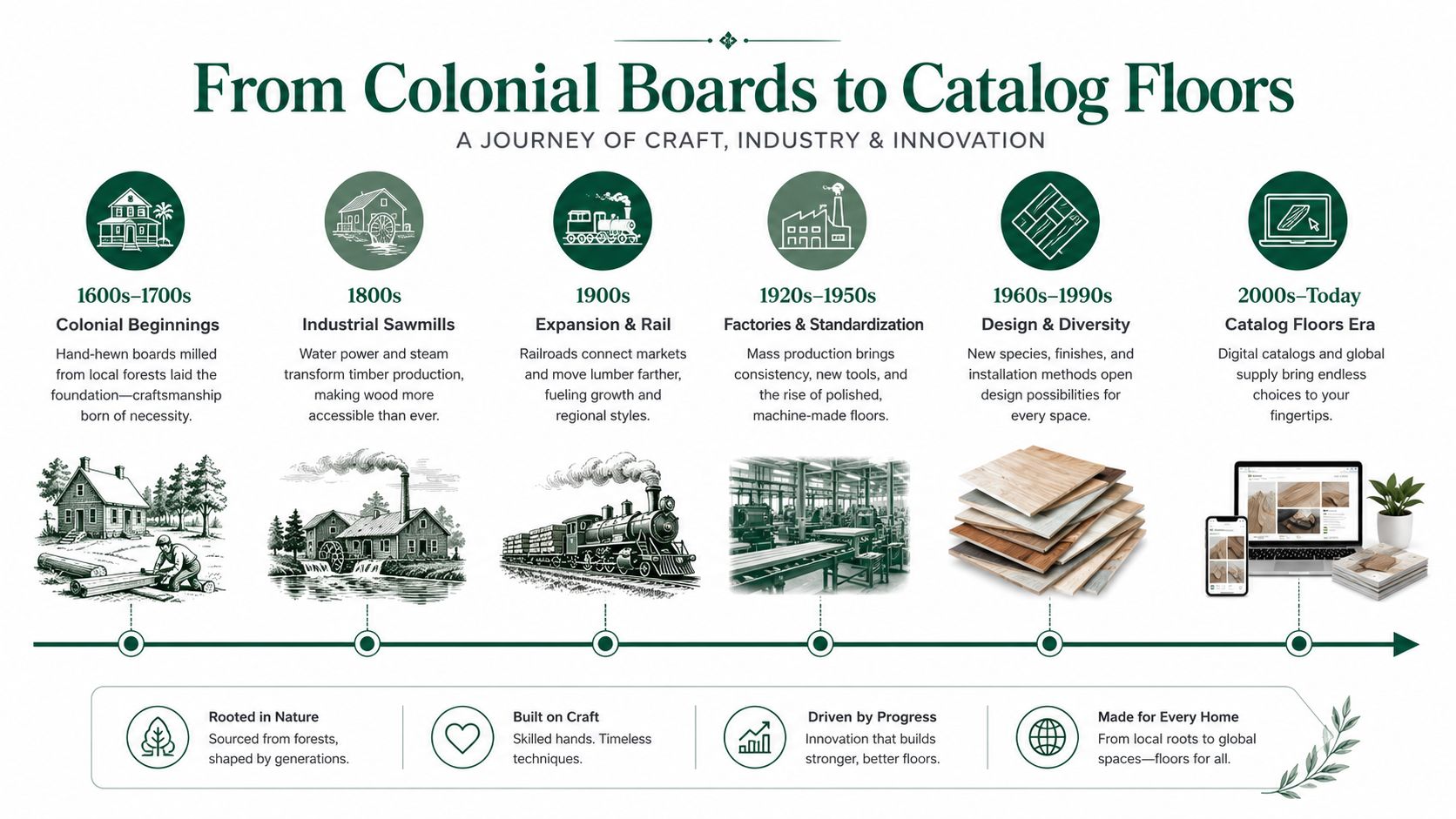
As the timeline graphic shows, Virginia's wood-floor story moves from hand-hewn colonial boards into a more standardized 19th-century market. In the 1700s, surviving flooring evidence from colonial Virginia shows that wide-plank wood flooring was already a distinct material category, and those original boards are still identifiable and valued as historic building fabric today. By the 1800s, wood flooring appears in trade catalogs and museum archives as a recognizable interior category, which shows the material shifting from site-specific craft toward a reproducible product.
That shift matters in Richmond VA because older homes do not all contain the same kind of floor. A Fan District Victorian may have boards that reflect later 19th-century standardization, while a Ginter Park colonial can hide layers of use, refinishing, and repair that came later. Postwar brick ranches often bring another layer of history, with floor systems and finishes that are simpler in layout but still vulnerable to moisture and wear.
How to think about your own house
Start by matching the floor's look to the home's age. Broad, irregular planks usually suggest an earlier origin or a later reproduction of an earlier style. Narrower, more uniform boards are more likely to reflect the 19th-century move toward cataloged flooring products and standardized dimensions.
A floor installed in 1905 will not behave like one from 1955, and neither behaves like a modern engineered floor. The difference shows up in the thickness of the wear layer, the way boards move seasonally, and how much sanding history the floor may already have. That is why “vintage” in Virginia homes can mean a floor that is structurally sound but finish-limited, or a floor that is historic enough to deserve a gentler approach.
If the boards still look original, the question is not just “Can it be refinished?” It is also “How much original material should be preserved?”
For homeowners who like visual references, the timeline above is a useful way to compare your floor to the broader historical arc. It also explains why a quote for floor refinishing Richmond VA should start with identification, not pricing alone.
For a practical check on whether the floor still has enough material left for sanding, see how to tell if hardwood floors can be refinished.
For homeowners comparing wood floors with other historic finishes, Original Mission Tile's pattern guide shows how period materials were often chosen as part of a broader design language, not as interchangeable products. That same mindset applies to hardwood in Richmond VA homes.
How to Read the Floor You Already Have

The fastest way to judge a vintage floor is to clear a corner, get down low, and look at it in raking light. That one move makes scratches, dull finish, patching, and uneven sheen much easier to see. It also helps you separate cosmetic wear from damage that's deeper than the finish.
What to look for first
A floor with only surface wear is often a candidate for wood floor recoating or a buff and coat service. If the finish is intact but tired, and the wear is mostly dullness, light scratching, or traffic patterns, the floor may not need full sanding. Deep gouges, gray wood fibers, and finish failure across wide areas usually point toward hardwood floor refinishing instead.
Check the edges and corners too. Pet stains, sun-fading near windows, wax buildup, and dark spots all tell a different story. Stains can signal that the wood itself has been affected, while wax can block adhesion and change how a new finish bonds. If the board surface is cupped or crowned, moisture has probably played a role, and that changes the conversation fast.
Here's a simple field check that helps before you call for an estimate:
- Feel the board edges: Raised edges can point to cupping, while a center ridge can suggest crowning.
- Look for color mismatch: Uneven tone may come from sun exposure, old stain, or spot repairs.
- Run your hand across traffic lanes: If the finish feels thin but the wood underneath looks healthy, recoating may be enough.
- Watch for soft spots or movement: Flex underfoot can suggest subfloor issues, not just a surface problem.
If you're not sure whether the floor is solid or engineered, check a vent opening, stair tread, or exposed edge where the layers may be visible. That detail matters because engineered hardwood refinishing isn't always an option the same way solid wood is.
For a deeper decision tree, this internal guide is worth bookmarking, how to tell if hardwood floors can be refinished.
Buff and Coat, Full Refinish, or Replacement
A Richmond homeowner usually does not need a wholesale tear-out just because a floor looks tired. The decision starts with the wood in front of you, its thickness, and how the finish is failing. In many Virginia vintage flooring jobs, a buff and coat service is enough when the surface is dull, lightly scratched, or worn but still holding together. Full sanding and refinishing becomes the better call once the damage reaches the wood itself, the stain has gone patchy, or the floor needs a complete reset. Replacement belongs at the end of the list, when the boards are too thin, structurally compromised, or no longer worth preserving.
A quick field check helps separate the three paths.
| Service | Best When | Typical Downtime | Cost Profile |
|---|---|---|---|
| Buff and coat | Finish is dull, lightly scratched, or worn but still bonded | Usually the shortest option | Lower |
| Full refinishing | Deep scratches, gray wear, color change, or finish failure | Longer because the floor is sanded and rebuilt | Higher than buffing |
| Replacement | Boards are too thin, structurally damaged, or not worth preserving | Longest, because old material comes out and new material goes in | Highest |
The right choice also depends on how much material is left to work with. Older floors in good shape often respond well to hardwood floor restoration through a careful recoating or a targeted refinish, especially when the wear is mostly in the finish layer. Once a floor has already been sanded several times, another aggressive refinish can shorten its remaining life, so preserving the original boards is usually the better trade if the wood still has enough thickness.
Practical rule: if the wood still has life left, saving it is usually better than tearing it out.
For Richmond homeowners comparing a freshened surface with a deeper reset, the our comparison guide is a good way to sanity-check the estimate. Buff & Coat Hardwood Floor Refinishing is one local option that handles dustless sanding, buffing, coating, installation, and repair work when the floor needs more than a surface touch-up.
Choosing the Right Service for Your Vintage Floor
A Richmond homeowner looking at an older floor usually wants one straight answer. The right service depends on what is happening at the wear layer, how much wood is left, and whether the boards are still tight, flat, and dry enough to keep.
A buff and coat makes sense when the finish is tired but still attached, the scratches stay in the surface, and the floor has not lost its color all the way through. That route keeps the original boards in place and usually means less interruption to the house. It also leaves the existing wear pattern alone, so it is the better call when the floor still reads as solid and even underfoot.
A full refinishing is the better fit when the finish has failed, the color has gone gray in traffic lanes, or the damage is deeper than the topcoat. On older Virginia floors, I look closely at the board thickness before recommending this step. If the floor has already been sanded several times, another aggressive pass can shorten its usable life, even if the result looks good right away.
Replacement is the right answer when the boards are too thin, badly cupped, split beyond repair, or have structural problems that sanding will not fix. Some vintage floors do not have enough material left for another refinish. In that case, preserving the wood is no longer the practical move, and new material is the honest choice.
For homeowners trying to decide on their own, use the floor in front of you as the guide. If the surface looks dull and the wear is mostly cosmetic, start by asking whether a buff and coat will give you enough life without cutting into the wood. If the floor has deep scratches, exposed raw patches, or uneven color that runs through the finish, a refinish is usually the safer path. If the boards feel soft, move under load, or are too thin at the tongue and groove to tolerate more sanding, replacement becomes the only practical option.
Moisture matters too. In older Richmond homes, wood that is still moving with the seasons can make any service harder to predict. A floor that is out of tolerance from excess moisture, or one that has gaps and cupping that keep changing, needs a contractor who can read the floor before choosing a process. That is where a site visit matters more than an online estimate.
Call a professional when you can see board loss, floor movement, patchy prior repairs, or finish failure that goes past the top layer. A homeowner can spot dullness and light wear, but it takes an experienced eye to tell whether the floor still has enough thickness for sanding, whether the subfloor is contributing to movement, and whether the room is a good candidate for recoating or needs a deeper reset. For many Virginia vintage floors, the decision is not about making the surface new. It is about choosing the least destructive service that still gives the floor a longer working life.
Inside Buff and Coat's Dustless Process
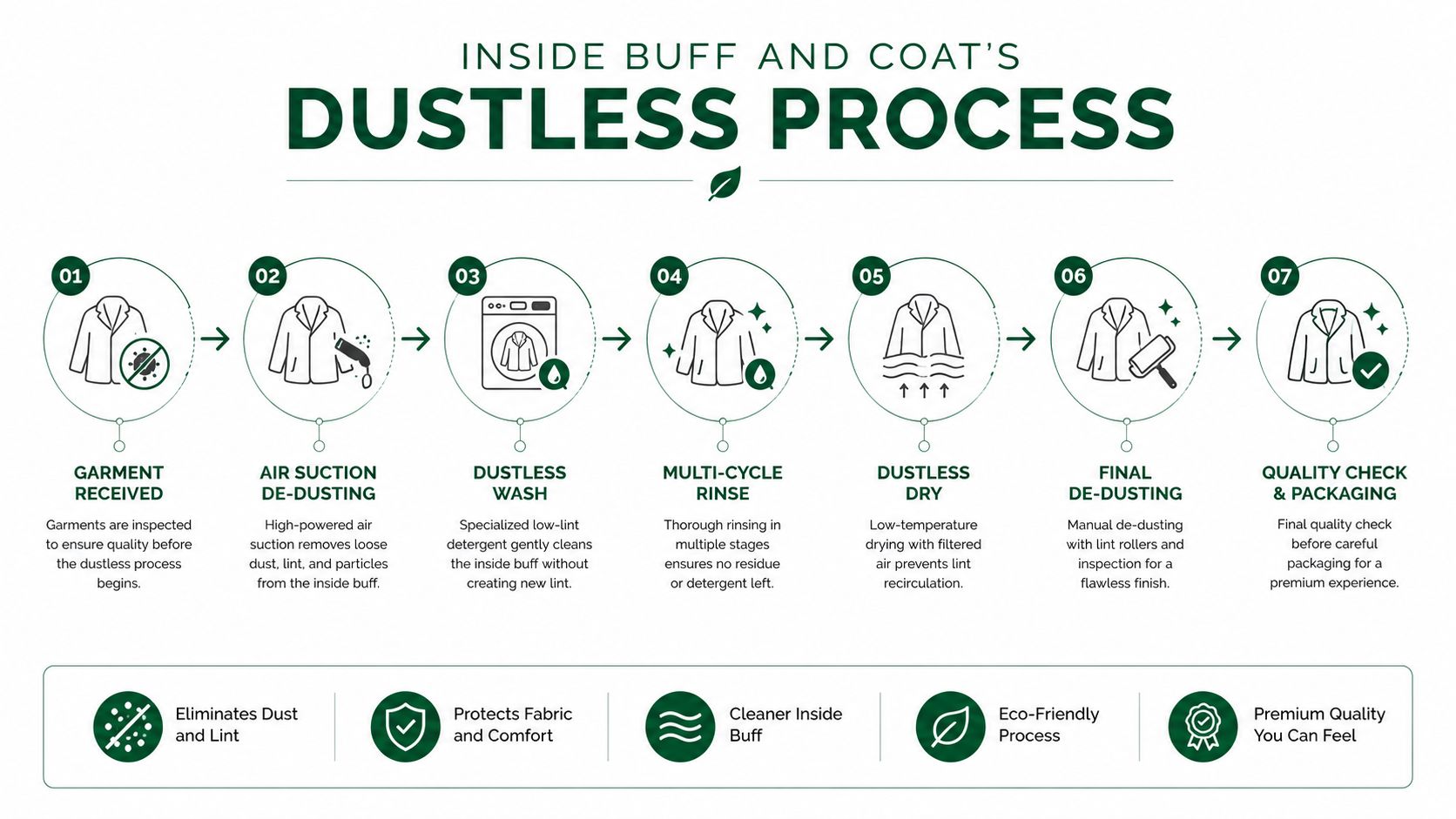
A proper job starts before any machine turns on. Furniture gets moved out or grouped based on the scope, and the work area gets isolated so the rest of the house stays usable. The big difference for Richmond homeowners is the dust control, because a sealed dustless sanding system is built to capture debris before it migrates through the home.
What the day usually looks like
The crew starts with the floor type and service choice, then adjusts the process. A buff-and-coat job uses screening or light abrasion to prepare the surface for a new protective layer. A full refinish involves sanding down to bare wood, followed by edge work near baseboards and careful attention in corners where larger machines can't reach.
After prep, finish goes on in coats with cure time between them. The exact sequence depends on the product and floor condition, but the homeowner should always know which rooms are off-limits, when socks are okay, and when furniture can return. That's the difference between a smooth project and a week of guessing.
A good crew also explains odor expectations. VOC-free or low-odor finishes can make the house easier to live in during the work, especially when the family is staying in place. That doesn't mean there's no inconvenience, but it does mean the job can be managed without unnecessary disruption.
For homeowners who want a process checklist, the dustless hardwood floor refinishing guide lays out the value of a contained setup. The point is simple, the mess should stay controlled, and the floor should end up smoother and more even than before.
Costs and Timelines for Richmond Homes
Homeowners usually want one number, but flooring doesn't work that way. Buff and coat is usually the leanest path when the floor already has good bones. Full refinishing costs more because it includes sanding, edge work, and rebuilding the finish system. Replacement rises further because material, removal, and subfloor condition all come into play.
What drives the quote
Square footage matters, but it isn't the whole story. Room count, current wear, stain decisions, and the number of finish coats all change labor and scheduling. If the floor needs patching or hardwood floor repair before finishing starts, that adds time too.
Timelines follow the same logic. A small recoating job can move quickly because the floor is being renewed rather than rebuilt. Full refinishing takes longer because the surface has to be taken down, cleaned up, and sealed again. Replacement takes the most coordination because old material comes out before the new floor can be installed.
For Richmond VA homeowners, the most useful question isn't “What's the cheapest option?” It's “Which choice gives me the most life without wasting sound wood?” That's especially true in older homes where the boards have already survived decades of seasonal movement, pet traffic, and past repairs.
A quote that looks unusually low often leaves out prep, repairs, or finish quality.
If you're comparing estimates, ask when you can walk on the floor, when rugs can go back, and when furniture can return. Those details tell you more than a polished sales pitch.
Why Older Virginia Homes Demand Extra Care
Older Richmond homes often hide settlement, patched framing, and humidity swings that newer houses do not see as often. That is why subfloor flatness matters so much. Manufacturer guidance calls for the subfloor to be level within the limits set by the product, and installation checks should be repeated as the work progresses to keep alignment under control. If the base is not right, the floor above it can squeak, gap, or telegraph defects later.
Moisture deserves the same attention. Before a floor goes down, the installer should follow the product's acclimation, moisture testing, and expansion requirements instead of guessing. Wood moves with moisture, and Richmond's seasonal changes can expose any shortcut fast. Floating floors, nail-down floors, and glue-down floors all need the right clearance and the right moisture conditions at the substrate, or the finish work can fail early.
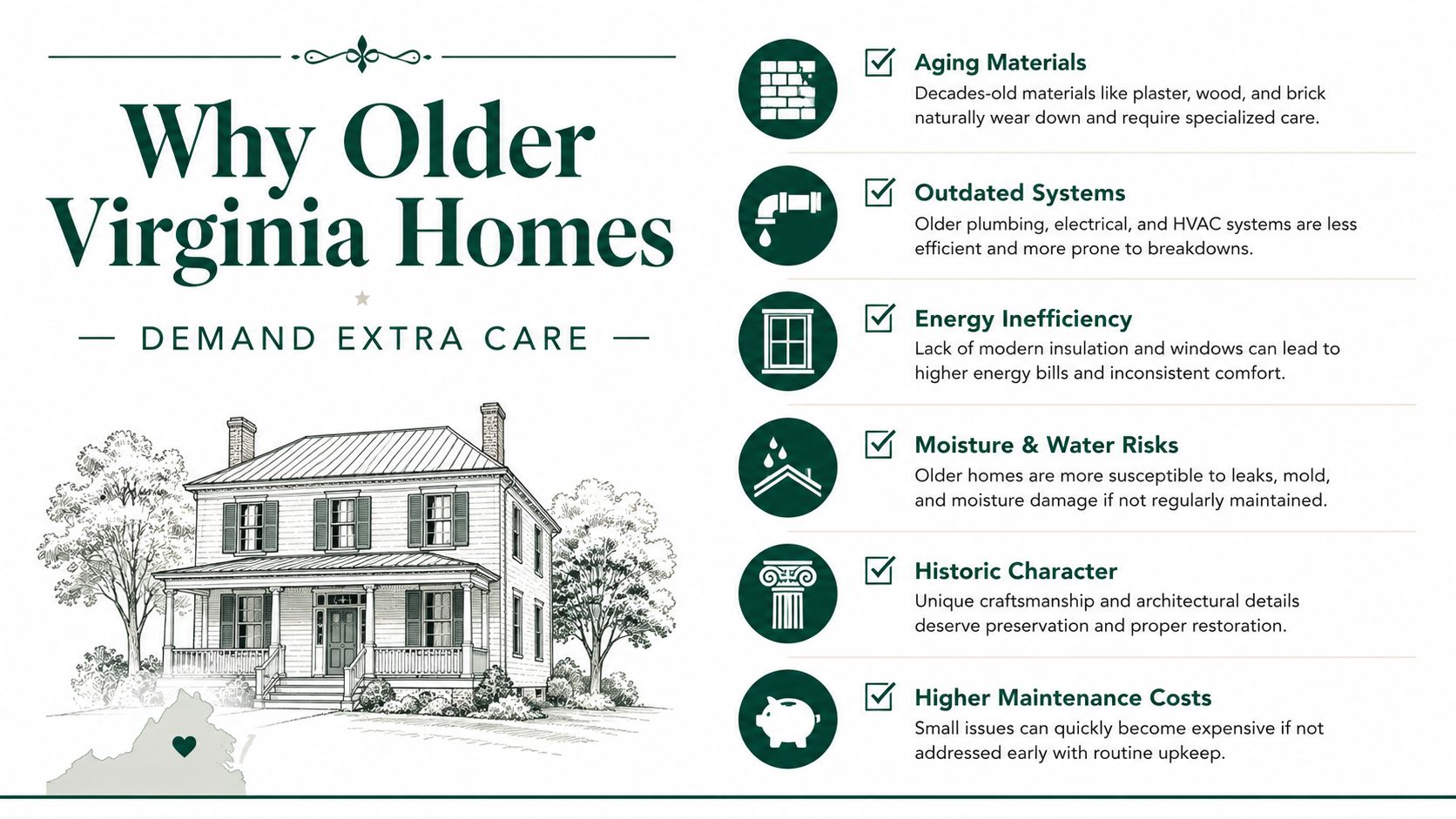
A contractor also needs to think about the whole flooring assembly, not just the visible boards. A preservation-focused refinishing workflow should include a qualified lead or asbestos test before work begins, because older materials can carry hidden hazards. In Richmond VA, that kind of caution is not overkill, it is standard jobsite discipline.
What this means for a homeowner is simple. A vintage floor can be a good candidate for buff and coat if the wear is light and the finish is still sound. If the boards are cupped, badly worn, or past the point where a topcoat will hold, full refinishing makes more sense. Replacement is the last move, and it only pays when the existing floor has structural problems, widespread failure, or moisture damage that cannot be corrected with repair.
Choosing a Local Contractor and Getting Started
The right contractor should make the decision easier, not harder. Look for dustless sanding, a written scope of work, and someone who can explain the difference between buffing, sanding, and replacement in plain English. You also want a company that will talk through hardwood floor scratch repair, finish choices, and engineered hardwood refinishing instead of pushing the most expensive route.
What to ask before you book
- Do they inspect for moisture and flatness? The answer should be specific, not vague.
- Do they explain finish options clearly? That includes low-odor or low-VOC choices when appropriate.
- Do they have experience with older homes? Richmond, Henrico, Chesterfield, Glen Allen, Short Pump, Midlothian, and Mechanicsville all have different housing stock, and the contractor should be comfortable with that variation.
- Will they recommend repair, recoating, or full sanding based on condition? The honest answer matters more than a hard sell.
- Do they offer a clear estimate and realistic timeline? That protects you from surprises.
If you're looking for floor installation Richmond homeowners can trust, or you're trying to decide whether restoration is enough, start with an in-home estimate and a real inspection. Buff & Coat Hardwood Floor Refinishing serves Richmond, Midlothian, Chesterfield, Henrico, Glen Allen, Short Pump, Mechanicsville, and occasional projects in Charlottesville, Fredericksburg, and Virginia Beach, with free estimates and seven-day scheduling.
Why Richmond Homeowners Choose Buff & Coat
- 15 years in business
- Dustless sanding systems
- Local, owner-operated
- High-quality finishes
- Clear pricing and honest advice
- 5-star customer service
Ready to restore your hardwood floors? Buff & Coat makes the process fast, clean, and stress-free. Call 804-392-1114 or request your free estimate at buffandcoatvirginia.com.
A CTA for Buff & Coat Hardwood Floor Refinishing.


