

Home Blog Water Damage Flooring Restoration Guide for Richmond
Water Damage Flooring Restoration Guide for Richmond

Richmond homeowners usually don't call about water damage flooring until the floor starts to cup, stain, or lift at a seam. By that point, the bigger question is not just how to dry the surface. It is how much of the floor system is still worth saving in Richmond VA's humid climate, where hidden moisture can stay trapped longer than anticipated.
A quick wipe-up often hides the underlying issue. Boards can feel dry on top while moisture remains in the underlayment or subfloor, and that is where the damage keeps spreading. Hidden moisture is the part that turns a small leak into a larger repair.
For a plain-English overview of the restoration process, what is water damage restoration is a useful starting point, but the real decisions happen on site after a careful inspection. The first job is to determine whether the flooring needs controlled drying, targeted repair, or full replacement. On Richmond homes, I also pay close attention to the wood species and the moisture in the layers below the boards, because both affect how well the floor can recover.
Water Damage Flooring Overview
A wet hardwood floor can look minor at first, especially after a leak that seems to have been wiped up quickly. In Richmond VA, the primary issue is often what's happening under the surface, where underlayment and subfloor materials can hold moisture long after the top boards feel dry.
Practical rule: if the floor looks dry but the edges are still moving or the boards feel uneven, don't assume the problem is over.
The safest first move is to identify how far the water traveled, then decide whether the floor needs drying, repair, or replacement. That means checking the boards, the seams, the wall line, and any low spots where water may have pooled. If you're unsure what you're seeing, a local inspection from Buff & Coat can help you separate cosmetic damage from a deeper flooring problem.
Types and Severity of Water Damage Flooring
Water intrusion isn't all the same, and hardwood reacts differently depending on what got in, how much, and how long it stayed there. A clean spill from a supply line is a very different problem from contaminated floodwater, and the repair path changes with that difference.
How the four classes affect hardwood
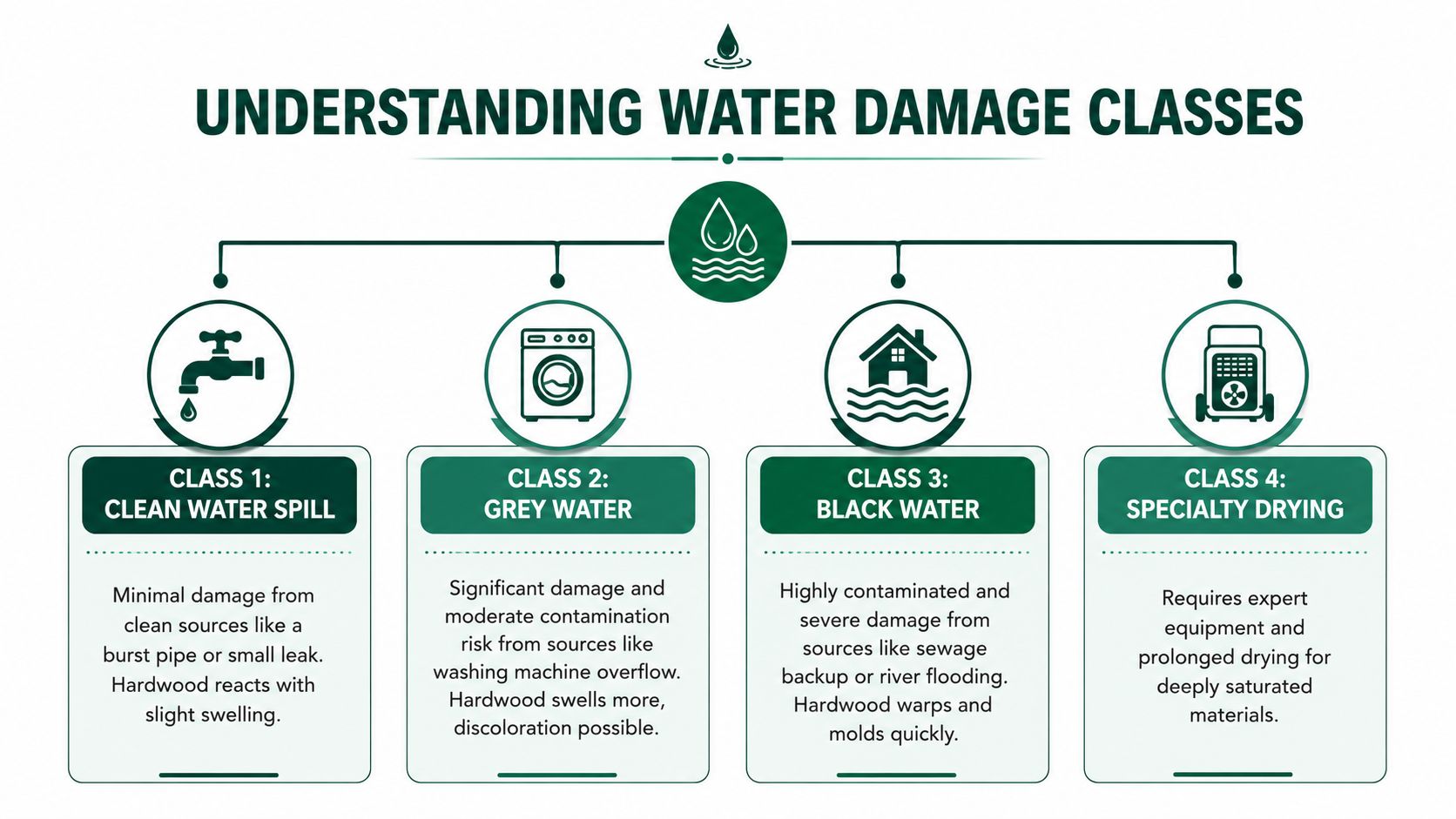
Class 1 is the lightest category, usually a clean-water event with limited absorption. Hardwood may show slight swelling, but the boards often remain stable if the area is dried correctly and the subfloor stayed mostly untouched. Class 2 brings more moisture and more spread, so boards may swell farther, discolor, or begin cupping. Class 3 is the most serious, because contaminated water can quickly drive warping and mold into the floor assembly. Class 4 is the specialty-drying category, where thoroughly saturated materials need extended, monitored drying and often professional equipment.
Just 1 inch of water in a typical home can cause up to $25,000 in damage according to This Old House's summary of FEMA and NFIP guidance. That's why a small leak can turn into a flooring project that includes boards, underlayment, and subfloor repairs.
For hidden leaks, professional leak detection matters too, especially when the source isn't obvious. A useful example of the diagnostic side of the work is expert leak detection in San Antonio, because it shows how often the underlying problem starts below the visible floor.
Why Timely Action Matters
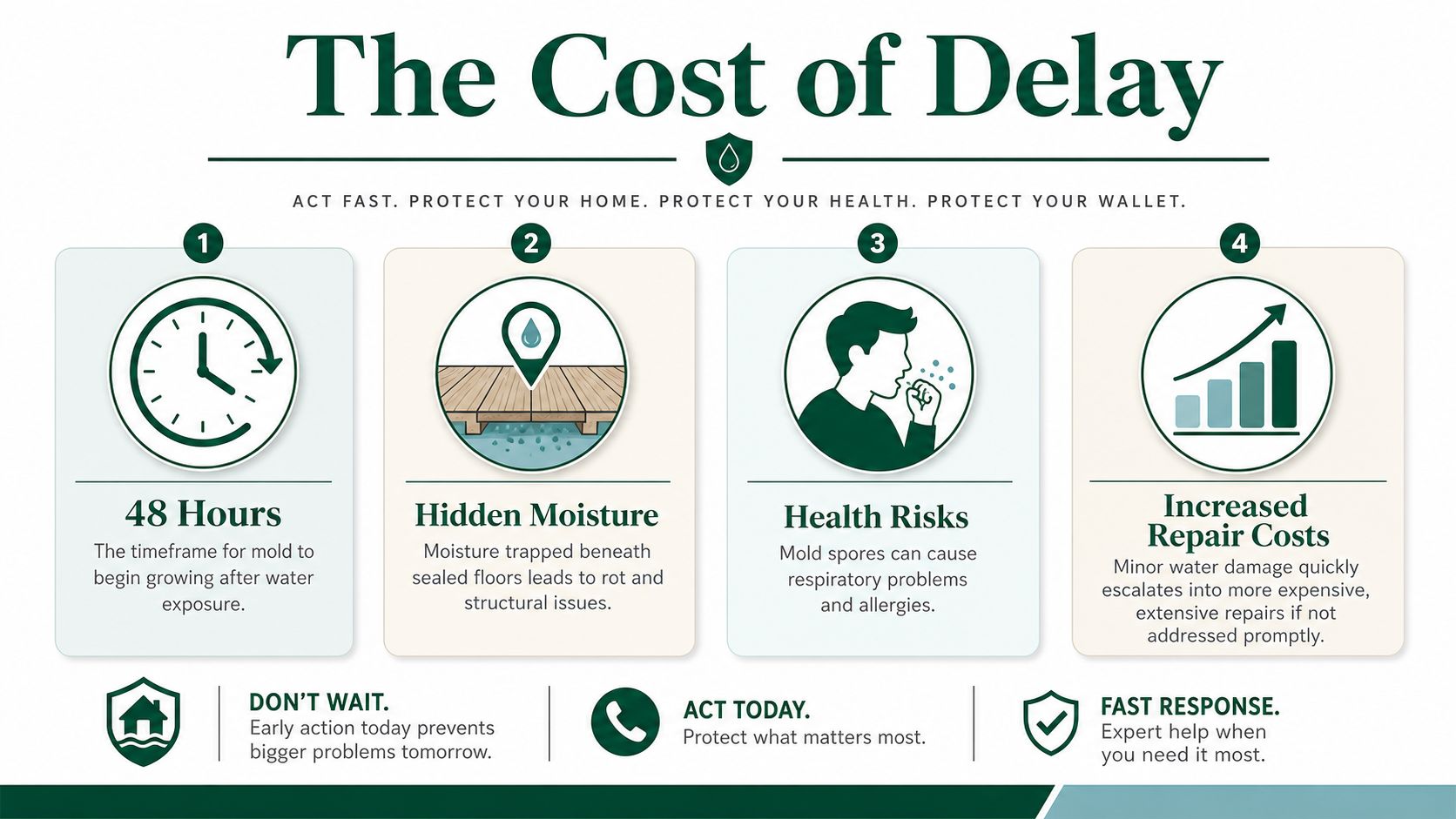
Mold and structural issues don't wait for a convenient weekend. The EPA says that if materials have been wet for more than 48 hours or if mold growth has already occurred, cleanup needs to follow mold-prevention guidance rather than basic drying alone EPA guidance.
Why delays change the repair outcome
The longer water sits, the more likely it is to move beyond the finish and into the layers underneath. That's when a floor that might have been saved with drying starts tipping into sanding, partial replacement, or full removal. Hidden moisture is the big problem, because it can keep feeding mold and deterioration even after the surface looks normal.
A simple rule helps here. If you're already asking whether the floor is “dry enough,” the safest answer is to verify it, not guess.
If the boards are dry on top but the subfloor still reads wet, the job isn't finished.
Immediate Steps to Protect Flooring
The first hour matters more than most homeowners realize. Stop the water source if you can, then move furniture, rugs, and anything that can trap moisture against the floor. Document the damage with photos before cleanup changes the scene, because insurance adjusters and flooring pros both need to see the condition as it started.
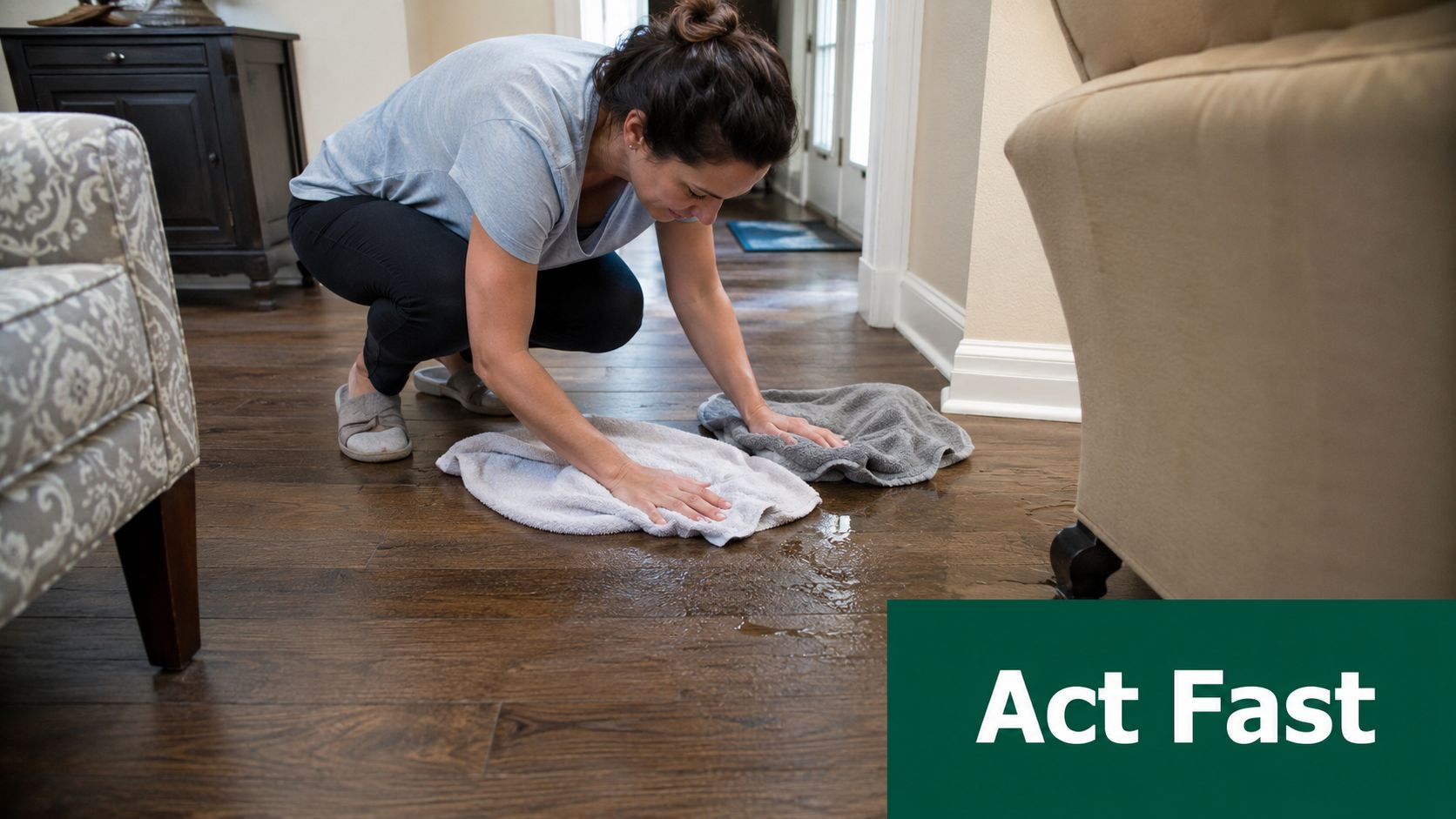
Fans and towels help with surface water, but they don't prove that the underlayment or subfloor is dry. That's where many DIY fixes fall short. If you want a deeper homeowner-level breakdown of the early stages, the internal guide on hardwood floor water damage is a practical reference.
A few quick actions usually make the biggest difference:
- Shut off the source: A supply valve, appliance line, or main shutoff stops new water from feeding the damage.
- Lift what you can save: Furniture pads, rugs, and small items should come off the floor right away so they don't trap moisture.
- Blot, don't scrub: Towels pull surface water off the boards without forcing moisture deeper into seams.
- Record the condition: Photos of buckling, staining, and affected rooms help establish the extent of the loss.
If boards are already moving or the leak lasted more than a short time, don't keep adding heat and hoping it disappears. That can make later repairs harder.
Drying and Moisture Verification Process
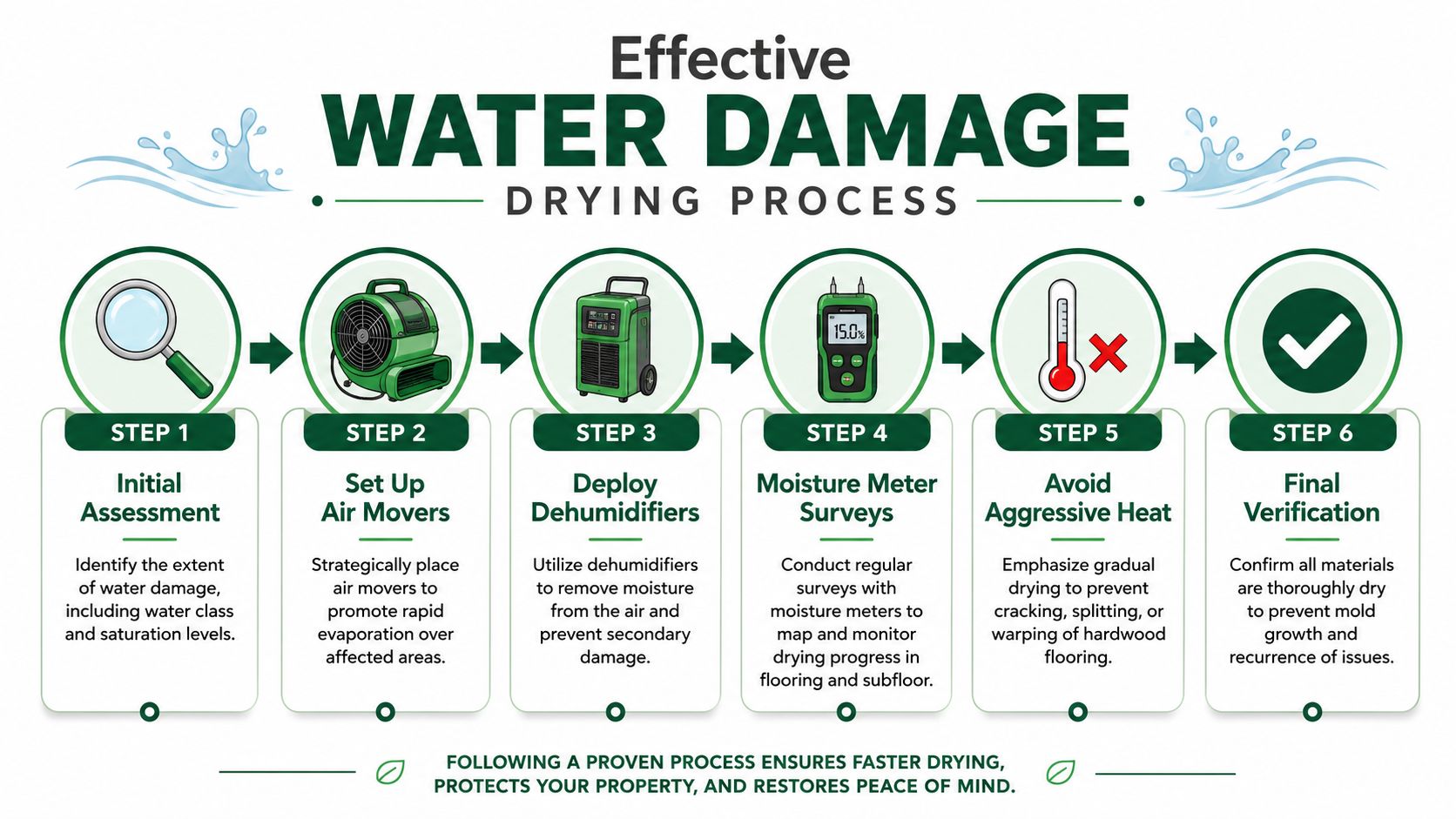
Wood flooring needs controlled drying, not a blast of hot air. University guidance says hardwood should be dried gradually and naturally, because sudden drying can crack, split, or distort the wood University of Michigan guidance.
What proper drying actually looks like
The process usually starts with an assessment, then air movers and dehumidifiers are set to pull moisture out of the space without overdriving the boards. Moisture meter surveys are the part homeowners rarely see, but they're the part that keeps a refinishing job from being done too early. Moisture readings should be tracked across the floor and compared with unaffected areas, because a floor can look steady while the layers below are still wet.
Practical rule: don't sand based on appearance alone. Sanding too early can lock in deformation and create crowning later.
Professional guidance also recommends monitoring hidden subfloor moisture and verifying acceptable levels before reinstalling or refinishing hidden moisture guidance. That point matters in Richmond VA, where humidity can slow equalization and make a floor seem stable before it really is.
For a related example of how boards respond when moisture gets trapped, the internal guide on what causes hardwood floors to buckle is worth reading before you commit to sanding.
Repair and Cost Options for Hardwood
Not every water-damaged floor needs the same fix. Some floors only need surface renewal, while others need new boards or a full rebuild of the affected section. The decision usually comes down to board condition, moisture history, and whether the subfloor stayed sound.
Comparing the main repair paths
A buff and coat service can work when the floor is dry, structurally stable, and the issue is mostly surface wear or light dulling after cleanup. Full sanding and refinishing makes sense when the finish is compromised deeper into the wood, but the boards are still salvageable. Replacement becomes the better choice when boards are warped, moldy, or no longer lying flat.
| Service | Cost per sq ft | Timeline |
|---|---|---|
| Buff and coat service | Depends on scope and condition | Often the fastest option |
| Full sanding and refinishing | Depends on floor size and prep | Longer than recoating |
| Full replacement | Depends on material and subfloor work | Longest, especially if repairs are needed |
Typical water-damage cleanup ranges from $450 to $1,200 for minor incidents and $5,000 to $16,000+ for severe events Wagner Meters summary. That spread shows why a quick inspection matters, because a floor that can be saved early may avoid a much bigger project later.
If you want a deeper breakdown of repair scenarios, the internal article on water damage hardwood floor repair gives a useful side-by-side view. In Richmond VA, I'd rather see a homeowner spend carefully on the right fix than twice on the wrong one.
When to Call Professionals and Preventive Tips
Call a pro when the water seems to have gone under the boards, when buckling shows up, or when your drying efforts don't change the moisture readings. That's also the point where the floor may need a decision, not more towels and fans. For hidden leak clues, signs of a hidden water leak is a good reminder that the source is sometimes as important as the damage.
Practical prevention that actually helps
Keep indoor humidity controlled, wipe spills right away, and check under sinks, dishwashers, washing machines, and refrigerator lines on a routine basis. Those are the places where a slow leak can stay hidden long enough to affect the subfloor. In homes with older hardwood, dustless sanding and recoating can also be part of long-term care, especially when the goal is to preserve the boards instead of replacing them.
A few habits go a long way:
- Inspect appliance zones yearly: Catching a small drip early is far easier than drying a soaked floor later.
- Use moisture readings, not guesses: If the floor has been wet, verify it before refinishing.
- Keep the home stable: Big swings in humidity make wood move more than it should.
- Act fast on stains or odor: That usually means moisture stayed longer than it should have.
Richmond homes deal with seasonal humidity, older construction, and a lot of mixed flooring types. That combination makes hidden moisture checks especially valuable after a leak.
Why Richmond Homeowners Choose Buff and Coat
- 15 years in business
- Dustless sanding systems
- Local, owner-operated service
- High-quality finishes
- Clear pricing and honest advice
- 5-star customer service
If you're dealing with floor damage in Richmond VA, it helps to have a local team that knows when a floor can be saved and when it can't. Buff & Coat keeps the process straightforward, from inspection to repair recommendations, so you're not left guessing about the next step. Call 804-392-1114 or request a free estimate at buffandcoatvirginia.com.
FAQ
Can waterproof flooring still hide water damage underneath?
Yes. The surface may resist water, but seams, underlayment, and subfloor layers can still be affected even when the top looks fine.
How long should gradual drying take in Richmond VA?
It depends on how much water got in and whether the subfloor is wet too. The key is to dry gradually and verify moisture levels instead of rushing to sanding.
Can engineered hardwood be refinished after water exposure?
Sometimes, but only if the boards are still stable and the wear layer can handle it. If the floor is warped or the moisture damage goes too deep, replacement may be the better choice.
What's the biggest mistake homeowners make?
Sanding too soon. If the floor isn't dry and equalized, refinishing can lock in the damage instead of fixing it.
Ready to restore your hardwood floors? Buff & Coat makes the process fast, clean, and stress-free.
Call 804-392-1114 or request your free estimate at buffandcoatvirginia.com.


