Solid hardwood itself does not contain added formaldehyde, while engineered and laminate floors can, because the adhesives in plywood, HDF, or MDF cores may off-gas. If you're asking does hardwood flooring have formaldehyde, the answer depends on the floor's construction, not just the word “hardwood.”
Richmond homeowners run into this question when they're comparing old solid oak floors, newer engineered planks, and wood-look products that sound similar but behave very differently. The good news is that formaldehyde is usually a background exposure issue, not an automatic emergency, and once you know where it comes from, you can shop, test, and refinish with a lot more confidence.
The Short Answer and Why It Depends on Your Floor
The simplest way to answer does hardwood flooring have formaldehyde is this. Solid hardwood generally does not have added formaldehyde in the wood itself, while engineered hardwood and other composite wood products can have formaldehyde tied to the layers beneath the surface. That difference matters because the face veneer may still be real wood, but the core can be plywood, HDF, or MDF bonded with resins.
For homeowners, that means the label on the box matters as much as the species of wood. A floor can look like oak, feel like oak, and still behave more like a composite panel if the core is pressed wood. That's why two floors that both get called “hardwood” can have very different emission profiles.
The EPA notes that formaldehyde is normally present in indoor and outdoor air at low levels, usually less than 0.03 ppm, which helps frame the issue in real terms rather than scare tactics. It also notes that homes with significant amounts of new pressed wood products can have indoor levels above 0.3 ppm EPA guidance on formaldehyde and indoor air quality.
Practical rule: if the floor is truly solid hardwood, your first concern is usually not the wood species itself. If it's engineered or laminate, inspect the core, the adhesive system, and the finish.
That's the mental map to keep in mind in Richmond VA, especially if you're weighing refinishing, replacement, or a simple buff and coat service. A good contractor should be able to tell you exactly what's under the surface before you make a decision.
Where Formaldehyde Actually Hides in Hardwood Flooring
Solid wood, veneer systems, and pressed cores
A floor can look like hardwood and still carry different formaldehyde risks depending on what is underneath the face layer. Solid hardwood flooring is milled from one piece of wood, so the wood itself usually does not rely on pressed-wood layers or the same adhesive systems that raise concern in composite products. The formaldehyde question shows up more often in engineered products, plywood cores, particleboard, MDF, and adhesives and resins used in composite wood flooring EPA formaldehyde overview. That is the part homeowners often overlook when they hear the word “hardwood” in a showroom.
Engineered hardwood uses a real wood veneer bonded to a manufactured core. The top layer may be oak, maple, or hickory, but the core is where formaldehyde-related emissions can enter the picture. A closer look at how those products are built helps make sense of the risk, especially when you explore engineered hardwood flooring types before you buy.
Laminate is a separate category. It can copy the look of wood closely, so shoppers often place it in the same bucket as hardwood, but its layered construction is different and so are its emission questions. That is why two floors with a wood look can behave very differently once they are installed.
If a salesperson cannot tell you what the core is made of, keep asking.
A quick comparison homeowners can use
| Floor Type | Core Layers | Primary Emission Source | Typical Risk Level |
|---|---|---|---|
| Solid hardwood | None, just milled wood | Natural trace background, finish only | Low |
| Engineered hardwood | Plywood, HDF, or MDF | Adhesives and resins in the core | Moderate to higher, depending on product |
| Laminate | Composite backing and core | Pressed layers and bonding materials | Moderate to higher |
| Site-finished solid hardwood | None, just solid planks | Finish and installation materials | Low to moderate, depending on products used |
For a homeowner in Richmond VA, the practical takeaway is simple. Solid boards are usually the cleanest baseline, while engineered and laminate products deserve a closer look at the spec sheet, the core construction, and any emission labels before you decide whether refinishing, replacement, or another floor service makes sense.
Health Risks, Background Levels, and Sensitive Groups
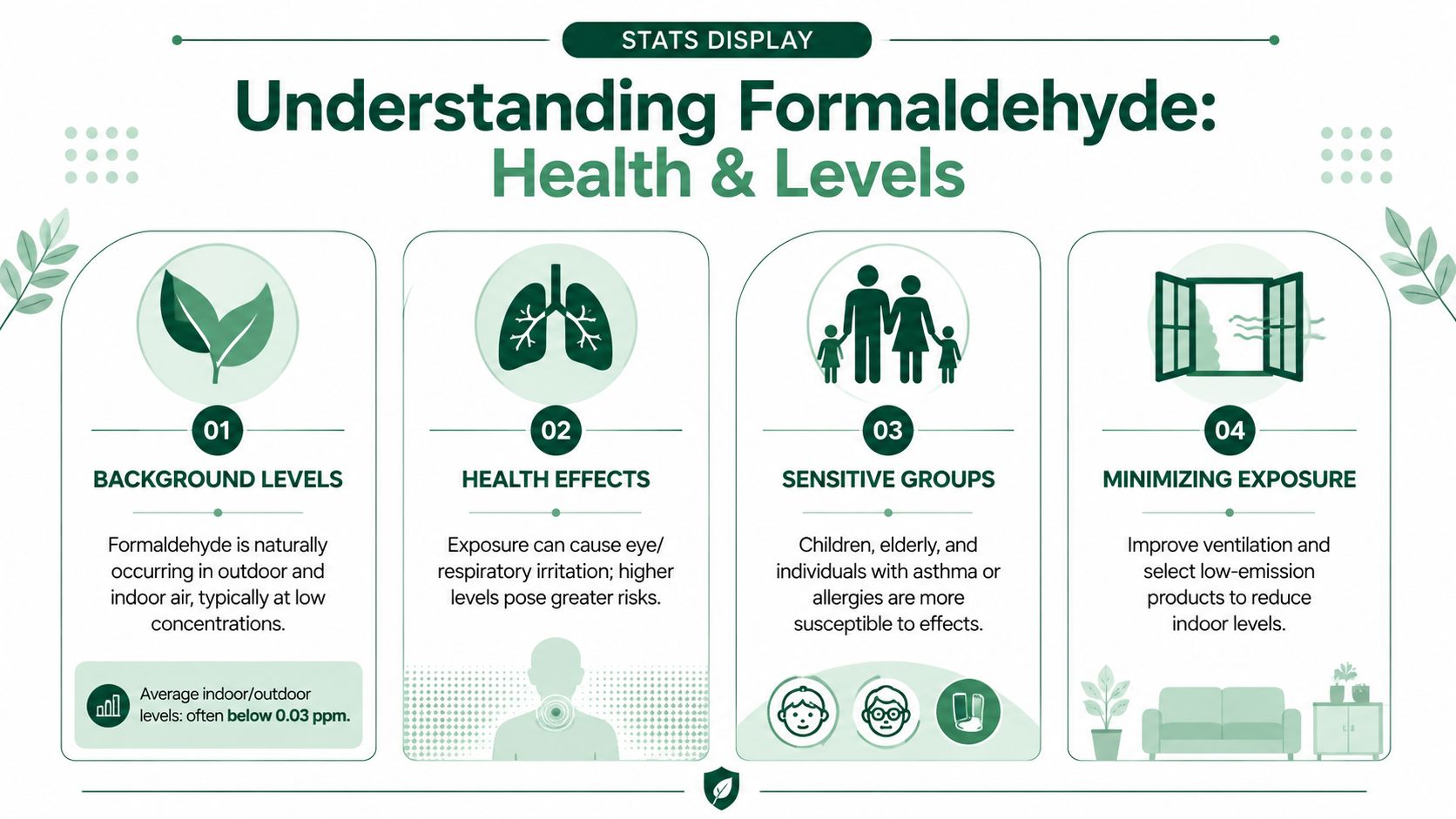
A homeowner usually starts noticing formaldehyde only after a room feels different. Maybe the air seems sharp after installation, or someone in the house begins rubbing their eyes and clearing their throat more than usual. Formaldehyde is already part of the air around us, and the EPA says it is normally present in outdoor and indoor air at low levels, usually less than 0.03 ppm EPA guidance on formaldehyde and indoor air quality. That baseline matters because the goal is to keep indoor sources from pushing the level higher than the room can comfortably handle.
The symptoms people notice most often are eye irritation, throat irritation, and other respiratory complaints when indoor levels rise. A stable solid hardwood floor with an older finish is usually a different situation from a room full of new pressed wood, fresh adhesives, or certain finishes. The material itself matters, but so does the age of the floor, the ventilation in the room, and whether the product includes composite layers that can release more formaldehyde than solid wood.
EPA guidance also notes that indoor levels can exceed 0.3 ppm in homes with significant amounts of new pressed-wood products EPA guidance on formaldehyde and indoor air quality. That is a practical threshold for homeowners, because it suggests when a room deserves better airflow, closer attention to the product spec sheet, or a check on whether the flooring, underlayment, or adhesive is the likely source. If the reading is higher than normal, the first move is usually to reduce exposure, not to panic.
Who should pay closer attention
- Children: they spend more time close to floor level, so the air they breathe can be affected by what is off-gassing from nearby materials.
- Older adults: irritation and breathing discomfort can show up more easily.
- People with asthma or allergies: they may react sooner to indoor air changes, especially in a room with new materials.
- Anyone with chemical sensitivity concerns: lower-emission flooring, careful ventilation, and product labels deserve extra attention.
If someone in the home is sensitive, treat the room like a newly painted space and give it the same care. Run ventilation during and after installation, use a HEPA air purifier to help with dust and particles, and choose a unit with activated carbon if you want help reducing lingering odors and some airborne chemicals. Open windows when weather allows, keep supply and return vents clear, and avoid stacking new boxes, leftover planks, or adhesive containers in closed rooms where the air already feels heavy.
If someone in your house already has respiratory irritation, do not guess at the cause. Talk to a physician for personal health advice, and use the product details, room conditions, and ventilation setup to decide whether the floor is part of the indoor air picture.
EPA Limits, TSCA Title VI, and What Those Labels Actually Mean
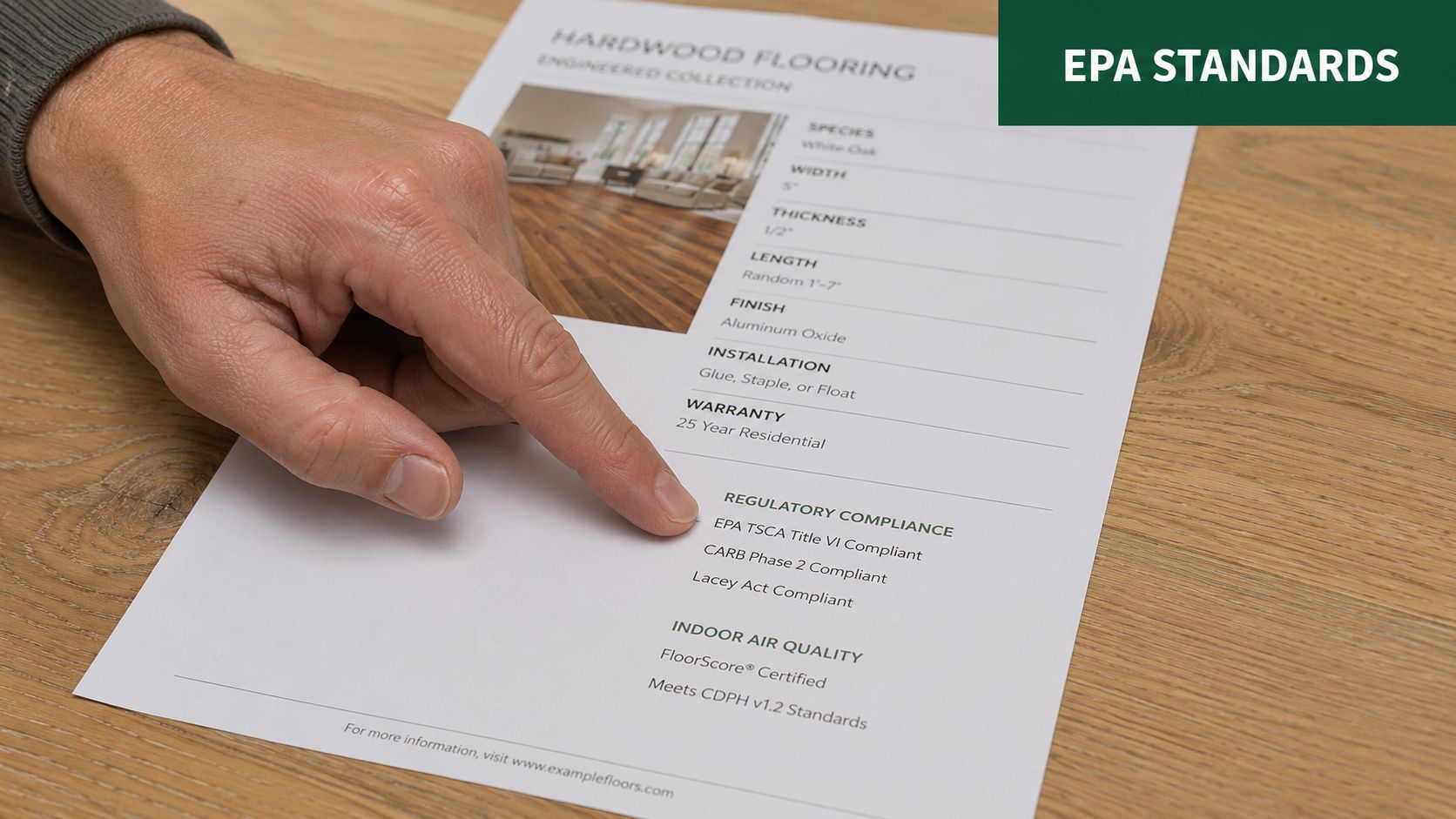
EPA formaldehyde rules changed the market in a big way. The agency says TSCA Title VI emission standards took effect beginning June 1, 2018, and by March 22, 2019, regulated composite wood products and finished goods containing them had to be certified by an approved third-party certifier EPA TSCA Title VI consumer FAQ. That's the regulatory backdrop behind many flooring labels homeowners see today.
The limits vary by product type. EPA lists 0.05 ppm for hardwood plywood, 0.09 ppm for particleboard, 0.11 ppm for MDF, and 0.13 ppm for thin MDF EPA TSCA Title VI consumer FAQ. If you're reading a product spec sheet, those are the kinds of numbers that matter, because they tell you whether the composite components have been tested against federal thresholds.
Compliance is not the same thing as zero emissions. It means a product meets the standard at the point of certification. For a homeowner, that's useful, but it's not the end of the decision process if you're especially sensitive or trying to reduce indoor exposure as much as possible.
Good shopping habit: ask for the spec sheet before you choose the floor, not after it's installed.
Many manufacturers also reference CARB Phase 2 because consumers recognize it as a low-emission benchmark. What matters is that the paperwork clearly identifies the core material and the emissions documentation, not just the marketing language on the carton.
How to Test Your Floors for Formaldehyde Emissions
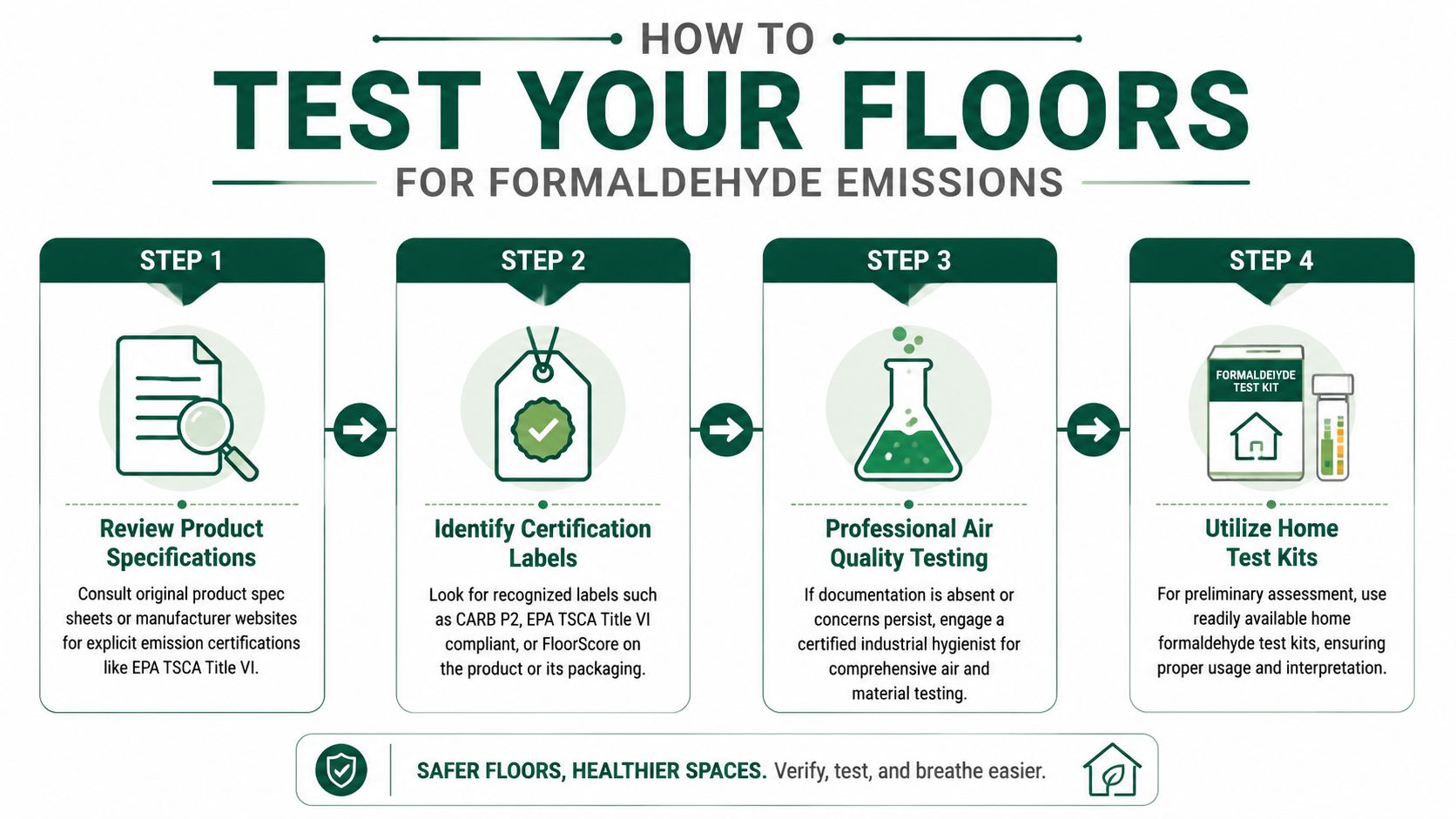
The easiest check is often the paperwork trail. Look for the original product spec sheet, the manufacturer's emissions statement, and labels like TSCA Title VI, CARB Phase 2, or No Added Urea Formaldehyde. A technical product sheet for unfinished white oak states “No Added Urea Formaldehyde” and also clarifies that formaldehyde still exists naturally in wood products unfinished white oak product sheet.
If the paperwork is missing, an in-home test can help, but it should be used with realistic expectations. A room reading reflects the whole space, not just the floor, so ventilation, furniture, cabinets, and recent renovation work all affect the result. That's why testing during active construction can give you a misleading snapshot.
The second path is professional testing. An indoor air quality specialist can evaluate whether the floor is likely contributing to the reading and whether the level changes with ventilation or time. Consumer test kits exist too, and they can be a useful screening tool, but they won't give you the same depth of interpretation as a trained professional.
For a homeowner who wants a simple, non-toxic sanding overview, this local resource is worth a look, non-toxic floor sanding guidance.
Here's a simple decision order:
- Check the spec sheet first.
- Confirm the core type.
- Look for emission labels.
- Test the room only if documentation is unclear or symptoms persist.
That sequence saves time and keeps you from overreacting to a single number without context.
Refinishing, Sealing, and When Replacement Is the Right Call
A refinish can lower what a floor adds to indoor air when the issue is on the surface, such as worn finish, light damage, or an older coating that is breaking down. In those cases, wood floor recoating and full hardwood floor refinishing are practical choices because they refresh the top layer and replace older finishes with cleaner ones. A new finish does not change what is happening inside the core, but it can make the floor easier to live with and less dependent on outdated coatings.
That distinction matters most with engineered products. If formaldehyde is coming from the core or the adhesive layers below the wear surface, sanding and sealing only treat the top. The floor may look better, but the emission source is still inside the plank, so replacement with a certified low-emission product is usually the better long-term answer.
hardwood floor repair should be diagnosed before any sanding starts. A few scratches, dull finish, or isolated wear spots are one kind of problem. Ongoing air-quality concerns are another. A careful contractor sorts out those different causes first, then decides whether a buff and coat service, a full refinish, or replacement makes sense.
For finish selection, ask about VOC-free or low-odor finishes. They are often the better choice in homes where indoor air matters, especially after sanding and sealing. If you want to see how finish chemistry affects odor and dry time, this guide to water-based polyurethane finishes explains the tradeoffs in plain language.
Practical rule: surface problem, refinish. Core problem, evaluate replacement.
A separate point helps here. A product used for one purpose does not always fit another, and flooring in a bedroom or living room is very different from exterior wood exposed to weather. For that reason, Durable exterior wood protection belongs in a different conversation than indoor floor finishing, even though both deal with wood protection.
A simple decision tree
- Solid hardwood with worn finish: recoating or refinishing is often the first move.
- Engineered floor with clear documentation and low emissions: refinishing may still be fine if the wear layer allows it.
- Engineered floor with suspected off-gassing from the core: replacement deserves serious consideration.
- Older floor plus health concerns: get the floor evaluated before choosing a path.
For Richmond VA homes, that advice matters because many properties mix older solid wood with newer additions and repairs. You do not want to replace a floor that only needs sanding, and you do not want to seal over a material issue that should be removed.
Choosing Low-Emission Floors and Finishes in Richmond VA
A homeowner in Richmond, Midlothian, Chesterfield, Henrico, Glen Allen, Short Pump, or Mechanicsville may be looking at a house that combines older solid hardwood, newer engineered products, and maybe a later repair or addition. That mix is where formaldehyde questions usually surface during remodels, rental refreshes, and floor installation Richmond projects. The safest habit is to read the spec sheet before you fall in love with the showroom sample.
The first thing to check is whether the product has TSCA Title VI or CARB Phase 2 documentation. Then look for a clear statement about No Added Urea Formaldehyde in the core or adhesives. If you are choosing a new floor, a solid hardwood option or a certified low-emission engineered product with a known core usually gives you more clarity than a product with vague paperwork. During installation, low-emission adhesives and careful subfloor prep matter just as much as the plank itself, because a good plank can still be paired with a poor adhesive choice.
Installers should be able to explain the material, the certification, and the layers below the surface. The Growth 4 Trades guide for installers is a useful reference for how flooring professionals judge suppliers and product quality, and that same mindset helps in Richmond VA too.
Dust control belongs in the same conversation. Pairing dustless sanding with a lower-odor finish keeps the job cleaner from start to finish, especially in occupied homes where people are still sleeping, cooking, and working around the project. For hardwood floor restoration, that approach reduces disruption without changing the character of the floor.
If you are sorting through finish choices, a local primer on low-VOC hardwood flooring helps you compare odor, cure time, and indoor air impact before you approve a quote.
Questions to ask before you buy or install
- What is the core made of?
- Do you have emissions paperwork I can review?
- Which finish or adhesive is being used in my home?
- Can the floor be installed or refinished with low-odor products?
- If the floor is engineered, is the wear layer thick enough for future service?
Richmond VA homeowners do not need scare tactics. They need a contractor who can separate a solid floor, an engineered product, and a laminate lookalike, then recommend the least disruptive path that still solves the problem.
Why Richmond Homeowners Choose Buff & Coat
- 15 years in business
- Dustless sanding systems
- Local, owner-operated
- High-quality finishes
- Clear pricing and honest advice
- 5-star customer service
Ready to restore your hardwood floors? Buff & Coat makes the process fast, clean, and stress-free. Call 804-392-1114 or request your free estimate at Buff & Coat Hardwood Floor Refinishing.