
A Richmond homeowner usually starts in the same place. The floor looks tired, the budget has limits, and laminate shows up as the affordable way to get a wood-look update without stepping into premium pricing.
That instinct is understandable. I see it all the time on estimates. Homeowners often choose laminate because the shelf price looks manageable and the room can look much better fast. The part that gets missed is ownership cost after installation, especially in busy homes with pets, kids, rolling furniture, or moisture risk near exterior doors and kitchens.
Laminate can be a reasonable short-term value in the right room. But price on day one is only part of the decision. A floor that wears early, swells from water, sounds hollow because prep was skipped, or has to be replaced instead of repaired can cost more over time than a better material with a higher initial price.
That is why smart budgeting starts with the installed price, then looks at lifespan, repair options, moisture tolerance, and how the floor will perform in your specific house. In many Richmond homes, that comparison leads laminate shoppers to look harder at LVP or hardwood, especially when they want a floor that holds up longer and adds more lasting value.
Your 2026 Guide to Laminate Flooring Costs in Richmond
A lot of Richmond projects start the same way. A homeowner wants the look of wood, needs to keep the budget under control, and sees laminate as the middle ground between a cheap cosmetic fix and a higher-ticket floor.
For planning purposes, laminate usually lands in the mid-range of replacement flooring, not at the bottom. Final cost depends less on the box price and more on the house itself. Room layout, trim work, floor removal, door adjustments, and subfloor prep are often what separate an acceptable quote from one that holds up well after installation.
That matters in Richmond. In older city homes, near-west-end remodels, and plenty of ranch houses in Henrico and Chesterfield, I often find uneven subfloors, patched areas, and height transitions that need correction before a floating floor goes in. Those items raise the invoice, but they also affect how the floor sounds, feels, and wears.
Homeowners planning floor installation Richmond projects also tend to weigh laminate against longer-lasting surfaces. That is a smart way to budget. Laminate can make sense in a guest room, rental turnover, or a lower-use space. In kitchens, entry areas, and busy family homes, the lower upfront number does not always produce the lowest ownership cost once moisture risk, wear, and replacement limits are part of the decision.
Practical rule: If a laminate quote looks unusually low, ask whether it includes removal, subfloor correction, trim work, transitions, and haul-away.
The best way to judge laminate is to treat installation price as only one part of the purchase. A floor that costs less today but needs earlier replacement can end up being the more expensive choice. That is why many Richmond homeowners start with laminate pricing, then move toward LVP or hardwood when they want better durability, better repair options, and stronger long-term value.
A Complete Breakdown of Laminate Installation Costs
The easiest way to understand laminate wood flooring installation cost is to break it into two main buckets. Materials and labor. Industry pricing shows the average cost to install laminate flooring ranges from $3 to $13 per square foot, with materials at $1 to $5 per square foot and labor at $2 to $8 per square foot, depending on job complexity and site conditions, according to Right Step Flooring's laminate flooring installation cost breakdown.
Estimated Laminate Flooring Installation Costs
| Cost Component | Average Price Range (per sq. ft.) |
|---|---|
| Materials | $1 to $5 |
| Labor | $2 to $8 |
| Total Installed Cost | $3 to $13 |
That chart gives you a realistic starting point, but each line means something specific.
Materials cover the laminate planks themselves. Lower-cost products usually have simpler visuals and lighter construction. Better laminate lines often look more convincing and feel more substantial underfoot, but they still share the same core limitation. Once water gets into the seams or the board body, laminate doesn't recover the way a true hardwood floor can through hardwood floor refinishing.
Labor covers layout, cutting, fitting, and standard installation work. Labor rises when rooms have angles, closets, transitions, heavy prep needs, or tight finish details around door casings and stair noses. In Richmond VA, older homes can look straightforward on paper and still take longer because walls aren't perfectly square and subfloors have movement or patchwork repairs underneath.
What homeowners miss when comparing quotes
A low material price can make one estimate look attractive. But labor is often where quality shows up. Clean cuts, tight transitions, proper expansion spacing, and honest prep work all live in that labor number.
A floor can look finished on day one and still fail early if the installer rushed the prep.
If you're comparing bids for floor installation Richmond work, ask each contractor to separate the quote into product, labor, prep, trim, and removal. That makes it much easier to see whether one estimate is cheaper or just less complete.
For Richmond VA homeowners weighing laminate against refinishing or new hardwood, this is also where the conversation starts shifting toward total ownership cost. A floor that can't be renewed later may cost less at installation, but more when it wears out.
Hidden Factors That Affect Your Final Flooring Cost
The square-foot price gets attention. The surprise charges usually come from everything around it.
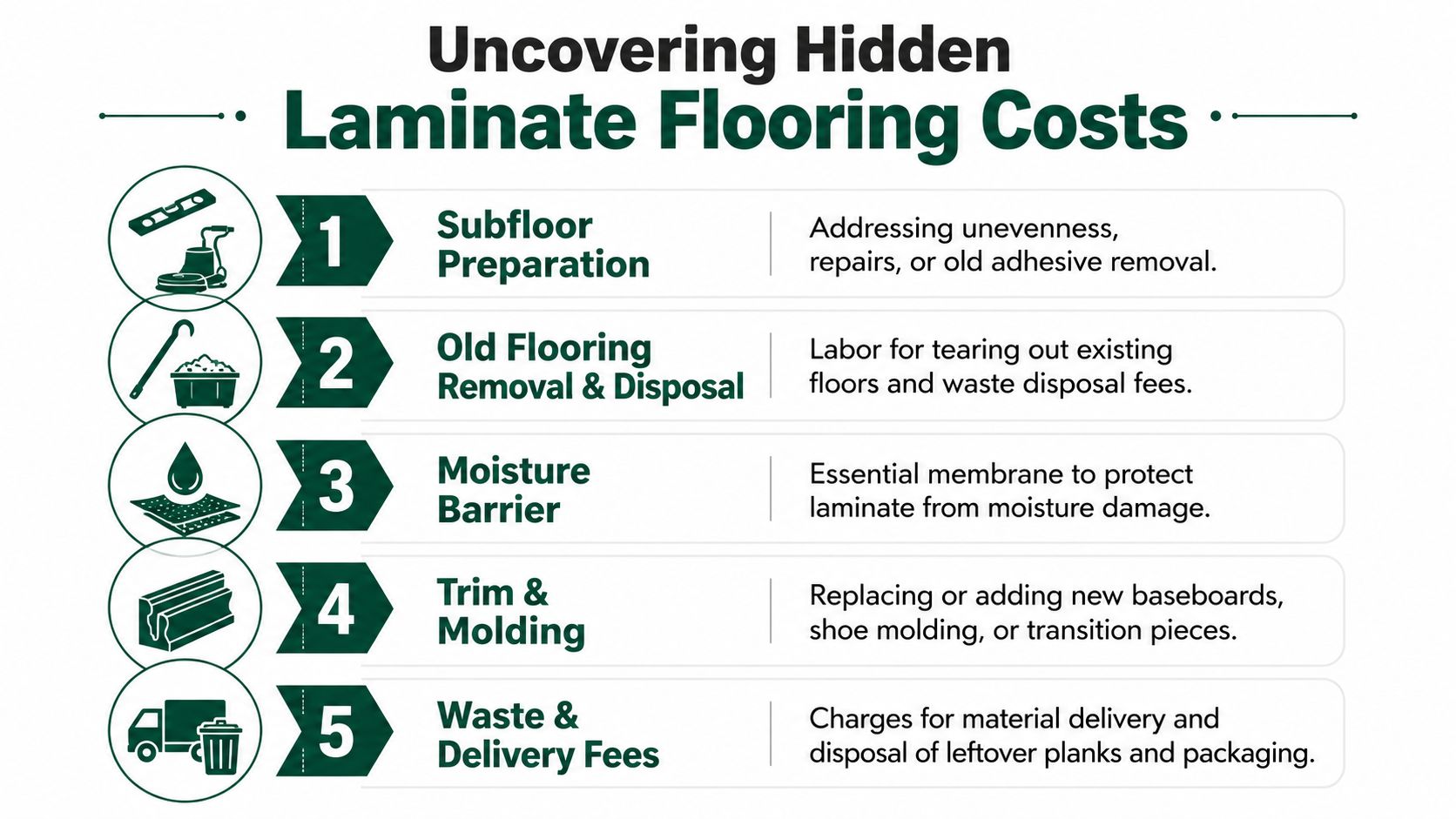
One of the biggest budget misses is subfloor work. The hidden cost of subfloor preparation can add 15 to 25% to total project costs, and subfloor repairs for moisture damage or leveling can cost $400 per 200 square feet, based on HomeAdvisor's laminate flooring cost data. In plain terms, the floor underneath your new laminate often decides whether the estimate stays stable.
The biggest add-ons homeowners run into
- Old floor removal can raise the total before the first new plank goes down. Professional projects may add $1 to $5 per square foot for removing existing flooring, according to Yelp's laminate floor installation cost guide.
- Subfloor flattening and patching become necessary when planks would otherwise flex, separate, or click underfoot.
- Trim and transition work adds time and material, especially when existing baseboards don't cover the new floor height cleanly.
- Furniture moving and appliance handling can turn a straightforward install into a more involved job.
- Moisture control details matter more than many homeowners expect, especially over concrete or in rooms with seasonal humidity swings.
A detailed local example shows how fast extras can stack up. In a 991-square-foot project, the total reached $12,914.38 after material costs, old flooring removal, leveling compound, underlayment, labor, trim, furniture moving, and fridge removal were added together, as shown in this project cost breakdown video on YouTube.
Why these costs matter more in older Richmond homes
In Richmond VA, Midlothian, Glen Allen, and surrounding neighborhoods, many homes have lived through multiple remodels. That means layers. Carpet over vinyl. Vinyl over old patching. Uneven transitions from room to room. None of that shows up in a simple online square-foot calculator.
If you want a better sense of full project budgeting before you commit, this guide on how much flooring installation costs is a useful next step. And once your new floor is in, good habits matter too. This resource on safeguarding floors from furniture offers practical ways to reduce scratching and early wear.
Cheap flooring mistakes usually don't come from the planks. They come from what was skipped underneath them.
DIY Installation vs Hiring a Professional in Richmond
A Richmond homeowner buys laminate for a spare bedroom, plans for one weekend, and expects to save on labor. Then the first row runs out of square, the door jambs need undercutting, and a small height change at the hallway turns into a trip back to the store. That is usually the point where the cheap install stops looking cheap.
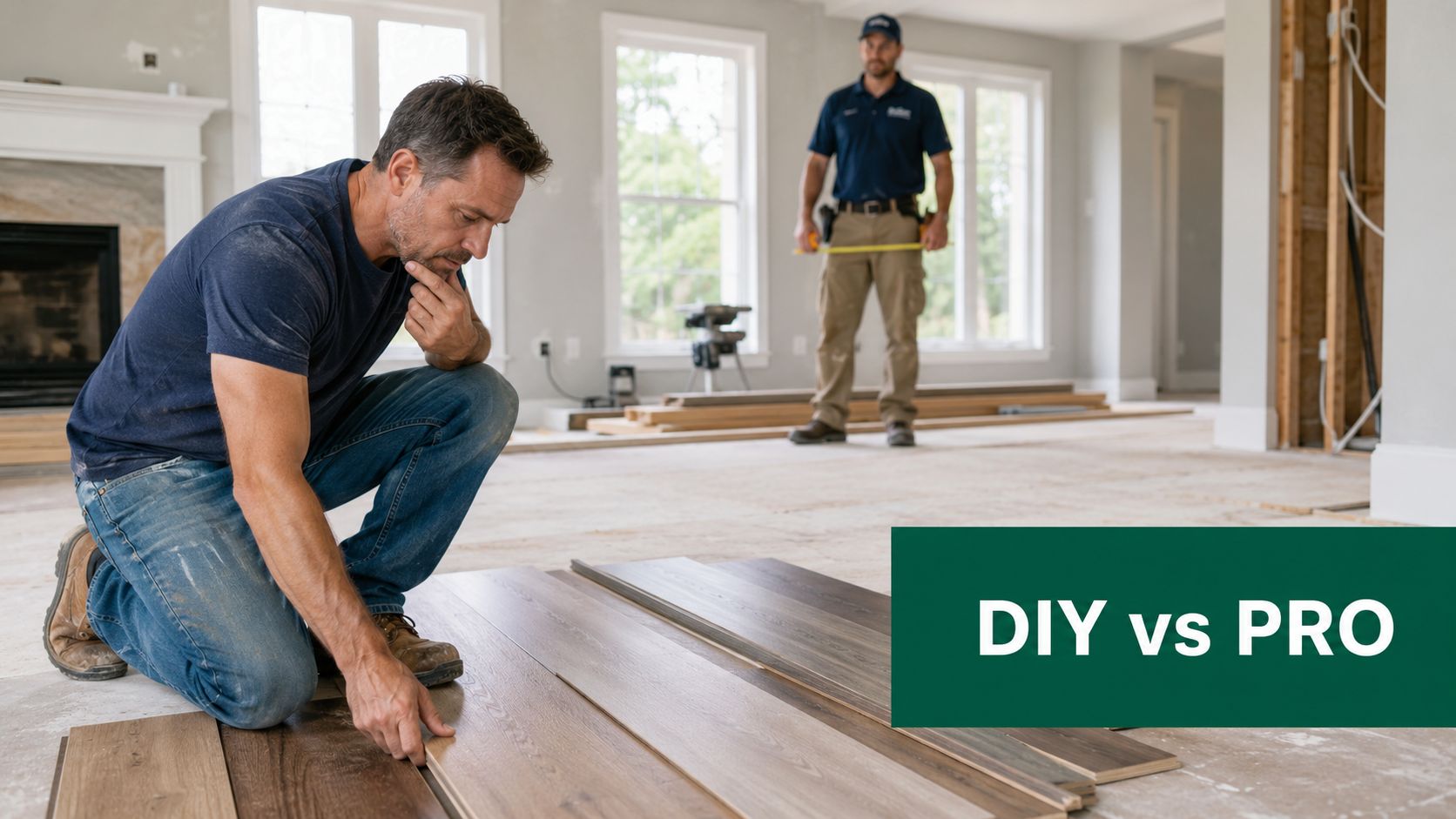
DIY laminate can work in the right room. I would limit it to dry, simple spaces with a flat subfloor, few cuts, and no tricky transitions. A square guest room is very different from a main level with offsets, appliance clearances, old trim, and traffic flowing into other finishes.
The actual comparison is not just labor cost versus no labor cost. It is total ownership cost. If a DIY job leaves bounce in the floor, chipped edges at cuts, or weak transitions, the floor often shows wear sooner and gets replaced sooner. That is one reason many Richmond homeowners who start by pricing laminate end up asking harder questions about whether LVP or hardwood will hold up better for the next ten to twenty years.
Professional installation usually earns its value in four places:
- Layout planning that avoids awkward plank repeats and narrow finish rows
- Subfloor prep so the floor feels solid underfoot
- Detail cuts around vents, casings, and fireplaces that look intentional
- Transition work where laminate meets tile, stairs, or existing hardwood
Those details matter more in older Richmond homes than online calculators suggest.
A weekend DIY project also has a time cost. Homeowners still have to move furniture, pick up waste, solve tool gaps, and fix mistakes that are easy to hide in the box but hard to hide on the floor. If you want a clearer picture of what hiring out looks like locally, this page on flooring installation in Richmond gives useful context.
This project video shows how quickly a flooring job expands once real-world items get added.
There is also the resale side. Floors influence how buyers read the whole house, especially in kitchens, entryways, and main living areas. If resale is part of your decision, this guide on types of flooring that attract buyers is worth reviewing before you commit to the lowest upfront option.
Saving on installation only helps if the floor performs well after the furniture goes back in.
How Laminate Compares to LVP and Hardwood Floors
The smarter comparison isn't just laminate versus laminate. It's laminate versus the floors that compete for the same budget conversation.
Laminate and LVP aren't interchangeable
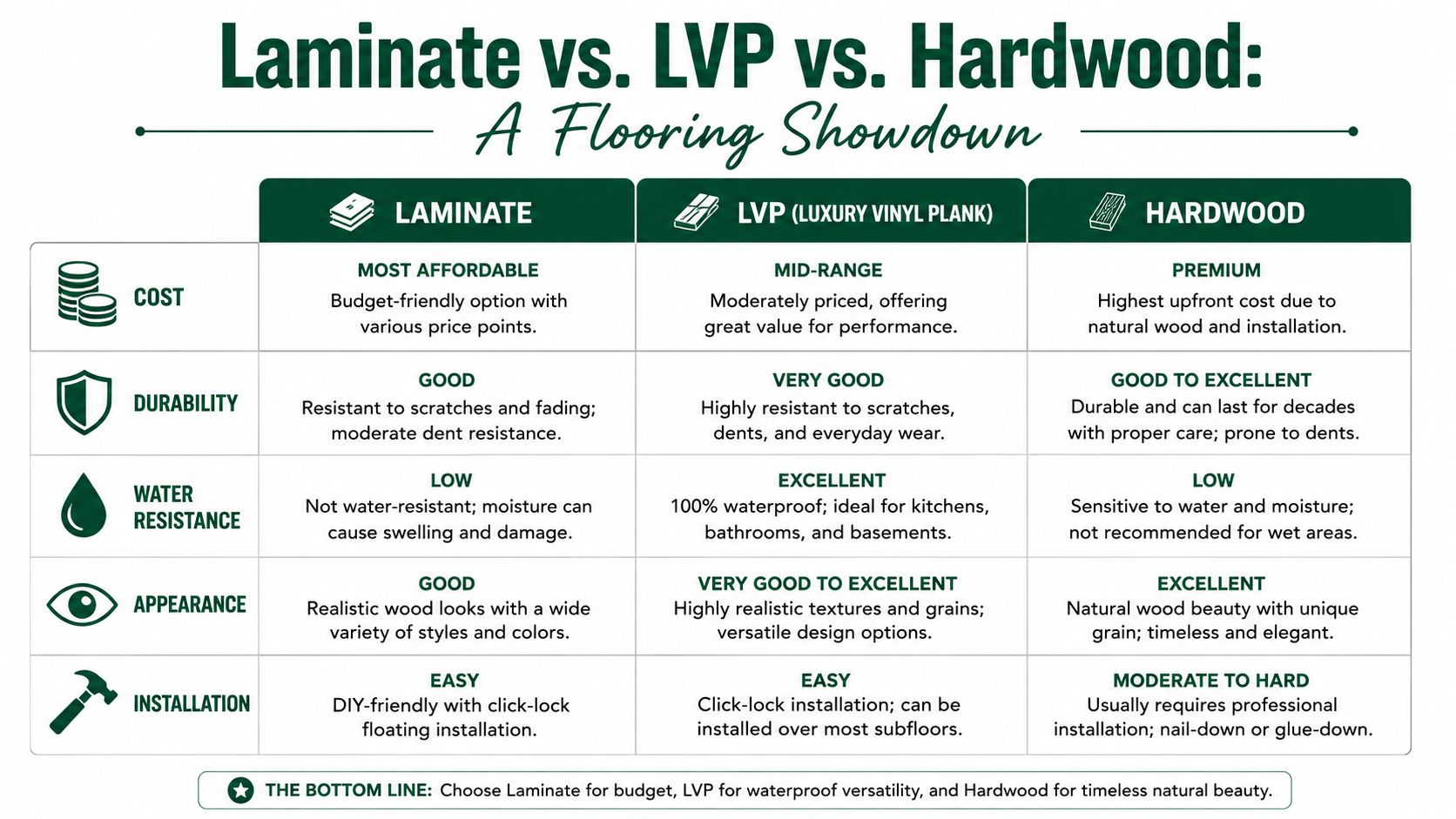
Laminate can look good in dry, low-risk rooms. But in kitchens, basements, laundry areas, entry zones, and homes with pets or frequent spills, LVP usually gives homeowners a more forgiving floor. That's one reason many people searching for floor installation Richmond end up shifting from laminate to vinyl after they think through room use instead of just sticker price.
If you're sorting through those two products, this explanation of the difference between vinyl and laminate is worth reading before you buy anything.
Hardwood changes the ownership equation
Hardwood costs more up front than laminate, but it plays by a different set of rules. A worn hardwood floor can often be renewed instead of replaced. For light wear, buffing and recoating costs $1.00 to $2.50 per square foot, while a full refinish for heavy wear ranges from $2.00 to $7.00 per square foot, according to Footprints Floors Richmond's hardwood refinishing pricing.
That's a major difference in total cost of ownership.
Laminate doesn't give you a true buff and coat service option. It also doesn't offer real wood floor recoating or full hardwood floor restoration. Once the surface is damaged beyond minor plank replacement, the practical path is replacement. Hardwood gives you maintenance paths. Laminate usually doesn't.
A practical way to choose
Consider each option by how you plan to live on it:
- Choose laminate when the room is dry, the budget is tighter, and you want a wood-look surface without stepping into hardwood pricing.
- Choose LVP when water resistance and easier daily maintenance matter more than a harder, more wood-like feel.
- Choose hardwood when long-term value, repairability, and the option for future hardwood floor refinishing matter most.
For resale-minded homeowners, flooring choice also affects how buyers read the house. This overview of types of flooring that attract buyers is a useful outside perspective.
In Richmond VA, that long-term view matters. Older homes, established neighborhoods, and move-up buyers tend to reward floors that age well and can be renewed instead of discarded.
Why Richmond Homeowners Choose Buff & Coat
Homeowners looking for floor refinishing Richmond VA, dustless sanding, hardwood floor repair, or a reliable installer usually want the same thing. Straight answers, clean work, and a floor that holds up.
Buff & Coat Hardwood Floor Refinishing serves Richmond, Midlothian, Chesterfield, Henrico, Glen Allen, Short Pump, Mechanicsville, and occasional projects in Charlottesville, Fredericksburg, and Virginia Beach. Homeowners choose them because they offer:
- 15 years in business
- Dustless sanding systems
- Local, owner-operated service
- High-quality finishes
- Clear pricing and honest advice
- 5-star customer service
If you're unsure whether laminate, LVP, or hardwood makes more sense for your home in Richmond VA, getting a clear assessment first usually saves money and frustration later. Call 804-392-1114 or request a free estimate today.
Frequently Asked Questions About New Flooring
Is underlayment always necessary under laminate
Most laminate jobs need the right underlayment or pad system for support, sound control, and separation from the subfloor. The exact product depends on the laminate you choose and what it's being installed over. On concrete, moisture control becomes a bigger issue. In many Richmond VA homes, underlayment isn't an upgrade. It's part of doing the job correctly.
Is laminate a good choice for kitchens and bathrooms
It can work better in some kitchens than in bathrooms, but moisture is the deciding issue. If water sits at seams, laminate is more vulnerable than LVP. For homes with kids, pets, or frequent spill risk, many installers steer homeowners toward LVP in those spaces.
How long does professional installation take
The timeline depends on room size, furniture, demolition, and subfloor condition. A simple room moves much faster than a house with removal, leveling, and trim replacement. The planning mistake homeowners make is assuming install time only includes laying planks. Prep and finish details often decide the actual schedule.
Can laminate be repaired if it gets damaged
Minor isolated damage can sometimes be addressed by replacing specific boards, but that depends on access and whether matching material is still available. Laminate doesn't offer the same repair path as real wood. It isn't a candidate for engineered hardwood refinishing, hardwood floor scratch repair, or full sanding and recoating.
When does hardwood make more sense than laminate
Hardwood makes more sense when you care about long-term value, repair options, and keeping the floor for many years. If your concern is total ownership cost, not just installation day price, hardwood often deserves a serious look. That's especially true in Richmond VA neighborhoods where original wood floors already fit the character of the home.
If you're weighing laminate against a more durable option, Buff & Coat Hardwood Floor Refinishing can help you sort through the actual trade-offs. Ready to restore your hardwood floors? Buff & Coat makes the process fast, clean, and stress-free. Call 804-392-1114 or request your free estimate at buffandcoatvirginia.com.