

Home Blog What’s the Difference Between Vinyl and Laminate: 2026 Guide
What’s the Difference Between Vinyl and Laminate: 2026 Guide

If you're standing in your Richmond home looking at tired floors and wondering whether to install something new or save what's already there, you're not alone. This is usually the point where homeowners start asking what's the difference between vinyl and laminate, and if either makes more sense than hardwood floor refinishing in Richmond VA.
The right answer depends on moisture, sunlight, subfloor condition, and whether you already have real wood worth saving. A floor that works great in one room can be the wrong investment in the next.
Your Flooring Dilemma New Floors vs Refinishing
A lot of Richmond homeowners start in the same place. The floor has scratches from dogs, worn finish in the hallway, dull spots near the kitchen, or boards that just look dated. The immediate reaction is often to cover it up with new flooring.
Sometimes that makes sense. Sometimes it doesn't.
The decision usually comes down to three options:
| Option | Best fit | Main strength | Main drawback |
|---|---|---|---|
| Refinish existing hardwood | Floors are real wood and structurally sound | Keeps authentic wood and updates the look | Not every floor is a candidate |
| Laminate | Dry rooms where appearance matters most | Realistic wood look and strong scratch resistance in dry conditions | Not suited for high-moisture spaces |
| Vinyl LVP or LVT | Kitchens, baths, basements, busy households | Fully waterproof and practical | Can show more UV color shift in very sunny rooms |
In older Richmond VA homes, it's common to find solid hardwood under worn finishes or under later flooring layers. In newer homes around Midlothian, Henrico, and Short Pump, the question is often whether to install LVP for convenience or choose laminate for a more wood-like look.
One of the biggest mistakes homeowners make is comparing only the showroom sample. The better approach is to compare the room, the daily use, and the long-term value of the decision. If you're weighing replacement against restoration, this guide on hardwood floor refinishing vs replacing is worth reading before you commit.
Practical rule: If you already have real hardwood, check whether it can be restored before you pay to cover it.
What Are They Made Of Laminate vs Vinyl Composition
Laminate and vinyl can look surprisingly similar once they're installed. Under the surface, they are not the same product.
How laminate is built
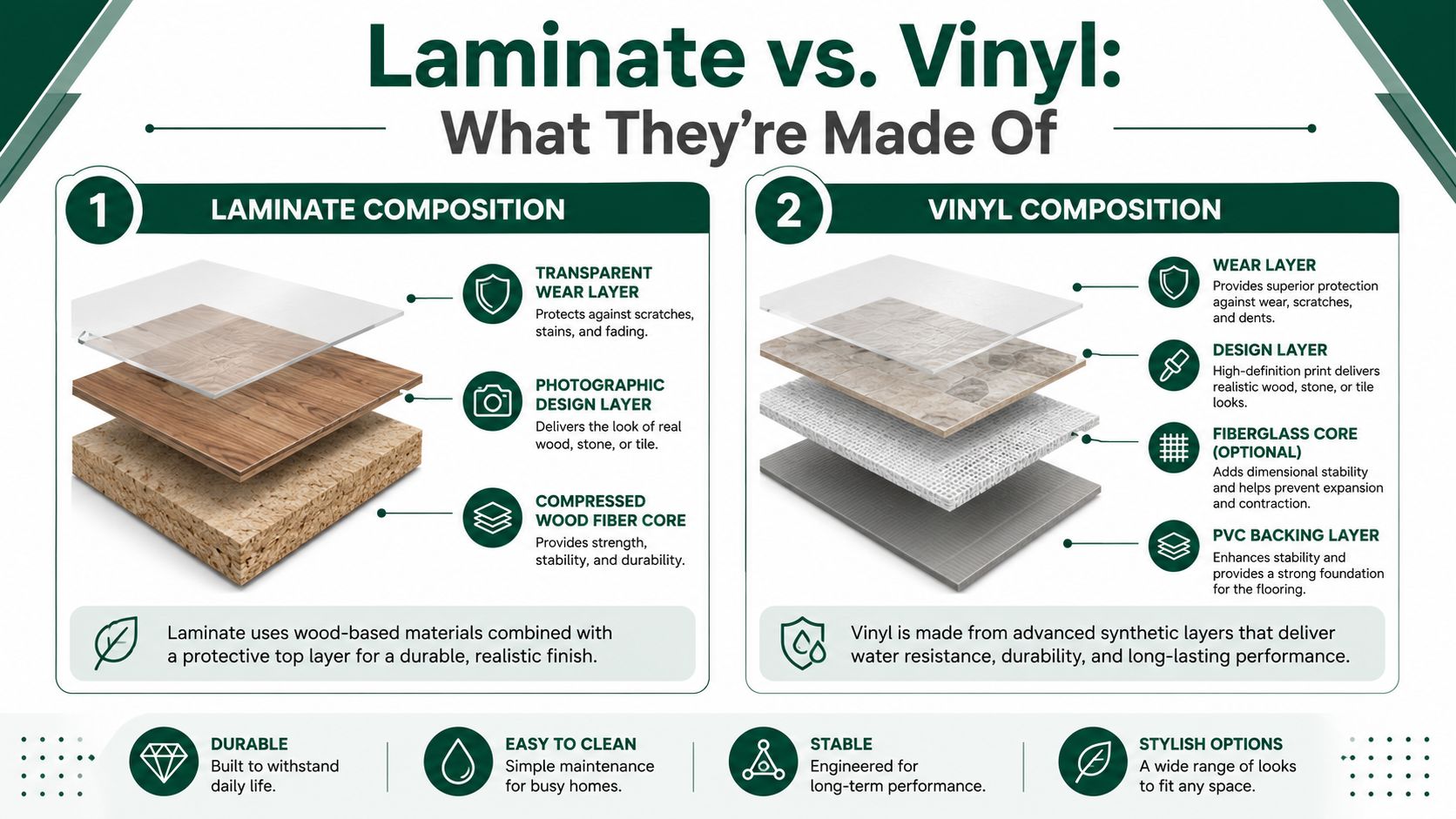
Laminate is a layered product built around a wood-based core, usually high-density fiberboard. On top of that core sits a printed design layer, then a clear wear layer that takes the abuse from daily traffic.
Its durability is commonly described by the Abrasion Classification rating, which runs from AC-1 for light residential use to AC-5 for heavy commercial traffic, as explained in this laminate and vinyl flooring breakdown from Floor & Decor.
That wood-fiber core is also the reason laminate behaves more like an engineered wood product than a plastic floor. It often feels firmer and more wood-like underfoot.
How vinyl is built
Luxury Vinyl Plank and Luxury Vinyl Tile are synthetic products. Their core is made from PVC or a more rigid composite such as SPC, which is one reason vinyl performs so differently around water.
That same Floor & Decor reference explains that vinyl's core makes it 100% waterproof, while laminate's resin-bound HDF core can swell and delaminate if water gets into it. That's the material difference that matters most in real homes.
Think of it this way. Laminate is closer to a compressed wood panel with a highly durable face. Vinyl is closer to a layered plastic product made to resist moisture and movement.
Why the core matters in daily life
The composition affects everything else:
- Spills and humidity: Vinyl handles them far better because the core doesn't absorb water.
- Feel underfoot: Laminate usually feels more like a wood floor because of its denser fiber-based construction.
- Placement: Laminate belongs in dry spaces. Vinyl works where wet shoes, pet bowls, laundry mishaps, and basement humidity are part of normal life.
If you're comparing products for a new install, this overview of vinyl flooring options helps clarify where LVP and LVT fit best.
A flooring sample tells you what it looks like. The core tells you how it'll live in your house.
The Real-World Durability Test Water Scratches and Sunlight
Most homeowners hear the word "durable" and assume it means one floor wins across the board. It doesn't. Durability changes depending on what you're asking the floor to survive.
Water exposure
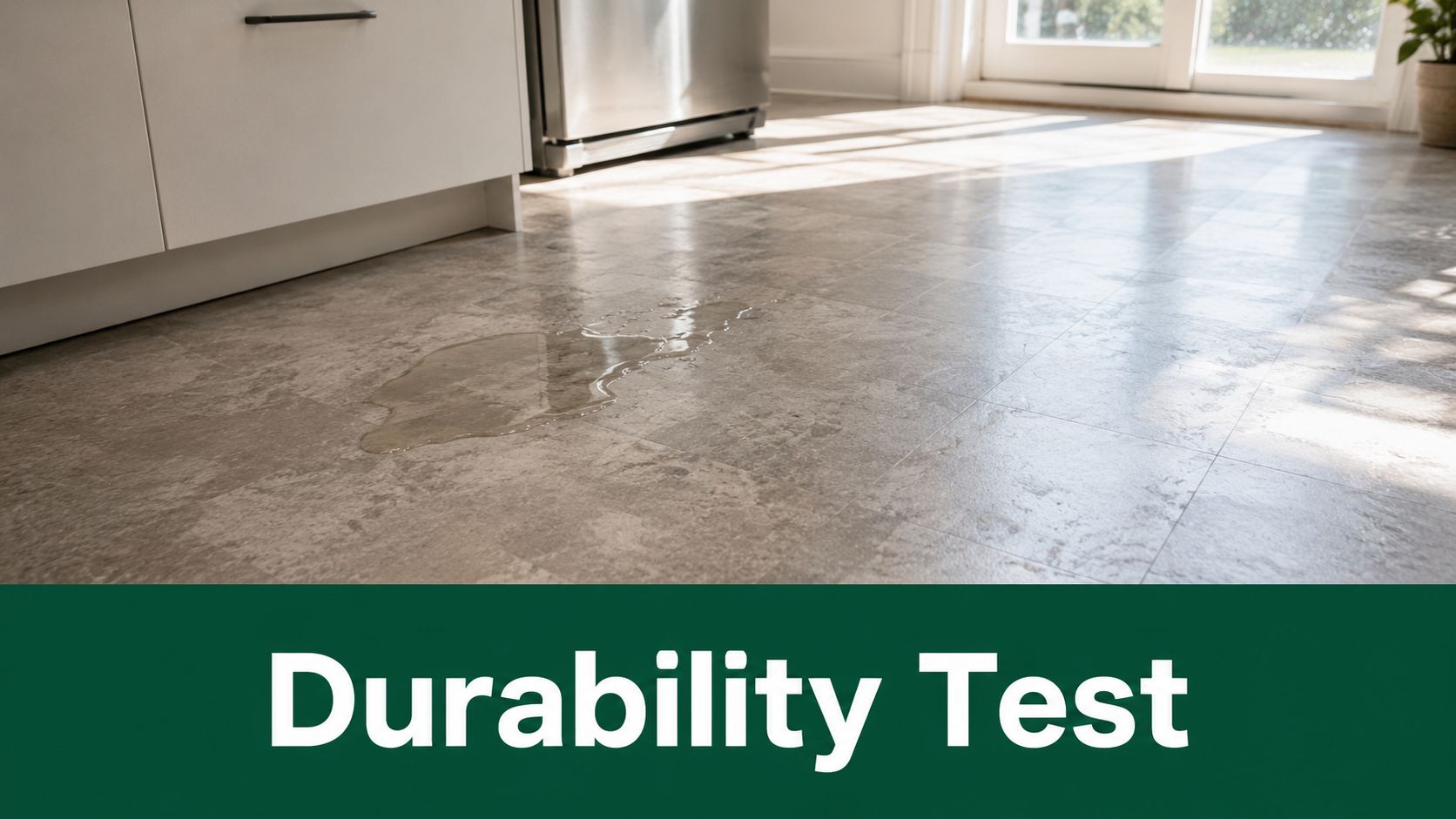
If the room sees regular moisture, vinyl is the safer choice. Kitchens, bathrooms, laundry spaces, mudrooms, and basements all push flooring in the same direction. Water gets into seams, around appliances, near tubs, and under exterior doors.
Laminate is different. It may offer spill protection for a limited window, but once moisture reaches the core, swelling and delamination are the primary risk. That's why a floor that looks fine after a quick wipe-up can still fail if water repeatedly works into the joints.
For homeowners with kids, dogs, and daily messes, it's also smart to understand home impacts with children and pets before choosing a floor only by appearance.
Scratches and dents
In dry spaces, laminate often has an edge on scratch resistance because of its hard wear layer and AC rating system. That can make it attractive for living rooms, bedrooms, and hallways where the main issue is foot traffic rather than moisture.
Vinyl handles impact differently. It generally deals better with the realities of dropped items, rolling loads, and busy traffic patterns, especially when the product has a rigid waterproof core. In homes with heavy chairs, kitchen stools, and constant movement, that matters.
Here's a useful visual overview of how these floors perform in everyday use:
Sunlight is the overlooked issue
This is the durability detail many comparison guides skip.
In sunny rooms, vinyl can lose its visual appeal faster than people expect. According to this laminate vs vinyl fade comparison from Country Wood Floor, vinyl's PVC core and printed image layer are more prone to UV-related color shifting, while laminate's thermally fused print layer has better fade resistance. The same source notes 15 to 20 percent faster color degradation for vinyl in high-UV areas.
That matters in Richmond VA homes with big front windows, skylights, or rooms that get hard afternoon sun. A floor can be waterproof and still be the wrong choice for a bright dry room if maintaining color matters to you.
Sun exposure changes the conversation. In a bright living room, laminate often ages better visually than vinyl.
Service life in plain terms
High-quality laminate generally lasts 10 to 25 years, and quality luxury vinyl can also reach that range, with some warranties extending to 20 to 25 years, according to this flooring comparison from Word of Mouth Floors. Thin vinyl products may fail sooner as the wear layer breaks down.
So if you're asking what's the difference between vinyl and laminate on durability, the honest answer is simple:
- Water: vinyl wins
- Dry scratch resistance: laminate often wins
- Sunny rooms: laminate often looks better longer
- Dents and hard-use commercial-style traffic: vinyl often holds up better
Comparing Appearance and Style Options
Appearance is where many homeowners hesitate. Two products may perform well, but only one feels right in the room.
Where laminate looks stronger
If your goal is a wood look that feels more convincing, laminate usually has the advantage. Its image layer and textured surface often create a sharper grain pattern and a more believable hardwood look.
That matters in classic Richmond neighborhoods where homeowners want a floor that fits older trim, traditional millwork, and a warmer interior style. In those settings, laminate often blends better than a plastic-looking plank, especially in dry areas like studies, bedrooms, and formal living rooms.
Laminate also tends to feel a bit less hollow underfoot than some thinner synthetic floors. That's a comfort issue as much as a style issue.
Where vinyl gives you more range
Vinyl's strength is flexibility in design. If you want a wood look, you can get it. If you want the look of slate, ceramic, or stone without installing actual tile, vinyl opens up more options.
That makes it useful in practical rooms where aesthetics still matter:
- Bathrooms: stone or tile look without a cold hard tile floor
- Basements: consistent design with better moisture performance
- Kitchens: wood visuals with easier cleanup
- Laundry rooms: a more finished look than sheet goods
Matching the house, not the trend
The right floor should fit the architecture and the way the room is used.
A few common matches in Richmond VA homes:
- Older Fan or Museum District homes: refinished hardwood usually fits best if it's salvageable
- Suburban family homes in Chesterfield or Glen Allen: LVP often makes sense in busy kitchens and entry areas
- Bright rooms with lots of sun exposure: laminate deserves a closer look
- Basements and lower levels: vinyl is usually the safer call
Style isn't only about the sample board. It's about whether the floor still looks right after years of sunlight, foot traffic, furniture, and real life.
Installation and Total Cost in the Richmond Area
Material price doesn't tell you the actual project cost. Installation details, transition work, subfloor condition, and door clearances can change the budget quickly.
The subfloor myth
A common sales pitch is that thicker laminate is more forgiving over an imperfect subfloor. There's some truth in that, but homeowners often hear only half the story.
According to this discussion on laminate, vinyl, and transition costs in older homes, laminate in the 8 to 12 mm range often creates transition issues, while thin vinyl in the 4 to 6 mm range is more compatible with a zero-transition approach. In older Richmond VA homes, that extra height can mean awkward edges and extra adjustment work where one flooring surface meets another.
That matters more than people expect.
Hidden costs that show up late
The floor itself may not be the expensive surprise. The transition work often is.
The same source notes that thicker laminate may require a 1/4-inch grade reduction at doorways and can trigger $15 to $30 per linear foot in trimming or undercutting costs. That's exactly the kind of budget item generic flooring guides leave out.
If you're renovating in Richmond VA, especially in older homes with uneven framing or multiple flooring layers, ask about these issues before choosing material by sample alone.
Jobsite reality: A floor that seems cheaper per square foot can cost more once you start solving doorway heights and transitions.
What professional installation changes
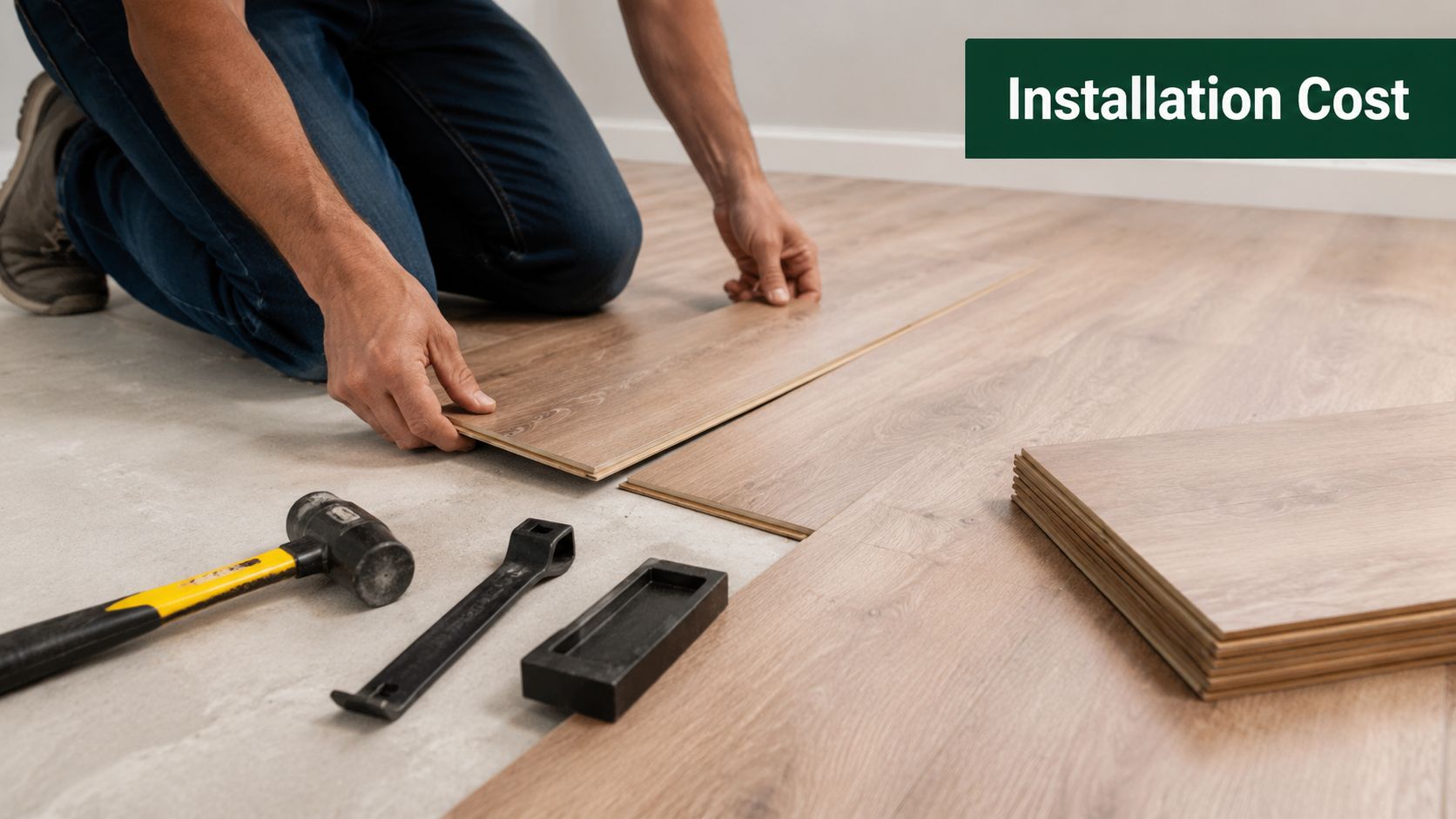
Both laminate and vinyl are marketed as click-lock products, and many homeowners assume that means a quick DIY job. The click system is the easy part. The subfloor prep, layout, cuts, and transitions are where projects either look finished or look amateur.
A good install starts with:
- Checking flatness, not just whether the floor "looks level"
- Planning transitions at doorways, stairs, and adjoining rooms
- Choosing the right thickness for the house, not just the nicest sample
- Matching the product to the room's moisture and sunlight conditions
If you're pricing a new floor installation in Richmond, it's worth reviewing this guide on how much flooring installation costs so you can compare proposals on the full scope, not just material.
Cost versus value
In plain English, vinyl often wins the total-cost conversation when the project involves older thresholds, uneven surfaces, or moisture-prone rooms. Laminate can still be a strong value in dry areas with a clean subfloor and fewer transition complications.
And if real hardwood is already in place, replacement may not be the best value at all. In many homes, restoring what's there is the smarter investment.
The Final Verdict A Decision Checklist
By the time most homeowners compare water resistance, sunlight, style, and install complexity, the answer gets clearer. The trick is to match the floor to the room instead of looking for one universal winner.
Choose vinyl if your house needs practicality first
Luxury vinyl plank or tile is usually the better fit when the room deals with moisture, routine spills, or hard daily use.
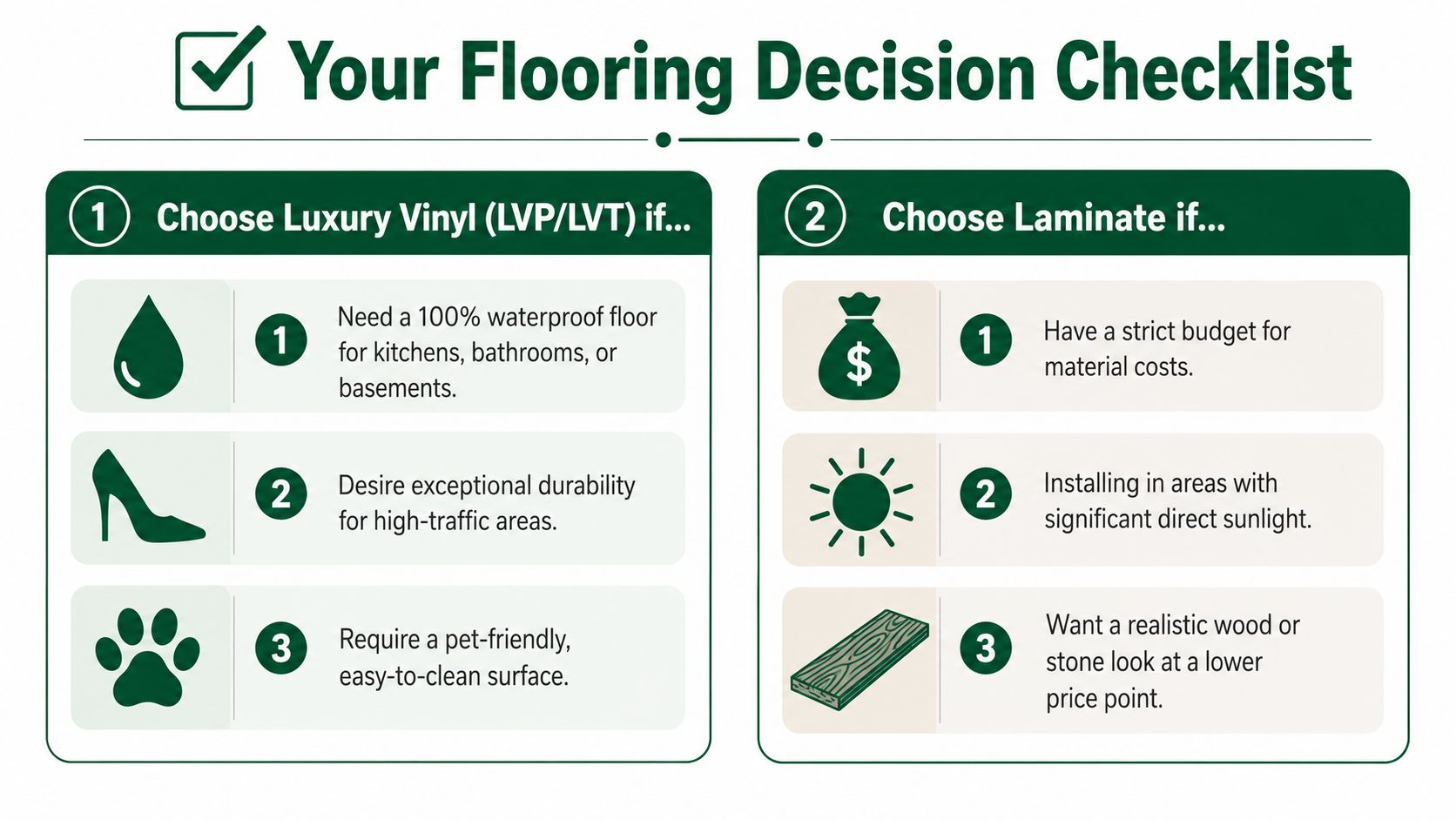
Choose vinyl when:
- Water is part of the room. Kitchens, bathrooms, basements, mudrooms, and laundry areas are natural LVP or LVT zones.
- You want easier transitions. In many homes, the thinner profile is easier to work with.
- You need a tougher floor for impact. Vinyl tends to handle dents and heavy-use conditions well.
- You want tile or stone visuals without actual tile.
Choose laminate if the room is dry and bright
Laminate makes more sense where appearance and scratch resistance in a dry environment matter most.
Choose laminate when:
- The room stays dry.
- You want the most convincing wood look.
- You have large sunny windows and care about fade resistance.
- The subfloor is in good enough condition to support a clean installation.
Laminate is often a strong fit for bedrooms, living rooms, upstairs hallways, and home offices in Richmond VA where water exposure isn't the main issue.
Refinish hardwood if you already have the real thing
This is the option too many homeowners overlook.
If the existing floor is genuine wood and still structurally sound, refinishing often beats covering it. You keep the character, the grain, and the long-term value of real hardwood. You can also change stain color, remove surface damage, and bring old floors back into the style of the house.
For families worried about mess, modern dustless sanding has changed the experience. Dustless hardwood floor refinishing uses industrial HEPA vacuum systems attached to the sanding equipment and captures 95 to 99 percent of dust at the point of creation, as described in this explanation of dustless hardwood floor refinishing and HEPA capture.
If the hardwood underneath is worth saving, refinishing is often the best-looking floor in the house because it's the only real wood floor in the conversation.
A quick decision filter
If you're still split, use this simple checklist:
| Your priority | Best direction |
|---|---|
| Waterproof performance | Vinyl |
| Most realistic wood appearance in a dry room | Laminate |
| Best answer for existing real wood floors | Refinishing |
| Easier cleanup for pets and wet areas | Vinyl |
| Better visual aging in sunny dry rooms | Laminate |
| Strongest resale impression | Refinished hardwood |
For homeowners researching wood floor recoating, buff and coat service, or full hardwood floor restoration in Richmond VA, in this situation, the bigger question matters most. Don't replace a floor that only needed restoration.
Frequently Asked Questions About Flooring Choices
Which option is more environmentally friendly
There isn't a simple winner. Laminate uses wood byproducts but also includes resins and synthetic layers. Vinyl is a plastic-based product, though its durability can make it a practical long-term floor in the right setting.
In many homes, the most resource-conscious option is restoring an existing wood floor instead of tearing it out and replacing it. A buff and coat service or full refinishing uses what you already have.
What adds more resale value
In most homes, beautifully restored hardwood makes the strongest impression. Buyers tend to recognize real wood immediately.
High-quality vinyl can still be a smart update, especially in basements, kitchens, and utility-heavy areas. Laminate is usually viewed more as a practical cosmetic upgrade than a premium feature.
Can engineered hardwood be refinished
Sometimes, yes. It depends on the thickness of the top wood layer. Some engineered floors can handle refinishing, while others can't.
This is where an on-site assessment matters. If you're researching engineered hardwood refinishing, don't guess based on the sample or product listing.
What's the difference between a buff and coat and full refinishing
A buff and coat is a maintenance service for floors with surface wear but no deep damage. It cleans up the existing finish and applies a new protective coat.
Full sanding and refinishing removes the old finish and addresses deeper wear. Sandless refinishing is not true refinishing. It's a cleaning and recoating process and won't correct deep scratches, gouges, or unevenness, as discussed in this sandless vs sanding floor refinishing discussion.
How long does refinishing take
The timeline depends on the size of the space, floor condition, repair needs, and finish system. If you're asking how long does refinishing take, the best answer comes after someone sees the floor in person. The same is true for refinishing cost and whether you need hardwood floor scratch repair or full sanding.
Why Richmond Homeowners Choose Buff & Coat
Choosing between vinyl, laminate, and hardwood floor refinishing isn't only about products. It's also about getting honest guidance from someone who understands old Richmond homes, newer subdivisions, and the trade-offs that don't show up on a showroom display.
Buff & Coat Hardwood Floor Refinishing is a Richmond-based floor refinishing and installation company with 15+ years of experience serving Richmond, Midlothian, Chesterfield, Henrico, Glen Allen, Short Pump, Mechanicsville, and occasional jobs in Charlottesville, Fredericksburg, and Virginia Beach.
Homeowners choose Buff & Coat because they offer:
- 15 years in business
- Dustless sanding systems
- Local, owner-operated service
- High-quality finishes
- Clear pricing and honest advice
- 5-star customer service
They handle dustless sanding, buffing and coating, hardwood floor installations, LVP and LVT installs, and repair work. If you're looking for the best hardwood floor contractor in Richmond, need floor refinishing in Richmond VA, or want straightforward advice on whether to refinish or replace, that's the kind of experience that helps you avoid expensive mistakes.
Ready to restore your hardwood floors? Buff & Coat Hardwood Floor Refinishing makes the process fast, clean, and stress-free. Call 804-392-1114 or request your free estimate at buffandcoatvirginia.com.


