

Home Blog Fixing Damage Hardwood Floors: Richmond VA Guide 2026
Fixing Damage Hardwood Floors: Richmond VA Guide 2026

Richmond homeowners usually notice floor damage the same way. You catch a scratch in the afternoon light, see a dark ring near the dog bowl, or feel a board lift slightly under your sock. If you're trying to figure out whether damage hardwood floors can be repaired, the good news is that many problems can be improved, and some can be fixed completely with the right approach.
Hardwood floor refinishing, hardwood floor repair, and wood floor recoating each solve different problems. In Richmond VA, the right answer depends on what caused the damage, how deep it goes, and whether moisture is still active under the floor.
Your Guide to Hardwood Floor Damage in Richmond
A lot of floor problems start with one small moment. A chair gets dragged across oak in the dining room. A plant leaks in a sunny front room. A piano gets moved across the floor without enough protection. If you're planning a heavy move, working with expert piano movers can prevent the kind of gouges and crushed grain that are hard to hide later.
In older Richmond homes, the first visible mark isn't always the whole story. That dull traffic lane in a Fan row house, or a cupped board near a back door in Henrico, may be telling you that finish has worn thin or moisture has been moving through the house for a while.
Homeowners looking into floor refinishing Richmond VA usually want the same thing. They want straight answers. Can the floor be saved? Is this a buff and coat service job, a full sand job, or partial board repair? And how disruptive will it be to the house?
Practical rule: The sooner you identify the type of damage, the more options you usually have.
A Visual Guide to Common Hardwood Floor Damage
A Richmond floor usually tells its story in plain sight. You see a dull path from the back door to the kitchen, a black ring under a plant, or boards that look slightly raised after a wet summer week. The trick is knowing which marks are cosmetic, which ones mean moisture, and which ones usually turn into a bigger repair if they sit too long.
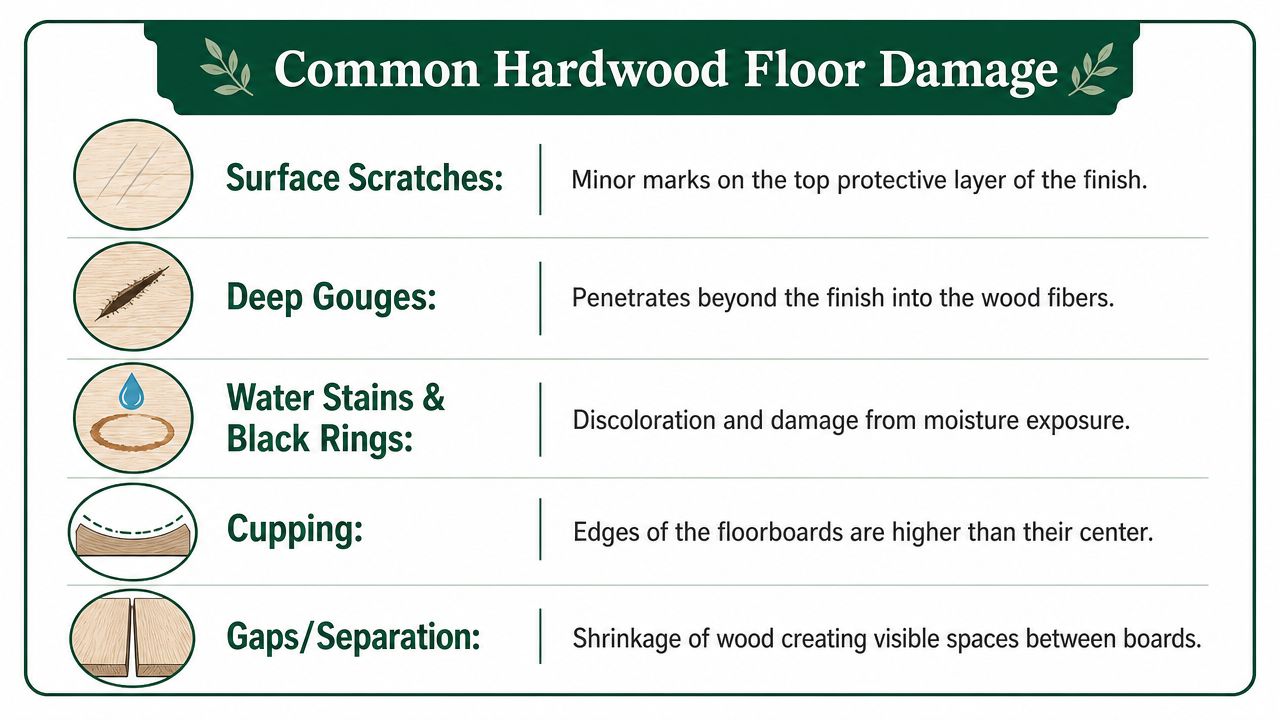
Surface scratches and deep gouges
A surface scratch stays in the finish. It often looks white or hazy and shows up where dogs turn corners, chairs slide back, or grit gets tracked in from a porch or sidewalk. In many Richmond homes, especially older ones with softer worn finish, these marks build up fast around entries and dining rooms.
A deep gouge is different. It cuts into the wood fibers, leaves a darker line, and usually feels rough or sharp to the touch. Moving furniture, dropped tools, and heavy items dragged across the floor are common causes. In a historic home with original oak or pine, gouges also stand out more because the surrounding patina makes fresh damage obvious.
Water stains and black rings
Water damage rarely looks the same twice. A cloudy white patch often means moisture got trapped in or under the finish. A dark brown or black mark usually means the water sat long enough to react with the wood.
That distinction matters in Richmond. Summer humidity, damp crawlspaces, old windows, and small plumbing leaks in older houses can all feed the same problem. A single stain may be isolated, or it may be the first visible sign that moisture has been moving through that area for a while.
Cupping and related warping
Cupping shows up when board edges rise higher than the center. You notice it most in low-angle light or when socks catch a slight ridge walking across the room. It often appears near exterior doors, window walls, kitchens, basements, or over crawlspaces.
This kind of movement usually points to a moisture imbalance, not just normal wear. In Richmond, I see it after humid stretches, HVAC issues, and slow leaks that went unnoticed under sinks or around appliances. If boards progress from lightly cupped to visibly distorted, the repair plan changes fast.
Sun fading and discoloration
Sunlight changes wood color over time, and wide front windows can make it obvious. Pull up an area rug and the floor underneath may be noticeably lighter. Cherry tends to deepen. Some oaks yellow or amber. Dark-stained floors can fade unevenly.
This is usually an appearance issue rather than a structural one, but it still affects repair choices. Spot work on sun-faded floors is hard to blend because the exposed and protected areas have aged differently.
Finish wear in traffic lanes
Finish wear is often the damage homeowners overlook the longest. The floor still feels solid, so it gets put off. Then the sheen disappears, the color turns dry or gray in walking paths, and bare wood starts taking the abuse instead of the finish.
That is the point where a simpler service may still be possible, depending on how far the wear has gone. If you want a realistic sense of what that progression looks like, these examples of refinishing hardwood floors before and after are a useful reference.
Gaps, dents, and mixed damage
Some floors show more than one issue at once. Seasonal gaps may open in winter. Dents show up under chair legs or dropped cookware. A hallway can have finish loss, light scratching, and a few isolated gouges all in the same ten feet.
That mix is common in Richmond homes because age, humidity swings, pets, traffic, and previous repairs all leave their mark differently. The floor rarely needs one simple label. It needs the right call on what is superficial, what is permanent, and what can still be corrected without a full refinishing job.
How Bad Is It? Assessing the Severity of Floor Damage
The right repair starts with a simple question. Is the issue cosmetic, or is the floor telling you something deeper about moisture, movement, or crushed wood fibers?
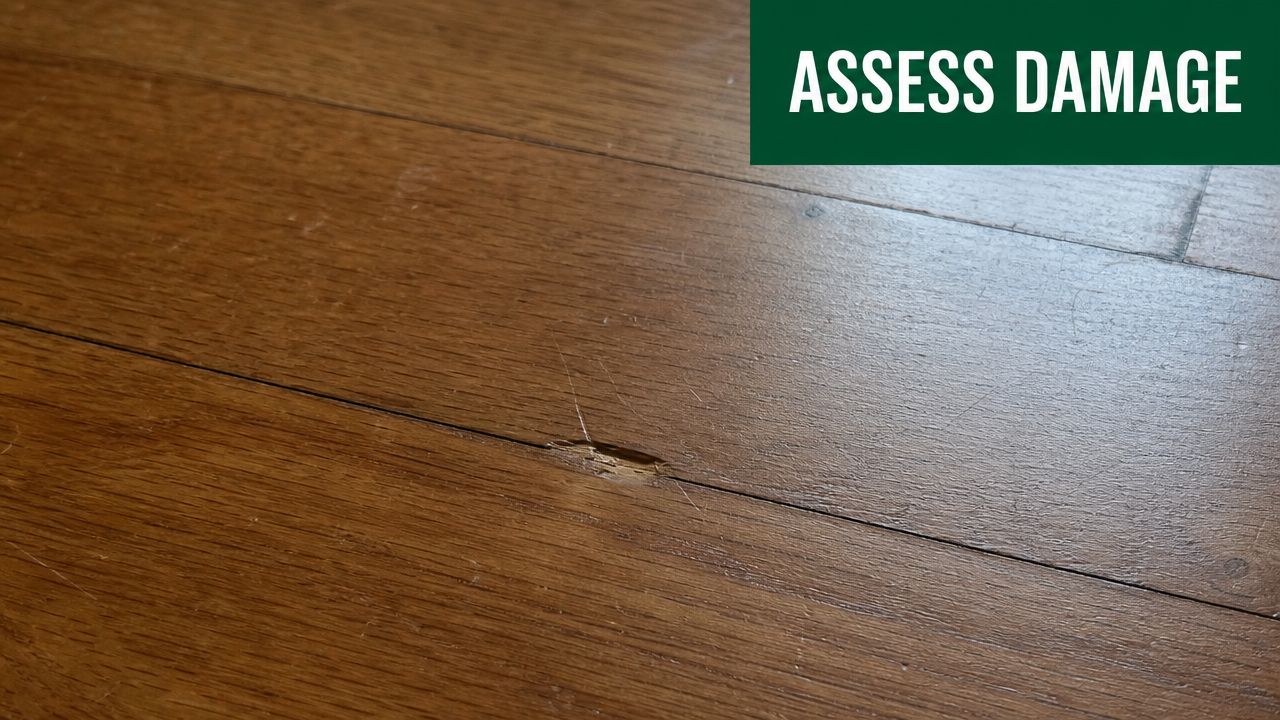
A few homeowner checks that help
Try the fingernail test on a scratch. If your nail barely catches and the mark looks white or cloudy, it may be mostly in the finish. If your nail drops into the line and you can feel torn grain, you're dealing with wood damage, not just finish wear.
Look at water spots from the side. If the board surface still looks flat and only the color changed, the damage may be more limited. If the board edges are lifting, the finish is separating, or the stain keeps growing, assume moisture is still involved until proven otherwise.
Walk slowly across the area. A creak doesn't always mean disaster, but movement matters. Denting is a mechanical failure where pressure crushes the wood grain, and even strong finishes can't prevent that. Squeaks and hollow spots also show up in 10 to 15% of cases, often tied to humidity-driven movement or subfloor issues, as described in this floor damage video explanation.
Signs that usually need a pro
Some issues are worth getting checked before you spend money on the wrong fix.
- Boards are lifting or changing shape. That points away from simple hardwood floor scratch repair and toward moisture diagnosis.
- Black staining is deep and widespread. Surface cleaning won't solve wood that has absorbed contamination.
- You hear movement underfoot. Hollow spots, seam friction, and subfloor problems often need more than a touch-up.
- Damage repeats after weather changes. Seasonal swings can expose installation or humidity problems.
If you're not sure whether a floor still has enough life for hardwood floor refinishing, this guide on how to tell if hardwood floors can be refinished is a good starting point.
If the floor changed shape, don't rush to sand it. Fixing moisture after sanding often means paying for the job twice.
If you're unsure whether your hardwood floors need refinishing or repair, call 804-392-1114 and get an honest opinion before the damage spreads.
Your Restoration Roadmap DIY Triage vs Professional Repair
You notice a dull traffic lane by the kitchen, a couple of scratches near the chairs, and one board by the back door starting to look a little off. That is the point where a smart first decision saves money. In Richmond, I see homeowners do well when they sort the problem before they buy products, rent equipment, or start sanding.
Some jobs are fine to handle yourself. Some get more expensive after a well-meaning weekend fix.
What you can usually handle yourself
Small, stable issues are the DIY zone.
- Light surface scuffs can often be improved with a color-matched touch-up product made for prefinished wood.
- Fresh spills should be dried right away, especially around board seams and near exterior doors.
- Tracked-in grit needs regular sweeping or vacuuming with a hardwood-floor attachment.
- Chair legs and furniture feet should have felt pads before they leave a pattern of scratches and dents.
That is upkeep, not restoration. It helps protect the floor while you decide whether the finish only needs refreshing or the wood itself needs repair.
Where DIY usually goes wrong
Rental sanding machines remove material fast. A slight pause can leave a low spot. Poor edge work can leave a visible halo around the room. Once that happens, the fix is usually a full professional sanding job, even if the original problem was minor.
Moisture causes the bigger mistakes. Richmond homes deal with humid summers, older crawlspaces, and plenty of houses where air movement under the floor is less than ideal. If boards are cupping, lifting, or staining dark, the first job is finding the moisture source and getting things dry. Surface products will not hold up on a floor that is still taking on moisture.
For homeowners dealing with a larger leak or overflow, the same dry-first logic applies in any market. Resources like Bellingham water damage restoration help show why drying and moisture control come before cosmetic repair.
A practical dividing line
DIY makes sense when the damage is localized, the boards are flat, and the issue is clearly in the finish.
Call a pro if you see:
- Cupping, crowning, or warping
- Deep gouges across several boards
- Black or gray water staining
- Loose boards, hollow movement, or recurring gaps
- Finish wear that runs through to bare wood in multiple areas
That dividing line matters because the right service is not always sanding. Sometimes a floor needs board repair. Sometimes it only needs a new topcoat. Richmond homeowners who want to compare those options can review this guide to wood floor refinishing vs buff and coat before spending money on the wrong fix.
A good diagnosis saves more than a cheap fix. If you want a straight answer on whether the floor needs repair, recoating, or full refinishing, call 804-392-1114 for a free estimate and practical recommendations.
Professional Solutions Buff and Coat vs Full Refinishing
The biggest point of confusion for homeowners in Richmond VA is this. Does the floor need a buff and coat service, or does it need full hardwood floor refinishing?
The answer depends on whether the problem sits in the finish or in the wood.
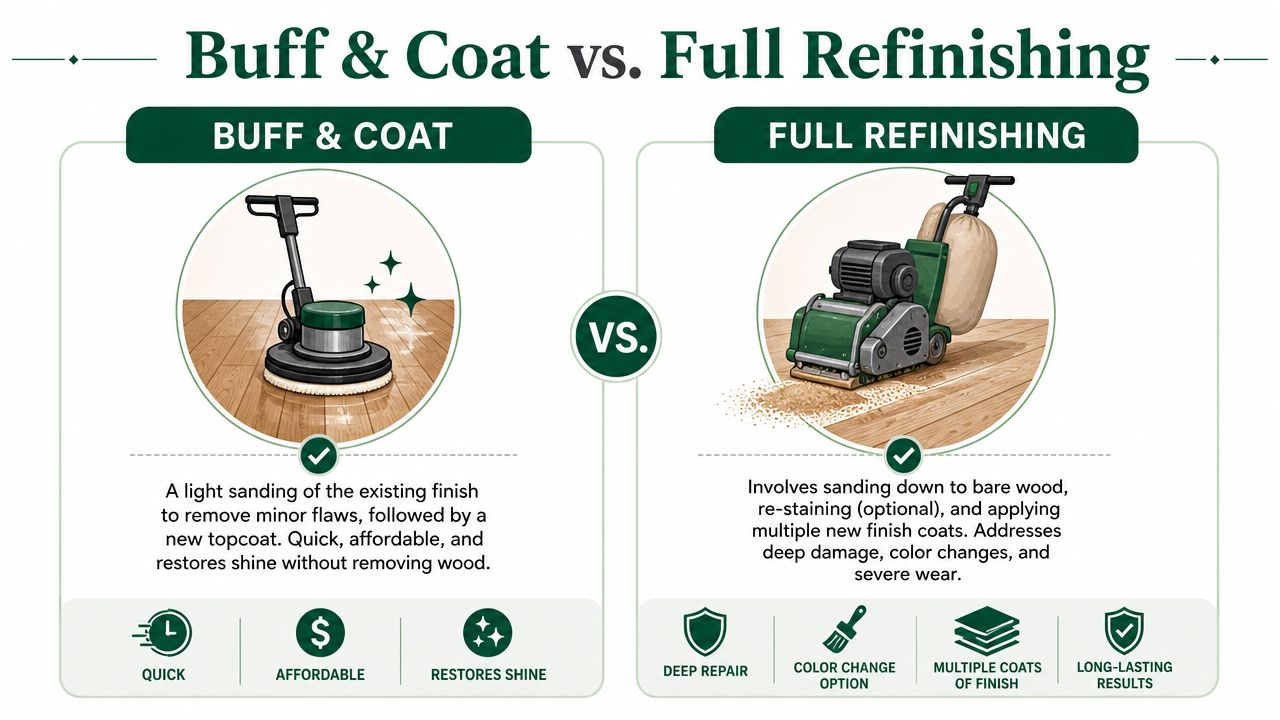
What a buff and coat actually does
A buff and coat, also called screen and recoat or wood floor recoating, lightly abrades the existing finish and applies a fresh topcoat. It works best when the floor looks tired, dull, or lightly scratched, but the underlying wood is still in good shape.
This is often the right choice for:
- Traffic-lane dullness
- Light surface scratching
- Loss of sheen
- Floors that need refreshing without major wood repair
A Richmond-based option for this kind of work is Buff & Coat Hardwood Floor Refinishing, which offers dustless sanding systems and optional low-odor, VOC-free finishes designed to reduce dust and harsh smells during service, according to this customer-facing company listing.
When full sanding and refinishing is the better call
A full sand-and-refinish job cuts deeper. The old finish is removed, damaged areas are addressed, stain color can be adjusted if desired, and new finish coats are applied over properly prepared wood.
That route makes more sense for:
- Deep scratches and gouges
- Heavy finish breakdown
- Pet stains that have penetrated
- Uneven color
- Floors with older patchy repairs
- Rooms where a cosmetic refresh won't be enough
Here's a side-by-side comparison.
Buff and Coat vs Full Sanding Which is Right for You
| Criteria | Buff & Coat (Screen & Recoat) | Full Sanding & Refinishing |
|---|---|---|
| Best use | Dull finish, light surface wear, minor scratches | Deep damage, exposed wood, major wear, color issues |
| How it works | Light abrasion of existing finish, then new topcoat | Sand to bare wood, repair as needed, stain if desired, apply new finish |
| Wood removed | Minimal | Significant compared with recoating |
| Mess level | Lower, especially with dustless sanding | More involved, though dustless sanding helps control debris |
| Appearance change | Restores sheen and refreshes the surface | Resets the floor more completely |
| Good for engineered hardwood refinishing | Sometimes, depending on wear layer and condition | Sometimes, but only after checking veneer thickness and damage |
| Best fit | Stable floors with cosmetic wear | Floors with structural wear, staining, or deeper defects |
A short video can help visualize the difference in process and finish outcome.
Real trade-offs homeowners should know
Recoating is faster and less invasive, but it won't erase gouges or flatten warped boards. Full refinishing delivers a more complete reset, but it takes more preparation, more decision-making, and more time for curing.
If mold is part of the concern after water damage, these Florida mold prevention tips offer useful context on why drying and cleanup matter before cosmetic restoration.
If you're weighing these two paths, this breakdown of wood floor refinishing vs buff coat which service do you actually need can help narrow the decision.
For floors with deeper damage or significant wear, expect a more involved process. Full sanding and refinishing removes old finishes, deep scratches, and unevenness, then applies durable recoats. Floors may dry within a few hours, but full curing takes several days, based on the company information published at Buff and Coat Virginia.
The wrong service usually fails for a simple reason. It asks a surface treatment to solve a wood problem.
If you want help choosing between recoating and full refinishing in Richmond VA, call 804-392-1114 and get a recommendation based on the actual condition of the floor.
A Maintenance Plan for Richmond's Climate
A Richmond floor can look fine in March, start gapping in January, then cup by August if the house swings between dry heat and heavy summer humidity. Older homes in the Fan, Museum District, and near the river are especially prone to this because they often have draftier envelopes, crawlspaces, or basements that let moisture conditions drift.
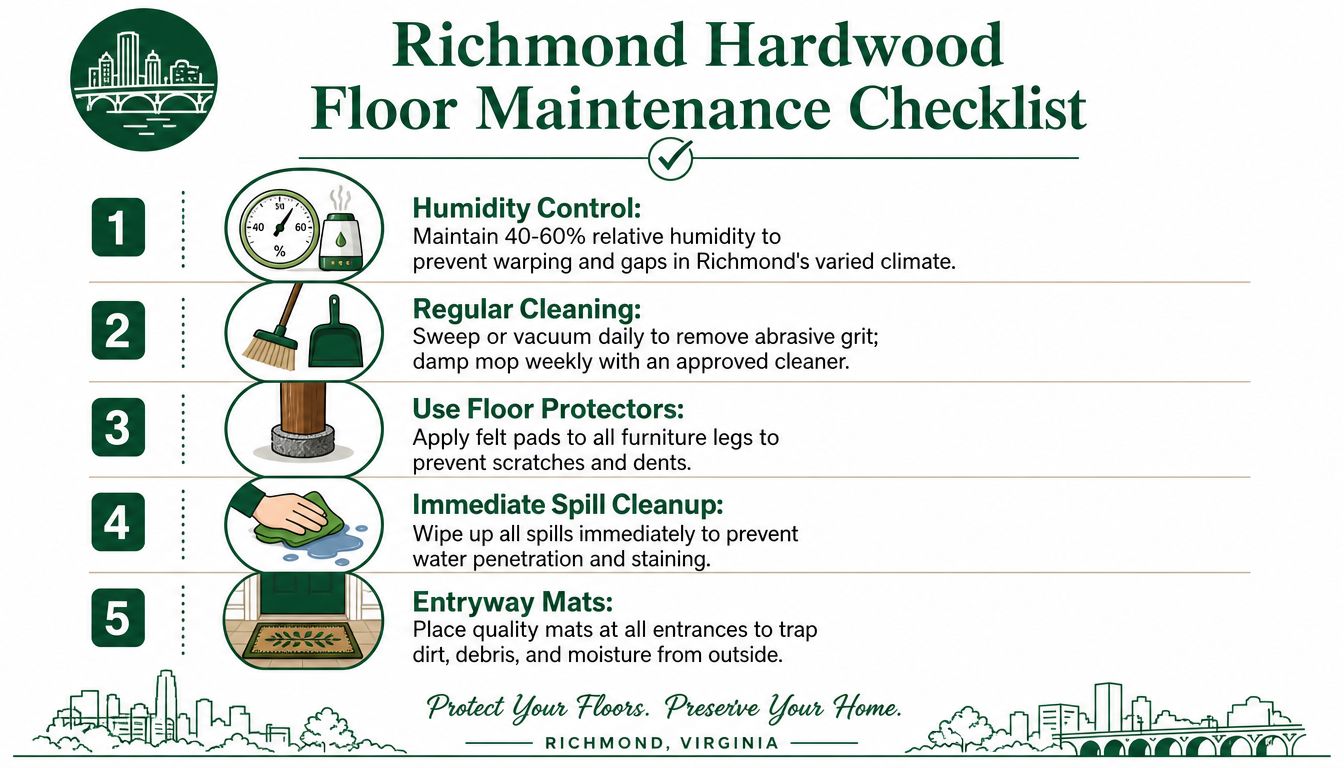
The habits that prevent expensive repairs
Most long-term floor problems I see in Richmond trace back to two things. Moisture swings and abrasion. Water is the headline problem, but daily grit does real damage too, especially in busy kitchens, entryways, and hallways.
Engineered hardwood is not immune. Even though it is more dimensionally stable than solid wood, it still reacts when indoor humidity stays too high or too low, or when a leak sits unnoticed. The practical rule is simple. Keep indoor humidity steady, clean up water fast, and pay attention to what is happening below the floor if you have a crawlspace or basement.
That matters here because local damage often starts outside the room where you notice it. A damp crawlspace, condensation around HVAC lines, or a basement that feels only slightly muggy can telegraph upward into the flooring.
A practical checklist
- Watch indoor humidity and try to keep it in a stable middle range year-round, rather than letting the house swing from very dry in winter to sticky in summer.
- Sweep or vacuum often so grit does not grind into the finish under shoes and chair legs.
- Use felt pads under chairs, stools, and small furniture that shifts during normal use.
- Clean spills right away so moisture does not work down into seams and board edges.
- Use entry mats at exterior doors to catch water, dirt, and fine grit before it gets tracked across the wood.
- Check crawlspaces and basements for damp air, standing water, or insulation problems if you see recurring cupping or seasonal movement.
For Richmond homeowners, that last point is often the one that gets missed. If boards keep swelling, separating, or changing shape in the same area, surface cleaning will not solve it. The moisture source has to be corrected or the floor will keep reacting, even after repair work.
Good floor care keeps small seasonal changes from turning into board replacement or a full refinish sooner than you expected.
If you're planning hardwood floor refinishing in Richmond VA, good maintenance before and after the job helps the finish wear more evenly and keeps future repairs smaller.
Hardwood Damage FAQs for Richmond Homeowners
Can one damaged area be repaired, or does the whole floor need work
Sometimes one area can be repaired cleanly. It depends on board matching, finish compatibility, sun fading, and whether the damaged spot sits in an obvious transition area. Small isolated repairs are often possible, but blending them invisibly into an older floor takes judgment.
Can severe pet stains be removed
Sometimes. If the stain is in the finish, sanding and refinishing may solve it. If it has penetrated far into the wood fibers, boards may need to be replaced before the floor is refinished. The key is seeing whether the discoloration is localized or spread through multiple boards.
Is engineered hardwood refinishing possible
Sometimes, yes. It depends on the thickness of the wear layer and the nature of the damage. Some engineered products can handle recoating, and some can handle careful sanding. Others are too thin for aggressive work. That's why inspection matters before promising engineered hardwood refinishing.
How long does refinishing take
The refinishing timeline depends on the square footage, damage level, repair needs, and finish system used. A buff and coat service is usually less involved than full sanding. Full refinishing also includes dry time and a longer cure period before the floor is ready for full use.
Are low-odor finishes worth it
For many households, yes. VOC-free or low-odor finishes are helpful when homeowners want less disruption, especially in occupied homes with children, pets, or sensitivity to strong smells. They don't eliminate the need for proper curing and good jobsite habits, but they can make the process easier to live with.
What makes Richmond homes tricky
Older floor systems, crawlspaces, additions, uneven subfloors, and seasonal humidity swings all show up regularly in Richmond VA. Historic homes can have a lot of character, but they also hide old repairs, patchwork boards, and moisture pathways that affect how a floor should be repaired.
Why Richmond Homeowners Choose Buff & Coat
Homeowners looking for floor refinishing Richmond VA, hardwood floor repair, or floor installation Richmond usually want the same basics. They want clean work, realistic expectations, and honest advice about what their floors need.
- 15 years in business
- Dustless sanding systems
- Local, owner-operated
- High-quality finishes
- Clear pricing and honest advice
- 5-star customer service
If you're comparing options in Richmond VA, Midlothian, Chesterfield, Henrico, Glen Allen, Short Pump, or Mechanicsville, it helps to work with a contractor who can explain the trade-offs clearly. Some floors need a simple recoat. Some need full sanding. Some need repair work before either option makes sense.
Ready to restore your hardwood floors? Buff & Coat Hardwood Floor Refinishing makes the process fast, clean, and stress-free. Call 804-392-1114 or request your free estimate at buffandcoatvirginia.com.


