

Home Blog Richmond Hard Flooring Installation: Pro Guide 2026
Richmond Hard Flooring Installation: Pro Guide 2026

Worn carpet, scratched planks, hollow spots near a doorway, a floor that just makes the whole room feel tired. That's where a lot of Richmond homeowners start when they begin looking into hard flooring installation. They want the house to feel cleaner, sturdier, and more pulled together, but the choices and the process can get confusing fast.
A good floor project doesn't start with picking a color sample. It starts with understanding what fits your house, your subfloor, your humidity conditions, and your day-to-day life. In Richmond VA, that matters more than people think. Older Fan homes, ranches in Henrico, and newer builds in Midlothian all ask for something slightly different.
Your Guide to Hard Flooring Installation in Richmond
If you're standing in your living room wondering whether to keep patching tired floors or finally replace them, you're not alone. Richmond homeowners usually know what they want the room to feel like. Cleaner lines, less maintenance, better durability, more value. What they often don't know is which floor will perform well once Virginia humidity, pets, furniture, and subfloor conditions get involved.
That's where local experience matters. Buff & Coat Hardwood Floor Refinishing is a Richmond-based floor refinishing and installation company with 15+ years of experience. The work includes dustless sanding, buffing and coating, hardwood floor installations, LVP and LVT installs, and repair work across Richmond, Midlothian, Chesterfield, Henrico, Glen Allen, Short Pump, Mechanicsville, and occasional jobs in Charlottesville, Fredericksburg, and Virginia Beach.
What Richmond homeowners are usually trying to solve
Some projects are obvious. The old carpet smells musty, the laminate edges are swelling, or the hardwood has been patched too many times. Others are less dramatic but just as common.
- Style mismatch. A dated floor can make cabinets, paint, and trim look older than they are.
- Wear that keeps spreading. One squeaky area becomes several. One damaged plank becomes a row.
- Maintenance frustration. Some floors trap dirt in seams or show every scratch in direct sunlight.
- Preparation for sale or a larger remodel. Flooring often sets the standard for the rest of the house.
Practical rule: The right flooring choice isn't the one that looks best in a showroom. It's the one that still works after a Richmond summer and a busy family schedule.
In Richmond VA, floor installation also intersects with decisions about hardwood floor refinishing, wood floor recoating, and full replacement. Sometimes a homeowner thinks they need a new floor when a buff and coat service or targeted hardwood floor repair would solve the underlying problem. Other times, replacement is the smarter move because the existing floor has structural or moisture-related issues that refinishing won't fix.
If you're unsure which path makes sense, Buff & Coat can take a look and give you honest recommendations. Call 804-392-1114 or request a free estimate today.
Choosing Your Hard Flooring A Richmond Homeowners Guide
The material choice drives almost everything else. Noise, feel underfoot, moisture tolerance, future repair options, and the kind of installation method your house can support all trace back to this decision.
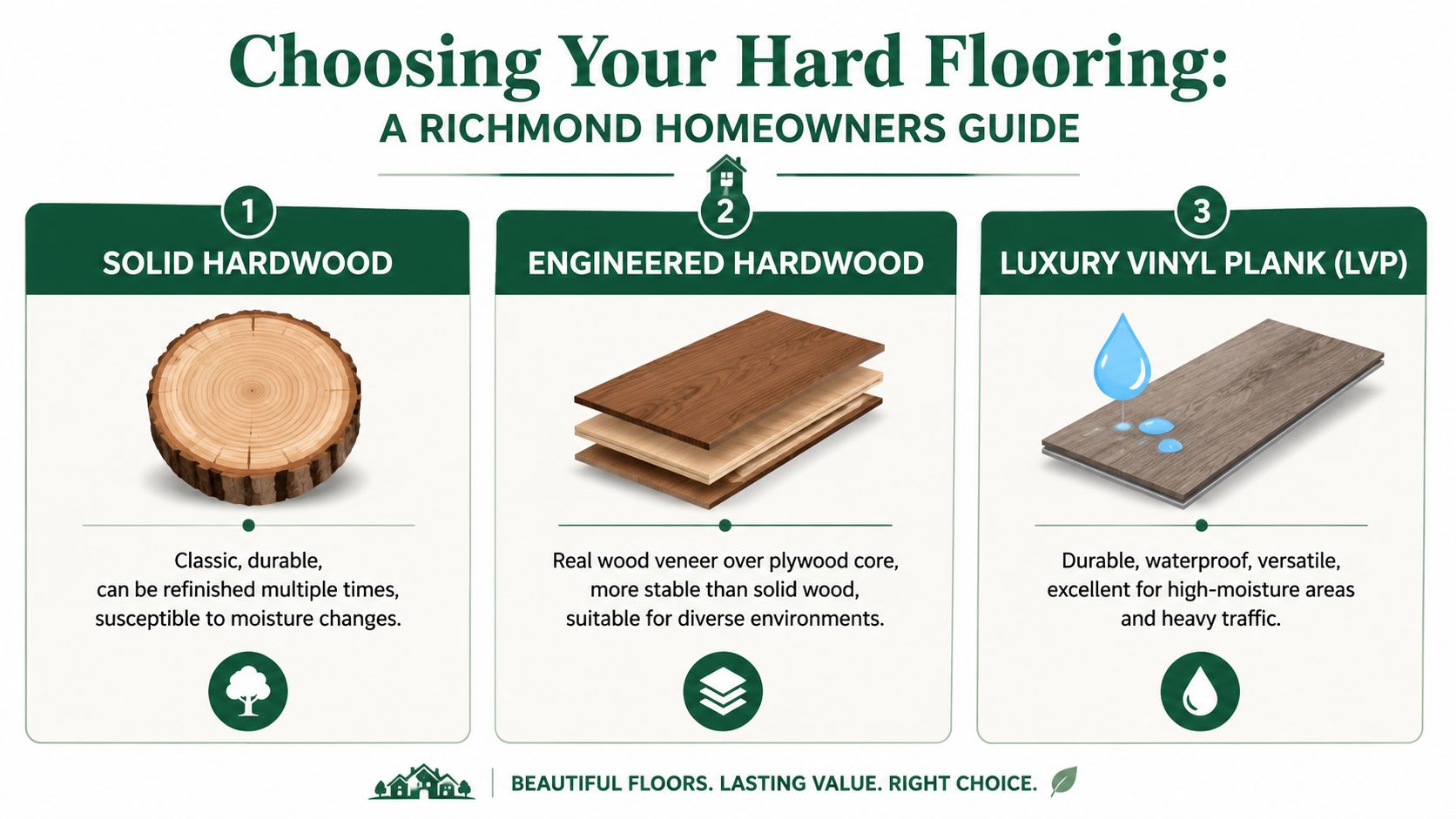
Solid hardwood
Solid hardwood is the traditional choice. One piece of wood, milled into planks, usually installed over a wood subfloor. It has real presence in the room, especially in older Richmond VA homes where original trim, stair details, and room proportions already lean classic.
What works:
- Long lifespan with the right conditions
- Can often be refinished multiple times
- Natural variation that suits older architecture
What doesn't:
- It's less forgiving when indoor conditions swing too far.
- It needs a stable subfloor and careful prep.
- It's not the first choice for every below-grade or moisture-prone area.
In a Museum District or Fan house, solid hardwood often looks exactly right. But that doesn't automatically make it right for every level of the home. If the crawl space or subfloor conditions are questionable, the conversation changes.
Engineered hardwood
Engineered hardwood uses a real wood wear layer over a layered core. That construction gives it more dimensional stability than solid wood, which is one reason so many homeowners now consider it for main-level living spaces, kitchens, and homes with more seasonal humidity movement.
The broader market has moved strongly in that direction. The global hardwood flooring market reached USD 55.46 billion in 2026, and engineered wood held 71.98% of the market share, reflecting demand for materials that combine appearance with installation efficiency, according to Mordor Intelligence's hardwood flooring market analysis.
For homeowners in Richmond VA, that trend makes sense. Engineered hardwood often fits houses that need the look of real wood but a little more stability than solid planks typically offer.
Good engineered hardwood can be a smart middle path. You keep the real wood surface, but you gain flexibility in more varied home conditions.
It's also worth asking about engineered hardwood refinishing before you buy. Some products can handle future recoating or refinishing better than others. The wear layer matters, and therefore, product selection should be done with a contractor, not by reading only the front label in a store aisle.
Luxury Vinyl Plank
LVP has earned its place because it solves practical problems. Families with dogs, kids, frequent spills, or a basement room that needs a tougher moisture story often land here for good reason.
Here's where LVP tends to fit best:
| Flooring type | Best fit in Richmond homes | Main trade-off |
|---|---|---|
| Solid hardwood | Formal living spaces, historic homes, main floors with stable conditions | More sensitive to moisture movement |
| Engineered hardwood | Whole-home updates, condos, kitchens, mixed subfloors | Product quality varies a lot |
| LVP | Basements, mudrooms, rentals, busy households | Doesn't have the same feel as real wood |
LVP isn't fake hardwood in the way people used to think about older vinyl floors. The better products install cleanly, hold up well, and make sense in a lot of high-traffic situations. But if a homeowner wants the warmth, repairability, and character of real wood, LVP won't fully replace that.
What I'd match to a Richmond home
A newer Chesterfield house with an open first floor often does well with engineered hardwood or LVP, depending on budget and traffic. A brick colonial in Henrico may benefit from hardwood in formal spaces and LVP in utility-heavy areas. An older Richmond VA home with original woodwork usually rewards a more careful hardwood approach.
That local fit matters more than trend-chasing. If you're comparing options for floor installation Richmond homeowners live with long term, the smartest decision usually comes from matching the product to the house instead of forcing the house to fit the product.
Richmond homeowners who want a straight answer on material choices can call 804-392-1114 for a free estimate and practical guidance.
The Critical First Step Proper Site Preparation
A floor usually fails long before the first plank loosens. It fails when the prep gets rushed.
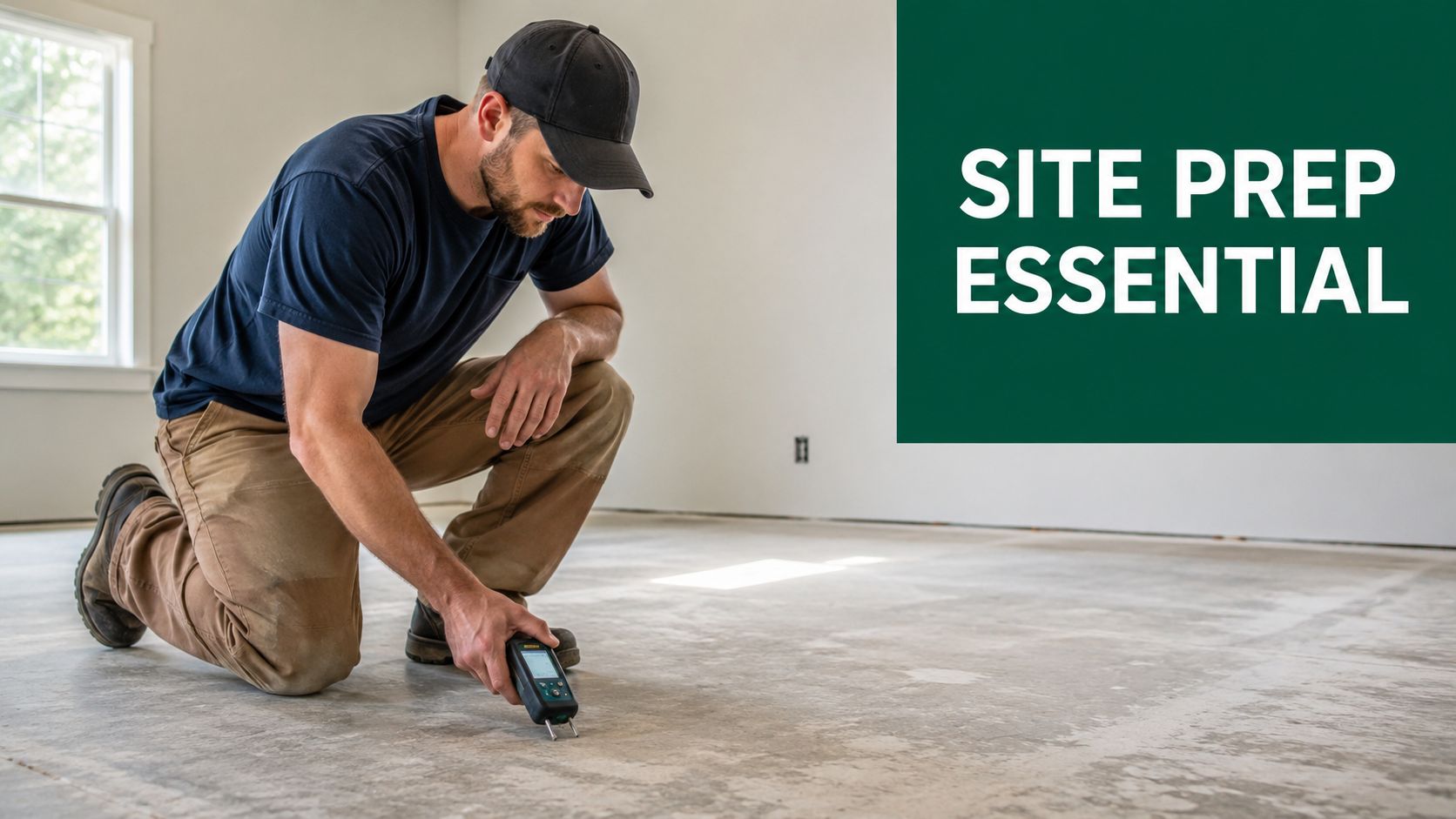
Homeowners often focus on color, plank width, and finish sheen. Installers know the project lives or dies on what's underneath. Old flooring has to come out cleanly. The subfloor has to be sound. Moisture has to be checked. The room conditions have to be right. Skip those steps and you can end up with squeaks, movement, visible gaps, or boards that never sit correctly.
Flat is not the same as level
This is one of the most important things people don't hear enough. A subfloor doesn't have to be perfectly level in the way you'd think about a countertop or a pool table. It does have to be properly flat for the flooring system being installed.
For successful hard flooring installation, subfloor flatness must be within 1/4 inch over 10 feet, and when that tolerance is missed, the boards take on stress that can lead to gaps, squeaks, and eventual failure, according to Somerset installation guidance on subfloor flatness.
That's why a serious prep phase often includes:
- Grinding high spots on concrete or wood subfloors
- Filling low areas with the right leveling compound
- Checking transitions between rooms so one area doesn't telegraph a problem into the next
- Verifying the fastening surface before nail-down work begins
A floor can look fine on day one and still be headed for trouble if the subfloor has humps and dips underneath it.
Acclimation and room conditions
Material has to adjust to the home before installation, especially with wood products. That doesn't mean leaving boxes in a room for a random amount of time and hoping for the best. It means handling acclimation based on the product, the house, and actual site conditions.
For homeowners who want a better sense of that process, this guide on hardwood floor acclimation time is a useful reference.
In Richmond VA, acclimation matters because indoor conditions can change quickly between humid summers, heat in winter, and homes with crawl spaces or less consistent HVAC.
A quick look at moisture testing helps show why prep can't be guessed at:
What careful prep looks like in practice
A meticulous installation crew doesn't treat prep as dead time before the main work. Prep is the core work. The old floor gets removed without damaging surrounding trim where possible. The subfloor gets inspected for movement and damage. Moisture readings get taken where needed. Trouble spots get fixed before the finish material arrives.
That's also the point where a homeowner may learn that the original plan needs to change. A slab may favor a glue-down product. An uneven hallway may need correction before the main rooms can start. That honesty saves money and frustration later.
If you want a floor that stays tight, quiet, and stable in Richmond VA, the prep stage is where that result gets built. Call 804-392-1114 if you want someone to assess the conditions before you commit to materials.
Key Hard Flooring Installation Methods Explained
Installation day looks different depending on the product and the subfloor. Most homeowners don't need every technical term. They do need to know what method fits which floor, what the process feels like in the house, and why one system makes more sense than another.
Nail-down installation
Nail-down is the classic method for many solid hardwood floors over wood subfloors. Boards are fastened mechanically, row by row, creating a firm connection to the structure below. It's a dependable approach when the subfloor and material are both suited for it.
From the homeowner side, this method usually means more tool noise during install and a careful setup phase to get the first rows perfectly aligned. It rewards precision. Small mistakes at the start don't stay small.
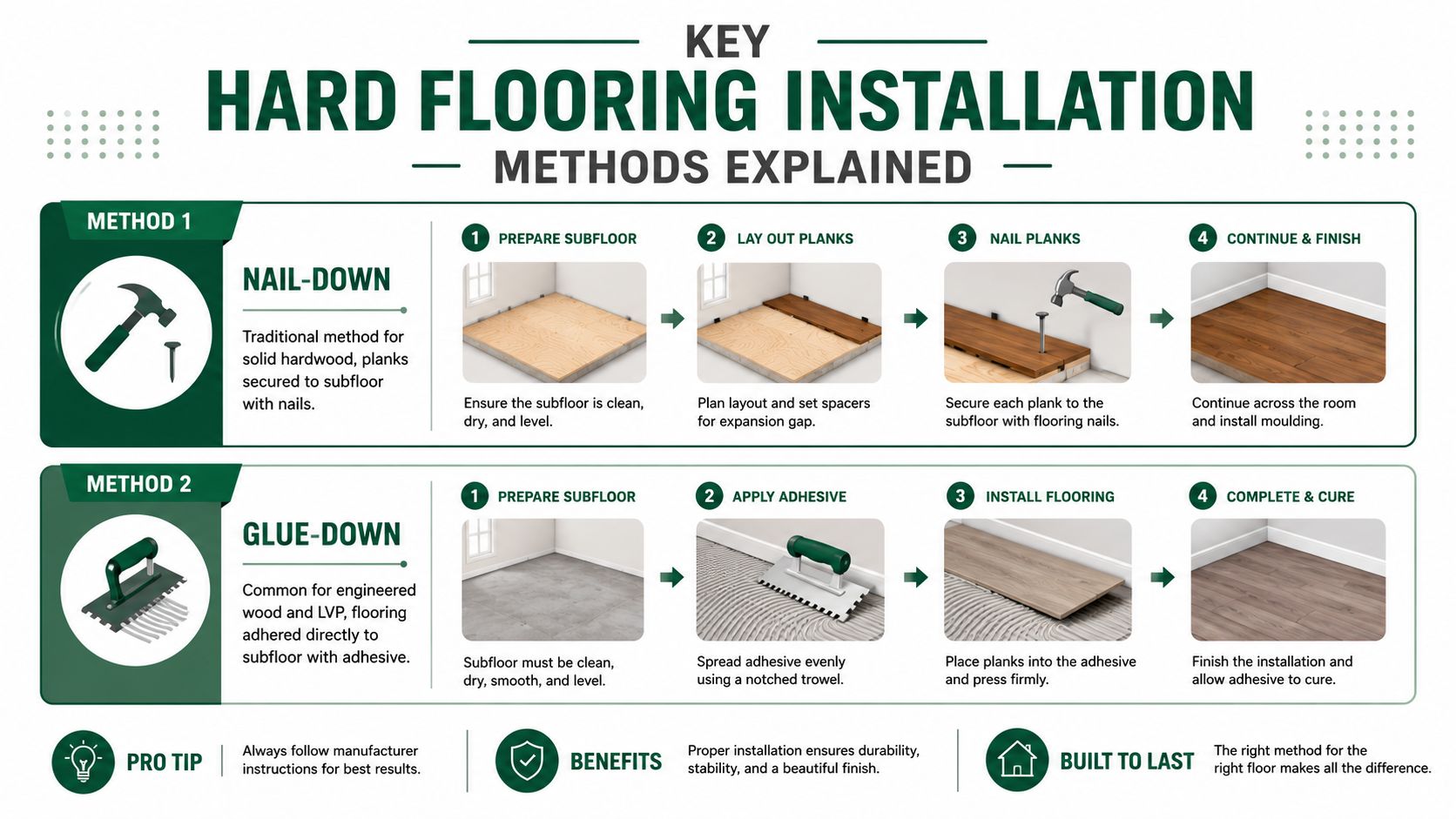
Glue-down installation
Glue-down is common with engineered wood and some LVP products, especially over concrete. Adhesive is troweled onto the subfloor, and the planks are placed directly into it in a controlled sequence.
This method can create a very solid feel underfoot, but it doesn't forgive sloppy subfloor prep. If the surface is dirty, uneven, or carrying moisture issues, the adhesive bond can be compromised. Cleanup and handling also matter because adhesive work is messy when rushed and clean when done properly.
A useful reference for homeowners comparing product and method combinations is this article on engineered hardwood floor installation.
Floating floors
Floating systems are popular with many LVP and some engineered products. The planks lock together and rest over an underlayment or approved surface rather than being fastened directly in the same way as nail-down or glue-down systems.
That can make installation more efficient in the right conditions, but “floating” doesn't mean casual. Layout still matters. Expansion space still matters. The subfloor still has to meet product requirements.
Here's a practical comparison:
- Nail-down works well for traditional hardwood over wood subfloors.
- Glue-down often makes sense for engineered products or installations over concrete.
- Floating is common where speed, flexibility, and product design support it.
The right method is the one the floor was designed for and the house can support. The wrong method often looks fine for a short time.
If you're planning floor installation Richmond homeowners often ask whether one method is “better.” The honest answer is no. It depends on the product, the substrate, and the conditions on site.
Common Installation Issues and How to Avoid Them
Most flooring problems don't come from bad luck. They come from details that were missed.
The crawl space problem
One of the most overlooked issues in Richmond-area homes is what's happening below the floor, not in the room itself. Inadequate crawl space ventilation can cause subfloor moisture migration and lead to hardwood buckling or gapping long after the installation looked perfect, as discussed in this crawl space moisture explanation.
That's especially relevant in older Richmond VA houses, where crawl spaces may have incomplete vapor protection, poor airflow, or long-standing moisture habits the homeowner doesn't even know about yet.
Baseboards and expansion gaps
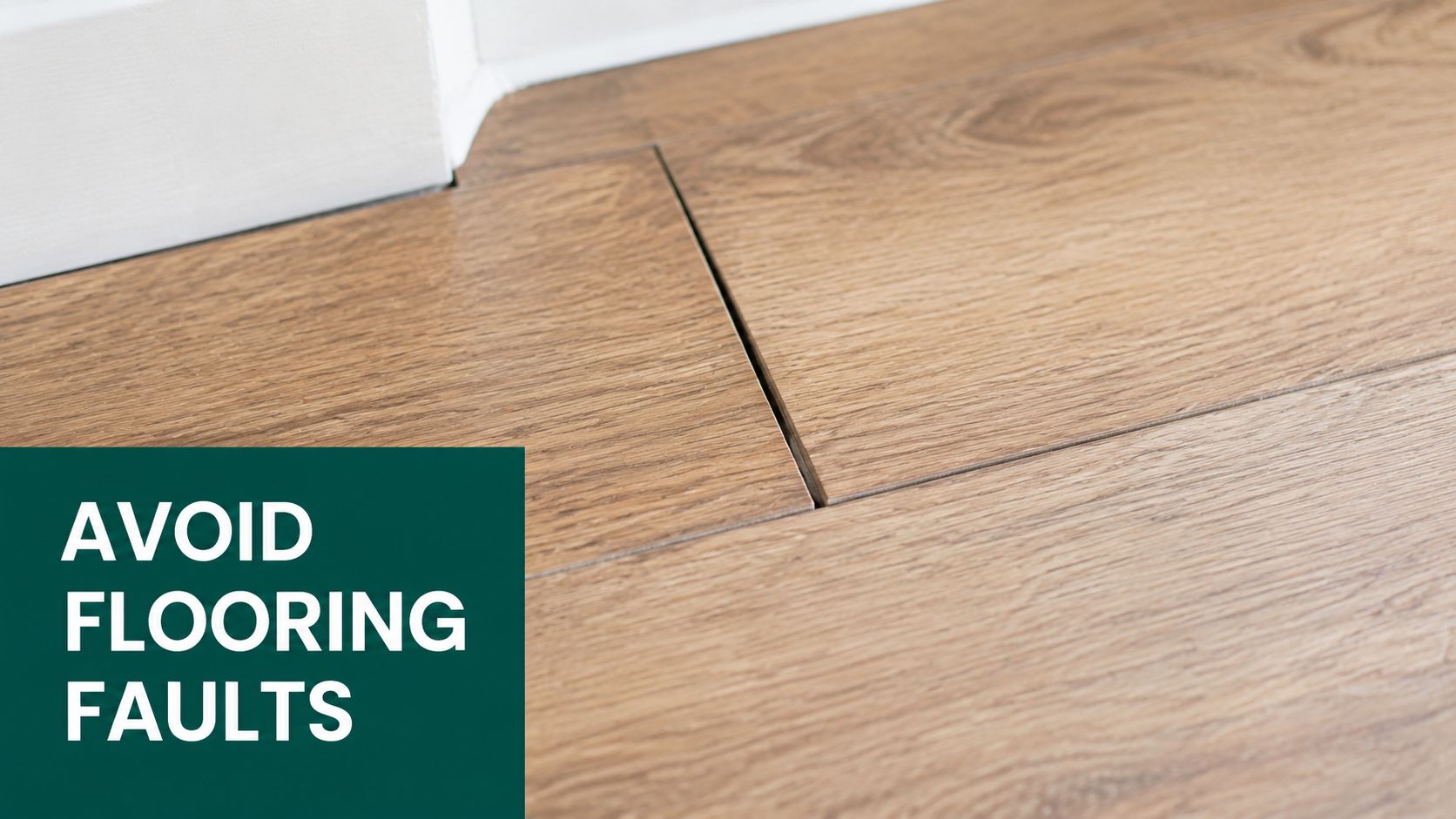
Another common mistake is getting the trim sequence wrong. If baseboards go in first and the flooring is trapped tight against them, the floor can't move as it needs to. That can contribute to buckling as seasons change.
For wood flooring, expansion space isn't optional. It's built into how the floor survives normal moisture and temperature movement. The perimeter has to be planned so the finished trim hides the gap without pinning the floor in place.
Mistakes that look small but aren't
Some issues start during material handling and room prep. Carrying heavy boxes carelessly can damage corners, stress joints, and create avoidable injuries before installation even begins. If you're moving flooring yourself, review these safe lifting practices before you start.
A few other problems show up often:
- Tight installations at vertical surfaces that leave no room for seasonal movement
- Poorly cut door jambs that force awkward plank edges
- Uncorrected subfloor movement that turns into squeaks later
- Broken locking edges or tongues that get used anyway instead of replaced
If a plank gets damaged during install, forcing it into the floor rarely saves time. It usually creates the call-back.
Experience is paramount, allowing a careful installer to notice the warning signs early. That's the difference between a floor that settles in well and one that starts asking for repairs.
If you're seeing buckling, gaps, or movement in Richmond VA, Buff & Coat can inspect the floor and tell you whether you're dealing with a moisture issue, an installation issue, or simple wear.
DIY Installation vs Hiring a Richmond Professional
DIY flooring has obvious appeal. You save on labor, control the schedule, and get the satisfaction of doing the work yourself. For a small room with a forgiving product, that can make sense.
The risk is that flooring mistakes aren't cheap. You're not just risking your time. You're risking the material, the trim, the transitions, and sometimes the subfloor underneath.
Why homeowners still hire pros
In the U.S., the flooring installation services industry generated $34.0 billion in revenue in 2026, and prefinished flooring accounted for 85% of residential wood flooring sales, according to IBISWorld's industry profile for flooring installation services. That preference lines up with what installers see every day. Homeowners want efficient installation, cleaner job sites, and a finished surface that doesn't require extended on-site finishing work.
That doesn't mean every project needs a contractor. It does mean modern flooring products often reward precise prep, manufacturer-specific methods, and clean execution.
A useful contractor checklist
If you're comparing companies for floor installation Richmond homeowners should ask direct questions.
- Ask about experience with your material. Solid hardwood, engineered wood, and LVP aren't interchangeable skill sets.
- Ask how they handle prep. If the answer skips moisture checks or subfloor correction, keep looking.
- Ask what happens when conditions aren't right. A good installer will delay or adjust the plan rather than force the install.
- Ask about insurance and project protection. Damage can happen during tear-out, delivery, or trim work.
- Ask for a clear scope. Homeowners should know who moves furniture, who handles demo debris, and what transitions are included.
For people sorting through options, this guide to hardwood flooring installation companies can help frame the comparison.
The real trade-off
DIY can save labor cost. Hiring a pro can protect the whole investment. That's the actual comparison.
If you're handy and patient, a simple floating floor in a straightforward room may be within reach. If the project involves wood movement, moisture questions, uneven subfloors, stair details, or matching existing floors, professional installation usually costs less than fixing a failed attempt.
Richmond homeowners who want an honest estimate can call 804-392-1114 and get a practical answer without pressure.
What to Expect From Your Buff & Coat Installation
A well-run installation should feel organized from the first visit. In a typical Richmond VA project, the process starts with an in-home estimate, a walkthrough of the rooms, and a direct conversation about the material, subfloor, transitions, and whether any repairs need to happen before installation begins.
The work inside the home
On install days, the biggest difference homeowners notice is usually pacing and cleanliness. Rooms get protected, materials are staged carefully, and the crew works through layout and prep before trying to cover square footage quickly. If the project includes related sanding or blending work, dustless sanding equipment helps contain airborne debris far better than older open-sanding setups.
One option homeowners in the area consider is Buff & Coat Hardwood Floor Refinishing, which provides hardwood installation along with dustless sanding, buffing and coating, LVP and LVT installs, and repair work. That combination can be useful when one part of the house needs new flooring and another needs hardwood floor restoration or hardwood floor scratch repair.
Managing Richmond conditions
Environmental control matters during installation, especially for wood. Professional installers must maintain 35 to 55 percent relative humidity and 65 to 80°F before and during solid hardwood installation, and they must leave a perimeter expansion gap so the floor can move without buckling or opening joints, according to National Floorcovering Professionals guidance on solid hardwood installation.
That matters in Richmond VA because indoor humidity can drift quickly with weather swings, crawl spaces, and HVAC habits. It's one reason an experienced crew may pause, test, or adjust the plan instead of pushing forward just to stay on a calendar date.
A smooth project usually looks calm. The crew isn't guessing, and the homeowner isn't left wondering what happens next.
At the end, there should be a final walkthrough, straightforward care guidance, and clear answers about when to move furniture back in and how to protect the new surface. If you want floor refinishing Richmond VA, installation, or a mix of both, call 804-392-1114 or request a free estimate.
Why Richmond Homeowners Choose Buff & Coat & FAQ
A lot of homeowners want the same thing from a flooring contractor in Richmond VA. Clear answers, solid workmanship, respect for the house, and no runaround.
Why Richmond homeowners choose Buff & Coat
- 15 years in business
- Dustless sanding systems
- Local, owner-operated
- High-quality finishes
- Clear pricing and honest advice
- 5-star customer service
That local approach matters whether you're planning a full replacement, looking into hardwood floor refinishing, comparing a buff and coat service to replacement, or trying to decide if a damaged area needs hardwood floor repair instead.
FAQ
How long does refinishing take
It depends on the size of the space, the condition of the floor, and whether you need a light recoat or a full sand and refinish. A simple wood floor recoating project moves much faster than a full restoration with repairs.
How long does hard flooring installation take
That depends on layout, room count, demolition, subfloor prep, and the product being installed. Straightforward floating floors usually move faster than detailed hardwood installs that require more prep and trim work.
Can you install new flooring to match my existing floors
Often, yes, but the answer depends on species, plank size, stain color, finish, and how the old floor has aged. Matching is usually easier when the transition is planned before material is ordered.
Do you offer low-odor finishes
Homeowners often ask for VOC-free or low-odor finishes during related refinishing work. The right product depends on the floor condition, sheen preference, and the use of the home during the project.
Is replacement always better than refinishing
No. Some floors respond well to hardwood floor restoration or a buff and recoat. Others are too damaged, too thin, or too unstable and need replacement instead.
Ready to restore your hardwood floors? Buff & Coat Hardwood Floor Refinishing makes the process fast, clean, and stress-free. Call 804-392-1114 or request your free estimate at buffandcoatvirginia.com.


