Why Understanding Sandless Refinishing Matters for Your Hardwood Floors
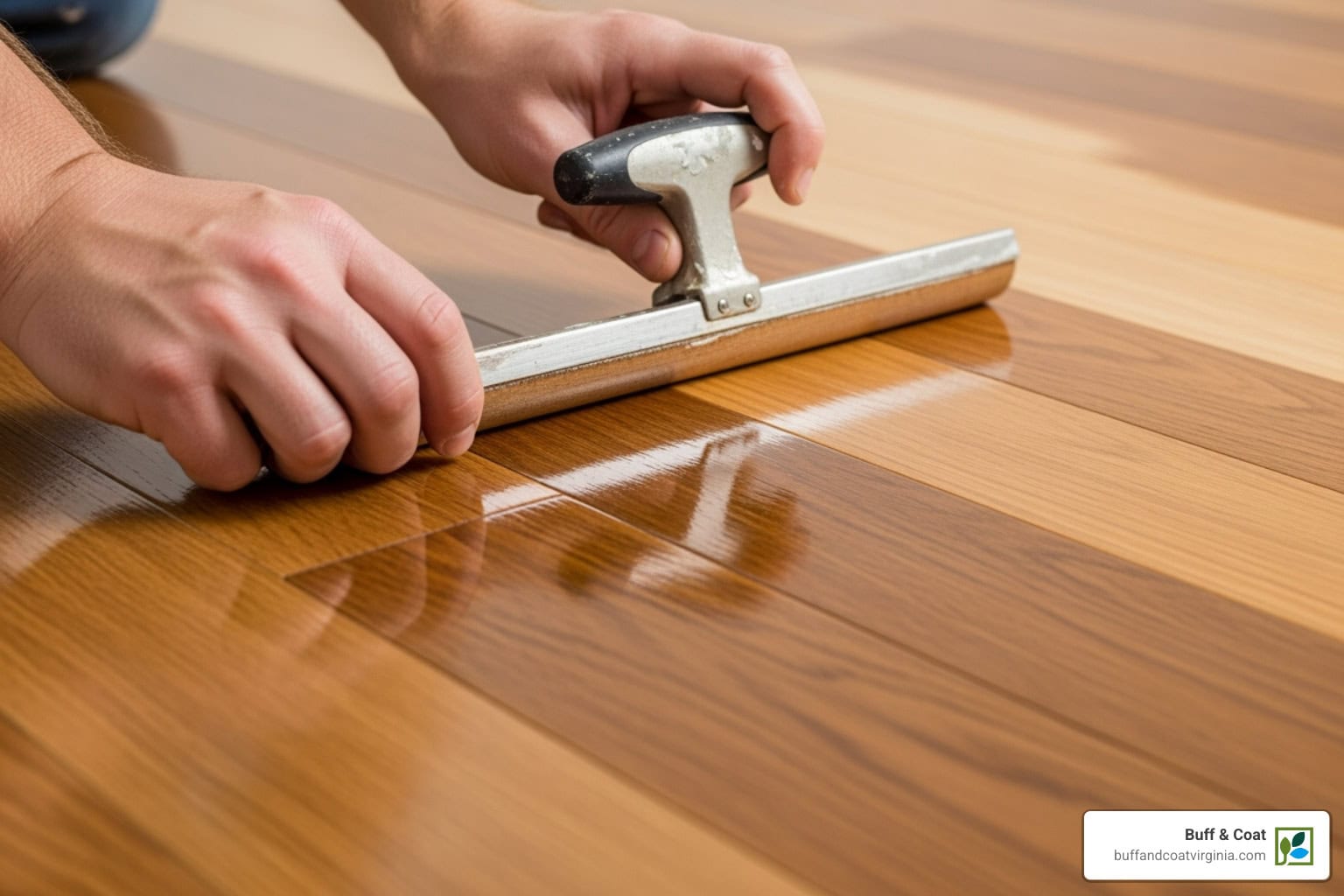
Homeowners looking to revitalize their hardwood floors often encounter sandless refinishing as a dust-free alternative to traditional sanding methods. This process restores a floor’s shine through intensive cleaning and recoating rather than removing wood layers.
Quick Answer: What is Sandless Refinishing?
- Process: Uses chemical etching and abrasive pads to clean existing finish, then applies new protective topcoat
- Best for: Minor wear, light scratches, preserving floor character
- Duration: Typically completed in one day
- Cost: $1.50-$4.00 per square foot vs. $3-$8 for traditional sanding
- Limitations: Cannot fix deep damage, stains, or allow color changes
- Lifespan: Results last 1-5 years depending on foot traffic
The decision between sandless and traditional refinishing isn’t always straightforward. While sandless methods offer convenience and speed, they work best on floors with surface-level issues rather than deep damage. For homeowners in the Richmond area seeking professional floor restoration services, understanding these differences ensures you choose the right approach for your specific needs.
As David Emmerling, President of Buff & Coat Hardwood Floor Refinishing, I’ve spent over 20 years helping Richmond-area homeowners steer these choices, including advanced sandless and dust-free restoration techniques. My hands-on experience has shown me that the right refinishing method depends entirely on your floor’s current condition and your long-term goals.
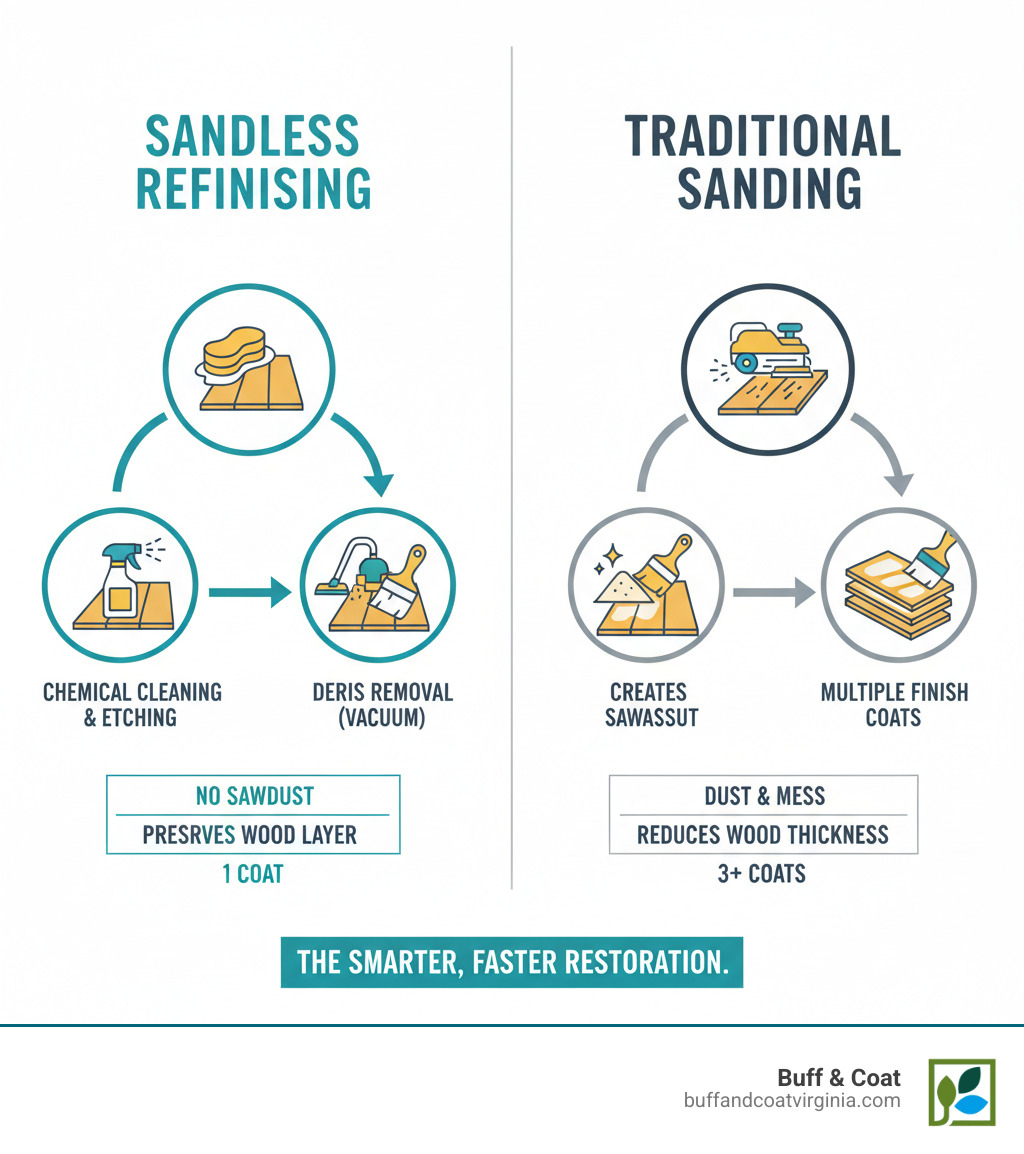
Simple guide to sandless:
What is Sandless Floor Refinishing and How Does It Work?
Picture this: your hardwood floors have lost their luster, but the idea of dust clouds settling on every surface in your home makes you want to postpone the project indefinitely. Enter sandless floor refinishing – a game-changing approach that delivers impressive results without turning your living space into a construction zone.
Sandless refinishing works fundamentally differently than traditional methods. While conventional hardwood floor refinishing strips away layers of wood to reach fresh material beneath, the sandless approach focuses entirely on revitalizing what’s already there. Think of it as the difference between getting a complete makeover and receiving an expertly applied facial – both can make you look years younger, but one requires significantly less recovery time.
The process targets your floor’s existing finish rather than the wood itself. This means your floor keeps its original character, including those charming imperfections that give vintage hardwood its personality. For homeowners with antique floors or thin engineered wood that can’t withstand aggressive sanding, this preservation aspect becomes invaluable.
The Sandless Refinishing Process
The sandless method follows a carefully orchestrated sequence that transforms your floors through deep cleaning and strategic surface preparation. Professional technicians begin with chemical etching, applying specialized liquid cleaning solutions that do double duty – they break down years of accumulated grime while creating microscopic texture on the existing finish. This etching process is crucial because it gives the new protective coating something to grip onto.
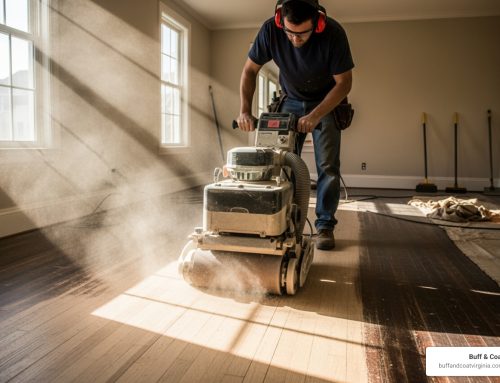
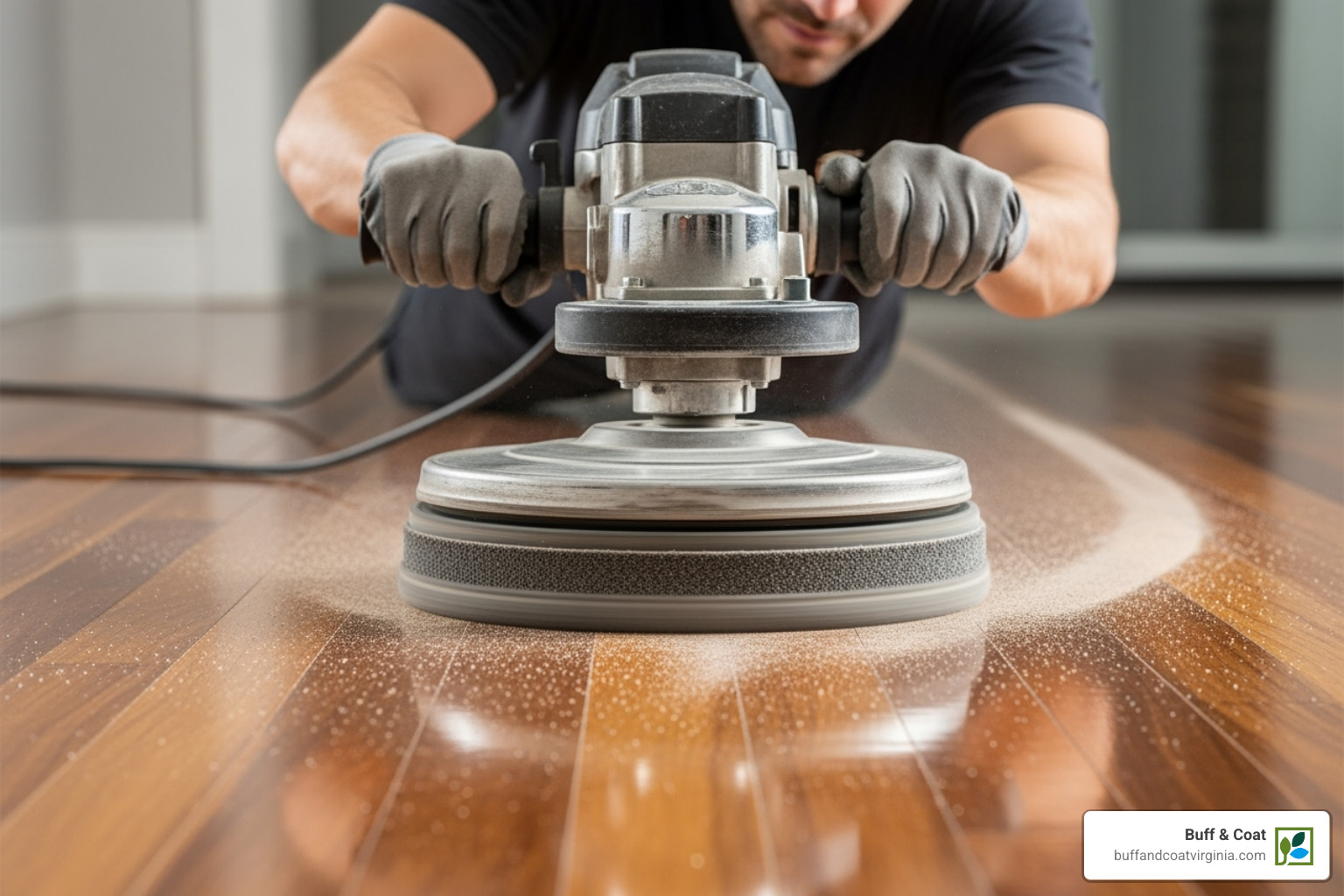
Next comes the mechanical action. Using professional-grade buffer machines equipped with abrasive pads, technicians systematically work across every square foot of flooring. The combination of chemical solution and controlled abrasion lifts away old wax buildup, surface scratches, and the dull oxidized layer that makes floors look tired and worn.
The debris removal phase ensures nothing interferes with the final results. Powerful vacuum systems extract all the loosened material and cleaning solution, leaving behind a perfectly prepared surface. This step separates professional work from DIY attempts – proper debris removal makes the difference between a smooth, even finish and a blotchy disappointment.
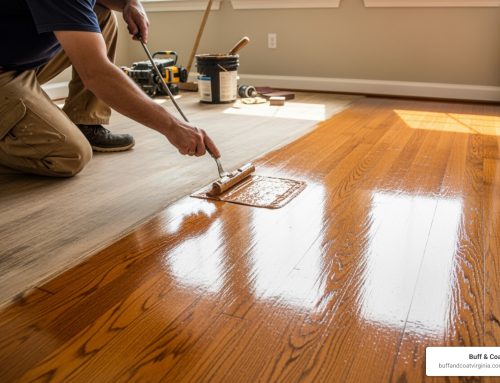
Finally, technicians apply a new protective topcoat that restores your floor’s original beauty. This fresh finish layer brings back the deep luster you remember while providing renewed protection against future wear. The entire process typically wraps up in a single day, similar to our signature buff and coat method that has helped countless Richmond homeowners refresh their floors without the disruption of traditional sanding.
What makes this approach particularly appealing is how it preserves floor character while delivering dramatic visual improvements. Those subtle variations in wood grain, the gentle patina of age, and even minor dings that tell your home’s story remain intact – they just look infinitely better framed by a crystal-clear protective finish.
The Great Debate: Sandless vs. Traditional Sanding
When it comes to revitalizing your hardwood floors, the choice between sandless refinishing and traditional sanding isn’t just about preference—it’s about matching the right solution to your floor’s specific needs. Think of it like choosing between a spa day and surgery: both can help, but one addresses surface concerns while the other tackles deeper issues.
The decision ultimately boils down to three key factors: your floor’s current condition, your budget, and how long you want the results to last. Sandless refinishing shines when convenience matters most, while traditional sanding delivers the comprehensive restoration that severely damaged floors require.
Key Benefits of the Sandless Method
The appeal of sandless refinishing lies primarily in its convenience and gentleness. No airborne dust tops the list of advantages—and for good reason. Traditional sanding, even with modern containment systems, can still produce fine particles that seem to find their way into every corner of your home. With sandless methods, you skip this headache entirely.
Quick completion is another major win. Most sandless refinishing projects wrap up in just one day, meaning you’re not displaced from your home for nearly a week. This speed makes it particularly attractive for busy families or anyone who can’t afford extended disruptions to their daily routine.
From a financial standpoint, sandless refinishing offers a lower upfront cost, typically ranging from $1.50 to $4.00 per square foot. This affordability makes it accessible for homeowners working with tighter budgets or those who need a quick refresh before putting their home on the market.
Safety-conscious families appreciate that the process is kid and pet safe. The methods align with Non-Toxic Floor Sanding principles, using gentler solutions and creating fewer fumes. Your children and furry friends can return to the space much sooner without health concerns.
Perhaps most importantly, sandless refinishing proves ideal for thin or engineered floors. If your floors have been sanded multiple times over the decades or feature engineered wood with thin veneer layers, another traditional sanding might not be possible. Sandless methods offer a lifeline for these delicate floors, extending their lifespan without risking structural damage.
Limitations You Must Consider
While sandless refinishing offers impressive convenience, it’s crucial to understand its boundaries. Deep scratches that you can catch with your fingernail will remain visible after treatment. The process works wonders on surface scuffs and dullness, but it simply cannot remove damage that penetrates beyond the existing finish into the wood itself.
Similarly, dents and gouges from dropped furniture or heavy objects won’t disappear. Sandless refinishing improves what’s already there—it doesn’t rebuild damaged wood fibers. If your floor looks like it’s been through a furniture moving marathon, traditional sanding might be your only path to a smooth surface.
Water damage and deep stains present another limitation. According to research from the University of Michigan, moisture damage that has penetrated into wood fibers requires removal of the affected layer—something only traditional sanding can accomplish. Sandless methods work on the surface finish, not the wood beneath.
Color changes aren’t possible with sandless refinishing either. If you’re dreaming of changing your honey oak floors to rich espresso, you’ll need traditional sanding to remove the existing stain and apply a new one. Sandless methods can improve and protect your current color, but they can’t change it.
The shorter lifespan of results—typically 1 to 5 years—represents perhaps the most significant trade-off. While traditional sanding and refinishing can last 7 to 10 years or longer, sandless treatments require more frequent touch-ups. This means lower upfront costs but potentially similar long-term expenses due to repeated treatments.
| Feature | Sandless Refinishing | Traditional Sanding & Refinishing |
|---|---|---|
| Cost | Lower upfront ($1.50-$4.00/sq ft) | Higher upfront ($3-$8/sq ft) |
| Duration | Very quick (1 day typical) | Longer (3-5+ days, including drying time) |
| Dust Level | Virtually none (no sanding involved) | Significant (but largely contained with dustless systems) |
| Damage Repair | Minor surface scuffs, dullness, old wax buildup | Deep scratches, dents, gouges, water damage, deep stains |
| Color Change | No (improves existing color) | Yes (allows for new stain application) |
| Longevity | Shorter (1-5 years, depending on traffic) | Longer (7-10+ years, depending on traffic and finish) |
| Floor Thickness | Ideal for thin or engineered floors | Requires sufficient wood thickness to remove layers |
Understanding these trade-offs helps ensure you choose the method that aligns with both your immediate needs and long-term expectations. The right choice isn’t always the most convenient one—sometimes it’s the one that delivers the results your specific floors actually need.
Making the Right Choice for Your Hardwood Floors
The ideal refinishing method is not one-size-fits-all. A floor with light surface scuffs has very different needs than one with deep scratches from pets or furniture. Evaluating your floor’s specific issues will point you toward the best solution.
Think of it like choosing the right treatment for your skin. A gentle daily moisturizer works wonders for minor dryness, but you wouldn’t use it to treat deep acne scars. The same principle applies to your floors – minor surface issues call for sandless refinishing, while significant damage demands the more intensive approach of traditional sanding.
The key is honest assessment. Walk around your floors in good lighting, run your hand over problem areas, and take note of what you find. Can you feel scratches with your fingernail? Are there dark stains that have soaked into the wood? Or are you mainly dealing with a dull, lifeless appearance that’s lost its original luster?
When is Sandless Refinishing the Best Option?
Sandless refinishing shines in particular scenarios where its unique benefits align with your floor’s condition and your personal priorities. This method works beautifully when you’re dealing with cosmetic issues rather than structural damage.
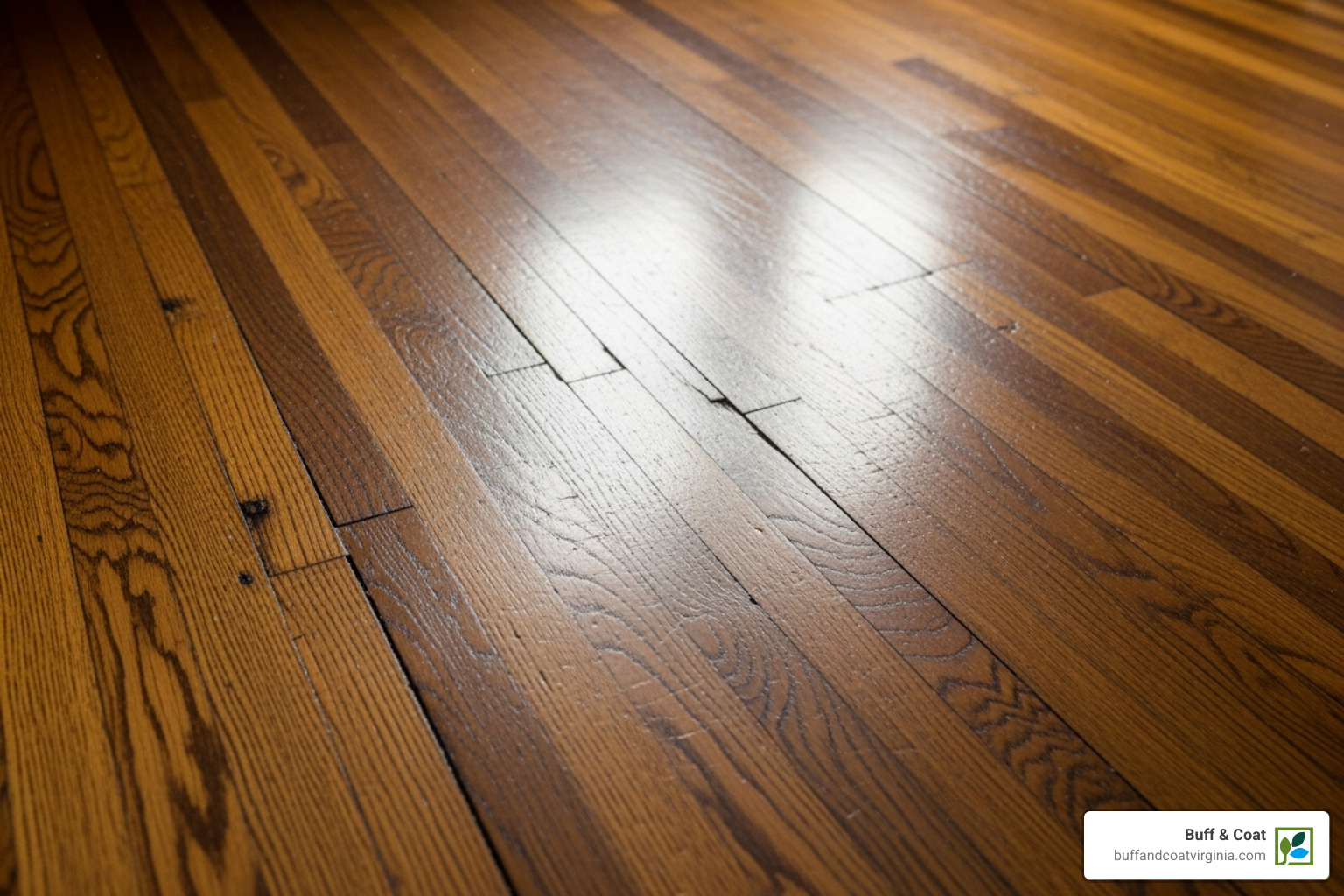
Consider sandless refinishing if your floors show minor wear and tear from everyday life. Perhaps they’ve simply lost their shine from years of foot traffic, or they have that hazy, tired look that comes with age. These floors aren’t damaged – they just need refreshing.
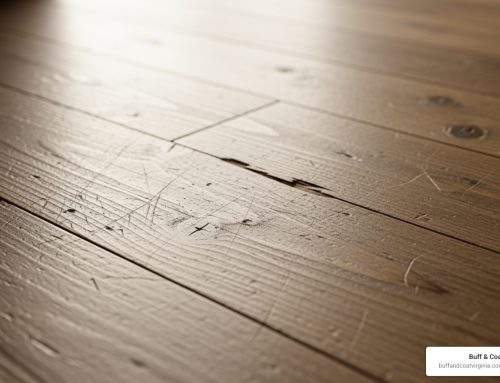
Light surface scratches that barely catch the light are perfect candidates for sandless treatment. If you can see them but can’t feel them with your fingernail, the cleaning and recoating process can often make them virtually disappear.
For homeowners with antique floors rich in character, sandless refinishing is often the ideal choice. Those charming dings, dents, and imperfections tell your home’s story. Traditional sanding would erase this history, but sandless methods preserve the patina while restoring protection and beauty. It’s like giving your vintage floors a spa day rather than plastic surgery.
Engineered floors or floors that have been sanded multiple times present another perfect scenario. These floors may be too thin for traditional sanding without risking damage to the structural layer. Sandless refinishing offers a safe way to extend their life and improve their appearance.
Time and budget constraints also make sandless refinishing attractive. Need a quick refresh before selling your home? Want to improve your floors without the disruption of a multi-day project? Sandless methods deliver impressive results in just one day, making them perfect for busy households or tight timelines.
When to Choose Traditional Sanding
While sandless methods excel at maintenance and light refreshes, certain situations demand the comprehensive approach that only traditional sanding can provide. When your floors have moved beyond surface-level issues, traditional sanding becomes the clear choice.
Deep scratches that you can feel with your fingernail require removing the damaged wood layer entirely. No amount of cleaning and recoating will make these disappear – they need to be sanded away. The same applies to significant dents and gouges from dropped furniture or heavy objects.
Pet stains present a particular challenge that sandless methods simply cannot address. When pet urine soaks into wood fibers, it creates dark, stubborn stains that penetrate well below the surface finish. Only traditional sanding can remove these stained wood layers completely.
Sun fading and discoloration from uneven light exposure creates another scenario where traditional sanding proves essential. These issues affect the wood itself, not just the finish, requiring the removal of the discolored layer to achieve uniform appearance.
If you’re dreaming of changing your floor’s color entirely – perhaps going from light natural oak to rich espresso – traditional sanding is your only option. This process removes the existing stain completely, creating a blank canvas for your new color vision.
For homeowners seeking a long-term solution lasting 7-10+ years, traditional sanding provides superior durability. While the upfront investment is higher, the extended lifespan often makes it more cost-effective over time. Understanding the Cost of Professional Floor Sanding Services helps you budget for this comprehensive approach.
When damage is extensive or you want professional results, it’s wise to Hire Someone to Sand Floors rather than attempting this complex process yourself. Professional expertise ensures proper technique, even results, and long-lasting beauty that justifies the investment.
Understanding Dustless Sanding and DIY Options
The world of floor refinishing includes more than just sandless and traditional methods. Dustless sanding offers a modern alternative that bridges the gap between these two approaches, while DIY kits promise savings for the hands-on homeowner. Understanding these options helps you make the most informed decision for your hardwood floor restoration needs.
What is Dustless Refinishing?
Think of dustless refinishing as the best of both worlds – it’s not sandless refinishing, but rather a significantly cleaner version of traditional sanding. This middle ground solution combines the deep restoration power of traditional sanding with the cleanliness homeowners crave.
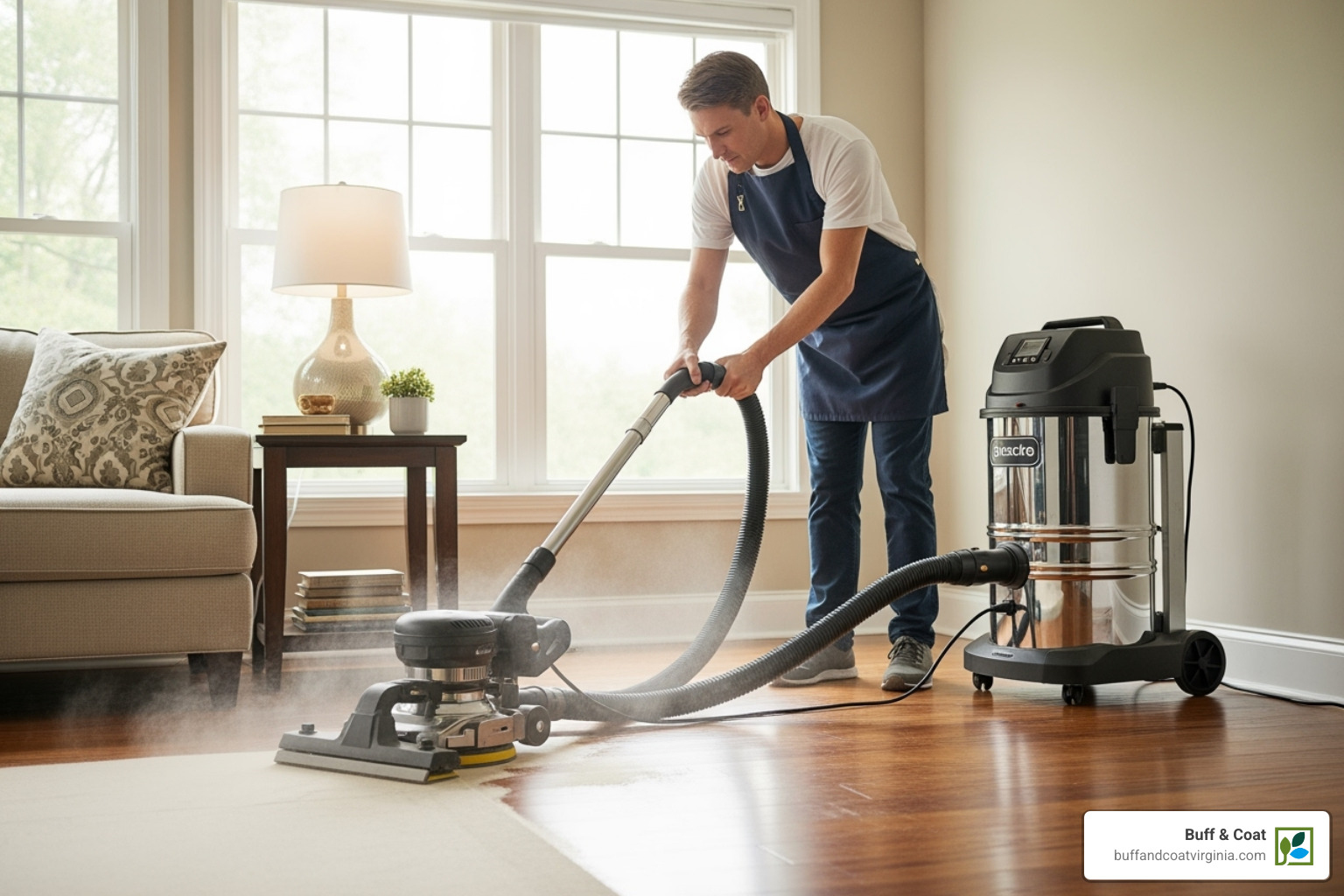
Unlike sandless methods, dustless refinishing involves true sanding that removes actual wood layers to eliminate imperfections. The game-changing difference lies in the powerful vacuum containment systems that capture up to 99% of dust during the process. This means you won’t find that fine layer of wood dust settling on every surface in your home days after completion.
The technology allows for deeper restoration than sandless methods because it’s genuine sanding. You can address deep scratches, dents, and stains just like traditional sanding, plus change stain colors if desired. Yet it remains cleaner than traditional sanding, offering all the restorative power with a fraction of the mess and disruption.
For homeowners seeking professional results without the typical dust concerns, a Dust-Free Floor Sanding Service provides this advanced approach with specialized equipment that makes the difference between a good job and an exceptional one.
Can You Do a Sandless Refinish Yourself?
The appeal of saving money naturally leads many homeowners to consider tackling sandless refinishing themselves. DIY kits are available at most home improvement stores and online retailers, complete with cleaning solutions and finishes.
While there are potential cost savings by eliminating labor costs, the reality is more complex. According to HomeGuide, professional sandless refinishing costs between $1.50–$4.00 per square foot. DIY might seem cheaper initially, but consider the total investment including materials, equipment rental, and your time.
The biggest challenge is the risk of uneven finish. Achieving perfectly even application of cleaning solutions and especially the new topcoat requires skill and experience. Without professional equipment and technique, you face potential streaks, lap marks, or inconsistent sheen that can actually make your floors look worse than before.
You’ll need to handle renting equipment like buffers and work with chemical etchers that require proper ventilation and protective gear. These solutions can be potent, making safety a real concern for inexperienced users.
Professional expertise yields better results consistently. We’ve seen homeowners attempt DIY sandless jobs only to call us later to fix issues, which often costs more than hiring professionals from the start. The specialized equipment, high-quality products, and experience we bring ensure a flawless, long-lasting finish that protects your investment.
Frequently Asked Questions About Sandless Refinishing
When homeowners in Richmond are weighing their floor refinishing options, they naturally have questions about what sandless methods can and cannot do. After two decades of helping families restore their hardwood floors, I’ve found that understanding the practical details makes all the difference in choosing the right approach.
What is the cost difference between sandless and traditional refinishing?
The financial difference between these methods is often the first thing homeowners want to understand, and for good reason. Sandless refinishing typically runs between $1.50 to $4.00 per square foot, making it the more budget-friendly option upfront. This lower cost reflects the streamlined process – there’s less labor involved, fewer materials needed, and the job gets done much faster.
Traditional sanding and refinishing, on the other hand, ranges from $3 to $8 per square foot according to Angi. The higher price tag comes from the intensive nature of the work: multiple sanding passes with different grits, longer project timelines, and more materials including sandpaper, stains, and multiple finish coats.
Here’s the catch though – while sandless costs less initially, it typically needs to be repeated more frequently. Think of it like the difference between a quick car wash and a full detail job. The wash is cheaper and faster, but the detail lasts longer.
Can sandless refinishing fix deep scratches or pet stains?
This is probably the most important limitation to understand before choosing sandless refinishing. The simple answer is no – sandless methods cannot eliminate deep scratches, gouges, or stains that have soaked into the wood itself.
Sandless refinishing works exclusively on the surface level. It’s designed to clean away buildup, refresh the existing finish, and add a new protective coat. If you can catch your fingernail in a scratch, or if pet accidents have left dark stains that have penetrated the wood fibers, these issues will remain visible after a sandless treatment.
For these deeper problems, traditional sanding remains the only solution. The sanding process physically removes the damaged layer of wood, revealing fresh, undamaged material underneath. Understanding this distinction upfront prevents disappointment and helps you choose the right method for your specific situation.
How long does a sandless refinishing project take?
Speed is where sandless refinishing truly shines. Most professional sandless projects wrap up in a single day, which is a game-changer for busy families. You can literally have your floors looking refreshed and be walking on them again before dinner – no need to pack up and stay elsewhere or steer around wet finish for days.
Traditional sanding projects typically take 3 to 5 days, sometimes longer depending on the size of the area and number of finish coats needed. Each coat requires proper drying time, and you often need to stay off the floors entirely during the process.
For homeowners who need a quick refresh before hosting guests or putting their house on the market, this time difference can be the deciding factor. The convenience of minimal disruption makes sandless refinishing particularly appealing for families with young children, pets, or anyone who simply can’t afford extended downtime in their living space.
Conclusion: Revitalize Your Richmond Floors the Right Way
Choosing the right refinishing method for your hardwood floors doesn’t have to be overwhelming. Sandless refinishing serves as an excellent maintenance solution for floors showing minor wear and tear, delivering quick results with minimal disruption to your daily life. It’s particularly valuable when you want to preserve the authentic character of vintage floors or need a budget-friendly refresh that can be completed in a single day.
However, when your floors have endured years of heavy use, deep scratches from pet claws, or stubborn water stains, traditional floor sanding becomes the clear winner. This comprehensive approach removes damaged wood layers entirely, allowing for complete color changes and delivering results that can last a decade or more.
For homeowners seeking the best of both worlds, dustless sanding bridges the gap perfectly. You get the thorough restoration power of traditional sanding with 99% less mess—a solution that’s gained tremendous popularity among busy families who can’t afford weeks of disruption.
The key is understanding your floor’s specific needs rather than choosing based on convenience alone. A floor with light surface scuffs responds beautifully to sandless treatment, while deep gouges and pet damage require the more intensive traditional approach. There’s no universal “best” method—only the best method for your unique situation.
For homeowners in the Richmond, VA area, navigating these choices becomes much simpler with professional guidance. At Buff & Coat, our signature “buff and coat” process combines advanced dust-free techniques with over 20 years of local experience. We believe in educating our clients about the “why” behind our recommendations, ensuring you make a decision you’ll be happy with for years to come.
Don’t guess when it comes to your floors. The wrong choice can mean wasted money, disappointing results, or even damage to floors that could have been beautifully restored with the right approach.
Ready to find the right solution for your home? We provide free estimates. Schedule a free, no-obligation inspection online to get a personalized recommendation from our experts. We’ll assess your floor’s condition, discuss your goals, and help you choose the most effective method for bringing your floors back to life.