

Home Blog Schedule Your Dust-Free Floor Sanding Service Today
Schedule Your Dust-Free Floor Sanding Service Today

Why Modern Facilities Are Choosing Dust-Free Floor Sanding
To book dust-free floor sanding service, follow these essential steps:
1. Contact a certified dust-free sanding contractor
- Request a detailed quote and timeline
- Verify they use HEPA filtration systems
2. Schedule a pre-service consultation
- Assess your space and collection protection needs
- Plan phased work zones to minimize disruption
3. Confirm service details
- Review dust containment methods (99.7% particle capture)
- Understand finish options and drying times
4. Prepare your facility
- Protect sensitive materials and equipment
- Coordinate with staff for operational continuity
Traditional floor sanding creates clouds of fine dust that can damage books, electronics, and artwork while disrupting normal operations for weeks. Modern dust-free technology changes everything. Advanced extraction systems capture up to 99.7% of particles down to 0.3 micrometers, protecting valuable collections and maintaining healthy air quality.
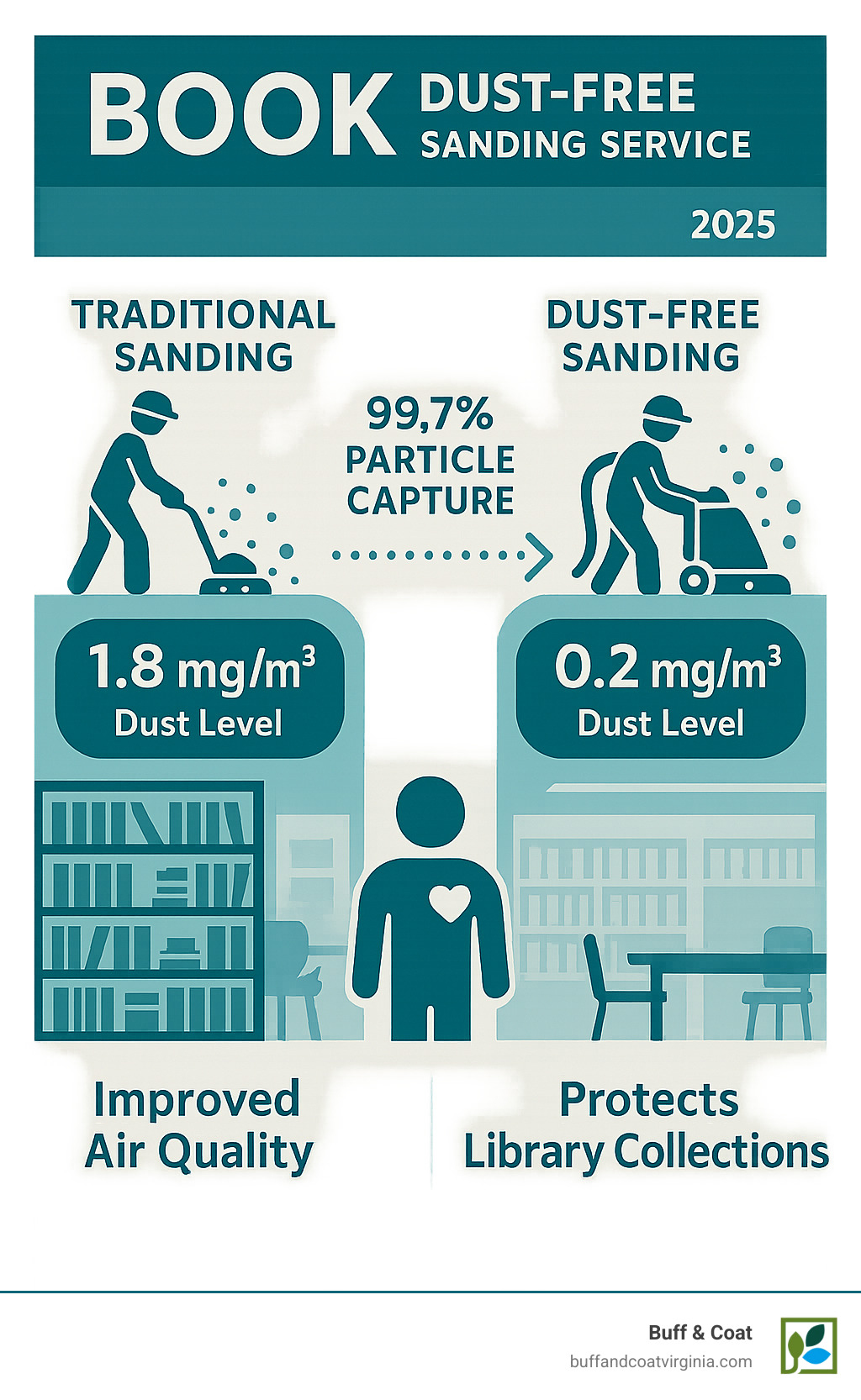
The difference is dramatic. In one documented case study, dust readings in a college library dropped from 1.8 mg/m³ to just 0.2 mg/m³ after dust-free floor sanding – well below the National Preservation Office’s safe limit of 0.5 mg per m³.
Libraries, schools, and commercial spaces no longer need to shut down completely during floor restoration. With proper planning, facilities can remain partially operational while achieving superior results.
I’m David Emmerling, President of Buff & Coat Hardwood Floor Refinishing, and I’ve spent over 20 years perfecting dust-free restoration techniques that protect sensitive environments while delivering exceptional results. My experience has shown that when you book dust-free floor sanding service with the right contractor, you get better outcomes with less disruption than traditional methods.
Why ‘Dust-Free’ is Non-Negotiable for Sensitive Environments
Picture this: you’re managing a beautiful library filled with rare books, or perhaps a museum with priceless artifacts. The floors desperately need refinishing, but the thought of traditional sanding makes you break out in a cold sweat. And honestly? That fear is completely justified.
When you book dust-free floor sanding service for sensitive environments, you’re not just choosing convenience – you’re making a critical decision that protects irreplaceable collections and the health of everyone who enters your space.
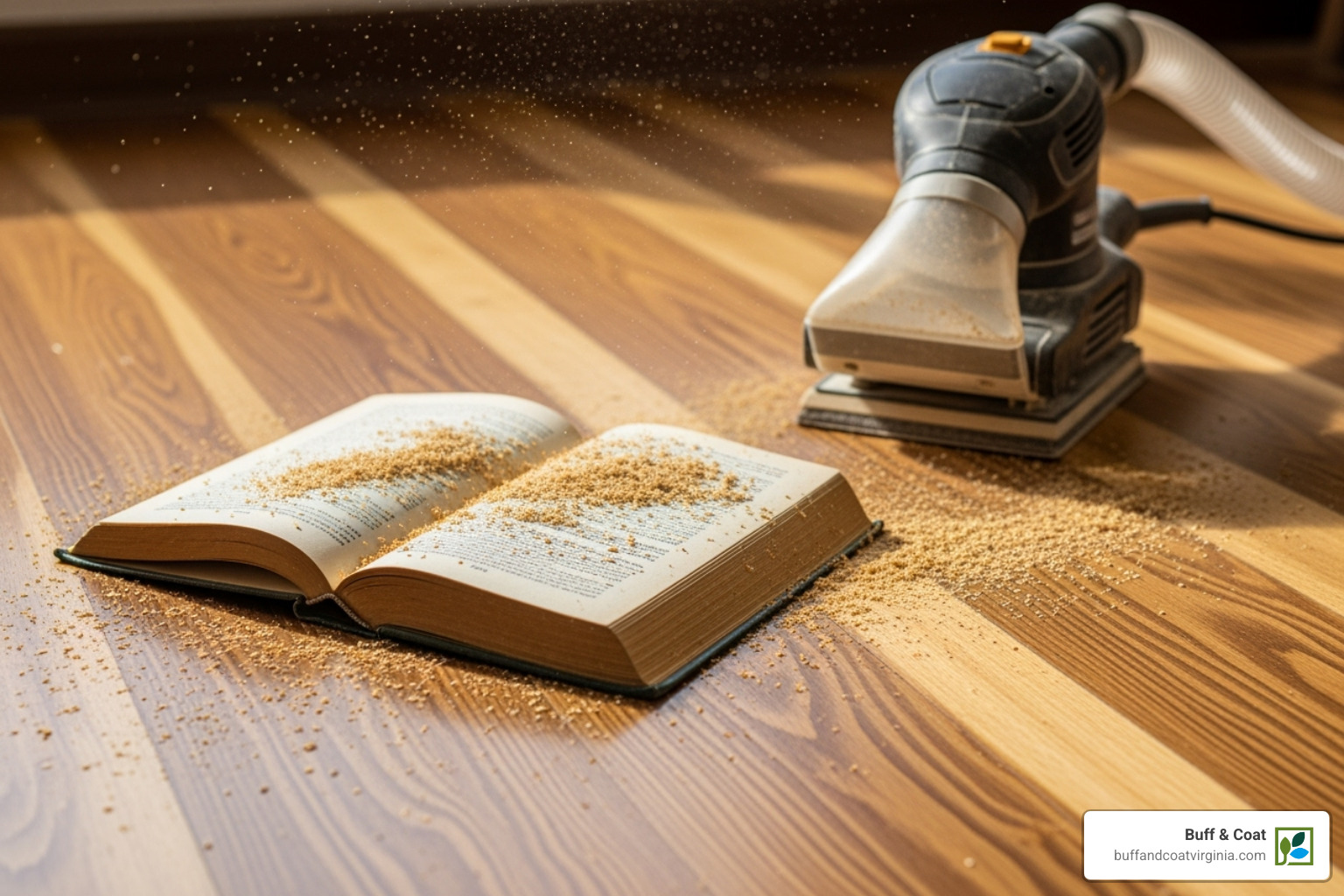
Traditional floor sanding creates what I call a “dust storm disaster.” Fine wood particles settle on every surface, seep into every crack, and infiltrate places you never knew existed. For libraries and archives, this isn’t just messy – it’s devastating.
Those microscopic particles act like tiny pieces of sandpaper, scratching delicate book covers and embedding themselves between pages. Chemical residues from old finishes mix with the dust, creating an acidic environment that accelerates paper degradation. It’s like watching history crumble in slow motion.
The numbers tell the story. In one college library project, we measured dust levels dropping from 1.8 mg/m³ to just 0.2 mg/m³ after implementing dust-free sanding. That’s well below the National Preservation Office’s safe limit of 0.5 mg per m³. Many busy public libraries test at triple that amount, making dust-free methods essential for preservation.
The Silent Saboteur: How Traditional Dust Damages Valuable Collections
Here’s what makes traditional sanding dust so dangerous: it’s not just dirt you can wipe away. Fine wood dust contains abrasive particles that scratch and deteriorate everything they touch. Mix in chemical residues from old finishes, and you’ve got a recipe for disaster.
These microscopic invaders don’t just damage what you can see. They contaminate your HVAC system, spreading throughout the building and reducing air quality for months. The dust absorbs and releases moisture, causing humidity swings that make paper materials expand and contract. This constant movement weakens fibers and makes documents brittle.
Think of it as death by a thousand tiny cuts. Each particle that settles on a rare manuscript or historical document causes microscopic damage. Over time, this leads to yellowing, brittleness, and irreversible deterioration.
Our dust-free process eliminates this threat entirely. By capturing 99.7% of particles at the source, we protect your collections while still achieving beautiful results. For more information about our safe refinishing methods, check out our guide on Non-Toxic Floor Sanding.
Improving Air Quality for Patrons and Staff
The health impact of traditional sanding dust extends far beyond the immediate project. Allergens and respiratory irritants linger in the air for weeks, causing coughing, sneezing, and breathing difficulties for staff and visitors.
I’ve seen librarians develop chronic respiratory issues after traditional sanding projects. Students complain of itchy eyes and headaches. It’s heartbreaking and completely preventable.
Our HEPA filtration systems capture harmful particles before they can circulate through your space. This creates a healthier workspace that benefits everyone. Staff morale improves when they’re not dealing with dust-related health issues. Patrons enjoy a cleaner, more comfortable environment.
The results speak for themselves. One college library saw a 17% increase in footfall within the first month after dust-free floor restoration. Clean air, beautiful floors, and no disruption to operations – that’s the power of doing it right.
Reduced cleaning needs mean your staff can focus on what they do best instead of constantly battling dust. The air stays cleaner, surfaces stay cleaner, and everyone breathes easier.
When you book dust-free floor sanding service, you’re investing in the long-term health of your facility and everyone who uses it. It’s not just about floors – it’s about creating a space where knowledge and culture can thrive without compromise.
The Technology Behind a Truly Dustless Finish
When we say “dust-free” floor sanding, we’re not just using fancy marketing language. We’re talking about real technology that makes a dramatic difference. At Buff & Coat, when you book dust-free floor sanding service, you’re getting access to sophisticated equipment that captures virtually every particle of dust before it can escape into your space.
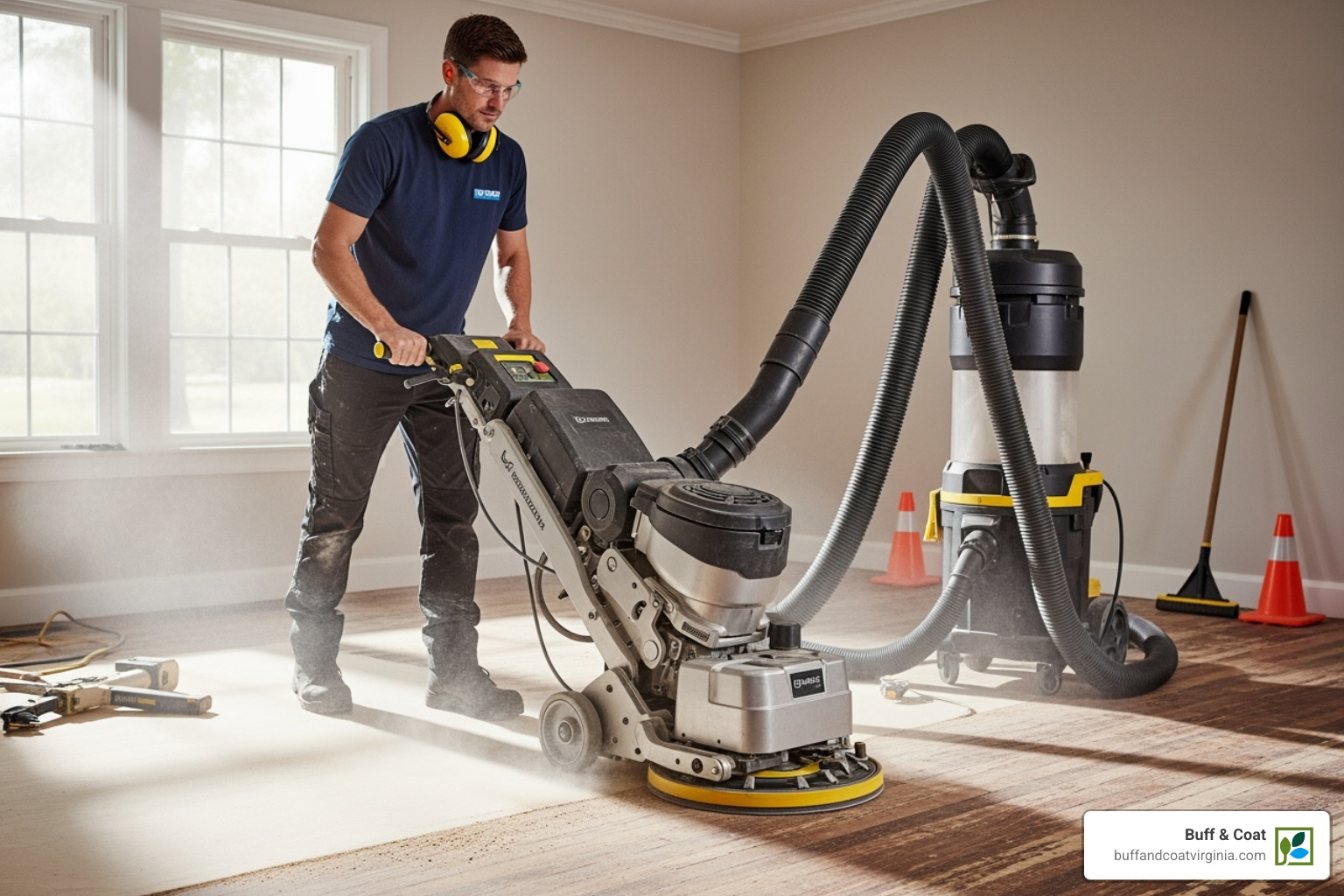
The secret lies in powerful, sealed extraction systems that connect directly to our sanding machines. Think of it as a dust-hungry vacuum that works at the exact moment the wood is being sanded. These systems create negative air pressure around the sanding head, which means dust gets sucked up instantly rather than floating around your library or office.
The captured dust travels through multiple stages of filtration, including HEPA filters that trap particles as tiny as 0.3 micrometers. That’s incredibly small – about 300 times smaller than the width of a human hair! Modern systems achieve an impressive 99.7% particle capture rate, which means your facility stays remarkably clean throughout the entire project.
This technology transforms what used to be a messy, disruptive process into something that’s almost surgical in its precision. To learn more about how this advanced process works, check out our detailed guide on dustless sanding wood floors.
Specialized Equipment for a Flawless, Clean Result
Achieving truly dust-free results requires more than just a powerful shop vacuum. It demands a complete system of specialized, interconnected equipment that works together seamlessly.
Our belt sanders are the workhorses that handle the bulk of floor sanding. These aren’t your typical sanders – they’re equipped with robust dust shrouds and direct connections to industrial-grade cyclonic vacuum systems. For getting close to walls and tight corners where belt sanders can’t reach, we use specialized edgers with integrated dust collection ports.
The buffers (also called rotary sanders) handle fine-grit sanding and blending work. Even these smaller tools are designed with dust extraction capabilities, ensuring no step in the process creates airborne particles.
The heart of our dust-free operation is our cyclonic vacuum systems with HEPA filters. These aren’t ordinary vacuums – they’re industrial-grade units that separate coarse particles in a cyclone chamber, then filter out microscopic dust through high-efficiency filters. Only clean air gets returned to your environment.
We rely on proven brands like Lägler North America equipment and Bona dust containment systems because they deliver the reliability and capture rates that sensitive environments demand. When you’re protecting valuable books or maintaining a healthy workspace, there’s no room for compromise.
How the Dust-Free Sanding Process Works
Our dust-free process is carefully orchestrated to minimize disruption while maximizing results. Everything starts with connecting each sanding machine directly to our high-powered, sealed extraction system. This creates continuous, active vacuum at the exact point where wood meets sandpaper.
As we sand, wood particles get drawn through hoses into the cyclonic vacuum units. Larger debris gets separated first, then everything passes through multiple filtration stages, including those crucial HEPA filters that capture even the smallest airborne particles. This continuous dust removal means virtually nothing escapes into your space.
For larger projects, we implement phased work zones. This smart approach lets us section off areas of your facility, so we can complete one section while other areas remain fully operational. We might use temporary plastic sheeting to create additional containment barriers, especially around sensitive collections or equipment.
The beauty of this system is that it eliminates the need for extensive post-sanding cleanup. No more days of wiping down every surface or dealing with dust that seems to appear out of nowhere weeks later. The result is not just a cleaner process, but actually a superior final finish quality – because there’s no dust settling back onto freshly sanded wood or interfering with finish application.
This level of precision and cleanliness is what makes it possible for libraries to stay partially open during floor restoration, and why schools can schedule projects during shorter breaks instead of waiting for extended closures.
How to Plan and Book Dust-Free Floor Sanding Service for Your Space
Planning a floor sanding project doesn’t have to be overwhelming, especially when you’re working with a team that understands your needs. At Buff & Coat, I’ve seen how proper planning can make the difference between a stressful disruption and a smooth change. When you’re ready to book dust-free floor sanding service, we’ll guide you through every step to ensure your project runs seamlessly.

The beauty of dust-free sanding is that it opens up possibilities that traditional methods simply can’t offer. Your library doesn’t need to shut down completely. Your office can often stay partially operational. We start with a comprehensive consultation where we’ll sit down and really understand your space, your schedule, and your concerns.
During this project planning phase, we’ll assess your floors, discuss your timeline, and create a detailed quoting process that leaves no surprises. Our service agreement spells out exactly what we’ll do, when we’ll do it, and how we’ll protect your valuable assets. The goal is operational continuity – keeping your world running while we transform your floors.
For facilities that need extra guidance on preparation, our article on how to Prepare for Hardwood Floor Refinishing provides detailed insights to help you get ready.
Step 1: Pre-Sanding Preparations and Consultation
Every successful project starts with understanding your unique situation. During our site assessment, we’ll walk through your space together, examining the wood type, current condition, and any special challenges your environment presents. If you’re a librarian, we’ll pay special attention to your collection areas and high-traffic zones.
Protecting collections is where our dust-free technology really shines. While traditional sanding would require you to cover or move everything, our contained system means much less disruption. We’ll still recommend basic precautions for your most sensitive materials, but you won’t need to wrap your entire collection in plastic.
The moving furniture conversation is always easier with dust-free methods. We’ll identify what needs to be cleared and what can simply be shifted within the room. Sealing off areas becomes more about workflow than dust control, though we may still use temporary barriers for organization.
Establishing a timeline means working around your schedule, not the other way around. We’ll create a communication plan that keeps you informed without overwhelming you with details. You’ll know exactly what’s happening when, and we’ll adjust our approach if your needs change.
Step 2: Choosing the Right Finishes for Durability and Safety
Once your floors are beautifully sanded, the finish you choose will determine how they look and perform for years to come. This decision is especially important for high-traffic spaces where durability for high traffic is essential.
Water-based polyurethane has become our go-to recommendation for most commercial spaces. It dries quickly, has minimal odor, and creates a crystal-clear protective layer that can handle heavy use. The low VOC content means your space stays healthy and comfortable.
Hardwax oils offer a different approach – they penetrate the wood to improve its natural beauty while providing excellent protection. These finishes are particularly popular in libraries because they’re easy to maintain and repair. A small scratch can be spot-treated without refinishing the entire floor.
Low-VOC products are non-negotiable in sensitive environments. We only use finishes that meet or exceed indoor air quality standards. Your patrons and staff deserve a healthy environment, and modern finishes deliver that without compromising on performance.
Slip resistance is built into all our recommended finishes, and the aesthetics speak for themselves. There’s nothing quite like the warm glow of properly finished hardwood to transform a space. For more information about environmentally conscious options, check out our guide on Eco-Friendly Floor Refinishing.
Step 3: Finalizing the Details to book dust-free floor sanding service
The final step brings everything together in a clear, comprehensive agreement. Reviewing the quote means going through every detail together – no fine print, no surprises. You’ll understand exactly what’s included and why each step matters.
Understanding the scope of work is crucial. We’ll explain how the dust-free process works in your specific space, what industry standards guide our work, and how we ensure insurance compliance throughout the project. Your peace of mind matters as much as the quality of our work.
Scheduling project phases to minimize downtime is where our experience really pays off. We’ll coordinate with your operations team to find the best times to work, whether that means evening hours in a library or weekend scheduling in an office building. The goal is to complete your project with minimal impact on your daily routine.
When you’re ready to book dust-free floor sanding service, you’ll have all the information you need to make confident decisions. Our process is designed to be straightforward, transparent, and custom to your specific needs. After all, your floors are an investment in your space’s future – they deserve the best care possible.
The Long-Term Value: Cost, ROI, and Environmental Impact
Here’s the truth about dust-free floor sanding: while it might cost a bit more upfront, the long-term value is remarkable. When you book dust-free floor sanding service, you’re not just paying for cleaner floors. You’re making a smart investment that pays dividends for years to come.
Think about it this way. Traditional sanding creates a mess that takes days to clean up. You’ll need professional cleaning services, extra staff hours, and potentially even temporary closures. With dust-free sanding, that cleanup virtually disappears. Your library or business can often stay partially open, which means no lost revenue or disrupted services.
| Metric | Dust-Free Sanding | Traditional Sanding |
|---|---|---|
| Upfront Cost | Slightly higher due to specialized equipment | Lower initial cost |
| Cleanup Time | Minimal to none | Extensive, costly, and time-consuming |
| Health Risks | Significantly reduced (99.7% particle capture) | High (allergens, respiratory irritants, VOCs) |
| Asset Protection | High (protects books, electronics, HVAC) | Low (dust contaminates and damages assets) |
| Downtime | Minimal, often allows partial operation | Significant, often requires full closure for days/weeks |
| Air Quality | Improved (HEPA filtration) | Degraded (airborne dust, lingering odors) |
| Sustainability | High (preserves existing material, low VOCs) | Lower (potential for material waste, higher VOCs) |
The financial benefits go way beyond cleanup savings. Your valuable books, electronics, and HVAC systems stay protected from damaging dust. That alone can save thousands in replacement costs and maintenance headaches.
Calculating the Financial Benefits for Your Institution
Let’s talk real numbers. Yes, dust-free sanding can sometimes cost twice as much as traditional methods upfront. But here’s what most people don’t realize: the total cost of ownership is actually lower.
Immediate savings are substantial. You won’t need expensive post-construction cleaning services. Your staff won’t spend days wiping dust off every surface. Many facilities save thousands just on cleanup costs alone.
The long-term picture is even better. Over 25 years, proper floor sanding can cut your flooring costs in half compared to replacement or carpeting. Your existing hardwood floors, when properly maintained, can last decades longer than any alternative.
Here’s a number that might surprise you: insurance premiums drop by 6-8% for academic libraries that maintain documented floor care programs. Insurance companies recognize that well-maintained facilities have fewer claims. That’s money back in your budget every single year.
Asset value protection is huge too. Beautiful, well-maintained floors increase your property value and create a welcoming environment that attracts more visitors. One college library saw a 17% increase in foot traffic after their dust-free floor restoration.
The Environmental Credentials of Dust-Free Restoration
Choosing to restore your existing floors instead of replacing them is one of the greenest decisions you can make. Floor sanding saves roughly 97 kg of CO₂ per 100 square meters compared to hardwood replacement. That’s a significant reduction in your facility’s carbon footprint.
Preserving existing timber means fewer trees harvested and less manufacturing waste. Your beautiful hardwood floors can serve your community for generations with proper care. It’s sustainability in action.
Our dust-free process uses low-VOC finishes that protect both indoor air quality and the environment. These modern finishes emit fewer harmful chemicals, creating healthier spaces for everyone who uses your facility.
Better waste management is another advantage. The contained dust collection system means wood particles are captured and disposed of responsibly, rather than scattered throughout your building and HVAC system.
We follow industry best practices recommended by organizations like the Wood Flooring Association, ensuring our methods are as environmentally sound as they are effective.
When you book dust-free floor sanding service, you’re choosing a process that’s better for your budget, your facility, and the planet. It’s an investment that keeps paying dividends long after we’ve finished the work.
Frequently Asked Questions about Dust-Free Floor Sanding
Let’s address the most common questions we hear when facility managers are considering whether to book dust-free floor sanding service. After two decades in this business, I’ve found that understanding the practical aspects helps you make the best decision for your space.
Can our library or business remain partially open during the project?
Absolutely! This is one of the biggest advantages of choosing dust-free methods. Unlike traditional sanding that forces complete shutdowns, we can work in carefully planned phases that keep most of your facility operational.
Here’s how we make it work: We create contained work zones using temporary barriers and work section by section. While we’re refinishing the main reading area, for example, your reference section and study rooms can remain open to patrons. We often schedule the most disruptive work during your off-peak hours or closed days.
The key is proper planning during your consultation. We’ll map out your space and create a timeline that minimizes impact on your daily operations. One college library we worked with stayed 70% operational throughout their entire floor restoration project. That’s something you simply can’t achieve with traditional dusty methods.
Is the service truly 100% dust-free?
Let me be completely honest with you – no sanding process can claim to be 100% dust-free. However, modern dust-free systems are remarkably effective, and the difference is dramatic.
Our HEPA filtration systems capture up to 99.7% of airborne particles, including those as small as 0.3 micrometers. To put that in perspective, that’s smaller than most bacteria! The tiny amount of dust that might escape is so minimal that it won’t harm sensitive materials or affect people with respiratory sensitivities.
When we say “dust-free,” we mean the air quality in your space actually improves during the project. The advanced filtration cleans the air as we work, often leaving it cleaner than when we started. It’s a night-and-day difference from traditional sanding that coats everything in a fine layer of wood dust.
How does the cost of dust-free sanding compare to traditional methods?
The upfront cost for dust-free sanding is typically higher – sometimes up to double the price of traditional methods. But here’s what that investment gets you: significantly better value when you look at the complete picture.
Traditional sanding requires extensive post-project cleanup that can cost thousands of dollars. You’ll need professional cleaning services to remove dust from books, electronics, HVAC systems, and every surface in your building. With dust-free methods, this cleanup is virtually eliminated.
The real savings come from reduced downtime. When a library can stay partially open during renovation instead of closing completely for weeks, that’s enormous value. Add in the protection of your valuable collections, improved air quality, and the fact that your floors will have a superior finish quality, and the return on investment becomes clear.
For institutional clients, we often see the total project cost (including all indirect expenses) end up being comparable or even less than traditional methods once you factor in all the hidden costs of dealing with dust.
Conclusion: A New Chapter for Your Floors
When you book dust-free floor sanding service, you’re doing something special for your space. You’re not just getting prettier floors – you’re making a smart choice that protects everything you care about. Your books stay clean. Your staff breathe easier. Your floors look amazing and last longer.

Think about what we’ve covered. Those precious archival materials that took decades to collect? They stay safe. That indoor air quality that affects everyone who walks through your doors? It actually gets better, not worse. The money you thought you’d have to spend on massive cleanup? You keep it in your budget for things that matter more.
The numbers don’t lie. Libraries see 17% more visitors after dust-free floor restoration. Insurance premiums drop by 6-8%. Air quality improves so much that dust readings fall from 1.8 mg/m³ to just 0.2 mg/m³. These aren’t just statistics – they’re real improvements that make your space work better for everyone.
Here’s what makes me proud about our dust-free process: it’s genuinely better for the environment too. Every 100 square meters we restore saves 97 kg of CO₂ compared to replacement. We’re not just making floors beautiful – we’re helping preserve the planet for future generations.
For facilities in Richmond, Virginia, Glen Allen, and Midlothian, Buff & Coat brings over 20 years of experience with these advanced techniques. We understand that your space is more than just floors – it’s a place where people learn, work, and create memories. Our dust-free methods protect that mission while delivering results that exceed expectations.
Ready to start your project? Your floors have stories to tell, and we’re here to help them shine again. The next chapter begins with a simple conversation about what’s possible for your space.


