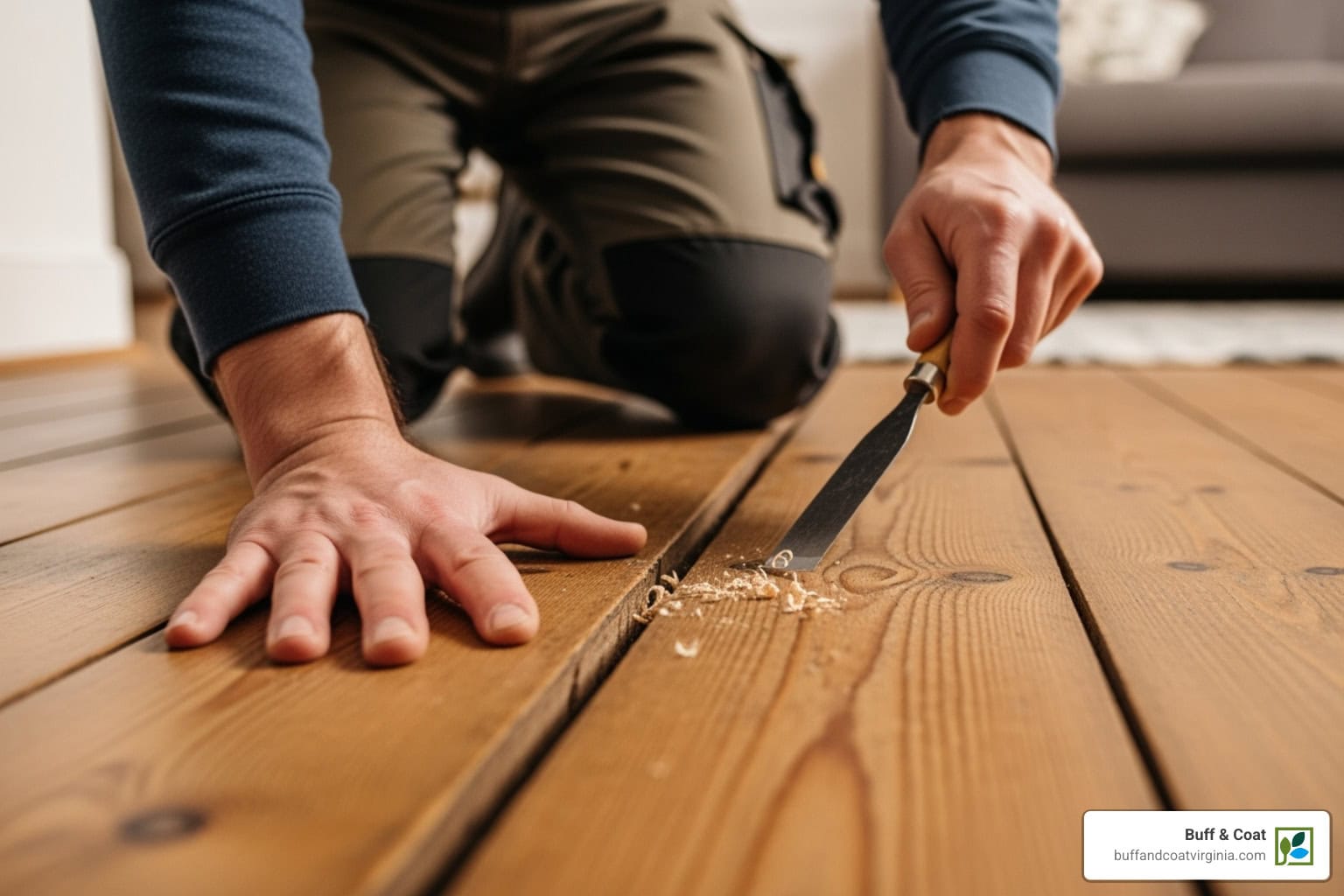
Why Squeaky Floor Repair Near Me is More Than Just an Annoyance
Squeaky floor repair near me is a common search when a persistent creak becomes too much to bear. That groan with every step can quickly turn from a nuisance into a major frustration. But an annoying squeak isn’t just about noise; it can signal deeper issues like loose subflooring, gaps between joists, or even structural problems. The good news is that most squeaks are fixable with the right approach and professional hardwood floor repair services.
Quick Answer for Squeaky Floor Repair:
- Handyman: Good for simple fixes ($200-$500)
- Flooring Contractor: Best for complex issues ($480-$1,700)
- Structural Engineer: Required for major foundation problems ($1,000+)
- DIY Options: Screw kits, shims, lubricants (under $50)
The key is knowing when to DIY versus when to call a pro. Simple squeaks might just need a few screws, but complex issues often require specialized tools and expertise. I’m David Emmerling, owner of Buff & Coat Hardwood Floor Refinishing. With over 20 years of experience in floor restoration in Richmond, Virginia, I’ve diagnosed countless squeaky floors and understand the structural issues that cause them.
Terms related to squeaky floor repair near me:
Why Is My Floor Squeaking? Uncovering the Common Culprits
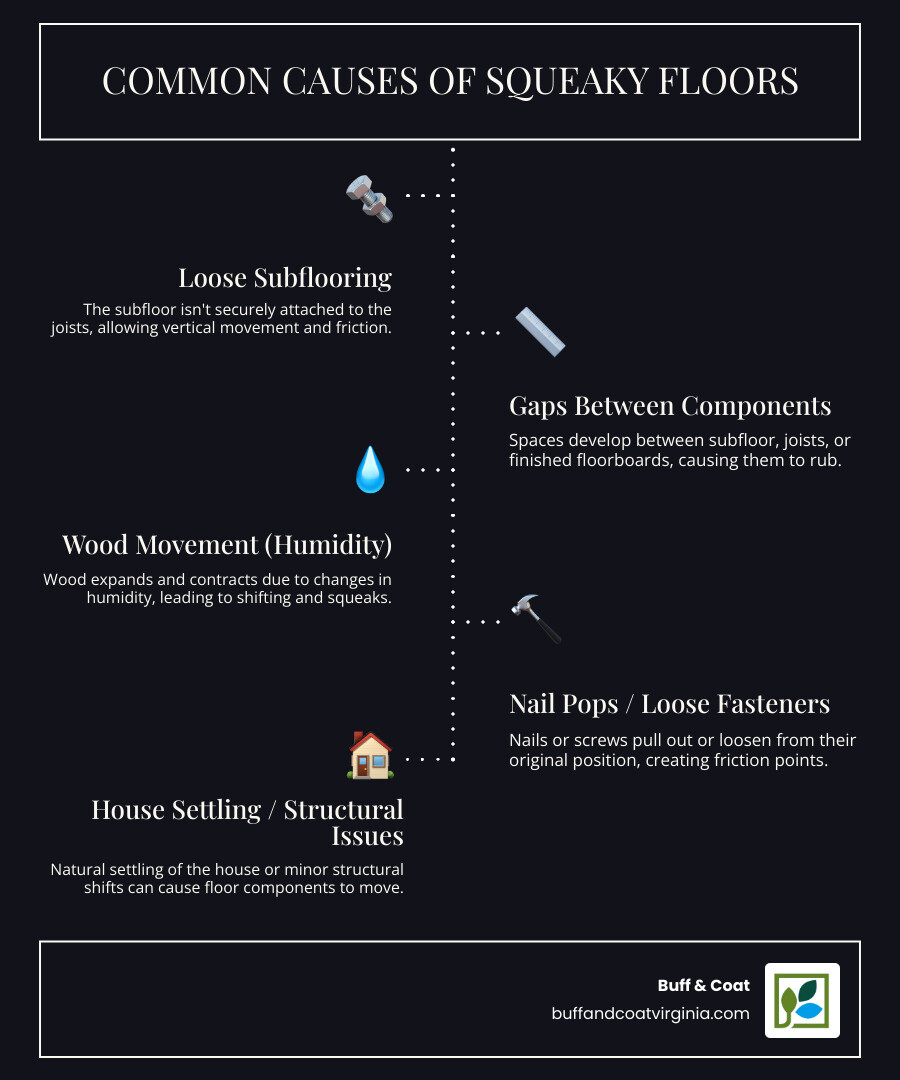
Ever wonder what’s causing that annoying creak? Understanding squeaky floor repair near me starts with identifying the cause. A squeak happens when two materials rub together, but the real culprit is usually hiding beneath the surface.
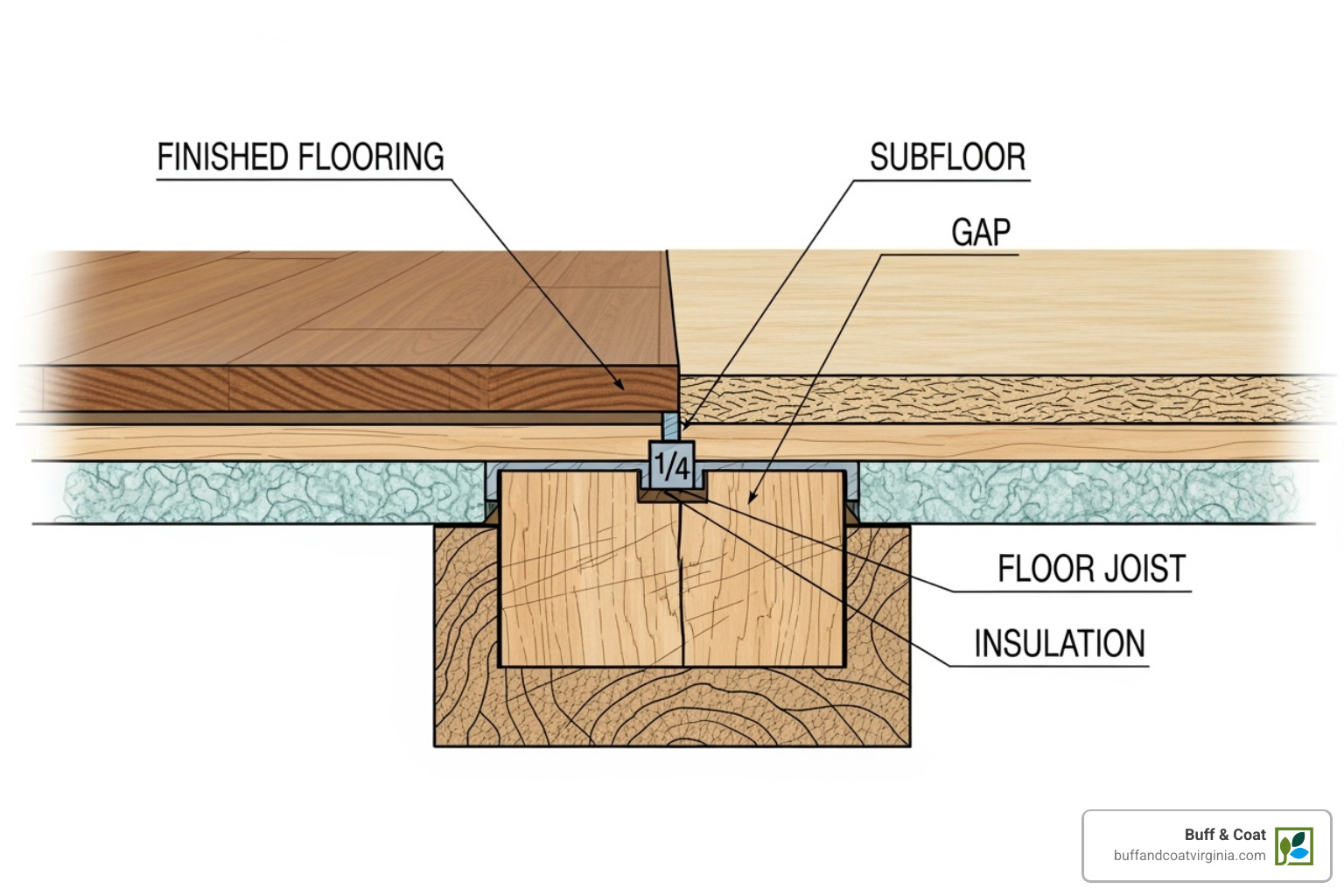
Your floor is a layered system: the finished surface on top, the subfloor in the middle, and floor joists supporting everything. When these layers shift, the squeaking begins.
- Wood movement from humidity changes: Wood swells in high humidity and shrinks when it’s dry. Seasonal changes, especially in Richmond, cause floors to expand and contract, loosening nails and creating gaps.
- House settling: All homes settle over time as lumber dries. This shifting can change the alignment of joists and subfloors, creating new friction points.
- Loose subflooring: If the subfloor isn’t tightly attached to the joists, it moves and creates noise with every step.
- Nail pops: Over time, nails holding the flooring or subflooring can work their way out. The nail shaft rubbing against the wood creates a distinct squeak.
Identifying the Source of the Squeak
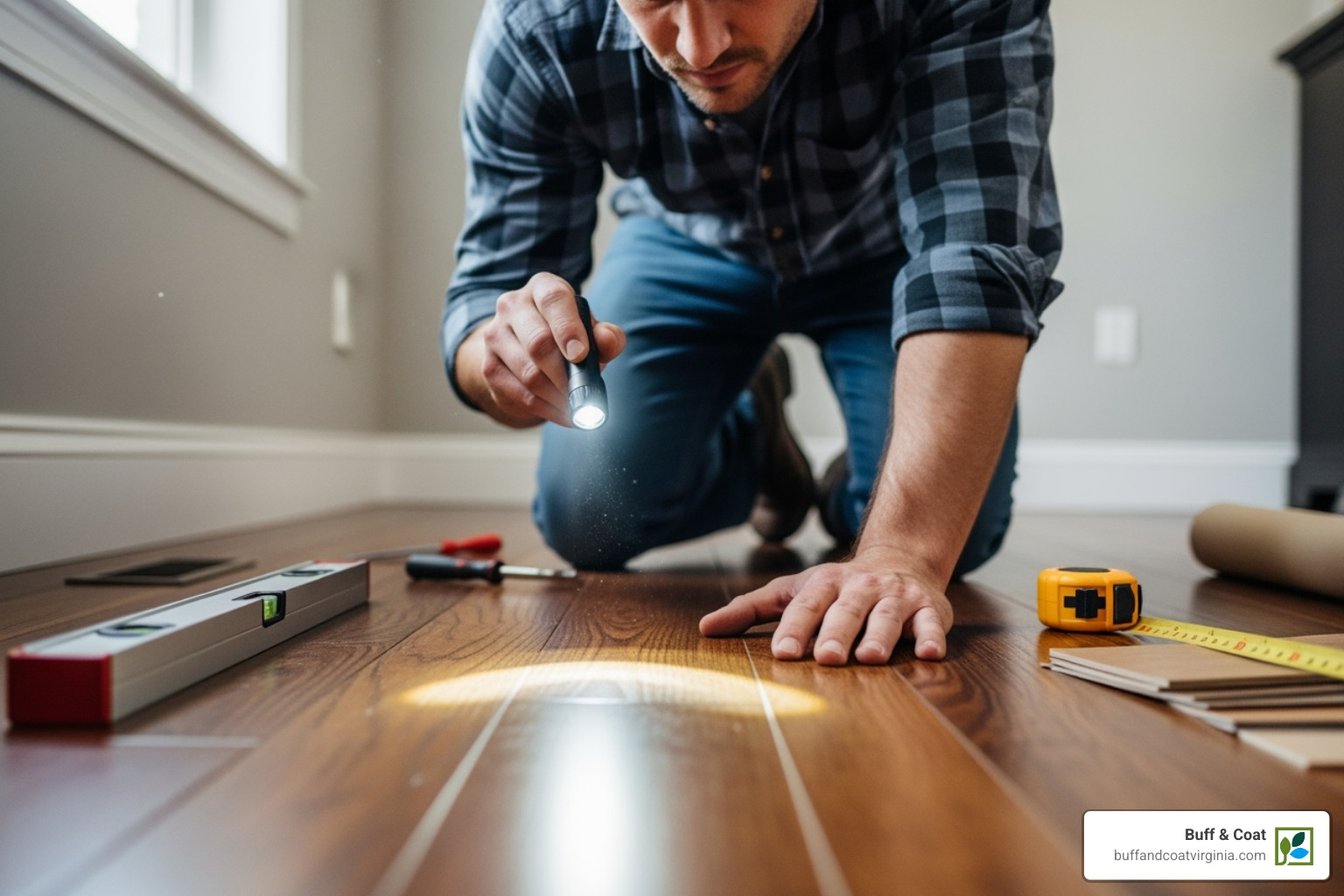
Finding the source of a squeak is a process of elimination. Start with a walking test: walk slowly over the area to find the loudest spots. If you have basement or crawlspace access, have someone walk above while you listen and watch from below to see the subfloor move. Understanding your joist direction is also key; squeaks often occur where the subfloor meets these support beams. Use a stud finder to map them out. The goal is to isolate the exact spot where the noise originates. For more tips, our floor restoration guide can help.
When a Squeak Signals a Bigger Problem
Most squeaks are just an annoyance, but some can indicate serious issues. Be alert for these red flags:
- Structural Issues: If a squeak is accompanied by noticeable sagging, bouncing, or a feeling that the floor might give way, you could have compromised joists.
- Foundation Shifts: Widespread squeaks combined with wall cracks or doors that no longer close properly can signal foundation movement.
- Water Damage: Persistent moisture from leaks can cause wood to rot and warp. Address the moisture source immediately.
- Pest Infestations: Termites or carpenter ants can damage your floor’s support structure. Look for droppings or damaged wood.
- Visible Sagging: If floors are visibly sagging or have depressions, it’s a sign of structural failure and requires immediate professional assessment.
When should you call a structural engineer? If you see any of the signs above, especially widespread squeaks, sagging, or wall cracks, don’t hesitate. An engineer can assess your home’s foundation and framing. For more on serious floor issues, see our guide on hardwood floor damage repair.
DIY Fixes vs. Hiring a Professional
When a floor creak starts, you face a choice: grab your toolbox or your phone? The right answer for squeaky floor repair near me depends on the cause and your comfort with carpentry. A single loose board is a great DIY project, but widespread squeaking may signal a more serious issue.
| Feature | DIY Squeaky Floor Repair | Professional Squeaky Floor Repair |
|---|---|---|
| Cost | Low (under $50 for materials) | Moderate to High ($480 – $1,700 average, more for structural) |
| Time | Varies, can be time-consuming, especially for diagnosis | Efficient, professionals typically complete quickly |
| Complexity | Best for simple, easily accessible squeaks | Handles complex issues, structural problems, and hidden causes |
| Long-Term Effectiveness | Often temporary, may not address root cause | More permanent, addresses underlying issues for lasting results |
| Skill Required | Basic carpentry skills, patience, problem-solving | Specialized expertise, advanced tools, structural knowledge |
| Risk | Potential for cosmetic damage, incomplete fix, voiding warranties | Low risk of damage, guaranteed work, adherence to codes |
Common DIY Squeaky Floor Repair Methods
For localized squeaks, a DIY approach can be satisfying and budget-friendly.
- Powdered Graphite or Talcum Powder: For hardwood, sprinkling powder into the seams can lubricate boards that are rubbing together. It’s a temporary but cheap fix.
- Wood Shims: If you have access from below, gently tap a thin wood shim into any gap between the subfloor and a joist. Don’t force it, or you could create a hump.
- Construction Adhesive: Apply a bead of adhesive along the joist where it meets the subfloor for a stronger bond, often used with screws.
- Specialized Screw Kits: Systems like “Squeak-No-More” use special screws that drive through the floor into the joist, after which the head breaks off below the surface. This is great for carpeted floors.
- The ‘This Old House’ Method: A classic technique of driving screws up through the subfloor. This Old House provides a helpful tutorial on this process.
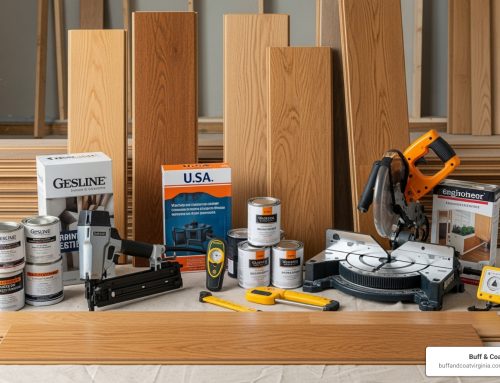
Essential tools: You’ll need a drill, screws, shims, construction adhesive, a stud finder, and safety glasses.
Why You Should Call a Professional
While DIY is great for simple jobs, some situations demand a professional.
- Complex or Widespread Issues: If your attempts fail or the squeaking is everywhere, a pro can diagnose underlying problems like inadequate subfloor attachment or weakened joists.
- Lack of Access: The best repairs are often done from below. If you don’t have a basement or crawlspace, pros have tools to work from above with minimal disruption.
- Structural Concerns: Squeaks can be a symptom of water damage, pests, or foundation shifts. These issues require a flooring contractor or structural engineer.
- Permanent Fixes: Professionals address the root cause for a lasting solution, not just a temporary patch.
- Protecting Your Investment: A mistake with a drill can cause costly cosmetic damage to expensive flooring. Pros have the experience to avoid this. For comprehensive solutions, see our professional repair solutions.
Hiring a Pro for Squeaky Floor Repair Near Me
When you decide to call in experts for squeaky floor repair near me, choosing the right one is key to a permanent solution.
Flooring Contractor vs. Handyman: A skilled handyman can handle simple fixes, but a dedicated flooring contractor has specialized experience. We understand how different wood species, subfloor systems, and humidity levels interact. This expertise allows for a faster, more accurate diagnosis of whether a creak is a minor issue or a sign of something more serious.
Vetting Your Professional: Don’t just hire the first name you find. Research companies with solid reputations. A good contractor will provide references, show proof of proper licensing and insurance, and have positive online reviews. How a company responds to feedback reveals its commitment to customer satisfaction.
What to Expect from a Squeaky Floor Repair Near Me Service
Here’s what a professional repair process typically involves:
- Initial Inspection: We act as floor detectives, walking the area, listening for patterns, and examining the floor system. Access from a basement or crawlspace allows us to see exactly what’s happening underneath.
- Diagnosis and Quote: We’ll explain the cause of the squeak in plain English and provide a transparent quote. You’ll know the plan and the cost before any work begins.
- The Repair: Depending on the diagnosis, we use various methods. These can include subfloor screw reinforcement, joist gap shimming, re-nailing loose floorboards, installing squeak-eliminating brackets, or using glue injection techniques. For deeper issues, we may recommend structural reinforcement.
Our goal is always a comprehensive, lasting solution. You can learn more about our approach to professional hardwood floor repair services.
How Repair Methods Vary by Floor Location
The location of the squeak dictates the repair strategy.
- First Floor with Basement Access: This is the ideal scenario. We can work from below using shims, blocking, or brackets, leaving your finished floor untouched.
- Second-Story Floors: Without access from below, we may need to remove a small section of the ceiling drywall to perform the most effective repairs, which we then patch and paint.
- Repairs Through Carpet: We can often use special screws that drive through the carpet and break off below the surface. Or, we can carefully pull back the carpet, make the repair, and re-stretch it.
- Repairs on Hardwood or Tile: These require the most care to avoid cosmetic damage. We prioritize working from below. If we must work from above, we use precision techniques like thin screws with expert patching.
As experienced flooring contractors in Richmond, VA, we understand the nuances of local homes and are here to make your floors quiet again.
Understanding the Cost of Silencing Your Floors
One of the first questions homeowners ask is, “How much does it cost to repair a squeaky floor?” The answer depends on several factors, making the final price range from an affordable fix to a more substantial investment.
Most homeowners can expect to pay between $480 to $1,700 for professional squeaky floor repair. The lower end of this range typically covers simple fixes, while the higher end is for more complex issues requiring extensive subfloor work.
However, severe structural issues can push costs significantly higher, sometimes from $1,500 to $3,000 or more, especially if a structural engineer is needed.
Several key factors affect the final price:
- Severity of the Issue: A single loose board is much cheaper to fix than widespread subfloor problems.
- Accessibility: Working from an accessible basement or crawlspace is more straightforward and affordable than repairs that require removing ceilings or flooring.
- Materials Needed: Basic screws and shims are inexpensive, but specialized brackets or new subflooring will add to the cost.
- Labor Rates: Costs vary by region.
- Type of Flooring: Hardwood and tile require more care and time to repair without causing cosmetic damage compared to working under carpet.
A professional diagnosis is the only way to get an accurate estimate for your specific situation.
Frequently Asked Questions about Squeaky Floors
We get plenty of calls about creaky floors. Here are the answers to the most common questions we hear.
What type of flooring is most likely to squeak?
Hardwood floors are the most common culprits. As a natural material, wood expands and contracts with humidity, which loosens fasteners over time. Older homes are also more prone to squeaks because they were often built with nails instead of the modern screws and adhesives that hold better. Engineered wood and laminate can also squeak, but the noise usually comes from the subfloor beneath them, not the flooring itself. Regardless of the type, squeaky floor repair near me services can typically solve the problem.
Can a squeaky floor be fixed permanently?
Yes, a permanent fix is possible by addressing the root cause instead of just masking the symptom. Professional methods like securing the subfloor to the joists with screws or adding shims are designed to eliminate the movement that causes the squeak. Proper installation and humidity control in your home also play a huge role in preventing future squeaks. A professional repair that addresses the underlying structural issue can provide a permanent solution.
What are the long-term implications of not fixing a squeaky floor?
Ignoring a squeak can lead to bigger problems. The annoyance will likely grow, but more importantly, the unchecked movement can lead to worsening damage. Fasteners can loosen further, and your finished flooring can wear down. In rare cases, squeaks can be a symptom of potential structural failure from water damage, pests, or weakened joists. Finally, squeaky floors can decrease property value, as potential buyers often see them as a sign of poor maintenance. Promptly addressing squeaks protects your home and investment.
Get a Professional and Permanent Fix for Your Squeaky Floors
We’ve covered why your floors squeak, how to decide between DIY and professional repair, and what to expect when you hire an expert for squeaky floor repair near me. The key takeaway is that while some creaks are minor, persistent squeaks often point to underlying issues with the subfloor or joists.
The peace of a quiet home is priceless. Imagine walking through your house without announcing every step. A professional repair provides not only silence but also the confidence that your floors are structurally sound.
At Buff & Coat, we have over 20 years of experience with floors throughout Richmond, Virginia. While we specialize in dustless refinishing, we understand the entire floor system, from the joists up. We believe in fixing problems permanently, not just masking them.
Our goal is to diagnose the root cause of the squeak and provide a lasting solution so you can enjoy years of quiet, comfortable living.
Don’t let an annoying squeak turn into a bigger, more expensive problem. For a comprehensive evaluation to silence your floors for good, schedule a free estimate and inspection with our team today. Let’s bring peace and quiet back to your home.