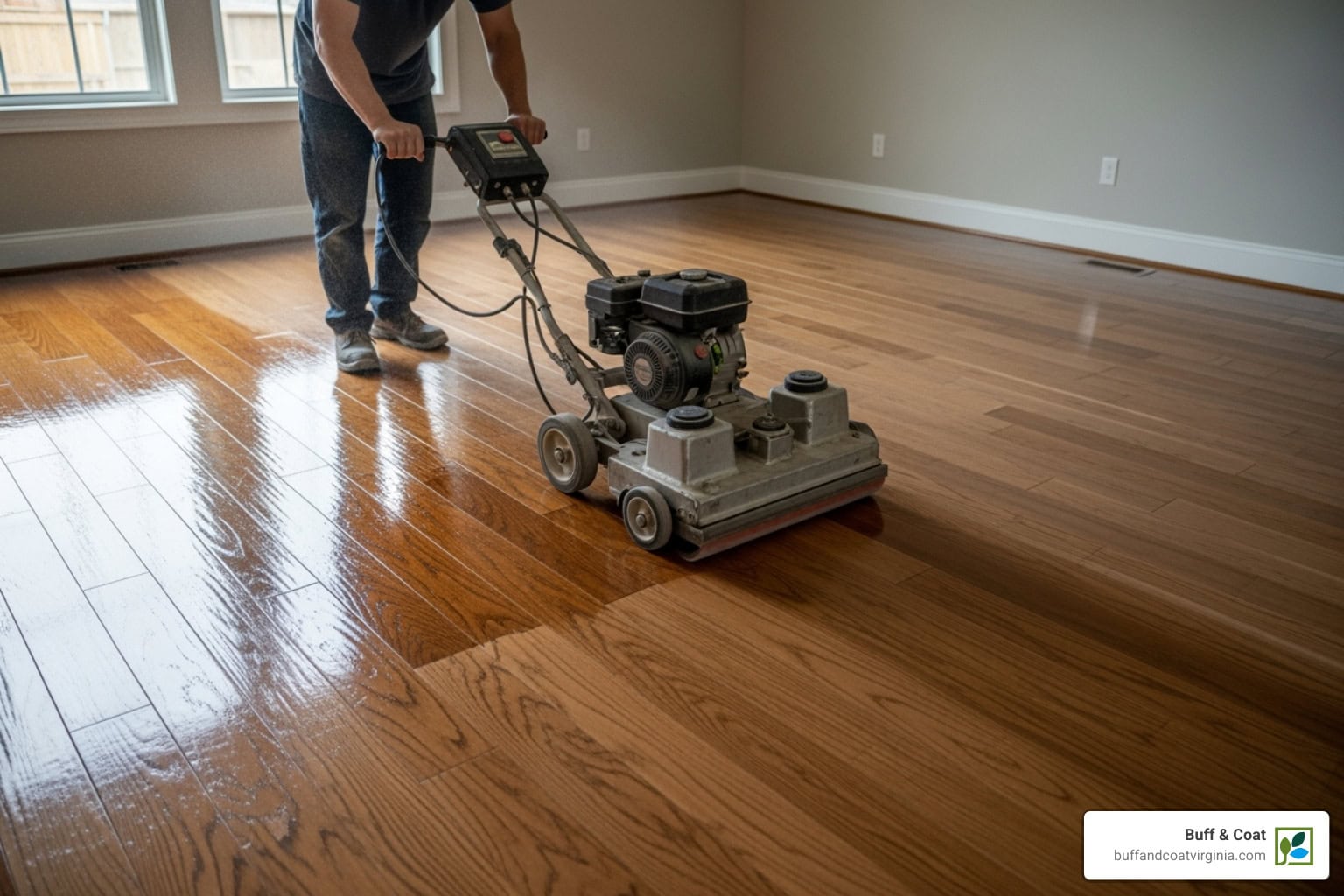
Why Screen and Recoat is Your Floor’s Best Friend
Screen and recoat hardwood floors is a gentle restoration that revives your floor’s beauty without the cost and mess of full refinishing. Here’s a quick overview:
What is Screen and Recoat?
- Light sanding (screening) of the existing finish
- Application of a new protective coat
- Cost: $1.00-$3.50 per square foot
- Time: Usually one day
- Best for: Dull finish, light scratches, worn areas
Key Benefits:
- 90% less dust than full sanding
- Preserves wood thickness
- Extends floor life by 3-7 years
- Walk on floors the next day
Over time, daily wear can dull your hardwood floors. Scratches from furniture, pets, and foot traffic diminish the finish you once loved. The good news is you don’t need a full refinishing. For homeowners seeking expert dustless hardwood restoration, the screen and recoat method is a brilliant solution. This process gently removes the worn top layer of finish and applies a fresh protective coat, changing tired floors back to their original glory.
As the President of Buff & Coat, I’ve seen how our dustless hardwood restoration amazes homeowners. We screen and recoat hardwood floors to restore their beauty, completing most projects in a single day with minimal disruption and stunning results.
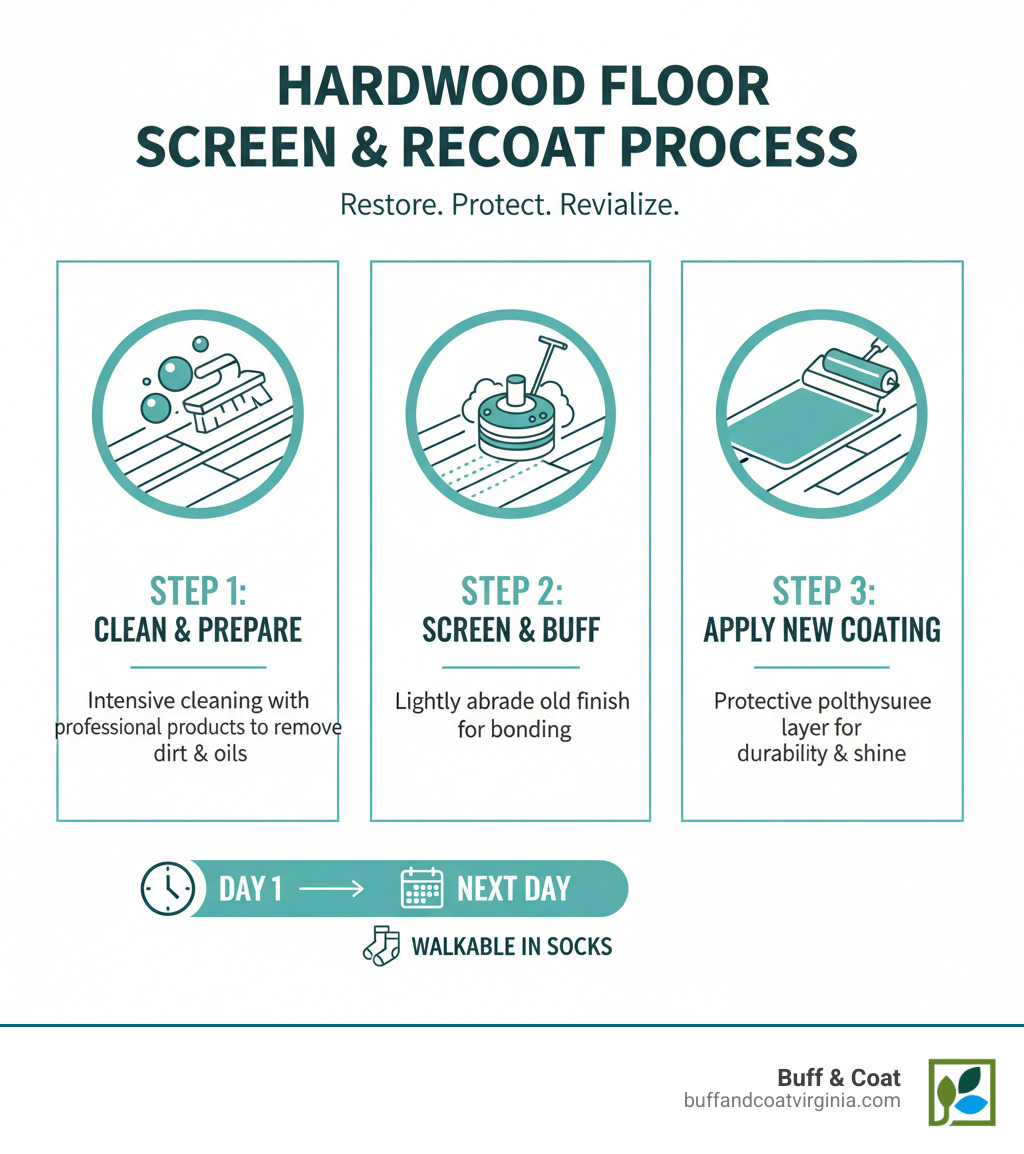
Screen and recoat hardwood floors vocab explained:
What is Screening and Recoating vs. Full Refinishing?
When your hardwood floors look worn, you have two main restoration options. The gentler approach is to screen and recoat hardwood floors (also called buff and coat), while the more intensive route is full sanding and refinishing. Think of it as a spa day versus major surgery for your floors.
Screening is a light exfoliation for your floors. We use a machine with a mesh abrasive pad to gently scuff the existing finish. This creates a surface that a new coat can adhere to without removing any wood.
Recoating is the next step, where we apply a fresh layer of polyurethane. This new protective coat restores shine and extends your floor’s life, making even decade-old floors look nearly new.
Full sanding and refinishing is a heavy-duty process that strips all finish and a thin layer of wood to reach the bare surface. It’s effective for severe damage but is more invasive, time-consuming, and costly. For homeowners seeking professional flooring contractors, understanding this difference is key.
The core difference is preservation versus renovation. Screening and recoating preserves your existing wood, while full sanding starts over from scratch.
The Key Differences at a Glance
Here’s how these two approaches compare:
| Feature | Screen & Recoat Hardwood Floors | Full Sanding & Refinishing |
|---|---|---|
| Purpose | Refresh dullness, remove light surface scratches, restore protection | Address deep scratches, gouges, stains; change wood color; complete overhaul |
| Invasiveness | Light abrasion of existing finish; no wood removed | Sands down to bare wood; removes a thin layer of wood |
| Time | Typically completed in a single day | Multiple days to a week or more |
| Cost | $1.00 – $3.50 per square foot (professional) | $3.00 – $8.00+ per square foot (professional) |
| Dust/Mess | Minimal, especially with dust-free techniques | Significant, even with dust containment systems |
| Outcome | Restores shine, adds new protective layer, extends finish life | “Like new” appearance, allows for stain changes, maximum durability |
A screen and recoat is perfect for surface-level wear, while full sanding tackles deep damage. The professionals at Understanding re-finishing / screen & recoat / etc. : Hardwood Floor Finishing explain these nuances in great detail.
For a comprehensive look at all your restoration options, check out our Hardwood Floor Refinishing Guide.
When to Choose a Screen and Recoat
You should screen and recoat hardwood floors when you notice:
- A Dull Finish: If your floors look lifeless but aren’t severely damaged, a recoat will restore their luster.
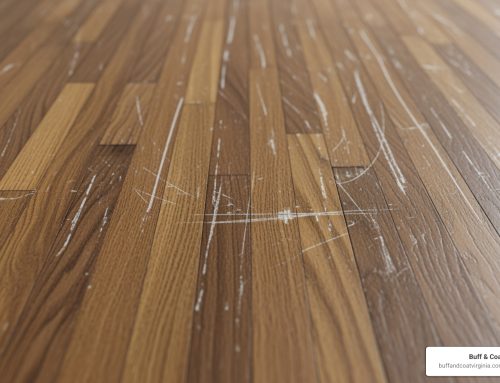
- Light Surface Scratches: The process is perfect for everyday scuffs from furniture or pet nails that haven’t penetrated the wood.
- Worn High-Traffic Areas: It effectively evens out wear in places like hallways and kitchen entrances.
Try the water drop test: place a few drops of water on the floor. If it beads up, your finish is intact. If it soaks in slowly, it’s time for a recoat. If it absorbs quickly and darkens the wood, you likely need a full refinishing.
We recommend a screen and recoat as part of regular Hardwood Floor Maintenance every 3-7 years. This proactive approach can help you avoid the need for full sanding indefinitely.
The Step-by-Step Process to Screen and Recoat Hardwood Floors
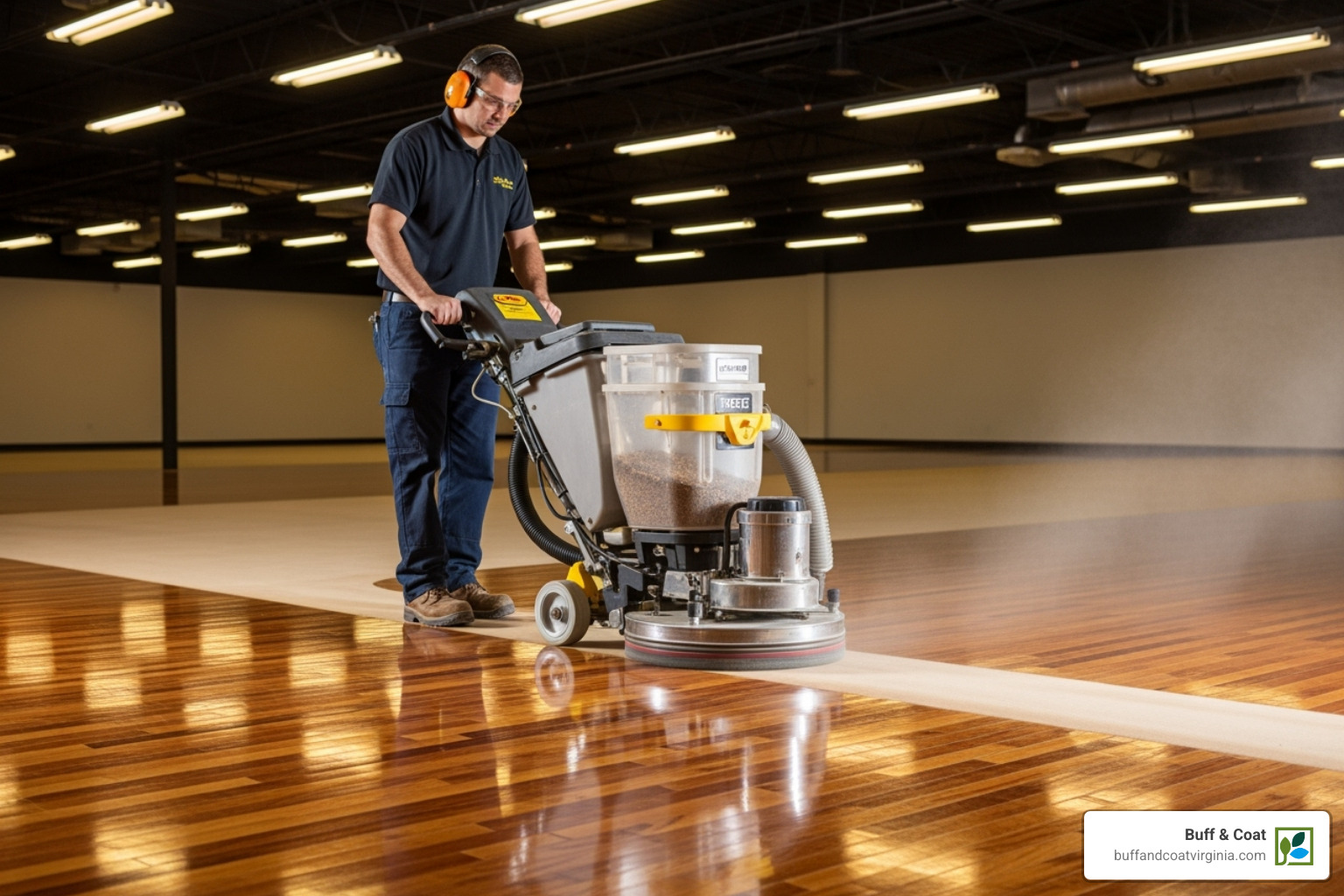
When you decide to screen and recoat hardwood floors, you’re choosing a process that requires skill and attention to detail. As experienced flooring contractors, we’ve perfected each step to minimize mess and maximize results.
Step 1: Intensive Cleaning and Preparation
Proper preparation is the most critical stage, as most recoat failures stem from inadequate cleaning. We begin with a thorough vacuuming, followed by an intensive cleaning process using commercial-grade products that strip away years of buildup.
This step is vital because contaminants like wax, acrylic polish, or oil soap residue will prevent the new finish from bonding, leading to peeling and bubbling. We use power scrubbing equipment to ensure every inch of the floor is perfectly clean, guaranteeing the new finish will adhere properly and last for years. As flooring professionals emphasize, thorough cleaning is absolutely crucial for proper adhesion.
Step 2: The Screening (or “Buffing”)
Once the floors are clean and dry, we move to the screening phase. This is the heart of the screen and recoat hardwood floors process.
Using a professional floor buffer and a mesh abrasive pad (the “screen”), we gently scuff the existing finish. This isn’t aggressive sanding; it’s a careful process that creates thousands of microscopic scratches. These grooves give the new protective coat something to grip, ensuring a strong, durable bond.
The screening also smooths out minor surface imperfections like shallow scratches, evening out the floor’s appearance. Our state-of-the-art dust containment systems capture nearly all dust at the source, keeping your home clean and the air breathable. You can see this screening process in action to understand how precise it is.
Step 3: Applying the New Protective Coat
After screening, we vacuum again and use a tack cloth to remove any remaining dust. Even a single particle can mar the final finish, so this step is non-negotiable.
Now we apply the fresh, protective coat of polyurethane. We offer different options to customize your look:
- Water-based polyurethanes dry quickly, remain clear, and have low odors.
- Oil-based options take longer to dry but develop a beautiful amber tone over time.
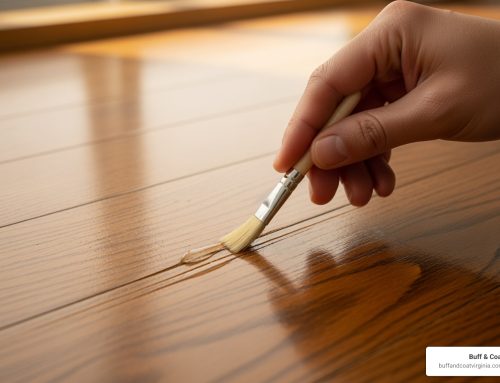
You also choose your desired sheen level, from high gloss to satin or matte. Our signature buff and coat process ensures an even application for a durable result that protects your investment. Applying the finish requires a steady hand to achieve a smooth, streak-free surface that will make your whole home feel fresh again. Check out this new finish application to see the final change in action.
Pros, Cons, and Potential Risks
When considering whether to screen and recoat hardwood floors, it’s important to have realistic expectations. The process works wonders for many floors, but it’s not a magic bullet for all types of damage.
The Benefits of a Screen and Recoat
The advantages of choosing to screen and recoat hardwood floors make it one of the smartest investments for your home.
- Cost-Effective: At $1.00 to $3.50 per square foot, it’s significantly cheaper than a full refinish, which can cost $3.00 to $8.00+.
- Time-Efficient: Most projects are completed in a single day, with minimal disruption to your life.
- Minimal Dust: Advanced dust-free techniques mean you won’t be cleaning up dust for weeks.
- Extends Floor Life: A new protective layer shields your wood from wear, moisture, and UV damage, delaying the need for full refinishing.
- Preserves Wood: Since no wood is removed, the process maintains your floor’s thickness and structural integrity, which is especially important for engineered hardwood.
- Restores Shine: The process effectively restores shine and brings dull floors back to life, often making them look nearly new.
Limitations and What to Avoid
Screening and recoating is not a solution for every problem. Understanding its limitations is key to making the right choice.
- Deep Damage: It will not fix deep scratches, gouges, or pet stains that have penetrated the wood itself. These issues require full sanding. For these situations, specialized hardwood floor scratch repair techniques are needed.
- Contaminated Floors: The process is ineffective on floors treated with wax, acrylic polish, or oil soap, as these products prevent the new finish from bonding.
- Color Changes: You cannot change your wood’s color with a screen and recoat. This requires full sanding and restaining.
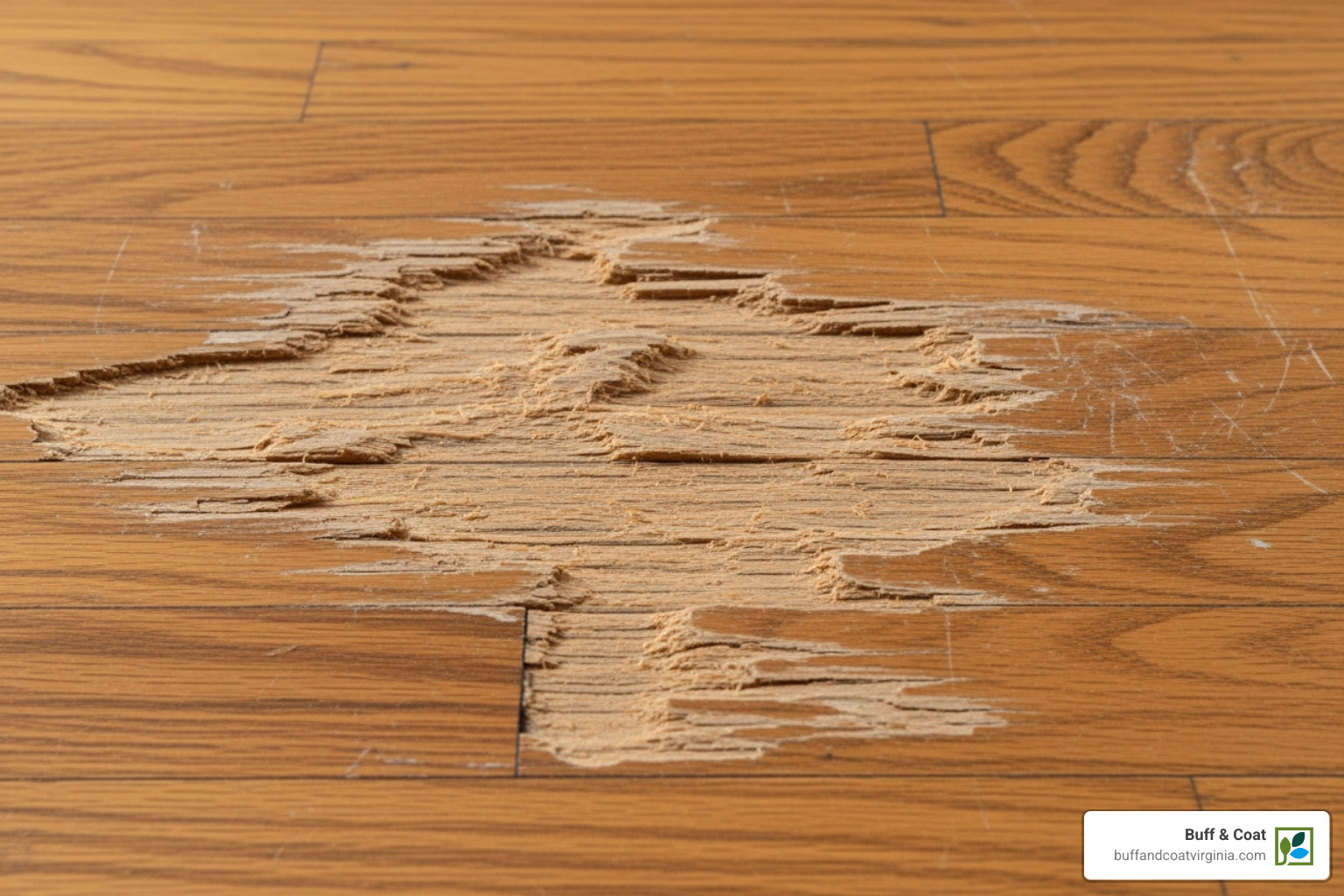
- Severe Damage: Floors with water damage, cupping, or warping need more intensive repair or replacement.
Can All Hardwood Floors Be Screened and Recoated?
Most hardwood floors are candidates, but there are exceptions:
- Solid and Engineered Hardwood: These are usually perfect candidates, provided the wear layer on engineered floors is thick enough.
- Factory-Finished Floors with Aluminum Oxide: These hard finishes require special chemical etching or abrasion techniques best left to professionals.
- Textured Floors: Hand-scraped or textured floors can be recoated but require special pads and expertise to avoid flattening the texture.
- Incompatible Finishes: Old finishes like shellac or varnish may not accept a new polyurethane coat and often require complete removal. We consult guidelines from the National Wood Flooring Association to ensure the correct approach.
If your floor has a polyurethane finish with normal wear, it’s likely a great candidate. When in doubt, a professional assessment is the wisest choice.
Cost and Professional vs. DIY Considerations
When refreshing your floors, the budget is always a key consideration. The great news is that choosing to screen and recoat hardwood floors is one of the most cost-effective ways to transform your home. But should you do it yourself or hire a professional?
How Much Does it Cost to Screen and Recoat Hardwood Floors?
Professionally, this service typically costs between $1.00 and $3.50 per square foot, often less than half the price of a full refinish. For a 500-square-foot room, you might pay between $750 and $1,250.
The final price can vary based on project size (smaller jobs may have a higher per-square-foot rate), your location, the floor’s condition, and the type of finish selected. Premium water-based polyurethanes and advanced dust-free systems might cost slightly more but offer superior long-term value and convenience.
DIY costs include equipment rental ($25/day), screening disks ($6-$10 each), and polyurethane ($25-$40/gallon). While this may seem cheaper, the savings can quickly vanish if something goes wrong, leading to a more expensive professional fix.
Our floor refinishing services in Richmond offer transparent, competitive pricing, so you know exactly what you’re paying for with no surprises.
DIY vs. Hiring a Professional
While the appeal of a DIY project is understandable, the risks of trying to screen and recoat hardwood floors yourself often outweigh the potential savings.
Common DIY disasters we see include:
- Uneven Finishes: Without proper technique, it’s easy to end up with streaks, lap marks, or a cloudy appearance.
- Bubbles and Imperfections: Trapped dust or improper application can create bubbles in the new finish that are impossible to fix without starting over.
- Poor Adhesion: The most serious issue is a peeling or flaking finish, usually caused by inadequate cleaning of contaminants like wax or soap residue.
Professional equipment, like our industrial-grade buffers and dust containment systems, is designed for consistent, flawless results that rental tools can’t match. Our advanced dust-free techniques also keep your home clean, capturing particles at the source.
While we can complete most projects in a day, a DIY attempt can stretch over a long weekend. As we detail in our post on The Importance of Hiring Professionals for Hardwood Floor Refinishing: Buff Coat’s Expertise, the quality, longevity, and peace of mind make hiring an expert a smart investment.
Frequently Asked Questions about Screening and Recoating
When homeowners learn about the screen and recoat hardwood floors process, they often have similar questions. Here are answers to the most common ones to help you feel confident in your decision.
How long does the screen and recoat process take?
One of the biggest benefits is the speed. Most projects are completed in a single day. You can walk on the floors in socks the very next day, a stark contrast to the week-long disruption of a full refinish.
While the finish is dry to the touch quickly, it takes 5 to 30 days to fully cure, depending on the polyurethane type, humidity, and temperature. During this curing period, we recommend being gentle with heavy furniture and waiting to place area rugs. We provide detailed care instructions to ensure your floors stay perfect.
Will a screen and recoat get rid of all scratches?
It’s crucial to set realistic expectations. A screen and recoat hardwood floors process is excellent for light surface scratches and scuffs that are only in the finish layer. The screening smooths these out, and the new coat makes them virtually disappear.
However, it will not fix deep scratches, gouges, or dents that have penetrated the wood itself. If you can catch a fingernail in a scratch, it’s likely too deep to be removed by this process and would require full sanding. Even so, most homeowners find these deeper marks far less noticeable against their beautifully refreshed floors.
How often should I screen and recoat my floors?
Think of it as regular maintenance, like changing the oil in your car. The ideal frequency is every 3 to 7 years, depending on your lifestyle.
- High-traffic households with kids and pets may need recoating every 3 to 5 years.
- Quieter homes with lighter foot traffic can often go 6 or 7 years.
By staying on top of this maintenance, you can indefinitely postpone the need for a full, invasive sanding. This preventative care protects your floors and your wallet. The key is to act when you first notice dullness or wear, rather than waiting for significant damage to occur.
Restore Your Floors’ Beauty Today
Your hardwood floors deserve to look their best. Screen and recoat hardwood floors is a smart investment that protects one of your home’s most valuable features while saving you time and money.
For a fraction of the cost of full refinishing, you can transform dull, lightly scratched floors back to their former glory in just one day. There are no weeks of dust and no major disruption to your routine. It’s a spa day for your floors, not major surgery.
This process is also powerful preventative maintenance. By addressing wear early with a recoat every 3-7 years, you reset your floor’s protective layer and can potentially avoid aggressive sanding for decades, preserving your wood’s thickness.
Timing is key. Those dull spots and light scratches are your floors asking for help. Waiting too long may lead to the need for a more expensive and disruptive full refinish.
At Buff & Coat, we’ve helped Richmond area homeowners fall in love with their floors again for over 20 years. Our dust-free techniques and signature process deliver amazing changes.
Ready to see what your floors could look like? We offer a free, no-obligation estimate to evaluate your floors and recommend the best path forward. Don’t let another day pass with floors that don’t make you smile.
Visit our contact page today to schedule your free inspection. Your floors will thank you!