

Home Blog Floor Sanding and Polishing Pros Who Won’t Rub You the Wrong Way
Floor Sanding and Polishing Pros Who Won’t Rub You the Wrong Way

Why Floor Sanding and Polishing is Essential for Your Home
If your hardwood floors look tired, floor sanding and polishing can bring them back to life. This process removes the worn-out top layers to erase scratches and stains, then applies a fresh, protective finish. This restoration not only revives their natural beauty but is a key part of maintaining your home’s beautiful appearance. A professional touch improves your floors’ longevity and boosts your property’s value. For homeowners in the Richmond, VA area, finding reliable experts is key. Consider professional hardwood floor sanding services to achieve that like-new look. Our local team in Richmond specializes in delivering stunning results.
What is Floor Sanding and Polishing?
- Restores Worn Floors: Removes old, damaged finishes, stains, and imperfections.
- Reveals Fresh Wood: Uncovers a pristine layer of wood.
- Applies New Finish: Coats the wood with a durable, protective layer.
Why is it Important?
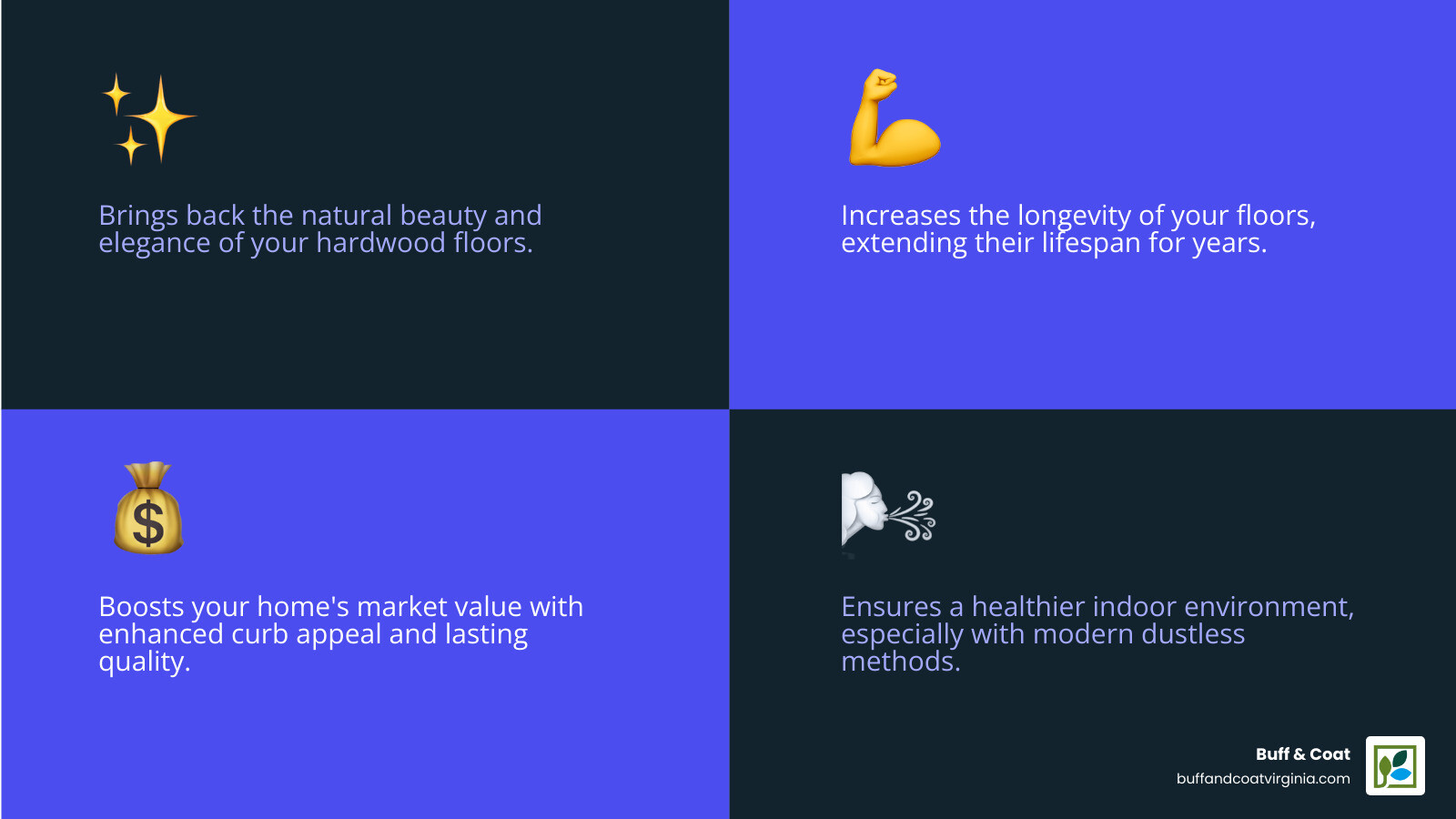
- Improves Appearance: Brings back your floor’s natural shine.
- Increases Longevity: Extends the life of your hardwood floors.
- Boosts Home Value: Beautiful floors contribute to market value.
- Removes Damage: Eliminates scratches, scuffs, and discoloration.
As an expert in this field, I’m David Emmerling, President and Owner of Buff & Coat Hardwood Floor Refinishing. For over 20 years, my company has provided high-quality, dustless floor sanding and polishing services, often completing projects in a single day.
Important floor sanding and polishing terms:
Understanding the Core Process: What is Floor Sanding and Why Bother?
Imagine your hardwood floors. Over time, daily traffic, pets, and spills lead to scratches, stains, and dullness. Floor sanding and polishing is the solution, acting like a reset button for your floors.
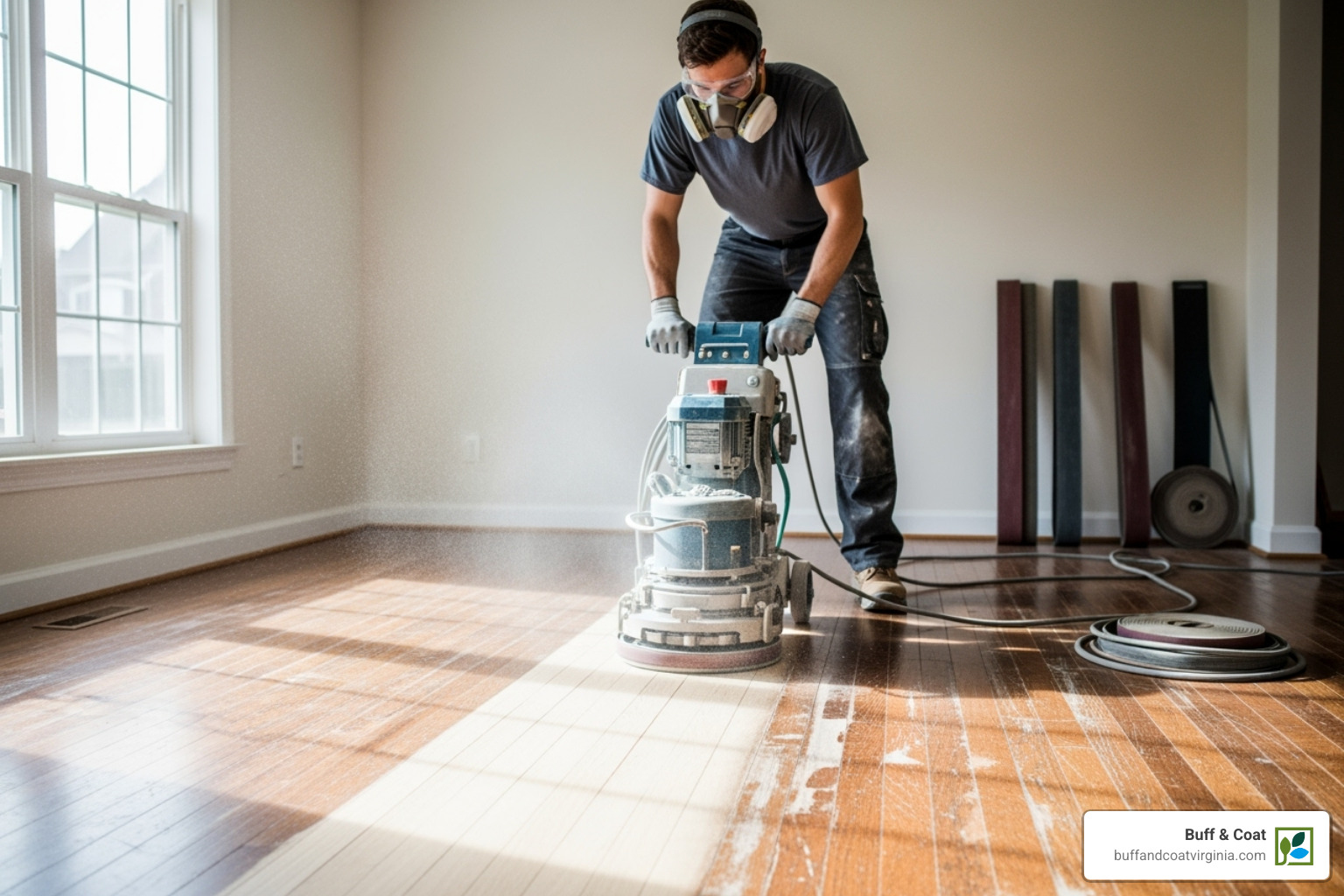
At its core, this process involves removing the old, worn-out finish and a thin layer of wood to reveal fresh timber. This crucial step eliminates surface imperfections, deep scratches, and stubborn stains that cleaning can’t fix. Once the fresh wood is exposed, showcasing its natural wood grain, it’s coated with a new, protective finish. Beyond the visual upgrade, sanding levels the surface for a smooth feel and ensures the new finish adheres properly, providing robust protection. This preserves your investment and increases property value. A well-maintained hardwood floor can last for decades. Learn more in our Guide to Hardwood Floor Refinishing.
Essential Preparation Before Sanding
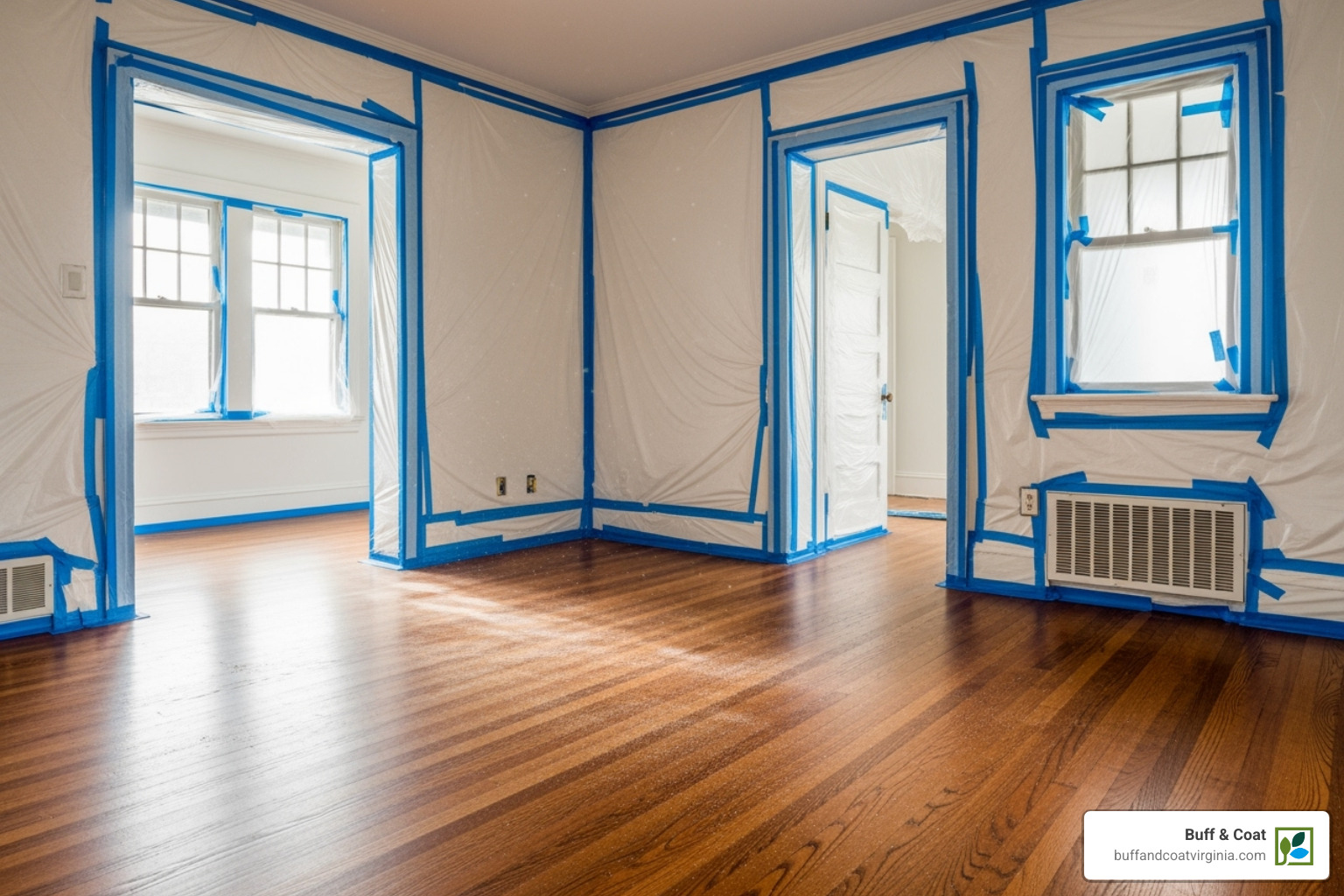
Proper preparation is paramount for a perfect finish. First, clear the room completely of all furniture, rugs, and wall hangings. Next, we secure any loose boards and counter-sink protruding nails to prevent damage to the sandpaper or sanding machine. A thorough cleaning follows, as we sweep and vacuum to remove all dust and grime. While not always required, removing baseboards allows for a seamless finish right up to the wall. Finally, we seal doorways and air vents with plastic sheeting to contain dust, even with our advanced dustless systems.
Key Tools and Materials for the Job
Achieving a perfect floor sanding and polishing job requires the right tools:
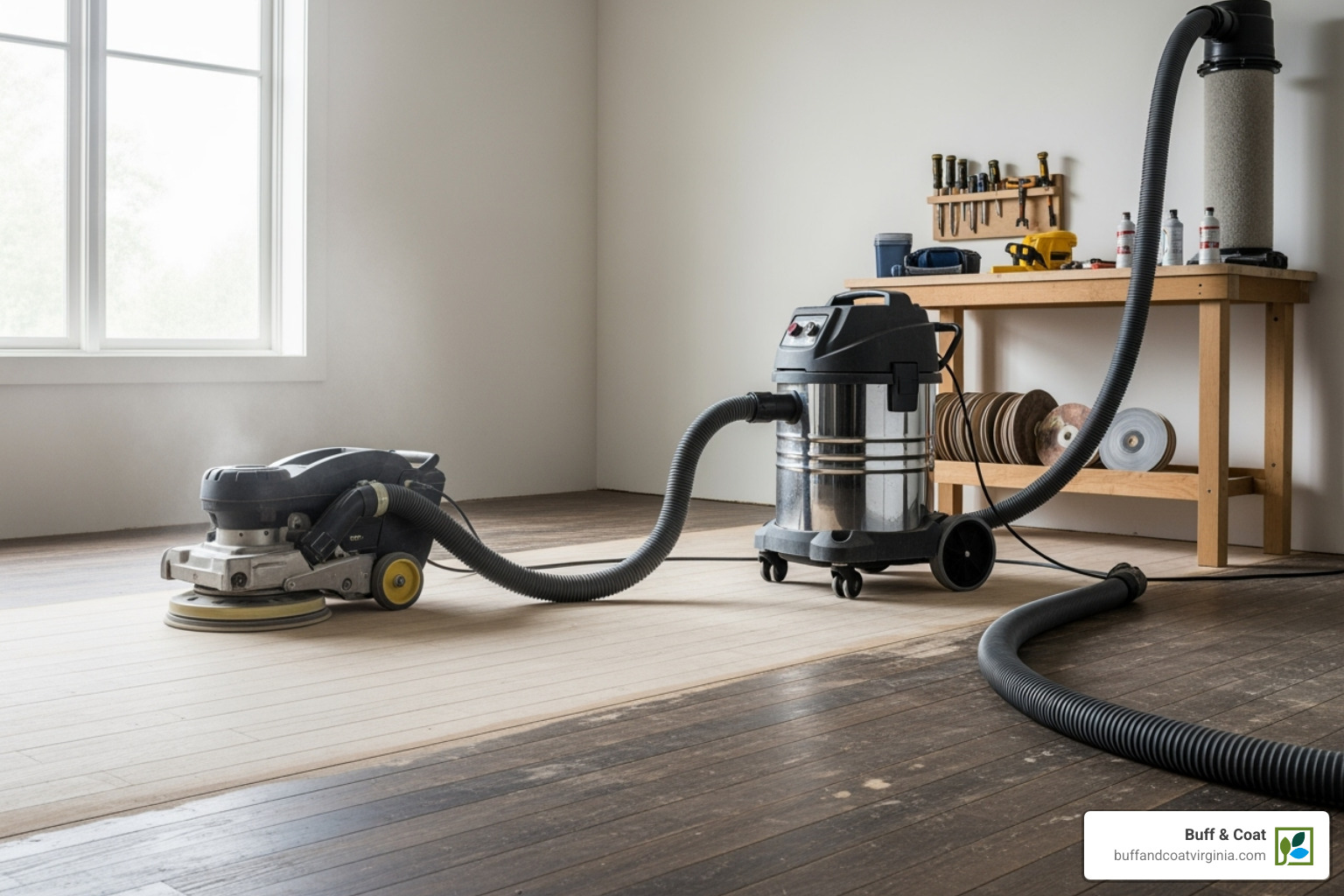
- Drum Sander: A powerhouse for removing old finishes and leveling the main floor areas.
- Edge Sander: A smaller sander for tight corners and areas near baseboards.
- Orbital Sander/Buffer: Used for fine sanding to achieve a super smooth finish before polishing.
- Various Grit Sandpapers: We progress from coarse (36-60 grit) to medium (60-80 grit) and fine (100-120 grit) for a silky-smooth surface.
- Safety Gear: We always use dust masks, safety goggles, and ear protection.
- Industrial Vacuum Cleaner: Essential for thorough dust removal between sanding passes.
- Tack Cloths: Used for a final wipe-down to pick up any microscopic dust particles.
- Wood Filler/Putty: Fills small cracks and nail holes for a seamless look.
- Applicators: Specific pads, rollers, or brushes are used for even finish application.
- High-Quality Wood Finish/Polish: The final protective layer, chosen for durability and appearance.
A Roundup of Floor Sanding Techniques
When it comes to floor sanding and polishing, there isn’t a one-size-fits-all method. The right technique depends on your floor’s current condition, the wood type, and your desired outcome. We’ve mastered them all, but it’s helpful for you to understand the main options.
| Technique | Effectiveness (Removal) | Difficulty (Skill Required) | Dust Level (Traditional) |
|---|---|---|---|
| Traditional Drum Sanding | High (aggressive) | High (risk of gouging) | Very High |
| Orbital Sanding | Medium (less aggressive) | Low (DIY-friendly) | Medium |
| Dustless Sanding (Modern) | High (efficient) | Medium-High (specialized) | Very Low |
| Hand Scraping | Low-Medium (selective) | Very High (artisan skill) | Very Low |
The Powerhouse: Traditional Drum Sanding
Traditional drum sanding is a powerful classic, known for its aggressive removal capabilities. It excels at cutting through old, stubborn finishes and deep scratches, and can even help level minor unevenness in a floor. However, this power requires high skill. In inexperienced hands, a drum sander can easily gouge the wood, causing permanent damage. Historically, these machines created significant dust, though modern versions have improved collection systems.
The DIY-Friendly Choice: Orbital Sanding
Orbital sanders are a gentler, less aggressive alternative, making them popular for DIY projects. They are easier to control and work well for floors in decent condition that only need a light refresh. The trade-off is a slower process, as they remove less material at once and may struggle with deep imperfections. They also create less dust than drum sanders, making cleanup more manageable.
The Modern Method: Dust-Free Floor Sanding and Polishing
This is the future of floor sanding and polishing and our specialty at Buff & Coat. Our dust-free technique is a game-changer. Our equipment uses advanced containment systems, connecting our sanders to powerful vacuums that capture up to 99% of wood dust as it’s created. This results in healthier indoor air quality and minimal cleanup for you. You won’t be finding dust on every surface for weeks. This professional standard is a core part of the Buff & Coat promise, ensuring a flawless result without the mess. Learn more about our Dustless Sanding Wood Floors.
Choosing Your Shine: A Guide to Finishes and Polishes
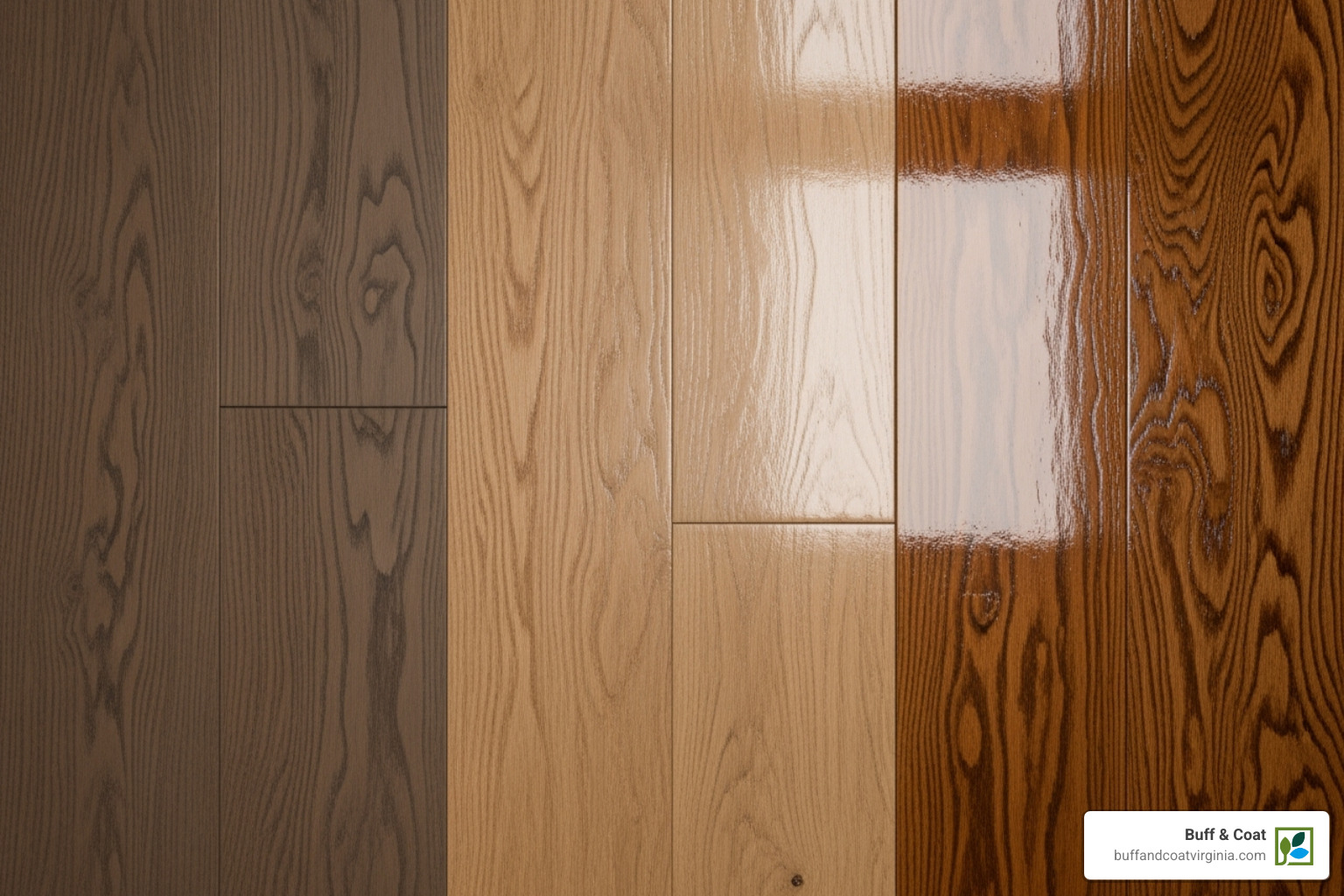
Once your floors are sanded to perfection, it’s time for the exciting part of floor sanding and polishing: choosing the finish. This protective shield determines your floor’s shine, durability, and even drying time. We’re here to help you understand your options.
Oil-Based Polyurethane
Oil-based polyurethane is a traditional choice known for its classic, warm look. It imparts a signature amber hue that deepens over time, enriching the wood’s natural color. This finish is also known for its high durability, creating a tough, long-lasting protective layer. However, it has a strong odor due to high VOCs and requires a longer drying time, often 8 to 24 hours between coats. We typically recommend three coats for the best protection.
Water-Based Polyurethane
Water-based polyurethane is a popular modern alternative. Its biggest advantage is a clear finish that dries and stays clear, preserving the wood’s natural color without ambering. It also has a low odor and is fast drying, with coats often drying in 2-4 hours. This allows us to apply multiple coats in a single day, shortening the project timeline. While early versions were less durable, modern formulas offer comparable or even superior protection. We often recommend four coats for optimal durability, aligning with Eco-Friendly Floor Refinishing practices.
Hard Wax Oil Finishes
For a unique, natural look, hard wax oils are an excellent choice. Instead of forming a film on top, these oils penetrate the wood fibers, enhancing the natural grain and creating an organic, breathable feel. They typically provide a beautiful matte finish and are spot-repairable, a major advantage for long-term maintenance. If a scratch occurs, the damaged area can often be cleaned and re-oiled. While durable, they do require more regular maintenance than polyurethane, typically re-oiling every 1-5 years depending on traffic. For more product information, you can explore options like More on hard wax oil by Fiddes.
DIY vs. Hiring a Pro: Is It Worth the Cost?
Many homeowners wonder if they can tackle floor sanding and polishing themselves to save money. A DIY project might cost under $1000 for tool rental and materials, while professional services in Australia, for example, can range from $50 to $55 per square meter. For a 100 square meter floor, that’s a professional investment of $5,000 to $5,500.
However, the cost difference doesn’t tell the whole story. A professional team can finish a 100 square meter floor in 3-5 days, while a DIY project could stretch into weeks. More importantly, achieving a smooth, even finish without gouges is incredibly difficult for the inexperienced. We’ve seen many DIY attempts that required costly professional correction.
Professionals also use high-quality, specialized equipment. Our signature dust-free floor sanding and polishing techniques keep your home much cleaner than a typical DIY rental setup. Hiring a professional company means you’re investing in years of expertise. Our team brings decades of experience to handle any issue, from damaged boards to stubborn stains, ensuring a flawless, durable finish.
While DIY might save money upfront, it often costs immense time, effort, and frustration for a subpar result. For homeowners in Virginia, a company like Buff & Coat offers expert floor sanding services with dust-free technology, ensuring a flawless result without the mess. For a deeper dive, read about The Importance of Hiring Professionals for Hardwood Floor Refinishing.
Frequently Asked Questions about Floor Sanding and Polishing
It’s natural to have questions about floor sanding and polishing. It’s a big decision, and we want you to feel fully informed. Here are some of the most common questions we hear.
How often can my hardwood floors be refinished?
This depends on your floor type. Solid hardwood floors are incredibly durable and can typically be sanded and refinished 4 to 7 times, and sometimes up to 10 times, over their long lifespan. For engineered wood floors, the number of refinishes depends on the thickness of the top wood veneer. Thicker veneers (3 mm or more) might allow for 1 to 3 refinishes, while thinner veneers may not be sandable at all. We always assess your floor’s condition to give you the best advice.
Frequency also depends on wear and tear. High-traffic areas need attention more often, but a general guideline is to consider professional floor sanding and polishing every 7 to 10 years. For more details, read our article on how often floors should be refinished.
How long does the floor sanding and polishing process take?
The timeline for floor sanding and polishing varies with the project size, floor condition, and chosen finish. A typical 100 square meter (about 1076 sq ft) floor might take a crew of three about 3 days to complete. This includes multiple sanding passes and applying the required coats of finish (usually three for oil-based and four for water-based polyurethane), with necessary drying time between each.
Here’s a general drying and curing timeline:
- You can walk on floors with socks after 24 hours.
- Move furniture back (by lifting, not dragging) after 48 hours.
- Wait 72 hours or more for heavy items, rugs, and normal traffic.
- The finish takes about 10 days to fully cure. Be extra cautious during this period to avoid spills or impacts.
What safety precautions are necessary?
Safety is paramount. Our technicians always wear proper Personal Protective Equipment (PPE), including dust masks or respirators, safety goggles, and ear protection. We ensure adequate ventilation to dissipate fumes and dust. We also pay close attention to electrical safety when operating heavy machinery.
Crucially, we practice proper disposal of rags used with oil-based finishes. These can spontaneously combust if not handled correctly. We ensure they are safely managed by either air-drying them away from structures or placing them in a water-filled, sealed metal container. These protocols ensure your project is both efficient and completely safe.
Conclusion
We’ve covered the journey from tired, worn floors to a gleaming, fresh shine. It’s clear that floor sanding and polishing is more than a renovation; it’s a restoration of your home’s natural beauty that adds significant value to your property.
We’ve explored everything from preparation and tools to sanding techniques and finish choices. While DIY is an option, floor sanding and polishing is a craft that benefits from professional hands. The skill, specialized equipment, and experience a professional brings ensure a flawless, durable finish that DIY efforts often struggle to match, saving you backbreaking work and potential headaches.
At Buff & Coat, we are passionate about bringing your hardwood floors back to life. Our commitment to quality, combined with our dust-free technology, delivers stunning results with minimal disruption. We’re here to make your floors shine for years to come.
Ready to see the change? To bring your floors back to life, schedule a free inspection and get a free estimate from our experts today.


