
It’s a moment every Richmond homeowner dreads: discovering a dark, ominous pet stain on your beautiful hardwood floors. To have any chance of fixing it, you first need to understand why these stains are so uniquely destructive. This isn't just a simple spill; it's a chemical assault on the wood itself, but with the right approach, even stubborn stains can be corrected.
Why Pet Stains Wreck Hardwood Floors
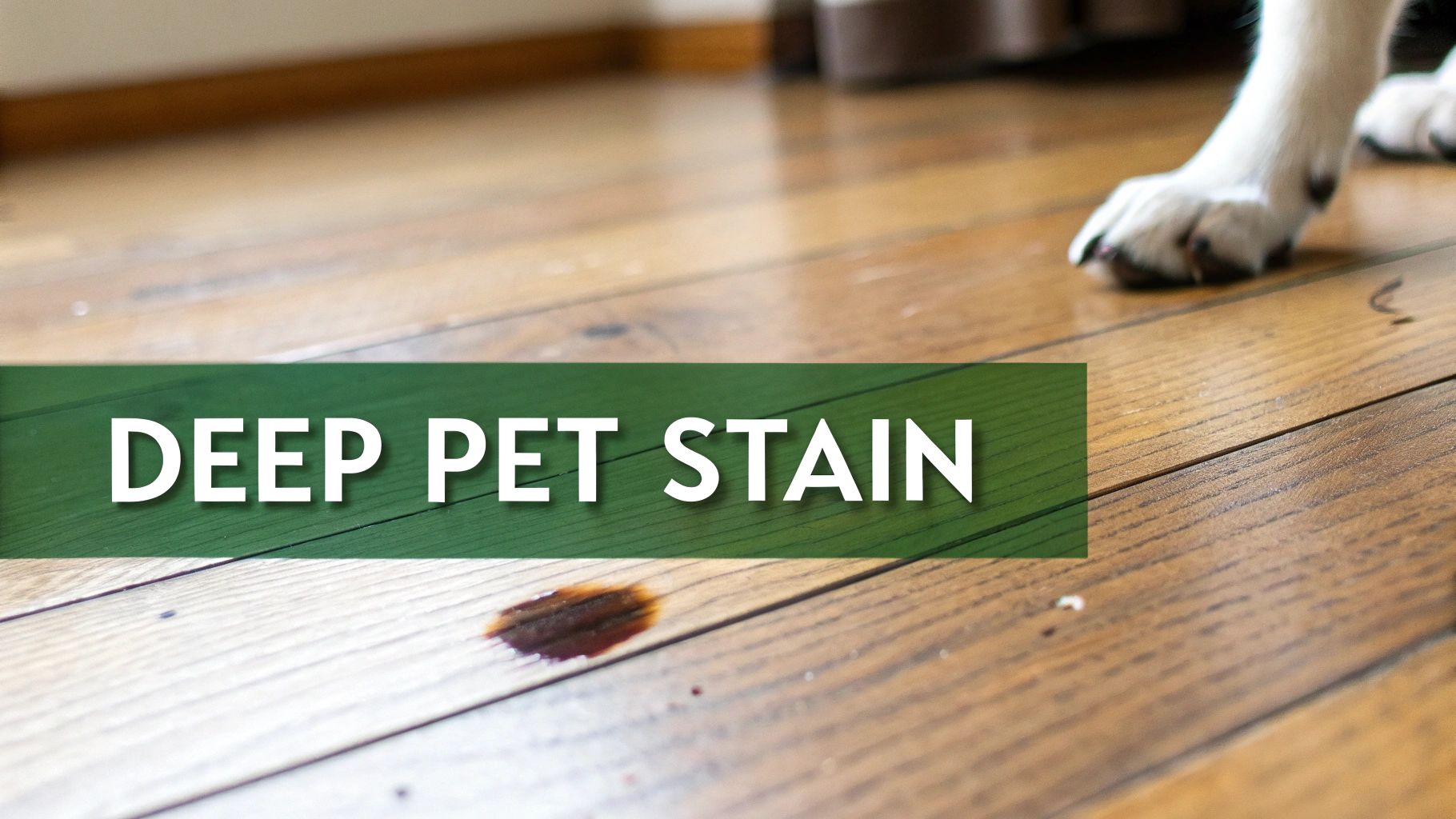
A pet accident unleashes a two-pronged attack on your floor. First, there's the moisture, which is bad enough for any wood. But the real problem lies in the chemical makeup of pet urine.
The main offender is uric acid. This compound doesn't dissolve in water or most common cleaners. As the urine dries, the acid forms sharp crystals that latch onto the wood fibers. This is why you might clean a spot and think you're done, only to have that foul odor return on a humid Richmond day—moisture in the air reactivates those stubborn acid crystals.
The Chemical Burn That Stains Your Wood
But it gets worse. Uric acid is corrosive, and its first job is to eat through your floor’s protective finish, whether it’s polyurethane or wax. Once that barrier is gone, the urine seeps directly into the raw wood.
This is what causes those dreaded black or dark gray stains. The ammonia in the urine creates a powerful chemical reaction with the tannins—natural compounds found in wood, especially in the oak floors common in so many Richmond and Henrico homes. This reaction essentially burns the wood from the inside out, creating a permanent discoloration that you simply can't wipe away.
Is It a Surface Stain or Has It Soaked In?
How bad the damage gets depends on the state of your floor's finish. A newer floor with a thick, intact coat of polyurethane might keep the urine pooled on the surface long enough for you to clean it up without a trace. This is a surface stain.
But if your finish is worn down from years of foot traffic or covered in tiny scratches from your pet's nails, that urine has an express lane right into the wood grain. Now you're dealing with a deep-set stain, where both the discoloration and the smell have become part of the wood itself.
Expert Insight: After 15+ years of hardwood floor refinishing in the Richmond VA area, we've seen a clear pattern. Older homes, especially in historic spots like The Fan or Church Hill, often have oil-based finishes that are much more vulnerable to deep pet stains than floors with modern, water-based polyurethane.
Once a stain has penetrated that deeply, surface cleaners are useless. They can't reach the problem. In fact, trying to scrub a deep stain usually makes things worse by damaging the surrounding finish and grinding the contamination even deeper. Knowing the difference is the first step toward a real solution, whether it's a DIY attempt or calling in a pro for hardwood floor repair.
If you're looking at dark, stubborn spots that refuse to budge, it’s a sure sign the damage is more than skin deep.
Unsure how deep your pet stain goes? Buff & Coat can provide an honest assessment and recommend the right approach. Call 804-392-1114 for a free estimate.
Your Immediate Response to a Fresh Pet Accident
The moment you spot a fresh pet accident on your hardwood floor, the clock starts ticking. What you do in the next few minutes can be the difference between a simple cleanup and a permanent, dark stain that requires professional hardwood floor repair.
Quick, correct action is your best defense.
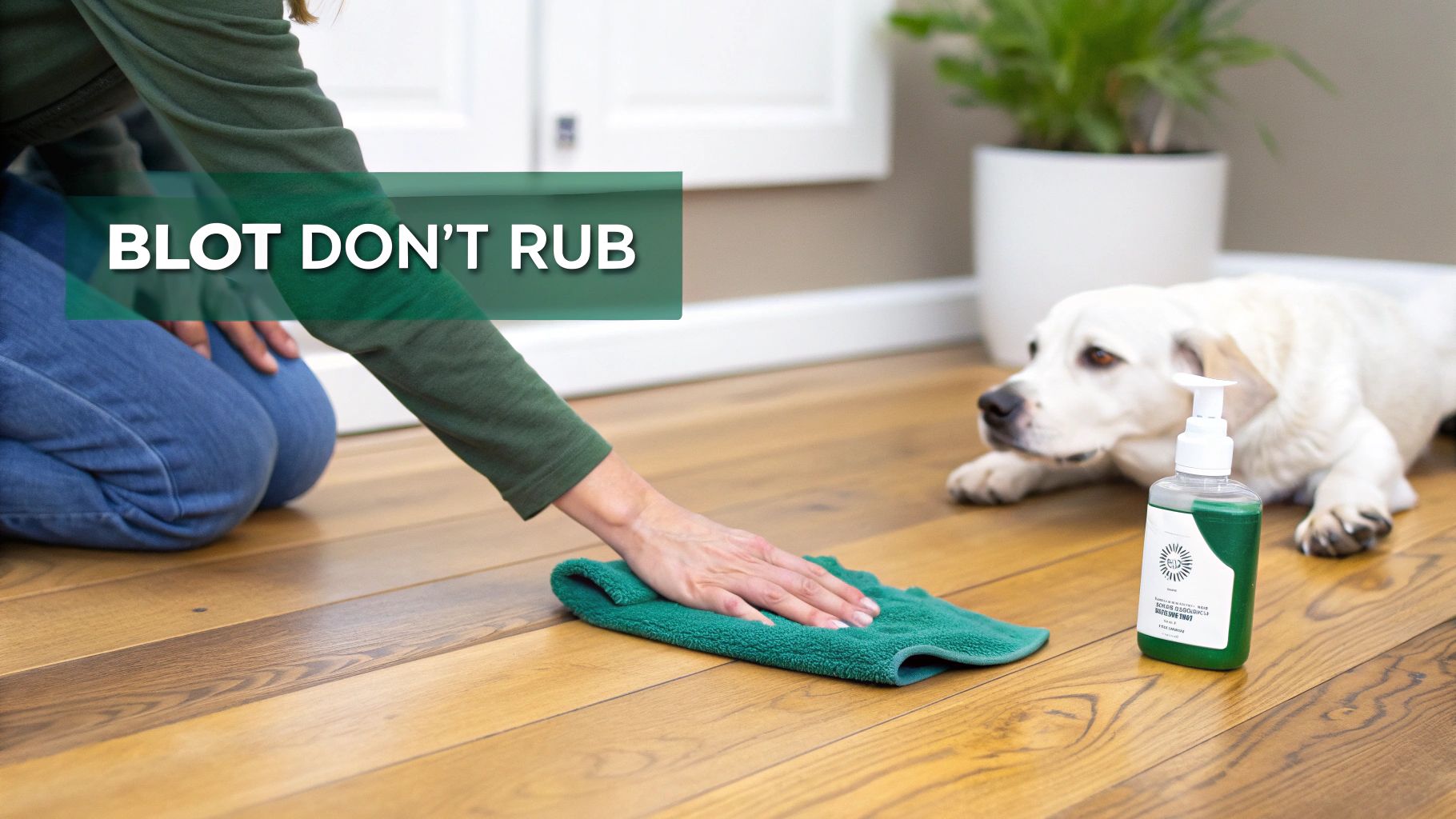
The single most important rule is to blot, never rub. Grab a clean, dry cloth or a thick stack of paper towels and press down firmly on the spot. Your goal is to lift the liquid straight up, pulling it out of the wood's pores and seams before it can soak in.
Rubbing or wiping just pushes the urine deeper into the wood grain and spreads it over a wider area, damaging more of your floor’s finish. Keep blotting with fresh, dry sections of your cloth until it comes up completely dry.
Choosing the Right Cleaning Solution
Once the excess moisture is gone, it’s time to clean the residue. This is where many homeowners go wrong, grabbing whatever bottle is under the sink. Harsh chemicals are your floor's worst enemy.
Never use cleaners containing:
- Ammonia or bleach: These are incredibly corrosive and will strip the polyurethane finish right off your floor, leaving a dull, hazy spot that’s even more vulnerable to future damage.
- Vinegar: While it’s a popular DIY recommendation online, vinegar is acidic. Over time, it can eat away at certain types of floor finishes, dulling the sheen.
- Oil-based soaps or wax: These products leave behind a grimy residue that attracts dirt and can cause major problems for future recoating or refinishing work.
Your safest bet is a pH-neutral cleaner made specifically for hardwood floors. Lightly dampen a clean microfiber cloth with the cleaner—never spray it directly onto the floor, as excess liquid can seep between the boards. Gently wipe the affected area to remove any lingering residue.
If you need more in-depth advice on tackling messes, a comprehensive guide to cleaning up dog diarrhea from hardwood and other surfaces can be a great resource for immediate cleanup techniques that minimize damage.
A Quick Tip from the Pros: If you don't have a dedicated wood floor cleaner on hand, a cloth lightly dampened with plain water is a much better choice than a harsh chemical. The key is to use as little liquid as possible.
The Final, Crucial Step: Drying
After cleaning, this final step is non-negotiable: you absolutely must dry the area completely. Any moisture left behind can cause the wood grain to swell, bubble, or lead to water spots that create their own discoloration.
Use a separate, completely dry cloth and wipe the spot until it's bone dry to the touch. We even recommend aiming a small fan at the area for 15-20 minutes to be sure all the moisture has evaporated.
Immediate Action Plan for Fresh Pet Stains
To make it simple, here's a quick look at the right moves versus the common mistakes we see. Getting this right from the start saves a lot of headaches later.
| Action to Take (The Right Way) | Mistake to Avoid (The Wrong Way) | Why It Matters |
|---|---|---|
| Immediately blot with a dry cloth. | Rubbing or wiping the spot. | Blotting lifts liquid out; rubbing pushes it deeper into the wood. |
| Use a pH-neutral wood cleaner. | Grabbing bleach, vinegar, or ammonia. | The right cleaner protects the finish; the wrong one strips it away. |
| Wipe the area completely dry. | Leaving the spot damp to "air dry." | Lingering moisture can cause wood to swell, warp, or discolor. |
By following this immediate response plan, you give your hardwood floors the best possible chance of surviving a pet accident without a lasting mark. Of course, if a stain has already had time to set, your approach will need to change.
Tackling Set-In Stains: A Word of Caution on DIY Methods
Once a pet stain has dried, the game changes entirely. The window for a simple cleanup has closed. Now, you’re dealing with a chemical burn that has seeped deep into the wood fibers. The internet is flooded with DIY remedies for these stubborn dark spots, but for homeowners in the Richmond area, it’s critical to approach them with a healthy dose of skepticism.
These so-called fixes might slightly lighten minor surface discoloration, but they almost never get to the root of a deep-set problem. More importantly, you run a serious risk of making the damage even worse.
The Hydrogen Peroxide Method
One of the most common suggestions online is using hydrogen peroxide to "bleach" the stain out. The advice is to soak a cloth in peroxide, lay it over the dark spot, and let it sit for hours.
While this can sometimes lighten a stain, the results are wildly unpredictable. You have virtually no control over the bleaching process. Instead of a clean fix, you're more likely to end up with a new, unnaturally light splotch that stands out even more than the original pet stain. You’ve just traded one eyesore for another.
The Baking Soda Paste Approach
Another popular home remedy involves making a paste from baking soda and water. The theory is that as the paste dries, it will pull the stain and odor out of the wood.
This method is safer than peroxide, but its effectiveness is extremely limited. A baking soda paste only works on the surface, helping to absorb any lingering moisture or smells that haven't penetrated the wood. It simply doesn't have the power to reverse the dark discoloration caused by uric acid reacting with the wood's tannins. For a deep stain, it's like trying to fix a crumbling foundation with a fresh coat of paint.
Understanding the Risks and Limitations
Before you try any DIY solution for a set-in stain, you have to understand the potential downsides. You could easily damage the finish around the stain, creating a hazy or dull patch that needs professional repair. Even worse, you could over-bleach the wood, making a seamless hardwood floor repair impossible without refinishing the entire section of your floor.
Our Honest Advice: For a very light, surface-level discoloration, a careful DIY attempt might be worth a shot. But if the stain is dark black or gray, that's a tell-tale sign the damage runs deep. At that point, DIY methods are far more likely to cause collateral damage than to solve the actual problem.
For a deeper dive into the science behind stain removal and why some spots are so stubborn, our guide on wood floor stain removal offers valuable insights.
When DIY Fails, Why Sanding Succeeds
There's a reason professionals turn to sanding for severe pet stains. It’s not a cover-up; it’s a cure. When it comes to set-in pet stains, sanding down to fresh wood and then refinishing successfully blends the repair in about 85% of cases when handled by an expert. This proven technique addresses the roughly 70% of pet urine incidents that penetrate deep into the wood, causing dark spots that are unresponsive to surface treatments.
Think of it this way: DIY methods try to treat the symptom—the discoloration you see on top. Professional dustless sanding removes the source of the problem entirely by physically stripping away the damaged, stained wood fibers. Once we get down to a fresh, unstained layer, we can perfectly match the stain and apply a new, durable finish, making the floor look like the damage never happened.
If you’re in Richmond, Midlothian, or Chesterfield and are tired of staring at that stubborn pet stain, don’t risk making it worse.
Let us take a look. Buff & Coat offers free estimates to help you understand the best way to permanently remove pet stains from hardwood floors. Call 804-392-1114 today.
When It's Time for Professional Hardwood Floor Repair
While it's tempting to tackle every pet stain yourself, there comes a point where DIY methods just won't cut it. Trying to scrub away deep-set damage is like trying to patch a leaky roof from inside the house—you’re not fixing the real problem, and you're probably making a bigger mess.
Knowing when to call a professional is key to preventing even more damage to your hardwood floors.
Telltale Signs You Need a Pro
Some stains are more than just stains; they're warning signs. If you notice any of the following, it’s a clear signal that the damage has gone beyond a simple surface issue and it's time to consult with an expert in hardwood floor repair in Richmond VA.
- Deep Black or Gray Discoloration: This isn't a surface blemish; it's a chemical burn. That dark color means the ammonia from the urine has reacted with the wood's tannins, causing damage deep within the fibers where no cleaner can reach.
- A Stubborn Ammonia Smell: You've cleaned the spot over and over, but the smell always comes back, especially on humid days. That's because uric acid crystals have embedded themselves in the raw wood. The only way to get rid of the odor is to physically remove the affected wood.
- Soft or Spongy Wood: Press on the stained area with your thumb. If the wood feels soft, "punky," or different from the surrounding boards, you're likely dealing with wood rot. This is a serious issue that compromises the board's integrity and requires replacement.
Ignoring these signs can lead to widespread damage, including mold growth under your floors or even deterioration of the subfloor.
Our Approach to Fixing Serious Pet Stains
When a Richmond homeowner calls us about a severe pet stain, we don't jump to the most expensive solution. We carefully assess the damage to figure out the smartest, most effective way to fix it. Usually, it comes down to one of two paths.
A buff and coat service is a maintenance procedure for floors with surface-level wear like light scratches and scuffs. We lightly abrade (or buff) the existing finish and apply a fresh top coat. It's a fantastic way to bring a dull floor back to life, but it will not remove a deep pet stain that has soaked through the finish.
For that kind of deep damage, dustless sanding is the real solution. This is a much more intensive hardwood floor restoration process. We use powerful sanding equipment connected to a high-efficiency vacuum system to grind away the entire old finish and the top layer of damaged wood. This physically removes the stained, odor-causing wood fibers, revealing a fresh, clean layer underneath that we can then stain and finish.
This guide can help you figure out the best course of action.
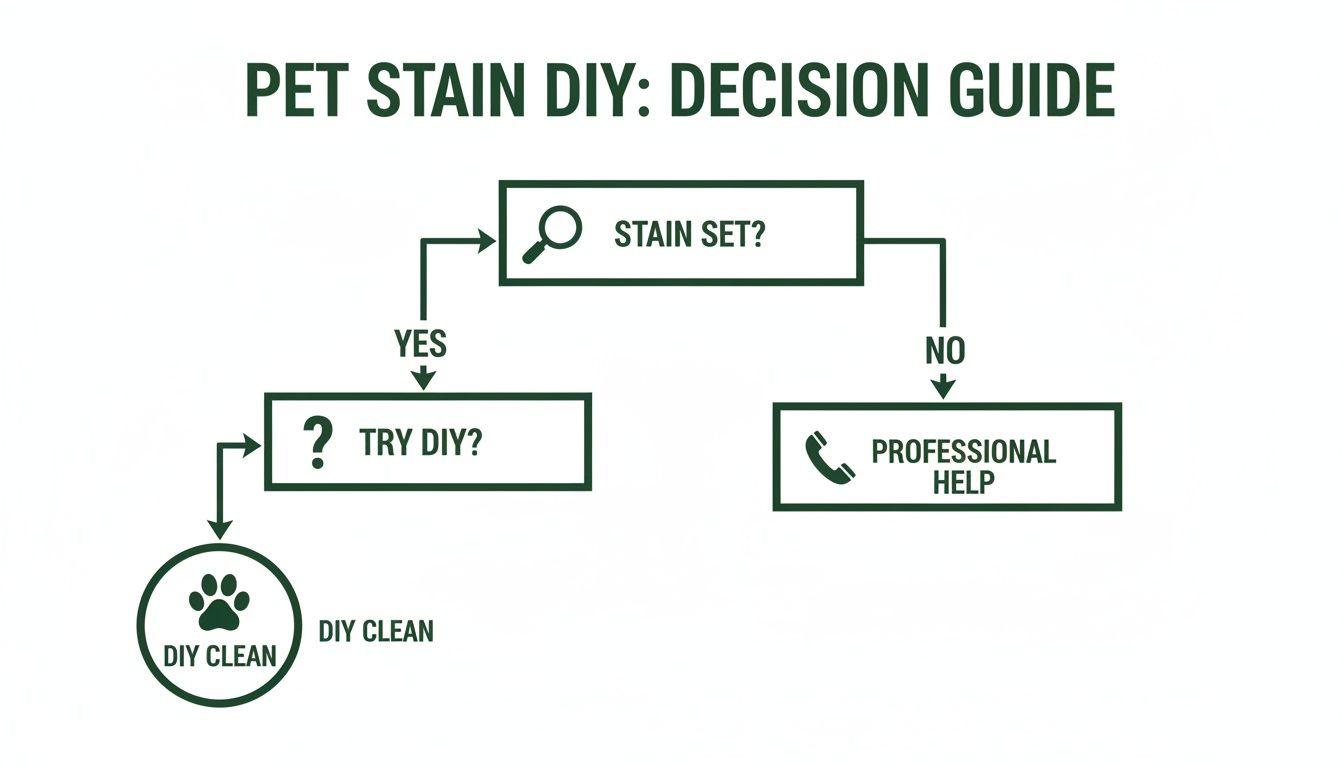
The bottom line is that once a pet stain has truly set into the wood, getting a professional assessment is the safest and most reliable path forward.
Our Promise: We'll never try to sell you a full refinishing job if a more targeted repair will do the trick. Our goal is to give you an honest assessment and an effective solution that restores your floors. You can learn more about how we handle different issues in our wood floor repair service guide.
The Cost-Benefit of Calling a Professional
We get it—homeowners often hesitate to call a professional because they're worried about the cost. But here’s something to consider: the cost of failed DIY attempts often ends up being higher than hiring a pro from the start.
In fact, for deep-set stains, an estimated 65% of DIY fixes fail simply because urine is acidic and eats away at wood fibers far beyond what any surface cleaner can handle. A targeted professional repair can be 30-50% less expensive than having to refinish an entire room just to hide a DIY job gone wrong.
Ultimately, investing in a professional hardwood floor repair doesn't just solve the problem at hand—it protects your home's value and saves you from much costlier mistakes down the road.
If you’re seeing the signs of deep damage, don’t play the guessing game. Buff & Coat can give you a clear, honest assessment and a free estimate. Give us a call today at 804-392-1114.
Proactive Strategies to Protect Your Floors
As any flooring pro will tell you, the best way to deal with a pet stain is to prevent it from ever happening. For Richmond homeowners, adopting a proactive mindset is the most effective way to preserve the beauty of your hardwood, saving yourself future stress and expense.
This isn't about creating a museum where your pets aren't allowed to live. It's about putting a few smart, simple habits in place that create a powerful defense against life with four-legged family members.
Setting Up a Pet-Friendly Environment
Creating a home where your pets and floors can coexist starts with a few key choices. These aren't complicated fixes, but they make a world of difference.
- Protective Mats are Non-Negotiable: Place high-quality, waterproof mats under every food and water bowl. Splashes and drool are a given, and these mats catch the mess before it can soak into the wood grain.
- Use Area Rugs Strategically: Pinpoint your pet’s favorite spots—where they sleep, play, or jump down from the couch. Putting durable, washable area rugs in these high-traffic zones gives your pet a comfy spot while shielding the floor underneath.
- Keep Those Nails Trimmed: This is one of the most critical steps. Long claws act like tiny sanders, etching thousands of micro-scratches into your floor's finish. These scratches don't just dull the shine; they create tiny channels for urine or water to seep directly into the wood. Get more details in our guide on how to protect hardwood floors from scratches.
For ongoing challenges, especially with puppies in training or senior pets struggling with incontinence, consider using some of the highly effective washable dog diapers available today. It can be a game-changer for preventing accidents from ever reaching your floors.
The Most Important Barrier Your Floor Has
While mats and trimmed nails are fantastic lines of defense, the real hero in preventing permanent damage is your floor's protective sealant.
Think of your floor’s finish as its shield. When that shield is strong and intact, it can hold liquid on the surface long enough for you to clean it up. But when the finish is worn down, it’s like a shield full of holes, offering little protection.
Expert Takeaway: A well-maintained finish is the difference between a minor cleanup and a permanent, dark stain. We see it every day in homes across Chesterfield and Henrico—the floors with a healthy top coat are the ones that survive pet accidents with minimal drama.
This is where professional wood floor recoating becomes essential. A recoat, what we call our Buff and Coat service, isn't a full refinishing project. Instead, we lightly abrade the existing finish and apply a fresh, durable layer of polyurethane. It’s a crucial maintenance task that restores that all-important protective barrier.
For pet owners, we generally recommend a professional recoat every 3 to 5 years. This proactive step ensures your floor's shield is always at full strength, preserving your beautiful hardwood for decades.
If your floor's finish is looking dull, scratched, or worn out, it might be time for a recoat. Contact Buff & Coat for a free, no-hassle estimate in the Richmond area.
Why Richmond Homeowners Choose Buff & Coat
Discovering a pet stain on your hardwood floors is a problem we've helped countless homeowners across the Richmond area solve. With over 15 years dedicated to hardwood floor repair and refinishing right here in our community, we’ve tackled every kind of damage you can imagine.
From surface spots in a Midlothian home to deep, dark stains in Mechanicsville, our experience is local and hands-on. You're not looking for a quick cover-up; you need a real solution that brings back the beauty and protects the value of your home. Untreated pet stains can seriously ding a home's resale value, as noted by organizations like the National Wood Flooring Association.
If you're curious about what professionals look for when diagnosing this kind of damage, Pete's Hardwood Floors offers a great visual guide that breaks down the difference between pet and water stains.
Our entire approach is built on giving you an honest, clear assessment and a solution that actually works for your specific floor.
Here’s why homeowners from Short Pump to Chesterfield trust our team:
- 15+ Years in Business: We have years of hands-on experience solving tough problems like deep-set pet stains.
- Dustless Sanding Systems: Our modern equipment captures dust at the source, keeping your home’s air clean and healthy.
- Local, Owner-Operated: We’re your neighbors, committed to straightforward advice without high-pressure sales pitches.
- High-Quality Finishes: We use top-tier, low-odor finishes that protect your floors without filling your home with harsh smells.
- Clear Pricing and Honest Advice: You’ll get a transparent estimate and a recommendation that makes sense for your floors and your budget.
- 5-Star Customer Service: Our reputation is built on doing great work and ensuring our clients are happy with the results.
Frequently Asked Questions About Pet-Damaged Floors
After more than 15 years of restoring floors here in Richmond, we’ve heard just about every question there is when it comes to pet damage. Here are answers to some of the most common ones.
Can you really get the urine smell out for good?
Yes, absolutely. That stubborn ammonia smell comes from uric acid crystals that have soaked deep into the wood grain. Surface cleaning won't touch it.
The only way to permanently eliminate the odor is to remove the source. That’s where professional dustless sanding comes in. We physically sand away the contaminated top layers of the wood, taking the embedded uric acid crystals with them. Once we apply a fresh stain and seal it with a professional-grade finish, the smell is gone for good.
Is it better to replace boards or refinish the whole room?
This is a great question, and it all comes down to the severity and location of the damage.
-
Replacing a Few Boards: If you have just one or two planks where the damage is so deep it’s caused the wood to go soft or rot, then a targeted hardwood floor repair is often the most direct and cost-effective fix.
-
Refinishing the Room: If you have several stains scattered across the room, or if the damage is more widespread but shallow, refinishing the entire floor is almost always the smarter move. This approach guarantees a perfect, uniform look across the whole space.
We’ll always give you a straightforward assessment to find the solution that saves you the most money while giving you the best result.
Will a darker stain hide the pet damage?
We hear this idea a lot, but trying to cover up pet stains with a dark stain is just a temporary band-aid. It might hide the discoloration for a little while, but it completely ignores the two real issues: the lingering odor and the damaged wood itself.
Those uric acid crystals are still trapped in the wood under that new stain, and that smell will come back, especially on humid Richmond summer days. The only real way to remove pet stains from hardwood floors is to get rid of the damaged wood fiber, not just paint over it.
Ready to restore your hardwood floors? Buff & Coat makes the process fast, clean, and stress-free.
Call 804-392-1114 or request your free estimate at buffandcoatvirginia.com.