

Home Blog Bye-Bye Blemishes: Your Guide to Wood Floor Stain Removal
Bye-Bye Blemishes: Your Guide to Wood Floor Stain Removal

Why Quick Action Matters for Wood Floor Stain Removal
Effective wood floor stain removal can save you thousands in replacement costs. Because wood is porous, liquids can seep into the grain within minutes, making quick action your best defense against permanent damage. While our hardwood floor restoration services can handle the toughest jobs, many common blemishes respond well to household remedies when caught early.
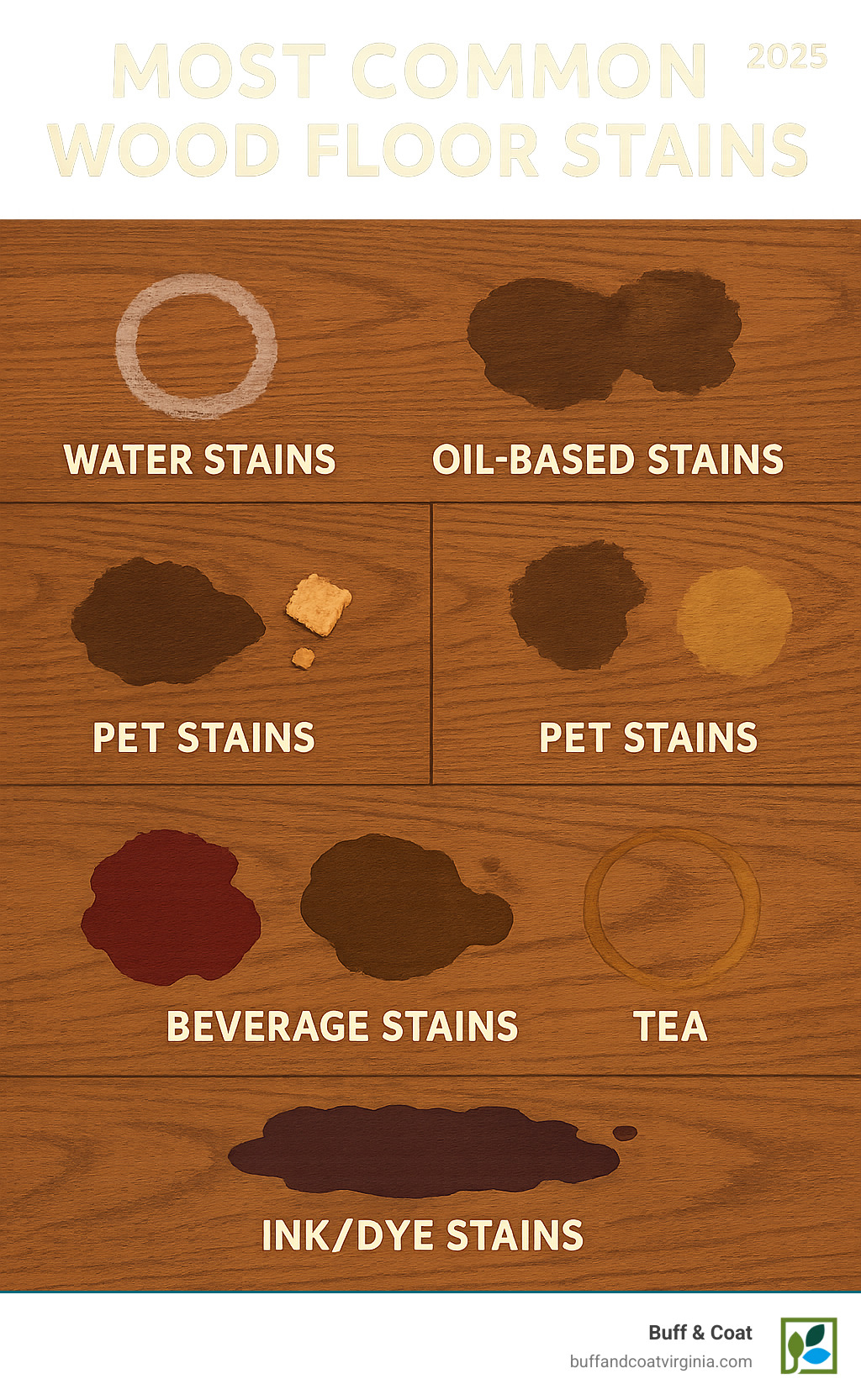
Most Common Wood Floor Stains:
- Water stains (white rings, dark spots)
- Oil-based stains (grease, food)
- Pet stains (urine)
- Beverage stains (wine, coffee)
- Ink and dye stains
Quick Action Steps:
- Blot immediately to prevent soaking.
- Identify the stain type (e.g., water vs. oil).
- Test your floor’s finish.
- Choose the right method, from gentle to aggressive.
- Work from the outside in to prevent spreading.
As President of Buff & Coat, I’ve spent over 20 years helping homeowners in Richmond, VA tackle every type of stain. This guide shares proven methods that actually work.
First Things First: Identify Your Floor & Test Your Method
Before starting wood floor stain removal, you must identify your floor’s finish. Whether your hardwood is sealed or unsealed determines the entire cleaning approach. Most modern floors have a protective finish, but older or worn floors may not.
Sealed vs. Unsealed Floors: The Water Drop Test
The water drop test is a simple way to check your floor’s finish.

Place a few drops of water on a hidden spot of your floor:
- If water beads up: Your floor is sealed (e.g., with polyurethane). Stains are likely on the surface of the finish.
- If water soaks in quickly: Your floor is unsealed or the finish is worn. Stains can penetrate the wood, requiring more careful methods.
Professional floor refinishing services always start with this test.
Spot-Testing Technique: Our Golden Rule
The most important rule of wood floor stain removal is to always test first. Apply your chosen cleaning solution to a small, inconspicuous area (like in a closet or under a sofa). Let it sit, then wipe it clean and check for any discoloration or damage to the finish. If the test spot looks good after a few hours, you can proceed with treating the stain. This step prevents turning a small problem into a large one.
Understanding your floor’s condition is crucial for proper hardwood floor maintenance throughout its lifetime.
Essential Tools and Materials for Stain Removal
You likely have most of these items already. Gather them before you begin.
- For Cleaning: Soft microfiber cloths, sponges, a bucket, a soft-bristle toothbrush.
- Cleaning Agents: Baking soda, white vinegar (diluted), 3% hydrogen peroxide, dish soap.
- For Tougher Stains: Mineral spirits, a plastic scraper or putty knife.
- Safety & Repair: Protective gloves, fine-grit sandpaper (150-180 grit) for last-resort efforts.
DIY Wood Floor Stain Removal: A Step-by-Step Guide
Many common wood floor stains can be removed with simple household items and natural cleaning solutions. The faster you address a spill, the easier it will be to remove.
Removing Water Stains (White Rings and Dark Spots)
Water can leave two types of marks, each requiring a different approach.
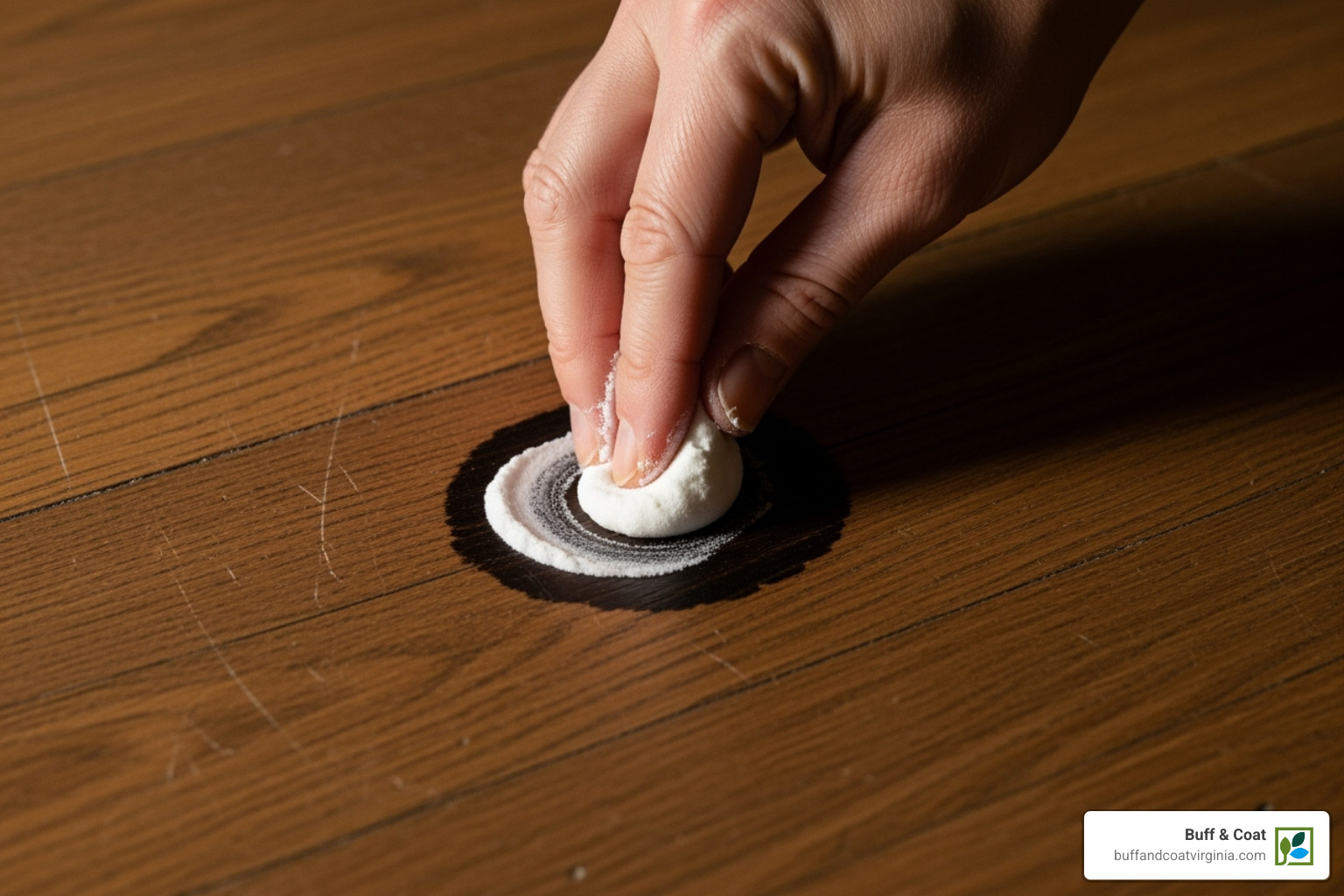
- White Rings: These are surface-level stains on the finish. Gently rub mineral oil into the stain with a soft cloth, let it sit for five minutes, and wipe clean. For tougher rings, mix baking soda and water into a thick paste, rub it into the stain with the grain, and let it sit for up to 24 hours before wiping clean.
- Dark Spots: These indicate water has penetrated the wood. Start by gently rubbing the stain with a cloth dampened in a 50/50 solution of white vinegar and warm water. For deep black stains, you may need a wood bleach containing oxalic acid, applied according to product instructions. Be aware this can affect the top coat.
For more detailed guidance, check out this helpful resource on removing water stains from wood floors.
Tackling Oil-Based and Greasy Stains
The key to removing oil and grease is absorption.
- Absorb: Sprinkle a generous amount of baking soda on the fresh stain and let it sit for several hours or overnight to absorb the oil. Then, vacuum or sweep it up.
- Clean: Gently rub any remaining residue with a damp microfiber cloth and a few drops of dish soap. Wipe clean with a fresh damp cloth and dry the area immediately.
- Treat Set-In Stains: For stubborn spots, apply a small amount of mineral spirits to a clean cloth and gently rub the stain, after testing in a hidden area.
This approach aligns with proper techniques for deep cleaning hardwood floors without causing damage.
How to approach wood floor stain removal for pet stains
Pet urine can cause dark stains, deep wood penetration, and persistent odors. Quick action is critical.
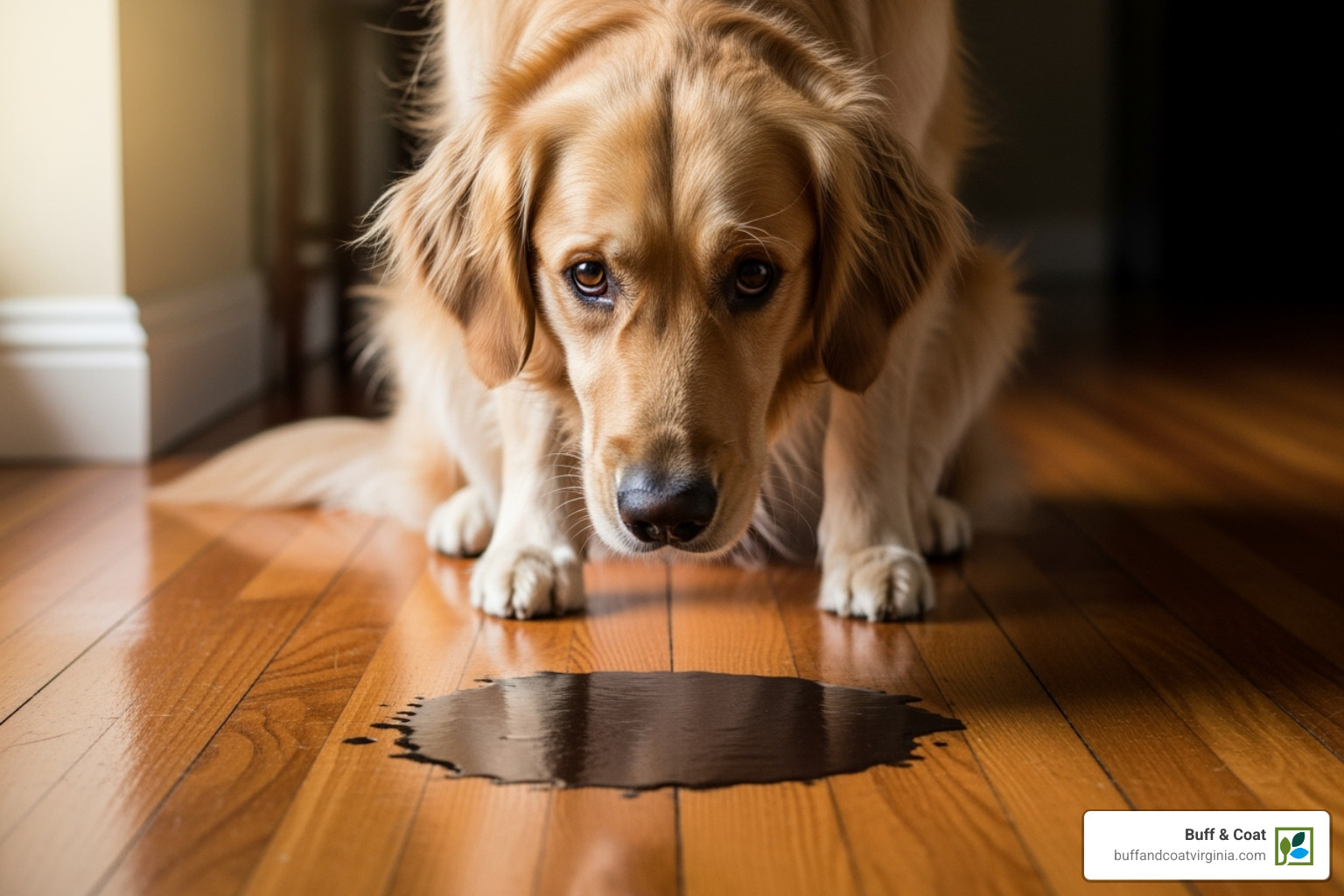
First, blot immediately with a clean cloth—never rub. Clean the area with a 50/50 vinegar and water solution to help neutralize odors.
For stubborn, discolored stains, hydrogen peroxide is a powerful tool. Soak a cotton ball or towel in 3% hydrogen peroxide, place it over the stain, and let it sit for several hours or overnight. The peroxide acts as a mild bleach but may affect your floor’s finish.
Safety Note: Never mix bleach and ammonia, as this creates dangerous fumes.
For deeply penetrated stains or odors, sanding may be necessary. Find more information in our guide to hardwood floor damage repair.
Erasing Tough Stains: Ink, Wine, and Dyes
For stains like red wine, coffee, or tea, blot immediately. A cloth soaked in diluted white vinegar and left on the stain for several hours can help draw it out. Commercial products like WOCA Wood Stain Remover are also effective.
- Ink Stains: Start by gently rubbing with a cloth and a solution of detergent and cold water. If that fails, carefully blot the stain with a cloth dampened with rubbing alcohol.
- Dye Stains: A paste of baking soda and vinegar can be effective. Apply, let sit, and gently scrub.
Common mistakes to avoid in wood floor stain removal
- Don’t use abrasive scrubbers or steel wool. They will scratch and dull your floor’s finish. Use only soft cloths or sponges.
- Don’t drench your floor with water or cleaners. This can cause wood to warp and swell. Always use a damp cloth and dry the area thoroughly.
- Avoid harsh chemicals and undiluted vinegar. Pure vinegar is acidic and can break down your floor’s protective sealant over time.
- Never skip the spot test. This simple step can save you from widespread damage and costly repairs.
When DIY Isn’t Enough: Advanced Stain Removal & Refinishing
When DIY wood floor stain removal methods fail, it may be time for advanced techniques or professional help. Stains that are old, have penetrated deep into the wood, or cover a large area often require more than household remedies.
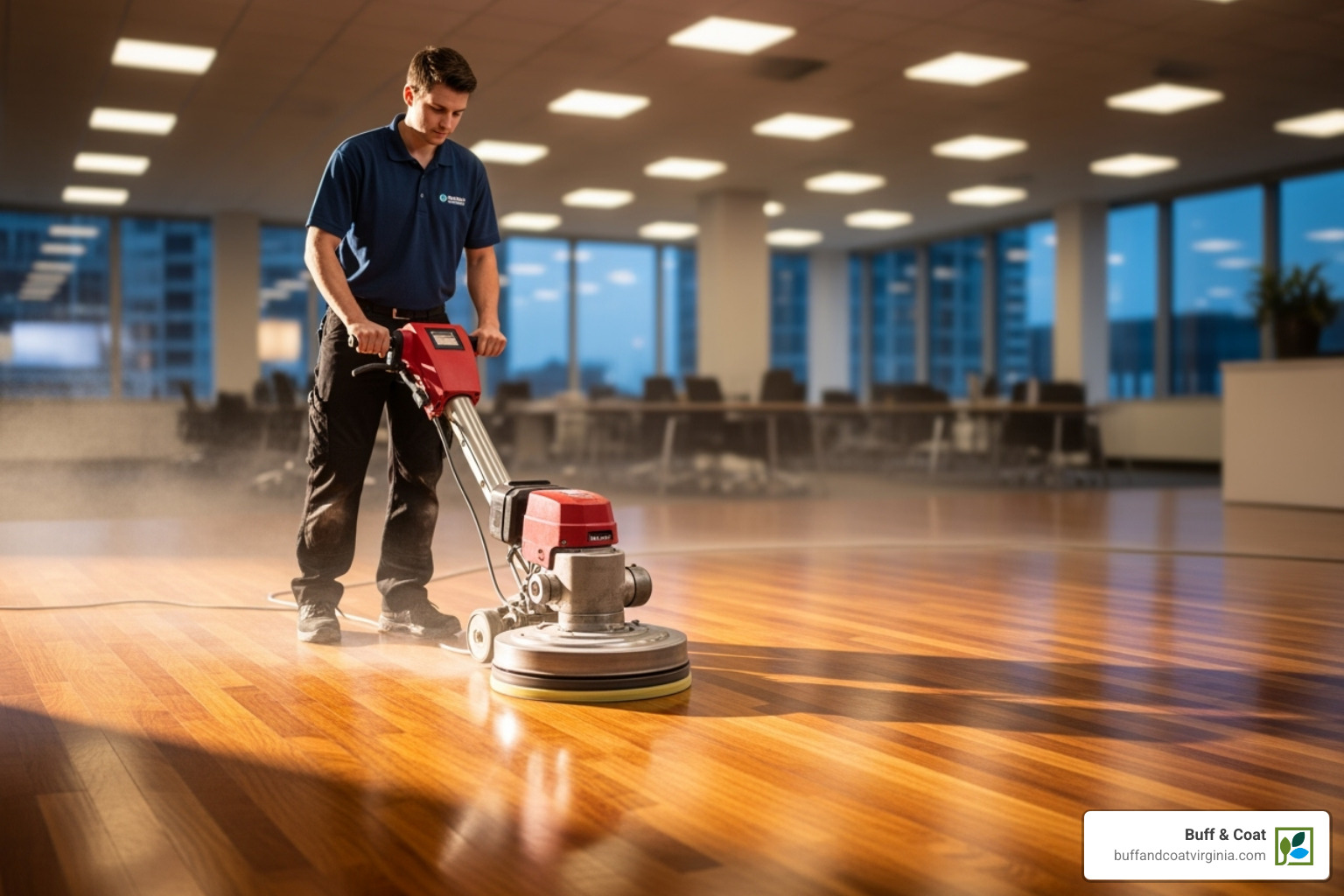
Deep black water stains or old pet accidents often require professional floor sanding and refinishing to fully restore your floors.
Using Advanced Methods Safely
Chemical strippers are a powerful DIY option but require extreme caution.
- Safety First: Always wear safety goggles, a respirator mask, rubber gloves, and long sleeves. Ensure critical ventilation by opening windows and using fans to direct fumes outside.
- Application: Apply the stripper in a thick, even layer and wait 15-20 minutes for the finish to bubble. Gently remove the loosened material with a plastic scraper, working with the grain.
- Neutralization: Follow the manufacturer’s instructions to clean away all residue and let the wood dry completely (often 24 hours) before refinishing.
Sanding and Refinishing as a Last Resort
For stains that have permanently discolored the wood fibers, sanding and refinishing is the most effective solution. This process removes the damaged top layer of wood.
The process involves sanding with progressively finer grits of sandpaper until the stain is gone and the surface is smooth. Afterward, a new stain is applied to match the existing floor, followed by a protective finish to seal the wood.
While small spot repairs can be a DIY project, larger sanding jobs benefit from professional expertise to ensure a seamless result. We have the specialized equipment and experience in matching stain and finish to restore your floors perfectly.
If you’re dealing with stubborn stains, our team can advise on the best path forward, drawing on our experience with hardwood floor damage repair. For guidance on timing, see our article on how often should hardwood floors be refinished?
Prevention is Key: How to Protect Your Hardwood Floors
After spending all this time mastering wood floor stain removal techniques, let’s talk about something even better – not needing them in the first place! Think of it like this: would you rather spend your weekend scrubbing mysterious stains, or relaxing on your beautiful, spotless floors?
The truth is, preventing stains is always easier (and less stressful) than removing them. Wood floors are an investment, and a little proactive care goes a long way toward protecting that investment.
Rugs and mats are your floors’ best friends. Place them strategically in high-traffic areas, entryways, and anywhere spills are likely – think kitchen sinks, bathroom doorways, and near your pet’s water bowl. These create a protective barrier that catches dirt, moisture, and accidents before they reach your precious hardwood.
Furniture pads might seem like a small detail, but they’re game-changers. Those felt or rubber pads under chair legs and table bases prevent scratches and scuffs that expose raw wood to potential staining. Trust me, moving a heavy dining room table without pads is a mistake you only make once!
Here’s the golden rule that’ll save you countless headaches: immediate spill cleanup. The moment something hits your floor – coffee, wine, pet accidents, whatever – grab a clean cloth and blot it up immediately. Wood is naturally porous, and liquids start absorbing within seconds. Those few extra minutes you spend finishing your phone call could mean the difference between an easy cleanup and a permanent stain.
Regular cleaning keeps your floors in fighting shape. Sweep or vacuum daily in busy areas, weekly elsewhere. All that dirt and grit acts like sandpaper, slowly wearing down your protective finish and making stains more likely to penetrate. When you do mop, use a hardwood-specific cleaner and keep that mop damp, not soaking wet.
Don’t forget about protective finishes – they’re your floor’s armor against daily life. Our signature buff and coat process doesn’t just restore that gorgeous shine; it adds a crucial protective layer that makes future stains much easier to clean up.
Smart prevention strategies are the foundation of effective hardwood floor maintenance. A little attention now saves you from major restoration projects later – and keeps your floors looking stunning for years to come.
Frequently Asked Questions about Wood Floor Stain Removal
Here are answers to the most common questions we receive about wood floor stain removal.
Can baking soda and vinegar damage wood floors?
Yes, if used improperly. Vinegar’s acidity can break down a floor’s protective sealant over time. Always dilute vinegar with an equal part of water (a 1:1 ratio). Baking soda’s abrasiveness, while mild, can cause fine scratches or a hazy residue if you scrub too aggressively.
The key is to use these products carefully for spot treatments and always test in a hidden area first.
How do you get a black stain out of a hardwood floor?
Black stains, often caused by deep water penetration or pet urine, are the toughest to remove because they indicate damage to the wood fibers themselves.
- Hydrogen Peroxide: Start by soaking a cotton ball in 3% hydrogen peroxide, placing it on the stain, and covering it to keep it moist overnight. The peroxide acts as a gentle bleach.
- Wood Bleach (Oxalic Acid): If peroxide fails, a stronger wood bleach containing oxalic acid may work. Follow the product’s safety and application instructions carefully.
- Light Sanding: As a last DIY resort, you can gently sand the area with fine-grit sandpaper (150-180 grit) until the stain is gone, then re-stain and finish the spot.
For extensive black stains, refinishing the entire floor is often the best solution.
Can you use a Magic Eraser on wood floor stains?
Use Magic Erasers with extreme caution. The material, melamine foam, is a micro-abrasive that works like super-fine sandpaper. While it can remove some surface stains, it also risks dulling or scratching your floor’s finish, creating a noticeable dull spot.
If you must try it, use very gentle pressure and test it on a hidden spot first. It’s better to try other, non-abrasive methods before resorting to a Magic Eraser.
Conclusion
There you have it – your complete guide to wood floor stain removal! From those annoying white rings left by coffee cups to the more challenging black spots from pet accidents, you now have the knowledge and tools to tackle most stains that dare to mar your beautiful hardwood floors.
The key takeaways? Act fast, identify your stain type, test your floor finish, and always spot-test any cleaning method first. Many common stains surrender to simple household remedies like baking soda, diluted vinegar, or hydrogen peroxide when you catch them early. Wood is naturally porous, so time is your enemy – but knowledge is your best friend.
That said, we completely understand that some stains are just plain stubborn. Maybe that black water stain has been there for months, or perhaps your furry friend had an accident that’s left a persistent odor no amount of scrubbing can eliminate. When DIY methods reach their limits, it’s time to bring in the professionals.
At Buff & Coat, we’ve seen it all over our 20+ years serving Richmond homeowners. Our team specializes in bringing wood floors back to life, whether through our signature dust-free refinishing process or targeted stain removal techniques. We have the advanced equipment and expertise to handle even the toughest challenges – the ones that would leave most homeowners throwing in the towel.
Don’t let unsightly stains steal the spotlight from your gorgeous hardwood floors. Wood floor stain removal doesn’t have to be a battle you fight alone. We offer free estimates to help you find the best solution. Ready to restore your floors to their former glory? Schedule a free inspection with our team today and let’s get those floors looking spectacular again!


