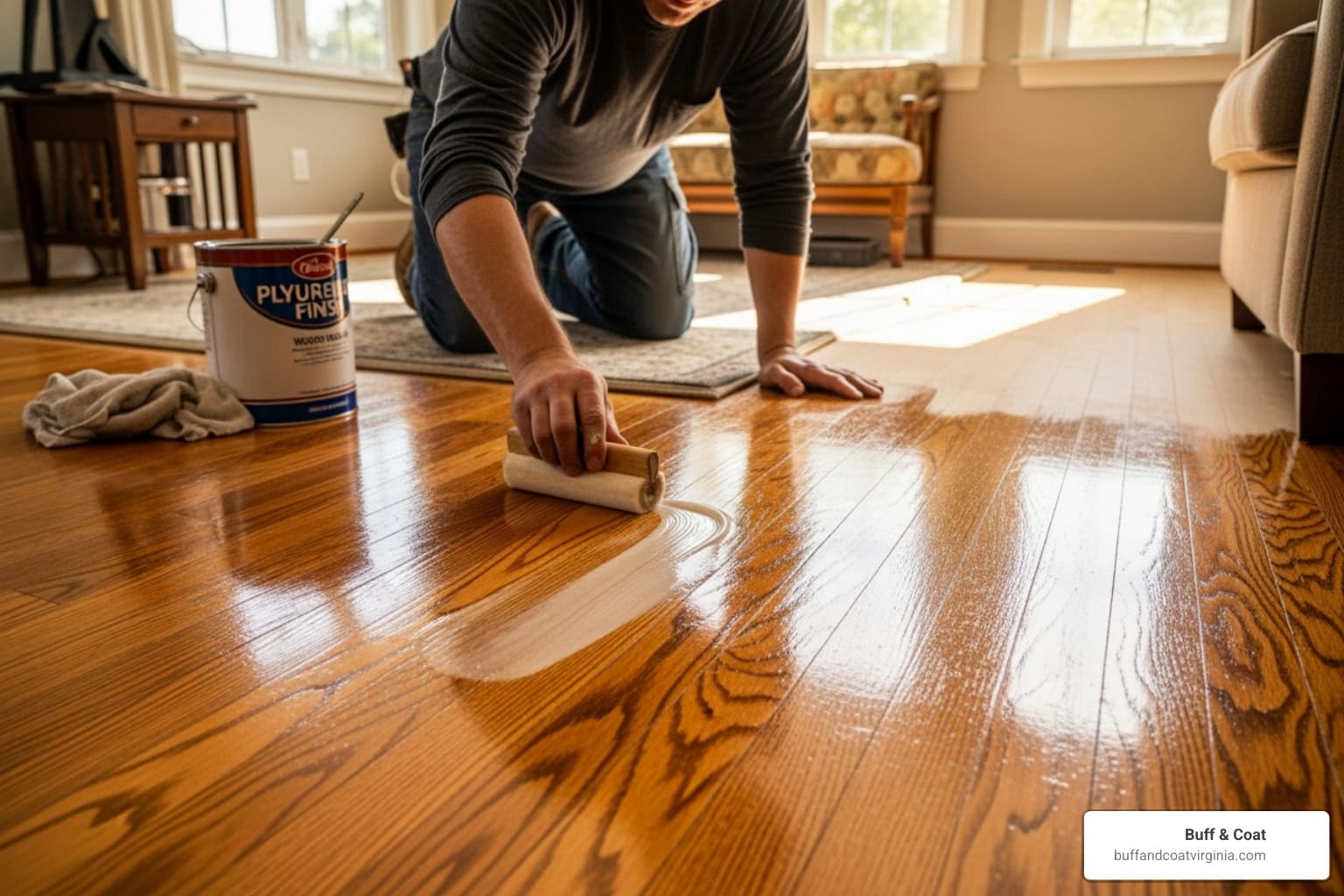
Why No Sand Wood Floor Refinishing is Gaining Popularity
No sand wood floor refinishing is a modern approach to restoring hardwood floors without the mess, dust, and lengthy timelines of traditional sanding methods. Here are your main no-sand refinishing options:
Popular No-Sand Methods:
- Buff and Coat (Screen and Recoat) – Lightly abrades surface and applies new topcoat
- Chemical Abrasion Kits – Uses etching solutions to prepare surface for new finish
- Floor Revitalizers – Cleans and fills minor scratches while adding protective coating
Key Benefits:
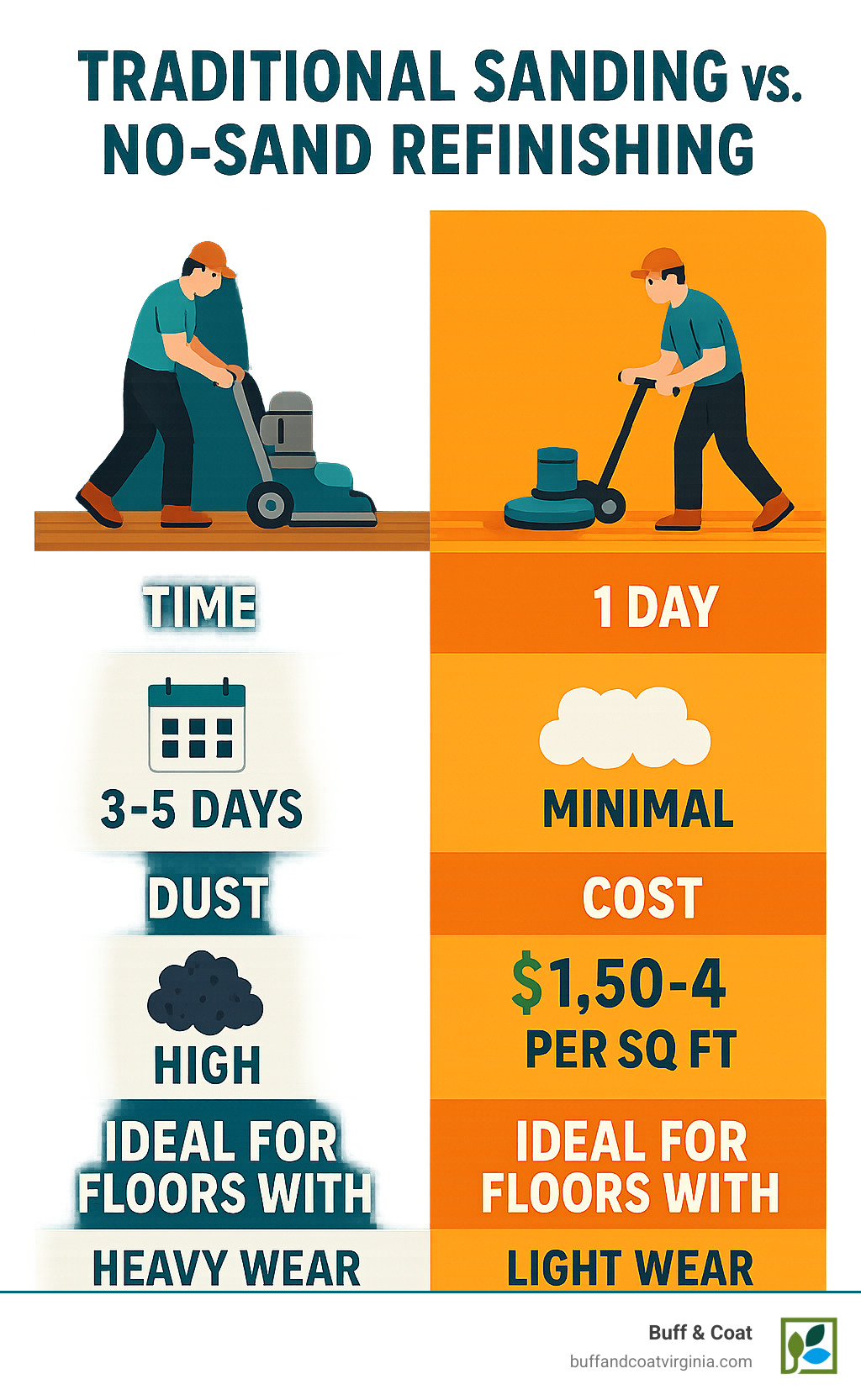
- Completed in one day vs. several days for sanding
- Costs $1.50-$4.00 per sq ft vs. $3-$8 for traditional refinishing
- Minimal dust and mess
- Safe for families and pets
- Preserves wood thickness
If you’re tired of looking at dull, scratched hardwood floors but dread the thought of a week-long sanding project that fills your home with dust, you’re not alone. Many Richmond homeowners are finding that professional hardwood floor refinishing services can restore their floors’ beauty without traditional sanding.
The most effective no-sand method is called “buff and coat” or “screen and recoat.” This process uses specialized equipment to lightly abrade the existing finish and apply a fresh protective coating. It works best on floors with surface-level wear, light scratches, and dullness – but won’t fix deep gouges, water damage, or allow color changes.
I’m David Emmerling, and I’ve spent over 20 years perfecting no sand wood floor refinishing techniques through my company, Buff & Coat Hardwood Floor Refinishing. Our dustless buff-and-coat process transforms worn floors in a single day, helping Richmond area homeowners avoid the disruption and expense of traditional refinishing methods.
Handy no sand wood floor refinishing terms:
The Great Debate: Traditional Sanding vs. No-Sand Refinishing
When your hardwood floors look tired, you face a choice. For decades, the only answer was to sand them down to bare wood and start over. But today, no sand wood floor refinishing offers a smarter path.
Traditional refinishing is a grueling process where powerful sanders strip away the finish and a layer of wood. The floor is then stained and sealed with multiple coats of polyurethane. While the results can be stunning, this method comes with significant drawbacks.
Why Avoid Traditional Sanding?
The mess from traditional sanding is legendary. Despite dust containment systems, fine wood particles infiltrate every corner of your home, settling on furniture, dishes, and clothes. This dust is also a health concern. The potential hazards of wood dust are well-documented, posing risks to your respiratory system, especially for children, the elderly, or those with breathing issues.
The process also requires you to move out. Traditional sanding takes several days, forcing you to relocate your family, pets, and furniture, adding stress and hidden costs.
Crucially, every sanding removes wood permanently. Floors can only be sanded a few times before they become too thin, especially engineered floors with thin veneers. Eventually, replacement becomes the only option.
Finally, the higher costs add up quickly. Between intensive labor, equipment, multiple finish coats, and temporary housing, traditional sanding can seriously strain your budget.
Key Benefits of Refinishing Without Sanding
Instead of battling those drawbacks, no-sand refinishing works with your lifestyle.

The speed and convenience are a major advantage. Most no-sand jobs are completed in a single day without you having to leave your home. This means no hotel bills or disrupted routines.
Cost-effectiveness makes this approach accessible. Since the process requires less labor and fewer materials, you’ll save significant money while achieving impressive results.
Family safety is prioritized with no-sand methods, which use non-toxic, low-odor finishes. This eliminates worries about harmful dust or chemical exposure for kids and pets.
Preserving wood thickness is a key long-term benefit. By not removing a layer of wood, the process maintains your floor’s structural integrity and extends its lifespan, which is crucial for engineered or previously sanded floors.
Many no-sand options are eco-friendly, using low-VOC products that improve your indoor air quality.
No-sand refinishing is also perfect for older floors full of character. It maintains their authentic charm by refreshing the protective finish while preserving the minor dings and wear patterns that tell a home’s story.
Your Guide to No Sand Wood Floor Refinishing Methods
No-sand wood floor refinishing methods are much gentler than traditional sanding but still deliver impressive results. Instead of grinding away wood, the focus is on refreshing the existing surface. The process involves thorough cleaning, smart surface preparation for adhesion, and applying a new protective finish to restore shine.
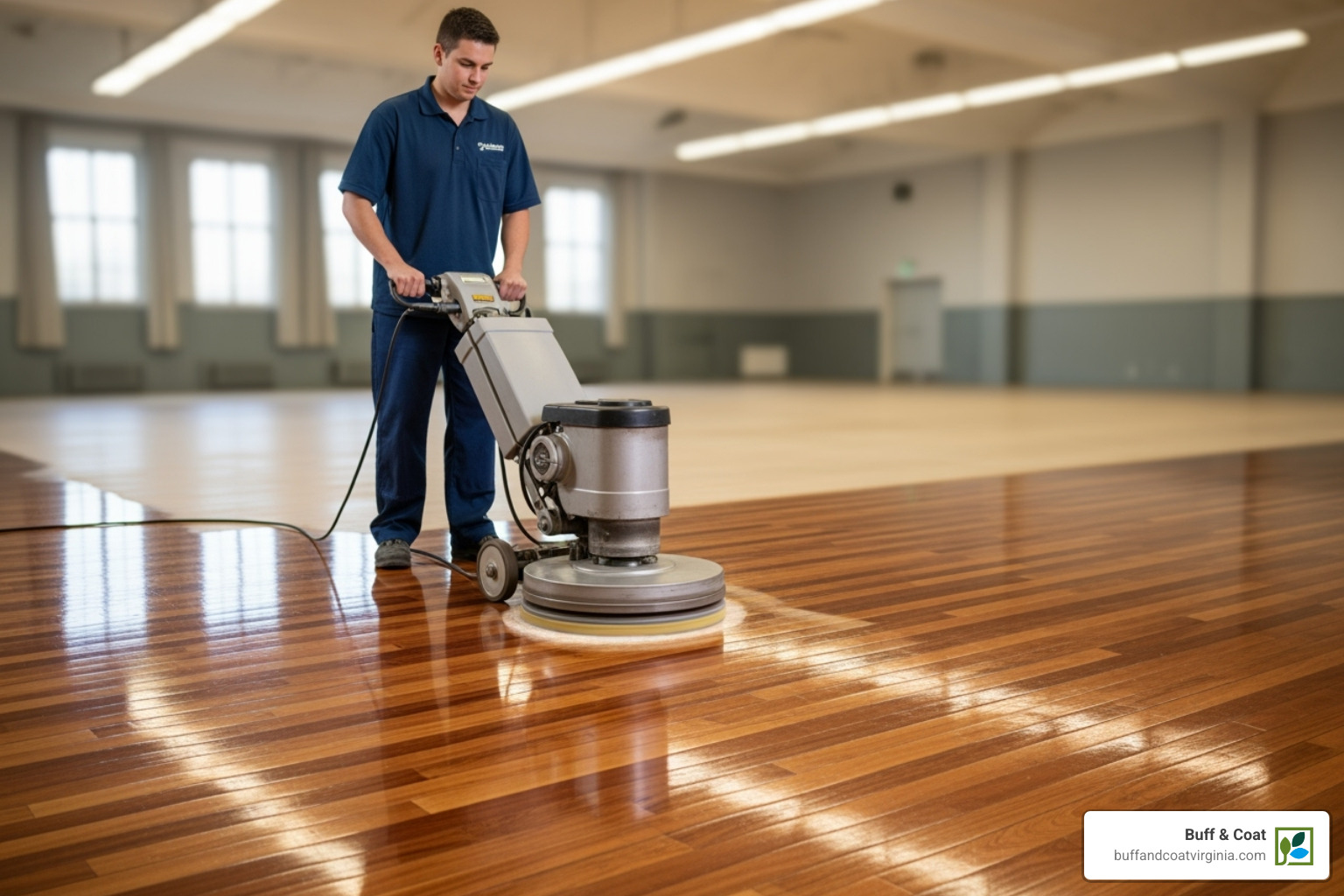
What is the ‘Buff and Coat’ Method for No Sand Wood Floor Refinishing?
The “buff and coat” method, also known as “screen and recoat,” is the gold standard for no-sand refinishing and our specialty at Buff & Coat. It’s the perfect way to refresh floors that have lost their luster but aren’t deeply damaged.
The process begins with a thorough deep cleaning to remove all dirt, wax, and product buildup. This step is crucial, as any remaining contaminants can prevent the new finish from bonding correctly.
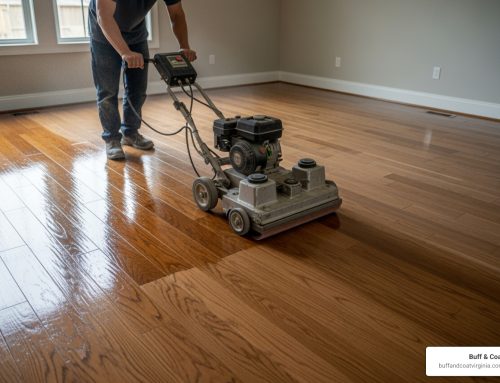
Next is the buffing or screening phase. We use a floor buffer with a fine abrasive screen to lightly scuff the existing finish. This creates microscopic scratches for the new finish to grip, similar to sanding a wall before painting. Learn more in our guide on how to buff wood floors.
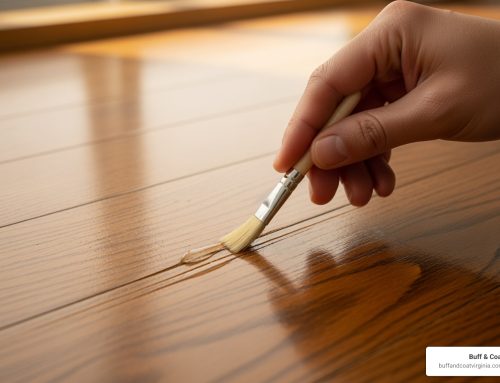
Finally, we apply a fresh topcoat of high-quality polyurethane. This new layer bonds to the prepared surface, restoring shine and providing durable protection against daily wear. The result is a floor that looks new, all completed in a single day.
As Brett Miller from the National Wood Flooring Association notes, “Recoating is a great way to restore the look of your hardwood without a full sand down.” This method is perfect for restoring shine to dull hardwood floors that have simply lost their sparkle.
When Is No-Sand Refinishing Appropriate?
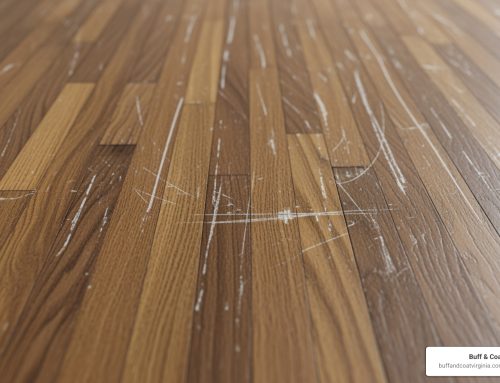
No sand wood floor refinishing works wonderfully for certain situations but has its limitations. This process is ideal for floors with surface-level scratches and scuffs, dullness, minor wear patterns, or buildup from old wax or cleaning products.
However, no-sand refinishing cannot fix deep gouges that have penetrated the wood, structural issues like warping or cupping, or significant water damage. These problems require more intensive repairs. You can read more about water damage concerns and why these situations need different approaches. Finally, if you’re hoping to change your floor’s color, you’ll need traditional sanding since our clear topcoat won’t alter the existing wood tone.
Choosing the right method for your specific situation is crucial for your satisfaction and investment protection.
Is No-Sand Refinishing the Right Choice for Your Floors?
Choosing the right refinishing method requires an accurate diagnosis of your floor’s condition. While no sand wood floor refinishing has incredible benefits, it’s not a one-size-fits-all solution. You need to understand what your floors need: a simple refresh or more intensive care for deep damage.
How Floor Condition Affects Your Choice
The current condition of your hardwood floors is the most critical factor.
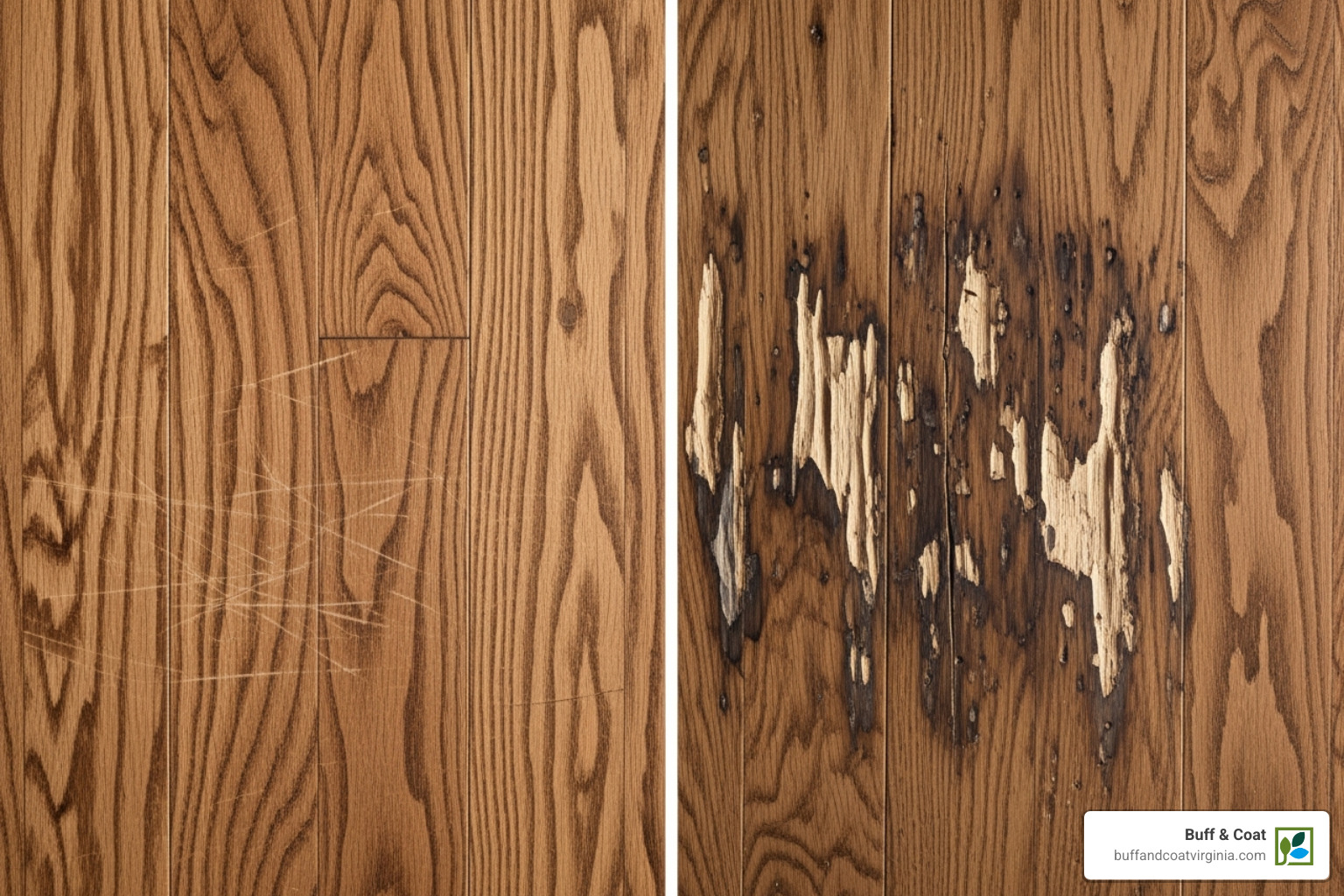
No sand wood floor refinishing is perfect for minor wear and tear. If your floors have surface-level scuffs and light scratches that haven’t penetrated the finish, they are ideal candidates. The buff and coat method is designed to address these issues, filling in minor imperfections while adding a new protective barrier.
Dullness is another key indicator. When constant foot traffic and cleaning have worn down the finish’s luster, a buff and coat can restore its shine.
However, some conditions require traditional sanding. Deep gouges that penetrate the finish and wood will not be fixed by a buff and coat. Warping or cupping indicates moisture-related structural problems that require professional assessment and repair. If you want to change the color of your floor or fix significant sun fading, traditional sanding is necessary.
Does the Existing Finish Matter?
Yes, the existing finish is critical to the success of a no sand wood floor refinishing project. Incompatible finishes can lead to adhesion failure.
Identifying your floor’s finish is crucial. Most modern floors have a polyurethane finish, which is ideal because new polyurethane bonds well to a properly prepared older polyurethane coat.
However, applying polyurethane over wax or certain oil finishes is problematic. The new coat may not adhere, leading to peeling, bubbling, and an uneven finish.
Adhesion issues can also be caused by cleaning products containing wax, silicone, or acrylics. These create a barrier that prevents the new finish from bonding. You can test for wax by applying mineral spirits to a small spot; if it turns cloudy, wax is present. Waxed floors are not good candidates for a buff and coat and may require stripping.
Products claiming to “renew” or “restore” your floors often contain ingredients that interfere with professional refinishing. For proper care, manufacturers like Bruce flooring provide recommendations for floorcare products that work with their finishes.
Our team always assesses your floor’s existing finish to ensure proper adhesion and prevent future problems, guaranteeing the best possible results.
DIY vs. Hiring a Professional
Tackling no sand wood floor refinishing yourself can seem like a great way to save money, but it’s important to understand the challenges involved before you start.
| Feature | DIY No-Sand Refinishing | Professional No-Sand Refinishing (Buff & Coat) |
|---|---|---|
| Cost | Lower upfront material cost (approx. $200 for products, plus buffer rental). Can save $1-$2.50/sq ft. | Higher upfront cost (average $1.50–$4.00 per square foot), but often less than traditional sanding. |
| Time | Can take a full day or more, depending on skill and floor size. Requires careful attention to detail. | Typically completed in just one day. Highly efficient. |
| Equipment | Requires renting specialized equipment (buffer, pads, applicators) and purchasing products. | Professionals use commercial-grade, specialized equipment and high-quality products. |
| Quality of Results | Can be satisfactory for minor issues with careful execution. Risk of uneven finish, lap marks, or adhesion problems if not done correctly. | Guaranteed, consistent, and superior results. Even finish, no streaks, maximum durability. |
| Expertise | Requires research and careful adherence to instructions. Learning curve involved. | Decades of experience, trained technicians who understand floor types and finishes. |
| Warranty/Guarantee | None. Mistakes are costly to fix. | Often comes with a warranty (e.g., our Five Year Warranty) and satisfaction guarantee. |
| Convenience | Requires your time and effort for prep, execution, and cleanup. | You relax while experts handle everything, including minimal cleanup. No need to move out. |
The DIY Approach
The DIY route can work for small areas, but the potential cost savings come with risks. The challenge lies in renting the right equipment—a floor buffer—and buying the correct supplies. Operating a buffer without experience can be difficult and lead to mistakes.
The risk of mistakes is high. Common DIY errors include an uneven finish, visible lap marks, or poor adhesion from improper cleaning. These mistakes can be costly to fix professionally.
Floor buffers are powerful and can damage floors if used incorrectly. Following instructions is critical, but experience is key. Our guide on how to buff wood floors provides basics, but hands-on skill is different.
When to Call a Professional
Most homeowners find that hiring a professional for no sand wood floor refinishing is a worthwhile investment that leads to greater satisfaction. Here’s why:
- Guaranteed Results: Hiring a professional guarantees a consistent, beautiful result. We use commercial-grade equipment and superior finishes not available to consumers, ensuring maximum durability.
- Experience: Our experience with different floor types and finishes ensures we know how to handle any situation, from vintage oak to modern engineered flooring, for optimal adhesion.
- Efficiency and Speed: We complete the job in a single day, saving you the time, stress, and hassle of a multi-day DIY project.
- Safety and Convenience: Our process is 100% dust-free and uses non-toxic products safe for your family. You can stay in your home while we work.
- Warranty: We back our work with a Five Year Warranty. If something goes wrong with a DIY job, you’re on your own. With us, you have peace of mind.
For Richmond area homeowners looking for quality, convenience, and value, our expert floor refinishing services in Richmond deliver results that can’t be matched by DIY efforts.
Frequently Asked Questions About No Sand Floor Refinishing
Homeowners are often curious but cautious about no sand wood floor refinishing, as it challenges the old belief that floor restoration must be messy and disruptive. Here are answers to the most common questions.
How does the cost of no-sand refinishing compare to traditional sanding?
No sand wood floor refinishing is typically more affordable than traditional sanding. Our buff and coat process generally runs between $1.50–$4.00 per square foot, while traditional sanding can cost anywhere from $3–$8 per square foot.
Why the cost difference? The process is less labor-intensive and faster. It doesn’t require massive sanding equipment, expensive sandpaper, or extensive cleanup. We complete the job in a single day, compared to the 3-5 days needed for traditional sanding. The final price depends on factors like the total area, the amount of prep work needed, and your choice of finish.
In terms of long-term value, a buff and coat extends your floor’s life by 3-5 years, making it an excellent maintenance step to postpone a more expensive full refinish.
What are the expected results of refinishing wood floors without sanding?
The most immediate result is a restored shine. Dull floors will reflect light again, and minor surface scratches and scuffs will disappear under the new, smooth topcoat. Beyond aesthetics, the new polyurethane layer provides serious protection against daily wear, making your floors more durable. The deep cleaning process also removes years of accumulated residue, revealing the true beauty of the wood.
It’s important to have realistic expectations. No-sand refinishing cannot fix deep gouges, penetrating water stains, or structural issues like warped boards. These issues require more extensive repairs.
How long does it last? The finish typically lasts 3-5 years, depending on traffic and care. Proper maintenance, like using furniture pads and the right cleaners, can extend its life.
Can you change the color of your floor without sanding?
No, you generally cannot change your floor’s color with no-sand refinishing methods. Wood stain must penetrate raw wood fibers to work. Since the buff and coat process applies a new clear coat over the existing finish, there is no bare wood for the stain to adhere to.
If changing color is your main goal, traditional sanding down to bare wood is your only option.
However, you can change the sheen level. We can transform your floor’s appearance by applying a new finish in matte, satin, semi-gloss, or high-gloss, depending on your preference.
If you love your floor’s current color but want to restore its protection and beauty, no sand wood floor refinishing is perfect. If you’re dreaming of a completely different color, you’ll need to discuss traditional sanding options.
Conclusion: Revitalize Your Floors the Smart Way
This guide has shown the possibilities of no sand wood floor refinishing. It is a smart homeowner’s solution, offering a fast, affordable, and completely dust-free way to bring tired floors back to life. Whether your hardwood has minor wear, surface scratches, or has simply lost its luster, this modern approach can work wonders.
The “buff and coat” method is our signature service at Buff & Coat Virginia. With 27 years in business, we’ve perfected this technique to deliver stunning, one-day results to countless Richmond-area homes, restoring floors to their former glory without the expected mess and disruption.
Our commitment to dust-free techniques and family-safe products means no lengthy cleanup, and your family can enjoy the refreshed floors almost immediately. It’s an advanced, environmentally conscious method that gets proven results.
While DIY kits exist, achieving a flawless, durable finish comes down to experience and professional-grade equipment. We’ve seen too many DIY attempts result in uneven finishes or adhesion problems. When it comes to your hardwood floors, it’s worth trusting the experts who guarantee their work.
Don’t let the fear of a messy renovation keep you from enjoying gorgeous hardwood floors. If your floors are showing their age, we’re here to help you revitalize them the smart way.
Ready to see what no sand wood floor refinishing can do for your home? Get a free, no-obligation estimate for your project by scheduling a free inspection with our team today. Let’s bring back the beauty of your floors without the hassle!