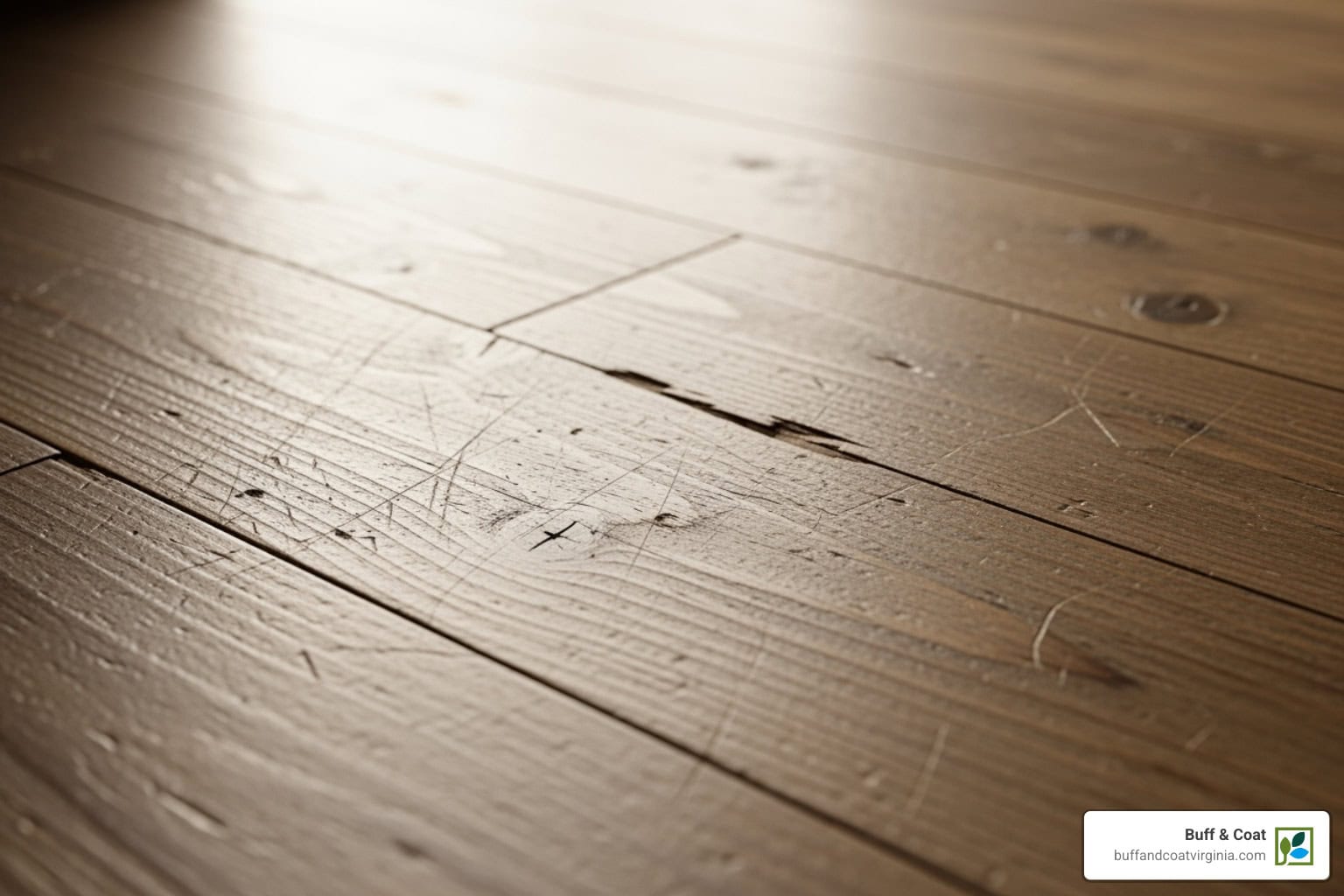
Why Learning How to Repair Damaged Engineered Wood Floors Matters
Learning how to repair damaged engineered wood floors is essential for any homeowner. If you want professional help, our hardwood floor repair and refinishing experts deliver fast, durable results. While engineered wood is durable, daily life can cause scratches, dents, and water spots. The good news is that most issues are fixable, saving you from costly replacements. For homeowners in Virginia, partnering with an expert hardwood flooring contractor is the best way to ensure professional results for more complex jobs. This guide covers everything from quick DIY fixes to professional restoration.
Quick Repair Guide:
- Light Scratches – Use wood repair markers or wax filler sticks, then buff gently.
- Deep Dents & Gouges – Fill with color-matched wood putty, sand smooth, stain, and seal.
- Water Damage – Remove standing water immediately, dry thoroughly with fans/dehumidifiers, and assess for warping.
- Severe Damage – Replace individual planks by cutting out damaged sections and installing new boards.
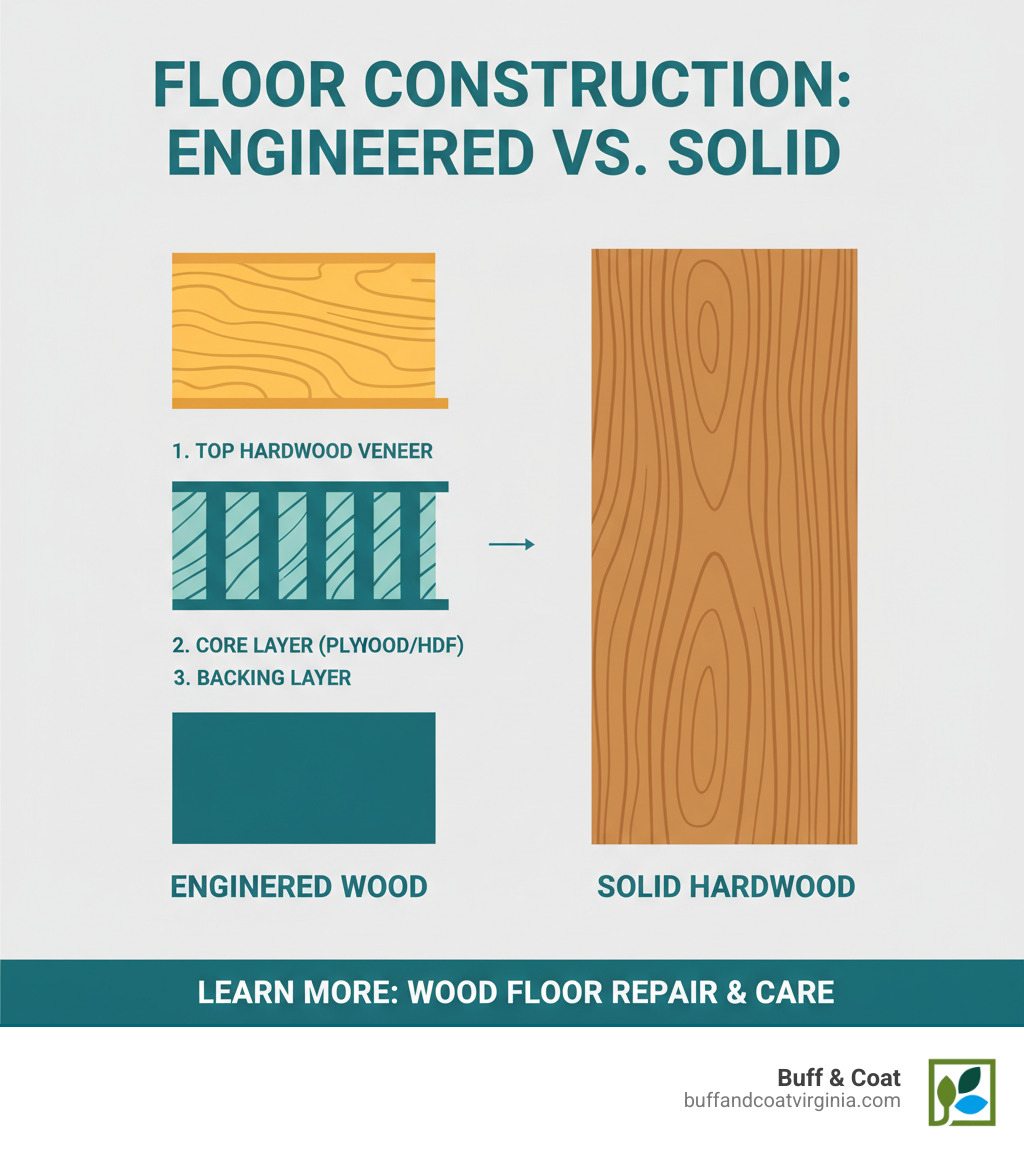
Engineered wood’s layered constructiona thin real wood veneer over a stable coreis what makes it unique. This veneer’s thickness dictates the available repair methods, from simple touch-ups to full refinishing. I’m David Emmerling, owner of Buff & Coat, and with over 20 years of experience, my team has helped thousands of Richmond-area homeowners restore their floors using both DIY-friendly advice and professional, dustless techniques.
Quick how to repair damaged engineered wood floors definitions:
First, Assess the Damage and Your Floor Type
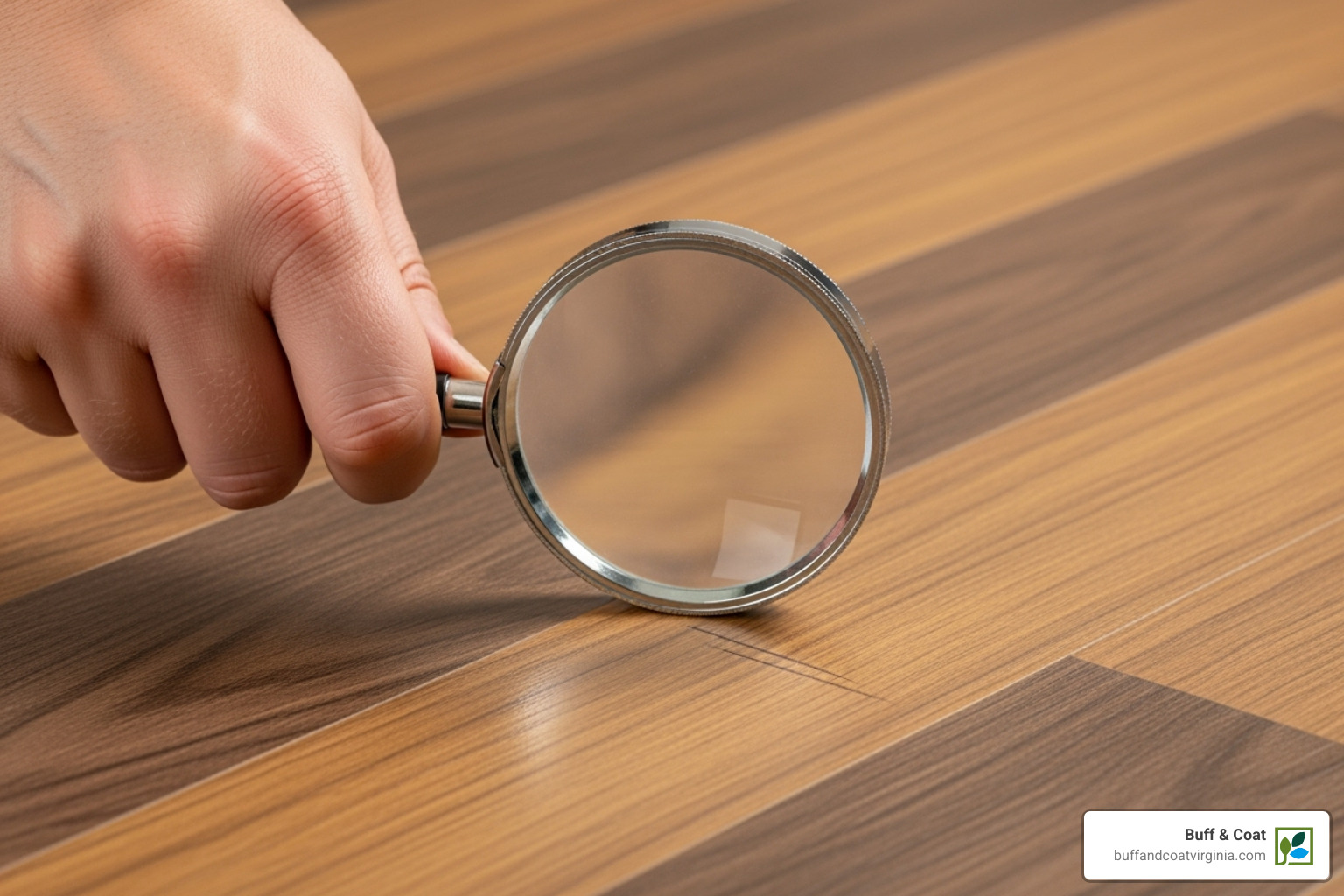
Before starting any repair, a proper diagnosis is essential to avoid costly mistakes. Understanding your floor’s construction and the type of damage will determine the correct repair method.
The most critical factor for repairing engineered wood is the thickness of its top hardwood veneer. This thin layer of real wood determines your repair options.
- Thin Veneer (under 2mm): Limited to cosmetic fixes like markers and wax sticks. Aggressive sanding will expose the core layers beneath.
- Thick Veneer (3mm or more): Can often be sanded and refinished, similar to solid hardwood, though usually only a few times.
The core layers (plywood or HDF) provide stability but are not meant to be exposed. Your floor’s finish type (lacquer, oil, etc.) also dictates which cleaning and sealing products are safe to use.
Next, identify the damage:
- Surface Scratches: The easiest to fix, often a DIY job.
- Dents: Can be filled or sometimes steamed out if shallow.
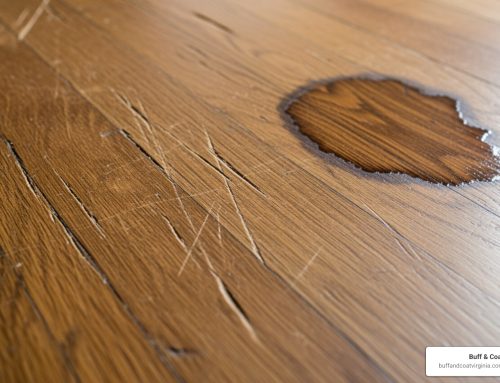
- Water Damage: Requires immediate action. Look for warping, cupping (board edges rising), or delamination (layers separating). Significant water damage is a red flag that requires expert attention.
- Deep Gouges: May be filled, but if the damage penetrates the veneer, plank replacement is necessary.
The line between a DIY fix and a professional job depends on the damage depth, the presence of moisture, and your veneer’s thickness. When in doubt, get a professional opinion. Buff & Coat offers free inspections to help you understand your options. For more on identifying damage, see our guide on Hardwood Floor Damage Repair or check out these top techniques to repair engineered wood flooring like a pro.
How to Repair Damaged Engineered Wood Floors: A Step-by-Step Guide
Most common engineered wood floor issues can be resolved with simple DIY techniques. The secret is matching the right approach to the damage. For more extensive damage that requires professional equipment, our professional floor sanding services can restore your floors to their original beauty.
For Light Damage: How to Repair Damaged Engineered Wood Floors with Scratches
Surface scratches and scuffs are often the easiest problems to fix.
- Clean the Area: Start by cleaning the scratch with a pH-neutral wood floor cleaner to remove any dirt.
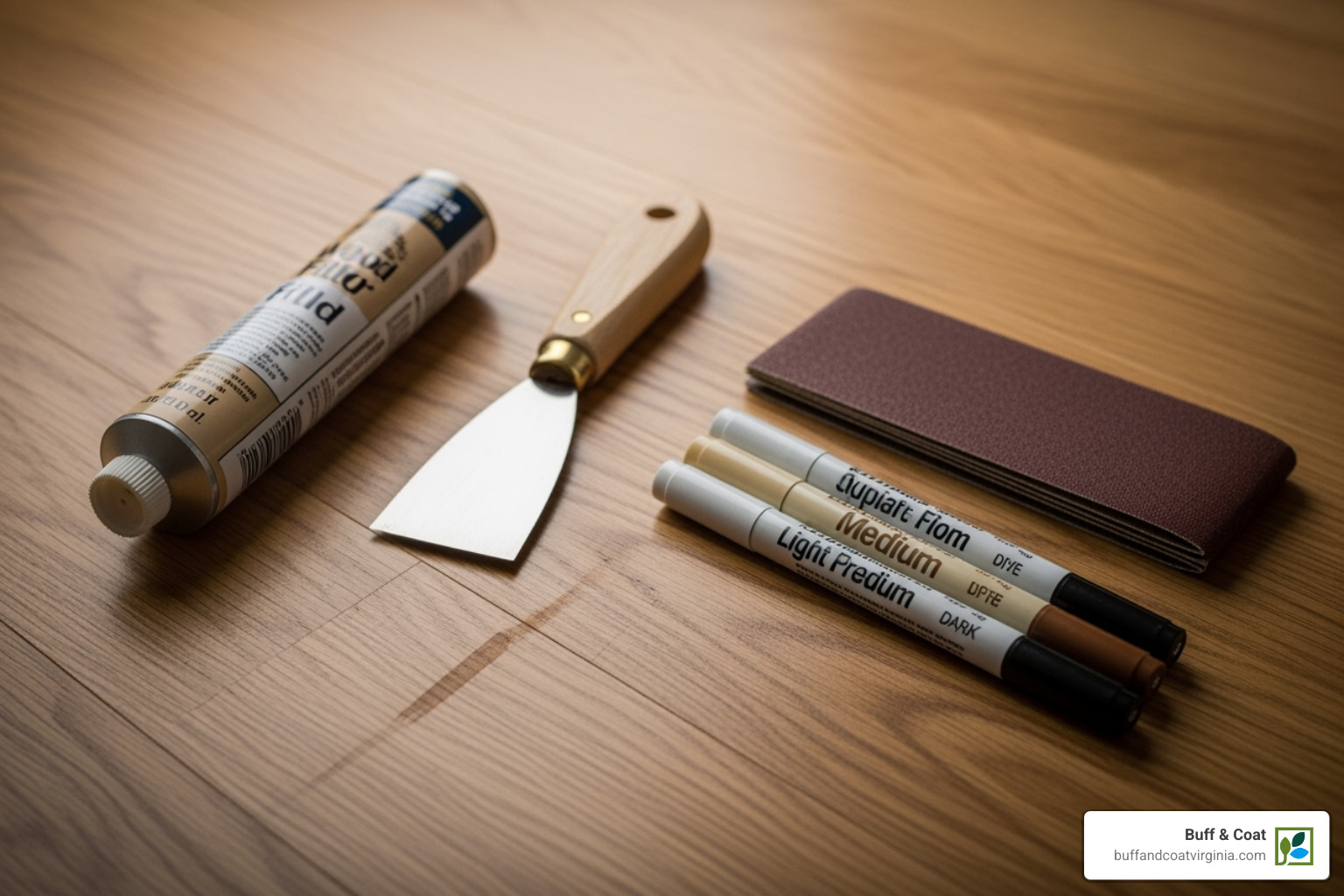
- Use a Repair Marker: For very light scratches that haven’t broken the finish, choose a wood repair marker that matches your floor. Apply it along the grain and wipe away any excess immediately with a soft cloth.
- Use a Wax Filler Stick: For slightly deeper scratches, rub a wax filler stick over the area to fill the indentation. Buff gently with a soft cloth to blend the wax.
- Seal the Repair: Apply a thin layer of clear floor finish over the spot to protect it and help it blend in.
For more strategies, see our guide to Fix Scratched Wood Floors.
For Deeper Damage: How to Repair Damaged Engineered Wood Floors with Dents and Gouges
Deeper dents and gouges require more work but are often manageable for a DIYer.
- Clean the Damage: Thoroughly clean the dent or gouge.
- Try Steaming (Shallow Dents Only): For dents that haven’t broken the wood fibers, place a damp cloth over the area and apply heat with a steam iron for a few seconds. The steam can cause the compressed fibers to swell, reducing the dent. Be careful not to scorch the finish.
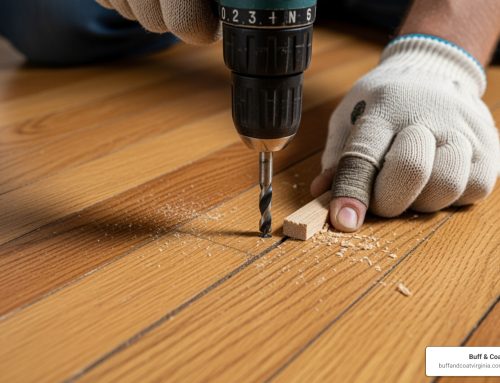
- Apply Wood Filler: For deep gouges, use a high-quality, color-matched wood filler or putty. Use a putty knife to press the filler firmly into the damage, slightly overfilling to account for shrinkage.
- Dry and Sand: Allow the filler to dry completely per the manufacturer’s instructions. Once dry, sand the area smooth with fine-grit sandpaper (150- to 220-grit), always sanding in the direction of the wood grain.
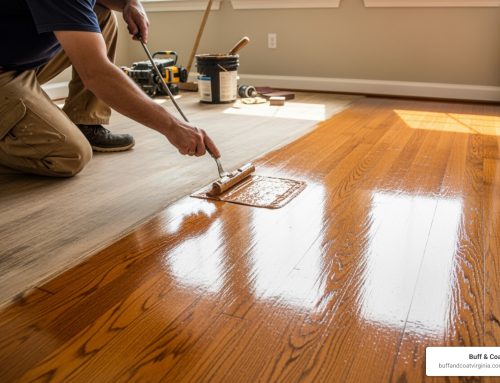
- Stain and Seal: If needed, apply a matching wood stain to the sanded filler. Once dry, seal the repair with a clear finish to protect it and match the surrounding sheen.
Our Hardwood Floor Scratch Filler Ultimate Guide offers more details on achieving a professional look.
Tackling Major Issues: Water Damage and Plank Replacement
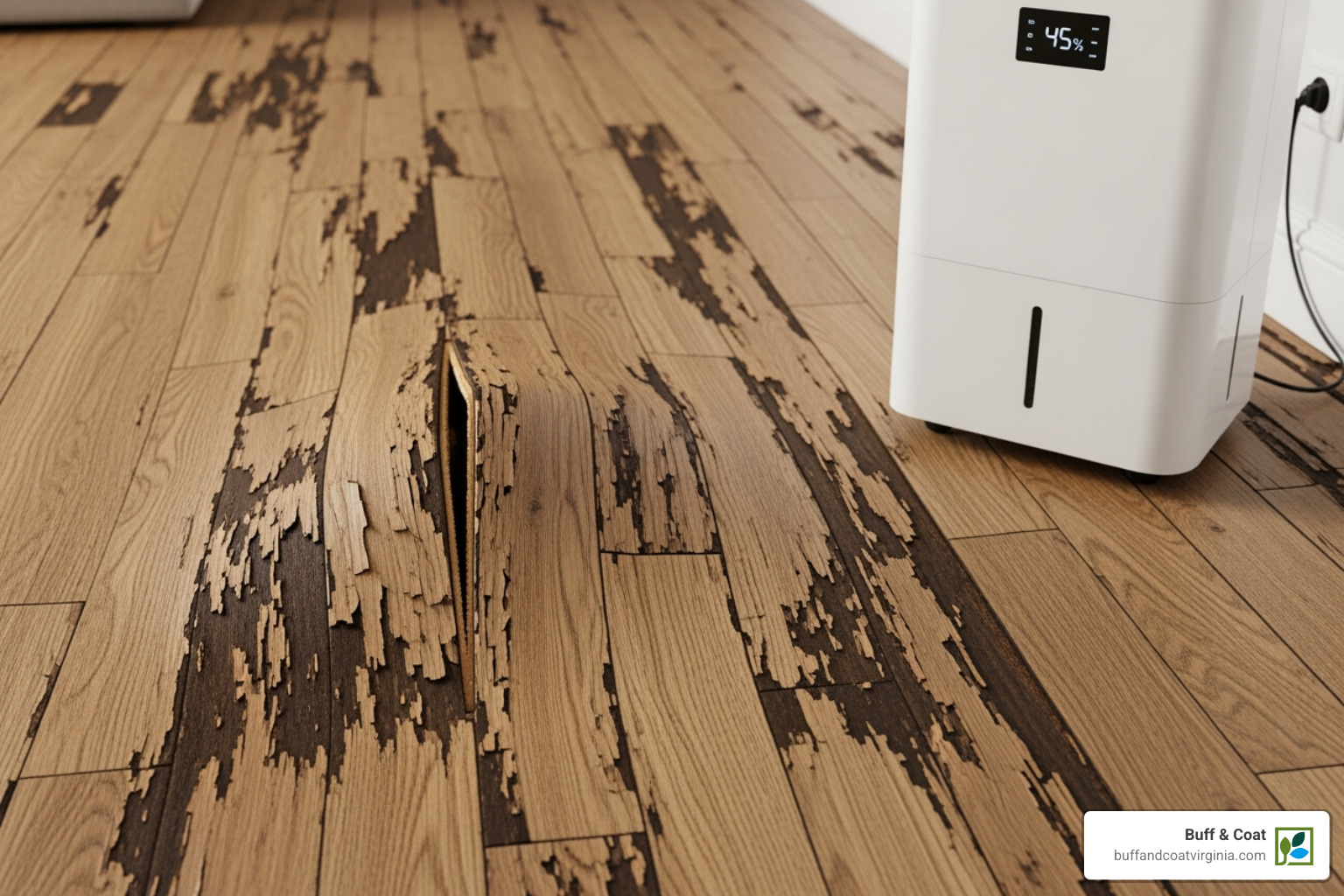
Some problems, like water damage or broken planks, require more intensive work. With engineered wood’s layered structure, acting quickly is critical to prevent permanent damage.
Addressing Water Damage and Warping
While engineered wood is more moisture-resistant than solid hardwood, prolonged water exposure can cause cupping, warping, or delamination (veneer peeling). If you act fast, you can often save the floor.
- Remove Standing Water Immediately: Use towels, a mop, or a wet/dry vacuum to remove all visible water. Speed is critical.
- Dry the Area Thoroughly: Set up high-velocity fans and dehumidifiers to pull moisture from the flooring and the subfloor. This process can take several days.
- Check Moisture Levels: Use a moisture meter to ensure both the flooring and subfloor have returned to a normal range (typically 6-12%) before proceeding.
- Assess the Damage: As the floor dries, cupped boards may flatten on their own. However, if you see delamination (bubbling or peeling layers), the planks are permanently damaged and must be replaced.
- Prevent Mold: Once completely dry, clean the area with a 1:9 bleach-to-water solution, testing in an inconspicuous spot first.
For a complete overview, consult our guide on Hardwood Floor Water Damage. You can also share this guide on repairing water damage on Facebook.
When and How to Replace a Damaged Plank
Plank replacement is necessary for deep cracks, severe gouges through the veneer, or delamination. Knowing how to repair damaged engineered wood floors sometimes means knowing when to replace a board.
Tools Needed: Circular saw, chisel, pry bar, wood adhesive, rubber mallet, and safety gear.
- Cut Out the Damaged Plank: Set your saw blade depth to match the flooring’s thickness. Make several parallel cuts down the length of the damaged plank, staying within its edges. Then, make cross-cuts to create smaller pieces.
- Remove the Pieces: Use a chisel and pry bar to carefully lift out the cut sections. Avoid damaging adjacent planks.
- Clean the Subfloor: Scrape away any old adhesive or debris to create a clean, smooth surface.
- Prepare the New Plank: For mid-floor replacements, you may need to trim the bottom lip of the groove on the new plank so it can be dropped into place.
- Install the New Plank: For glued-down floors, apply wood adhesive to the subfloor, position the new plank, and gently tap it flush with a rubber mallet. For floating floors, click the new plank into place. Wipe away any excess adhesive immediately and place a heavy weight on the new plank overnight to ensure a strong bond.
For more detailed instructions, see our article on Hardwood Floor Board Replacement.
Sanding and Refinishing: A Complete Refresh for Your Floors
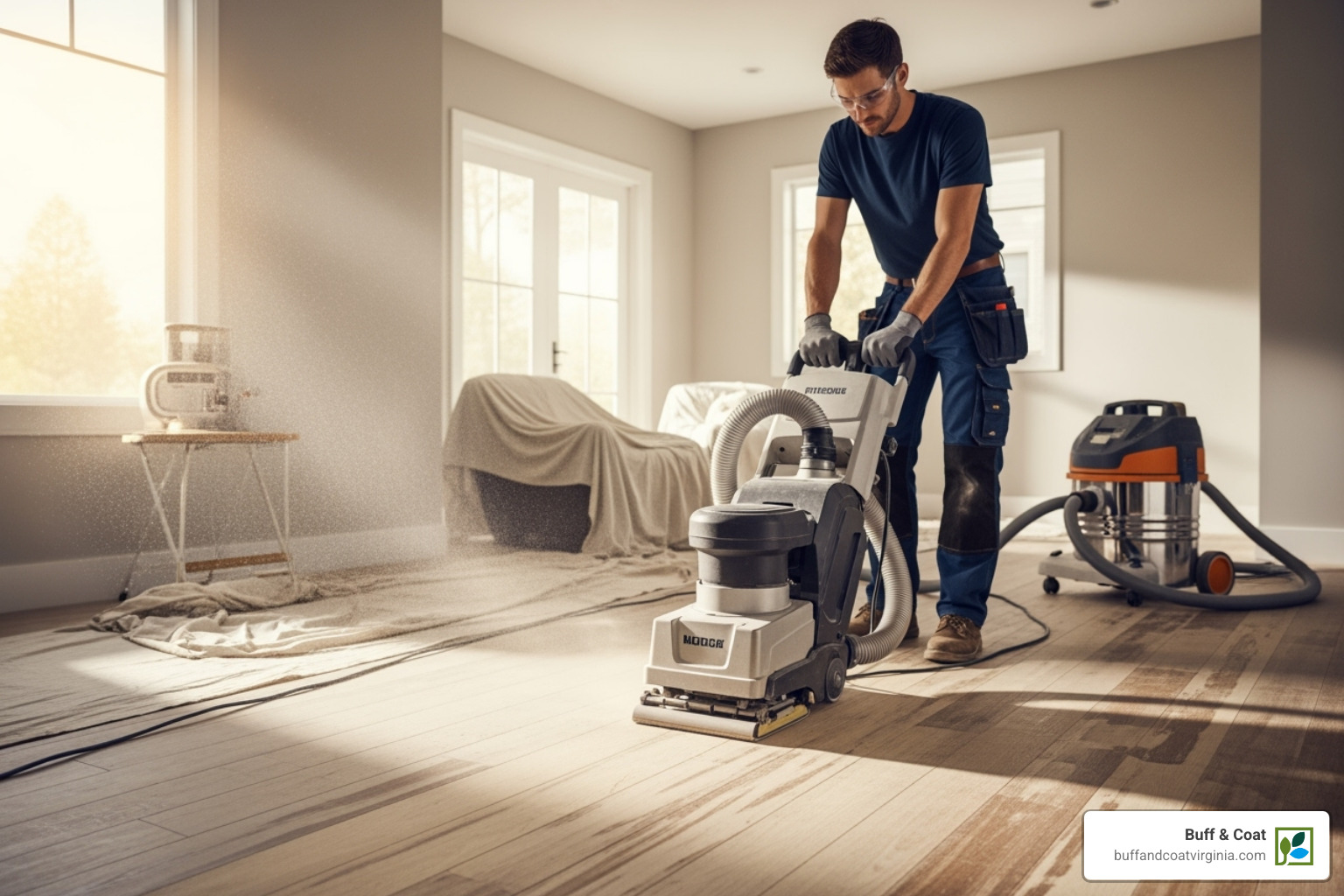
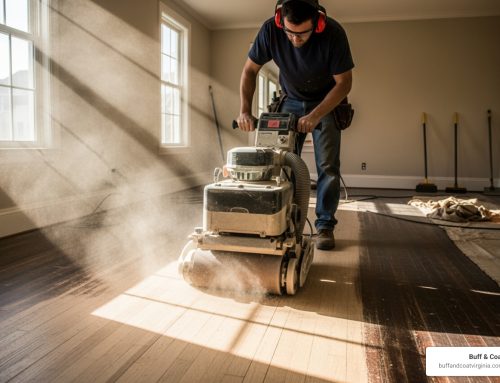
For widespread wear, numerous deep scratches, or a complete color change, sanding and refinishing offers the ultimate solution. However, this process has specific limitations for engineered wood that depend entirely on the thickness of its top veneer.
Can Engineered Wood Floors Be Sanded and Refinished?
Yes, but the ability to do so is determined by the wear layer thickness. Sanding through the veneer to the core layer is an irreversible mistake.
- Wear Layer Under 2mm: These floors cannot be sanded. A light buff-and-coat process may be possible to refresh the finish, but abrasive sanding is not an option.
- Wear Layer of 2mm: These floors can typically handle a light buffing (or screening), which abrades the top finish layer to allow a new coat to adhere. This will not remove deep scratches.
- Wear Layer of 3mm or More: These floors can usually be fully sanded and refinished one to three times. Premium floors with 5-6mm veneers may handle more.
This is the key difference from solid hardwood, which can be sanded many more times. Each sanding removes a portion of the finite veneer. Our guide on Refinishing Engineered Wood Floors Complete Guide provides more detail, and you can learn more about the technicals of Engineered Wood Sanding.
When to Call a Professional for Floor Repairs
While DIY repairs are great for minor issues, some jobs require professional expertise and equipment. Consider calling a pro for:
- Extensive Water Damage: When a large area is affected, or the subfloor may be damaged, professionals have the tools to dry the area properly and prevent mold.
- Subfloor Issues: Unevenness, moisture problems, or structural damage must be addressed by an expert to ensure a lasting repair.
- Very Thin Wear Layer: A professional can accurately measure the veneer and determine the safest refinishing method, avoiding costly mistakes.
- A Guaranteed Flawless Finish: Achieving a perfectly smooth, even finish requires commercial-grade equipment and years of experience.
- Lack of Tools or Time: Renting and learning to use a drum sander is difficult and risky. A professional team can complete the job faster and with less disruption.
Choosing professional help is a smart investment in your home. Learn more about The Importance of Hiring Professionals for Hardwood Floor Refinishing from our team of Hardwood Floor Repair Contractors.
Prevention: The Best Way to Keep Your Floors Looking New
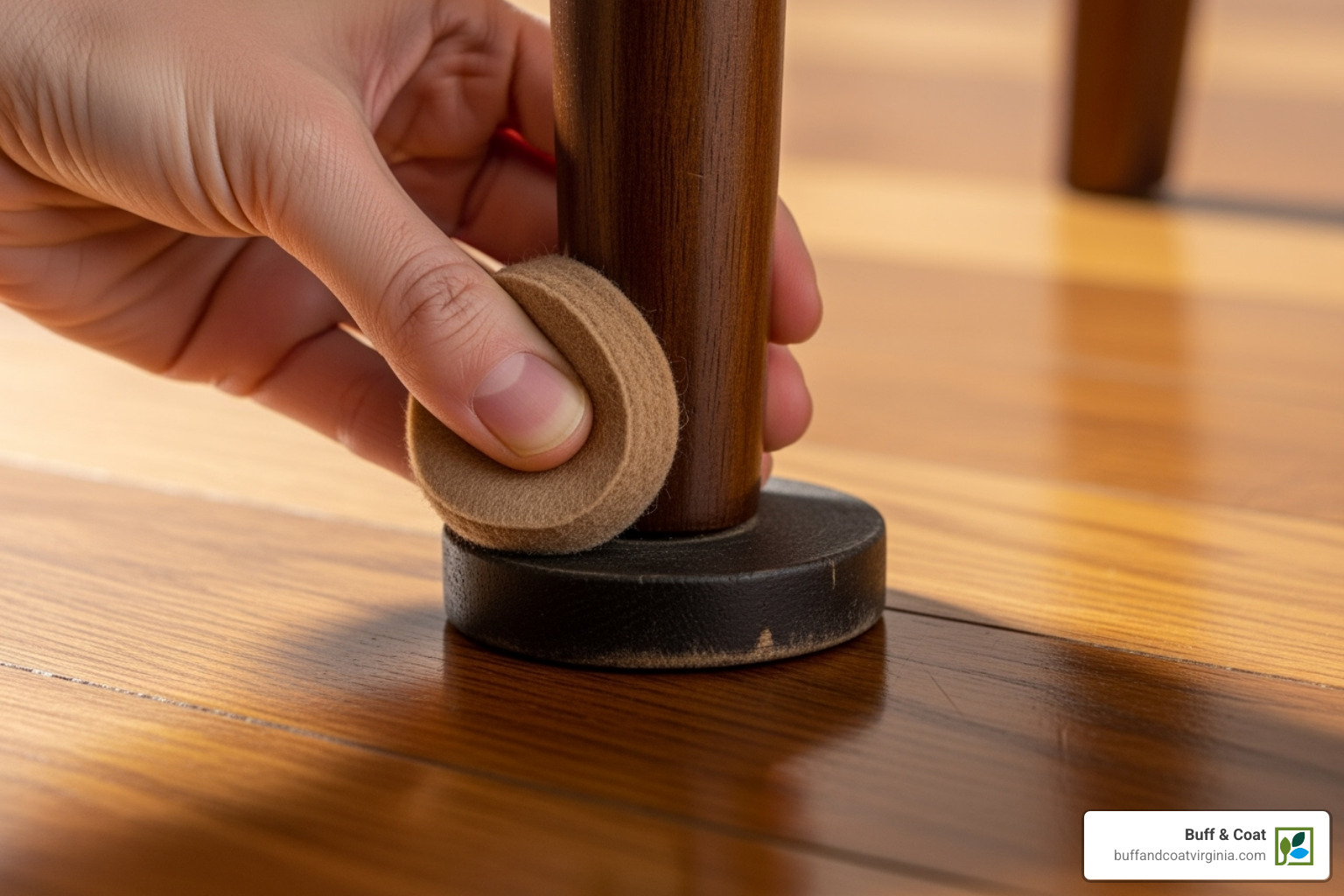
The best repair is the one you never have to make. Proactive maintenance is the most effective way to protect your engineered wood floors and minimize the need for future repairs.
- Sweep or Vacuum Regularly: Use a soft-bristle broom or a vacuum with a hardwood floor attachment to remove abrasive dirt and grit.
- Use the Right Cleaner: Clean with a pH-neutral cleaner designed for wood floors. Use a damp, not wet, mop and never use a steam mop, as the heat and moisture can damage the finish and adhesive.
- Apply Furniture Pads: Place felt pads on the bottom of all furniture legs to prevent scratches and dents.
- Use Area Rugs and Mats: Place rugs in high-traffic areas and at entryways to trap dirt and reduce wear.
- Control Humidity: Maintain indoor humidity levels between 40-60% to prevent warping in high humidity and gapping in low humidity.
- Wipe Up Spills Immediately: Standing liquid is the enemy of wood floors. Clean up spills right away to prevent staining and water damage.
- Trim Pet Nails: Regularly trimming your pet’s nails is one of the easiest ways to prevent scratches.
By incorporating these habits, you’ll rarely need to worry about how to repair damaged engineered wood floors. For more tips, explore our resources on Hardwood Floor Maintenance or Download a Lacquered Flooring Maintenance Guide for finish-specific care.
Frequently Asked Questions about Engineered Wood Floor Repair
Can engineered wood floors be sanded multiple times?
Engineered wood flooring can be refinished, but the number of times depends entirely on the thickness of its top hardwood layer. This is a critical factor when considering how to repair damaged engineered wood floors through sanding. A floor with a thin wear layer (under 2mm) should not be sanded, as it risks exposing the core material. A 2mm layer may handle a light buffing or screening to erase minor scuffs. For engineered floors with thicker layers (3mm or more), they can typically be sanded one to three times over their lifespan, and sometimes even more for premium products with very thick veneers (5-6mm). Always assess your floor’s wear layer before attempting any sanding.
What is the best way to fix a deep gouge in engineered wood?
For a deep gouge, the best method is to use a color-matched wood filler or putty. First, we clean the area thoroughly to ensure good adhesion. Then, we apply the filler with a putty knife, pressing it firmly into the gouge and slightly overfilling it to allow for shrinkage. Once it’s completely dry (following the manufacturer’s instructions), we carefully sand the area until it is flush with the rest of the floor, using progressively finer grits of sandpaper (e.g., 100-grit, then 150-grit, then 220-grit). Finally, we apply a matching stain if necessary and then a clear sealant (like polyurethane) to protect the repair and blend it seamlessly with the surrounding floor.
When is it necessary to replace a plank instead of repairing it?
Plank replacement is necessary when the damage is too severe for a filler or refinishing to correct. This includes deep cracks that compromise the board’s structure, significant water damage that has caused the layers of the engineered wood to delaminate (separate), or a gouge that has penetrated through the entire hardwood veneer into the core layers. Other reasons include extensive warping that cannot be flattened by drying, or if the board is loose due to adhesive failure and cannot be re-secured effectively. In these cases, attempting a repair would be futile, and replacement ensures the longevity and integrity of your floor.
Conclusion
Repairing your engineered wood floors is an achievable goal. By understanding how to repair damaged engineered wood floors, you can confidently tackle minor scratches and dents with simple DIY methods, saving money and extending the life of your flooring. For more complex challenges like deep water damage, plank replacement, or a full refinishing project, the expertise of a professional is invaluable. The best strategy is prevention through regular, thoughtful maintenance.
If you’re in the Richmond, VA area and need help with extensive damage or simply want a perfect, professional finish, it’s time to call the experts. At Buff & Coat, we specialize in advanced restoration techniques that bring floors back to life. Our dust-free process ensures a beautiful result without the mess.
Ready to restore your floor’s beauty? Contact Buff & Coat today at (804) 285-5900 for expert advice. We give free estimatesclick our Contact Us page to schedule a free inspection and get your no-obligation quote.