Richmond homeowners usually start looking into hardwood floor refinishing when the floor still looks decent from across the room, but not up close. The finish is dull, scratches show in the afternoon light, and the house already feels busy enough without adding a messy project.
That's where water based polyurethane finishes make a real difference. For many homes in Richmond VA, they offer a practical mix of clear appearance, lower odor, and a faster refinishing timeline, especially when you're deciding between a simple wood floor recoating and a full sand-and-refinish.
An Introduction to Water-Based Polyurethane Finishes
Water-based polyurethane is a clear protective coating for wood floors that uses water as the main carrier instead of heavier petroleum-based solvents. That doesn't mean it's weak. It means the product goes on differently, smells less aggressive during application, and dries much faster than older finish systems many homeowners still picture when they hear “polyurethane.”
A simple way to think about it is this. Old finishes are like a heavy cotton sweatshirt. They work, but they feel bulky and slow. Modern water-based systems are more like a lightweight performance jacket. They're designed to protect while staying cleaner, clearer, and easier to live with during the job.
One reason homeowners ask for this finish in Richmond VA is appearance. Unlike oil-based polyurethanes that amber over time, modern water-based polyurethanes use self-crosslinking resins to keep a crystal-clear look without yellowing, which matters if you want to preserve the natural color of white oak, lighter stains, or contemporary interiors, as noted in this water-based polyurethane market overview.
What homeowners usually notice first
Homeowners don't care about finish chemistry. They care about what shows up in their house.
- Clearer color: Water-based finishes keep the floor looking closer to its original tone.
- Less disruption: They fit better when you want a cleaner, lower-odor project.
- Modern look: They pair well with the lighter, less amber styles many Richmond homeowners prefer.
Practical rule: “Water-based” doesn't mean watered down. It means the carrier is different. The protection comes from the cured finish left on the floor.
If you're comparing sheen, durability, and the right fit for older versus newer homes, it helps to review the broader range of hardwood floor finish options before choosing a system.
For homeowners researching floor refinishing Richmond VA, this is usually the key takeaway. Water-based products aren't a compromise finish anymore. They're often the cleanest answer when you want protection without adding the warm yellow cast that comes with traditional oil-based coatings.
Water Based vs Oil Based Polyurethane A Homeowners Comparison
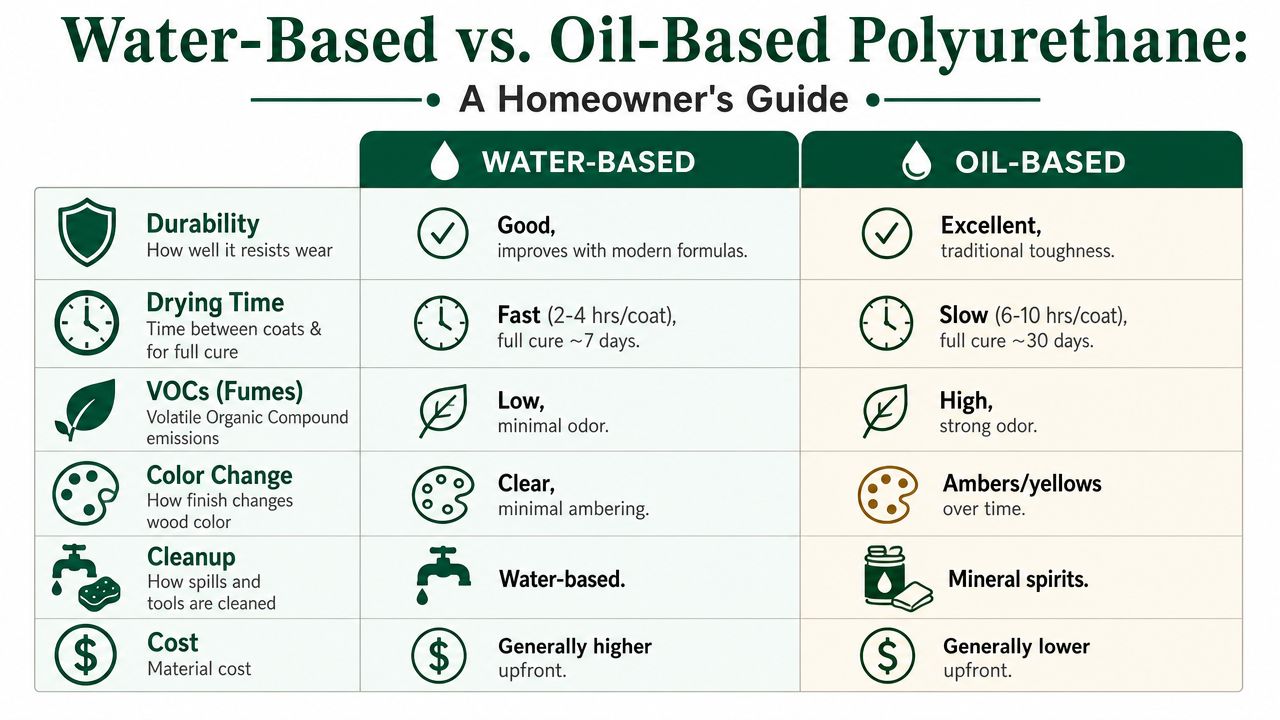
The better finish depends on what you want your floor to look like, how much household disruption you can tolerate, and whether you're trying to refresh existing hardwood or planning full hardwood floor restoration. In Richmond VA, this decision often comes down to lifestyle as much as appearance.
Appearance and long term color
Water-based polyurethane dries clear and stays much truer to the wood's existing color. Oil-based polyurethane gives wood a warmer, more amber look and continues shifting over time. That isn't always bad. Some homeowners like that traditional warmth on older red oak or pine.
If you want a floor to stay bright, neutral, or close to the stain sample you picked, water-based is usually the safer choice.
Dry time and household disruption
Many projects gravitate toward water-based options due to their quick drying times. Water-based polyurethane finishes can dry in as little as 1 to 2 hours, which allows much faster recoating and can shorten the overall project timeline, according to this guide to water-based polyurethane dry times and application.
That faster schedule matters if you're asking practical questions like how long does refinishing take or whether you can stay in the home during the project.
Odor and cleanup
Water-based finishes are usually the better fit when the household includes kids, pets, or anyone sensitive to stronger smells. They also clean up with warm water instead of chemical solvents. That doesn't make them foolproof or casual to apply. It just makes the process easier on the home environment.
A finish can be durable and still be miserable to live with during the job. Homeowners often underestimate that part until the work starts.
Durability and wear
Oil-based polyurethane still has a reputation for old-school toughness. Water-based finishes have improved a lot, and for normal residential wear they perform very well when applied correctly and built to the right coat system.
What matters most isn't just the category. It's floor condition, prep, coat count, and whether the right service is being chosen in the first place. A buff and coat service over a failing finish won't hold up, no matter how good the product is.
Water-Based vs. Oil-Based Polyurethane at a Glance
| Feature | Water-Based Polyurethane | Oil-Based Polyurethane |
|---|---|---|
| Appearance | Clear, modern look | Warm amber tone |
| Color change over time | Minimal yellowing | Ambers over time |
| Drying speed | Fast recoat schedule | Slower drying |
| Odor | Lower odor | Stronger odor |
| Cleanup | Water cleanup | Solvent cleanup |
| Project impact | Easier for busy households | More disruptive |
For a deeper side-by-side breakdown, see this comparison of the difference between oil and water-based polyurethane.
If you're choosing between finishes for hardwood floor refinishing in Richmond VA, the question usually isn't which finish is universally best. It's which one fits your floor, your schedule, and the look you want to live with.
The Buff and Coat Process With Water-Based Finishes
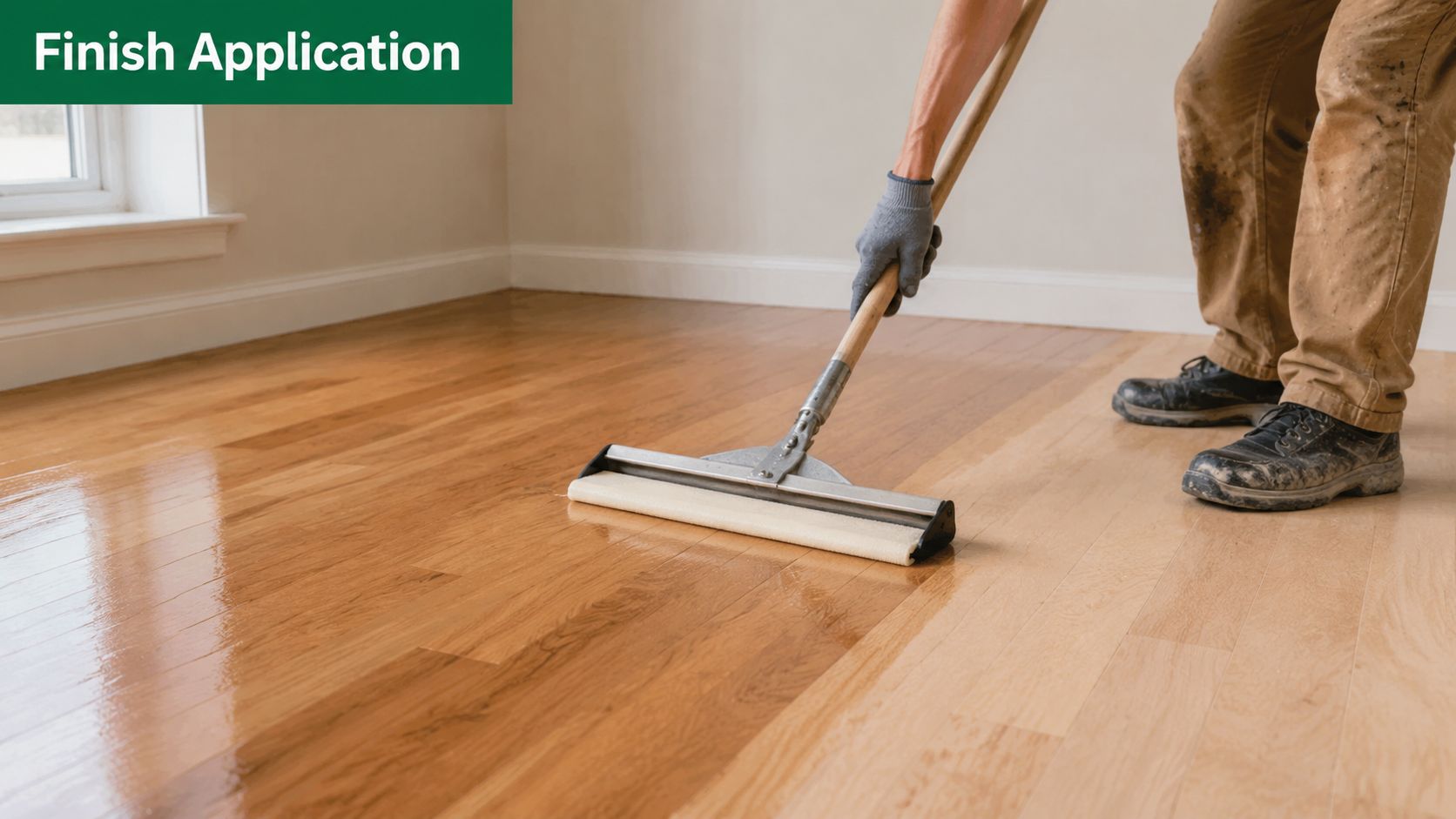
A lot of floors don't need to be sanded down to bare wood. They need the existing finish cleaned up, lightly abraded, and recoated before wear gets through to the wood itself. That's where a wood floor recoating service makes sense.
What happens during a buff and coat
In plain terms, the floor pro screens or buffs the existing finish so the new coat can bond properly. The floor is cleaned carefully, then fresh finish is applied over that prepared surface.
This is not the same as hiding damage with a shiny top layer. It works when the existing finish is worn but still intact enough to accept a new coat. If the scratches have gone through the finish and into the wood, this process won't erase them.
A good overview of that service is this explanation of a buff and coat for hardwood floors.
Why water-based works well for recoats
The biggest advantage is speed. Water-based polyurethane finishes are engineered to dry ultra-fast, typically within 2 hours, but that speed creates a real application challenge. If the applicator doesn't maintain a wet edge, lap marks and uneven film build can permanently affect clarity, according to this Minwax technical data sheet.
That's why this part of the job rewards skill. Fast drying is great for the homeowner. It's unforgiving for the person applying it.
The same feature that helps a floor get finished faster can also make a rushed or sloppy application obvious forever.
A professional recoating job usually includes attention to edges, room sequence, applicator choice, and the pace needed to keep the finish flowing evenly across the floor.
Here's a helpful visual on how that kind of floor work comes together:
For homeowners in Midlothian, Chesterfield, and other busy parts of Richmond VA, this is often the appeal. A recoat with water-based finish can refresh the look of a floor without turning the house upside down the way a full sanding project does.
When a Buff and Coat Isnt Enough The Case for Full Refinishing
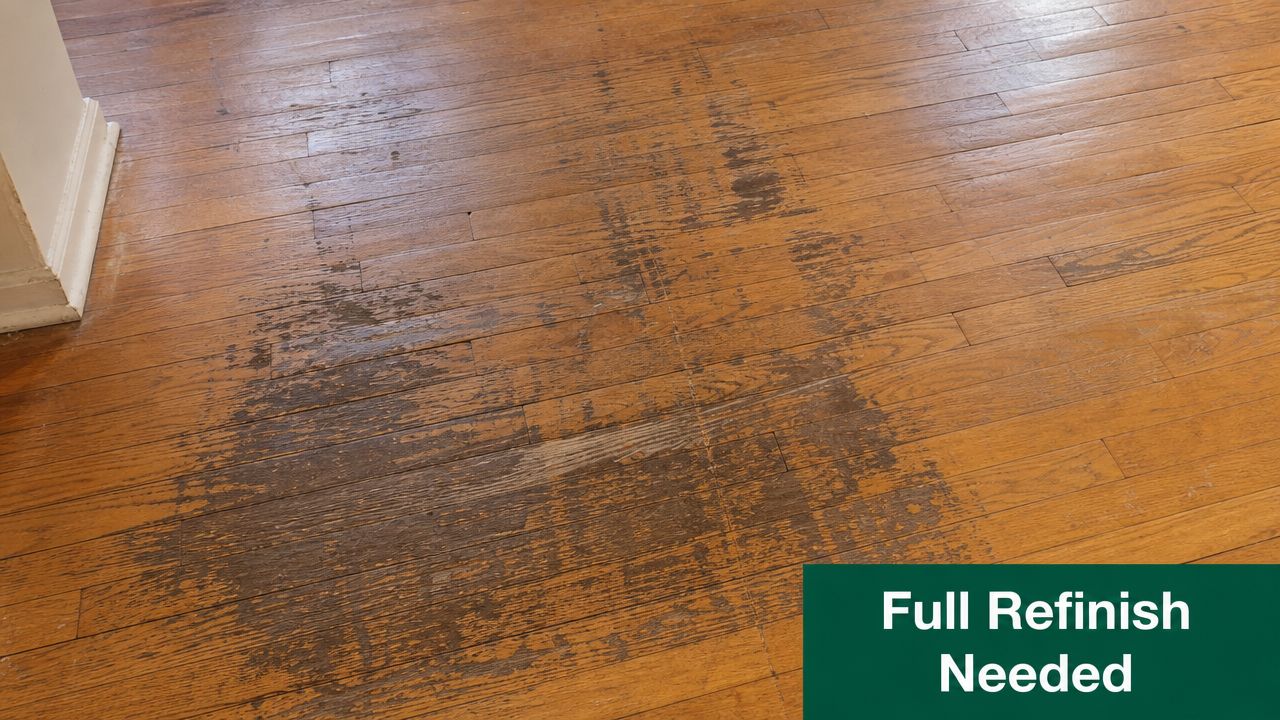
Some floors are past the point where a new topcoat will help. If the finish has worn away in traffic lanes, if pet stains have darkened the wood, or if you can feel deep gouges with your hand, a buff and coat service won't solve the problem. It may add some sheen for a while, but it won't reverse damage that's already in the wood.
Signs you need full hardwood floor refinishing
A full refinishing job removes the old finish down to the wood, gives the surface a fresh sanding sequence, and then applies new finish. That's the right path when the damage is structural to the floor surface, not just cosmetic to the topcoat.
Look for these signs:
- Bare wood in traffic areas: Hallways, kitchens, and entry paths often show this first.
- Deep scratches and gouges: Surface-level abrasion is one thing. Cuts into the wood are another.
- Discoloration or black staining: Water damage and pet accidents often leave marks that recoating won't fix.
- Color change goals: If you want to go lighter, darker, or more natural, full sanding is usually required.
There's also a lot of confusion around “sandless refinishing.” In practice, that's generally a deep cleaning and recoating of the existing finish, not true refinishing. It doesn't remove the old finish layer, and deeper scratches or discoloration remain.
Why dustless sanding matters
Homeowners often avoid full refinishing because they imagine dust everywhere. Modern equipment changes that. Dustless hardwood floor refinishing captures 95 to 99 percent of sanding dust at the point of creation using HEPA-equipped vacuum systems attached to the sanders, as described in this explanation of dustless hardwood floor refinishing.
That matters in older Richmond homes where vents, trim details, and lived-in rooms make cleanup a major concern.
If someone has allergies, asthma concerns, or just doesn't want sanding dust drifting through the house, dustless sanding is the standard worth asking for.
For floor refinishing Richmond VA homeowners, the honest answer is simple. Recoating is a maintenance service. Full refinishing is a restoration service. One preserves a floor that still has a healthy finish layer. The other rebuilds a floor that's already worn past that point.
How to Maintain Your Water-Based Polyurethane Floors
Once the finish is down, daily habits matter more than most homeowners think. Good maintenance won't make a poor application better, but it will help a well-finished floor stay attractive longer and delay the need for another hardwood floor refinishing project.
The first week matters most
For maximum durability, manufacturers recommend waiting 72 hours before heavy traffic and 7 days before placing rugs or cleaning so the finish can fully cross-link and harden, according to this DuraSeal water-based polyurethane product guidance.
That early cure period is where a lot of accidental damage happens. People slide furniture too soon, put down rugs too early, or start wet cleaning before the finish has reached full hardness.
Simple habits that protect the finish
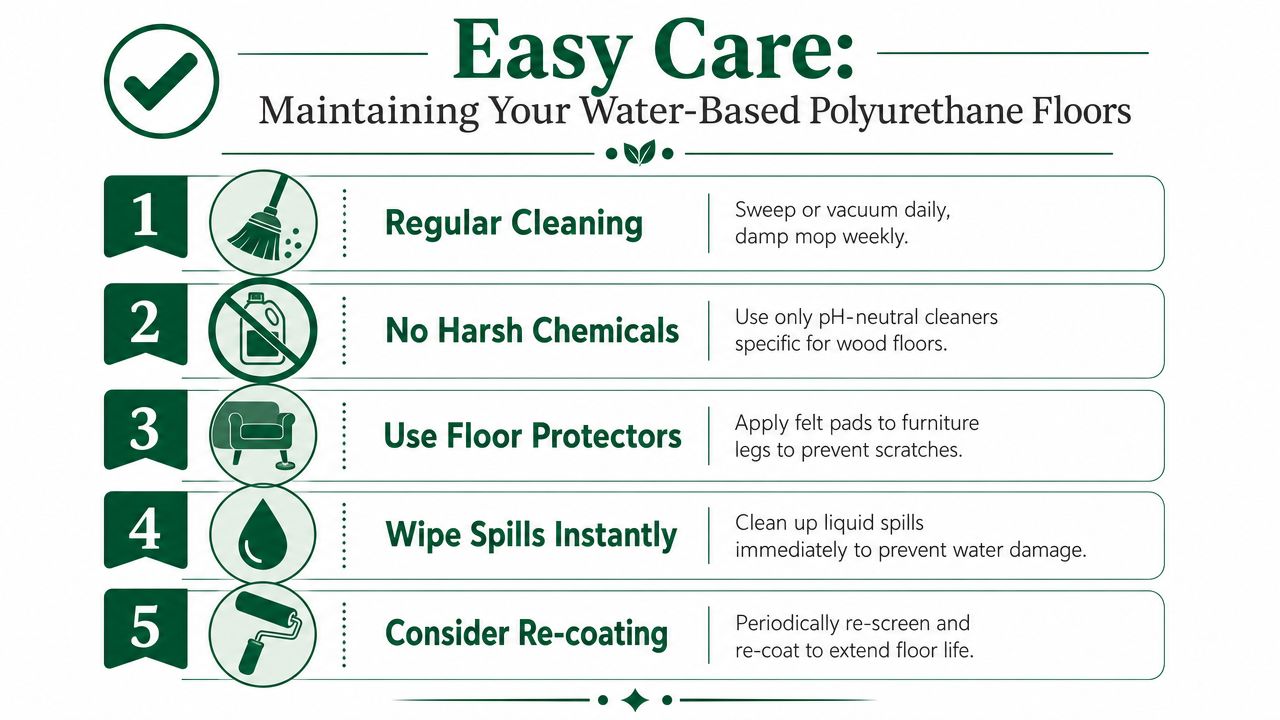
- Use microfiber and soft-brush tools: Grit from shoes acts like sandpaper on a clear coat.
- Clean spills quickly: Water-based finish resists moisture, but standing liquid still isn't good for wood floors.
- Skip waxes and oil soaps: Those products can interfere with future recoating and leave residue.
- Add felt pads under furniture: This is one of the easiest ways to prevent avoidable scratch repair.
- Watch seasonal humidity: Richmond summers can feel heavy, and indoor moisture swings can affect how wood behaves over time.
A good maintenance routine is boring. That's the point. You want the floor to age gradually, not get forced into an early hardwood floor restoration because of preventable wear.
Why Richmond Homeowners Choose Buff & Coat
Homeowners looking for floor refinishing Richmond VA usually want two things at the same time. They want the floor done right, and they want straight answers about whether the floor needs recoating, full refinishing, repair, or replacement.
That's why Richmond-area homeowners choose Buff & Coat Hardwood Floor Refinishing:
- 15 years in business
- Dustless sanding systems
- Local, owner-operated
- High-quality finishes
- Clear pricing and honest advice
- 5-star customer service
Buff & Coat Hardwood Floor Refinishing serves Richmond, Midlothian, Chesterfield, Henrico, Glen Allen, Short Pump, Mechanicsville, and occasional jobs in Charlottesville, Fredericksburg, and Virginia Beach. The work includes dustless sanding, buffing and coating, hardwood floor repair, hardwood installations, LVP/LVT installs, and restoration work for floors that need more than surface-level attention.
If you're unsure whether your floors need a simple recoat or full hardwood floor refinishing, getting an honest evaluation first saves time and frustration.
Frequently Asked Questions About Floor Finishes
Can engineered hardwood be refinished?
Sometimes, yes. It depends on the thickness of the wood wear layer on top. Some engineered floors can handle refinishing. Others are better candidates for a light recoat only. This is one of those cases where the product itself matters more than the category name.
How long does refinishing take?
The answer depends on the floor condition and the service. A buff and recoat is usually much faster than full sanding and refinishing because you're not removing the old finish down to bare wood. Water-based systems also help shorten downtime because of their faster dry schedule.
What's the difference between hardwood floor scratch repair and recoating?
If the scratch is only in the finish, recoating may help improve the floor's appearance and protection. If the scratch cuts into the wood, recoating won't remove it. That usually takes sanding, board repair, or a more involved hardwood floor repair approach.
Are water-based finishes a good fit for older Richmond homes?
Often, yes. They're especially useful when homeowners want to preserve natural wood color and avoid the amber look of oil-based finishes. They also work well for households that want low-odor finishes and a cleaner-feeling project.
When should a floor be recoated instead of fully refinished?
A recoat makes sense when the finish is dull or lightly worn but still present across the floor. Once wear has broken through to bare wood, or stains and gouges are widespread, full refinishing is usually the right call.
Do dustless systems really help?
Yes. They don't mean zero dust, but they make a big difference in keeping sanding debris contained at the source. For many families, that's one of the biggest quality-of-life improvements in modern hardwood floor refinishing.
If you're ready for clear advice on water-based finishes, recoating, or full refinishing, Buff & Coat Hardwood Floor Refinishing can help you figure out what your floors need. Ready to restore your hardwood floors? Buff & Coat makes the process fast, clean, and stress-free. Call 804-392-1114 or request your free estimate at buffandcoatvirginia.com.