Wood floor recoating usually runs $1 to $3 per square foot, while full hardwood floor refinishing typically falls around $3 to $8 per square foot. For Richmond homeowners with dull floors, light surface scratches, and finish wear, recoating is often the more cost-effective way to freshen up the floor without paying for a full sand-down.
A lot of people start researching wood floor recoating cost when their floors look tired but not ruined. That's the right time to ask questions. If the finish is worn but the wood underneath is still in good shape, a buff and coat service can save money, shorten the project, and avoid the disruption of full hardwood floor refinishing in Richmond VA.
Buff & Coat Hardwood Floor Refinishing is a Richmond-based floor refinishing and installation company with 15+ years of experience. We handle dustless sanding, buffing and coating, hardwood floor installations, LVP/LVT installs, and repair work across Richmond, Midlothian, Chesterfield, Henrico, Glen Allen, Short Pump, Mechanicsville, and occasional jobs in Charlottesville, Fredericksburg, and Virginia Beach. This guide is written the way I'd explain it to a neighbor: plain English, real trade-offs, and no guessing.
Understanding Wood Floor Recoating or Buff and Coat
Recoating, also called screening and recoating or a buff and coat service, is a maintenance job. It refreshes the protective finish on top of the floor. It does not sand the floor down to bare wood.
That distinction matters. A recoat is closer to waxing your car than repainting it. You're renewing the surface layer so the floor looks better and stays protected, but you're not rebuilding the whole finish system from scratch.
When a floor is a good candidate
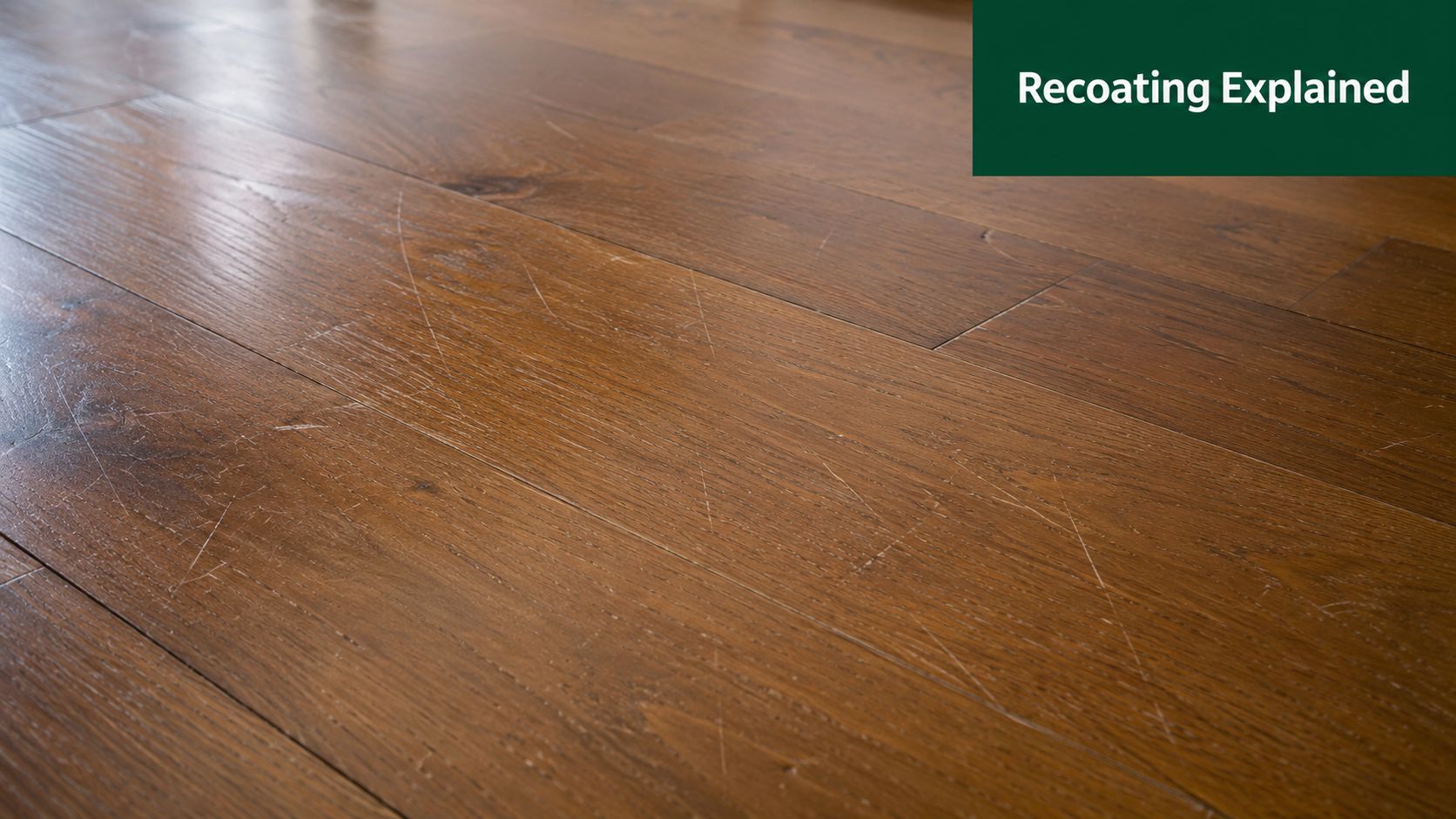
Recoating makes sense when the main problem is cosmetic wear in the finish itself. In Richmond VA, that often means floors that have lost their sheen in front of the sofa, in hallways, or near the kitchen entry.
A floor is usually a good fit if you're seeing:
- Dull traffic lanes where the shine has faded
- Light surface scratches that haven't cut far into the wood
- Mild finish wear but no major wood damage
- An overall tired look even though the floor is still structurally sound
Practical rule: If the finish looks beat up but the wood still looks healthy, recoating is worth considering before you jump to full refinishing.
The National Wood Flooring Association recommends a screen and recoat every 3 to 5 years to maintain the floor's protective layer and luster, which can help delay a more expensive full refinish later on, as noted in this cost guide referencing NWFA guidance.
When recoating won't solve the problem
This is where honest advice matters. Recoating can't fix damage that goes below the finish layer. If the wood itself is damaged, a fresh topcoat won't hide it.
Recoating usually won't work well for:
- Deep gouges
- Black pet stains
- Gray or oxidized wood
- Water damage
- Board movement or cupping
- Finish contamination from waxes or polishes
If you want a deeper explanation of the actual screening process, this guide on how to buff hardwood floors is useful background.
For homeowners comparing hardwood floor restoration options in Richmond VA, the biggest mistake is picking a lighter service for a heavier problem. A buff and coat service is excellent when the floor is a maintenance candidate. It's the wrong tool when the wood needs correction.
If you're unsure whether your hardwood floors need refinishing, Buff & Coat can take a look and give you honest recommendations.
Average Wood Floor Recoating Cost in Richmond and Beyond
A lot of Richmond homeowners start with an online calculator, see a low per-square-foot number, and assume that is the job cost. Then the estimate changes after an on-site look. The usual reason is prep. If the floor has wax, acrylic polish, or years of cleaning residue, the work is no longer a simple recoat.
For a clean, finish-ready floor, a professional buff and coat usually lands well below the cost of full sanding and refinishing. Local pricing from Footprints Floors Richmond puts buff and coat service at about $1.00 to $2.50 per square foot, while full sanding and refinishing runs about $2.00 to $7.00 per square foot.
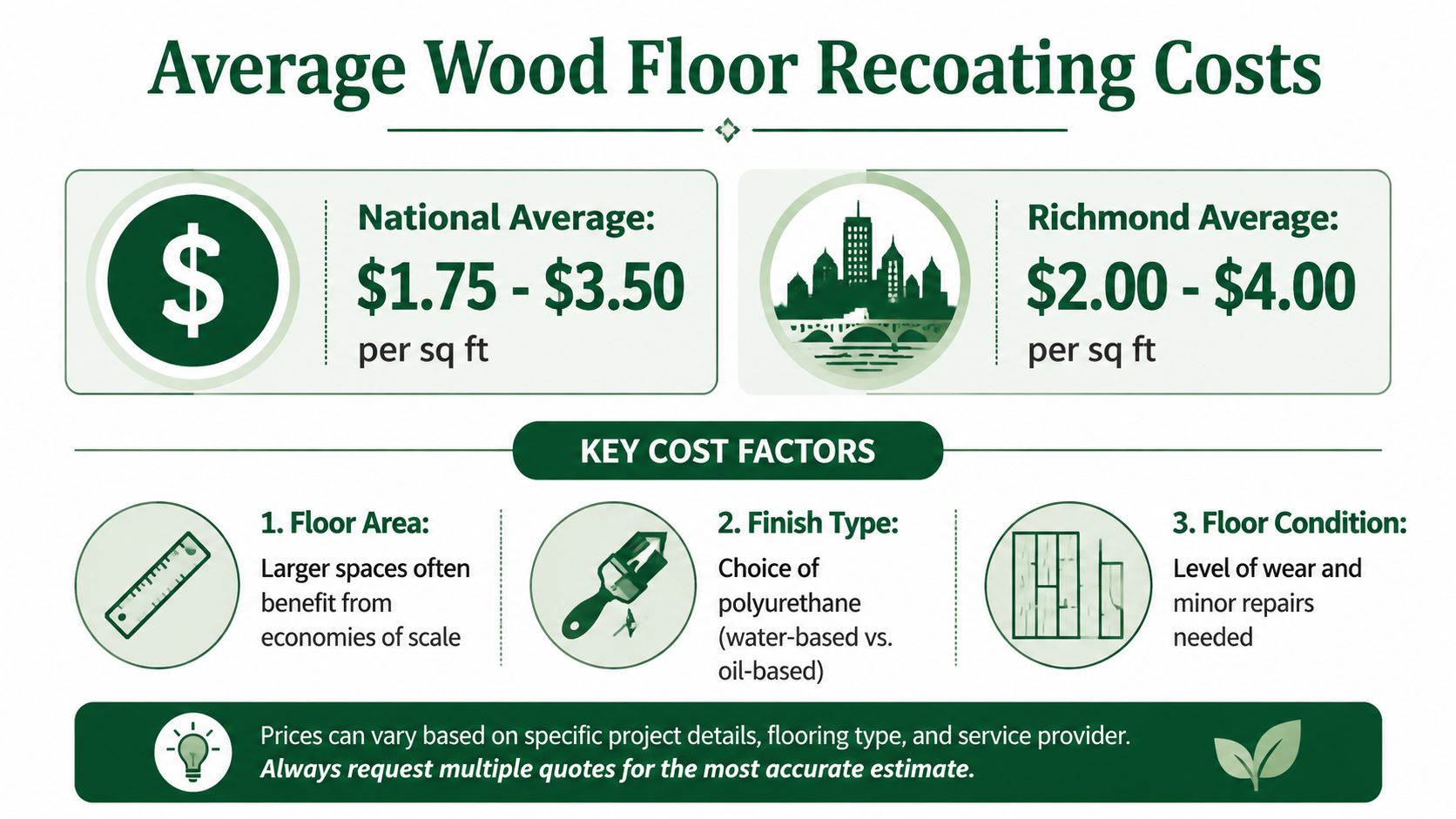
That spread matters. On paper, recoating looks straightforward. In the field, two 500 square foot floors can price very differently if one is ready for abrasion and coating, and the other needs contaminant removal before any new finish will bond.
Richmond area pricing
For homeowners comparing floor refinishing Richmond VA options, this is the practical starting point:
| Project type | Typical Richmond area price |
|---|---|
| Buff and coat service | $1.00 to $2.50 per sq ft |
| Full sanding and refinishing | $2.00 to $7.00 per sq ft |
Those numbers are useful for early budgeting in Richmond, Midlothian, Chesterfield, Henrico, and Glen Allen. They are not a final quote. Floor condition, layout, furniture moving, edge wear, and especially old maintenance products can shift the actual price fast.
Sample room scenarios
Square-foot pricing makes more sense once you put it into room sizes people recognize.
| Space size | Recoating budget at $1.00 to $2.50 per sq ft |
|---|---|
| 250 sq ft room | $250 to $625 |
| 400 sq ft room | $400 to $1,000 |
| 1,000 sq ft main level | $1,000 to $2,500 |
These examples fit a lot of homes around Richmond, from a Fan row house living room to a larger first floor in Short Pump.
The hidden cost many articles skip is prep for contamination. A homeowner may budget for a standard recoat, but if the floor was treated with a shine restorer or polish, the contractor may need extra cleaning or removal steps before screening even starts. That is why one estimate feels reasonable and another feels high. They may be pricing two different jobs.
If you want to compare recoating with the bigger sanding project, this guide to hardwood floor sanding cost helps put the price gap in context.
Low online pricing is fine for a rough budget. It often misses the hidden prep work that decides the real recoating cost.
For homeowners weighing wood floor recoating, hardwood floor repair, or replacement, recoating usually gives the best value when the finish is worn but the wood underneath is still in good shape.
What Factors Change Your Recoating Price
A floor can look like a simple buff and coat from the doorway, then turn into a more expensive prep job once a contractor gets down on the surface and checks what has been used on it over the years. That gap is where a lot of online pricing falls apart.
Many Richmond homeowners start with a square-foot number and assume that is close enough. In reality, floors often aren't ready for a standard screen and recoat. Old polish, wax, cleaning residue, edge wear, and small repairs can all change the labor before the new finish even goes down.
The hidden cost most guides miss
The biggest surprise is usually contamination. I see this with acrylic polishes, store-bought shine restorers, and older wax-based products. They can keep a new coat from bonding, which means the contractor has to clean, strip, or test the surface first instead of going straight into screening.
Weles explains in its guide on refinishing vs resurfacing wood floors that surface buildup can add removal work before recoating. That is the hidden cost many calculators miss. Two homes with the same square footage may be priced very differently because one floor is finish-ready and the other needs corrective prep.
What usually affects the quote
Most recoating quotes in Richmond move up or down based on a short list of practical issues:
- Past maintenance products. Wax, acrylic polish, mop-and-glow type products, and some heavy cleaners create extra prep and more risk.
- Wear at doorways and traffic lanes. If the finish is thin in front of a sink, entry, or hallway, the floor may need more than a recoat.
- Repairs before coating. Loose boards, minor pet damage, open seams, or transition problems can add labor.
- Room layout and access. Stairs, tight closets, built-ins, and furniture-heavy rooms slow the job down.
- Finish system selected. Water-based and oil-based products behave differently, dry on different schedules, and may require different planning inside the house.
One more point matters here. If there is any doubt about whether the floor is a good candidate for recoating, this guide on wood floor refinishing vs buff and coat helps clarify where the line usually is.
Finish choice changes cost and convenience
Homeowners often focus on price per square foot, but finish choice affects the day-to-day disruption too. Water-based finishes usually have lower odor and faster dry times. Oil-based finishes may fit some older floors better, but they can mean a longer smell window and a slower return to normal use.
Bona's overview of screen and recoat maintenance also reinforces a point good contractors already know. Product compatibility matters. A cheaper coating is not a bargain if it does not bond well with the existing finish.
If a contractor never asks what cleaners, polishes, or restorers have been used on the floor, the quote is missing one of the biggest variables in the job.
Why an in-home assessment matters
Photos can show sheen loss and scratches, but they rarely show residue, adhesion risk, or worn-through spots near edges. Older Richmond homes make this trickier because the floor history is often mixed. One room may have original oak, another may have patched boards, and nobody remembers what was used to make the floor shiny ten years ago.
That is why the most useful estimate is usually the one based on an on-site inspection, not a calculator. A careful contractor should test the surface, ask about maintenance history, and explain whether the price assumes a clean recoat or includes contamination removal if needed. Homeowners already dealing with moisture or indoor air concerns sometimes take the same cautious approach outlined in this LA homeowners' mold guide. Start with the condition of the floor, not the cheapest number on a website.
If you want to avoid surprise charges, ask this upfront: “Does this quote include prep for wax, polish, or other contamination if you find it?” That question gets to the part of recoating cost many articles skip.
Recoating vs Full Refinishing A Head-to-Head Comparison
A lot of Richmond homeowners call thinking they need a full refinish, then I walk the floor and find the wood itself is still fine. The finish is scratched up, dull, or wearing thin, but the boards do not need to be sanded to bare wood. In that case, recoating usually makes more sense.
The opposite happens too. A floor looks like a simple buff and coat candidate until you see black pet stains, gray traffic lanes where finish is gone, or old polish buildup that has to be stripped before any new coating can bond. That is where online cost calculators fall short. They price the ideal version of the job, not the floor you have.
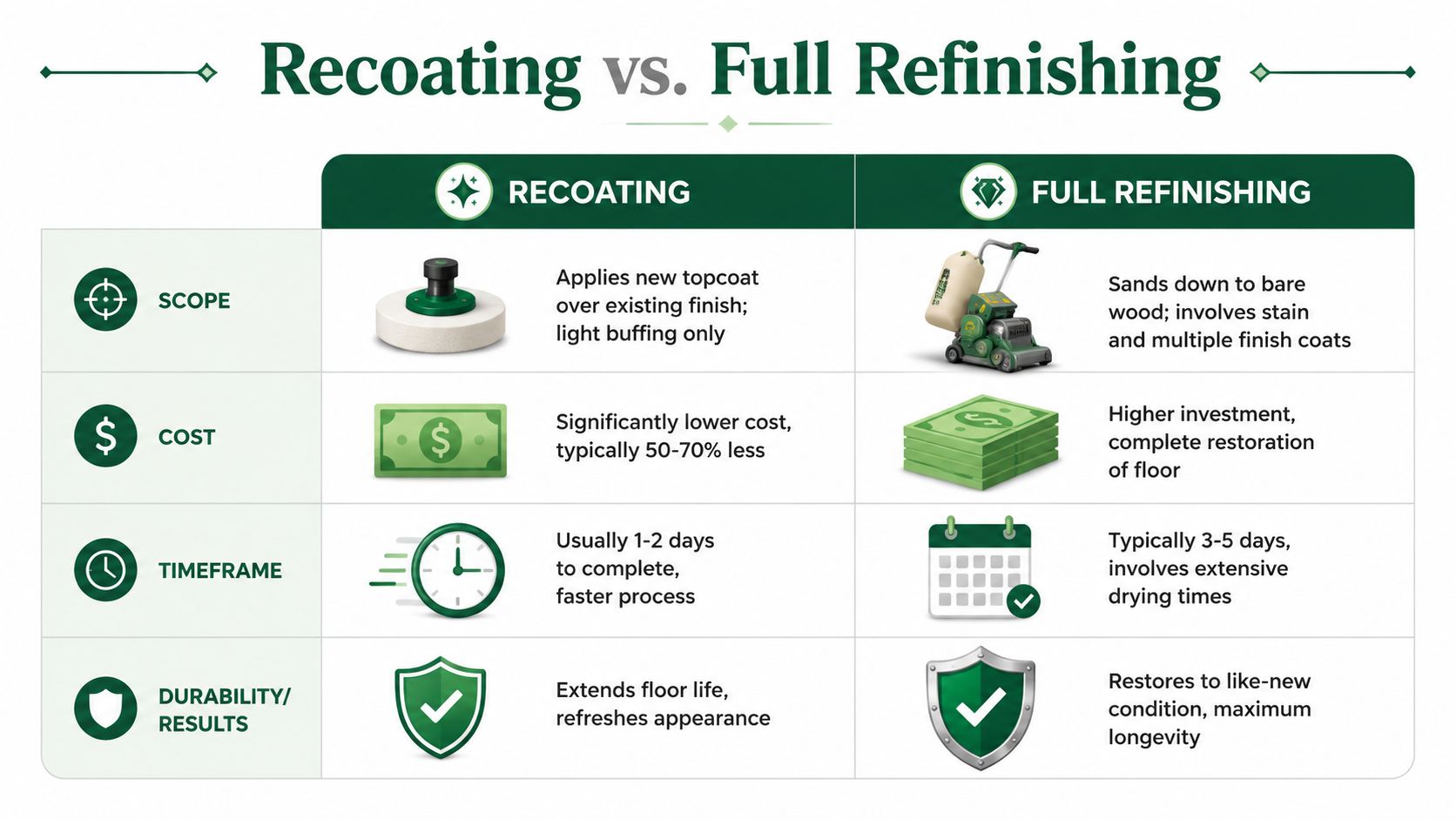
Side-by-side comparison
| Category | Recoating | Full refinishing |
|---|---|---|
| Scope | New topcoat over existing finish | Sanding to bare wood, then new finish system |
| Best for | Dullness, light wear, light surface scratches | Deeper scratches, stain issues, worn-through finish |
| Color change | Very limited | Yes, if stain change is part of the job |
| Disruption | Lower | Higher |
| Timeline | Shorter | Longer |
| Cost | Lower at the base price, unless prep issues add labor | Higher, because sanding and rebuild of the finish system take more time |
The real decision point
Recoating is a finish-renewal service. Full refinishing is a wood-correction service.
That difference matters because the cheaper option is only cheaper when the floor qualifies for it. If the existing surface has wax, acrylic polish, oil soap residue, or localized wear-through, a recoat quote can change fast. Sometimes the floor needs extra cleaning and testing. Sometimes it fails the test and needs sanding after all.
Here is the practical rule I give homeowners:
- Choose recoating if the goal is to restore sheen, cover light surface wear, and buy more life out of the current finish
- Choose full refinishing if the goal is to remove deeper damage, correct bare spots, or change stain color
- Choose repair first if boards are cupped, split, loose, or stained below the finish layer
One more trade-off gets missed. Every full sanding removes a little wood. That is not a reason to avoid refinishing when it is needed, but it is a reason not to do it just because the floor looks tired. In older Richmond homes with original oak, keeping as much wear layer as possible is usually the smarter long-term call.
Moisture changes the decision too. Dark staining near exterior doors, under windows, or around pet areas can be a finish problem, but it can also point to a deeper issue. For homeowners dealing with suspicious staining or moisture exposure, this LA homeowners' mold guide is worth reading before you spend money on the wrong floor service.
If you want a closer breakdown of where the line falls, this guide on wood floor refinishing vs buff coat and which service you actually need explains the decision in more detail.
The right service saves money. The wrong one adds a second bill.
The Buff & Coat Process What to Expect
A lot of Richmond homeowners call after looking at an online cost calculator, then get surprised when the actual estimate includes prep they never saw listed. The floor itself may be a good recoat candidate, but old polish, wax, acrylic cleaner buildup, or greasy traffic lanes can change the job before the buffer even comes out.
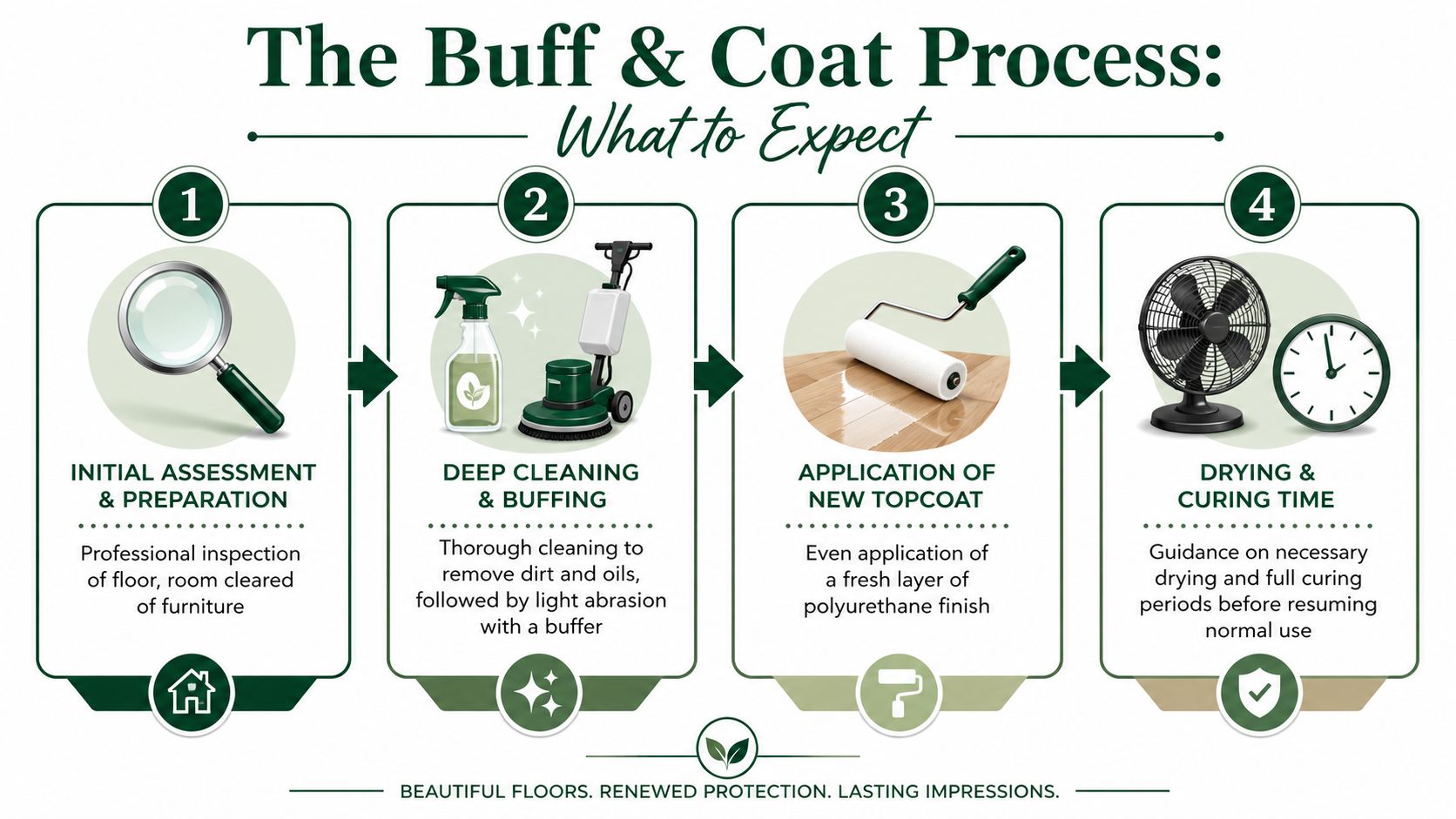
From estimate to finish coat
The first step is an in-home inspection. I look for wear patterns, finish failure, pet staining, and signs that someone has used the wrong maintenance product over the years. Recoating only works if the new finish can bond to what is already on the floor.
That bonding question is where hidden cost shows up.
If a floor has wax, polish, or store-bought shine restorer on it, standard cleaning is not enough. The residue has to be removed properly or the new coat can peel, fisheye, or dry unevenly. Homeowners rarely budget for that part because many online price tools assume a clean, compatible floor with no contamination.
Once the floor passes that check, the room gets cleared out and the surface is cleaned in detail. Then the existing finish is lightly abraded with a buffer and screen so the new topcoat has something to grab. This is much lighter work than full sanding, but it still depends on careful prep and clean edges.
A short video can help if you want to see what this style of work looks like in practice.
Timeline and what daily life looks like
For a straightforward recoat, the work itself is often finished in a day. Dry time and cure time are a separate issue. You can usually expect a shorter disruption than a full sand-and-finish job, but the house still needs to follow the finish schedule, not your calendar.
That matters in busy homes.
After the coat goes down, the crew should give clear instructions on what happens next:
- When light foot traffic is allowed
- How long to wait before moving furniture back
- What to do with rugs, pet bowls, and floor mats
- Which cleaners to avoid so the new finish is not damaged early
In Richmond, I see two mistakes all the time. Furniture goes back too soon, or someone cleans the floor with the same polish product that caused the adhesion problem in the first place. The job can look great on day one and still fail early if the prep was skipped or the aftercare is wrong.
If you want floors refreshed without turning your house upside down, call 804-392-1114 or request a free estimate today.
Frequently Asked Questions About Wood Floor Recoating
Can engineered hardwood floors be recoated
Sometimes, yes. It depends on the condition of the existing finish and the wear layer of the product. Some engineered floors are good candidates for a light recoat, while others are not. The safest approach is an on-site evaluation, especially if you're not sure what product was installed.
How long does refinishing take compared with recoating
For a recoat, the job can often be completed much faster than full refinishing. As covered earlier, a standard recoat can often be done in as little as one day, while a full sand-and-refinish project usually takes longer. That's one reason homeowners in Richmond VA often choose recoating when the floor only has surface wear.
Can recoating fix hardwood floor scratch repair issues
It can help with light surface scratches in the finish. It won't remove deeper scratches that cut into the wood itself. If you can feel the damage with your fingernail, there's a good chance a simple recoat won't be enough.
Does recoating have a strong odor
That depends on the finish being used and the ventilation in the home. Many homeowners now ask for lower-odor options, especially if they have kids, pets, or sensitivity to strong smells. If odor is a concern, bring it up before the job is scheduled so the finish options match your household.
Is recoating better than replacement
If the wood floor is structurally sound, restoring it is often the better value move. Full replacement makes more sense when the floor has major damage, repeated patchwork, or conditions that a finish-only approach can't solve.
Why Richmond Homeowners Choose Buff & Coat
Richmond homeowners usually want the same things from a flooring contractor: honest advice, clean work, and pricing that makes sense. That's why Buff & Coat Hardwood Floor Refinishing has become a trusted local choice for floor refinishing in Richmond VA, wood floor recoating, hardwood floor repair, and floor installation Richmond projects.
Here's what stands out:
- 15 years in business
- Dustless sanding systems
- Local, owner-operated
- High-quality finishes
- Clear pricing and honest advice
- 5-star customer service
If your floors only need a maintenance refresh, you should hear that. If they need full sanding, you should hear that too. That kind of straight answer matters when you're hiring a best hardwood floor contractor Richmond homeowners trust.
If you're comparing recoating, full hardwood floor refinishing, or repair, Buff & Coat Hardwood Floor Refinishing can give you a clear recommendation based on what your floor needs. Ready to restore your hardwood floors? Buff & Coat makes the process fast, clean, and stress-free. Call 804-392-1114 or request your free estimate at buffandcoatvirginia.com.