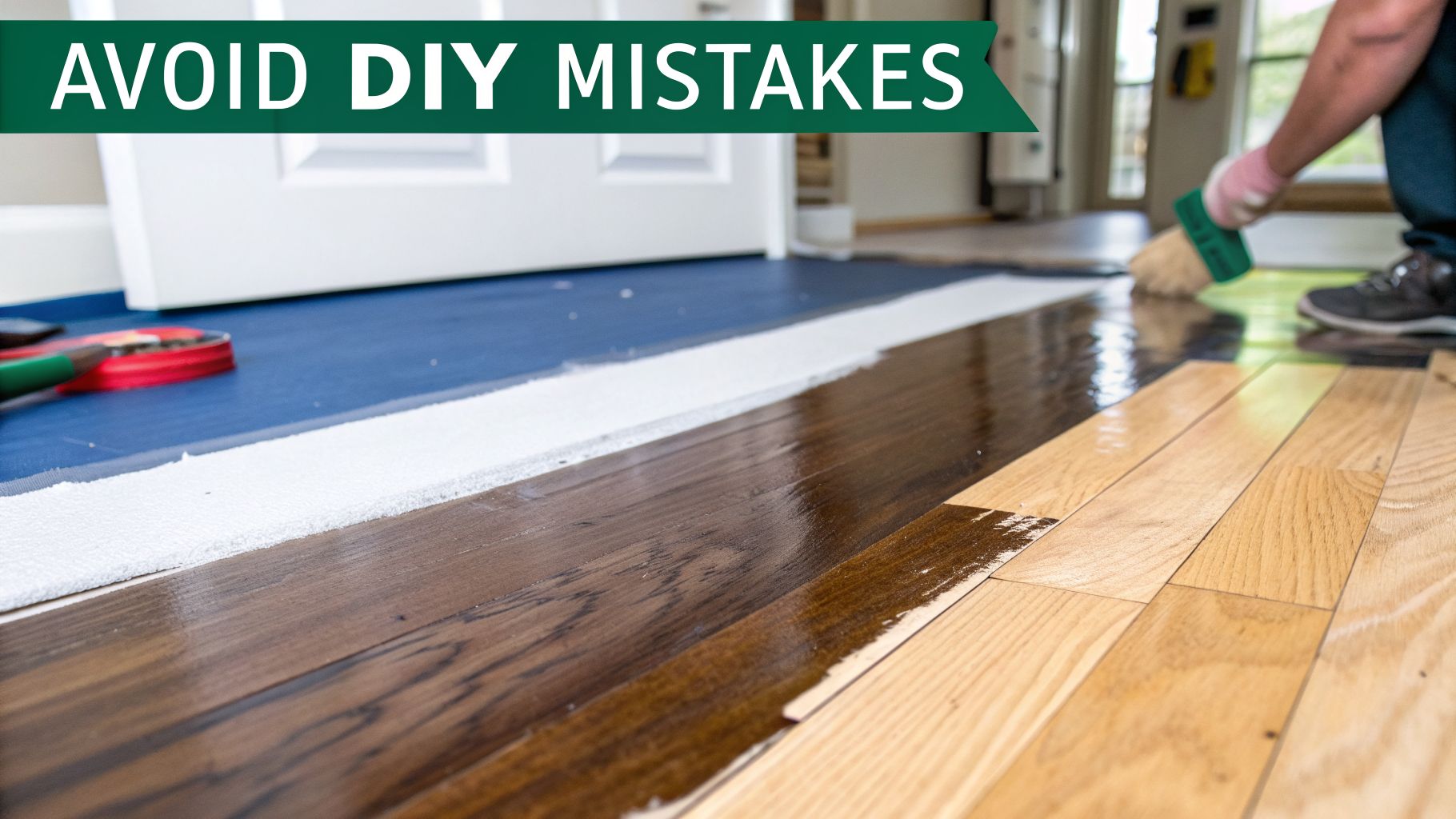
Hardwood floors in Raleigh typically raise several practical questions at once. What type of wood holds up best here, what does the work involve, and when does it make more sense to restore an existing floor instead of replacing it?
Raleigh homeowners have a real mix of housing styles, from older homes with original oak strip floors to newer builds over slab foundations where engineered products often make more sense. The right decision usually comes down to moisture, subfloor condition, wear level, and how you live in the house, not just what looks best in a showroom.
Choosing the Right Hardwood for Your Raleigh Home
The first choice isn't color. It's solid hardwood or engineered hardwood.
In a Raleigh home, that decision affects stability, refinishing options, where the floor can be installed, and how forgiving it will be when indoor conditions shift through the year. If you're comparing materials, this solid vs engineered hardwood flooring guide is a useful companion to the basics below.

Solid hardwood
Solid hardwood is one piece of wood from top to bottom. That's its biggest strength and its biggest limitation.
It works well in main living areas and upper floors where conditions are stable and the subfloor is appropriate for nail-down installation. It's also the better choice when long-term refinishing potential matters most, especially in homes where owners plan to keep the floor for many years.
The trade-off is movement. Solid wood reacts more to moisture swings, so it isn't my first recommendation for every Raleigh room, especially where the subfloor or environment is less predictable.
Engineered hardwood
Engineered hardwood uses a real wood top layer over a layered core. In practical terms, that construction makes it more dimensionally stable than solid wood when conditions are less ideal.
For Raleigh-area projects, that matters. The ANSI/HPVA engineered flooring standard specifies an average shipment moisture content of 5% to 9% and requires adjacent ply surfaces to be uniformly and securely bonded, which is why product quality and installation specs matter so much for engineered floors in moisture-sensitive conditions (ANSI/HPVA engineered flooring standard).
Practical rule: Engineered hardwood often makes more sense over concrete, on lower levels, or anywhere the subfloor and humidity profile make solid wood a riskier bet.
That doesn't mean every engineered floor is equal. Some are built for real longevity. Others are basically a thin decorative surface over a core, and that difference matters later if you ever want to refinish.
Which one fits your home better
Here is a simple viewpoint:
| Floor type | Usually a better fit for | Main caution |
|---|---|---|
| Solid hardwood | Traditional living spaces, long-term ownership, floors likely to be refinished more than once | More sensitive to moisture swings |
| Engineered hardwood | Slab homes, lower levels, variable subfloors, rooms where stability matters most | Refinishing depends on wear layer thickness and product quality |
Species choices that work well in real life
Once you've chosen the construction, then it makes sense to talk species.
- Oak tends to be the safe, versatile choice. It has a grain pattern most homeowners recognize, and it usually works well across traditional and updated interiors.
- Maple gives a cleaner, quieter look. It can be a good fit if you want less prominent grain and a more contemporary feel.
- Hickory brings more visual movement. It suits homes where you want a stronger natural character and don't mind variation from board to board.
What works best depends on traffic, pets, desired stain color, and the style of the house. A historic or older Raleigh home often looks right with a floor that has some grain and warmth. A newer home with open sightlines may benefit from a more restrained look.
The mistake I see most often is choosing based only on a small sample board. Flooring has to work at room scale. It has to suit the home, the subfloor, and the way the family uses the space.
How Raleigh's Climate Impacts Your Hardwood Floors
Raleigh's climate changes how hardwood should be selected and installed. That's not a side issue. It's one of the main issues.
Wood takes on and releases moisture. When indoor conditions change, boards can expand, shrink, cup, gap, or start making noise if the installer skipped the moisture and subfloor work at the start. Homeowners often focus on species, but in Raleigh, the better question is whether the installer is managing moisture correctly. This article on hardwood floor acclimation time explains why that prep step matters.
What a careful installer checks first
In Raleigh's humid-subtropical climate, professional installation decisions should be driven by moisture testing, not just product choice. Reputable installers measure the hardwood moisture content, the subfloor moisture content, and the indoor relative humidity before installation because mismatches can lead to expansion, cupping, and squeaks after the floor acclimates (professional hardwood installation guidance in Raleigh).
That same guidance also emphasizes subfloor leveling and structural repair before installation. High spots, low spots, and loose boards don't just create a rough feel underfoot. They can also lead to hollow sounds, movement, and seams that never sit as tight as they should.
A beautiful floor can still fail if it goes over a subfloor that isn't flat, dry, and solid.
What goes wrong when moisture is ignored
The warning signs usually show up after the installer is gone.
- Cupping: Board edges rise when moisture conditions are out of balance.
- Gapping: Seasonal shrinkage leaves visible spaces between boards.
- Squeaks and movement: Fasteners, subfloor issues, or moisture mismatch can leave the floor sounding and feeling loose.
- Uneven seams: Boards don't stay as tight or stable when the base isn't properly prepared.
The point isn't to make hardwood sound risky. It's to show why hardwood floors in Raleigh need a contractor who understands local conditions, not just someone who can lay boards in a straight line.
Restore or Refinish? When to Buff-and-Coat vs Full Sanding
You walk across the living room in a Raleigh home after a humid summer, and the floor looks tired in the traffic lanes but still feels solid underfoot. In that situation, the right question is not whether the floor is "old." The key question is whether the wear is sitting in the finish or has gone down into the wood.
That distinction decides whether a buff-and-coat will buy you more years or whether full sanding is the better use of your money. If you want a side-by-side explanation of the two services, this wood floor refinishing vs buff coat guide lays out the difference clearly.
Start with the visual comparison below.

When a buff-and-coat makes sense
A buff-and-coat service refreshes the existing finish. The floor is cleaned, lightly abraded, and coated again so the new finish bonds properly.
It works best when the floor has lost sheen, picked up light surface scratches, or shows early wear in walkways, but the wood itself is still in good shape. In many Raleigh homes, especially newer builds with prefinished oak or engineered wood, this is the right maintenance step before humidity swings and daily traffic wear the finish down further.
Choose this route when:
- The wear is in the finish layer, not deep in the wood
- You want to keep the current color
- The floor does not have widespread black staining, deep gouges, peeling finish, or exposed bare wood
A simple field check helps. If the floor looks much better after cleaning and the scratches fade from normal standing height, recoating may work. If you can see raw wood, dark pet stains, or areas where the finish has fully worn through, recoating will not solve the problem.
Home style matters here too. In many Raleigh colonials and traditional two-story homes, the main level often has older site-finished hardwood with sun-faded areas near windows and worn paths between kitchen, hall, and family room. Those floors sometimes look rougher than they are. If the color is still fairly even and the boards are flat, a buff-and-coat can be a practical middle ground.
Buff & Coat Hardwood Floor Refinishing also offers dustless sanding for floors that need more than a recoat, which can make a refinishing project cleaner for occupied homes.
Here's a quick visual explanation of restoration methods in action.
When full sanding is the better investment
Full sanding and refinishing removes the old finish and sands the floor back to bare wood before new stain and finish go on.
That is usually the better choice when the floor has real damage, not just cosmetic wear. Raleigh's humidity can make neglected problem areas stand out faster. Entry points, kitchen perimeters, and first-floor rooms over crawl spaces often show the clearest signs. If moisture has contributed to finish failure, gray traffic lanes, or board-edge staining, a simple recoat usually leaves those issues visible.
Use this table as a quick filter:
| Condition you see | Better option |
|---|---|
| Light surface wear, dullness, minor finish scratches | Buff-and-coat |
| Deep scratches, pet stains, gray traffic lanes, peeling finish | Full sanding and refinishing |
| Desire to change color | Full sanding and refinishing |
| Uneven boards, movement, damaged sections | Depends. Repair may need to happen before refinishing |
Full sanding costs more and takes longer, but it resets the floor. It also gives you room to correct old stain colors that no longer fit the house. I often see this in Raleigh homes built in the late 1990s and early 2000s, where orange-toned finishes age the room more than the wood itself.
The engineered hardwood question
Engineered wood needs a closer look before anyone promises refinishing.
The key detail is the thickness of the wear layer. The National Wood Flooring Association explains that some engineered wood floors can be recoated and some can be sanded and refinished, depending on the thickness of the wood veneer and the floor's condition (NWFA guidance on recoating and engineered flooring). Thin wear layers leave very little margin for error.
That is why "real wood" is not enough information. Some engineered floors in Raleigh townhomes and newer suburban homes can handle a light screen-and-recoat with no problem. Others should never be aggressively sanded because there is not enough top layer to work with.
Cost depends on condition, not just the service name
Homeowners often compare buff-and-coat, full refinishing, and replacement as if they are interchangeable price tiers. They are not. The least expensive option upfront can turn into repeat work if the floor already has exposed wood, pet damage, or finish failure.
Angi's hardwood flooring cost guide notes that refinishing and installation costs vary based on floor size, wood type, finish system, repair needs, and local labor conditions (hardwood flooring cost factors). That lines up with what happens on real Raleigh jobs. A clean recoat is usually the lower-cost service, but once boards need repair, stain correction, or full sanding, the scope changes quickly.
The best decision framework is simple. Recoat a floor that still has a sound finish film. Sand a floor that has worn through, stained thoroughly, or needs a color reset. Replace boards first if movement, structural damage, or moisture-related deterioration is part of the problem.
The Floor Refinishing and Installation Process
Most homeowners are less worried about the floor itself than the disruption. They want to know what their house will feel like while the job is happening.
A professional process should look organized from the first day. Rooms are prepped carefully, transitions are protected, and expectations are set before machines are turned on. The smoother the setup, the fewer surprises later.
What refinishing usually looks like
A refinishing project starts with clearing the work area and checking the floor's condition in person. Problem boards, previous patchwork, finish buildup, and edge wear all affect how aggressive the sanding needs to be.
From there, sanding removes the old finish and levels out wear patterns. Dust control matters a lot here. A contractor using dustless sanding and proper containment can reduce airborne mess compared with old-style open sanding setups, which is especially helpful in occupied homes.
After sanding, the floor may be stained if a color change is planned. Then finish coats go on in sequence, with cure time respected between steps. Rushing that part is where shortcuts tend to show up later.
The finish you choose changes how the house feels during the project. Some homeowners prioritize durability. Others care more about lower odor and a smoother re-entry into the space.
What new installation involves
New installation begins below the surface. The subfloor has to be flat, secure, and ready before the first board is laid.
Once layout is established, boards are installed according to the product and subfloor conditions. Some projects stop there with prefinished material. Others move into site finishing, where the newly installed floor is sanded, stained, and coated after installation for a more continuous custom look.
The best projects don't feel improvised. They feel planned. That's true whether you're doing a hardwood floor repair, a wood floor recoating, or a full installation.
Budgeting for Raleigh Hardwood Floor Projects in 2026
A Raleigh homeowner can get two hardwood quotes for the same square footage and see a wide spread in price. That usually comes down to conditions inside the house, not salesmanship. A 1960s ranch in Midtown, a newer home in North Hills, and a two-story traditional in Cary often need very different amounts of prep before the flooring crew ever starts laying boards or sanding finish.
A practical starting point is the local range for installation. Hardwood floor installation often lands around $8 to $15 per square foot including materials and labor, with labor-only pricing commonly falling around $3 to $6 per square foot in Raleigh. On a 1,000-square-foot project, that puts many jobs around $8,000 to $15,000 before subfloor repairs, custom stain work, or higher-end species are added (Raleigh hardwood installation cost guide).

What pushes a quote up or down
The biggest cost drivers are usually hidden at first glance.
Older Raleigh homes often have subfloor movement, patched areas, or height differences between rooms. Those issues add labor, and they should. If a contractor skips that work to protect a low price, the floor can end up noisy, uneven, or prone to movement through seasonal humidity swings.
Material choice changes the budget fast. Red oak and white oak do not price out the same way in every market. Neither do wider planks, site-finished floors, or upgraded finish systems. In Raleigh, I also tell homeowners to budget carefully for any product that is less forgiving with moisture. Our humid summers make that decision more than a style question.
Room layout matters too. Open rectangles are faster to install than chopped-up floor plans with stairs, tight closets, multiple transitions, and detailed trim work.
Refinishing vs replacement on the budget side
If the existing floor is structurally sound and has enough wear layer left, refinishing usually costs less than full replacement. That is often the better value in Raleigh homes with solid hardwood already in place, especially if the goal is to keep original character in older neighborhoods.
Replacement starts to make more financial sense when boards are badly cupped, heavily patched, water-damaged, or too thin for another full sanding. Engineered products also need a closer look because some can be refinished and some cannot. The low quote is not always the lower-cost decision over time if it leaves you with a floor that still has weak spots.
The estimate should spell out what is included. Look for moving furniture, tear-out, disposal, moisture testing, subfloor correction, trim work, stain work, finish coats, and cleanup. In Raleigh, where seasonal humidity can expose weak prep work, those line items are not fluff. They are often the difference between a floor that settles in well and one that starts showing problems after the first summer.
How to Hire a Top Hardwood Contractor in Raleigh
Hiring the right contractor matters more than picking the perfect stain. Good materials installed poorly will still give you trouble.
Most flooring failures don't start with the wood. They start with skipped prep, weak communication, or a contractor who gives vague answers when you ask how the work will be done.

Questions worth asking before you sign
Bring these up in the estimate meeting, not after.
- How do you handle moisture and subfloor prep? The answer should be specific. You want to hear about testing, flatness, and repairs if needed.
- What kind of dust containment do you use? If you're living in the home, this matters.
- Can this floor be recoated or refinished? A careful contractor won't guess, especially with engineered wood.
- What finish systems do you use? That affects odor, appearance, maintenance, and wear.
- What isn't included in this quote? This question often tells you more than the sales pitch.
What to verify outside the quote
A contractor interview shouldn't stop at price.
Insurance and licensing matter
Ask for proof, not just assurance. If you want a plain-English overview of what coverage and bonding look like from the contractor side, this guide for contractors to win bids gives helpful context.Photos should show real project quality
Look for close-up work, transitions, vents, edges, and stairs. Wide shots can hide a lot.Reviews are useful when you read them carefully
Look for patterns in communication, cleanliness, punctuality, and how the company handled problems.
A detailed contract protects both sides. If the scope, finish system, prep work, and payment terms aren't written down clearly, the job is already harder than it needs to be.
Why Homeowners Choose Buff & Coat's Expertise
Homeowners usually want the same things from a flooring company. Clear recommendations, clean work, and a crew that doesn't turn a flooring project into a guessing game.
Why Richmond homeowners choose Buff & Coat:
- 15+ years in business
- Dustless sanding systems
- Local, owner-operated service
- High-quality finishes
- Clear pricing and honest advice
- 5-star customer service
That approach translates well for regional projects because the fundamentals don't change. Good floor work starts with honest assessment, proper prep, and choosing the right service for the floor that is there, whether that's a simple recoat, full sanding, repair, or new installation.
Frequently Asked Questions About Raleigh Hardwood Floors
Do I need a permit for hardwood floor work in Raleigh
For straightforward floor replacement or refinishing inside the home, a permit often isn't the first issue that comes up. But permit requirements can change based on scope, structural repair, subfloor replacement, or other related work.
The safe move is simple. Ask your contractor whether your specific project involves permit-related work, and if you're doing a larger remodel, confirm requirements directly with the local building authority before the job begins.
How do I clean and maintain newly refinished floors
Keep it simple and consistent.
- Use dry cleaning first: Dust mop or vacuum with a hard-floor setting so grit doesn't sit on the finish.
- Use the right cleaner: Choose a cleaner made for finished wood floors, not a general wet-floor product.
- Limit water: A damp microfiber mop is fine. Saturating the floor isn't.
- Protect traffic areas: Entry mats and runners help, especially near doors.
- Protect furniture contact points: Felt pads under chairs and tables make a real difference. For a practical homeowner guide, this article on protecting floors from furniture covers the basics well.
Is LVP or LVT a better choice than hardwood in some rooms
Sometimes, yes.
If a room has more moisture exposure, tougher utility demands, or you want a lower-maintenance material in a basement or certain lower-level spaces, LVP or LVT can be a sensible alternative. Hardwood still wins on repairability, authenticity, and the ability to restore many floors instead of replacing them, but it isn't automatically the best answer for every room in the house.
The right choice depends on location, subfloor, budget, and how you use the space day to day.
If you're weighing refinishing, recoating, repair, or installation, Buff & Coat Hardwood Floor Refinishing can help you sort through the options and give you a straightforward recommendation. Ready to restore your hardwood floors? Buff & Coat makes the process fast, clean, and stress-free. Call 804-392-1114 or request your free estimate at buffandcoatvirginia.com.