
Your hardwood floors have seen better days. Scratches crisscross the finish. The shine’s gone dull. Maybe there’s a worn path from the kitchen to the living room that catches your eye every time you walk through.
So now you’re wondering: do these floors need to be replaced, or can refinishing bring them back? It’s not a small question. The difference between the two options can mean thousands of dollars, weeks of disruption, and years of durability. And if you make the wrong call, you’ll know it every time you look down.
Here’s what most people don’t realize until they start digging into the numbers: refinishing isn’t just cheaper—it’s often the smarter long-term move. Let’s walk through exactly why.
How Much Does Hardwood Floor Refinishing Really Cost vs. Replacing
Let’s start with the number that matters most to homeowners: what’s this actually going to cost you?
Refinishing hardwood floors typically runs between $3 and $8 per square foot. For a standard 1,000-square-foot area, you’re looking at roughly $3,000 to $7,000. That includes sanding down the existing surface, repairing minor damage, and applying fresh stain and protective finish.
Replacement is a different story. New hardwood installation costs anywhere from $10 to $25 per square foot—and that’s before you factor in demolition of your old floors, disposal fees, and potential subfloor repairs. For that same 1,000 square feet, you could easily spend $10,000 to $25,000 or more.
Do the math and refinishing saves you 50% to 70% of what replacement would cost. That’s real money that stays in your pocket or goes toward other home improvements.
What Affects the Final Cost of Refinishing Your Floors
Not all refinishing projects cost the same. Several factors influence where your project lands on that $3 to $8 range.
Floor condition matters. If your floors have minor surface scratches and dullness, the work goes faster. But if there’s water damage, deep gouges, or uneven wear, expect more prep work and possibly some board replacement before refinishing can even begin.
The size of your project plays a role too. Larger areas often cost less per square foot because we can work more efficiently. Smaller rooms or projects under 500 square feet might hit the higher end of the price range since we still need to bring equipment and set up.
Stain choices affect both cost and timeline. If you’re changing from a light to a dark stain—or vice versa—it takes more precision during sanding to ensure even color absorption. Some wood species like maple or pine need pre-conditioner before staining, which adds a step.
Finish type is another variable. Water-based polyurethane dries faster and has less odor, but it costs a bit more than oil-based options. Oil-based finishes take longer to cure but often provide a richer, warmer tone that many homeowners prefer.
Location can shift costs too. In areas like Henrico County, Chesterfield County, Hanover County, and Powhatan County, you’ll find competitive pricing among local refinishing companies. But always verify that lower quotes include the same scope of work—some contractors cut corners on prep or use lower-grade finishes.
The key is getting a detailed estimate that breaks down exactly what’s included. We assess your floors in person, explain what condition they’re in, and give you a realistic timeline and cost before any work begins.
Hidden Costs of Replacement Most Homeowners Don’t Expect
When you start pricing out replacement, the initial quote might seem manageable. Then reality sets in.
Demolition and disposal fees add up fast. Ripping out your old hardwood floors isn’t as simple as pulling up a few boards. It’s labor-intensive work that generates a lot of waste. You’ll pay for the crew’s time to remove everything, haul it away, and dispose of it properly. Depending on your area and the amount of material, that alone can run $1 to $3 per square foot.
Subfloor issues often surface once the old floor comes up. Maybe there’s water damage you didn’t know about. Maybe the subfloor isn’t level. Suddenly you’re looking at additional repairs or even subfloor replacement before new hardwood can go down. That wasn’t in the original estimate, but now it’s necessary.
Baseboard and trim work is another surprise. When you install new flooring, you often need to remove and reinstall baseboards. If they get damaged during removal—which happens more often than you’d think—you’re buying new trim and paying for installation. Even if they survive intact, there’s labor involved in taking them off and putting them back.
Transition pieces and thresholds between rooms need to be addressed. If your new floor height differs from adjacent rooms, you’ll need custom transitions. Those aren’t free, and they add both material and labor costs.
Finishing time for unfinished hardwood is sometimes forgotten in initial quotes. If you’re installing unfinished planks, they need to be sanded and finished on-site after installation. That’s essentially a refinishing job on top of the installation, adding days to your timeline and hundreds or thousands to your cost.
All these extras can push your final bill significantly higher than the original quote suggested. Refinishing avoids most of these complications entirely because you’re working with what’s already there.
How Long Does Refinishing Take Compared to Replacement
Time is another major factor when you’re deciding between refinishing and replacing. Nobody wants their home torn apart for weeks.
Refinishing typically takes 3 to 5 days for a full sand-and-refinish project. Day one involves sanding the floors down to bare wood. Day two might include additional fine sanding, repairs, and stain application if you’re changing color. Days three through five are for applying multiple coats of protective finish, with drying time between each coat.
For a lighter refresh—like our buff and coat service—the timeline shrinks dramatically. Many of these projects finish in a single day. We screen the surface to remove minor scratches, then apply a fresh topcoat. You’re walking on your floors again within 24 to 48 hours.
Replacement takes longer. Figure on at least a week to two weeks, sometimes more. First comes demolition of your old floors. Then subfloor inspection and any necessary repairs. After that, the new hardwood gets installed. If you’re using unfinished planks, they still need to be sanded, stained, and finished on-site—essentially adding a refinishing timeline on top of installation.
What to Expect During the Refinishing Process
Knowing what happens day by day helps you plan around the work and set realistic expectations for your household.
Preparation comes first. You’ll need to clear the rooms of furniture, rugs, and anything on the floors. We can help move heavy furniture if needed, but it’s easier if rooms are empty when we arrive. We’ll also tape off doorways and cover vents to contain dust—though our dustless systems capture most of it anyway.
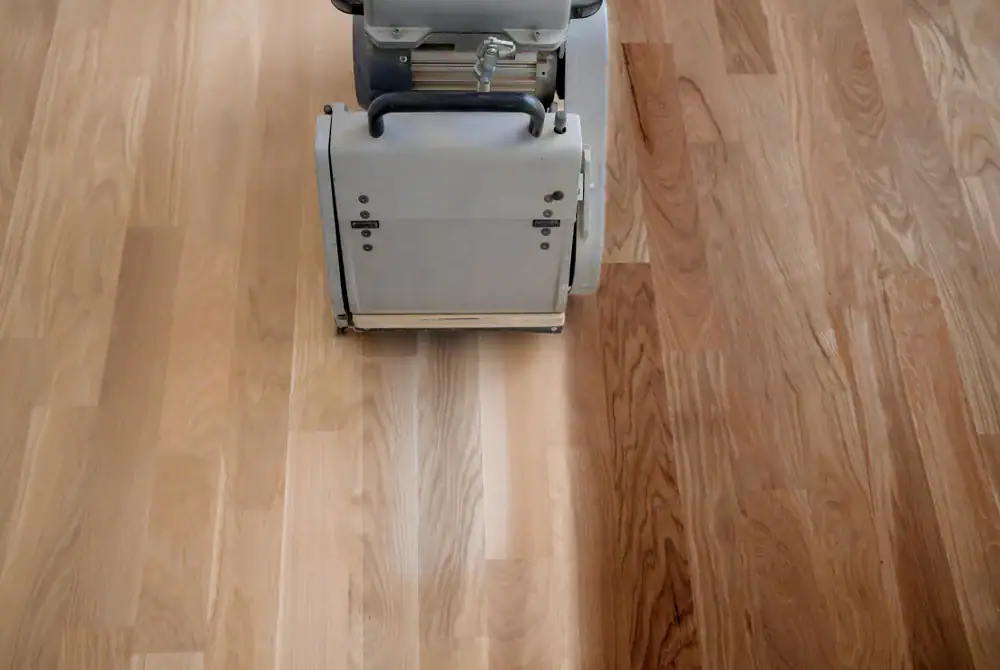
Sanding is the noisiest part. We use drum sanders and edgers to remove the old finish and smooth out imperfections. This typically takes most of day one. With dustless equipment, you won’t see clouds of sawdust settling on everything, but there will still be some noise. If you’re home, expect it to be loud.
Staining happens next if you’re changing color. The stain needs to penetrate evenly, which requires skill and attention to detail. It also needs time to dry—usually overnight—before the finish can be applied. If you’re keeping the natural wood color, this step gets skipped and we move straight to finishing.
Finish application takes multiple days because each coat needs to dry before the next one goes on. Water-based finishes dry faster—often in 2 to 3 hours—so we can get multiple coats in a day. Oil-based finishes need 8 to 12 hours between coats, which spreads the work over more days. Most floors get at least three coats for durability.
Curing is different from drying. Your floors might feel dry to the touch after 24 hours, but the finish continues to harden over the next week or two. Water-based finishes fully cure in 7 to 14 days. Oil-based finishes take 7 to 28 days. During that time, you can walk on the floors in socks, but hold off on moving furniture back for at least 48 to 72 hours. Area rugs should wait a full week to avoid trapping moisture or leaving marks.
The whole process is surprisingly manageable if you work with a professional crew that communicates clearly and respects your home. Many families stay in the house during refinishing, especially with dustless systems that keep the mess contained.
How Replacement Timelines Create More Disruption
Replacement stretches out over more days and involves more moving parts, which means more potential for delays and disruption.
Demolition day is messy and loud. The crew rips up your old floors, and even with careful work, dust and debris spread beyond the work area. You’ll hear hammering, prying, and the sound of wood being torn up. If your home has multiple levels, carrying debris down stairs adds time and noise.
Subfloor work can’t be rushed. Once the old floor is gone, any issues with the subfloor become visible. If repairs are needed, that adds days to the schedule. You can’t install new hardwood over a damaged or uneven subfloor, so this step is non-negotiable. Sometimes contractors discover problems they didn’t anticipate, which pushes the timeline out further.
Installation itself takes time. Laying new hardwood isn’t a one-day job for most homes. The crew has to acclimate the wood to your home’s humidity levels, cut and fit each plank precisely, and ensure everything is level and secure. Depending on the size of the area and the complexity of the layout, installation can take several days.
Finishing unfinished hardwood adds another layer. If you chose unfinished planks, the floors need to be sanded and finished on-site after installation. That’s basically a full refinishing job, complete with sanding dust, stain drying time, and multiple coats of finish. Suddenly your one-week project has turned into two weeks or more.
Delays happen more often with replacement because there are more variables. Material shipments get delayed. Subfloor repairs take longer than expected. Weather affects delivery schedules. Each delay extends the time your home is torn up and unusable.
Refinishing avoids most of these complications. The floors are already there. There’s no demo, no waiting for materials to arrive, no surprises hidden under the old flooring. The work follows a predictable schedule, and you’re back to normal life in days, not weeks.
Making the Right Choice for Your Floors and Your Budget
At the end of the day, the decision between refinishing and replacing comes down to your floors’ condition, your budget, and what you’re trying to achieve.
If your floors are structurally sound—no major warping, no subfloor damage, no signs they’ve been refinished ten times already—refinishing is almost always the smarter financial move. You’ll save thousands of dollars, get your home back faster, and end up with floors that look brand new. The environmental benefits are real too: you’re keeping perfectly good wood out of the landfill and avoiding the carbon footprint of manufacturing and shipping new materials.
Replacement makes sense in specific situations. If your subfloor is damaged, if your floors have been refinished so many times that there’s barely any wood left, or if you genuinely want to change the species or layout, then replacement is the way to go. But those scenarios are less common than most people think.
For homeowners in Henrico County, Chesterfield County, Hanover County, and Powhatan County, working with an experienced local company makes all the difference. We’ve been helping Virginia homeowners make these decisions for over 20 years, and we’re happy to assess your floors and give you an honest recommendation—even if that means telling you refinishing isn’t the right fit for your situation.