For Richmond homeowners, your beautiful hardwood floors are a huge part of your home's character and value. But choosing the best hardwood floor sealant isn't about finding one miracle product. It’s about finding the perfect shield for your specific floors, protecting them from the daily grind of life—from foot traffic and spills to furniture scratches.
Making the right choice of finish is one of the most important decisions you'll make to ensure those floors look great for years to come. At Buff & Coat, we've helped hundreds of homeowners in the Richmond area navigate this choice, and we're here to give you the same straightforward advice.
Why Your Hardwood Floor Sealant Matters
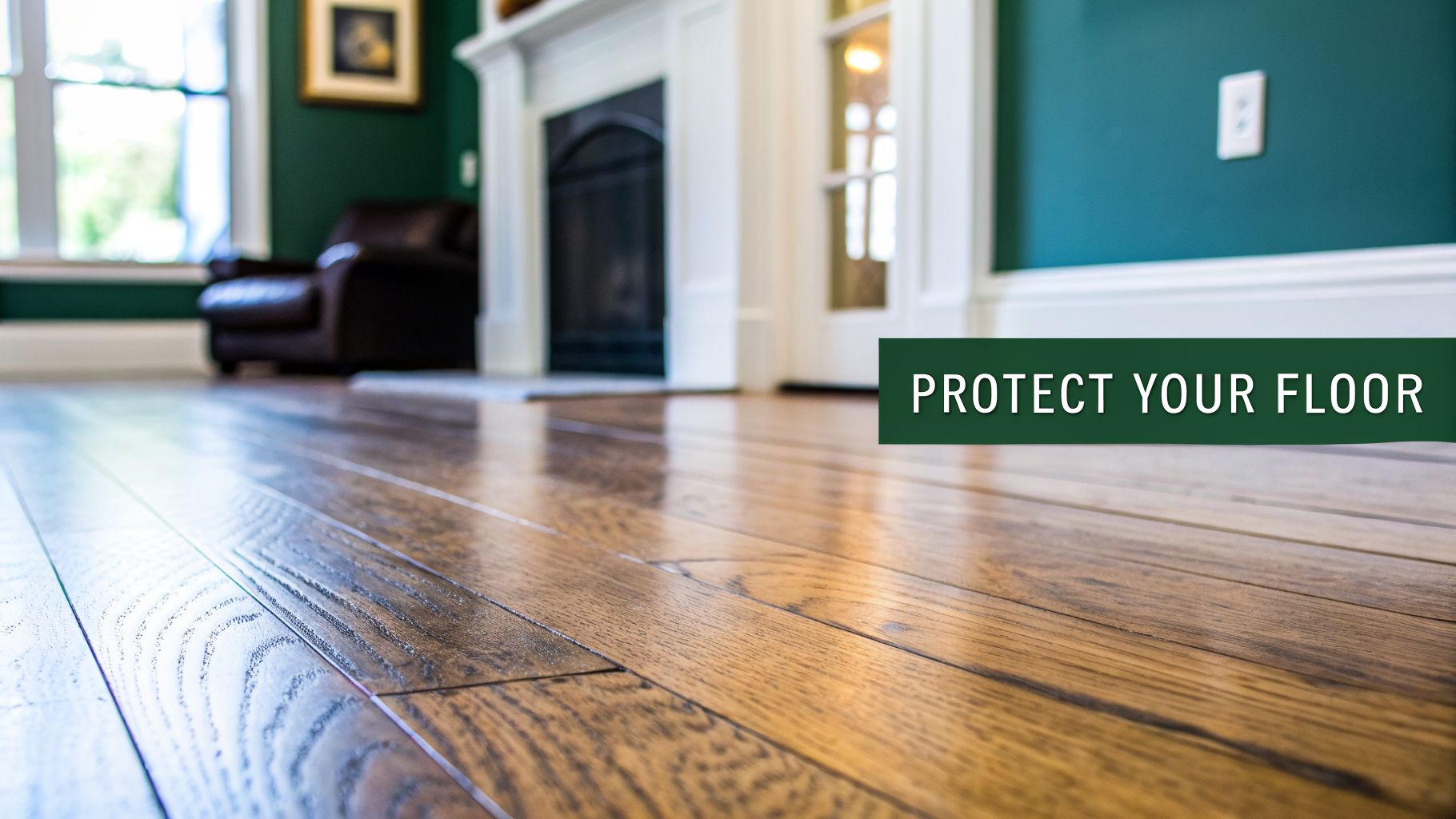
Think of your floor's sealant—often called a finish or topcoat—as the armor for your hardwood. The wood underneath provides the timeless beauty, but the sealant is what takes all the abuse. It’s the invisible, hardworking layer that stands up to kids, pet claws, dragged chairs, and that occasional glass of spilled iced tea.
Without a quality finish, your raw wood would quickly get stained, scratched, and worn down. This is why a proper hardwood floor restoration project always ends with a professional-grade sealant.
For homeowners in Richmond and surrounding areas like Midlothian and Glen Allen, a durable sealant is simply non-negotiable. Our region’s distinct seasons, from humid summers to dry winters, cause wood to expand and contract. A great finish needs to be flexible enough to move with the wood, preventing ugly cracks and peeling while keeping that protective layer intact.
The Fundamental Purpose of a Floor Finish
At its core, a hardwood floor sealant has three primary jobs:
- Protection: It creates a tough barrier that resists moisture, dirt, and daily scuffs. This is what stops a spilled drink from becoming a permanent dark stain on your beautiful oak floors.
- Durability: It hardens the surface, making the wood itself more resilient against dings, dents, and deep scratches. A properly applied finish can dramatically extend the time between major hardwood floor refinishing projects.
- Aesthetics: The finish is what gives your floors their final look. It dictates the sheen (from a trendy matte to a classic high gloss) and can either enhance or subtly change the wood's natural color and grain.
Understanding these roles is the first step toward making a smart choice. Skimping on the quality of your sealant is like buying a fantastic car but skipping the paint job—it leaves your investment exposed and vulnerable.
An Overview of Your Main Options
Navigating the world of floor sealants can feel overwhelming, but most professional choices boil down to a handful of key categories. Each one offers a different balance of looks, toughness, and long-term maintenance.
Here’s a quick table to help you see the main differences at a glance.
Quick Comparison of Hardwood Floor Sealant Types
| Sealant Type | Best For | Appearance | Durability | VOC Level |
|---|---|---|---|---|
| Water-Based Polyurethane | Preserving wood's natural color, quick projects | Crystal clear, non-yellowing | Good to Excellent | Low |
| Oil-Based Polyurethane | High-traffic areas, achieving a warm look | Amber hue, deepens over time | Excellent | High |
| Penetrating Hardwax Oil | Easy spot repairs, natural "in the wood" feel | Matte to satin, enhances grain | Good (but requires more maintenance) | Very Low |
| Moisture-Cure Urethane | Extreme durability (gyms, commercial spaces) | High gloss, very clear | Exceptional | Extremely High |
| Conversion Varnish | Professional application for ultimate toughness | Very clear and durable film | Excellent | High |
This table gives you a starting point, but the best choice always depends on your lifestyle, your home, and your personal taste.
Over our 15+ years of floor refinishing in Richmond VA, we've seen it all. We know that nearly every homeowner's needs can be met by understanding the core differences between these modern finishes. Getting it right from the start is the key to a long-lasting result you'll absolutely love.
If your floors look dull, scratched, or worn out, it’s a clear sign that their protective sealant is failing. The good news is that it’s almost always fixable. The Buff & Coat team can take a look and give you honest, straightforward recommendations for bringing them back to life.
Call us at 804-392-1114 or request a free estimate online today.
Water-Based vs. Oil-Based Polyurethane: The Great Floor Finish Debate
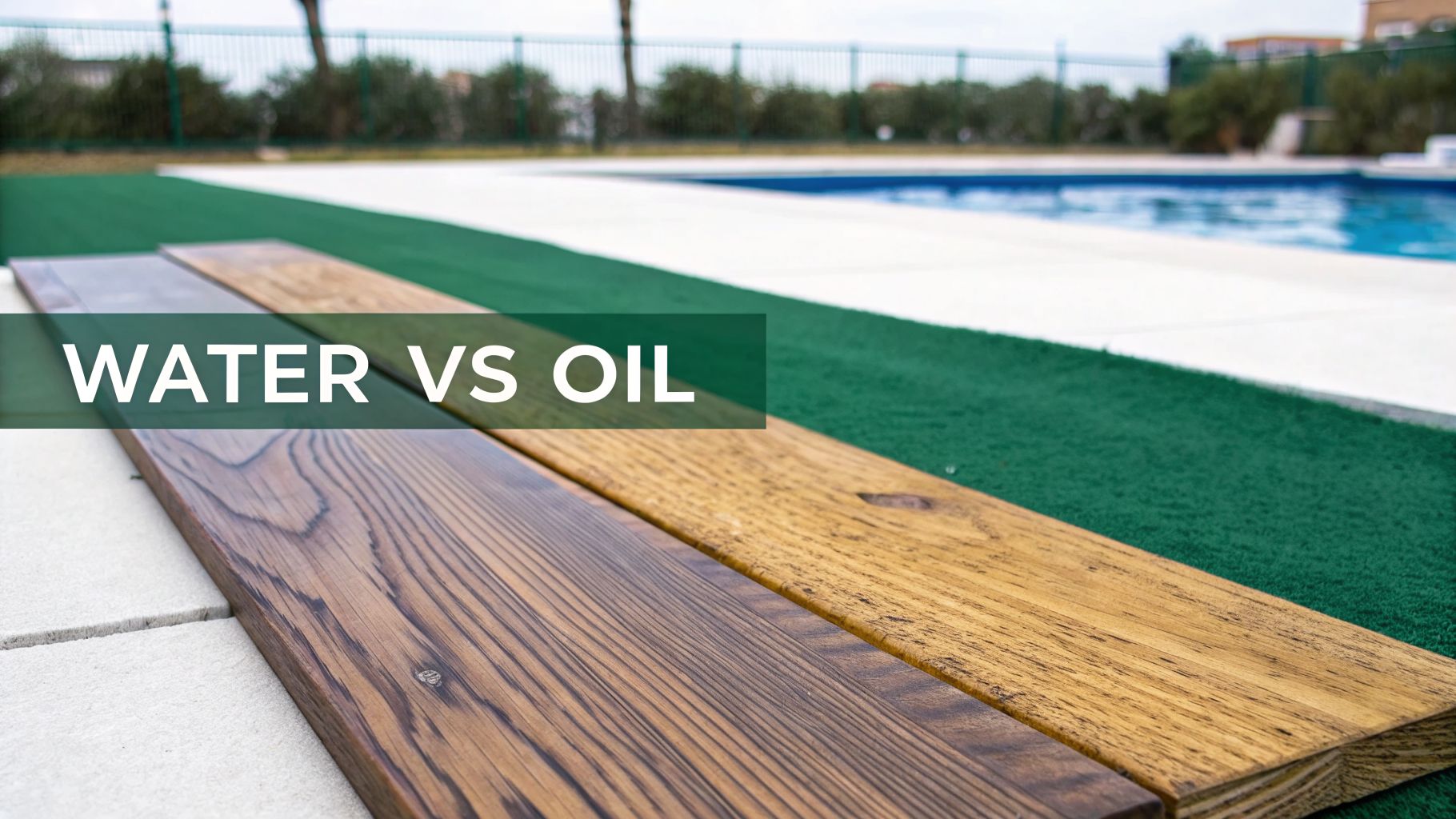
When you're choosing the best hardwood floor sealant, you'll quickly run into the classic showdown: water-based versus oil-based polyurethane. These two are the workhorses of the floor finishing world, but they couldn't be more different in how they look, feel, and perform.
Think of it this way: water-based polyurethane is like modern, high-tech athletic gear. It’s designed for high performance, dries in a flash, and keeps its original color without changing the look. It does its job and gets you back in the game quickly.
Oil-based polyurethane, on the other hand, is like a classic, well-oiled leather work boot. It’s unbelievably tough, develops a rich, warm character over time, and is built to take a beating.
Both are fantastic choices, but they are not interchangeable. The one you pick will have a real impact on your daily life, from how soon you can walk on your floors to the long-term vibe of your home.
The Case for Water-Based Polyurethane Finishes
Water-based polyurethane has exploded in popularity with homeowners in Richmond, especially for families with busy schedules or anyone sensitive to harsh smells. Its biggest selling points are all about convenience and a clean, modern look.
- Crystal Clear & True to Color: Water-based finishes go on clear and stay clear. They don't have the yellowing effect of oil, so the natural color of your wood—whether it's a light maple or a rich red oak—is what you see.
- Lightning-Fast Dry Times: This is a game-changer. You can often apply multiple coats in a single day, and the floor is usually ready for light foot traffic in just 4-6 hours. That means your refinishing timeline gets a whole lot shorter.
- Low Odor & Low VOCs: The smell is much, much milder than oil-based products. Because water-based polys have fewer volatile organic compounds (VOCs), the air quality in your home stays better, making the whole process less disruptive.
The demand for these advanced formulas is huge. The global market for floor sealers hit USD 3.1 billion in 2024, with premium water-based products leading the charge. In fact, studies show modern formulas can cut down wear rates by 35-50%—a massive benefit for homes with kids and pets. You can find more data on the growing floor sealer market on imarcgroup.com.
The Case for Oil-Based Polyurethane Finishes
For decades, oil-based poly was the undisputed champion of floor protection, and for good reason. It offers a rugged durability that's tough to match, making it a go-to for high-traffic areas and rental properties where toughness is priority one.
Here’s why people still love it:
- Exceptional Durability: Oil-based finishes are famous for being incredibly hard and scratch-resistant. It creates a thick, protective shell that stands up to the chaos of a busy household.
- Rich, Amber Glow: Unlike the clear look of water-based poly, oil-based finishes give the wood a warm, amber tone. This patina actually deepens over time, adding a richness and character that many homeowners adore, especially in more traditional homes.
- Budget-Friendly: Gallon for gallon, oil-based polyurethane is typically less expensive than high-quality water-based products, which can add up on a big project.
Of course, these strengths come with some serious trade-offs. Oil-based finishes have a very strong smell and high VOCs, so you’ll need great ventilation and to be out of the house for a while. The dry times are also much longer, often requiring 12-24 hours between coats and several weeks to fully cure and harden.
Our Expert Take: For most homeowners we work with in the Richmond area, a high-quality, two-component water-based finish delivers the best of all worlds. The technology has come so far that the best water-based products are now just as tough as oil, but without the harsh fumes and painfully long wait times.
Making the Right Choice for Your Home
So, which one is for you? It really boils down to your priorities.
If you want to preserve the true, natural color of your wood, are sensitive to strong smells, or just need to get your house back to normal fast, a water-based polyurethane is the clear winner. We dive into even more options in our complete guide to hardwood floor finish options.
But if you love that traditional, warm amber look and your number one goal is maximum scratch resistance for a high-traffic area, an oil-based finish could be a great fit—as long as you can handle the potent smell and longer project timeline.
Still not sure which sealant is the right choice for your floors? The team at Buff & Coat can walk you through the pros and cons for your specific home and lifestyle. Call us at 804-392-1114 for some honest advice and a free estimate.
Exploring Natural Finishes Like Penetrating Oils
While polyurethane finishes are fantastic for creating a tough, plastic-like film over your wood, there's another path that’s really catching on with Richmond homeowners who want a more organic, in-touch experience with their floors. We're talking about penetrating hardwax oils.
These finishes work in a completely different way. Instead of sitting on top like a shield, they soak deep into the wood fibers and actually harden from within, becoming a true part of the floor itself.
This creates a stunning, low-sheen look that feels much more natural underfoot. You aren't walking on a layer of plastic; you're walking directly on sealed, protected wood, feeling the authentic grain and texture. For owners of historic homes in The Fan or those with modern, minimalist spaces out in Short Pump, this "close to the wood" aesthetic is a huge part of the appeal.
But the single biggest advantage of penetrating oils is their unmatched ability for spot repairs. If you get a deep scratch on a polyurethane floor, you're often looking at a full wood floor recoating for the entire room to get a seamless fix. With a hardwax oil, you can typically fix just the damaged area, which saves a ton of time and money.
How Hardwax Oils Differ from Polyurethane
So, let's break down what makes these finishes so unique. Unlike polyurethane, which essentially forms a solid sheet over your floor, penetrating oils bond with the wood on a molecular level.
This fundamental difference leads to a few key benefits:
- Appearance: They deliver a beautiful matte or satin finish that really lets the wood's natural character shine through, without any synthetic gloss.
- Feel: The floor feels warmer and more genuine because there's no plastic barrier between your feet and the actual wood.
- Repairs: Scratches and scuffs can often be buffed out and re-oiled individually, blending right into the surrounding floor without leaving harsh lines. This is an absolute game-changer for households with pets or active kids looking for easy hardwood floor scratch repair.
Because these finishes are made from natural, plant-based oils and waxes, they are almost always VOC-free or low-odor finishes. This makes them a fantastic choice for anyone concerned about indoor air quality, a topic we dive into in our guide on how to give your floors an eco-friendly makeover. The application process has far fewer fumes, which means a healthier environment inside your home from day one.
Maintenance and What to Expect
Now, while the easy repairability of hardwax oils is a massive pro, it does come with a different kind of maintenance schedule. A polyurethane finish is more of a "set it and forget it" solution for several years, but oiled floors need a bit more hands-on care to keep them looking their best.
Our Expert Insight: Think of it like caring for a high-quality leather sofa versus a vinyl one. The vinyl sofa just needs a quick wipe-down, but the leather needs occasional conditioning to stay supple and rich. Oiled floors are the same—they thrive with periodic "refreshing" using a maintenance oil to nourish the wood and renew that protective layer.
This doesn't mean it's hard work. The process usually just involves cleaning the floor with a specialized soap and then applying a thin coat of maintenance oil where it’s needed in high-traffic areas. For a busy family in Chesterfield, this might mean refreshing the main hallway once a year, while a quiet bedroom could go much, much longer.
The trade-off for this simple routine is a floor that never has to be fully sanded down again and can be kept beautiful pretty much indefinitely. If you love the idea of a floor finish that celebrates the natural beauty of wood and offers simple, localized repairs, a penetrating hardwax oil could be the perfect fit for you.
Unsure if an oiled finish is right for your lifestyle? Buff & Coat can walk you through the maintenance routine and show you real-world examples. Call 804-392-1114 to discuss your options with an expert.
How to Select the Right Sealant for Your Home
Now that you’ve got the rundown on the different sealant types, let’s get practical. Choosing the best hardwood floor sealant isn’t about chasing trends—it’s about finding the perfect match for your lifestyle. The right choice comes down to a few simple questions about your home, your style, and how much disruption you can handle.
To get started, think of it as two main paths you can take: a super-protective, film-forming finish like polyurethane, or a more natural finish that lets you feel the wood grain, like a penetrating oil.
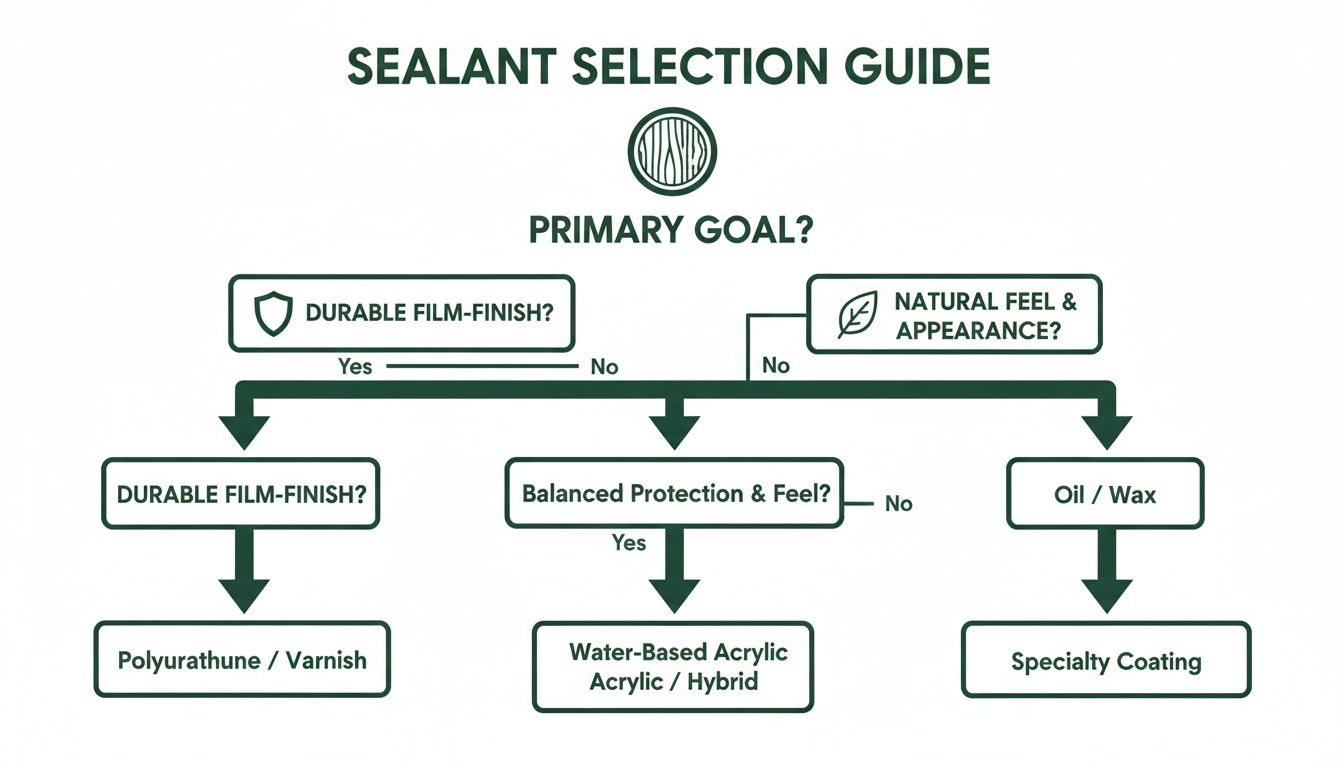
This flowchart boils it all down. The very first question is whether you want a tough, armor-like surface or a finish that feels like raw wood. Answering that one question gets you halfway to the perfect sealant for your home.
Key Questions to Guide Your Decision
Run through these questions, and your answers will point you directly to the right category of finish.
What does daily life look like in your house?
Do you have big dogs skittering across the floor? A crew of active kids? Do you love hosting parties? A busy, high-traffic home needs the toughest protection you can get. That usually means an oil-based polyurethane or a high-end two-component water-based finish, which offer the best defense against scratches and scuffs.What’s your style goal?
Are you dreaming of that classic, warm glow that makes old hardwood floors so inviting? Oil-based polyurethane is your ticket to that signature amber tone. But if you have a lighter wood like maple or want to keep your white oak looking crisp and natural, a crystal-clear water-based finish is the way to go. It won't yellow over time.How sensitive is your household to smells and chemicals?
If anyone in your family has sensitivities, or you just want to get back into your space as quickly as possible, low-VOC water-based polyurethanes or zero-VOC hardwax oils are fantastic options. They have very little odor and let you move furniture back in a fraction of the time it takes for traditional oil-based products to cure.
The flooring industry has seen a massive shift toward meeting these needs. The global floor sealant market is expected to jump from USD 6.8 billion in 2025 to USD 11.5 billion by 2035. This boom is fueled by remodeling projects and the fact that professionally finished floors can boost a home's value by 5-10%. In fact, since 2020, we've seen a 20% increase in homeowners choosing modern, eco-friendly options. You can find more data on this market growth at Makdatainsights.com.
Local Considerations for Richmond Homeowners
Believe it or not, your zip code matters. Here in the Greater Richmond area, our climate throws a curveball that makes professional application absolutely essential.
Our Expert Take: Richmond's infamous summer humidity is the arch-nemesis of a new floor finish. High humidity dramatically slows down drying and curing, especially for oil-based products. If a sealant doesn't cure correctly, it never reaches its maximum hardness, leaving your beautiful new floors weak and vulnerable to damage.
This is where hiring a pro team like Buff & Coat really pays off. As the best hardwood floor contractor in Richmond, we constantly monitor the temperature and humidity in your home and use industrial-grade air movers to create the perfect drying environment. This guarantees every single coat cures properly for a tough, long-lasting bond.
A family in a new Short Pump home might need the low VOCs and quick turnaround of a water-based finish to suit their busy schedule. Meanwhile, the owner of a rental property in the Fan District with constant tenant turnover might opt for the rugged durability of oil-based polyurethane to get the most mileage out of their investment.
As you weigh your options, you might also want to look into advanced sealants and waterproofing solutions that offer extra protection, which can be a lifesaver in kitchens or near entryways. By thinking through these factors, you can confidently land on the perfect sealant for your home, budget, and lifestyle.
If you’re still not sure which direction to go, Buff & Coat is here to help you make a choice you’ll be happy with for years. We give honest, straightforward advice tailored specifically to your Richmond-area home.
Call 804-392-1114 or request a free estimate today.
The Risks of a DIY Sealant Application
It’s tempting to watch a few tutorial videos and think that applying a new coat of sealant to your hardwood floors is a simple weekend project. We get it. But as experienced pros, we’ve seen the aftermath when it goes wrong, and trust us—this isn't like painting a wall. The margin for error is razor-thin, and any mistake is permanently sealed in the middle of your living room for everyone to see.
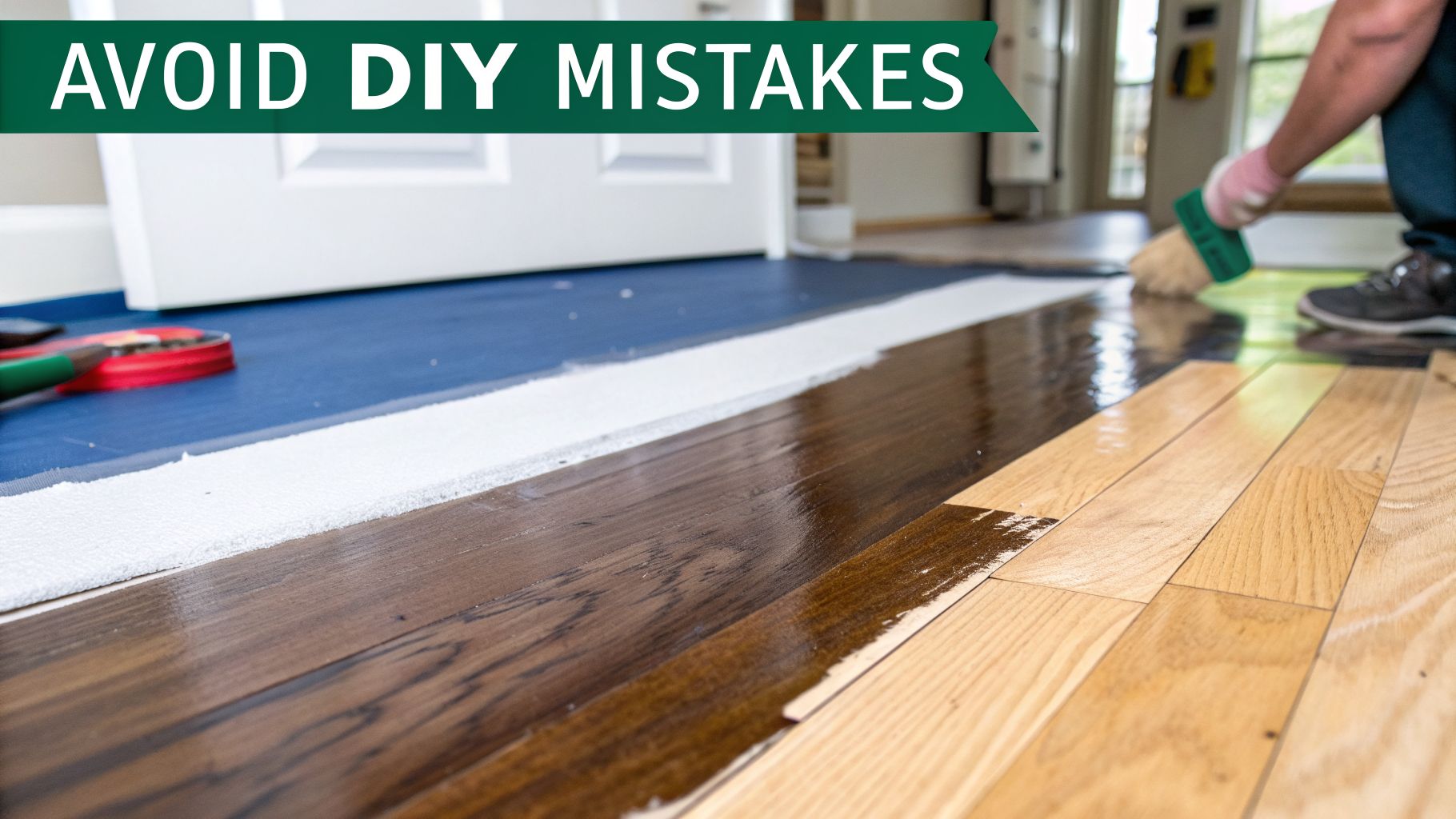
When homeowners try to tackle this themselves, we often see the same frustrating issues pop up. These aren't just small blemishes; they can ruin the look of your floor and weaken the finish itself.
Common DIY Pitfalls
- Bubbles and Debris: It's so easy to trap tiny air bubbles or specks of dust in the finish. This happens from over-brushing, using the wrong roller, or not getting the surface surgically clean. Once that sealant dries, those little bumps and bits of fuzz are there forever.
- Streaks and Drips: A steady, confident hand is non-negotiable. Without experience, it’s almost impossible to avoid ugly streaks, stop-and-start marks where you paused, and drips that run down the baseboards.
- "Lap Marks": This is the classic DIY mistake. Lap marks are visible lines that show up where one section of sealant started to dry before you could connect it to the next wet section. Professionals work quickly to maintain a continuous "wet edge" across the entire floor, which is the only way to get a perfectly seamless look.
Even with the right technique, your tools can let you down. For anyone trying to use an airless sprayer, for instance, a clean and functional machine is everything. Something as simple as maintaining your airless sprayer with the correct parts can be the difference between a smooth coat and a splattery mess.
Why Professional Preparation Is Key
Here’s a secret from the pros: the most important part of the job happens before we even open a can of finish. For a new coat of sealant to stick, it needs a surface that's ready to accept it. Without the right prep work, the new finish will peel, flake, and fail in a matter of months.
The professional process involves a crucial step called 'screening' or 'abrading,' where we lightly sand the existing finish to create a microscopic texture. This texture gives the new coat of sealant something to mechanically grip onto, ensuring a strong, lasting bond.
This step is everything. Our investment in dustless sanding systems isn't just for show—it's how we achieve this vital preparation without blanketing your entire house in fine dust. The numbers don't lie; the demand for durable, professional results is why the floor coatings sector is projected to hit USD 4,734.9 million by 2027. Homeowners know a pro-level finish is something you just can’t get from a DIY kit.
Ultimately, trying to recoat your floors yourself often ends in frustration and a higher refinishing cost when you need a professional to fix it. Hiring an experienced team ensures the job is done right the first time, giving you a beautiful, durable floor without the headache. You can learn more about why professional floor refinishing is a smart investment on our blog.
If your floors are looking tired, let the pros handle the refresh. Call Buff & Coat at 804-392-1114 for a fast, free estimate.
Why Richmond Homeowners Choose Buff & Coat
Choosing the right finish for your floors is a big decision, but picking the right team to apply it is just as critical. For over 15 years, Buff & Coat has been the go-to expert for homeowners all over the Greater Richmond area. We’ve brought new life to historic floors in The Fan and restored the shine to family homes in Midlothian and Mechanicsville.
We're not a big, faceless franchise. We’re a local, owner-operated business, and that means we’re committed to genuine craftsmanship and clear, honest communication. Your neighbors choose us because they know they'll get straightforward advice and beautiful results that actually last. We believe in treating your home like it’s our own and making the refinishing process as clean and stress-free as we possibly can.
Our Commitment to Quality and Service
What really makes us different is our blend of an old-school work ethic with the best modern technology. It’s how we guarantee a better outcome for your floors.
15+ Years of Local Experience: We know Richmond-area homes. We understand the unique needs of the historic heart pine in the Fan just as well as the maple and red oak floors found in newer suburban builds.
Advanced Dustless Sanding Systems: We've invested in top-of-the-line equipment that captures dust right at the source. This keeps your home clean and protects your indoor air quality while we work.
Local, Owner-Operated Business: You get personal service and direct accountability on every single job. The owner is hands-on, making sure your project meets our demanding standards for quality.
Premium Quality Finishes: We simply don’t cut corners. We only use professional-grade, highly durable sealants that we trust to protect your investment for years to come.
Clear Pricing and Honest Advice: You’ll never find hidden fees or aggressive upselling here. We give you our professional opinion on what your floors truly need to look their best and last longer—nothing more, nothing less.
5-Star Customer Service: We pride ourselves on clear communication, punctuality, and respect for your home. Our reputation in the community is built on trust and exceptional workmanship.
Your Top Questions About Hardwood Floor Sealants, Answered
As Richmond's hardwood flooring experts, we get a lot of questions about the best way to protect beautiful wood floors. We've compiled the most common ones we hear from homeowners to help you make the right call for your home.
How Often Should I Reseal My Hardwood Floors?
While a full sand-and-refinish job can last 7-10 years, the real secret to forever-fresh floors is being proactive. The best approach is a buff and coat service every 3-5 years.
Think of it as a "screen and recoat." We lightly abrade the existing top layer of finish to smooth out minor surface scuffs, then apply a brand-new, gleaming coat of sealant. For homes in high-traffic spots around Chesterfield or Henrico, this is the most cost-effective way to restore that shine and protection, pushing back the need for a more expensive full sanding by years.
Will a New Coat of Sealant Fix Deep Scratches?
No, a new coat of finish won't fix damage that has penetrated into the wood itself. Sealant is a protective shield on the surface, not a magic eraser for deep gouges or dents. A recoat is perfect for hiding light surface scuffs and bringing back a uniform sheen, but any scratch deep enough to have broken through the finish will still be there.
To properly eliminate deep scratches, a full hardwood floor refinishing is the only solution. This process involves sanding the floor down to the fresh, undamaged wood below. This creates a perfect canvas for stain and new layers of the best hardwood floor sealant, delivering that flawless, like-new look.
Can You Put a Water-Based Finish Over an Oil-Based One?
Yes, you can—but this is a job that demands professional prep work. Just slapping a water-based finish over an old oil-based one is a recipe for disaster. The new coat simply won't bond, and you'll be left with a finish that peels right off.
To get proper adhesion, a flooring pro must first "screen" or mechanically abrade the entire surface. This crucial step etches the old finish, creating a textured profile for the new water-based sealant to grab onto. Skipping this is one of the most common—and costly—DIY mistakes we see.
How Long Until I Can Walk on My Sealed Floors?
Patience is a virtue, and the time you need depends entirely on the finish we use. It's also important to know the difference between "dry to the touch" and "fully cured."
- Water-Based Finishes: These dry incredibly fast. You can usually walk on them (with socks only!) in about 4-6 hours.
- Oil-Based Finishes: These take a bit longer. Plan on waiting 12-24 hours before any light foot traffic.
"Curing," however, is the chemical process where the finish hardens to its maximum strength. This takes much longer. We recommend waiting at least 48-72 hours before moving furniture back. And for area rugs, which can trap solvents, it's best to wait at least a week for water-based finishes and up to a month for oil-based ones to be safe.
Ready to restore your hardwood floors? Buff & Coat makes the process fast, clean, and stress-free.
Give us a call at 804-392-1114 or request your free estimate at buffandcoatvirginia.com.