Choosing a flooring contractor in Richmond isn’t just a business transaction; it’s inviting a team of craftspeople into your home. The right pro will elevate your space and add real value, while the wrong one can turn a dream project into a costly, frustrating nightmare. This guide is designed to help Richmond homeowners navigate the process with confidence.
Finding a Trustworthy Local Flooring Contractor
Hiring a contractor is a big decision. You’re not just paying for a service—you’re trusting someone to care for a fundamental part of your home. A truly great local contractor provides more than just skilled labor; they offer peace of mind through proven expertise, quality workmanship, and clear communication.
For homeowners here in the Richmond area, this means looking beyond a simple price tag. The best in the business have a deep understanding of our region’s unique homes, from the historic Fan District houses with their original heart pine floors to the modern builds out in Short Pump. They know how Virginia’s humidity impacts different wood species and which finishes will hold up, season after season.
Verifying the Essentials
Before you discuss stains or finishes, there are a few non-negotiables every legitimate flooring contractor must have. Think of these as your first line of defense—they protect you, your home, and your investment.
Here’s what to look for right away:
- Proper Licensing and Insurance: This is crucial. A valid contractor’s license shows they meet Virginia’s professional standards. Even more critical are liability insurance and workers’ compensation. These protect you from being financially responsible if an accident happens on your property.
- A Strong Local Reputation: You want a company with deep roots in the Richmond, VA community. Years of experience in local neighborhoods, a solid trail of positive online reviews, and a portfolio of finished projects in places like Midlothian or Glen Allen speak volumes.
- Clear Communication: From the very first phone call, a professional should be easy to reach. They should answer your questions patiently and explain their process without confusing jargon.
A trustworthy contractor’s goal is to find the right solution for your specific floors, not just to sell you the most expensive service. Honesty and transparency from the start are the clearest signs you’ve found a reliable partner.
To help you get started, we’ve put together a quick-reference checklist covering the essential credentials you should verify before hiring anyone.
Key Contractor Vetting Checklist
| Vetting Point | Why It Matters | What to Ask For |
|---|---|---|
| VA Contractor’s License | Confirms they meet state-mandated standards for knowledge and business practices. | Ask for their license number and verify it on the DPOR website. |
| Liability Insurance | Protects your home and property from accidental damage during the project. | Request a “Certificate of Insurance” (COI) directly from their insurance agent. |
| Workers’ Compensation | Protects you from liability if a contractor’s employee is injured on your property. | This should also be listed on the COI. Don’t just take their word for it. |
| Local References | Provides real-world proof of their quality, professionalism, and reliability. | Ask for 2-3 recent, local references you can actually call. |
| Detailed Portfolio | Shows the quality and range of their work. Look for projects similar to yours. | Check their website, social media, or ask them to share photos of past work. |
Taking the time to check these boxes is the most important step you can take. It sets the foundation for a smooth project and floors you’ll love for years.
If you’re just beginning your search, our guide on finding the best flooring contractors near you dives even deeper into how to properly vet local professionals. This initial due diligence is what separates a successful project from a potential disaster.
Matching the Service to Your Floors
Not every hardwood floor needs the same treatment. One of the biggest mistakes homeowners in the Richmond area make is assuming their tired-looking floors need a full, down-to-the-bare-wood sanding. That’s often the most expensive and disruptive option, and much of the time, it’s simply not necessary.
Figuring out what your floors actually need is the key to getting a beautiful result without overpaying. It really boils down to two main paths: a buff and coat service (also called a screen and recoat) or a full sand and refinish. The right choice depends entirely on the current condition of your floors.
When a Buff & Coat Service is the Smart Choice
Think of a buff and coat as a professional refresh for your floors. It’s the perfect fix when the wood itself is in good shape, but the finish has lost its luster from years of foot traffic, kids, and pets. It’s all about restoring that protective sheen.
This process is your best bet if your floors show signs of:
- Surface-level scuffs and light scratches that haven’t broken through the finish to the wood.
- A dull, hazy look that won’t go away, no matter how much you clean.
- General wear and tear in high-traffic spots like hallways, kitchens, and entryways.
A wood floor recoating is a quick, clean, and minimally invasive job. We use special equipment to lightly abrade (or “screen”) just the top layer of polyurethane. This isn’t sanding; it’s more like a deep exfoliation that cleans the surface and gives the new finish a solid base to bond to.
Then, we apply a fresh, durable coat of low-odor finish. The entire process is completely dustless and is often completed in a single day. You get a brand-new protective layer without changing your floor’s color.
When You Need a Full Sand and Refinish
A full sand and refinish is the heavy-duty solution. This is a complete hardwood floor restoration for floors with damage that goes beyond the surface. When a simple recoat won’t fix the underlying problems, it’s time for a more thorough approach.
You should be thinking about a full refinish if your floors have:
- Deep scratches or gouges where you can see and feel the raw wood.
- Significant water damage or dark pet stains that have soaked deep into the wood grain.
- Patches where the finish has completely worn away, leaving the wood exposed and vulnerable.
- A desire to change the color of the stain or switch from an old, yellowing oil-based finish to a modern, clear water-based one.
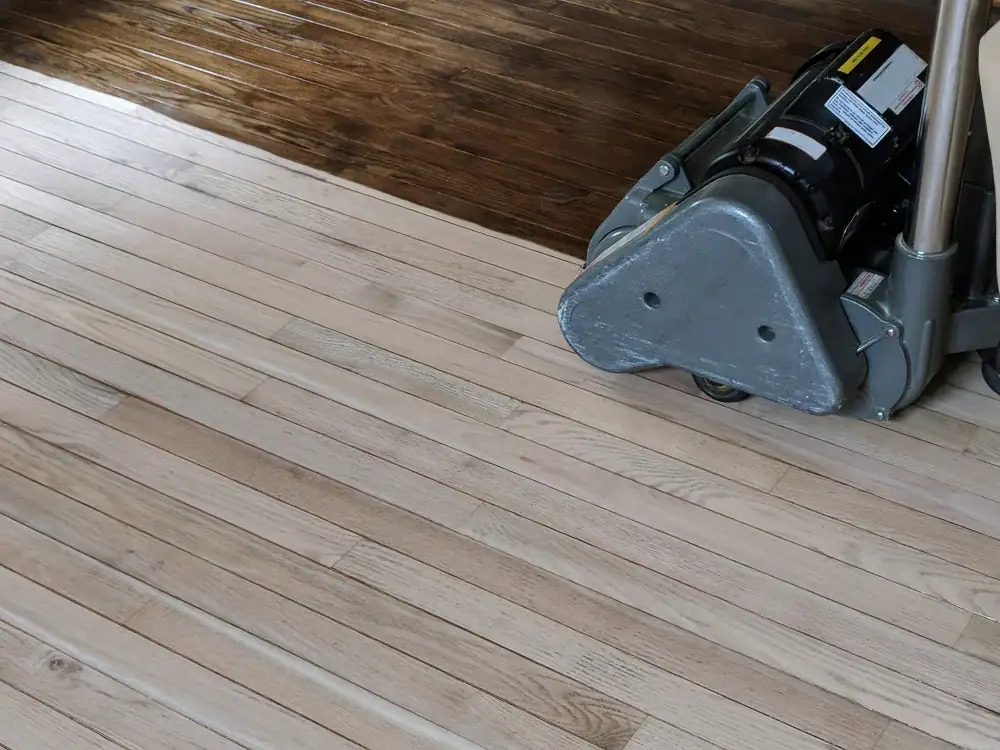
During a full refinish, a flooring contractor uses powerful sanding machines to methodically remove the old finish and a very thin layer of the wood itself, effectively erasing years of damage. This takes the floor back to its raw, natural state, creating a perfect canvas for new stain and several coats of protective polyurethane.
This decision tree can help you visualize the choice between a quick refresh and a full restoration.
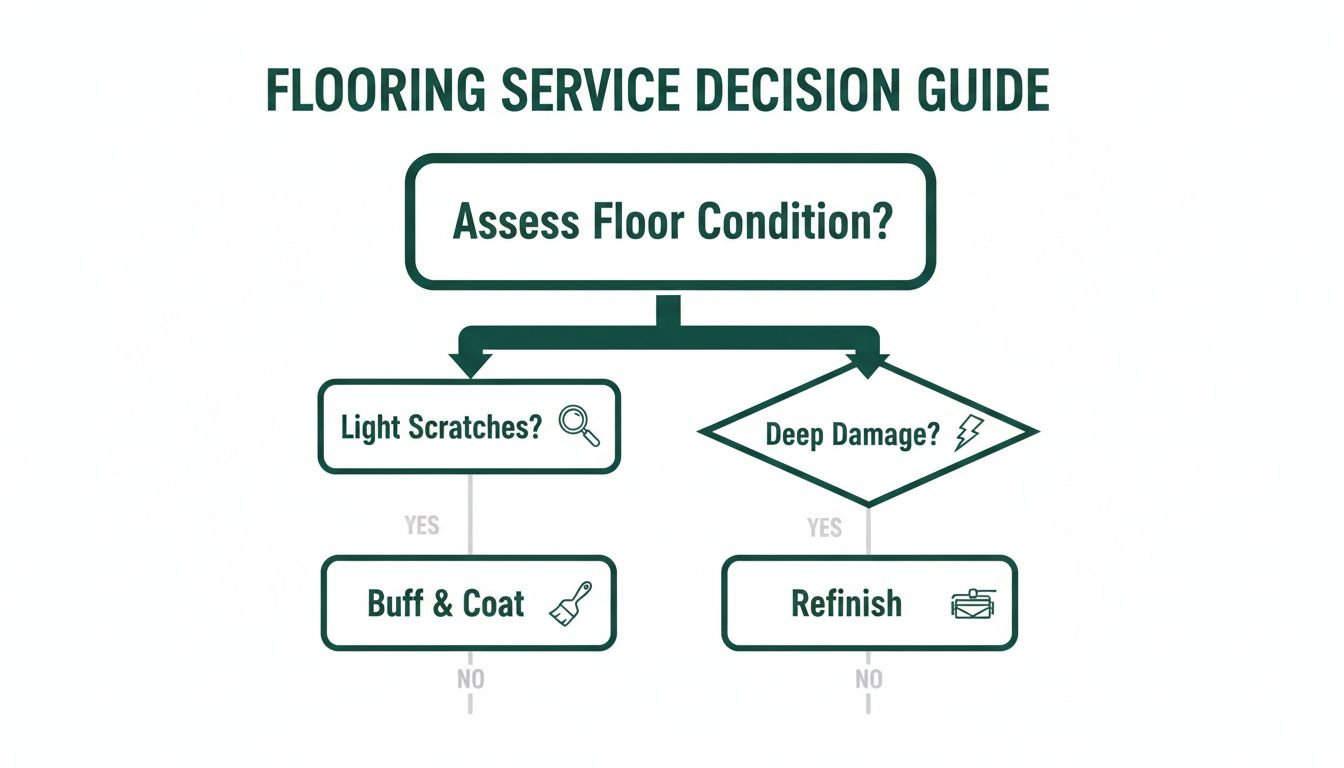
As the chart shows, it’s all about an honest assessment: is the damage just cosmetic, or has it actually penetrated the wood? The demand for these professional services is growing. The global flooring market is expected to jump from USD 385.6 billion in 2025 to USD 634.8 billion by 2033, with a significant portion driven by homeowners investing in quality, lasting solutions like dustless renewals. You can explore more data on flooring market trends if you’re curious.
If you’re unsure whether your hardwood floors need refinishing, Buff & Coat can take a look and give you honest recommendations.
Call 804-392-1114 or request a free estimate online today.
Critical Questions for Every Contractor Interview
Your first meeting with a potential flooring contractor is more than a quick chat about price—it’s your best chance to interview them for a skilled job inside your home. Asking the right questions upfront reveals everything you need to know about their expertise, process, and commitment to quality. It helps you see past a sales pitch and hire someone you can genuinely trust.

Think of this conversation as your most important vetting tool. A true professional will welcome detailed questions and provide clear, confident answers. If you get vague responses or a dismissive attitude, that’s a major red flag.
Questions About the Process and People
First, you need to know who will be in your home and how they operate. These questions get to the heart of their business practices.
- Who will actually be doing the work? Are they trusted, long-term employees or a crew of subcontractors they just hired? An in-house team usually means better quality control and direct accountability.
- What does your dust containment process look like? This is a huge one. You want to hear an answer that includes modern dustless sanding equipment connected to powerful vacuums—not just a vague promise to hang some plastic sheets.
- How will you protect my home and belongings? A professional crew should have a clear plan for sealing off other rooms, protecting baseboards and cabinets, and keeping your home as clean as possible.
A contractor who is unclear about their dust control or home protection plan probably doesn’t have a reliable system in place.
Key Takeaway: A pro’s process should prioritize your home’s cleanliness and safety just as much as the final finish on your floors. Their answers should give you peace of mind, not more anxiety.
Questions About Materials and Expertise
Next, dig into the products they use and their technical knowledge. The finish they recommend directly impacts your floors’ durability and your home’s air quality.
- What type of finish do you recommend for my floors, and why? There’s no single “best” finish. The right one depends on your lifestyle—kids, pets, foot traffic—and the look you want. A good contractor will walk you through the pros and cons of oil-based vs. water-based polyurethanes, explaining durability, dry times, and VOC levels.
- Are your finishes low-VOC or low-odor? With a growing focus on healthier homes, many Richmond homeowners specifically request VOC-free or low-odor finishes. This question shows whether the contractor is up-to-date on modern products that are safer for your family and pets.
To ensure you’ve covered all your bases, it never hurts to review a list of crucial questions to ask any service provider to get a feel for effective vetting in general.
If you’re not sure what to ask about your specific project, that’s what we’re here for. At Buff & Coat, we’ll walk you through all the options and give you honest, straightforward answers.
Richmond homeowners: get a fast quote for refinishing or recoating.
How to Read a Flooring Estimate and Timeline
When a flooring contractor hands you an estimate, it should be a clear roadmap for your project. A single number scribbled on a piece of paper isn’t a professional quote; it’s a huge red flag. A proper estimate is your best tool for comparing contractors fairly and knowing exactly where your money is going.
A vague quote often leads to hidden costs or subpar work. Any trustworthy contractor will provide a detailed breakdown. Don’t just scan for the total price—dig into the specifics.
A solid estimate will always include:
- Square Footage: The total square footage of the area being serviced must be clearly stated.
- Labor Breakdown: Costs should be separated for each major step, like sanding, staining, and applying finish coats.
- Materials: Look for the specific brand and type of stain and polyurethane finish being used. This matters for quality and durability.
- Repairs: Any necessary hardwood floor repair, like patching in new boards, should be itemized as a separate line item.
This level of detail proves the contractor has thoroughly assessed your project and is being transparent about pricing. It empowers you to ask the right questions and ensures there are no surprises down the road.
Understanding the Refinishing Timeline
Just as critical as the refinishing cost is the project timeline. How long does refinishing take? It depends entirely on the scope of the work.
For instance, a simple buff and coat service on 1,000 square feet can often be completed in a single day. There’s no heavy sanding, and the specialized finish we use dries quickly.
A full sand and refinish, however, is a multi-day process that can’t be rushed. For that same 1,000 sq. ft. space, a realistic timeline looks like this:
- Day 1: Sanding the floors down to the bare wood.
- Day 2: Applying stain (if chosen) and the first protective coat of finish.
- Day 3: Applying the second (and sometimes third) coat of finish to build durability.
Once the final coat is down, the curing process begins. While you can usually walk on the floors with socks in about 24 hours, the finish needs several days to a full week to fully harden and reach maximum durability. Any contractor promising to do a full refinish in a single day is cutting corners that will compromise the quality and lifespan of your floors.
If you want to dig deeper into project expenses, check out our guide on understanding floor remodel costs.
Globally, the flooring market was valued at USD 510.13 billion in 2024 and is expected to hit USD 825.42 billion by 2032. A big driver of that growth is homeowners choosing to restore existing hardwood floors, which is why understanding the value you get from a professional refinishing service is so crucial. You can discover more insights about flooring market growth and the trends behind these numbers.
Not sure if your floors need a full refinish or just a touch-up? Give Buff & Coat a call. We’ll take a look and give you an honest, no-nonsense recommendation.
Getting Your Home Ready for Floor Refinishing
Proper preparation is the secret ingredient to a smooth, stress-free flooring project. Once you’ve hired your flooring contractor, a little planning on your end makes a world of difference. Taking a few key steps before the crew arrives helps us stick to the schedule and keeps your belongings safe.

This isn’t just about making room for us to work; it’s about creating a safe and efficient job site. When the space is clear, our team can focus entirely on their craft, leading to a flawless finish without any preventable hiccups.
Your Pre-Project Checklist
Before our team arrives, we ask homeowners to handle a few simple but important tasks. Getting these things done beforehand means we can get straight to work bringing your floors back to life.
Your main job is to completely clear the rooms we’ll be working in. This means everything.
- All Furniture: Every piece, from large items like sofas and beds to smaller tables and bookcases, needs to be moved out. Another room, the garage, or a temporary storage unit are all great options.
- Rugs and Decor: Roll up any area rugs and move out floor lamps, plants, and other decorative items.
- Wall Hangings: It’s a smart move to take down pictures, mirrors, and anything on shelves. The vibration from our sanding equipment can sometimes cause things to shift or fall.
- Closets: Don’t forget the closets! If there’s hardwood in there, it needs to be completely empty.
Taking the time to clear everything out is the single most helpful thing you can do. It prevents accidental damage to your belongings and gives us the open space we need to create a perfectly uniform finish across the entire floor.
What About Pets and People?
For the safety and comfort of everyone involved—two-legged and four-legged—it’s best to make arrangements for them to be away from the work area. The equipment is loud, and even with the low-odor finishes we use, the space needs to be left undisturbed while the new finish cures.
If you plan to stay home during the project, please map out clear routes that avoid the rooms we’re refinishing.
We’ve put together a more detailed guide that walks you through exactly how to prepare your house for hardwood floor refinishing with even more tips.
The Contractor’s Responsibilities
Once you’ve cleared the space, our part of the prep begins. Any professional flooring contractor in Richmond VA will take steps to protect the rest of your home from the work zone.
At Buff & Coat, our crew will carefully seal off all doorways and openings with plastic sheeting. This, combined with our powerful dustless sanding systems, does an incredible job of containing any airborne particles and keeping your home clean. We also ensure the space is properly ventilated from start to finish.
If you’re unsure about any part of the prep process, just ask. We’re here to give you clear guidance to make getting ready as easy as possible.
Why Richmond Homeowners Choose Buff & Coat
In a world full of big-box stores and faceless subcontractors, choosing a local, owner-operated flooring contractor makes a huge difference in your project’s outcome. When the person who gives you the estimate is the same one personally invested in your project’s success, you get a higher level of accountability and pride in the workmanship.
- 15+ Years in Business: We have deep roots in the Richmond community and a long track record of successful projects.
- Dustless Sanding Systems: Our advanced equipment keeps your home clean and your family safe from airborne dust.
- Local, Owner-Operated: You get direct communication and hands-on expertise from a team that cares about its reputation right here in the RVA.
- High-Quality Finishes: We use premium, durable products, including low-odor options, for a beautiful, long-lasting result.
- Clear Pricing & Honest Advice: We provide detailed estimates and recommend the right solution for your floors, not just the most expensive one.
- 5-Star Customer Service: Our goal is to make the entire process smooth, professional, and stress-free.
FAQ: Your Top Flooring Questions Answered
After more than 15 years of hardwood floor refinishing in the Richmond area, we’ve heard just about every question you can imagine. Here are a few of the most common things homeowners ask.
How long until I can use my floors again?
While a full refinishing project takes a bit of patience, you don’t have to wait forever. Your floors are typically safe for light, sock-foot traffic in about 24 hours. We recommend waiting a full 48-72 hours before moving furniture back into the room. When you do, please put new felt pads on everything! For area rugs, hold off for one full week. This lets the finish fully harden to its maximum strength.
Is dustless sanding really 100% dust-free?
Modern dust containment systems are a game-changer. Our equipment captures around 95-98% of all airborne dust, making the process much cleaner and healthier than old-school methods. That said, nothing is perfectly dust-free. A minimal amount of residual dust is possible, which is why we still seal off doorways as an extra precaution to protect the rest of your home.
Can you just repair one damaged area?
It depends on the damage. For a few minor surface scuffs, a targeted hardwood floor scratch repair can sometimes work. However, for deeper gouges, water stains, or boards that need replacing, we almost always recommend refinishing the entire room. Trying to patch and stain a single spot rarely matches the surrounding floor, which has aged and developed its own unique color. Sanding and coating the whole room is the only way to guarantee a seamless, uniform finish.
What is the difference between finishes?
The choice comes down to oil-based versus water-based polyurethane.
- Oil-based finishes give wood a classic, warm amber glow that deepens over time. The trade-off is a stronger smell during application and a longer drying time.
- Water-based finishes dry completely clear, preserving the natural, unaltered color of your wood. They are low-odor finishes and dry much faster, getting you back on your floors sooner.
We’ll walk you through the pros and cons to help you pick the perfect one for your home and lifestyle.
Ready to restore your hardwood floors? Buff & Coat makes the process fast, clean, and stress-free.
Call 804-392-1114 or request your free estimate at buffandcoatvirginia.com.