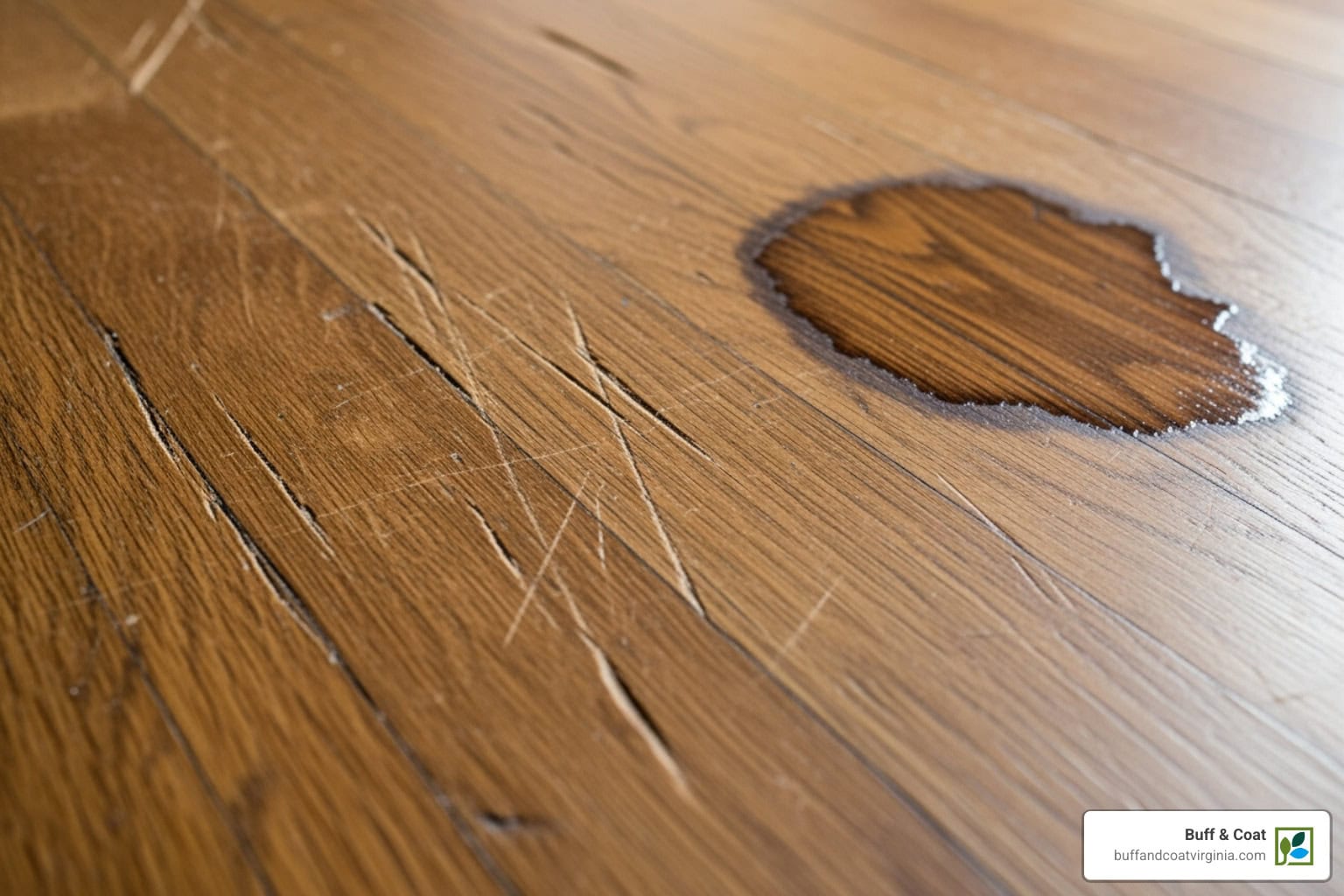
Why You Should Repair Damaged Wood Floor Instead of Replacing It
When you need to repair damaged wood floor issues, from light scratches to water stains, knowing your options can save you thousands. Most damage is repairable, restoring your floors to like-new condition for significantly less than a full replacement. With professional hardwood floor repair, homeowners can often restore their floors to their original glory without the high cost and hassle of a total tear-out.
Quick Guide to Wood Floor Repair:
- Minor scratches: Use wood markers or fine steel wool (DIY cost: $20–$50)
- Deep gouges: Fill with wood putty, sand, and refinish (DIY cost: $50–$200)
- Water damage: Requires professional drying, sanding, and refinishing (Pro cost: $8–$100 per sq ft)
- Severe damage: Replace boards and address subfloor issues (Pro cost: $300–$1,000+)
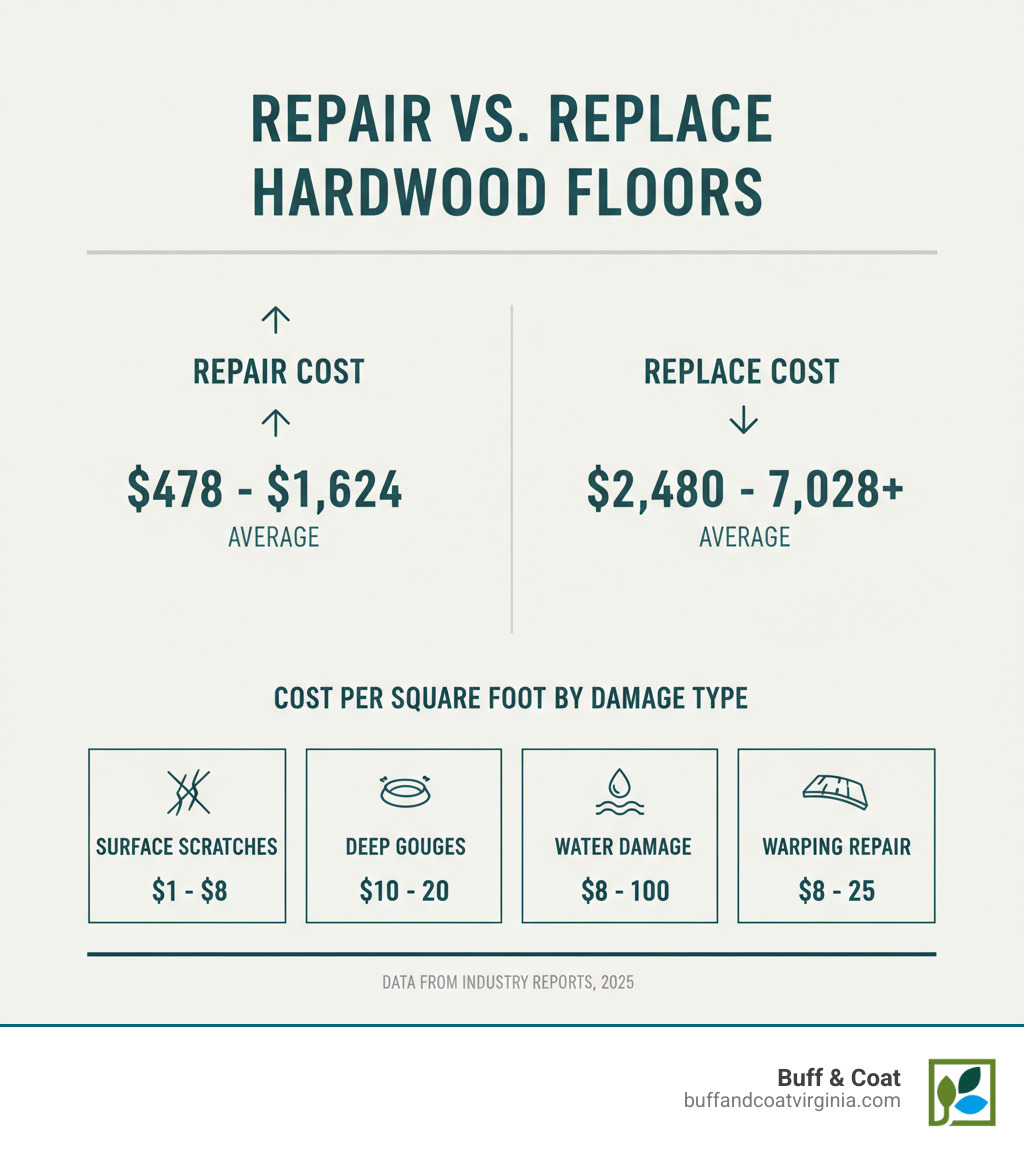
According to industry data, the average repair costs between $478 and $1,624, while a full replacement can cost $2,480 to $7,028 or more. Understanding your repair options helps you make the smartest decision for your home.
I’m David Emmerling, President of Buff & Coat Hardwood Floor Refinishing. For over 20 years, I’ve helped Richmond-area homeowners with our dust-free, eco-friendly restoration services, getting most floors back in service in just one day.
Basic repair damaged wood floor terms:
First Steps: Assessing Damage and Deciding to Repair or Replace
Before starting any repair, you must first assess the damage to save time and money. Hardwood floors can suffer from various issues, each requiring a different approach.
Common damage types include:
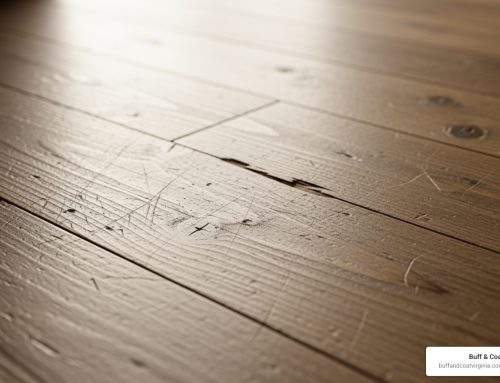
- Scratches and scuffs: Often from pet claws or furniture.
- Dents and gouges: Caused by dropped objects.
- Water damage: Appears as dark stains, swelling, or mold.
- Warping, cupping, or crowning: Board shape changes due to moisture imbalances. Cupping is when edges curl up; crowning is when the center bulges.
- Gaps and stains: Gaps can be seasonal, while stains come from spills or pets.
Understanding these types is the first step when deciding whether to repair damaged wood floor sections or replace them entirely.
How to Assess the Severity of Hardwood Floor Damage
To properly assess the damage, you need to inspect your floors closely.
- Visual Inspection: Get on your hands and knees. Are scratches superficial or deep into the wood? What color are the stains?
- Feel the Surface: Run your hand across the floor. Uneven edges, or “lippage,” can signal warping or installation issues.
- Check for Sponginess: Gently press on boards, especially in areas with suspected water damage. Any soft or spongy feeling is a red flag for rot or subfloor damage.
- Use a Straight Level: Place a level across the boards to reveal cupping, crowning, or warping that the naked eye might miss.
- Identify the Cause: Knowing what caused the damage—a leaky dishwasher, dragged furniture, pet claws—is crucial for choosing the right repair and preventing future issues.
Signs Hardwood Flooring Needs Repair Versus Replacement
Most hardwood floor damage is repairable, which is great news for your budget.
Choose repair for:
- Surface-level damage: Minor scratches and dents that only affect the finish are prime candidates for repair.
- Light water stains: If caught early, these can often be sanded away.
- Small gaps: Minor seasonal gaps often close on their own or can be filled. Learn more in our article on how to repair wood floor gaps.
- Minor warping: Can often be corrected by sanding and refinishing after the wood has dried and stabilized.
Choose replacement for:
- Widespread water damage: Damage affecting over 30% of the floor often makes replacement more practical.
- Rotted wood: Soft, crumbling wood is unsalvageable and must be replaced.
- Structural subfloor damage: The subfloor must be repaired before new flooring can be installed.
- Severe warping or buckling: Boards that have lifted significantly or are extremely misshapen usually cannot be saved.
- Extensive termite damage: All compromised wood must be replaced after pest control.
| Feature | Repair | Replacement |
|---|---|---|
| Cost | $478 – $1,624 (avg.) | $2,480 – $7,028+ (avg.) |
| Time | Hours to a few days | Days to weeks |
| When to Choose | Surface damage, minor dents, light stains, small gaps, mild warping | Widespread water damage, rot, structural issues, severe warping, extensive termite damage |
When in doubt, a professional assessment is worthwhile. For more details, visit our guide on hardwood floor damage repair.
DIY Fixes for Minor Hardwood Floor Damage
Many minor hardwood floor issues can be fixed without a professional. If you’re dealing with everyday scratches, small dents, or minor gaps, you can often repair damaged wood floor problems yourself with a few basic tools and some patience. Most surface-level fixes cost between $20 and $50.
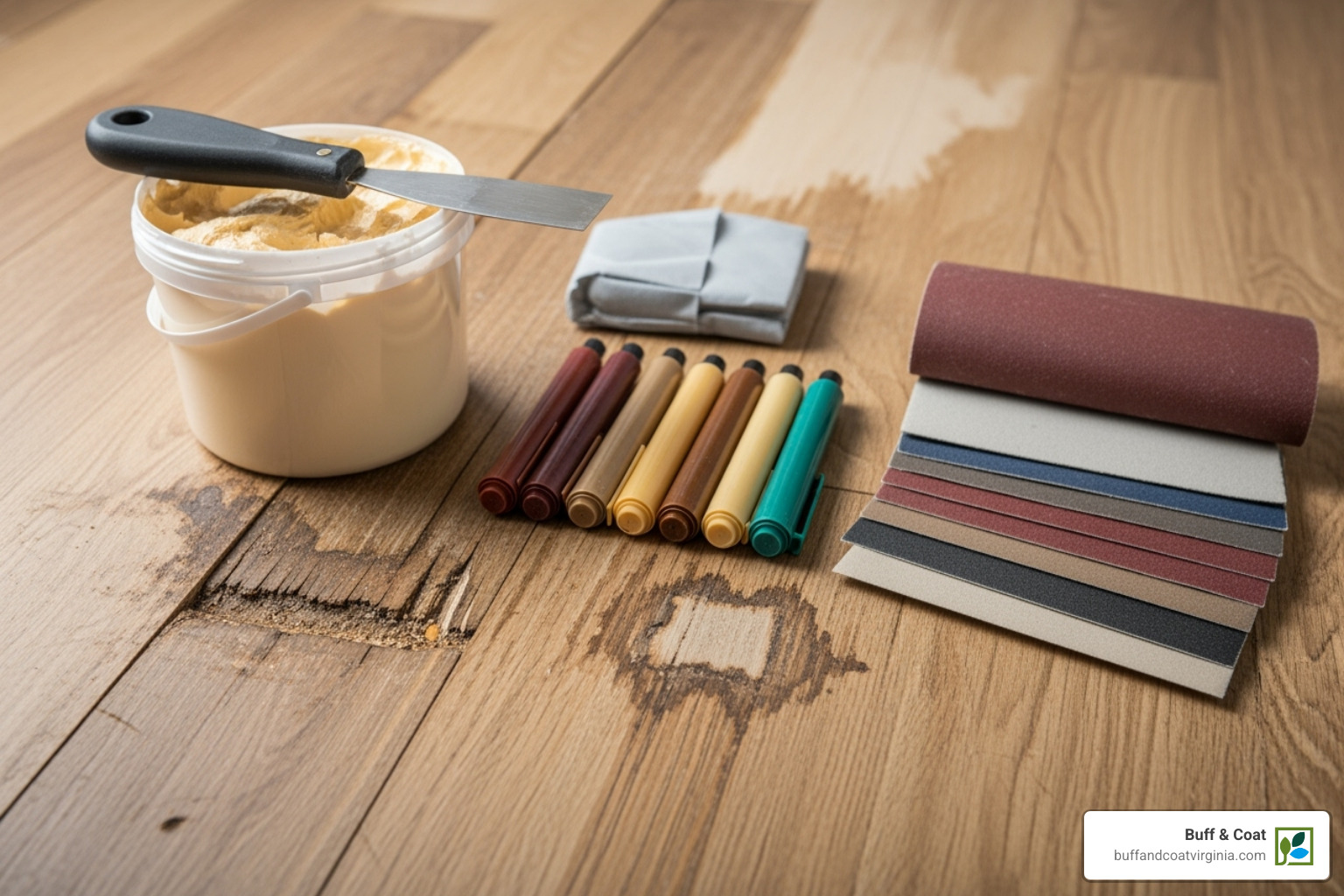
Fixing Light Scratches and Scuffs
Light scratches are the most common and easiest to fix, as they are usually only in the finish layer.
- The Walnut Trick: For very fine scratches, rub a raw, shelled walnut over the mark. The nut’s natural oils help mask the scratch. Buff with a soft cloth after a few minutes.
- Floor Markers and Stain Pens: For more visible scratches, use a color-matched marker. Test it in a hidden spot first, apply it to the scratch, and buff after it dries.
- #0000-Grade Steel Wool: For scratches still in the finish, gently rub with superfine steel wool in the direction of the grain. This smooths the edges. Follow up with a stain pen or a thin coat of finish.
Blending is key to an invisible repair. For more techniques, see our complete guide to fixing scratched wood floors.
Repairing Dents and Small Gouges
Dents and gouges damage the wood itself but are still manageable with DIY methods.
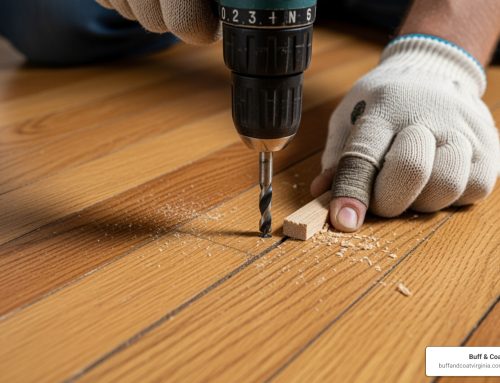
- Wood Filler: Choose a stainable or color-matched filler. Press it firmly into the gouge with a plastic putty knife, level it, and wipe away excess immediately. Once dry, sand it smooth with fine-grit sandpaper.
- Wood Putty: This is similar but stays flexible and is often applied after finishing.
- Sawdust and Glue Method: For a near-perfect color match, mix fine sawdust from your floor with wood glue to create a paste. Apply it to the dent, let it dry for 1-2 days, then sand and finish. This method is detailed in this guide on how to repair cracks in wood floors.
For small chips, the same methods apply. Ensure the area is clean and dry before starting. For specific instructions, see our guide on fixing a chip in your hardwood floor.
Addressing Minor Gaps Between Boards
Small gaps between floorboards are often normal. Wood is hygroscopic, meaning it expands in humid summers and contracts in dry winters. This natural movement causes small gaps to appear and disappear with the seasons. As explained by flooring experts, seasonal changes cause wood to expand and contract.
If gaps are minor (1/16 inch or less) and seasonal, it’s best to leave them alone to prevent buckling when the wood expands. For persistent, larger gaps, a flexible wood filler can be a cosmetic solution. If you see large gaps suggesting structural issues, it’s time to call a professional. For more on this topic, read our article on how to repair wood floor gaps.
Professional Solutions to Repair Damaged Wood Floor
When DIY fixes aren’t enough, it’s time to call in the experts. At Buff & Coat, we have the experience and tools to restore severely damaged floors and make them look spectacular again.
How to Address Water Damage in Hardwood Floors
Water damage from leaks or floods can be devastating if not handled correctly. It can cause cupping (edges curl up), crowning (center bulges), buckling (boards lift from the subfloor), and black stains (indicating prolonged moisture and potential mold).
The professional solution starts with proper drying using industrial-grade dehumidifiers to quickly extract moisture and prevent mold. Home insurance often covers these services. Next, we inspect the subfloor; if it’s compromised, it must be repaired or replaced first. For minor cupping or staining, professional sanding and refinishing can restore the floor once it’s completely dry. It is critical to never sand a cupped floor while it’s still wet, as this can lead to crowning later. For severe warping, buckling, or mold, board replacement is necessary. For more, see our article on dealing with hardwood floor water damage.
The Process for Replacing Damaged Hardwood Floorboards
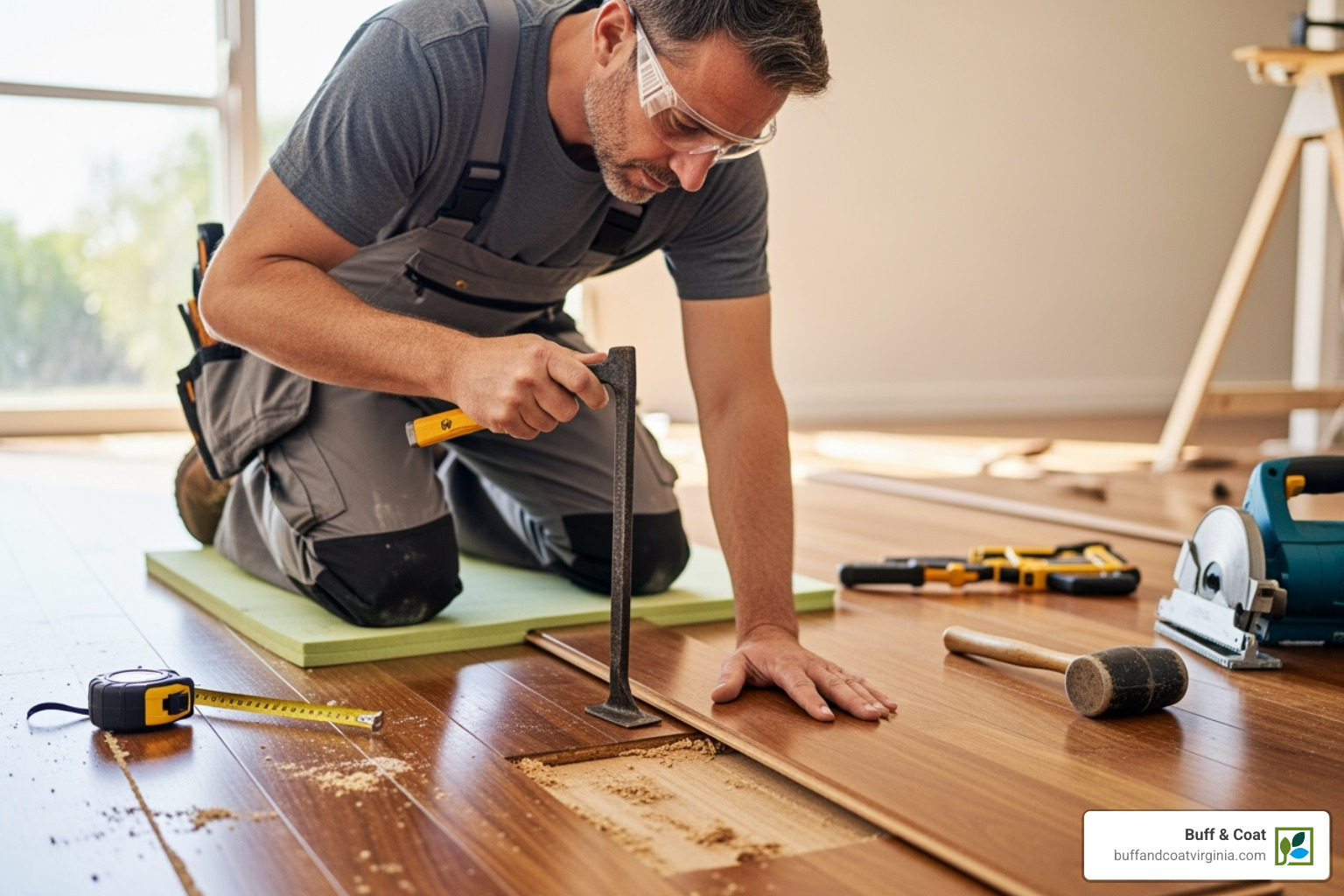
When damage from rot, termites, or severe warping is beyond sanding, board replacement is the only solution. The process involves:
- Removing the Damaged Board: We use specialized tools to carefully cut out the damaged plank without harming adjacent boards.
- Installing the New Board: We clean the subfloor and install the new plank. For a seamless fit, we may use a spline (or slip-tongue) to join a groove to a groove. We secure the board with blind-nailing, driving nails through the tongue at an angle so they are hidden.
- Using Advanced Techniques: For historic floors, we may use the Dutchman repair technique, where a damaged section is cut into a geometric shape and replaced with a precisely matched piece, preserving the floor’s character. This method is documented by the General Services Administration as an effective preservation tool.
Learn more in our guide to replacing wood floor planks.
How Professionals Match Stain and Finish
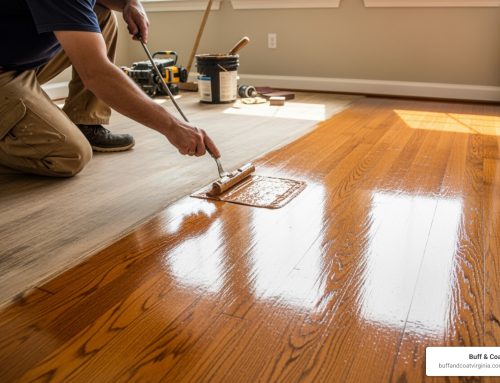
Matching stain and finish is an art form that makes a repair invisible. We start by testing on scrap wood of the same species, examining the color in different lighting. We custom-mix stains to achieve the exact hue of your existing floor. After staining, we use a technique called feathering, applying thin coats of finish that blend seamlessly into the surrounding area.
The type of flooring matters. Solid hardwood can be sanded and refinished multiple times, offering great repair flexibility. Engineered hardwood has a thin top veneer, which limits aggressive sanding. Repairs on engineered floors often involve spot treatments or board replacement. Learn more in our guide to refinishing engineered wood floors.
Sanding and Refinishing for Widespread Damage
When damage is widespread (over 30% of the floor) or the finish is dull, a full sanding and refinishing is the best solution. This creates a uniform, revitalized appearance and allows you to change the stain color if desired.
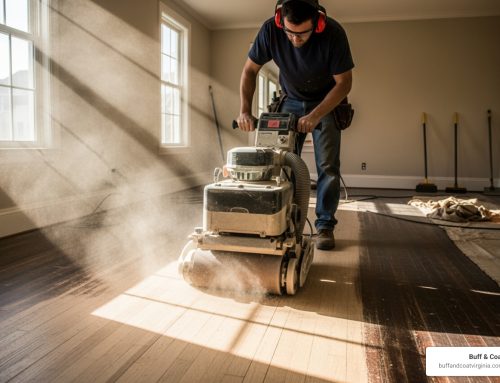
Our professional dust-free floor sanding service uses advanced equipment to remove the old finish and a thin layer of damaged wood, capturing 99% of dust at the source. This means a cleaner home and faster project completion. After sanding, we apply your chosen stain and multiple coats of durable finish. Most of our refinishing projects are completed in just one or two days, restoring your floors to their original beauty.
Understanding the Costs and When to Call a Pro
Understanding the costs to repair damaged wood floor issues helps you budget effectively and decide when to hire a professional.
Cost Breakdown
Repair costs vary based on the damage and who performs the work.
- DIY Repairs: These are budget-friendly, typically costing $20 to $50 for minor scratches or $50 to $200 for filling gouges. The main cost is your time.
- Professional Repairs: According to HomeAdvisor’s cost guide, most homeowners pay between $478 and $1,624. Labor costs range from $50 to $100 per hour.
- Cost by Damage Type (per sq ft):
- Surface scratches: $1 – $8
- Deep gouges: $10 – $20
- Warping/cupping: $8 – $25
- Water damage: $8 – $100 (widest range due to complexity)
- Full Replacement: This is the most expensive option, costing $2,480 to $7,028 or more for an average room.
Clear Signs You Need a Professional
While DIY is great for minor fixes, some situations require professional expertise. Call a pro if you notice:
- Structural Concerns: Soft spots, widespread buckling, or a compromised subfloor are serious issues that need immediate professional assessment.
- Extensive Water Damage: If water damage affects more than 30% of your floor, or if there is severe cupping or discoloration, you need professional drying equipment and mold prevention expertise.
- A Need for a Perfect Match: Professionals excel at custom-mixing stains and feathering finishes to make repairs invisible. If a seamless blend is your goal, their skill is worth the cost.
- Lack of Specialized Tools: Board replacement and professional sanding require equipment most homeowners don’t own. Renting tools without experience can lead to more damage.
- Time Constraints: A professional crew can complete a job in hours that might take a DIYer an entire weekend.
We’ve seen many DIY attempts that end up costing more to fix. That’s why we stress the importance of hiring professionals for hardwood floor refinishing to ensure a durable, beautiful result.
Prevention: Best Practices for Protecting Your Hardwood Floors
The best way to deal with damaged wood floors is to prevent the issues from happening in the first place. Proactive care can keep your floors looking pristine for decades, saving you thousands in repair costs.
Daily and Weekly Maintenance
Your daily cleaning routine is your floor’s first line of defense.
- Sweep or Vacuum Daily: Use a soft-bristle broom or a vacuum with a hardwood floor attachment. Dirt and grit act like sandpaper, wearing down the finish over time.
- Mop Carefully: Use a pH-neutral cleaner designed for hardwood floors. Harsh, all-purpose cleaners can dull the finish. Always use a well-wrung-out microfiber mop.
- Avoid Excess Water: Never leave standing water on your floor. A damp mop is sufficient; too much water can seep between boards and cause swelling, cupping, or rot. For safe cleaning methods, consider these tips for eco-friendly green cleaning.
For a more thorough clean, consider a professional deep cleaning for your hardwood floors every few months.
Long-Term Protective Measures
Implement these strategies to protect your floors for years to come.
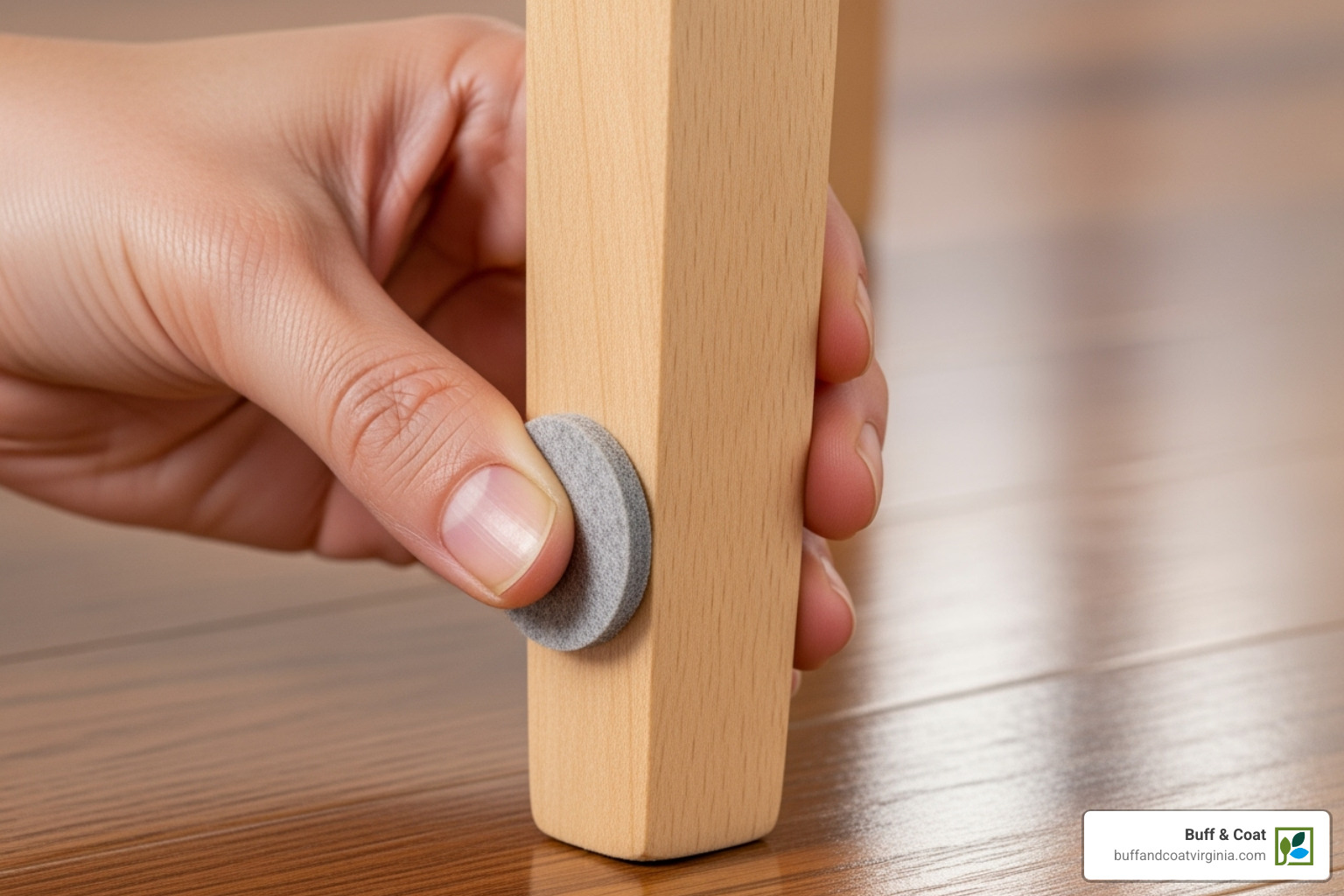
- Use Felt Pads on Furniture: This is the most cost-effective way to prevent scratches and gouges from moving furniture.
- Place Area Rugs in High-Traffic Zones: Rugs in entryways, hallways, and living areas protect the finish from wear and trap dirt.
- Establish a Shoes-Off Policy: High heels can dent hardwood, and outdoor shoes track in abrasive materials.
- Protect from Sunlight: Direct sunlight can fade floors unevenly. Use blinds, curtains, or UV-filtering window films, and periodically rearrange furniture and rugs.
- Maintain Indoor Humidity: Keep humidity between 30% and 50% year-round using humidifiers in winter and dehumidifiers or AC in summer. This prevents gapping and warping.
These simple, inexpensive measures are incredibly effective at minimizing the need to repair damaged wood floor issues. Learn more about protecting floors in high-traffic areas.
Frequently Asked Questions about Hardwood Floor Repair
Here are answers to the most common questions we receive from homeowners about hardwood floor repair.
Is it cheaper to repair or replace hardwood floors?
Repairing hardwood floors is almost always more cost-effective for localized damage. According to HomeAdvisor, professional repairs typically range from $478 to $1,624, whereas a full replacement costs $2,480 to $7,028 or more. However, if over 30% of your floor is damaged, a full refinish or replacement may offer better long-term value by providing a uniform, durable surface across the entire space.
How does the type of hardwood (solid vs. engineered) affect repair options?
The type of hardwood directly impacts the repair methods available. The key difference is the thickness of the top wood layer.
- Solid hardwood is wood all the way through, allowing it to be sanded and refinished multiple times over its lifespan. This makes it very forgiving for repairing deep scratches and wear.
- Engineered hardwood has a thin veneer of real wood over a core. The veneer’s thickness limits how much it can be sanded, if at all. Repairs often focus on spot treatments, filling, or board replacement. Our signature buff and coat process is often ideal for refreshing engineered floors without removing material.
For more details, see our guide on refinishing engineered wood floors.
Can you repair just one section of a hardwood floor?
Yes, repairing or replacing a single section or a few boards is a common and effective solution for localized damage from issues like water leaks or pet accidents. The primary challenge is achieving a perfect match with the existing stain and finish. This is where professional expertise is invaluable for custom-mixing stains and feathering the finish to create a seamless, invisible repair. That perfect blend is the hallmark of a great repair.
If you’re ready to restore your floors, we can provide a free, no-obligation estimate. Schedule a free inspection online to get started.
Conclusion
Your hardwood floors are a valuable asset, and while damage is disheartening, most issues are repairable at a fraction of the cost of replacement. The key is to assess the damage accurately, handle minor fixes yourself, and call professionals for significant challenges like water damage or board replacement. Prevention through simple maintenance is the most effective strategy.
Repairing your floors saves money and preserves your home’s unique character. For homeowners seeking expert hardwood floor repair contractors in Richmond, the team at Buff & Coat specializes in restoring floors with advanced, dust-free techniques, often in just one day.
Don’t let floor damage diminish your home’s beauty. To get a free, no-obligation estimate for your project, schedule a free inspection online today. We’re here to help you enjoy beautiful, resilient floors once again.