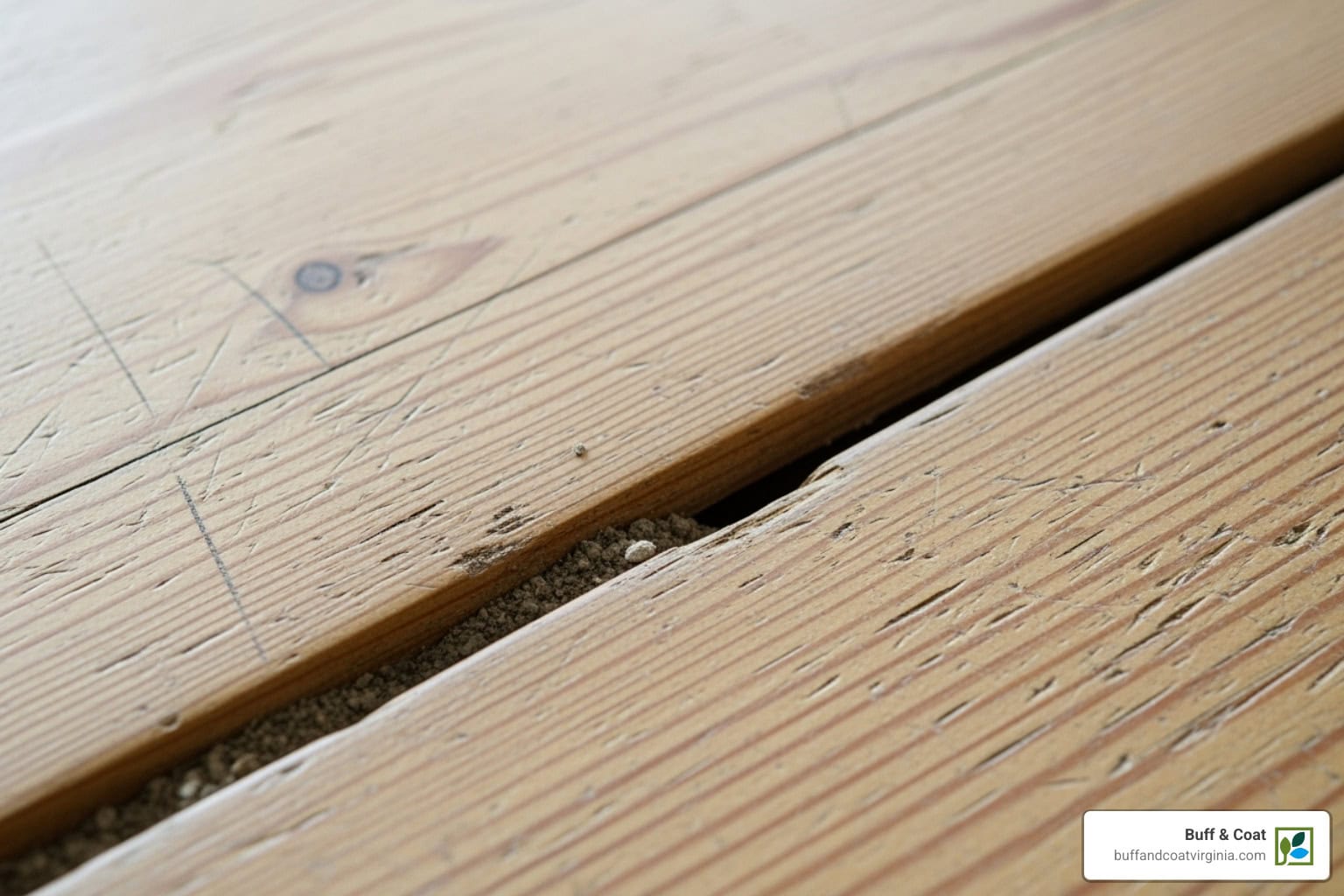
Why Wood Floor Gaps Are More Than Just a Cosmetic Issue
To repair wood floor gaps, you have three main options: wood filler for small gaps, wood strips for large gaps, or rope filling for a traditional approach. The key is timing your repairs during humid months when gaps are narrowest to prevent future buckling. As a leading hardwood flooring contractor in Richmond, Virginia, we know that unsightly gaps between planks don’t just affect your home’s appearance—they become dirt magnets and can create tripping hazards.
Quick Gap Repair Methods:
- Small gaps (less than nickel width): Wood filler or putty
- Large gaps (nickel fits easily): Wood strips cut from matching flooring
- Traditional method: Natural fiber rope stained to match
- Best timing: End of summer when wood is most expanded
Wood is a natural material that expands in humid conditions and contracts when dry, making seasonal gapping a common occurrence. Most gaps form due to environmental factors like humidity changes, but poor installation or subfloor issues can also be culprits. While small seasonal gaps are often acceptable, larger permanent gaps need attention. With professional services like hardwood floor sanding, you can restore your floor’s integrity and appearance without the expense of complete replacement.
I’m David Emmerling, President of Buff & Coat Hardwood Floor Refinishing. With over 20 years of experience, I’ve helped countless clients repair wood floor gaps and understand when to use DIY methods versus when professional intervention is needed.
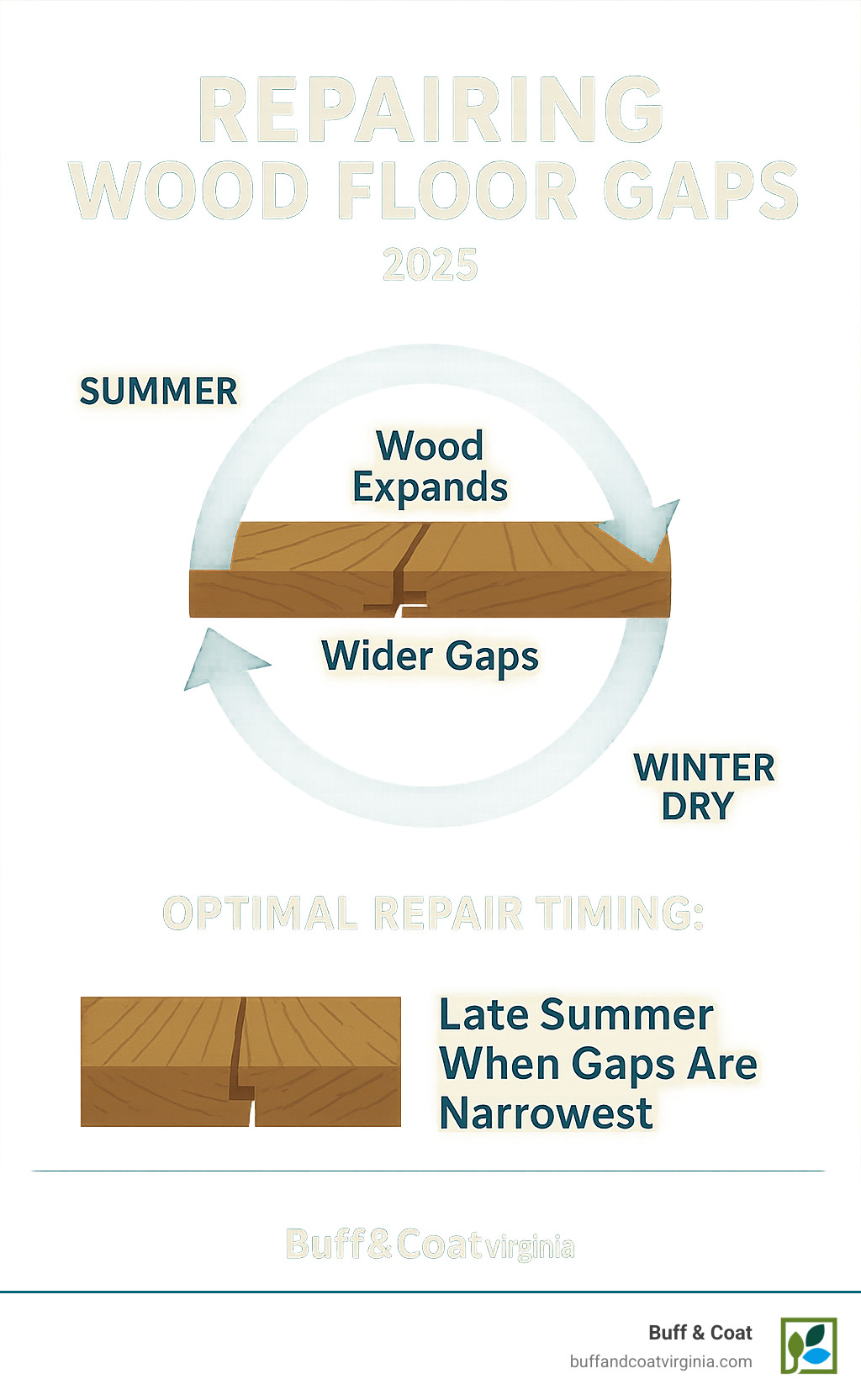
Basic repair wood floor gaps terms:
Why Do Gaps Form? Understanding the Causes
Wood is a natural material that responds to its environment through wood movement, affecting its structural integrity. This natural expansion and contraction is the main reason gaps appear between planks. Understanding why it happens helps you determine when you need to repair wood floor gaps and when to let nature take its course.
Environmental Factors: Humidity and Temperature
Seasonal gapping is one of the most common flooring phenomena. During winter contraction, dry air from HVAC systems pulls moisture from wood floors, causing planks to shrink and create gaps. In the summer, higher humidity levels cause summer expansion as floors absorb moisture from the humid air. Ideally, this closes winter gaps, but if the wood has contracted significantly or if there are underlying issues, some gaps may remain year-round.
Your heating and cooling systems play a significant role. Floors near furnace rooms or in areas with constant dry air circulation are prone to developing gaps. These temperature changes stress the wood, leading to more pronounced movement. Understanding these cycles, along with serious issues like What is Peaking, Buckling and Cupping in Wood Floors, helps you make informed repair decisions.
Installation and Structural Issues
Sometimes gaps are not just environmental but stem from poor installation practices. Improper acclimation is a top mistake. Hardwood needs up to two weeks to adjust to a home’s temperature and humidity before installation. Skipping this step can lead to significant gaps as the wood settles.
Incorrect nailing and improper board seating also create problems. When planks aren’t tightly fitted, seasonal movements are magnified. An uneven subfloor can also cause boards to shift and separate over time. These foundational problems require more than a simple gap-filling solution and may need professional help with Hardwood Floor Board Replacement to address the root cause.
To Fill or Not to Fill: Assessing Your Floor Gaps
When you spot gaps in your hardwood, the best action is sometimes no action at all. Proper decision making requires understanding the difference between normal seasonal movement and gaps that need attention. The key is timing, as wood expands and contracts throughout the year. Before you decide to repair wood floor gaps, observe your floors through different seasons.
A simple nickel test can help gauge severity. If a nickel slides easily into the gap while standing upright, the gap is worth addressing. Smaller gaps are often a normal part of owning hardwood floors.
When to Leave Gaps Alone
The wisest choice can be to leave seasonal gaps alone. These gaps are your floor’s way of staying healthy and preventing more serious problems. If gaps appear during dry winter months and close up in the humid summer, you’re witnessing normal wood behavior. These minor gaps (typically 1-5% of a plank’s width) are a natural breathing pattern.
Filling seasonal gaps can backfire. When summer humidity returns, the wood needs space to expand. If you’ve filled the gaps, your floor might start buckling or cupping. If your gaps aren’t safety hazards and close up naturally, leave them alone to protect your floor integrity.
Signs You Need to Repair Wood Floor Gaps
Permanent gaps that remain wide regardless of the season signal a problem, such as installation issues or excessive moisture loss. Wide gaps that pass the nickel test become collectors of dirt and debris, harboring allergens and making cleaning difficult.
Safety is a concern when gaps create tripping hazards, especially if boards are curling or cupping. In older homes, significant gaps can also create drafts from below, impacting energy bills. Once you’ve identified gaps that truly need repair, several effective methods can restore your floor’s beauty and function.
A Homeowner’s Guide to How to Repair Wood Floor Gaps
Once you’ve determined that you need to repair wood floor gaps, you have several effective DIY methods. Choosing the correct method will save you time and money. Patience is key; rushing repairs often leads to poor results.
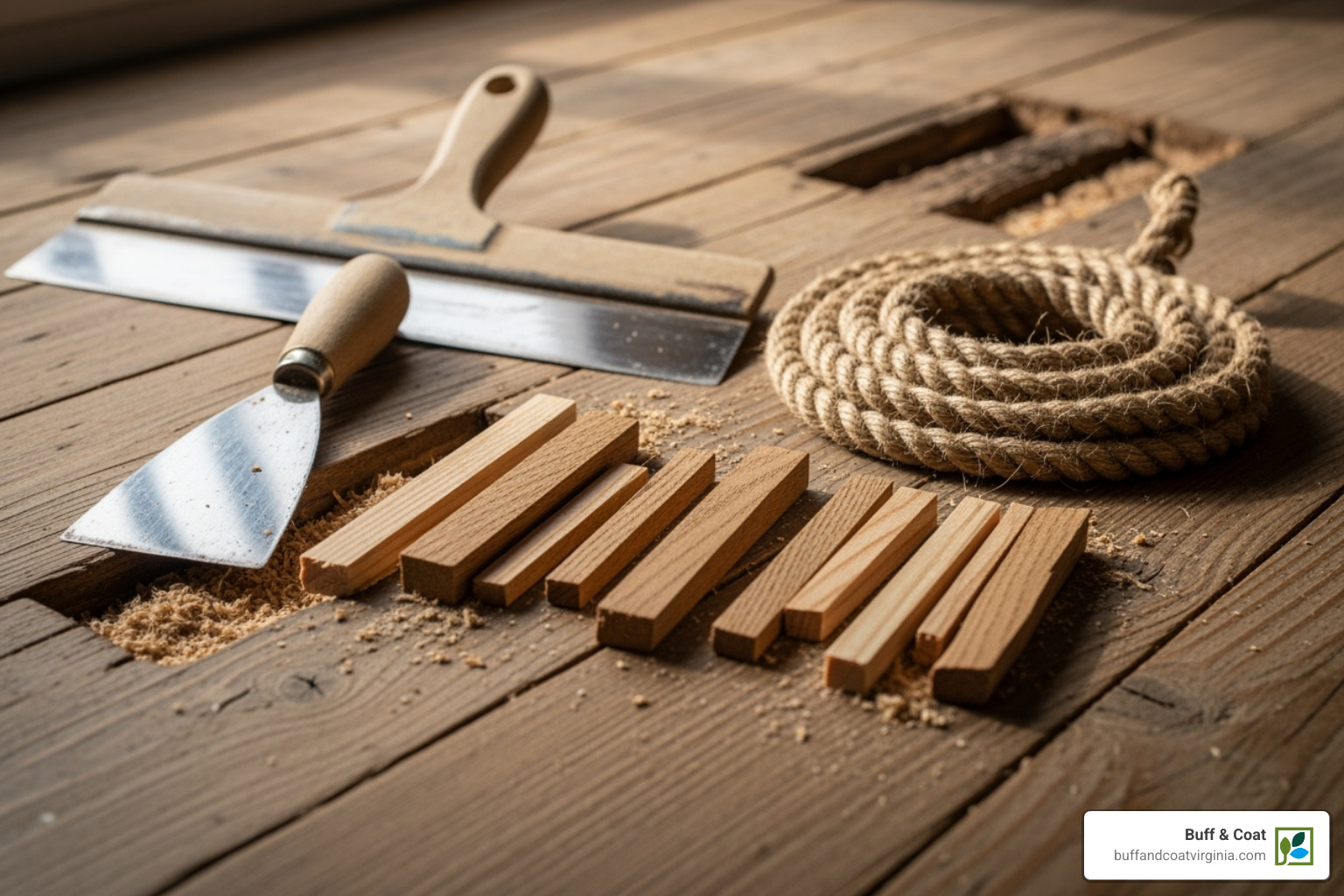
Method 1: Using Wood Filler or Putty for Small Gaps
For narrow, permanent gaps or small surface imperfections, wood filler or putty is a quick and easy solution. It’s important to know the difference between the two.
| Feature | Wood Filler | Wood Putty |
|---|---|---|
| Composition | Typically latex- or water-based, with wood fibers or cellulose | Oil- or solvent-based, often with petroleum distillates |
| Drying | Dries hard | Remains pliable (flexible) after drying |
| Sanding | Can be sanded smooth once dry | Cannot be sanded effectively due to pliability |
| Staining/Sealing | Can be stained and sealed/finished (check product specs). Ideal for unfinished wood | Generally does not accept stain well. Best for finished wood that won’t be stained |
| Best Use | Filling nail holes, small cracks, gouges, and permanent narrow gaps in unfinished floors or before a full refinish | Filling small holes, nail holes, or minor imperfections in finished wood (e.g., trim, furniture) |
| Durability | Very durable once cured and finished | Less durable for high-traffic areas; may compress or pop out |
For repair wood floor gaps, wood filler is almost always the best choice because it dries hard, is sandable, and accepts stain.
Tools: Wood filler, putty knife, sandpaper (120-grit), damp cloth, vacuum.
How-to:
- Thoroughly clean the gap with a vacuum to ensure the filler adheres properly.
- Using a putty knife, press filler firmly into the gap.
- Scrape away excess filler, leaving the surface flush with the floorboards. Wipe residue with a damp cloth.
- Allow the filler to dry completely according to the manufacturer’s instructions. This is a crucial step.
- Once dry, lightly sand the area with 120-grit sandpaper until smooth. Vacuum the dust, then stain or apply finish to match your floor.
This method is great for issues similar to those in our Hardwood Floor Scratch Filler: The Ultimate Guide.
Method 2: Installing Wood Strips (Slivers) for Large Gaps
For wider gaps where filler won’t work, installing wood strips (or “slivers”) creates a durable and visually seamless repair. This method is more demanding but produces excellent results.
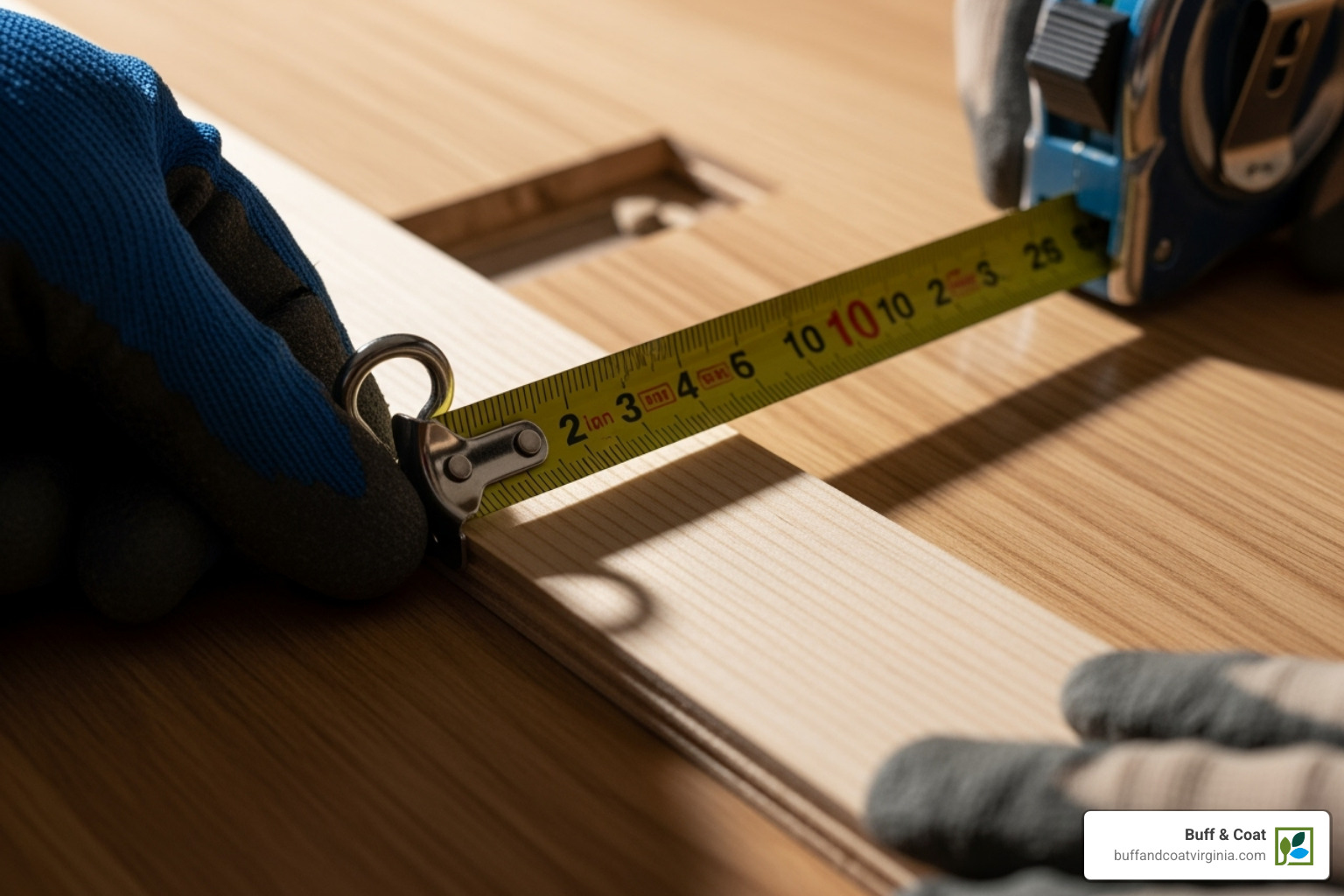
Tools: Matching hardwood floorboards, table saw, miter saw, wood glue, rubber mallet, chisel, sandpaper, vacuum.
How-to:
- Source spare boards from your original installation or find reclaimed/new boards of the same species and thickness.
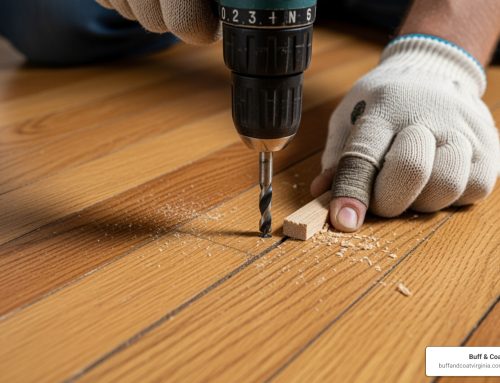
- Measure each gap’s width and length precisely. Use a table saw to cut narrow strips slightly wider than the gap for a snug fit.
- Clean the gaps thoroughly with a chisel and vacuum. Test-fit each strip, sanding it down if necessary.
- Apply a thin bead of wood glue to the strip’s sides, place it in the gap, and gently tap it down with a rubber mallet until it’s flush. Immediately wipe away excess glue.
- Let the glue dry completely (overnight is best), then sand the area until perfectly flush. Stain and finish to match.
This method is effective for substantial repairs and can be a step before more extensive work like How to Replace a Hardwood Floor Board.
Method 3: The Traditional Rope Method
For a rustic, historically authentic solution, especially with wide plank flooring, the rope method is a unique option to repair wood floor gaps.
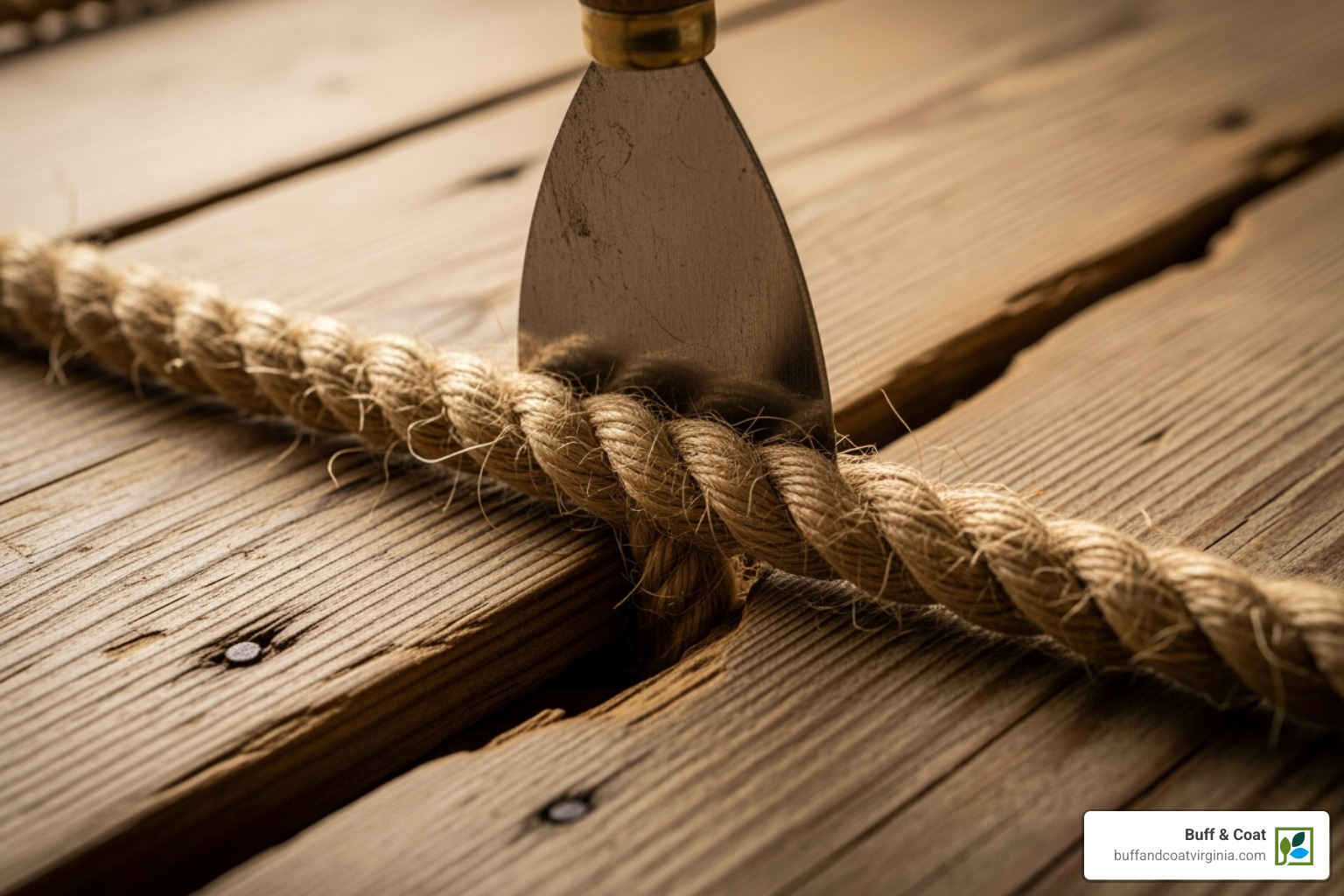
Materials: Natural-fiber rope (jute/cotton) slightly thicker than the gaps, wood stain, wood glue, putty knife, utility knife.
How-to:
- Clean the gaps completely with a screwdriver or chisel and vacuum.
- Choose natural-fiber rope with a diameter slightly larger than your gaps.
- Stain the rope to match your floor and let it dry completely. Safety note: Ensure good ventilation when drying rope with oil-based stains to avoid spontaneous ignition risks.
- Apply a thin bead of wood glue inside the gap. Use a putty knife to pack the stained rope firmly into the gap until it’s flush or slightly below the surface.
- Trim excess rope with a utility knife. For added durability, apply a clear varnish or polyurethane over the filled rope once the glue is dry.
Achieving a Flawless Finish
After you repair wood floor gaps, the final steps of color matching, sanding, and sealing are what create a professional-looking restoration. These details separate a noticeable patch from an invisible repair.
How to Perfectly Match the Color and Finish
- Create a custom filler: For a perfect match, mix fine sanding dust (80-100 grit) from your floor with a water-based wood filler. This creates a filler that is literally made from your wood.
- Test your stains: Always test stains on scrap wood of the same species first. Wood absorbs stain differently, and a test run prevents surprises on your actual floor.
- Sand correctly: After your filler or strip is dry, sand with the grain using 120-grit sandpaper until the surface is smooth and flush. The goal is a seamless transition between the repair and the original floor.
- Apply finish carefully: For small repairs, apply finish just to the repaired area and feather it out. For extensive repairs, a fresh coat over the entire floor provides the most uniform appearance and protection.
For more on finishes, professional resources like the Coatings and Colors Manual offer valuable insights.
Common Mistakes to Avoid When You Repair Wood Floor Gaps
- Filling gaps in winter: This is the biggest mistake. Filling gaps when they are at their widest during dry months can lead to buckling or cracking when the wood expands in the summer. Repair in late summer when gaps are narrowest.
- Using the wrong filler: Use hard, sandable wood filler for floors, not flexible wood putty, which can’t withstand foot traffic.
- Skipping prep work: Applying filler over dirt and debris will cause the repair to fail. Always clean gaps thoroughly.
- Rushing the process: Allow proper drying time for all products—filler, glue, stain, and finish. Follow manufacturer instructions to avoid ruining your work.
- Over-sanding: Sand with a light touch to avoid creating low spots or removing too much existing finish, which makes the repair obvious.
When to Call a Professional
While DIY projects can be rewarding, it’s important to recognize your DIY limitations to protect your investment. Knowing when to call a professional is key to getting the results you want.
Structural damage is a major red flag. If gaps are accompanied by soft, squishy spots or a bouncy floor, you’re likely dealing with subfloor problems or moisture damage that requires professional assessment. Filling gaps on a structurally compromised floor is only a temporary fix for a much larger issue.
Call in the experts for extensive repairs across an entire floor, such as widespread warped boards, cupping, or buckling. A professional can address the underlying cause, whether it’s moisture or an installation problem.
Sometimes, the issue is about achieving a flawless finish. Professional-grade equipment and years of experience create results that are difficult to replicate with rental tools. When gaps are just one of many issues, like deep scratches or a dull finish, your floor may be a candidate for complete refinishing. Our expertise with Hardwood Floor Repair Contractors allows us to transform a worn-out floor into one that looks brand new.
Don’t let a project that’s beyond your skill level become a bigger problem. The most cost-effective solution is often getting it done right the first time by professionals.
Frequently Asked Questions about Repairing Wood Floor Gaps
Here are answers to the most common questions we receive about how to repair wood floor gaps.
What’s the difference between wood filler and wood putty?
Choosing the right product is crucial. Wood filler dries hard, can be sanded smooth, and can be stained to match your floor. It’s ideal for gaps in unfinished wood or for floors you plan to refinish.
Wood putty remains flexible after drying. It’s oil-based and best for filling small nail holes in finished wood trim, but it is not suitable for floors. It cannot be sanded properly, won’t accept stain, and will compress under foot traffic. For floor gaps, always use wood filler.
Can I use caulk to fill gaps in my hardwood floor?
Using caulk on hardwood floors is not recommended. Caulk is too flexible for floor traffic, cannot be sanded or stained to match the wood, and becomes a dirt magnet that looks grimy over time. It’s best to use a proper wood filler from the start to avoid having to redo the work later.
When is the best time of year to fill floor gaps?
Timing is critical. The best time to repair wood floor gaps is in late summer or early fall. During this humid period, the wood has expanded, and the gaps are at their narrowest.
If you fill wide gaps during the dry winter, the wood will have no room to expand when the humidity rises in the summer. This can cause the floor to buckle, cup, or pop the filler out. By repairing when gaps are small, you allow for natural seasonal contraction without causing damage.
Conclusion
We hope this guide has given you the confidence to tackle gaps in your hardwood floors. Understanding the causes, from natural wood movement to installation issues, empowers you to choose the right solution. Whether you use wood filler, wood strips, or the traditional rope method, you now have a roadmap for success.
Timing is everything when you repair wood floor gaps. Working in late summer when wood is most expanded can prevent future problems like buckling. Proper color matching and sealing are the final touches that make repairs invisible.
Of course, some projects are beyond the scope of a DIY repair. When facing extensive gapping, structural issues, or if you simply want a flawless professional finish, that’s where we come in. At Buff & Coat, we have over two decades of experience helping Richmond homeowners love their floors again. Our signature dust-free techniques and deep understanding of wood allow us to handle everything from simple gap repairs to complete floor changes.
Ready to get started? For a professional evaluation and a free estimate on your wood floor repair in Richmond, VA, schedule a free inspection by visiting our contact page. Your beautiful, gap-free floors are just a phone call away!