Understanding Your Engineered Hardwood Options
Refinishing engineered wood floors is possible, but success depends on one critical factor: the thickness of your floor’s wear layer. As a leading provider of professional hardwood flooring services, we know that understanding your options is the first step to restoring your floors’ beauty. Here’s what you need to know:
Key Requirements for Refinishing:
- Minimum veneer thickness: 2mm (about 1/16 inch)
- Ideal thickness: 3mm+ for multiple refinishes
- Signs it’s time: Deep scratches, worn finish, or fading color
- Professional assessment recommended for floors with thin veneers
Most engineered hardwood floors can be refinished 1-3 times during their lifetime, compared to solid hardwood which can handle up to 10 refinishes. The difference lies in construction – engineered floors feature a thin hardwood veneer over a plywood core, while solid floors are made entirely of hardwood.
Engineered hardwood offers impressive stability and moisture resistance, making it perfect for areas where solid wood might warp. The multi-layer construction with a real hardwood top layer gives you the beauty of natural wood with improved durability. However, that thin veneer means you need to be extra careful during the refinishing process.
As David Emmerling, President of Buff & Coat Hardwood Floor Refinishing with over 20 years of experience, I’ve helped countless Richmond homeowners successfully restore their engineered floors using specialized dustless refinishing techniques. The key is understanding your floor’s limitations and using the right approach for refinishing engineered wood floors without damaging that precious wear layer.
Refinishing engineered wood floors definitions:
- cost of professional floor sanding services
- dust free floor sanding near me
- floor sanding contractors
Can Your Engineered Floor Be Refinished? Key Factors to Consider
Picture this: you’re walking across your once-gorgeous engineered hardwood floors, and instead of that satisfying click of heels on smooth wood, you hear the soft shuffle of socks on a surface that’s lost its luster. Maybe your furry friend has left a few “love scratches” near the door, or years of family life have taken their toll. The big question is: can your floors be saved?
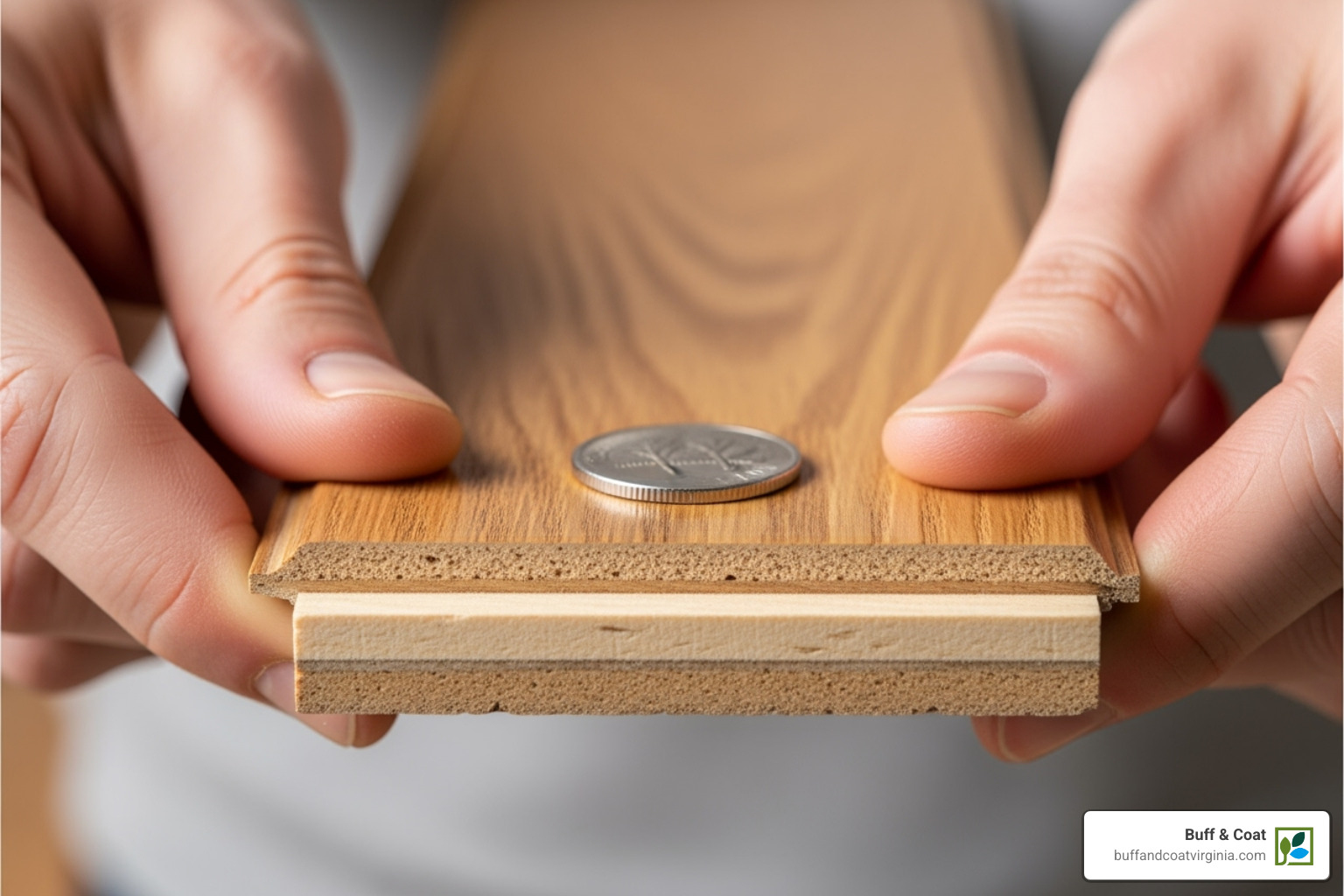
The answer depends on one crucial factor that many homeowners don’t even know exists: the thickness of that precious top layer of real wood. Think of it as the difference between a thick winter coat and a lightweight jacket – one can handle much more wear and tear than the other. When it comes to professional floor refinishing services, understanding your floor’s anatomy makes all the difference.
The Critical Role of Veneer Thickness
Here’s where things get interesting (and a bit technical, but stick with me). That beautiful hardwood surface you see isn’t solid wood all the way through – it’s actually a thin layer of real hardwood sitting on top of layers of plywood. This top layer, called the wear layer or veneer, is the only part that can be sanded during refinishing.
The golden rule is simple: you need at least 2mm of veneer thickness to safely attempt any sanding. That’s roughly the thickness of two pennies stacked together. Go thinner than this, and you’re playing a dangerous game where one wrong move with the sander could expose the plywood core underneath – and trust me, that’s not a look anyone’s going for.
If you’re lucky enough to have 3mm or thicker veneer, you’re in the sweet spot. These floors can typically handle 2-3 refinishes over their lifetime. Some premium engineered floors come with veneer as thick as 4-6mm, which can be refinished almost as many times as solid hardwood floors.
Hand-scraped and distressed floors present a special challenge. These floors get their character from those intentional imperfections and textures. When you sand them, you’re essentially erasing the very features that make them unique. Most hand-scraped engineered floors can only be lightly refinished once, if at all.
The National Wood Flooring Association (NWFA) has specific guidelines for what qualifies as refinishable. They recommend a minimum wear layer of 2.5mm at the lowest point for sculpted or distressed flooring.
How do you measure this mysterious veneer thickness? Sometimes you’ll find it in your original flooring specifications, but more often, it requires a professional assessment. We can usually determine thickness by examining exposed edges near vents or transitions, or in rare cases, by carefully removing a small piece in a hidden area.
Signs It’s Time for Refinishing
So how do you know when your floors are ready for their spa day? Your floors will usually tell you – you just need to know what to look for.
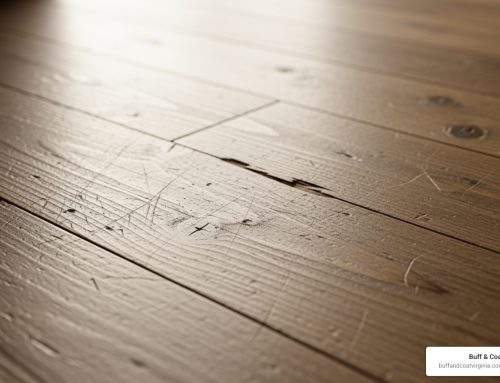
Surface scratches are the most obvious culprits. If you can run your fingernail across a scratch and it doesn’t catch, it’s likely just in the finish and perfect for refinishing. These shallow marks disappear beautifully with proper sanding and a fresh topcoat.
Dullness is another telltale sign. When your floors lose that gorgeous shine and start looking more like tired wood than polished perfection, the protective finish has worn thin. This isn’t just about looks – worn finish means your actual wood is vulnerable to damage.
Worn-through finish is more serious. If you see areas where the protective coating has completely disappeared, exposing raw wood that looks fuzzy or discolored, it’s definitely time to act. These spots typically appear in high-traffic areas like hallways and doorways.
Sometimes the issue isn’t damage at all – maybe you’re just ready for a color change. Perhaps that dark walnut stain felt dramatic five years ago, but now you’re craving something lighter and brighter. Refinishing engineered wood floors offers the perfect opportunity for a complete makeover.
Minor water damage might also be repairable through refinishing, though significant moisture damage usually means replacement. Engineered floors handle moisture better than solid wood, but they’re not waterproof.
For more guidance on timing, check out our detailed guide on how often should hardwood floors be refinished. We also have specific advice for hardwood floor scratch repair if you’re dealing with particular problem areas.
The bottom line? If you’re unsure about your floor’s refinishing potential, it’s worth getting a professional assessment. A small investment in expert advice can save you from costly mistakes and help you make the best decision for your beautiful floors.
The Step-by-Step Guide to Refinishing Engineered Wood Floors
So your engineered hardwood floors have passed the refinishing test? Fantastic! Now comes the exciting part – bringing them back to their former glory. While we always recommend professional floor sanding for engineered floors (that thin veneer is unforgiving!), understanding the process helps you make informed decisions. Here’s what goes into refinishing engineered wood floors:
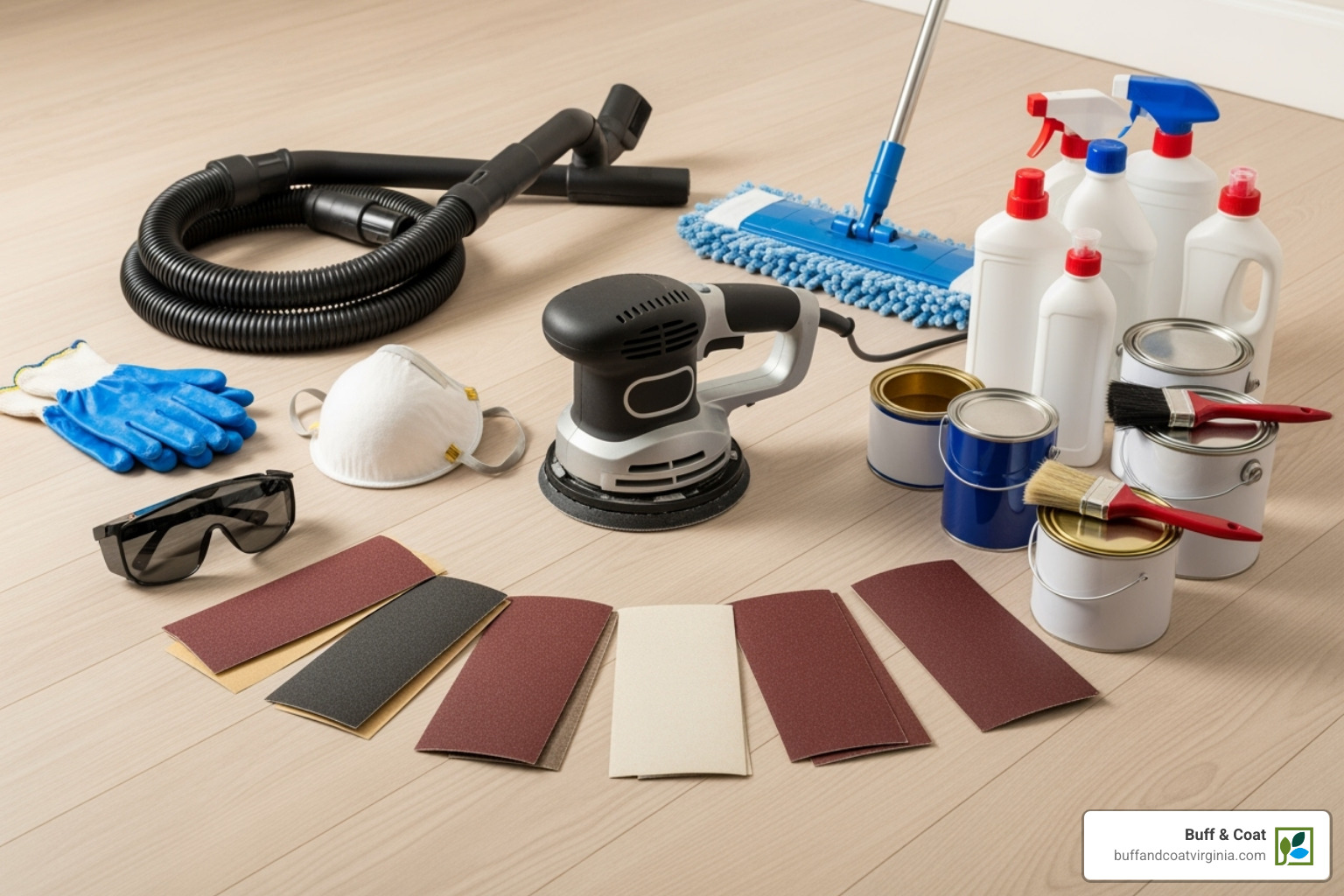
Before diving in, you’ll need the right arsenal. Safety gear is non-negotiable – dust masks, eye protection, ear protection, and gloves. For cleaning, gather your vacuum, pH-neutral wood cleaner, and microfiber cloths. The star of the show is a lightweight orbital sander paired with various grits of sandpaper (100-120 grit for starting, progressing to 150-180, then 220+ for final buffing). You’ll also need dust control materials like plastic sheeting and painter’s tape, plus your finishing supplies – high-quality polyurethane, applicators, and wood stain if you’re changing colors.
Step 1: Preparation is Paramount
Think of preparation as laying the foundation for a masterpiece. Rush this step, and you’ll regret it later! Start by clearing the room completely – every piece of furniture, every decorative item, every dust bunny needs to go. This isn’t the time for “I’ll work around that chair.”
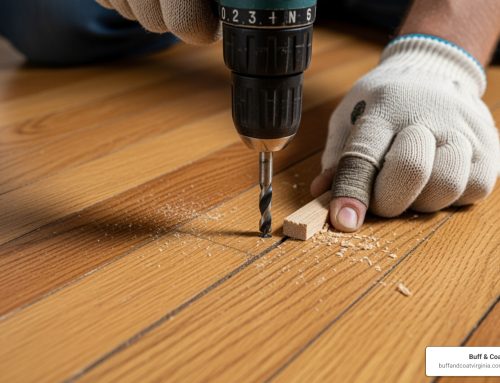
Next comes the deep clean. Vacuum thoroughly, then mop with a pH-neutral wood cleaner. Let everything dry completely – moisture and sanding don’t mix well. While you’re waiting, check for loose boards by walking the entire floor and listening for squeaks. Secure any wobbly planks and hammer down protruding nails that could tear your sandpaper.
Protect everything you don’t want covered in dust. Tape off baseboards and hang plastic sheeting over doorways. Even with dust-free techniques, preparation prevents problems later. For a comprehensive preparation checklist, check out our guide on how to prepare your house for hardwood floor refinishing.
Step 2: The Gentle Art of Sanding
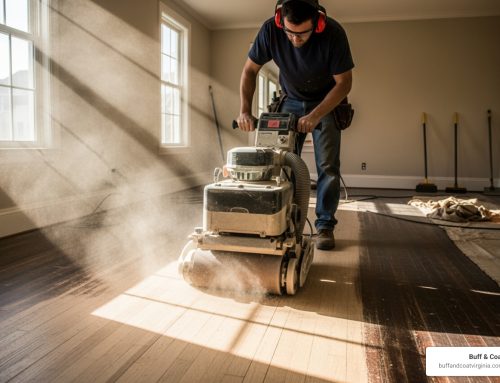
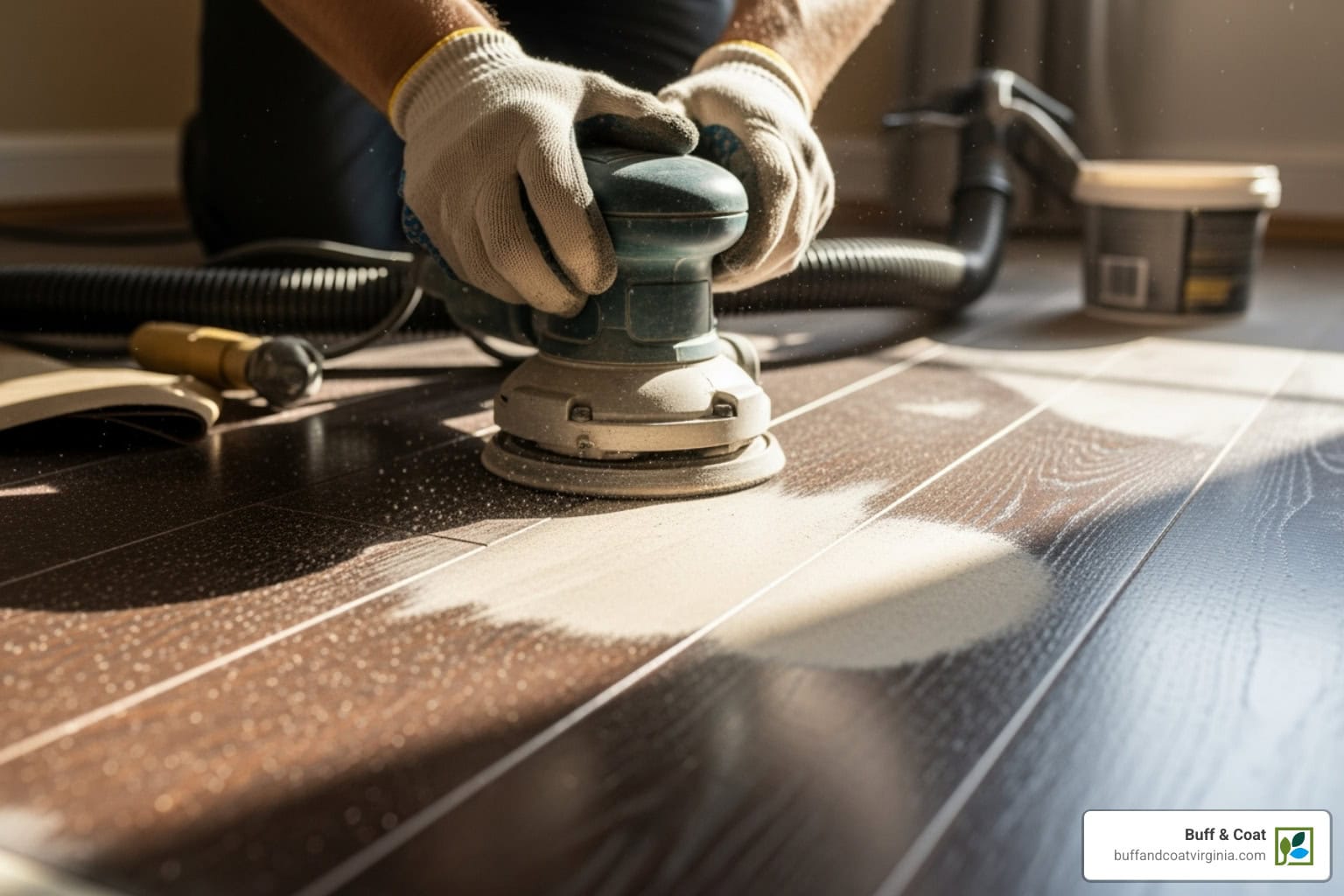
Here’s where refinishing engineered wood floors gets tricky. That beautiful veneer layer is precious – damage it, and you’ve got expensive firewood. This is why we use orbital sanders exclusively for engineered floors. Drum sanders might be faster, but they’re like using a sledgehammer to crack a walnut.
Start with 100-120 grit sandpaper – much finer than what you’d use on solid wood. Your goal isn’t to remove lots of material, just to scuff up the old finish so the new one will stick. Sand with the grain, never against it, moving in smooth, overlapping passes. Cross-grain scratches will haunt you through every coat of finish.
Dust control is crucial throughout the process. Connect your sander to a shop vacuum and stop frequently to clean up. Between each grit, vacuum everything and wipe down with a tack cloth. Our dust-free floor sanding techniques take this even further, using specialized equipment to capture 99% of airborne particles.
Step 3: Staining for a New Look
Ready for a color change? Staining lets you completely transform your floors’ personality. But here’s the golden rule: always test first. Find an inconspicuous spot – inside a closet works perfectly – and test your chosen stain. Wood species react differently, and the last thing you want is a surprise orange floor when you expected rich brown.
Apply stain in manageable sections, working with the grain using a brush or lint-free cloth. The key is consistent timing – let it penetrate for exactly the manufacturer’s recommended time, then wipe off the excess. Work quickly to avoid lap marks where sections overlap.
Patience pays off during drying. Most stains need 12-24 hours to fully dry, and rushing this step can cause adhesion problems with your finish. Trust us – we’ve seen too many beautiful jobs ruined by impatience.
Step 4: Applying a Durable Finish
The finish is your floor’s armor against daily life. Polyurethane remains the gold standard for durability. Water-based versions dry faster, have less odor, and won’t yellow over time – perfect for busy households. Oil-based polyurethane offers incredible durability and that rich, amber glow that deepens with age, though it takes longer to cure.
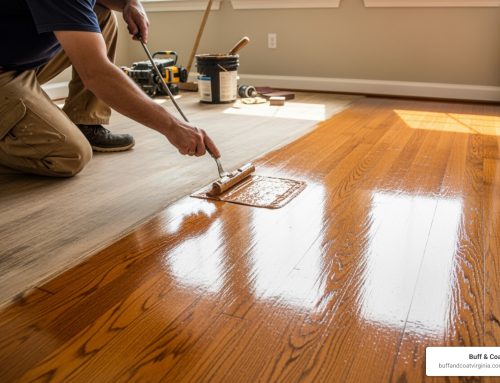
Apply thin, even coats using a lambswool applicator or high-quality brush. Think multiple thin coats rather than one thick one – they’ll dry more evenly and look better. After the first coat dries, lightly buff with 220-grit sandpaper to create the perfect surface for the next coat.
Two to three coats typically provide excellent protection. Between each coat, vacuum thoroughly and tack cloth to remove any dust nibs. The final step requires the most patience – proper curing. While you might get away with light foot traffic after 24 hours, full curing takes days to weeks. Avoid heavy furniture and area rugs during this time.
Our signature buff and coat process combines years of experience with premium materials to deliver that perfect, durable finish that makes your floors shine like new.
Alternatives to Sanding and When to Call a Professional
Not every engineered floor needs the full sanding treatment. Sometimes, your floors are crying out for help, but a gentler approach is all they need. Other times, the smart move is recognizing when you’re in over your head and calling in the pros. Let’s explore your options for refinishing engineered wood floors without breaking out the heavy artillery.
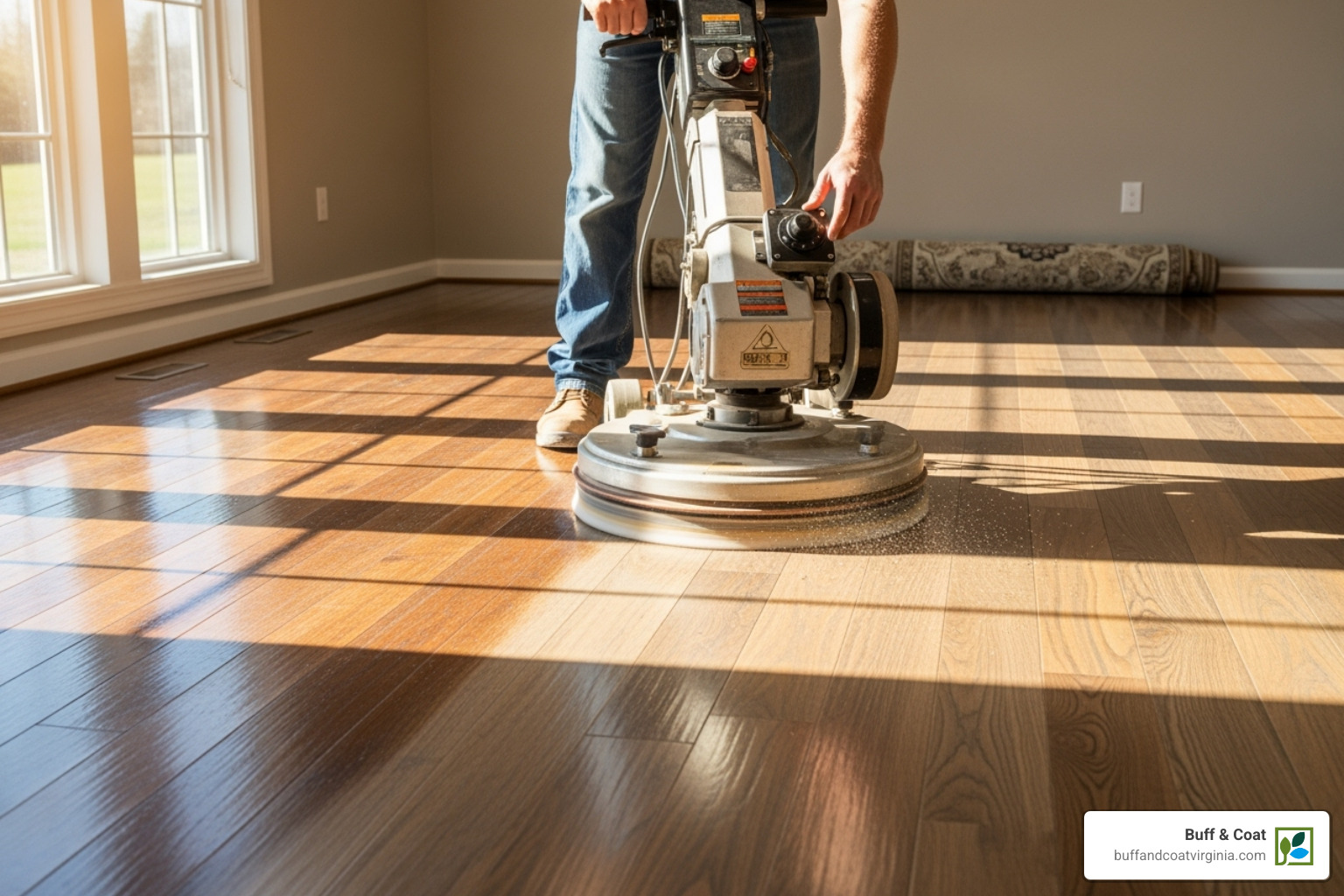
Think of your engineered hardwood like a well-loved leather jacket. Sometimes it just needs a good conditioning rather than a complete overhaul. That’s where alternative methods come in handy, especially when your veneer is on the thinner side or when the damage is mostly surface-level.
Light-Touch Refresh: Screening and Recoating
This is our bread and butter at Buff & Coat – and honestly, it’s often the perfect solution for engineered floors that have seen better days but aren’t quite ready for retirement.
The buffing process is beautifully simple yet effective. We use a rotary buffer equipped with a fine abrasive screen to gently scuff up the existing finish. Think of it as giving your floor a light exfoliation rather than a deep chemical peel. This creates tiny scratches in the old finish that give the new topcoat something to grab onto, without ever touching that precious veneer underneath.
Light abrasion is the key here. We’re not trying to remove wood or even strip the old finish completely. We’re just roughing up the surface enough to ensure proper adhesion. It’s like lightly sanding between coats of paint – you want texture, not removal.
Applying a new topcoat over this freshly buffed surface brings back that showroom shine. We typically apply one or two coats of high-quality polyurethane, and the change is remarkable. Colors become richer, scratches disappear, and that protective barrier is restored.
This method is ideal for minor wear – those everyday scuffs from dog claws, shallow scratches from furniture moves, or that general dullness that comes from years of loving use. If you can run your fingernail over a scratch without it catching, screening and recoating will likely make it vanish completely.
For floors that have lost their luster but aren’t deeply damaged, check out how we approach restoring shine with a buff and coat. It’s amazing what this gentle process can accomplish.
Chemical strippers offer another path forward, particularly for ultra-thin veneers where even light sanding feels risky. These products dissolve the existing finish, allowing you to scrape it away without any abrasion to the wood. The downside? You’re working with some pretty serious chemicals that require excellent ventilation and careful disposal. It’s messy, time-consuming, and honestly, not something most homeowners want to tackle on a weekend.
Glazing techniques can work wonders when you want a subtle color change without the commitment of full refinishing. Semi-transparent glazes or tinted finishing oils can be applied right over an intact existing finish, giving you a new look without any risk to the veneer. It won’t give you a dramatic change, but it’s perfect for warming up a cool-toned floor or adding richness to faded wood.
Key factors for refinishing engineered wood floors: When to Hire a Pro
Here’s where we need to have an honest conversation. While we love a good DIY success story, refinishing engineered wood floors is often where weekend warrior projects go to die. The margin for error is just too slim, and the consequences of getting it wrong are too expensive.
Thin veneer risk is the elephant in the room. That beautiful engineered plank might look substantial, but remember – you’ve only got 2-4mm of real hardwood to work with. One aggressive pass with a drum sander, one moment of inattention, and suddenly you’re looking at plywood core staring back at you. We’ve seen it happen, and it’s heartbreaking – especially when replacement becomes the only option.
When you’re dealing with extensive damage – deep gouges that go beyond the finish, water stains that have penetrated the wood, or large areas where the finish has completely worn through – this isn’t the time for YouTube tutorials. Professional assessment becomes crucial because sometimes what looks like refinishable damage actually indicates deeper structural issues that need addressing first.
Lack of proper tools is more limiting than most people realize. That rental sander from the home improvement store? It’s probably too aggressive for engineered wood. Professional orbital sanders designed specifically for thin veneers, dust containment systems that actually work, and finishing equipment that ensures even application – these tools make the difference between a successful project and an expensive mistake.
If you have a desire for a flawless finish that adds real value to your home, professional expertise becomes invaluable. We’ve spent years perfecting techniques for working with different veneer thicknesses, understanding how various stains react with different wood species, and achieving that mirror-smooth finish that makes guests ask, “Are these floors new?”
The cost versus replacement calculation often surprises homeowners. Yes, professional refinishing costs more upfront than doing it yourself. But when you factor in the risk of ruining floors that cost thousands to replace, plus the time investment and tool rental costs, professional services often provide better value. Plus, our work comes with warranties that DIY projects simply can’t match.
We truly believe in the importance of hiring professionals for hardwood floor refinishing, especially with engineered floors. Our expert floor sanding services are specifically custom to the unique challenges of engineered wood. We understand that every project is different, every veneer thickness requires a different approach, and every homeowner deserves floors they can be proud of.
The bottom line? Sometimes the smartest DIY decision is knowing when not to DIY. Your engineered floors are an investment worth protecting, and professional refinishing ensures they’ll continue adding beauty and value to your home for years to come.
Frequently Asked Questions about Refinishing Engineered Wood
We hear these questions almost daily from homeowners across Richmond, and honestly, we love talking about refinishing engineered wood floors! There’s something satisfying about helping folks understand what’s possible with their beautiful floors. Let’s explore the most common concerns we encounter.
How many times can you refinish engineered hardwood?
Here’s the million-dollar question, and the answer might surprise you – it’s not a one-size-fits-all situation. Everything comes down to that precious wear layer we’ve been talking about throughout this guide.
Think of your engineered floor’s veneer like a favorite sweater. If it’s thick and well-made, you can get years of wear out of it. If it’s thin and delicate, you need to baby it. For floors with less than 2mm of veneer thickness, refinishing simply isn’t safe. One pass with a sander, and you’ll likely go right through to the plywood core underneath – not a pretty sight!
Most standard engineered floors with a 2mm wear layer can handle one careful refinishing during their lifetime. It’s like getting one do-over, so you want to make it count. If you’re lucky enough to have floors with a 3mm or thicker veneer, you might squeeze in 2-3 refinishes over the years.
Now, here’s where it gets interesting. Premium engineered hardwood with a robust 4mm-6mm wear layer? These beauties can be refinished multiple times, potentially matching solid wood’s 10+ refinishing capability. However, hand-scraped or heavily textured floors are a different story – their unique character means they typically get just one shot at renewal.
Can you change the color of engineered hardwood floors?
Absolutely! This is one of our favorite changes to tackle. There’s something magical about watching a homeowner’s face light up when they see their “boring” honey oak floors transformed into rich, dramatic ebony or trendy gray tones.
The color-changing magic happens during the refinishing process. After we’ve carefully sanded your floor down to the bare wood (assuming your veneer is thick enough), we can apply virtually any wood stain color your heart desires. Want to go from dark to light? We can do that. Dreaming of jumping on the gray wood trend? Consider it done.
The key is working with that precious veneer layer. Since we’re only dealing with a thin top layer, we need to be extra gentle during the sanding process. But once we’ve prepped the surface properly, wood stain colors opens up to you.
Pro tip from our years of experience: Always, and we mean always, test that stain color first! Wood species react differently to stains, and what looks perfect on a sample might surprise you on your actual floor. We always test in an inconspicuous spot – maybe inside a closet or under where a couch will sit.
Is it cheaper to refinish or replace engineered hardwood?
This question usually comes up when homeowners are staring at their worn floors, calculator in hand, trying to figure out the most budget-friendly path forward. In almost every case, refinishing wins the financial battle by a landslide.
Think about it this way: replacement means ripping out your existing floors (hello, disposal fees), buying entirely new materials, and paying for extensive installation labor. We’re talking potentially thousands of dollars, not to mention the disruption to your daily life.
Refinishing uses what you already have – your existing floor structure – and simply gives it a fresh face. You’re saving on materials, reducing waste, and typically cutting your costs by 60-80% compared to replacement. It’s like getting a brand-new floor for a fraction of the price.
Of course, this assumes your floor’s foundation is solid and your veneer is thick enough for the process. If you’re dealing with severe water damage, extensive warping, or floors with paper-thin veneers, replacement might be your only option. But for typical wear and tear – scratches, dullness, minor staining – refinishing is almost always the smarter financial choice.
Curious about specific numbers? Check out our detailed breakdown of the cost of professional floor sanding services to get a better idea of what you might expect for your project.
Restore Your Floors with Confidence
After walking through all the ins and outs of refinishing engineered wood floors, you’re now equipped with the knowledge to make smart decisions about your beautiful flooring. It all comes down to a few crucial factors: veneer thickness is absolutely key – that 2mm minimum can make or break your refinishing dreams. The sanding process demands a gentle touch and the right equipment, which is why we always stress using orbital sanders over aggressive drum sanders.
While the DIY approach might seem tempting (and we admire that spirit!), professional help often makes the difference between a good result and a truly stunning change. At Buff & Coat, we’ve spent over 20 years perfecting our approach to engineered hardwood refinishing. Our dust-free techniques and careful assessment process means we can maximize your floor’s potential while protecting that precious wear layer.
Professional expertise ensures quality results every single time. We understand exactly how much material can be safely removed from different veneer thicknesses, and our specialized equipment is calibrated for the delicate nature of engineered floors. Plus, our signature buff and coat process can often restore your floors’ beauty without full sanding – extending their life while saving you money.
For homeowners throughout the Richmond area, choosing professional floor refinishing services in Richmond guarantees beautiful, long-lasting results. We’ve helped countless families fall back in love with their floors, whether through full refinishing or our gentler screening and recoating methods.
Don’t risk damaging your beautiful engineered hardwood floors with guesswork or rental equipment. Instead, let our experts provide a thorough assessment and clear recommendations custom to your specific floors. We offer free, no-obligation estimates that include a detailed evaluation of your veneer thickness and refinishing potential.
Ready to restore your floors’ original beauty? Schedule your free inspection today! We’re here to help you make the best decision for your home and your budget – because your floors deserve nothing less than expert care.