
Floor Installation in Wedgewood, VA
Old Homes, Real Subfloors, Floors That Actually Last
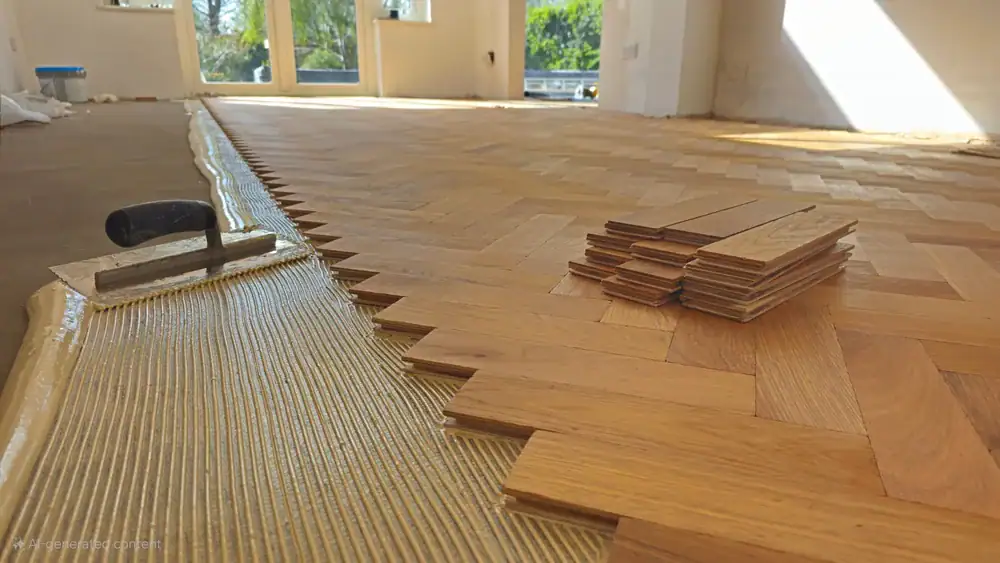
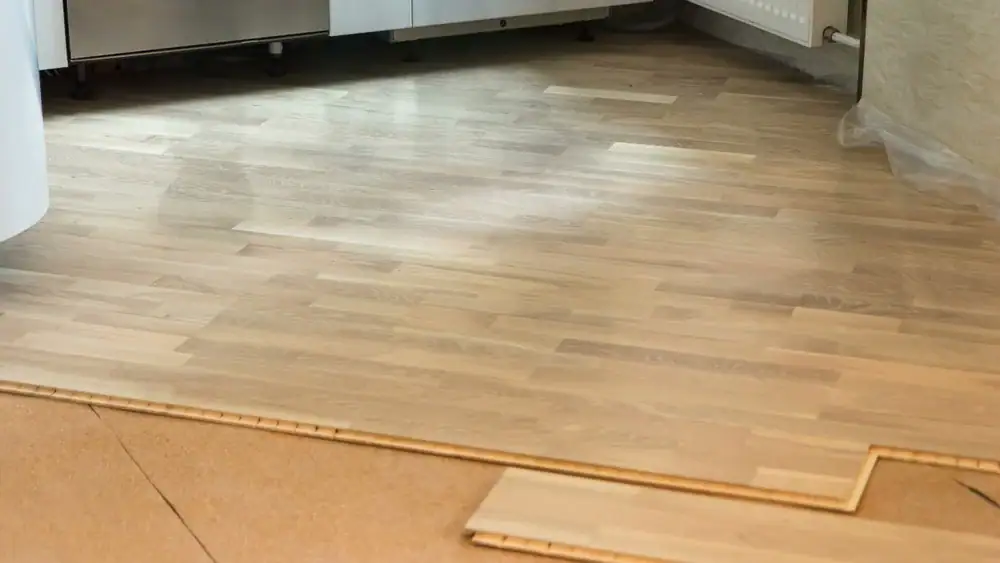
Hardwood Floor Installers Wedgewood VA
When you’re renovating a Wedgewood home built in the 1940s or 1950s, you’re not starting from scratch you’re starting from decades of seasonal movement, crawlspace moisture, and subfloors that have seen a lot of Virginia summers. That history matters. If an installer doesn’t account for it before they start, you’ll feel it in the squeaks, see it in the gaps, and deal with it long after they’re gone.
Wedgewood sits in a humid subtropical climate where summer humidity regularly climbs above 70 to 80 percent. Wood expands in that heat and contracts again every winter when the heat kicks on and the air dries out. In a neighborhood where pier-and-beam and crawlspace construction is the norm, that moisture cycle works its way up from the ground and into your subfloor year after year. A new floor installed without proper moisture testing in a home like yours isn’t a question of if it’ll fail it’s a question of when.
What you get on the other side of a proper installation is a floor that feels solid underfoot, looks like it belongs in a home with original crown molding and a wood-burning fireplace, and doesn’t give you a reason to call anyone back. No squeaks. No cupping. No gaps showing up six months later when the weather shifts.
Local Wood Floor Installers Henrico County
We’ve been working on Richmond-area homes since 2012, and a significant part of that work has been right here in North Henrico the same vintage brick homes in Wedgewood, the same crawlspace construction, the same climate challenges that come with living near Bryan Park and the Lakeside corridor.
We’re owner-operated and based on Staples Mill Road in Glen Allen the same road Wedgewood residents take to reach I-64 every morning. That’s not a coincidence. We’re a Henrico County business that knows Henrico County homes, not a franchise routing your call to whoever’s available in your zip code.
What that means for you is honest, upfront assessment of what your subfloor actually needs before any work begins not a crew that installs over a problem and hopes you don’t notice until after they’ve been paid. Hundreds of five-star Google reviews from Richmond-area homeowners back that up, and our track record speaks for itself.
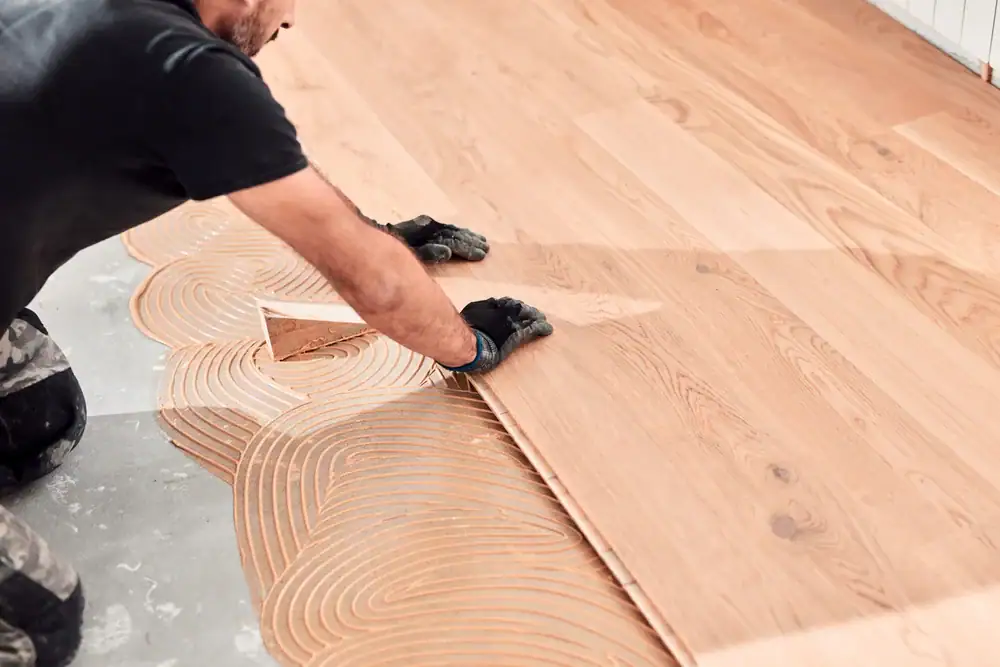
Hardwood Floor Installation Process Wedgewood VA
The process starts with a real assessment not a quick glance and a quote. Before anything is installed, we check the subfloor for levelness, stability, and moisture content. In a Wedgewood home built in the 1940s or 1950s, that step alone can reveal decades of seasonal movement, loose fasteners, or moisture migration from a crawlspace that’s never had a proper vapor barrier. If something needs to be corrected, you’ll hear about it upfront not after the fact.
Once the subfloor is confirmed to be within industry standards, we test the wood planks for moisture content as well. The goal is to verify that the differential between the subfloor and the wood is within acceptable range no more than four percent for strip flooring, tighter for wider planks. Virginia’s humidity swings make this step non-negotiable, especially during the summer months when indoor moisture levels in older Wedgewood homes can spike even with air conditioning running.
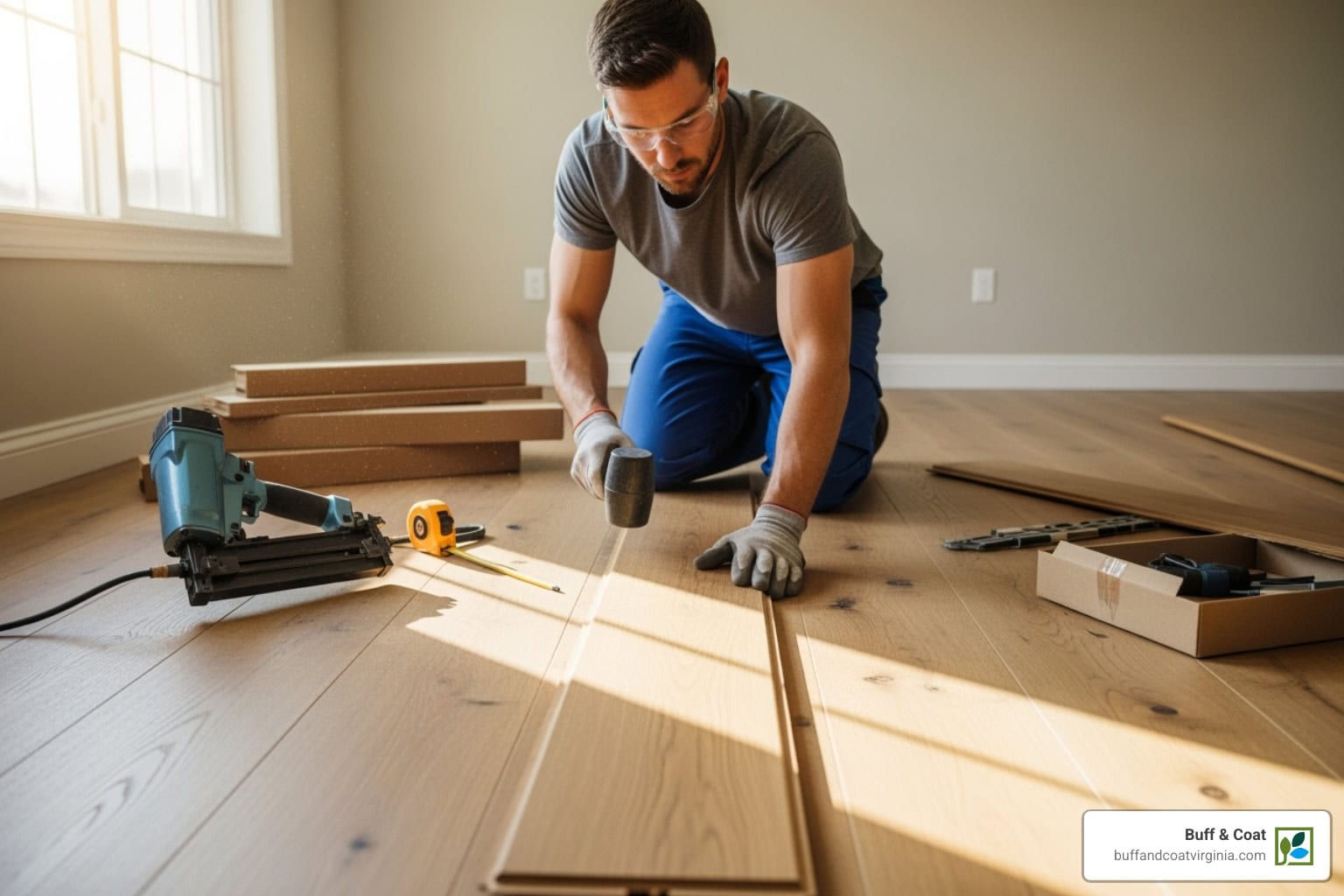
Installation follows after the prep work is done right. Most projects in a Wedgewood home typically 1,300 to 1,900 square feet are completed within a few days. No weeks-long disruption, no dragging it out. You get a clear timeline upfront, and our crew works to it. Henrico County does not typically require a permit for standard floor installation, but if subfloor repairs involve structural work, we flag that and handle it correctly from the start.
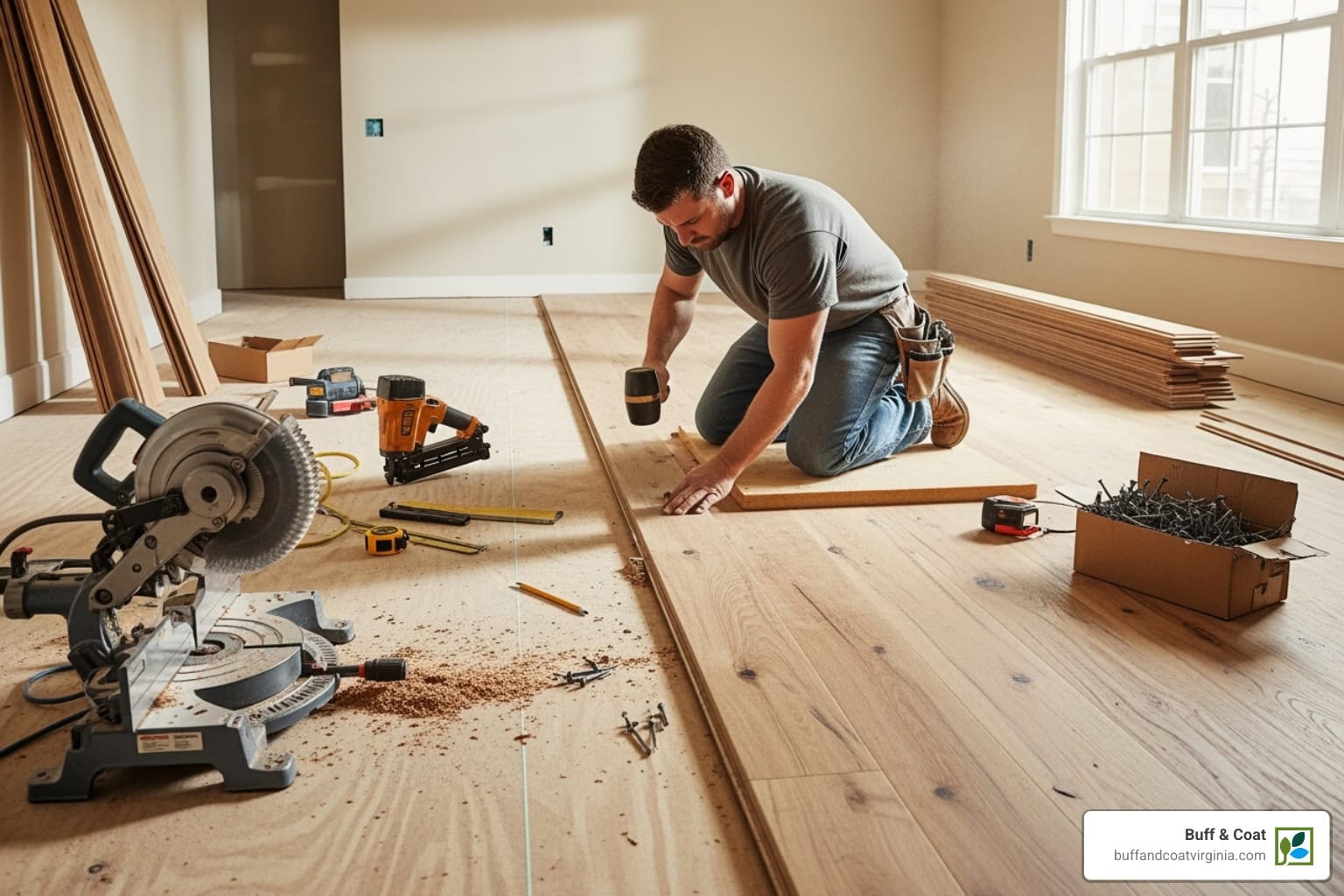
New Wood Floors Wedgewood VA
Not every Wedgewood home is the right candidate for solid hardwood, and we’ll tell you that before you commit. Solid hardwood is a beautiful, lasting choice for homes with stable subfloors and manageable moisture levels and many of the older homes in this neighborhood are excellent candidates. But if your crawlspace has significant moisture exposure or your subfloor has seen a lot of movement over the years, engineered hardwood may actually hold up better long-term. It’s dimensionally more stable through Virginia’s humidity swings, and it performs well in conditions where solid wood can be unpredictable.
The honest answer depends on what’s actually going on in your specific home which is exactly why the pre-installation assessment matters. You’ll get a clear recommendation based on your subfloor condition, your home’s construction type, and the look you’re going for, not a push toward whatever costs more.
If you’re replacing floors in part of your Wedgewood home and need new wood to blend with existing hardwood, we’ve done that throughout the Lakeside and Bryan Parkway neighborhoods. Matching grain, color, and finish in a 70-year-old home takes a practiced eye, and it’s the kind of detail that makes a partial renovation look intentional rather than patched together. Whatever direction you go, the goal is a floor that fits your home not just a floor that’s installed in it.
How much does hardwood floor installation cost in Wedgewood, VA?
Hardwood floor installation in Wedgewood typically runs between $2,500 and $7,000 for most residential projects, depending on square footage, wood species, and the condition of the existing subfloor.
What can shift the number significantly is the subfloor. In Wedgewood homes built in the 1940s through 1960s, subfloor repairs are sometimes necessary before installation can begin. Leveling, replacing damaged sections, or addressing moisture issues can add anywhere from $900 to $3,000 to the total cost. The important thing is knowing about those issues upfront, not discovering them after the floor starts squeaking six months later. We’ll break out subfloor work separately in our estimate so you know exactly what you’re paying for and why.
What's the difference between solid hardwood and engineered hardwood for older homes?
Solid hardwood is exactly what it sounds like a single piece of wood milled to a consistent thickness. It’s durable, can be sanded and refinished multiple times over its life, and looks exactly the way most people picture hardwood floors. For homes with stable subfloors and good moisture control, it’s an excellent long-term investment.
Engineered hardwood is constructed in layers a real wood veneer on top bonded to a plywood or HDF core. That layered construction makes it significantly more resistant to the expansion and contraction that comes with humidity swings, which is a real consideration in Wedgewood. Homes with crawlspace construction and older vapor barriers can see meaningful moisture variation between seasons, and engineered hardwood handles that more predictably than solid wood. If your Wedgewood home has a particularly damp crawlspace or a subfloor with a history of moisture exposure, engineered hardwood may actually hold up better over time even if solid wood is the more appealing option on paper. The right choice depends on what’s actually going on beneath your floors, which is why the pre-installation assessment drives that conversation.
How do I know if my subfloor needs work before installing new hardwood floors?
A few signs are worth paying attention to before installation begins. If your current floors squeak when you walk across them, that’s often a sign of loose fasteners or movement in the subfloor beneath. If you notice areas where the floor feels soft or bouncy, or if you can see visible unevenness when you look across the room at a low angle, those are indications that the subfloor may need leveling or repair.
In Wedgewood specifically, the age of the housing stock makes subfloor assessment more important than it would be in a newer neighborhood. Homes built in the 1940s and 1950s on pier-and-beam or crawlspace foundations have had decades of seasonal movement, and that movement accumulates. The industry standard for a subfloor ready to receive new hardwood is flat within an eighth of an inch over a ten-foot span anything beyond that and you’re likely to end up with squeaks, rocking planks, or gaps that show up once the seasons change. We’ll check for levelness, moisture content, and structural stability before any wood is ordered or delivered.
Does hardwood floor installation require a permit in Henrico County, VA?
In most cases, standard hardwood floor installation in Henrico County does not require a building permit. Replacing existing flooring with new hardwood even if it involves removing old carpet or tile is generally considered cosmetic work and falls outside the permit requirement threshold.
Where it gets more nuanced is when subfloor repairs involve structural work. If floor joists need to be sistered, replaced, or modified, or if the work affects the structural integrity of the floor system, Henrico County may require a permit before that work proceeds. We flag this for you upfront if it applies to your project, rather than skipping the permit to keep things moving faster. Virginia also requires contractors performing this type of work to hold an active license through the Virginia Board for Contractors worth confirming with any installer you’re considering.
How long does hardwood floor installation take from start to finish?
For most Wedgewood homes typically in the 1,300 to 1,900 square foot range installation itself takes two to three days once the prep work is done. The full timeline from first contact to finished floor is usually one to two weeks, depending on scheduling and how much subfloor preparation is needed going in.
There are a few things that can extend that timeline. If the wood needs additional acclimation time because of elevated humidity which is a real consideration during Wedgewood’s summer months that adds a day or two before installation begins. If subfloor repairs are needed, those get completed first before any wood goes down. The most important thing is that the timeline is communicated clearly upfront, not discovered mid-project. A straightforward installation on a well-prepped subfloor moves quickly. The prep work is where the time gets spent and it’s time worth spending.
Is spring or fall the best time to install hardwood floors in Wedgewood, VA?
Both are strong seasons for installation, and for similar reasons. Spring and fall in Henrico County offer moderate temperatures and more stable humidity levels, which means the wood you’re installing is acclimating in conditions closer to what it will experience year-round. That stability reduces the risk of expansion or contraction after installation and generally leads to better long-term results.
Summer installations in Wedgewood aren’t off the table, but they require more attention to moisture. When outdoor humidity is consistently above 70 percent and older homes without perfectly sealed crawlspaces are absorbing that moisture, the moisture differential between the subfloor and the wood planks needs to be tested carefully before anything gets nailed down. Winter installations carry the opposite risk dry heating air drops indoor humidity significantly, and wood installed in those conditions can develop visible gaps when it expands in spring. Neither season is a dealbreaker, but both require an installer who accounts for the conditions rather than ignoring them. If you’re flexible on timing, late September through early November tends to be the most straightforward window for a Wedgewood home.