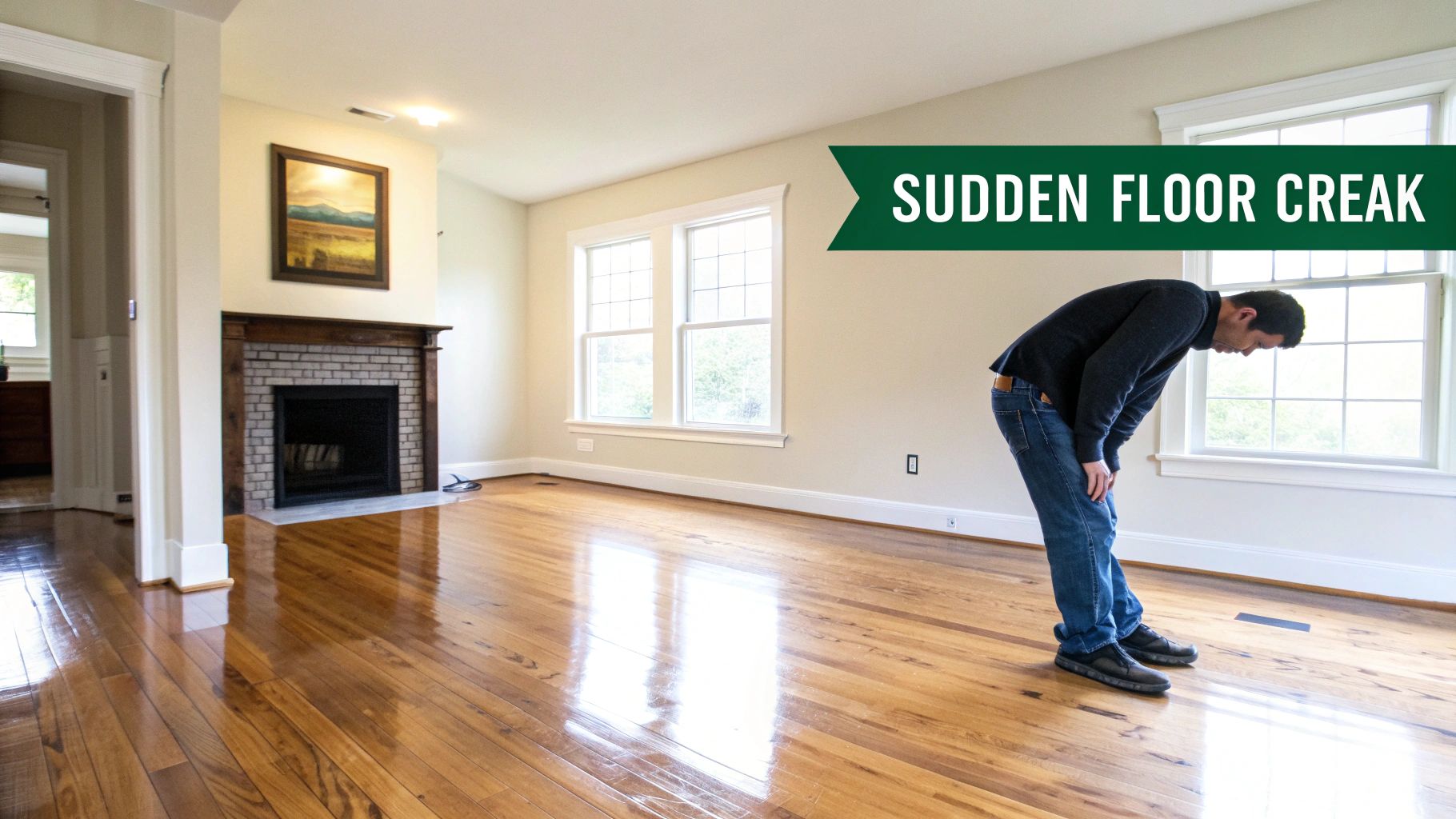
That sudden creak or groan you hear from your hardwood floors isn't just an annoying sound—it's your home's way of telling you something has shifted. For homeowners across Richmond and Henrico, it's a story we hear all the time. The culprits are usually pretty simple: environmental changes like humidity, loose floorboards rubbing together, or sometimes, deeper subfloor issues. This guide will help you get to the bottom of what's causing your hardwood floors to creak and show you what you can do about it.
Understanding the Causes of Noisy Floors
A creaky floor can disrupt the peace and quiet of your home, turning a simple walk to the kitchen into a noisy obstacle course. While it’s easy to blame it on an old house, the truth is that even newer floors can start squeaking. These sounds almost always boil down to two things: movement and friction. It’s the sound of wood rubbing against wood, or wood rubbing against a nail.
Figuring out the root cause is the first step toward a real, lasting fix. Here at Buff & Coat, we've spent over 15 years diagnosing and performing hardwood floor repair for squeaky floors all over the Richmond, VA area. Our team has seen it all, and we pride ourselves on quality workmanship and honest advice.
Key Reasons Your Floors Are Creaking
Think of that noise as a symptom. The actual problem can come from a few different places:
- Humidity Fluctuations: Wood is a natural material that expands when it's humid and shrinks when it's dry. All that movement can eventually loosen boards and create gaps, leading to noise.
- Loose Fasteners: Over time, everyday foot traffic and the natural settling of your house can cause the nails or staples holding the floorboards to the subfloor to work themselves loose.
- Subfloor Problems: If your subfloor is uneven or wasn't secured properly, it can flex under your weight. That movement causes both the subfloor and the hardwood above it to squeak.
- Improper Installation: Sometimes, the problem starts on day one. If the wood wasn't acclimated to the home's environment before installation or if the boards weren't fastened correctly, you're likely to hear about it later.
A creaky floor is almost always the result of friction. When floorboards become loose, they rub against each other or the subfloor, creating that unmistakable sound. The key to a quiet floor is finding a way to eliminate that movement.
To get a wider perspective on floor-related problems beyond just squeaks, you can explore these common causes and solutions for various flooring issues.
If you’re tired of tiptoeing around your own home, it's time to find the source of the noise. Buff & Coat offers honest assessments to help Richmond homeowners pinpoint the problem and choose the right repair.
Call 804-392-1114 or request a free estimate today.
How Richmond's Climate Makes Your Floors Move
The number one culprit behind creaky floors in our area isn't a flaw in your home's construction—it’s something you can't even see. It’s humidity. If you live anywhere in the Richmond area, from Midlothian to Mechanicsville, you already know our weather is famous for its dramatic swings. Your hardwood floors feel every bit of it.
Think of each floorboard as a tiny, living sponge. During our notoriously humid Virginia summers, that wood soaks up moisture from the air and naturally expands. Then, once winter arrives and the heat kicks on, that dry indoor air pulls the moisture right back out, causing the wood to shrink. This constant cycle of swelling and contracting is the real reason your floors start to talk.
The Science of Seasonal Wood Movement
This isn't just an old contractor's tale; it's a well-known process in the wood flooring world. Wood is a hygroscopic material, which is just a fancy way of saying it always tries to match the moisture level of the air around it. This seasonal movement creates tiny gaps and immense friction—between the boards, against the subfloor, and around the nails holding it all together.
The result? Those pops, groans, and squeaks that always seem to get worse when the seasons change. In a climate like ours, this humidity-driven movement is a leading cause of floor noise, especially in homes over a decade old.
When you consider Richmond's summer humidity often tops 70% and can plummet below 40% indoors in the winter, you can see why this constant shifting is a big deal.
To give you a clearer picture, here's how the seasons in our area typically impact your floors.
Seasonal Humidity Impact on Richmond Hardwood Floors
This table breaks down the year-round battle your floors are fighting against our local climate.
| Season | Typical Richmond Humidity | Effect on Hardwood | Common Result |
|---|---|---|---|
| Summer | High (65-80%) | Wood absorbs moisture and expands (swells). | Boards press tightly together, sometimes causing cupping or buckling. |
| Fall | Moderate (50-65%) | Wood begins to release moisture and contract. | Minor creaks may start as gaps begin to form. |
| Winter | Low (30-45%) | Dry indoor heating pulls moisture out, causing shrinkage. | Gaps appear, boards loosen, and creaking becomes most noticeable. |
| Spring | Moderate (50-65%) | Wood starts reabsorbing moisture and expanding again. | Floors may quiet down temporarily as gaps close. |
As you can see, the constant expansion and contraction is a natural, year-long cycle that puts stress on your flooring system.
Why Your Home's Humidity Matters
Controlling your home's indoor climate is your first line of defense against noisy floors. Keeping your indoor humidity in a stable range—ideally between 35% and 55% year-round—can dramatically reduce how much your floors move. This doesn't just quiet them down; it protects your investment by preventing long-term problems like permanent gaps or cupping. We dive deeper into this issue in our guide on how to repair wood floor gaps.
Key Takeaway: A quiet floor often starts with a stable indoor environment. While you can't control the Richmond weather, you can control your home's humidity to minimize seasonal wood movement and the noise that comes with it.
If you know fluctuating humidity is a problem in your home, it helps to learn a few strategies for managing it. This guide on how to reduce humidity in your home is a great starting point.
But what if the noise is already there? Simply managing humidity might not be enough to completely silence a floor that has been moving for years. If seasonal changes have already taken their toll, Buff & Coat can help. We can assess your floors and recommend the right hardwood floor repair to bring back the peace and quiet.
Unsure if humidity is the culprit? Get a fast, free quote from your local Richmond experts.
Finding the Source of the Squeak
While Richmond's humid climate often gets the blame for what causes hardwood floors to creak, sometimes the root of the problem is more mechanical. If you've managed your home's humidity and the noise persists, it’s time to put on your detective hat and pinpoint exactly where that squeak is coming from. Figuring this out will tell you if you're dealing with a simple fix or something more serious.
The best way to track down a squeak is to grab a partner. Have one person walk slowly and deliberately across the noisy area of the floor. Meanwhile, the other person needs to listen intently—either from inside the room or, even better, from the basement or crawlspace directly below, if you can get there. This two-person team approach is incredibly effective for isolating the sound to a single troublesome board.
Simple Diagnostic Steps
Once you've zeroed in on the general area, use these steps to get even more specific:
- Walk and Mark: Methodically step on every single board in the squeaky zone. The moment you hear that familiar creak, mark the spot with a small piece of painter's tape or a sticky note.
- Check for Movement: Now, press down firmly with your foot on each marked spot. Do you feel any give, bounce, or movement? A board that shifts under pressure is a dead giveaway that it has separated from the subfloor below.
- Listen from Below: If you have access to the space under your floor, this is the gold standard. Have your helper walk on the marked spots upstairs while you look and listen from below. Watch for any gaps between the subfloor and the floor joists (the big support beams). If you see a gap that closes when someone steps on the board above, you’ve found the smoking gun.
This flowchart gives a great visual of how those seasonal shifts we talked about can lead to movement in your floors, which is often the starting point for all this noise.
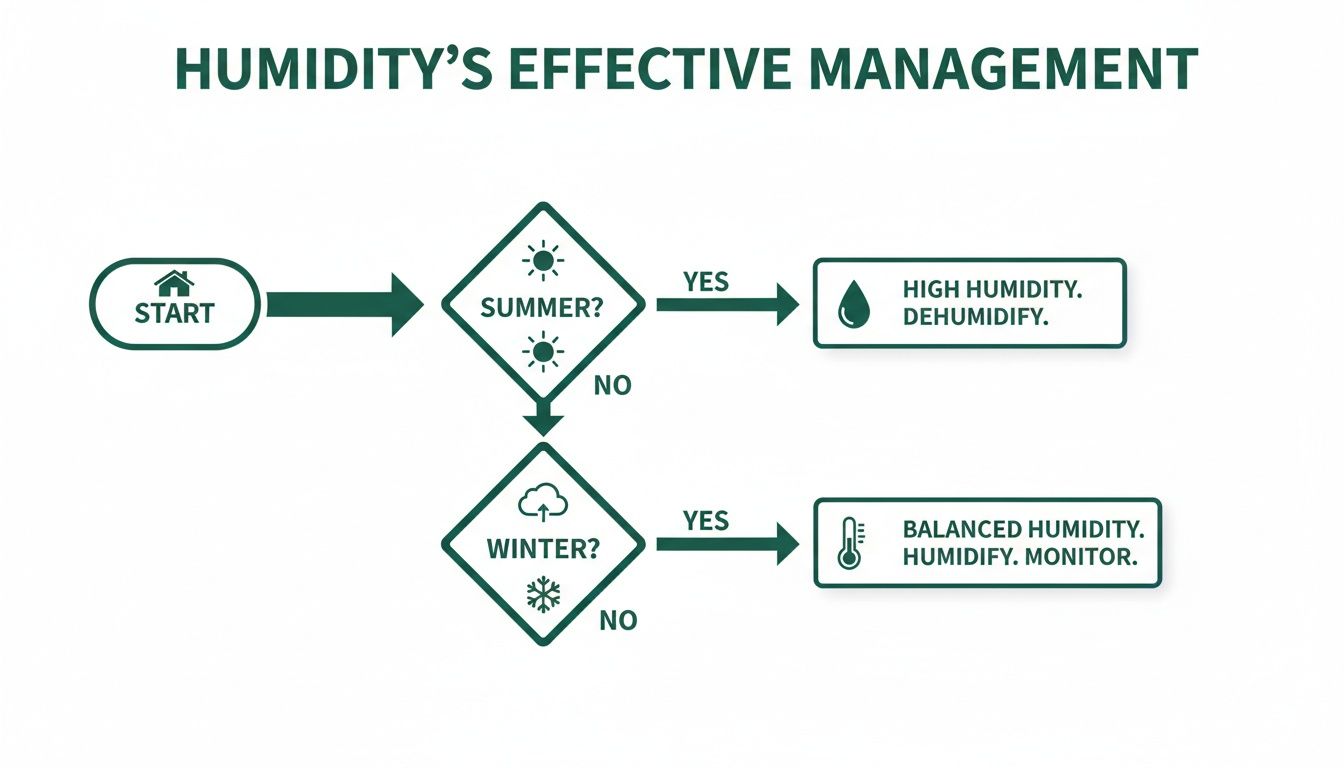
As you can see, both the muggy Virginia summers and the dry winters can cause the physical shifts that lead to squeaks. That’s why keeping an eye on your home's humidity all year long is so important.
Loose Boards and Improper Installation
Sometimes, the cause is just plain old wear and tear. Years of foot traffic and the natural settling of a house can cause the nails or staples holding the floorboards to the subfloor to work themselves loose. Think of it like a screw that has gradually backed itself out over the years. It's a common problem.
A shoddy installation job can also be the culprit from day one. If the original installers didn't use enough fasteners, spaced them too far apart, or missed the floor joists entirely (creating what we call "shiners"), then squeaks are pretty much guaranteed down the road.
Pro Tip: Don't let a squeak fool you! Sound can travel surprisingly well along floorboards. You might think the noise is coming from one spot, but the actual loose board could be a foot or two away. This is why that careful, board-by-board testing is so critical to getting it right.
Once you’ve successfully identified the trouble spots, you'll have a much clearer picture of what kind of fix is needed. For a deeper dive into the actual repair techniques, check out our guide on how to fix squeaky hardwood floors.
If you've found the squeak but you're not confident about the next steps, the team at Buff & Coat is here to help. We provide honest, straightforward recommendations for hardwood floor repair in Richmond, VA.
Call 804-392-1114 to schedule your free, no-pressure estimate.
When the Problem Is Below the Surface
That maddening creak you hear every time you walk across the living room? Sometimes, the culprit isn't the beautiful hardwood floor you see. The real problem often lies deeper, within the subfloor that serves as the foundation for your entire floor system. If that hidden layer isn’t rock-solid, the noise will travel right up through your floorboards.
This is a story we see all the time, especially in the older homes around Richmond and Chesterfield. Decades of natural settling can cause tiny, almost invisible shifts in a home's structure. When the subfloor moves, your hardwood floor moves right along with it, creating the friction that leads to noise. A professional diagnosis is critical here because a simple surface-level fix will never solve a foundational problem.
Common Subfloor and Joist Issues
The quiet harmony of your floor depends on the relationship between the hardwood, the subfloor, and the joists (the support beams underneath). When that relationship breaks down, you get squeaks.
Here are a few of the most common issues we find:
- Gaps Between Subfloor and Joists: Over the years, wood can warp and settle, creating small gaps. When you step on the floor, the subfloor presses down to meet the joist, and pop—you get a distinct squeak or thud.
- Improper Fastening: If the original installers were stingy with nails or didn't use adhesive to secure the subfloor to the joists, the panels will have too much room to flex and rub against the fasteners.
- Movement in Tongue-and-Groove Joints: Most subfloors are made of plywood or OSB panels that link together with tongue-and-groove edges. If those joints work themselves loose, they can rub against each other, creating a persistent creak.
A stable, properly secured subfloor is the unsung hero of a quiet hardwood floor. If the foundation isn't solid, no amount of work on the surface will provide a permanent fix.
In our experience, subfloor issues can account for a significant number of squeaks in homes over 30 years old, particularly if the panels weren't glued down in addition to being nailed. For older Richmond-area homes, this problem is even more common.
Why a Professional Assessment Matters
Figuring out if the problem is in the subfloor requires a trained eye. At Buff & Coat, we don't just look at the surface. We know how to diagnose problems that start deep below your hardwood, making sure our hardwood floor repair targets the true source of the sound.
This might mean re-securing the subfloor from the basement or crawlspace or addressing how the hardwood itself is connected. Our experience with complex repairs, including tricky tongue-and-groove repair techniques, ensures we provide a solution that lasts.
Dealing with a stubborn squeak? Buff & Coat can identify if the problem is in your subfloor. Request your free estimate today.
How to Fix Your Creaky Hardwood Floors for Good
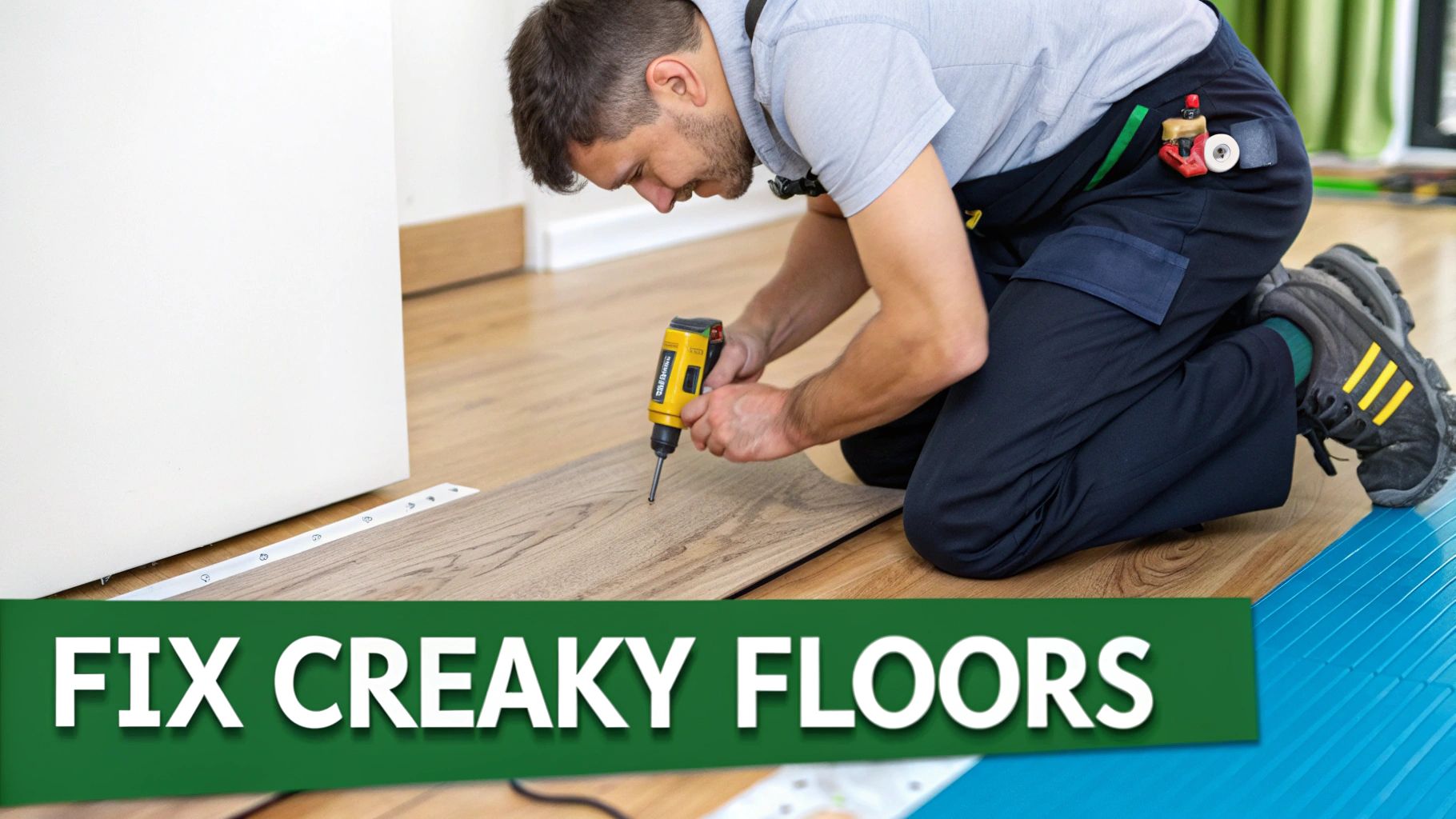
Alright, you’ve played detective and have a good idea of what’s causing your floors to sing. Now for the fun part: making it stop. If you're dealing with just one or two noisy spots, a few simple DIY tricks might do the job. But for floors that creak no matter where you step, calling in a professional is usually the only way to get lasting peace and quiet.
Your game plan depends entirely on the source of the sound. A single loose board needs a different approach than a whole floor that’s flexing over the subfloor. Let’s walk through the options.
Simple DIY Fixes for Minor Squeaks
For those small, localized creaks, you might be able to tackle them yourself. Just remember, these fixes are best for hitting one or two annoying spots, not silencing an entire room.
- Lubricate the Seams: Sometimes, the squeak is just two boards rubbing together. You can try sprinkling a dry lubricant like powdered graphite or talcum powder into the seam. Work it deep into the crack with a small brush, then walk on the area to help it settle in.
- Use Wood Shims from Below: This is a classic, effective fix if you can get into a basement or crawlspace. Have someone walk on the squeaky spot upstairs while you’re underneath. If you see a tiny gap between the subfloor and a joist, you can gently tap a wood shim coated in wood glue into the space. This fills the void and stops the movement.
While these DIY methods can offer some relief, they are often temporary. If the underlying cause is widespread loose boards or subfloor issues, the squeaks will likely return or appear in new spots.
Professional Hardwood Floor Repair
When the squeaks are all over, seem to be coming from deep within the floor, or you just want a permanent fix, it's time to call in the experts. At Buff & Coat, our approach to hardwood floor repair in Richmond, VA isn’t about quick patches; we go straight to the root of the problem.
Our primary goal is simple: eliminate all movement. A quiet floor is a stable floor. We achieve this by re-securing the hardwood planks directly to the subfloor, anchoring the boards so they can no longer shift, rub, or flex when you walk on them.
Our Expert Repair Process
For more extensive creaking, a full refinishing project is often the most effective and permanent solution. It might sound like a big step, but here’s why it works so well:
- Complete Access: Our dustless sanding process strips away the old finish, letting us see and access every single board and fastener. This gives us a crystal-clear view of the entire flooring system, with nowhere for problems to hide.
- Systematic Re-Securing: With the floorboards exposed, we can methodically go through and address every single loose board. We use specialized techniques to tightly fasten the hardwood to the subfloor, turning it all into one solid, unified surface.
- A Flawless Finish: After all the repairs are done, we apply a brand-new, high-quality, low-odor finish. This doesn’t just make your floors look stunning again; it also helps lock the boards together, adding another layer of stability.
This comprehensive approach is truly the only way to guarantee a quiet, solid floor that looks and feels new again. It’s a permanent solution that fixes the problem at its core.
If you’re not sure whether you need a quick spot repair or a full refinishing, Buff & Coat can give you an honest, expert assessment. We’ll help you understand your options and choose the best path forward for your Richmond home.
Tired of noisy floors? Call 804-392-1114 or request your free estimate today.
Why Richmond Homeowners Choose Buff & Coat
Figuring out why your hardwood floors are creaking is more than just silencing an annoying sound—it’s about getting back that solid, quiet feeling you expect from your home. For over 15 years, Buff & Coat has been the go-to partner for homeowners in Richmond, Midlothian, and Chesterfield who want real solutions, not just quick fixes. We know this area, and we combine that local experience with the best flooring technology to deliver results that last.
Choosing the right contractor means finding a team that gets your home, your goals, and the unique challenges posed by our Virginia climate. We’re not just some faceless flooring company; we're your neighbors, and we know exactly what it takes to make floors last here.
The Buff & Coat Difference
When you work with us, you’re not just getting a service; you're getting a completely different kind of flooring experience. Our whole approach is built on quality, honesty, and getting the job done right the first time.
- 15+ Years of Local Experience: As an owner-operated business, we’ve spent years working on every type of floor imaginable, from historic homes in the Fan to modern builds in Glen Allen and Short Pump. That hands-on experience means we can spot and solve issues specific to our region.
- Dustless Sanding Systems: A clean work environment isn't a bonus—it's a promise. We use state-of-the-art dustless sanding systems that capture virtually all airborne particles. This protects your home's air quality and leaves you with a stunning floor, not a dusty mess.
- Clear Pricing and Honest Advice: We believe in empowering homeowners with good information. You'll get a straightforward, no-nonsense assessment of your floors and a clear, detailed estimate. No hidden fees, no last-minute surprises.
- High-Quality, Durable Finishes: A repair is only as good as the finish protecting it. We use premium, low-odor finishes that are tough enough to stand up to daily life, ensuring your newly silent floors are also beautiful and incredibly durable.
- 5-Star Customer Service: We treat every project with the same level of care and precision, from a simple hardwood floor repair to a full-scale refinishing. Our goal is to make the process completely stress-free and deliver a final result that boosts your home’s value.
For a quiet, beautiful floor and a process you can trust, count on the best hardwood floor contractor in Richmond.
Ready to restore your hardwood floors? Buff & Coat makes the process fast, clean, and stress-free. Call 804-392-1114 or request your free estimate at buffandcoatvirginia.com.
Frequently Asked Questions About Creaky Floors
We hear a lot of the same questions from homeowners in Richmond about their noisy hardwood floors. Here are some quick, straightforward answers to clear things up and help you decide on the best next step for your home.
Will a Buff and Coat Service Stop the Creaks?
While a buff and coat service does an amazing job of making your floor's surface look brand new, it won't solve the underlying problem causing the creaks. That noise comes from movement—either between the boards themselves or between the boards and the subfloor. A surface treatment can't fix that.
When we come out for a free estimate, we can pinpoint what's causing the sound and tell you exactly what's needed. It might be a simple hardwood floor repair in one spot, or it might make more sense to address it during a full refinishing project.
Is It Normal for a Brand New Floor to Creak?
Honestly, no. A brand new, professionally installed hardwood floor shouldn't have any significant creaks. You might hear a few minor settling sounds right after installation, but anything persistent is a red flag. It usually points to a problem with how the subfloor was prepped, how the wood was acclimated, or the installation itself.
If you're in the Richmond, VA area and your new floor is already making a racket, give us a call. Our team can take a look and figure out what went wrong.
Does Fixing Creaky Floors Actually Increase My Home's Value?
It absolutely does. Think of it from a buyer's perspective: quiet, solid-feeling floors signal a well-maintained home. A creaky floor, on the other hand, can make buyers wonder what other hidden problems might be lurking.
By professionally fixing the source of the noise with a hardwood floor repair, you're not just making your home more pleasant to live in—you're boosting its appeal and protecting its value on the market.
How Long Does It Take to Fix a Creaky Floor?
The timeline really depends on how widespread the problem is. If it's just a few noisy boards in one area, we can often get it done in a couple of hours.
But if the creaking is all over the place and the best solution is to re-secure the entire floor as part of a sand and refinish job, that process usually takes about 3-5 days. We'll give you a crystal-clear timeline during your free, no-pressure estimate so you know exactly what to expect.