Why Richmond Homeowners Need Reliable Solutions for Squeaky Hardwood Floors
Squeaky hardwood floor repair in Richmond is a common challenge that often signals deeper structural issues beyond a simple annoyance. The persistent creak with every step is caused by friction between wood components and can stem from humidity changes, house settling, or loose subflooring. While it can be a major frustration, most squeaks can be fixed, sometimes with a simple DIY fix or with help from a hardwood floor restoration professional.
Quick Solutions for Squeaky Floors:
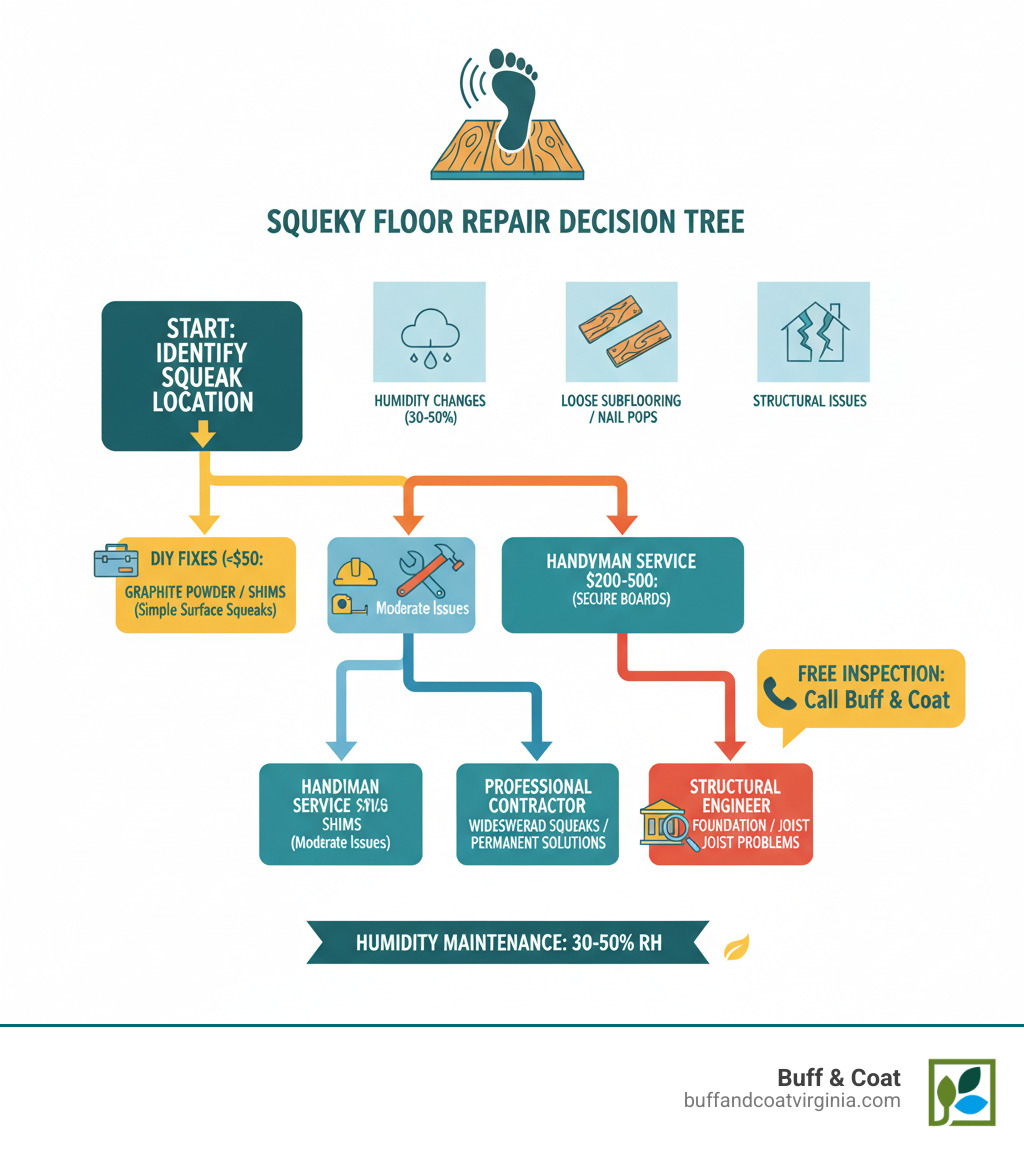
- Simple DIY fixes – Apply powdered graphite or talcum powder between floorboards for quick relief (cost: under $50)
- Moderate repairs – Hire a handyman to secure loose boards or add shims ($200-$500)
- Professional service – Call a flooring contractor for comprehensive diagnosis and permanent fixes ($480-$1,700)
- Structural assessment – Contact a structural engineer if you notice widespread squeaking, sagging floors, wall cracks, or foundation issues
Common causes in Richmond homes include:
- Humidity changes from our humid summers and dry winters
- House settling over time
- Loose subflooring or nail pops
- Wood expansion and contraction
The good news? Most squeaks can be fixed—either as a weekend DIY project or with professional help. The key is knowing when a squeak is just annoying and when it’s warning you about something more serious.
I’m David Emmerling, and I’ve spent over 20 years helping Richmond homeowners with hardwood floor restoration. Through my work at Buff & Coat, I’ve diagnosed and permanently resolved countless cases of squeaky hardwood floor repair richmond challenges, from simple friction issues to complex subfloor problems.
Squeaky hardwood floor repair richmond terms to learn:
Why Your Richmond Floors Squeak: Common Causes and Hidden Dangers
That familiar creak underfoot might seem like just part of your home’s character, but it’s actually your floors trying to tell you something. Understanding what causes squeaks is your first step toward finding the right solution for squeaky hardwood floor repair richmond needs—and knowing whether that squeak is harmless or a warning sign.
Here’s what’s really happening when your floors squeak: two pieces of wood are rubbing together when they shouldn’t be, or a fastener has lost its grip. It’s friction creating that noise, plain and simple. But what causes that friction in the first place?
Humidity changes are the biggest culprit we see in Richmond homes. Your hardwood is a living, breathing material that constantly reacts to moisture in the air. When humidity rises, the wood swells. When the air dries out, it shrinks back down. This ongoing dance of expansion and contraction loosens floorboards, shifts subflooring, and works nails free from their original positions—creating gaps and friction points that squeak with every step.
House settling is another natural process that contributes to squeaky floors. As lumber dries out over the years and your home’s structure adjusts to its foundation, small shifts occur in your floor system. The finished surface, subfloor, and floor joists can develop tiny gaps between them where everything once fit snugly together.
Loose subflooring often flies under the radar because you can’t see it. This layer of plywood or OSB sits on top of your floor joists and provides the foundation for your beautiful hardwood. When the subfloor isn’t properly secured to the joists—or when those fasteners loosen over time—the subfloor moves independently. That movement creates friction against both the joists below and the hardwood above.
Nail pops are especially common in older Richmond homes. Decades ago, builders relied heavily on nails to secure everything. Unlike modern screws and construction adhesive, nails can work their way loose over time. When you step on a board with a loose nail, the nail head rubs against the wood, creating that distinctive squeaking sound. It’s one reason why professional floor refinishing often includes reinforcing old fasteners.
Beyond the daily annoyance, addressing squeaks protects your investment. A single isolated squeak might just be one loose board, but fixing it prevents that minor issue from spreading. Securing your floors maintains your home’s structural integrity and increases home value—potential buyers often see squeaky floors as a red flag for poor maintenance. When we work on Richmond VA wood flooring projects, we always investigate these underlying causes to ensure lasting results.
The Impact of Richmond’s Climate on Hardwood
Living in Richmond means dealing with humid summers that make your clothes stick to you and dry winters that leave your skin parched. Your hardwood floors feel these seasonal swings just as as you do, and that’s often what sets off a squeaking problem.
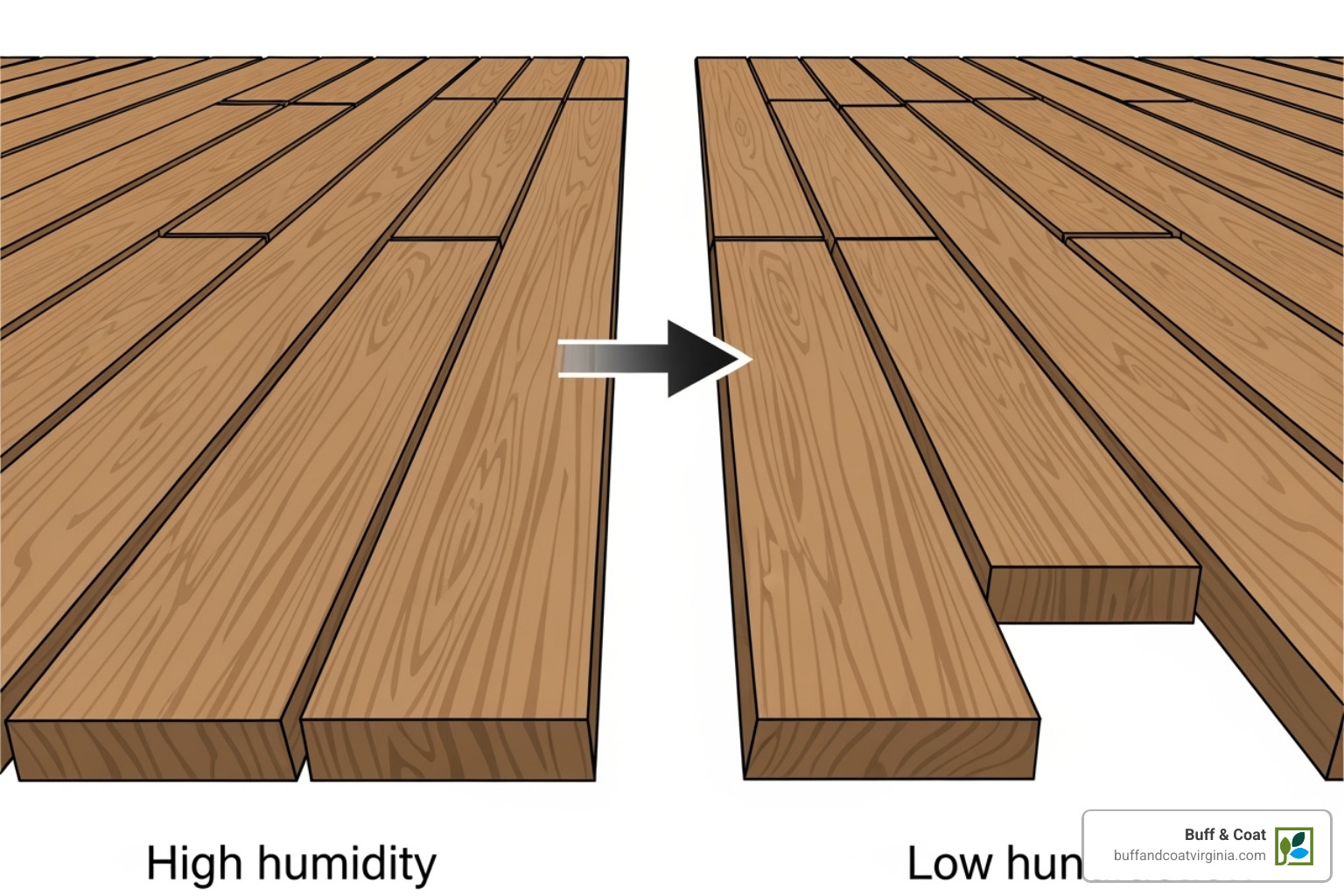
During our steamy summer months, your floors absorb moisture from the air and expand. The boards push against each other, sometimes cupping or buckling if there isn’t adequate expansion space built into the installation. Then winter arrives, you crank up the heat, and the indoor air becomes desert-dry. Your floors release that absorbed moisture and contract, pulling away from each other.
This seasonal cycle of wood expansion and wood contraction is completely natural—it’s just what wood does. But here’s the problem: each time your floors expand and contract, they can loosen their grip on the subfloor and joists. Boards that once fit snugly together develop gapping, and fasteners that held everything tight work themselves loose. The result? Components that now rub against each other with every footstep.
Managing Richmond’s humidity swings is essential for preventing squeaks before they start. You’ll find detailed strategies in our guide on how to repair wood floor gaps, which often go hand-in-hand with squeaking issues.
When a Squeak Signals a Bigger Problem
Most squeaks are just annoying—a minor inconvenience from normal wood movement. But some squeaks are your home’s way of waving a red flag, warning you about serious structural issues that need immediate attention. Learning to recognize the difference can save you thousands in repair costs.
Widespread squeaking across your entire floor or large sections of it suggests something more systemic than a few loose boards. When everywhere you walk sounds like you’re in a haunted house, it’s time to investigate deeper.
Sagging or bouncing floors take things to another level entirely. If your floor visibly dips in certain areas or feels like a trampoline when you walk across it, your floor joists or subfloor have likely been compromised. This goes way beyond friction and points to inadequate support holding up your floor system.
Watch for wall cracks or doors not closing properly—these seemingly unrelated problems often connect to floor movement. When your floor system shifts significantly, it stresses your walls and door frames. You might notice cracks appearing above doorways or doors that suddenly stick or won’t latch.
Foundation movement represents the worst-case scenario. When widespread squeaking combines with sagging floors, wall cracks, and door problems, your home’s foundation may be settling unevenly or shifting. This requires immediate evaluation by a structural engineer, not a flooring contractor.
Water damage creates its own set of problems. Persistent moisture from plumbing leaks, roof issues, or foundation seepage causes wood to rot, warp, and lose strength. Damaged wood squeaks as the compromised floor system flexes under your weight. Look for discoloration, mold growth, or musty odors accompanying the squeaks.
Pest damage from termites or carpenter ants silently destroys floor joists and subflooring from the inside out. By the time you notice squeaking, sagging, or soft spots, these insects may have caused extensive damage. If you suspect pests, call for professional inspection immediately.
When you spot any of these warning signs, DIY fixes won’t cut it. Contact a professional flooring contractor or structural engineer to assess the situation. Early intervention prevents minor issues from becoming major disasters that threaten your home’s safety and drain your savings.
Simple DIY Fixes for Minor Squeaks
Good news: if you’ve got a few isolated squeaks that aren’t signaling any serious structural issues, you can probably handle them yourself with a quick trip to the hardware store and a free Saturday afternoon. Most of these fixes cost less than $50 and require only basic tools you likely already own.
The secret to success? Pinpointing the exact source of the squeak. This detective work is crucial. Have someone walk slowly across the floor while you listen carefully, or get down on your hands and knees to feel for movement. Once you’ve found the culprit, mark it with painter’s tape so you don’t lose track of it.
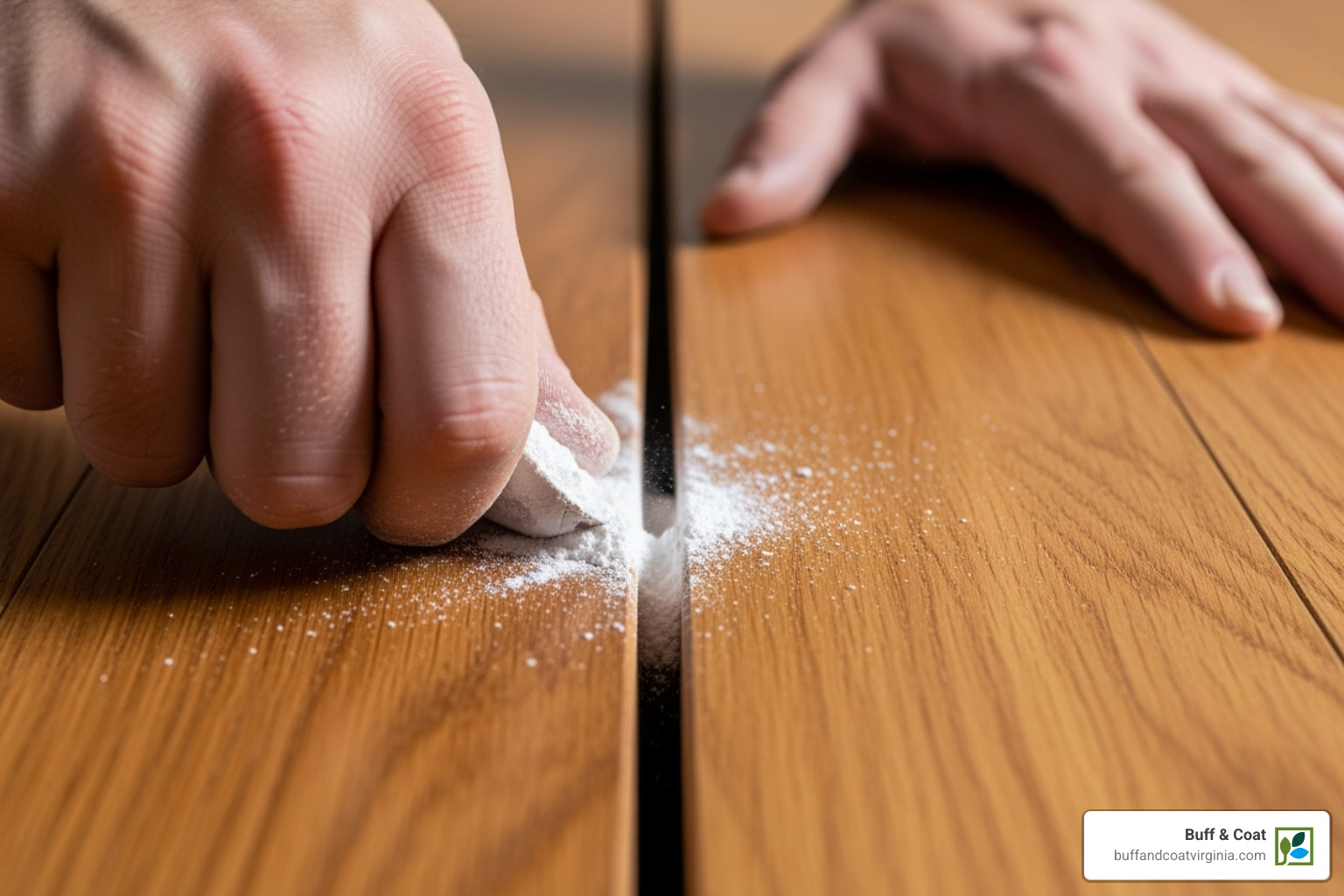
The most common DIY approach is using powdered graphite or talcum powder as a lubricant. When floorboards rub against each other, they create friction—and that friction is what you hear. Sprinkle a generous amount of graphite powder (or even baby powder in a pinch) over the squeaky seams, then walk on the area repeatedly to work it down into the gaps. Wipe away the excess, and you’re done. It’s remarkably simple, though the fix may only last a few months before needing a refresh.
If you have access to the underside of your floor from a basement or crawlspace, you’ve got more options. Wood shims can work wonders when there’s a gap between the subfloor and joists. Gently tap thin shims into any visible gaps—just be careful not to force them, as pushing too hard can actually create a hump in your finished floor above. A dab of wood glue on the shim before insertion helps it stay put.
For larger gaps, construction adhesive provides a stronger bond. Apply it along the joist where it meets the subfloor, and let it cure according to the manufacturer’s instructions. This creates a solid connection that eliminates the movement causing your squeak.
From above, specialized screw kits like “Squeak-No-More” can secure loose boards directly to the joists below. These kits use screws that snap off below the surface, leaving minimal damage. You’ll need to drill a pilot hole first to avoid splitting your hardwood, then fill the hole with matching wood putty. This is more involved than sprinkling powder, but it’s also much more permanent.
For a visual guide that walks you through these techniques step-by-step, we recommend this helpful tutorial from This Old House. It covers the basics beautifully and can give you confidence before you start your project.
From Above: Surface-Level Solutions
When you’re working from the top of your floor, your main goal is stabilizing loose boards or reducing friction—all without leaving visible scars on your beautiful hardwood. These surface-level approaches work best for squeaks you can clearly pinpoint and that seem isolated to just a board or two.
Lubricating the seams is your quickest win. Powdered graphite is ideal because it doesn’t attract dirt like oil-based lubricants would. Work it into the cracks between boards by sprinkling generously and then walking over the area. The powder fills microscopic gaps and creates a slippery barrier that stops the rubbing. It’s not glamorous, but it’s effective.
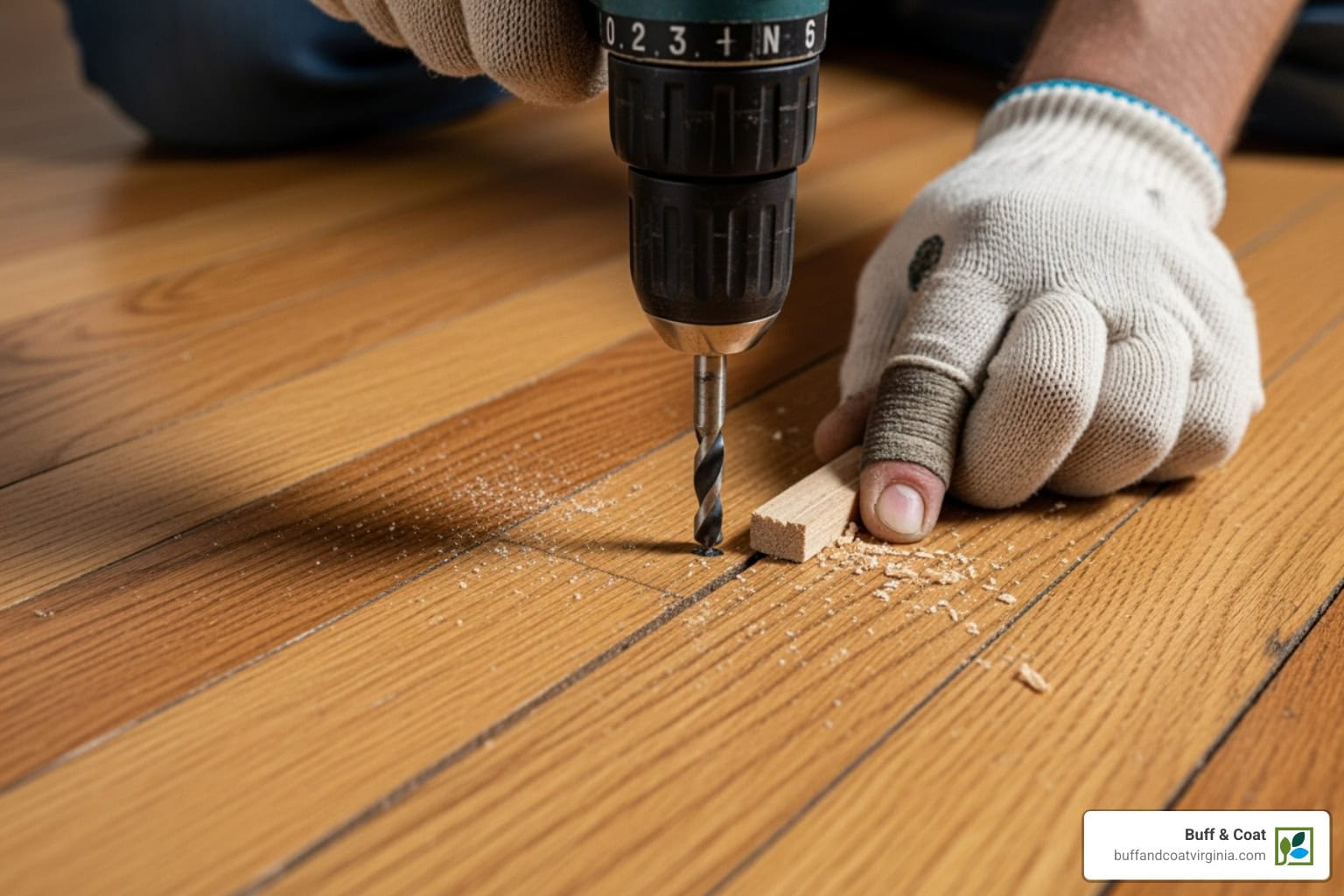
For boards that have genuinely come loose, you’ll need to secure them back down. The right way to do this is drilling a small pilot hole first—this prevents the wood from splitting, especially if you’re working with older, drier planks. Then drive a finish screw or specialized flooring screw through the board, through the subfloor, and into the joist below. Countersink the screw head slightly below the surface and fill the hole with wood putty that matches your floor color. Once it dries and you sand it smooth, the repair becomes nearly invisible.
Squeak-No-More kits deserve special mention. These clever systems include a specialized fixture that guides a screw through your floorboard and subfloor into the joist beneath. The screw is designed to snap off cleanly below the floor surface, leaving no protruding head to deal with. While they were originally designed for carpeted floors, they can work on hardwood too—you just need to be more careful about the finish and plan to fill any small holes left behind.
If your squeak involves damaged tongue and groove connections between boards, understanding tongue and groove repair techniques can give you additional options for restoring a tight, quiet fit.
The beauty of working from above is convenience—no crawling through dusty crawlspaces. The downside? You’re making small holes in your finished floor that need patching. Done carefully, though, these repairs can last for years.
From Below: Accessing the Subfloor
If you’re fortunate enough to have a basement or crawlspace beneath your squeaky floors, you’ve just open uped the best way to fix them. Working from below lets you address the structural causes of squeaks directly, without disturbing your finished floor at all.
Start with the same detective work: have someone walk on the noisy spots above while you watch from below with a flashlight. You’re looking for gaps between the subfloor and joists, or places where the subfloor visibly flexes and moves. Once you spot the problem, you can fix it right there.
Wood shims are your first tool. When you see a gap between the top of a joist and the bottom of the subfloor, gently tap a thin, tapered shim into that space. The key word here is gently—you want to fill the void and stop the movement, but if you hammer too enthusiastically, you’ll push the subfloor up and create a noticeable bump in your hardwood above. Add a bit of wood glue to the shim before sliding it in, and it’ll stay put indefinitely.
For wider gaps or situations where shims aren’t practical, construction adhesive becomes your best friend. Squeeze a generous bead along the top edge of the joist where it should meet the subfloor. The adhesive fills the gap and bonds the two surfaces together, eliminating both movement and noise. Just make sure you’re using an adhesive rated for structural applications—not regular wood glue.
Sometimes the problem isn’t a simple gap but rather a subfloor that’s flexing between joists, or joists that have twisted or bowed over time. In these cases, adding blocking between joists provides the extra support needed. Cut pieces of lumber (typically 2x8s) to fit snugly between your joists, then screw them firmly in place. The blocking should sit flush with the top of the joists so it properly supports the subfloor above. This stiffens the entire floor system and dramatically reduces movement.
Working from below gives you the strongest, most permanent fixes for squeaky hardwood floor repair richmond challenges. The repairs are hidden, the finished floor remains untouched, and you’re addressing the root structural causes rather than just masking symptoms. It’s why professional contractors prefer basement access when it’s available.
Your Guide to Squeaky Hardwood Floor Repair in Richmond: DIY vs. Professional
When you’re facing a squeaky floor, one of the first questions is whether to grab your toolbox or pick up the phone. It’s a decision that can save you time, money, and frustration—or cost you more if you choose wrong. Here at Buff & Coat, we’ve seen homeowners successfully tackle simple squeaks and we’ve also rescued floors from well-intentioned DIY attempts gone sideways. Let’s walk through how to make the right call for your situation.
The truth is, squeaky hardwood floor repair richmond homeowners attempt ranges from quick weekend fixes to complex structural work. Your choice really comes down to three factors: how widespread the squeaking is, how comfortable you are with tools and home repairs, and what your budget looks like.
Here’s how the options stack up:
| Feature | DIY Repair | Handyman Repair | Professional Contractor Repair |
|---|---|---|---|
| Cost | Under $50 in materials | $200-$500 per visit | $480-$1,700 depending on scope |
| Time Investment | 1-3 hours for localized fixes | Half day to full day | 1-3 days for comprehensive repair |
| Effectiveness | Good for isolated squeaks | Moderate for accessible areas | Excellent for all squeak types |
| Permanence | Often temporary (months) | Semi-permanent (1-2 years) | Permanent solution (years to decades) |
| Skill Required | Basic homeowner skills | Intermediate repair knowledge | Professional diagnosis and repair |
| Best For | Single squeaky boards, surface friction | Multiple squeaks in accessible areas | Widespread issues, structural concerns, no basement access |
The DIY route works beautifully when you’ve got a single board that squeaks in the hallway or a few noisy spots near the kitchen. You can pick up powdered graphite, some wood shims, or a Squeak-No-More kit at your local hardware store and often solve the problem in an afternoon. It’s satisfying, it’s economical, and for minor issues, it genuinely works.
A handyman represents the middle ground. They bring more experience and tools than most homeowners have on hand, and they can handle multiple squeaks or situations that require a bit more finesse. If you’ve got several problem areas but nothing that suggests a deeper structural issue, a skilled handyman can often provide relief without the full cost of a specialized contractor.
Professional floor restoration contractors like us come into the picture when squeaks are widespread, when you suspect something more serious is happening beneath the surface, or when previous repair attempts haven’t worked. We bring specialized diagnostic tools, decades of experience with Richmond’s unique climate challenges, and the ability to identify whether that squeak is just a loose board or a red flag for foundation movement.

DIY vs. Pro: Cost and Effectiveness for Squeaky Hardwood Floor Repair in Richmond
Let’s talk dollars and cents, because that’s often what tips the decision one way or another. DIY materials rarely exceed $50. You’re looking at maybe $10 for powdered graphite, $15-30 for a Squeak-No-More kit, or $20 for wood shims and construction adhesive. The trade-off? You’re investing your own time and accepting that the fix might be temporary.
Handyman services in Richmond typically charge between $200 and $500 for squeak repairs, depending on how many areas need attention and whether they can work from above or need to access your crawlspace. This middle-tier option works well when you’ve got the access but not the expertise or time to do it yourself.
Professional flooring contractors generally quote $480 to $1,700 for comprehensive squeak repair. That wider range reflects the scope of work—a few strategic screws and some subfloor reinforcement on the lower end, or extensive floor system stabilization and multiple-room repairs on the higher end. What you’re paying for is permanent results, proper diagnosis, and the peace of mind that comes from knowing the job is done right.
The effectiveness question is equally important. DIY fixes like powder or surface screws work great for friction between boards but won’t solve subfloor separation or structural movement. They’re Band-Aids—helpful, but not always curative. Handymen can provide more robust repairs if they have good access and can identify the source, but they may lack the specialized knowledge to spot underlying structural concerns.
Professional contractors bring diagnostic expertise that often reveals issues a homeowner wouldn’t catch. We’ve lost count of how many times we’ve been called for “a few squeaks” only to find water damage, inadequate joist spacing, or foundation settlement that needed addressing. Sometimes spending more upfront prevents much costlier repairs down the road. For guidance on finding the right help, check out our article on hardwood floor repair contractors.
When to Call a Professional Flooring Contractor
Some situations just call for professional eyes and hands. If you’re experiencing widespread squeaking—not just one board in the hallway, but whole rooms or sections of your floor—that’s a clear signal something systemic is happening. It might be subfloor separation across multiple joists, it might be humidity-related movement throughout the floor system, or it could indicate structural settling that needs proper assessment.
When you suspect structural issues, don’t hesitate. If you’re seeing sagging, feeling excessive bounce, noticing wall cracks, or watching doors that suddenly won’t close properly, these are red flags that extend beyond a simple squeak. A professional can determine whether you need floor repair or if it’s time to bring in a structural engineer.
No access from below presents another clear case for calling a pro. Many effective repairs work best when you can reach the subfloor and joists from underneath. If you’re in a slab foundation home or your crawlspace is inaccessible, professionals have specialized tools and techniques to work from above without destroying your beautiful hardwood.
Damaged floorboards change the game entirely. If your squeaks come with visible cracks, splits, or warping, you’re looking at replacement work that requires matching wood, proper installation, and often refinishing to blend the repair. This level of work demands professional skills and equipment.
We’ve also learned that time matters to Richmond homeowners. If you’ve tried DIY solutions and the squeaks return within weeks or months, that’s your floor telling you the underlying cause hasn’t been addressed. Professional diagnosis can identify what’s really happening and provide a permanent solution, saving you from repeatedly buying supplies and spending weekends on temporary fixes.
Restore Peace and Quiet to Your Richmond Home
That persistent creak following you through your home isn’t just annoying—it’s a signal that something needs attention. Addressing squeaky floors is crucial for your home’s comfort and long-term health. While some minor squeaks make for satisfying weekend DIY projects, widespread or persistent issues benefit from an expert eye. A professional can ensure the problem is truly solved, protecting both your home’s value and its structural integrity.
Here’s the reality: temporary fixes might quiet a squeak for a few weeks or months, but permanent solutions require correctly diagnosing the root cause. Is it just surface friction between boards, or is your subfloor pulling away from the joists? Are you dealing with normal seasonal movement, or is there a more serious structural concern? These distinctions matter, and getting them right the first time saves you money and frustration down the road.
At Buff & Coat, we’ve been Richmond’s trusted partner in hardwood floor restoration for over 20 years. Our team specializes in diagnosing and permanently silencing even the most stubborn squeaks, using advanced techniques and a deep understanding of how wood behaves in our local climate. We often achieve lasting results without extensive demolition or disruption to your daily life—just expert assessment, precise repairs, and floors that stay quiet for years to come.
Whether you’re dealing with a single annoying board or an entire floor that sounds like a haunted house, we can help. Our comprehensive approach addresses the underlying causes of squeaky hardwood floor repair richmond challenges, not just the symptoms. We provide transparent quotes, explain exactly what we find, and give you options that fit your needs and budget.
Don’t let those creaks continue to echo through your home and chip away at your peace of mind. For a comprehensive evaluation and a free estimate, call us at (804) 295-3932 or schedule a free inspection with our team today. Let us bring the quiet comfort back to your Richmond home—your floors (and your nerves) will thank you.