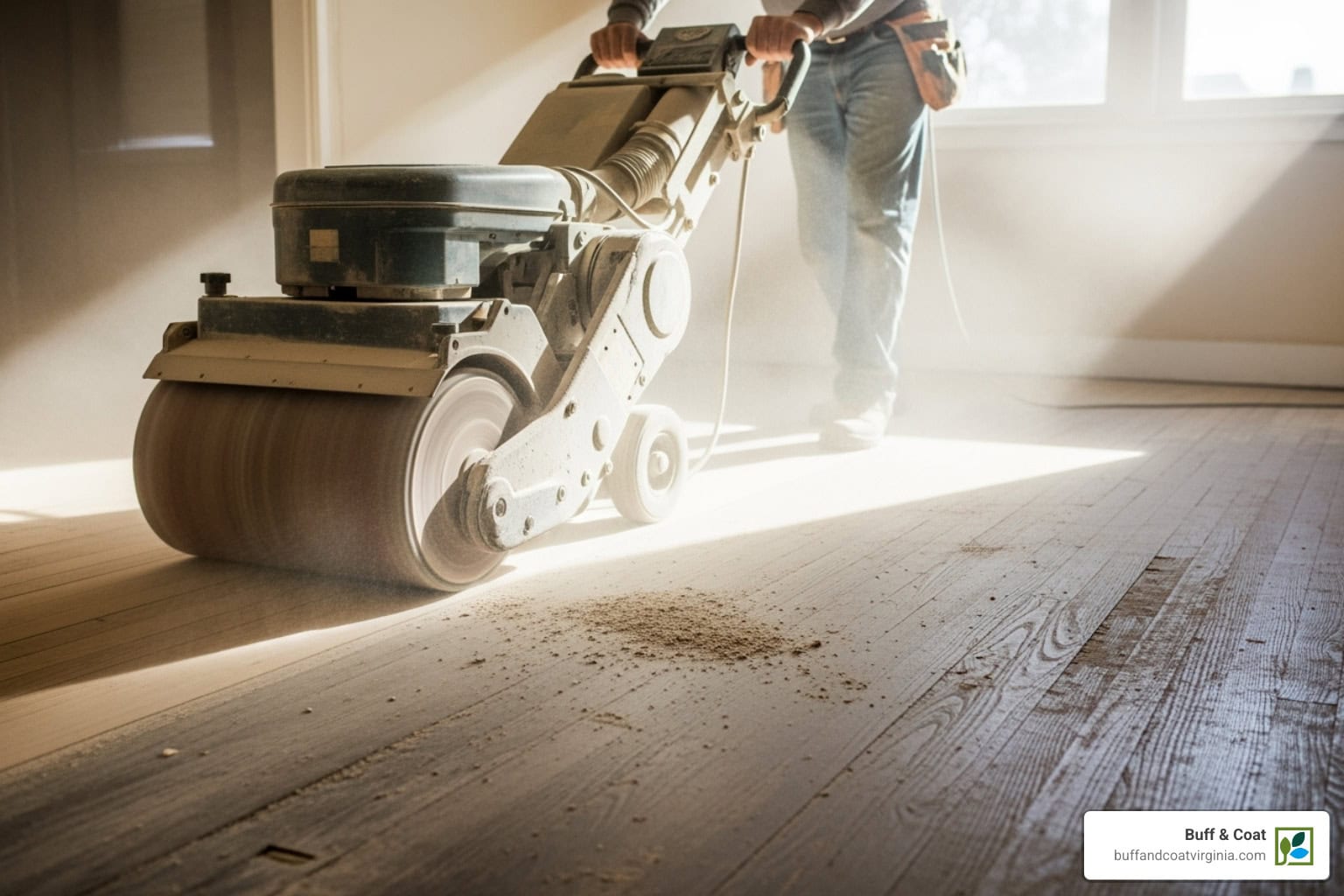
Why Sand and Refinish Hardwood Floors
Sand and refinish hardwood floors are the key to changing worn, scratched, and dull flooring back into stunning centerpieces that improve your home’s beauty and value. This comprehensive hardwood floor refinishing process removes years of damage while protecting your investment for decades to come.
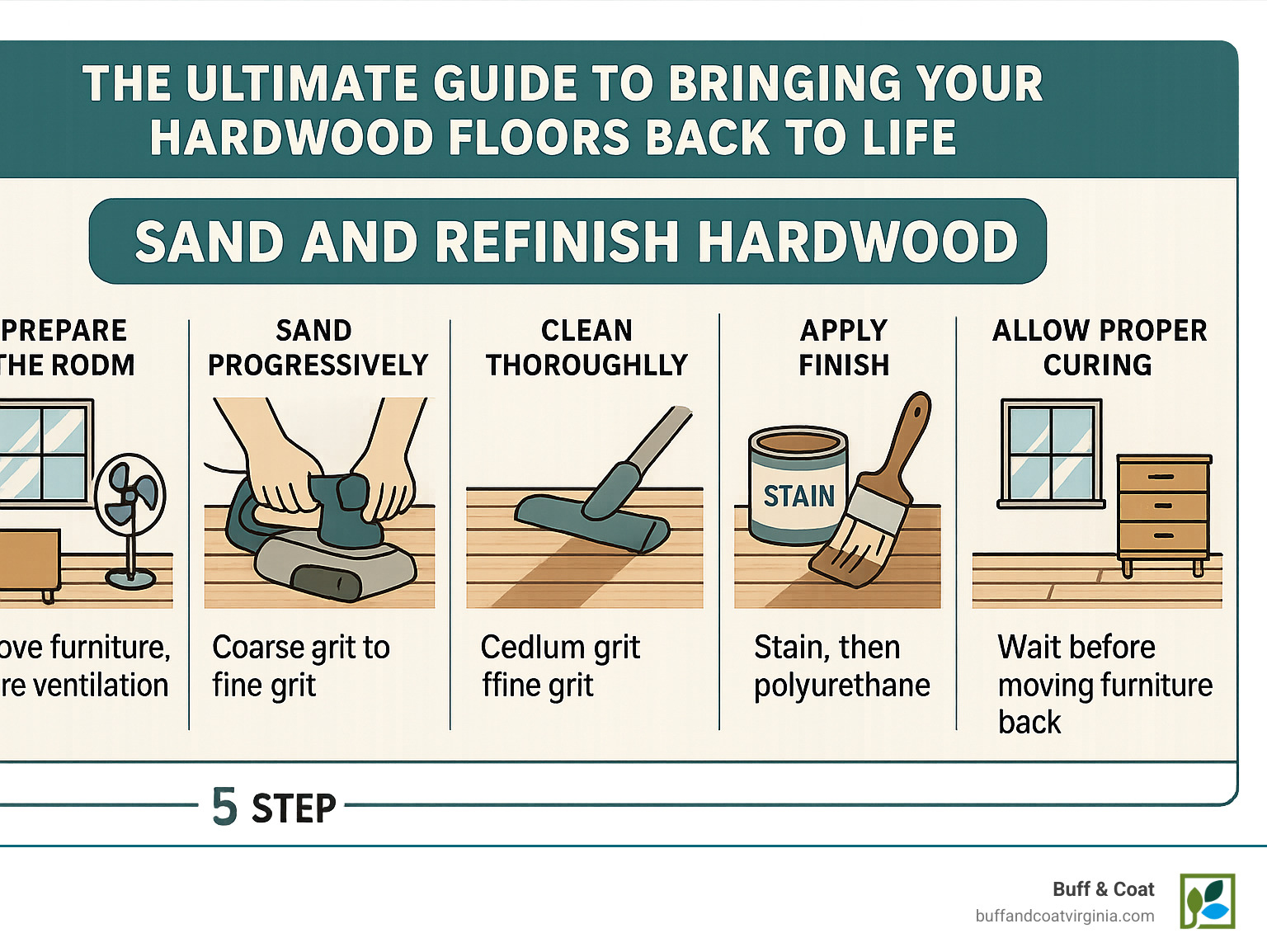
Quick Answer – The Sand and Refinish Process:
- Prepare the room – Remove furniture, seal vents, ensure proper ventilation
- Sand progressively – Start with coarse grit (36-40), move to medium (60), finish with fine (100-120)
- Clean thoroughly – Vacuum all dust and debris between each step
- Apply finish – Stain (optional), then 2-3 coats of polyurethane
- Allow proper curing – Wait recommended time before moving furniture back
The benefits extend far beyond aesthetics. Research shows that refinishing hardwood floors can increase your home’s value while being significantly more cost-effective than replacement. A typical DIY project costs around $1.50 per square foot, compared to professional services ranging from $4-10 per square foot, and full replacement costing even more.
Refinishing also improves indoor air quality by eliminating trapped dust and allergens that accumulate in worn finishes over time. With proper care, refinished floors can last 7-10 years before needing attention again.
Whether you’re dealing with surface scratches, fading, or general wear, this guide will walk you through every step of the process. From assessing your floor’s condition to applying the final protective coating, you’ll learn the techniques and avoid the common mistakes that can turn a restoration project into a costly repair.
I’m David Emmerling, President and Owner of Buff & Coat Hardwood Floor Refinishing, with over 20 years of experience helping homeowners sand and refinish hardwood floors throughout the Richmond area. My hands-on approach to every project has taught me the ins and outs of floor restoration, from traditional techniques to modern dust-free methods.
Basic sand and refinish hardwood glossary:
Is Refinishing Right for Your Floor?
Before we even think about touching a sander, the first step in any successful sand and refinish hardwood project is to assess if refinishing is truly what your floors need. Not every floor showing signs of wear requires a full sanding. Sometimes, a deep clean and a fresh coat of finish (often called a “screen and recoat” or “buff and recoat”) can do the trick.
So, what are the signs that your hardwood floors need refinishing?
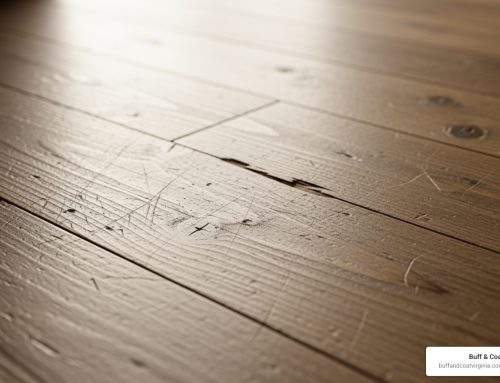
- Deep Scratches and Gouges: If scratches go beyond the surface finish and into the wood itself, or if you have noticeable gouges, a full hardwood floor sanding is likely necessary to remove these imperfections.
- Fading and Discoloration: Sunlight exposure or general wear can cause the color of your wood to fade or become uneven. Refinishing allows us to restore the original hue or even change it entirely with a new stain.
- Worn-Off Finish: This is perhaps the most critical sign. If you see areas where the protective finish has completely worn away, exposing bare wood, your floor is vulnerable to moisture damage and further wear. A simple water droplet test can quickly reveal this: if water droplets soak in immediately, your floor needs refinishing. If they bead up, it might only need cleaning and polishing.
- Graying or Dullness: Over time, the finish can become dull or even take on a grayish tint, especially in high-traffic areas. This indicates that the finish is compromised and no longer protecting the wood effectively.
Now, let’s talk about the type of hardwood you have. Can you refinish engineered hardwood floors, or is it only for solid hardwood?
- Solid Hardwood Floors: These are typically 3/4-inch thick solid wood planks. They are the champions of refinishing, capable of being sanded multiple times throughout their lifespan. Traditional solid hardwood floors can generally be refinished up to 10 times, depending on the thoroughness of the sanding and the level of wear. This means they can truly last for the life of a home!
- Engineered Hardwood Floors: These floors consist of a real wood veneer layer on top of multiple layers of plywood or high-density fiberboard. The key here is the thickness of that top veneer. If the veneer is thick enough (usually 2-3mm or more), engineered floors can be sanded and refinished, often once or twice. However, if the veneer is very thin, a full sanding might go right through it, damaging the floor irreparably. It’s crucial to know your floor’s specifications before attempting to sand and refinish hardwood engineered flooring. If in doubt, we always recommend consulting a professional.
Finally, how often should hardwood floors typically be refinished?
In general, hardwood floors need to be refinished every seven to 10 years. This timeframe can vary based on traffic levels, direct sunlight exposure, and how well the floors are maintained. High-traffic areas, like hallways and living rooms, may show wear sooner than bedrooms. For more detailed information, check out our guide on How Often Should Hardwood Floors Be Refinished.
Before You Begin: Preparation and Safety
Think of preparing to sand and refinish hardwood floors like getting ready for a major home renovation – because that’s exactly what it is. The difference between a successful project and a costly disaster often comes down to how well you prepare. I’ve seen too many enthusiastic DIYers rush into sanding only to realize they forgot to seal off their kitchen, and now there’s fine dust coating every dish in their cabinets.
The good news? With proper preparation and safety measures, this can be one of the most rewarding home improvement projects you’ll ever tackle. Your floors will thank you, your home’s value will increase, and you’ll have the satisfaction of knowing you restored something beautiful with your own hands.
How to Properly Prepare the Room
Room preparation isn’t just about moving furniture – it’s about creating a controlled environment where you can work efficiently while protecting the rest of your home. Trust me, skipping these steps will cost you hours of cleanup later.
Start by removing absolutely everything from the room. I mean everything – furniture, curtains, decorative items, even the little things you might think won’t matter. That beautiful area rug? It needs to go. The family photos on the side table? They need to find a temporary home elsewhere.
Removing baseboards is optional, but I highly recommend it if you want professional-looking results. When you leave baseboards on, the edger can’t reach all the way to the wall, leaving an unsanded “halo” around the room’s perimeter. If you do remove them, number each piece with painter’s tape so you know exactly where each one goes back.
Clean the floor thoroughly before you even think about plugging in a sander. Sweep, vacuum, and look for any small debris that could damage your sandpaper or create scratches. Even a tiny pebble can cause problems when it gets caught under a drum sander.
Sealing off the work area is absolutely critical. Use heavy-duty plastic sheeting and high-quality painter’s tape to seal all air vents, doorways, and even light fixtures. I’ve learned from experience that fine sanding dust has an amazing ability to find its way into places you never imagined. Your future self will thank you when you’re not finding dust in your bedroom closet weeks later.
Ventilation is your friend, but it needs to be controlled. Open windows in the work area and consider placing a fan to blow air outward – but only after you’ve sealed off other areas. You want the dust to leave through the windows, not migrate to other parts of your house.
For more detailed guidance on protecting your entire home during this process, check out our comprehensive guide on how to prepare your house for refinishing.
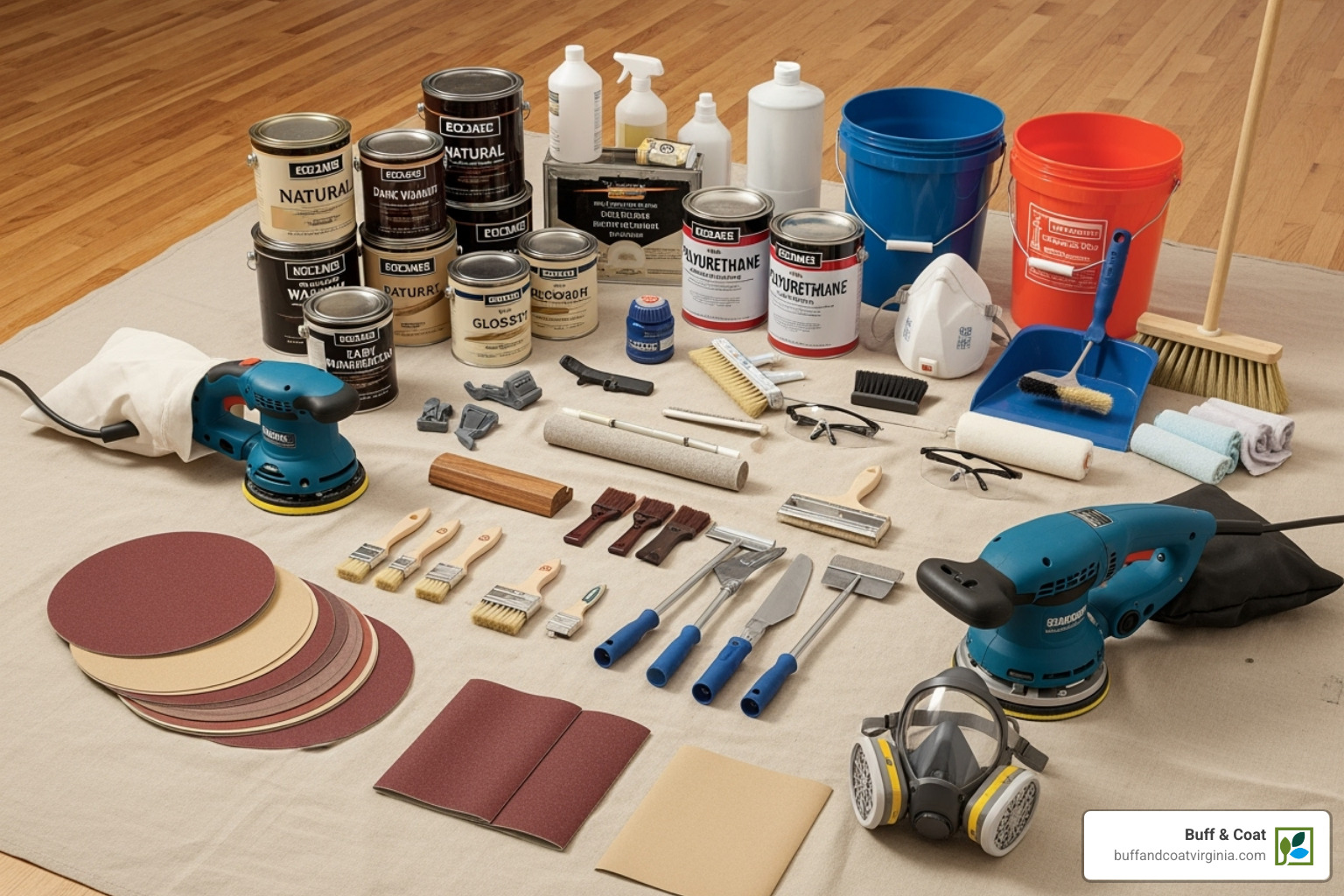
Essential Tools and Materials to Sand and Refinish Hardwood
Having the right equipment makes all the difference between a smooth project and a frustrating struggle. Most of these tools can be rented from your local home improvement store, which is much more economical than buying everything outright.
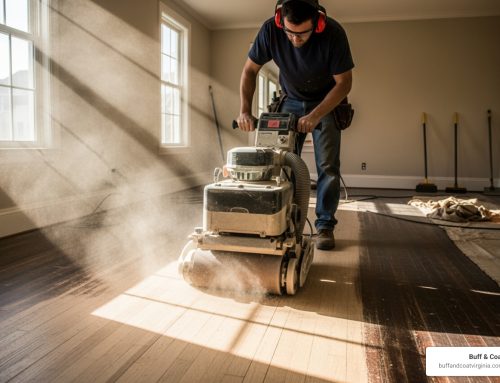
Your main workhorses will be the drum sander for large open areas and the edger sander for perimeters. The drum sander is powerful and efficient, but it demands respect – it can gouge your floor in seconds if you’re not careful. The palm or orbital sander handles those tricky corners and tight spaces where the bigger sanders can’t reach.
A quality shop vacuum with a HEPA filter is absolutely essential. Regular household vacuums just won’t cut it for the fine dust you’ll be creating. You’ll use this constantly throughout the project, not just at the end.
For applying finishes, you’ll need the right applicators depending on what type of polyurethane you choose. Lamb’s wool applicators work well for oil-based finishes, while foam applicators are better for water-based products.
Sandpaper selection follows a logical progression: start with coarse grit (36-40) to remove the old finish and level the floor, move to medium grit (60-80) to smooth things out, and finish with fine grit (100-120) for that final smooth surface.
Wood filler becomes your best friend for dealing with nail holes and small imperfections. Choose one that matches your wood or can be stained to blend seamlessly.
Tack cloths might seem like a small detail, but they’re crucial for picking up every last speck of dust before you apply stain or finish. Think of them as the final quality check before the beautiful part begins.
Safety Precautions and Minor Repairs
Safety isn’t negotiable when you sand and refinish hardwood floors. The combination of powerful machinery, fine dust, and chemical fumes creates several hazards that proper equipment easily prevents.
Your respiratory system needs protection from fine wood dust that can cause both immediate irritation and long-term health problems. An OSHA-approved respirator or N95 mask is essential during sanding, and you’ll want a vapor mask when applying finishes.
Eye and ear protection might seem obvious, but I’ve seen people skip these basics. Safety glasses prevent dust and debris from getting in your eyes, while ear protection saves your hearing from the loud sanders you’ll be operating for hours.
Proper ventilation does double duty – it helps clear dust and fumes while making the work environment more comfortable. Keep windows open whenever possible, especially during staining and finishing.
Lead paint concerns are real if your home was built before 1978. The safest approach is to assume lead might be present and follow the EPA’s Lead-Safe Certified Guide to Renovate Right. When in doubt, have it tested or hire a professional.
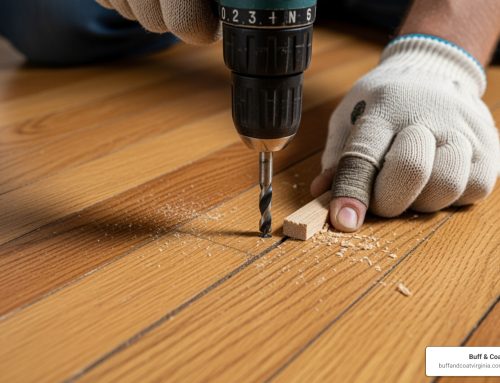
Before sanding begins, walk through and hammer down any protruding nails or screws. Fill nail holes and minor gouges with wood filler, allowing it to dry completely before sanding. For deeper damage, you might need to use wood putty or even small wooden plugs.
Fire safety becomes important when using oil-based products. Oil-soaked rags can spontaneously combust, so hang them outside to dry completely before disposal. Never leave them bunched up indoors.
The goal of all this preparation is creating the ideal conditions for success. When everything is properly set up and safety measures are in place, the actual sanding and finishing process becomes much more enjoyable and produces professional-quality results.
The Step-by-Step Process to Sand and Refinish Hardwood Floors
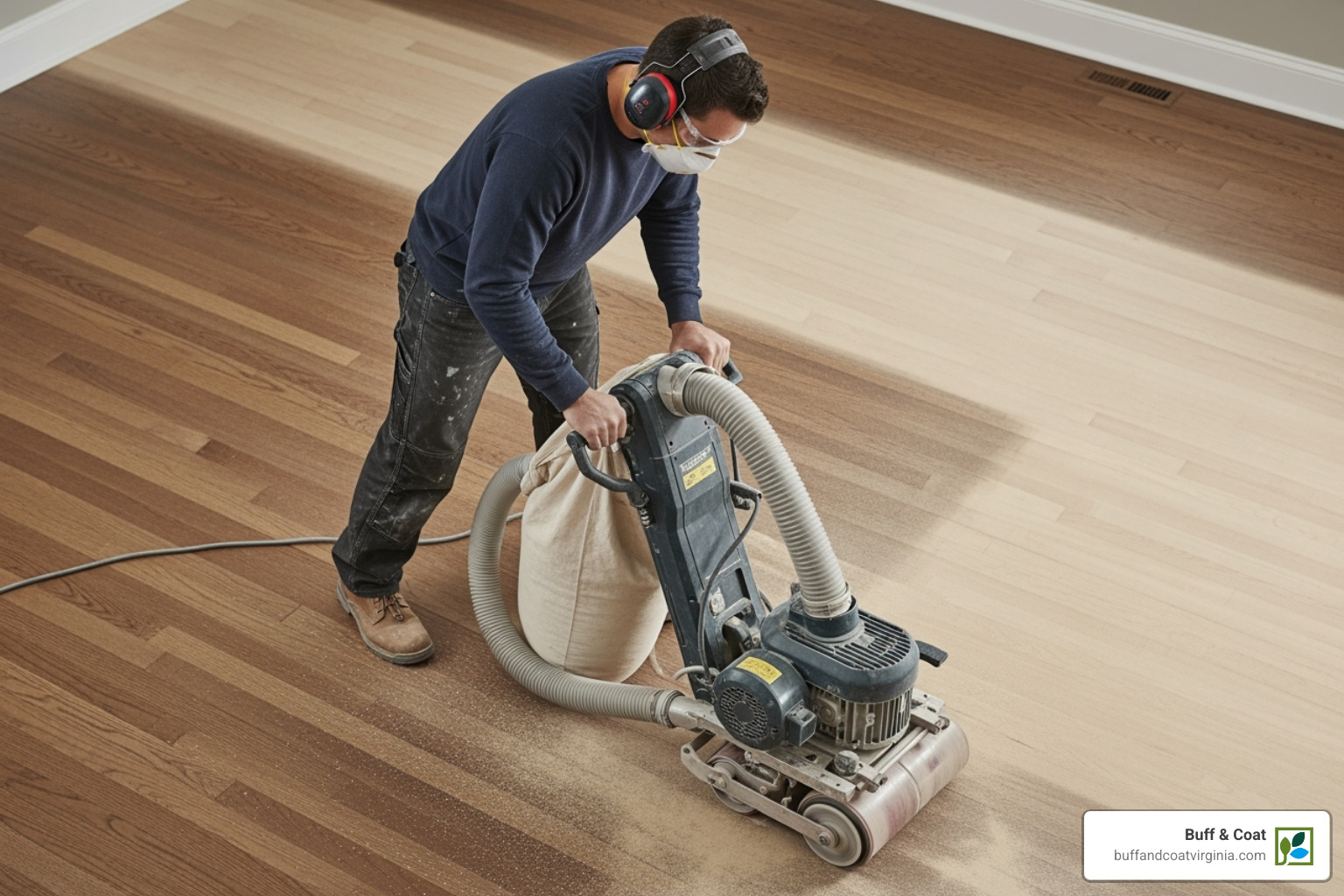
Now comes the exciting part – changing your worn floors into beautiful hardwood again! The sand and refinish hardwood process requires patience and attention to detail, but the results are absolutely worth it. Think of this as sculpting – you’re gradually revealing the gorgeous wood that’s been hiding under years of wear and old finish.
The key to success lies in understanding that sanding is a progressive process. You’ll start aggressive and gradually work toward a baby-smooth finish that’s ready for its protective coating.
Step 1: The Initial Sanding Passes
Your journey to stunning floors begins with the heavy lifting – removing that old, tired finish and smoothing out imperfections that have accumulated over the years.
Starting with coarse-grit sandpaper is essential for this first phase. We typically begin with 36-40 grit sandpaper, which acts like your floor’s personal trainer – tough but effective. If your floors have particularly stubborn buildup or deep damage, you might even need to start with 20-grit, though this is rare for most home projects.
Operating the drum sander properly is crucial because this powerful tool can quickly become your worst enemy if mishandled. The golden rule? Never let it sit in one spot. Always start with the drum raised off the floor, then slowly lower it as you begin walking forward. When you reach the end of your pass, lift the drum before stopping. Think of it like landing an airplane – smooth approach, controlled contact, gentle takeoff.
Moving with the grain isn’t just a suggestion – it’s absolutely critical. Sanding against the grain creates cross-grain scratches that will haunt you through every subsequent step and show through your final finish like unwanted battle scars.
Overlapping passes ensure even coverage across your entire floor. Overlap each pass by at least one-third the width of your sanding belt, working methodically across the room. A helpful trick is to draw light pencil marks across the floor before starting – when those marks disappear, you know that section has been properly sanded.
After completing the entire floor with coarse grit, it’s time to progress to medium-grit sandpaper, typically 60-80 grit. This pass removes the coarser scratches left behind and continues smoothing the surface. Remember to sweep and vacuum thoroughly between each grit change – any debris left behind can create new scratches.
Using an edger for perimeters addresses the areas your drum sander can’t reach. The edger uses the same grit progression as your drum sander to ensure uniform results. Move it in sweeping, semicircular motions or straight along the wall, always overlapping your passes.
Using a palm sander for corners completes the picture. These tight spaces that even the edger can’t access need attention too. Your palm or orbital sander becomes your precision tool for these detail areas.
Don’t forget to replace your sandpaper frequently – roughly every 250 square feet. Worn or clogged sandpaper works harder and delivers poorer results.
Step 2: Final Sanding and Cleaning
This stage is all about achieving that silky-smooth surface that makes the difference between a good job and a professional-looking result.
The final pass with fine-grit sandpaper (typically 100-120 grit) removes any remaining sanding marks and prepares your wood for staining or finishing. By now, your floors should be starting to look pretty impressive, but we’re not done yet.
Screen sanding for a professional finish takes your floors to the next level. This involves using a floor buffer equipped with a fine-grit screening pad (usually 120-150 grit). The buffer levels any minor unevenness left by the drum sander and edger, creating that perfectly uniform surface that separates amateur work from professional results. It’s like the difference between a rough draft and a polished manuscript.
Thorough vacuuming becomes critical at this point. Go over the entire floor multiple times, paying extra attention to edges, corners, and any cracks between floorboards. Use a brush attachment to dislodge stubborn dust particles that might be hiding.
Wiping with tack cloths is the step that many DIYers skip – and regret later. Even after careful vacuuming, microscopic dust particles remain on the surface. Tack cloths (those slightly sticky cloths) pick up these final particles that would otherwise get trapped in your stain or finish, creating an unsightly bumpy texture.
Ensuring a dust-free surface cannot be overstated. Run your hand over the floor or shine a flashlight across the surface to check for any lingering dust. Any particles left behind will show up in your final finish like stars in a night sky – and not in a good way. This is where professional dust-free floor sanding services really shine, using advanced techniques to minimize airborne dust throughout the entire process.
Step 3: Staining and Finishing
With your floor perfectly prepped, it’s time to bring out its character and protect it for years of beautiful service.
Applying wood stain is optional, but if you want to change your floor’s color, now’s the moment of truth. Always test your stain color in an inconspicuous area first – like inside a closet or where a rug will cover. Stain can look dramatically different on actual wood than it does on those tiny sample chips.
When applying stain, work in manageable sections to avoid lap marks. Apply it evenly in the direction of the wood grain using a foam applicator, brush, or rag. Wipe off excess stain according to the manufacturer’s directions (usually within 5-15 minutes) to prevent blotchy results. Allow complete drying – typically 8-24 hours depending on the product and humidity levels.
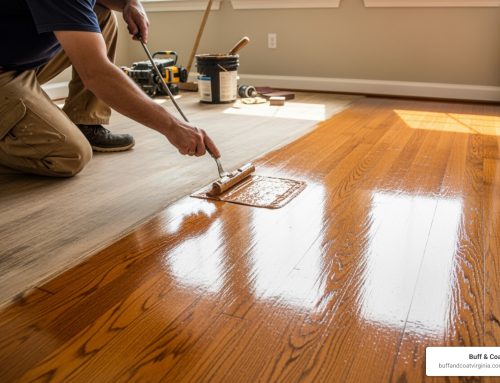
Applying polyurethane finish is where your floor gets its protection and final beauty. You have two main options, each with distinct advantages:
Water-based polyurethane dries crystal clear, has minimal odor, and dries quickly enough to apply multiple coats in one day. It’s environmentally friendlier and easier to work with, though it may be slightly less durable in extremely high-traffic areas.
Oil-based polyurethane provides maximum durability and gives wood a warm, amber tone that many homeowners love. However, it has a strong odor, takes longer to dry, and requires better ventilation during application.
Maintaining a wet edge while applying finish prevents lap marks and ensures even coverage. Work systematically across the room, never allowing your work area to dry before connecting to the next section.
Applying 2-3 coats is typically recommended for optimal protection. Lightly sand between coats with 220-grit sandpaper to ensure proper adhesion, then clean thoroughly before applying the next coat.
Proper curing time is essential – don’t rush this final step after all your hard work. Follow the manufacturer’s recommendations for foot traffic and furniture replacement. Your patience here determines how long your beautiful results will last. If this process seems overwhelming or you want to ensure a flawless, professional result, our team is here to help. We offer free estimates for all our services. Contact Buff & Coat today to schedule your free inspection and let us bring your hardwood floors back to life.