When Your Hardwood Floors Need a Major Decision
Replacing old hardwood floors is often the last resort when your beloved wood surfaces have seen better days. But before you commit to a full tearout, you need to know whether refinishing could save you thousands of dollars and weeks of disruption.
Quick Decision Guide:
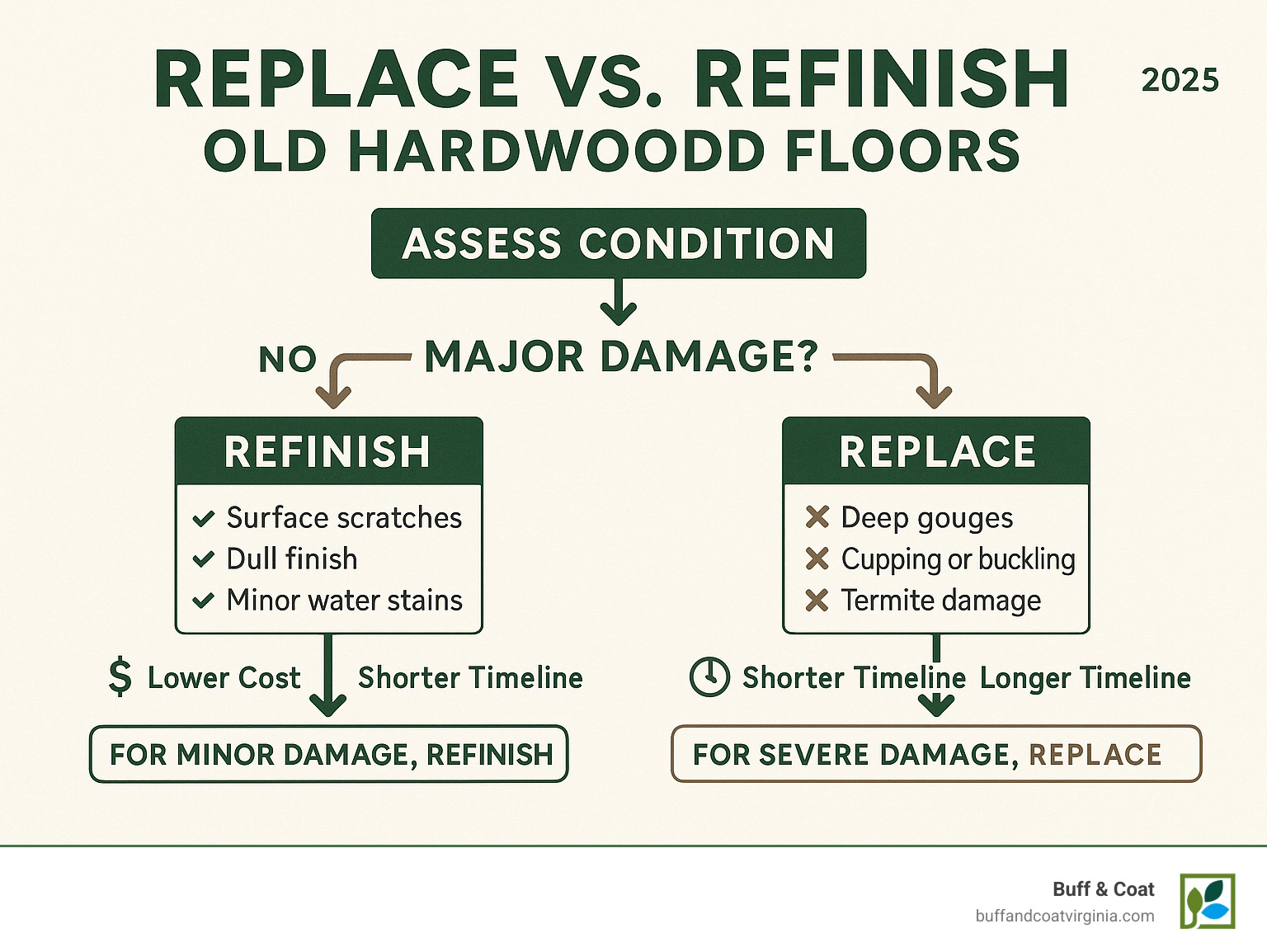
- Refinish if: Surface scratches, dull finish, minor water stains, solid wood with thickness remaining
- Replace if: Deep gouges to bare wood, cupping/buckling, termite damage, engineered floors with thin wear layers
- Cost difference: Refinishing averages $1,000-$2,400 vs. replacement at $7+ per square foot
- Timeline: Refinishing takes 1-3 days vs. replacement taking 5-10 days including acclimation
The reality is that most homeowners jump straight to replacement when a simple buff-and-coat could restore their floors for a fraction of the cost. According to industry data, refinishing costs under $500 per 275 square feet for DIY projects, while replacement runs significantly higher with new materials and labor.
The key factors that determine your path forward:
- Current floor condition and damage depth
- Your budget and timeline constraints
- Whether you have solid or engineered hardwood
- Long-term maintenance preferences
I’m David Emmerling, President of Buff & Coat Hardwood Floor Refinishing, and I’ve spent over 20 years helping Richmond-area homeowners steer this exact decision about replacing old hardwood floors or restoring what they already have. My experience has shown that proper assessment often reveals refinishing options that homeowners never knew existed.
Floor Health Check: Can Your Planks Be Saved?
Before you start replacing old hardwood floors, let’s assess your current flooring. Think of this as giving your floors a complete physical exam – we’re looking for clues that tell us whether your hardwood deserves a second chance or needs replacement.
The most telling symptoms I see during floor assessments are cupping (edges curl up higher than the center, creating valleys) and buckling (entire boards lift and separate from the subfloor, often with a popping sound).
Deep gouges that cut through the finish to bare wood are another red flag. These aren’t just cosmetic scratches – they’re like open wounds that let moisture seep in and cause bigger problems. Water damage shows up as dark stains, warping, or boards that feel soft when you walk on them.
Termite damage can turn solid hardwood into Swiss cheese. If you suspect termites, get a professional inspection immediately – this goes way beyond flooring concerns.
Don’t ignore squeaks either, though they’re not always a death sentence. Often, squeaky floors just mean the subfloor has loosened up over time. A few strategic screws can sometimes solve the problem without touching your hardwood.
When I assess floors professionally, I use a moisture meter to detect hidden water damage. For engineered floors, I measure the wear-layer thickness to see if there’s enough material left to sand. Solid hardwood is more forgiving – it can usually handle multiple refinishing cycles.
Want to do your own inspection? Walk your floors systematically, feeling for spots that seem soft, spongy, or uneven. Look for visible gaps between boards, raised edges, or areas where the finish has completely worn away.
Signs Hardwood Is Beyond Repair
Some damage is like a terminal diagnosis. Rot is the big one. If you can push a screwdriver into your wood easily, or if it feels mushy underfoot, the structural integrity is shot.
Severe warping that creates significant height differences between boards is another deal-breaker. When boards have cupped or crowned so dramatically that they create tripping hazards or gaps larger than 3/8 inch, refinishing won’t fix the underlying moisture problems.
Missing or severely damaged tongue-and-groove connections spell trouble too. These interlocking systems keep your floor stable and secure. When they’re compromised, individual boards start shifting around, creating an unstable walking surface.
Structural subfloor issues often reveal themselves through your hardwood’s symptoms. If the subfloor underneath has sagged, rotted, or separated from the joists, no amount of surface work will solve the problem.
Quick Tests Before Replacing Old Hardwood Floors
Before you commit to replacing old hardwood floors, try these simple diagnostic tests that might save you thousands of dollars.
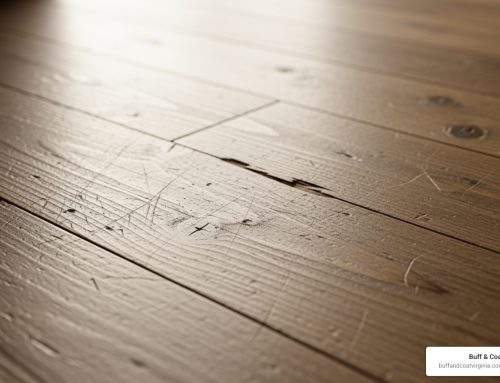
The credit-card depth scratch test is surprisingly reliable. Run a credit card across suspected scratches – if the card glides over smoothly, you’re dealing with surface-level damage that refinishing can handle. If the card catches and you feel a definite groove, the damage might be too deep for a simple fix.
Moisture readings are crucial, especially if you suspect water damage. While professional moisture meters give the most accurate results, you can get a general sense by taping a plastic sheet over suspected areas. If condensation forms underneath within 24 hours, you’ve got moisture issues that need addressing.
Board thickness measurement helps determine how much material you have to work with. Standard hardwood planks range from 0.5 to 1 inch thick. If your floors have been refinished multiple times already, there might not be enough wood left for another sanding.
Replacing Old Hardwood Floors vs. Refinishing: Cost, Time & Mess
Let’s be honest about what you’re really getting into with each option. The numbers don’t lie when it comes to the cost, timeline, and disruption you’ll face.
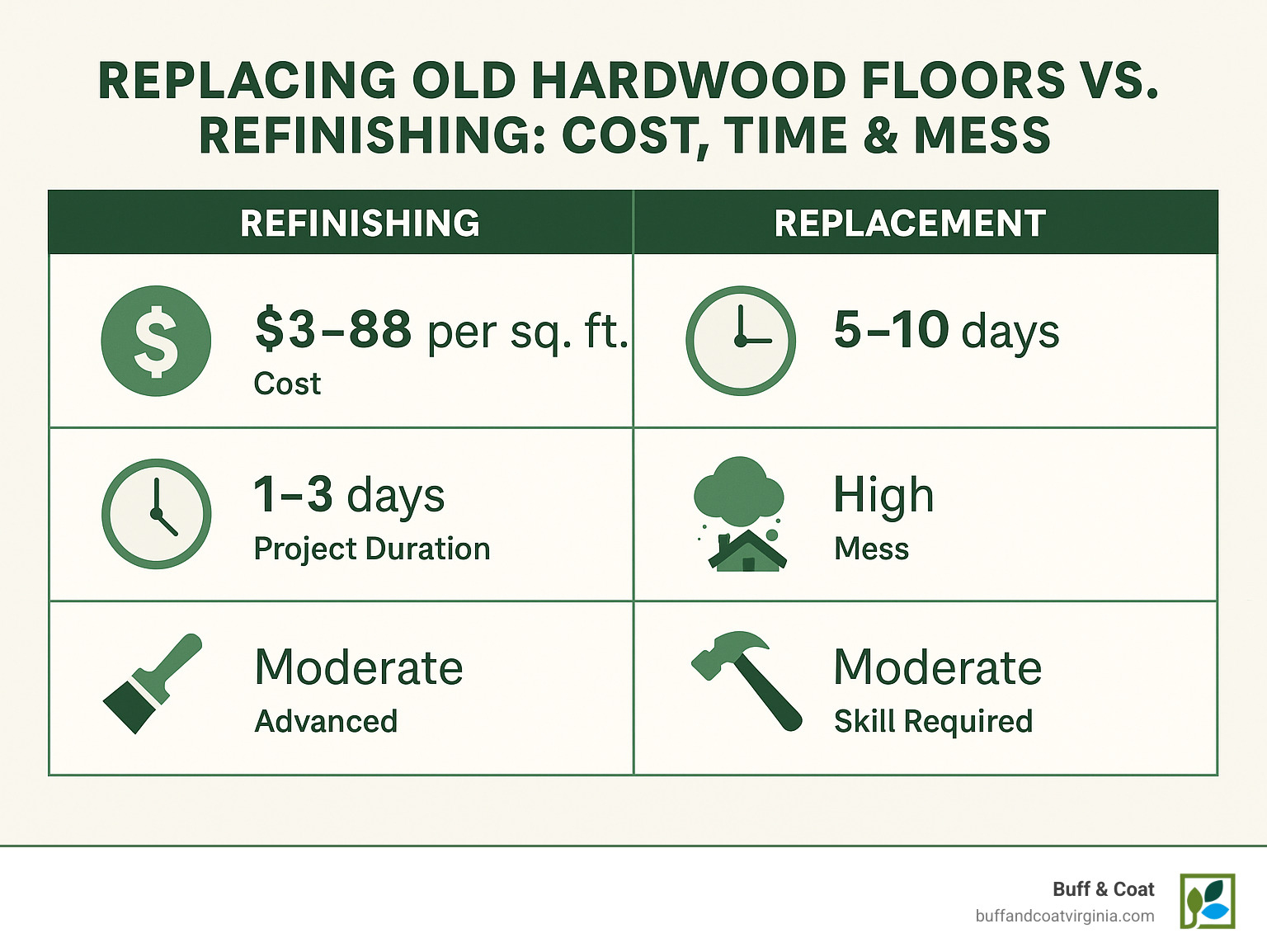
Refinishing wins the budget battle by a landslide. Professional refinishing typically runs $1,000 to $2,400 for most rooms, while replacing old hardwood floors hits you with approximately $7 per square foot – and that’s just the beginning. For a 300-square-foot room, refinishing might cost $2,100 total, but replacement starts at $2,100 just for materials before labor costs.
The timeline difference is equally dramatic. Refinishing can be done in one to three days, getting you back to normal life quickly. Replacement? You’re looking at 5-10 days minimum, including the mandatory acclimation period where your new wood sits around adjusting to your home’s humidity levels.
Now, about the mess – traditional refinishing used to mean dust everywhere. But modern dust-free equipment has completely changed this game. At Buff & Coat, our dust-free systems eliminate 99% of airborne particles, making refinishing cleaner than most people expect.
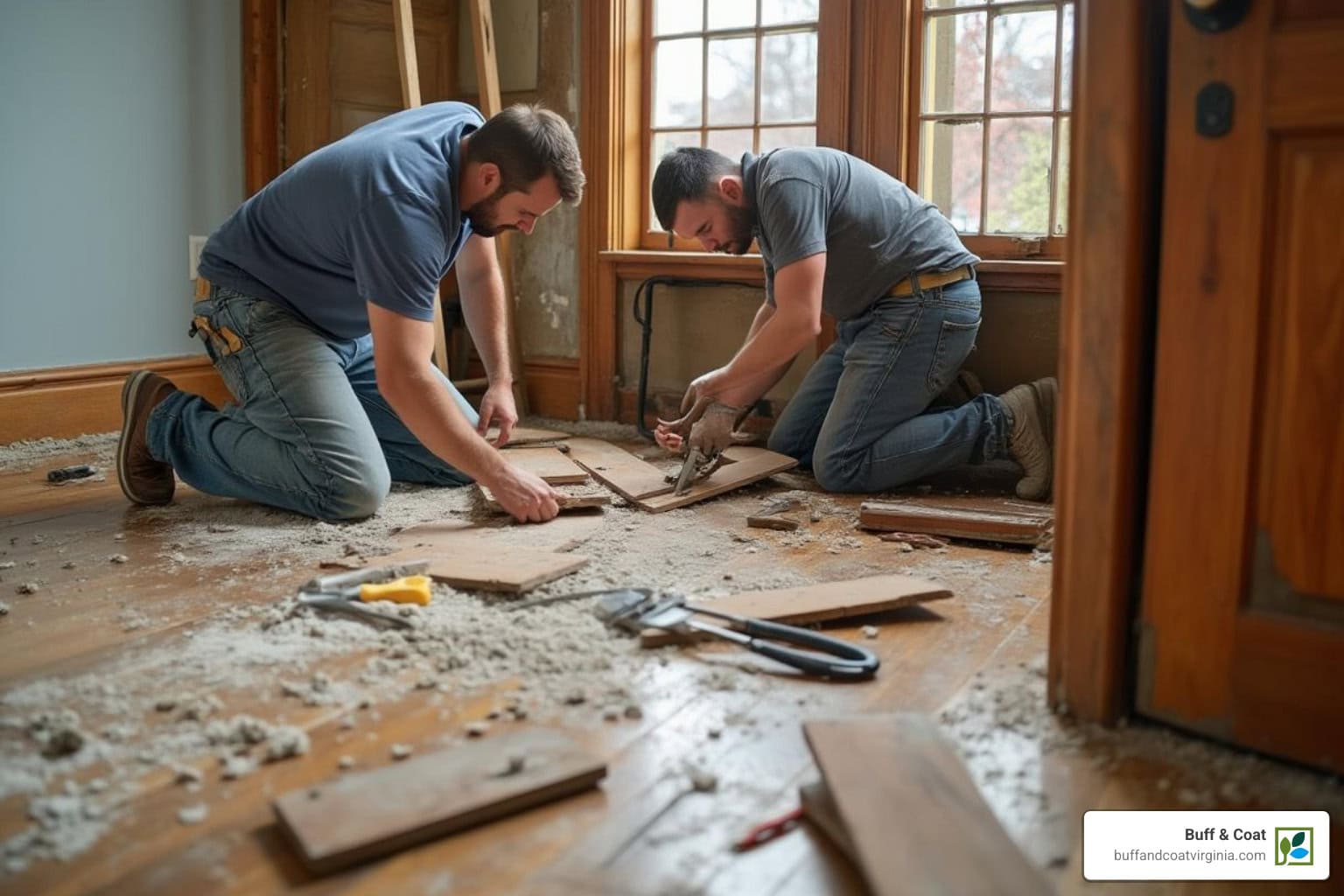
Replacement creates a different kind of chaos. You’re dealing with demolition debris, piles of old flooring, and constant noise of nail and staple removal. Less airborne dust during installation, but more physical debris to haul away.
DIY versus professional considerations vary dramatically between approaches. Refinishing requires specialized equipment rental – sanders, edgers, dust collection systems – plus the technique to use them without ruining your floors. Tool rental costs can add $200-400 to your project.
Replacement demands more physical labor but uses common tools many homeowners already own. However, disposal fees for your old flooring can surprise you with an extra $200-500 depending on local regulations.
Budget Breakdown for Replacing Old Hardwood Floors
When you’re replacing old hardwood floors, materials will eat up 40-60% of your total budget. Solid hardwood ranges from $3-12 per square foot depending on species and grade. Engineered options run $2-8 per square foot, while laminate alternatives cost significantly less at $0.80-$3 per square foot.
Here’s where many homeowners get blindsided: subfloor preparation costs. If your existing subfloor needs leveling, self-leveling compound adds $0.50-$1.50 per square foot. This isn’t optional – uneven subfloors create squeaks, gaps, and premature wear.
Underlayment is another necessary expense. Basic foam underlayment runs $0.25-$0.50 per square foot, while premium sound-reducing options cost $0.75-$1.25 per square foot.
Fasteners and adhesives represent smaller line items but are crucial for proper installation. Budget $0.15-$0.35 per square foot for nails, staples, or adhesive. The micro pin nailer mentioned in our installation guide runs about $100-150 for quality models.
Finish costs apply if you choose unfinished hardwood. Polyurethane finishes range from $0.50-$1.50 per square foot for materials.
Don’t forget disposal fees for your old flooring. Depending on local regulations, this can add $200-$500 to your project cost. Check out our comprehensive guide on How Much Does Flooring Installation Cost? for more detailed pricing information.
Timeline Truths When Replacing Old Hardwood Floors
Let me give you the real timeline for replacing old hardwood floors – not the optimistic contractor estimates, but what actually happens.
Demolition takes 4-8 hours for a standard room, but this depends heavily on your original installation method. Glued-down floors can take twice as long to remove as nail-down installations.
Subfloor preparation and drying time often gets overlooked in planning. If we find moisture issues, the subfloor may need days or even weeks to dry completely. Self-leveling compounds typically need 24-48 hours to cure fully.
Acclimation time is non-negotiable for quality results. New hardwood should sit in your home for 3-7 days to adjust to humidity and temperature conditions. Skip this step and you’ll see gaps and buckling within months.
Installation itself typically takes 1-3 days for most residential projects, depending on room size and complexity. Factor in extra time if you’re doing this yourself – professional installers work much faster than weekend warriors.
Finish cure time varies by product type. Water-based polyurethanes allow light foot traffic in 24 hours. Oil-based finishes require 72 hours before normal use.
For those considering the Do It Right, Do It Yourself! approach, add 50-100% more time to these estimates.
Fast-Track Guide to Refinishing Without Full Sanding
Sometimes replacing old hardwood floors isn’t necessary when a smart middle-ground approach can restore your floors beautifully. Our signature buff-and-coat process has become the go-to solution for homeowners who want dramatic results without the time, mess, and expense of full refinishing or replacement.
Think of it as giving your floors a professional facial rather than major surgery. Surface screening removes just the top layer of worn finish while leaving the underlying wood and stain completely intact. This gentle approach preserves all the character and patina your floors have developed over the years.
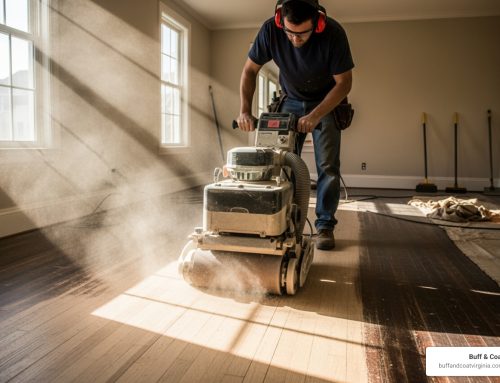
The magic happens with professional-grade buffers equipped with maroon abrasive pads that create the perfect surface texture for new polyurethane to bond. Unlike aggressive sanding that cuts deep into the wood, this process only scuffs the existing finish uniformly.
What makes this process truly remarkable is our dust-free equipment. Advanced vacuum systems capture particles at the source, which means you won’t come home to find dust on every surface in your house. Many clients are amazed that they can stay in their homes during the entire process.
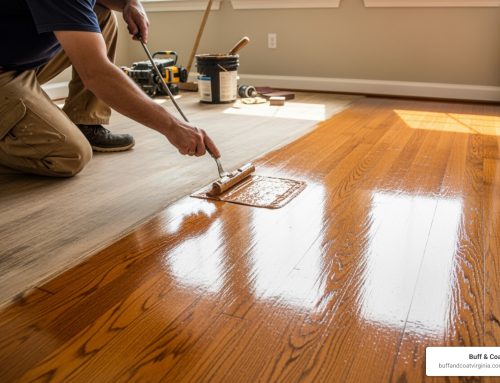
The choice between water-based and oil-based polyurethane significantly impacts both your experience and results. Water-based products dry faster and have minimal odor, making them perfect when you need to get back to normal life quickly. Oil-based finishes take longer to cure but provide that warm, amber glow many homeowners love.
Edge preparation requires careful hand-sanding along walls and in tight corners where our buffers can’t reach. This detail work separates a professional job from a DIY disaster.
The best part about choosing our buff-and-coat method is the maintenance schedule. When done properly, you can expect to recoat every 5-7 years to maintain that showroom appearance.
When the Buff-and-Coat Process Shines
Light scratches that haven’t cut through to bare wood respond beautifully to our process. These surface-level marks completely disappear under the new polyurethane layer, and you’ll be amazed at how floors that looked tired suddenly look brand new.
Dulled finishes from years of foot traffic regain their original luster and protection without any of the disruption that comes with full refinishing. This works especially well in high-traffic areas like hallways and living rooms.
Sometimes homeowners want a color refresh without the expense of completely refinishing their floors. Different polyurethane formulations can subtly warm or cool your floor’s overall appearance while providing fresh protection.
The minimal downtime is probably what our clients appreciate most. Most buff-and-coat projects allow you to walk on your floors within 24 hours and move furniture back within 48-72 hours. Compare that to the week-long displacement that full refinishing often requires.
Step-by-Step: Safe & Efficient Floor Replacement

When you’ve determined that replacing old hardwood floors is your best option, proper technique makes the difference between a professional-looking result and a project you’ll regret.
Safety comes first – protective eyewear shields your eyes from flying debris, knee pads save your joints during hours of floor-level work, and dust masks protect your lungs from accumulated dust and finish particles.
The cut-and-pry technique is your best friend for efficient removal without destroying your subfloor. Set your circular saw blade depth just 1/16 inch deeper than your flooring thickness – any deeper and you risk cutting into the subfloor. Make perpendicular cuts every foot or two to break stubborn planks into manageable sections.
Pry bars and mallets work as a team to lift those cut sections. Start with the longest, straightest boards along your walls, then work toward the room’s center. Those tongue-and-groove connections will fight you, but steady, consistent pressure usually wins.
Nail and staple removal is tedious but crucial work. Keep a large magnet handy to collect metal debris before you vacuum – this protects your shop vacuum from expensive damage.
Subfloor leveling separates amateur installations from professional results. Use an 8-10 foot straight board to identify high and low spots. Sand down high areas and fill low spots with floor-leveling compound, ensuring your entire surface stays within 1/8 inch of level.
Tongue-and-groove installation requires careful attention to alignment and spacing. Start with your longest, straightest boards along your room’s longest wall, maintaining that crucial 1/8 inch expansion gap. A micro pin nailer gives you precise fastening without splitting your new boards.
Staggered joints create both visual appeal and structural stability. Keep those butt joints at least 6 inches apart in adjacent rows, and avoid creating H-patterns that weaken your installation.
Preparing the Subfloor Before Replacing Old Hardwood Floors
Your subfloor preparation determines whether your new floors will squeak, gap, or fail prematurely.
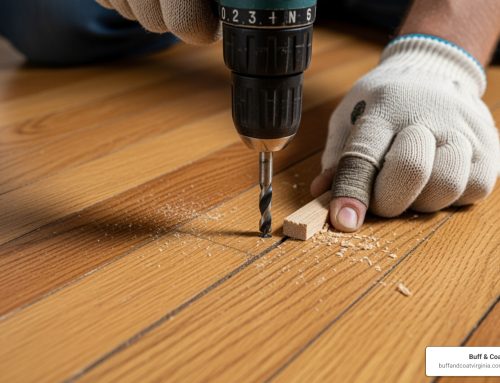
Screw down any loose areas to the underlying joists using construction screws rather than nails. Screws create a permanent, solid connection that eliminates future movement and squeaks.
Self-leveling compound addresses minor irregularities that would otherwise telegraph through your new flooring. Choose gypsum-based products over Portland cement mixtures – they’re more compatible with nailing.
Vapor retarders aren’t optional in certain climates and installation conditions. These barriers prevent moisture migration from below while allowing your wood to acclimate properly to room conditions from above.
Dealing with squeaks often requires detective work to identify the noise source. Most squeaks result from loose subflooring rather than the finish flooring itself. Securing your subfloor to joists with screws typically eliminates these sounds permanently.
When subfloor issues become extensive, professional assessment becomes valuable. Our Floor Installation services include comprehensive subfloor evaluation and correction as part of every project.
Choosing Your New Surface
Solid hardwood remains the gold standard for longevity and refinishing potential. These floors can be sanded and refinished multiple times over their lifetime, making them a true long-term investment despite higher initial costs.
Engineered wood offers stability in challenging environments while maintaining hardwood’s appearance. The plywood core resists moisture-related movement, making it ideal for basements or areas with significant seasonal humidity changes.
Laminate provides hardwood’s appearance at a fraction of the cost, ranging from $0.80 to $3 per square foot. While not refinishable, modern laminates offer impressive durability and easy installation.
Waterproof hybrid products combine the best features of multiple technologies. These newer options provide hardwood appearance with complete moisture resistance, making them ideal for kitchens, bathrooms, and basements.
For more guidance on wood selection in the Richmond area, check out our insights on Wood Flooring Richmond VA.
Eco-Friendly Upgrades & Common Pitfalls to Avoid

Making smart environmental choices during your flooring project doesn’t mean sacrificing quality or breaking your budget. Many eco-friendly options can actually save you money while protecting your family’s health and the planet.
FSC certification is your guarantee that new hardwood comes from responsibly managed forests. When you see that FSC logo, you know the wood was harvested using practices that protect wildlife, clean water, and local communities. It’s like a background check for your flooring.
Low-VOC finishes are a game-changer for indoor air quality. These products release fewer harmful chemicals into your home’s air, which means less headache-inducing fumes during application and healthier air for your family long-term. Water-based polyurethanes typically have the lowest VOC content.
Don’t overlook the potential of recycling your old boards. Even when planks are too damaged for flooring, they often make stunning accent walls, rustic furniture, or outdoor projects. I’ve seen homeowners create beautiful kitchen islands and barn doors from floors that were destined for the dumpster.
Now, let’s talk about mistakes that can turn your flooring project into a nightmare. Height mismatches between old and new flooring are more than just ugly – they’re dangerous. Always measure twice and plan your transitions with proper reducers or threshold strips.
Expansion gaps might seem like a small detail, but they’re absolutely critical. Wood moves with the seasons, and without proper gaps around the perimeter, your beautiful new floors can buckle. Leave at least 1/4 inch around the edges – your baseboards will hide the gap.
The biggest mistake I see homeowners make is ignoring acclimation time. I get it – you’re excited to see your new floors installed. But rushing this step is like planting a garden in frozen ground. Wood needs time to adjust to your home’s temperature and humidity levels. Skip this step, and you’ll likely see gaps or buckling within months.
Finally, skipping moisture tests is like driving blindfolded. Both your subfloor and new materials need to be tested for moisture content before installation. Significant differences can cause cupping, crowning, or complete adhesive failure. A simple moisture meter can save you thousands in repair costs.
The key to avoiding these pitfalls is patience and preparation. Take time to do things right the first time, and your floors will reward you with decades of beauty and performance.
Frequently Asked Questions About Replacing or Refinishing
How do I know if I can install new flooring over existing hardwood?
This is one of the most common questions we get, and honestly, it’s tempting to think you can just lay new flooring right over your old hardwood. Sometimes it works, but more often it creates problems.
The existing floor must be rock solid – no squeaks, no loose boards, no soft spots. If you can feel any movement when walking across the floor, that instability will transfer to your new flooring and likely get worse over time.
Height is usually the deal-breaker. Adding new flooring on top of existing hardwood raises your floor level by at least half an inch, sometimes more. This means your doors might not open properly, your appliances might not fit, and you’ll need transition strips everywhere.
The moisture factor gets tricky too. Trapping the old hardwood underneath can create a moisture sandwich that leads to warping, mold, or adhesive failure.
My honest advice? If your existing hardwood is in good enough condition to build on top of, it’s probably good enough to refinish instead. Replacing old hardwood floors completely usually makes more sense than trying to work around them.
How long does it really take to replace hardwood in a 300 sq ft room?
Let me give you the real timeline, not the optimistic version some contractors might quote. A 300-square-foot room typically takes 7-10 days from start to finish, though you’re not dealing with active construction the entire time.
Day one is all about demolition – ripping out the old flooring, pulling nails, and cleaning up the mess. This usually takes 4-6 hours of actual work.
Days two and three focus on subfloor prep. This is where we often find surprises – squeaky spots that need screwing down, low areas that need leveling compound, or moisture issues that require attention.
Days four through six are acclimation time for your new flooring. This isn’t optional – the wood needs to adjust to your home’s temperature and humidity.
Installation happens on days seven and eight for most standard rooms. The final days are for curing and cleanup. You can walk on the floors, but furniture and normal use need to wait until everything’s fully set.
What maintenance keeps new floors looking fresh the longest?
The secret to long-lasting floors isn’t complicated, but it does require consistency. The first 30 days are absolutely critical – treat your floors like they’re still curing, because they are.
Daily dust mopping or vacuuming removes the tiny particles that act like sandpaper on your finish. Use a vacuum with a floor brush attachment, not the beater bar that can scratch the surface.
Weekly damp mopping with the right cleaner keeps things looking fresh without over-wetting the wood. The key word here is “damp” – your mop should be well-wrung, not soaking.
Furniture pads are your best friend. Every chair leg, every table base, every piece of furniture that touches your floor should have a pad underneath. This one simple step prevents most scratches and dents.
Address spills immediately – water is hardwood’s enemy, and even sealed floors can suffer damage if moisture sits too long.
The maintenance schedule that works best is recoating high-traffic areas every 3-5 years with a compatible finish. This refreshes the protective layer and keeps your floors looking new without the expense of full refinishing.
Our Hardwood Floor Refinishing Richmond VA services include maintenance consultations where we assess your specific situation and recommend the best care schedule for your lifestyle and flooring type.
Conclusion
Deciding between refinishing and replacing comes down to two things: the actual condition of your floor and how much disruption you can tolerate. After 20 years of working on Richmond-area hardwood, I can tell you that most “hopeless” floors only need a dust-free buff-and-coat, not a full tear-out.
When refinishing will bring back the beauty in a day or two, it almost always beats a week of demolition, acclimation, and installation. But when boards are rotten, warped, or riddled with termite tunnels, replacement is the smarter long-term investment—and we handle that, too.
The biggest mistake I see is guessing instead of testing. A quick in-home moisture check and thickness measurement removes all doubt. If you live in Richmond, Glen Allen, Midlothian, or a nearby community, schedule a free, no-pressure evaluation with Buff & Coat. We’ll show you exactly what your floor needs and what it will cost—no surprises.
For more detail and photo examples, visit our guide on Top Wood Floor Installation Richmond VA: Expert Tips & Services. Your floors have already added character to your home—let’s make sure they keep doing it for decades.