

Home Blog Floored by Mohawk: A Step-by-Step Installation Journey
Floored by Mohawk: A Step-by-Step Installation Journey

Why Mohawk Hardwood Flooring Installation Is Your Home’s Best Investment
Mohawk hardwood flooring installation transforms any room into a stunning showcase of natural beauty and lasting value. Whether you’re choosing engineered hardwood with Uniclic® technology or traditional solid wood planks, the process requires careful planning and precise execution. To ensure your investment is protected from day one, a professional hardwood floor installation is key. With over 100 years of flooring expertise, Mohawk has engineered their products for dimensional stability and durability—but only when installed correctly.
Here’s what you need to know about Mohawk hardwood flooring installation:
- Three main methods: Floating (Uniclic®), glue-down, and nail-down/staple-down
- Acclimation time: 48 hours for engineered, 72 hours for solid hardwood
- Environmental conditions: Maintain 60-80°F and 35-55% humidity
- Subfloor prep: Must be clean, flat (within 3/16″ in 10′), and dry
- Extra material: Purchase 5% extra (10% for diagonal layouts)
- Tools needed: Tapping block, pull bar, appropriate nailer/stapler, and safety gear
The key to success lies in proper preparation. As Mohawk’s installation guidelines emphasize: “It is the responsibility of the installer and owner to ensure that job site environmental, sub-floor and subsurface conditions meet or exceed all requirements.”
I’m David Emmerling, President of Buff & Coat Hardwood Floor Refinishing, and I’ve spent over 20 years perfecting hardwood floor projects throughout Richmond, Virginia. My experience with mohawk hardwood flooring installation has taught me that attention to detail during the installation process is what separates a good floor from a great one that lasts decades.
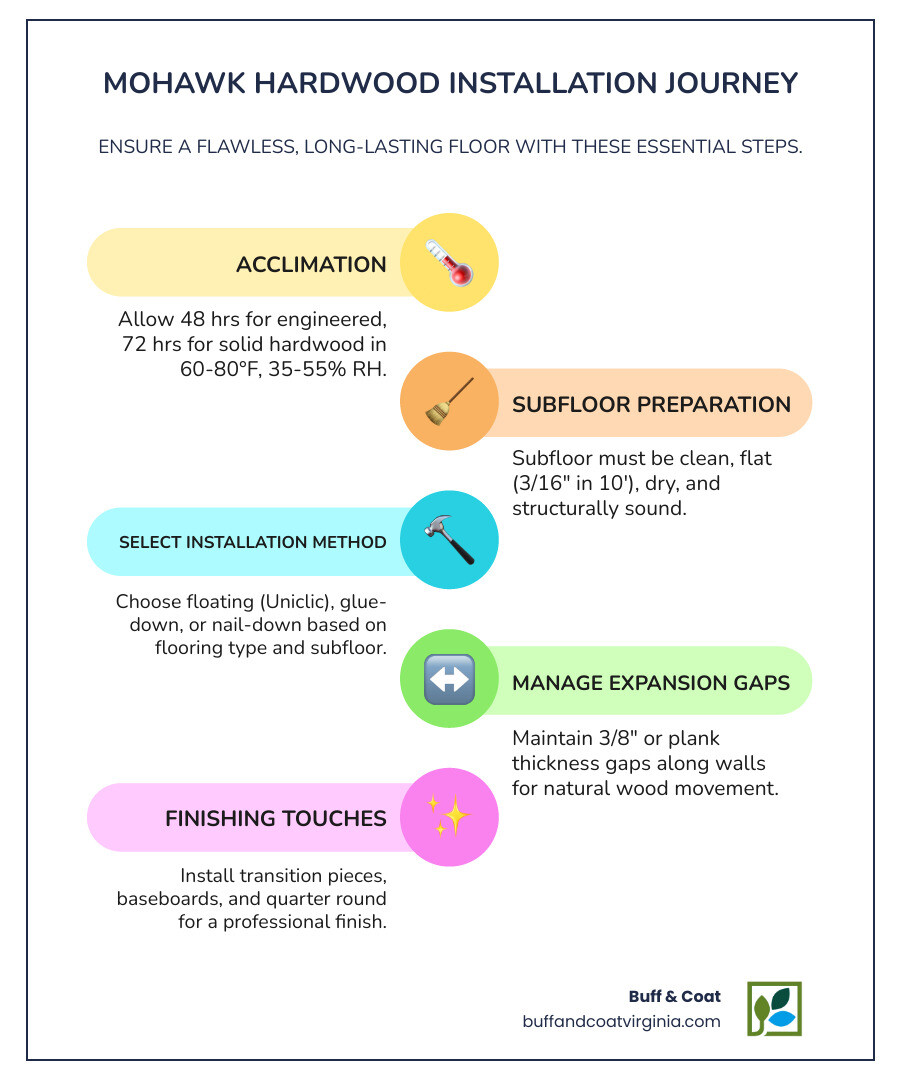
Basic mohawk hardwood flooring installation vocab:
Pre-Installation Prep: The Foundation for Flawless Floors
Think of mohawk hardwood flooring installation like building a house – everything depends on having a rock-solid foundation. I’ve seen too many beautiful floors fail simply because someone skipped the prep work. Trust me, Mohawk is crystal clear about this: both the installer and homeowner share responsibility for ensuring job site conditions meet their standards. Cut corners here, and you could void your warranty before you’ve even enjoyed your first morning coffee on those gorgeous new floors.
Your job site needs to be completely ready before those planks arrive. This means your exterior doors and windows should already be installed, and your permanent HVAC system needs to run for at least five days before delivery. Keep that temperature steady between 65-75°F and humidity between 35-55% – not just for installation day, but for the entire life of your floors.
Here’s the thing that surprises many homeowners: all water-related work must be finished first. That includes plumbing, painting, and any other messy trades. Your subfloor should be spotless and clear of debris. If other work is still happening around your professional floor installation, protect your investment with breathable materials like uncoated cardboard or Kraft paper. Never use plastic – it traps moisture like a greenhouse, and that’s the last thing we want.
Essential Tools and Materials
Having the right tools makes the difference between a frustrating weekend project and a smooth installation that you’ll be proud of for decades. Let me walk you through what you’ll need for a successful mohawk hardwood flooring installation.
Safety comes first – and I can’t stress this enough. Wood dust is classified as a carcinogen, so a NIOSH-designated dust mask isn’t optional. Add safety glasses and gloves to your must-have list. Your lungs and eyes will thank you later.
For measuring and marking, you’ll need a quality tape measure, chalk line, and square. These basics ensure your first row goes down perfectly straight – because if that’s crooked, everything else will be too.
Your cutting arsenal should include a miter saw for clean crosscuts, a table saw for ripping planks to width, and a jigsaw for those tricky cuts around vents and doorways. Pro tip: invest in quality blades designed for hardwood – they’ll give you cleaner cuts with less tear-out.
The installation tools are where the magic happens. A tapping block protects plank edges while ensuring tight fits. A pull bar helps close gaps on those final rows against walls. Spacers or wedges maintain that crucial expansion gap around the perimeter – skip these, and your floors might buckle when they expand.
For mechanical fastening, you’ll need a flooring nailer or stapler specifically designed for hardwood. A rubber mallet works with your tapping block – never hit the flooring directly.
Subfloor preparation requires a long straightedge (at least 10 feet), level, sander for high spots, and patching compound for low areas.
If you’re doing a glue-down installation, the adhesive system is critical. Mohawk offers specific adhesives like M1000 for high-moisture concrete (up to 95% RH), M808 for wood and standard concrete (up to 85% RH), or M908/WUA2 for lower humidity conditions. You’ll also need the correct notched trowel and a 75-pound smooth roller for proper adhesive transfer.
Don’t forget cleaning supplies – mineral spirits for adhesive cleanup, a soft-bristle broom, and Mohawk FloorCare Essentials cleaner for the final touches.
Subfloor Preparation and Requirements
Your subfloor is the unsung hero of your hardwood installation. Even premium Mohawk flooring will fail on a poorly prepared subfloor, so let’s get this right.
The golden rule is simple: your subfloor must be clean, flat, and dry. Clean means spotless – remove every bit of debris, dirt, wax, grease, paint, and old adhesive. We’re starting with a perfectly clean slate.
Flatness is absolutely critical. Your subfloor must be flat within 3/16″ over a 10-foot span, or 1/8″ over 6 feet. High spots get sanded down, while low spots need filling with high-compressive-strength Portland cement-based leveling compound. No shortcuts here.
The subfloor must also be structurally sound with zero movement. Nail or screw down any loose areas and fix those annoying squeaks now – they won’t magically disappear under your new floors.
Wood subfloors have specific requirements based on your joist spacing. For joists 16″ on center or less, you need minimum 5/8″ CDX plywood. Wider joist spacing up to 19.2″ requires 3/4″ tongue-and-groove CDX plywood or OSB. If your joists are 24″ on center, step up to 7/8″ tongue-and-groove material. All panels should be both glued and mechanically fastened – no exceptions.
Old solid wood plank subfloors can work if they’re at least 3/4″ thick, no wider than 6″, and installed diagonally to the joists. Wider planks need an additional 3/8″ plywood underlayment. Particleboard gets tricky – only high-density versions (40+ pounds) work, and only for floating installations.
Concrete subfloors demand extra attention. The slab must cure completely – that’s 60 days for solid wood, 30 days for engineered. It needs to be structurally sound, clean, and visually dry with no moisture history. Lightweight concrete won’t work at all.
Moisture testing is non-negotiable for concrete. Use the Calcium Chloride test (ASTM F1869) – results must show no more than 3 pounds per 1,000 square feet in 24 hours. Alternatively, an in-situ RH probe (ASTM F2170) should read under 75% RH. For detailed guidance on concrete installations, check out our comprehensive guide on the Best Way to Install Hardwood Floors on Concrete.
Installing over a crawl space? Ensure it’s dry and well-ventilated with at least 18″ clearance from ground to joists. Cover the entire ground with 6-mil black polyethylene vapor barrier, and make sure perimeter vents equal 1.5% of your total square footage.
Acclimation: Why Your Mohawk Flooring Needs to Settle In
Imagine stepping off a plane from Minnesota in January straight into Miami’s humidity. You’d need time to adjust, right? Your Mohawk flooring feels the same way about environmental changes.
Acclimation allows your flooring to reach moisture equilibrium with its new environment before installation. Wood naturally expands and contracts with humidity changes, and skipping this step leads to unsightly gaps, cupping, or warping. Even worse – it can void your warranty.
Mohawk requires 48 hours minimum for engineered hardwood and 72 hours for solid wood. During acclimation, lay cartons flat in the rooms where they’ll be installed. Cross-stack them to allow air circulation around each box.
Environmental conditions matter tremendously. Maintain 60-80°F and 35-55% relative humidity throughout acclimation, installation, and the entire life of your floors. If your home’s humidity swings wildly between seasons, consider investing in humidifiers for dry winter months and dehumidifiers for humid summers. This stability minimizes seasonal gapping, which Mohawk correctly notes is a natural wood characteristic, not a defect.
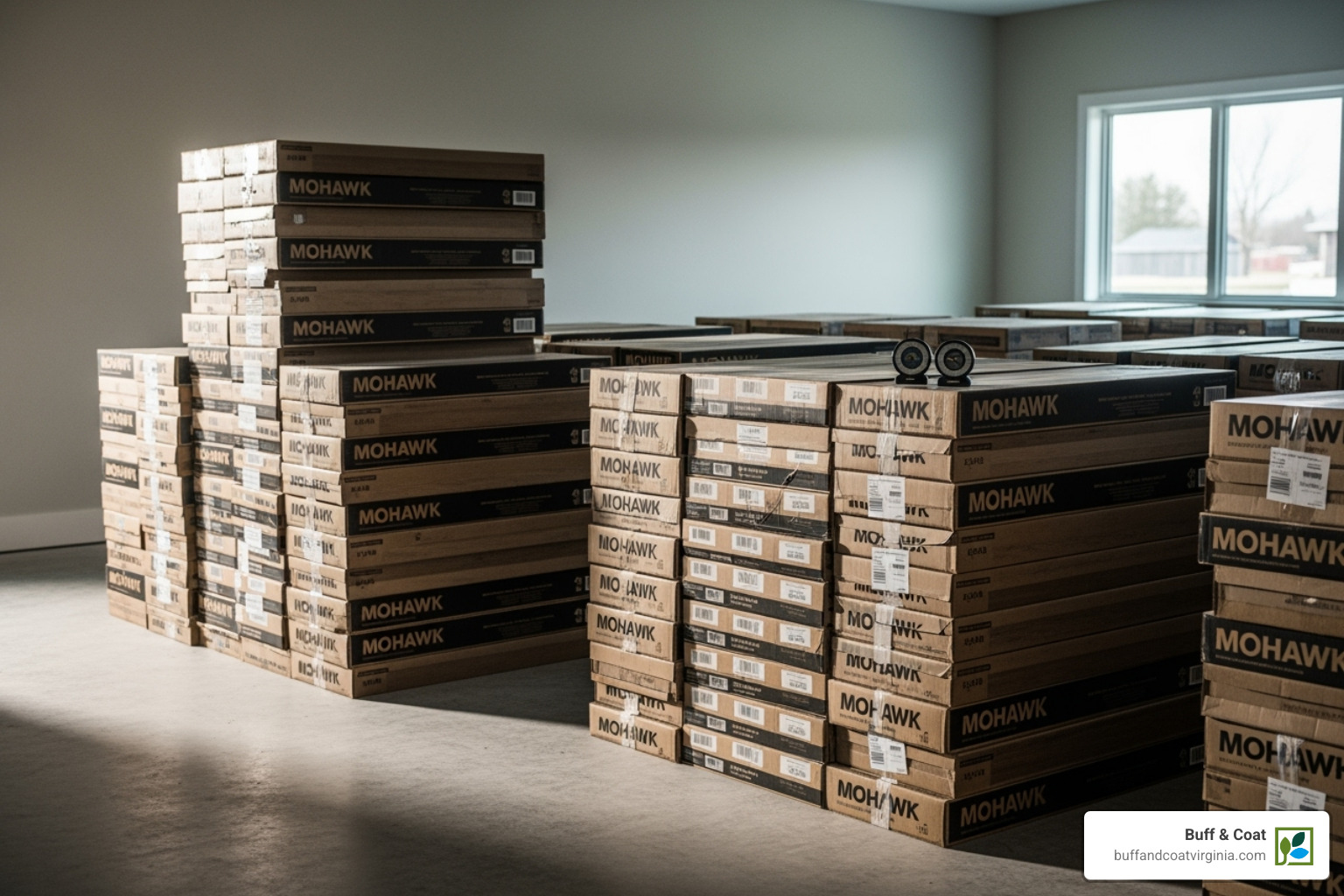
Proper preparation isn’t just about following rules – it’s about protecting your investment and ensuring your beautiful Mohawk floors look stunning for decades to come.
The Ultimate Guide to Mohawk Hardwood Flooring Installation Methods
Now that our foundation is rock-solid and our flooring has had time to settle in, it’s time for the exciting part – bringing those gorgeous Mohawk planks to life! When it comes to mohawk hardwood flooring installation, you’ve got three main paths to choose from, and the right one depends on whether you’re working with solid or engineered hardwood and what type of subfloor you’re dealing with.
Think of it like choosing the right tool for the job. Each method has its sweet spot, and when you match the right installation technique to your specific situation, you’ll get that beautiful, long-lasting floor that makes your neighbors peek through the windows! Always double-check the specific installation instructions that come with your Mohawk product – they’re your best friend throughout this process.
Method 1: Floating Installation with Uniclic® Technology
The floating installation is like the friendly neighbor of flooring methods – approachable, reliable, and surprisingly forgiving for DIY enthusiasts. This technique works beautifully with Mohawk engineered hardwood, especially those featuring their clever Uniclic® system. What makes it “floating”? Well, the planks aren’t directly attached to the subfloor. Instead, they lock together and literally float above the surface, which gives the wood room to breathe and move naturally with humidity changes.
This method is perfect for engineered hardwood over concrete slabs, and it’s often the go-to choice because it’s faster and more forgiving than other methods. Just remember – solid hardwood doesn’t play well with floating installations, so stick with engineered products here.
Getting started with underlayment is your first step. Roll out your recommended underlayment with the moisture barrier facing up, running it parallel to the direction you’ll lay your flooring. Mohawk’s Performance Accessories Underlayment is often the recommended choice, providing that crucial sound dampening and moisture protection your floor needs.
Starting your first row sets the tone for the entire installation. Position the first row with the tongue side facing the wall, and here’s where those spacers become your best friends – use them to maintain that crucial expansion gap (typically 3/8 inch, or whatever matches your plank thickness). I always recommend working from the longest wall and mixing planks from at least three different cartons as you go. This creates that natural, varied look that makes hardwood so beautiful.
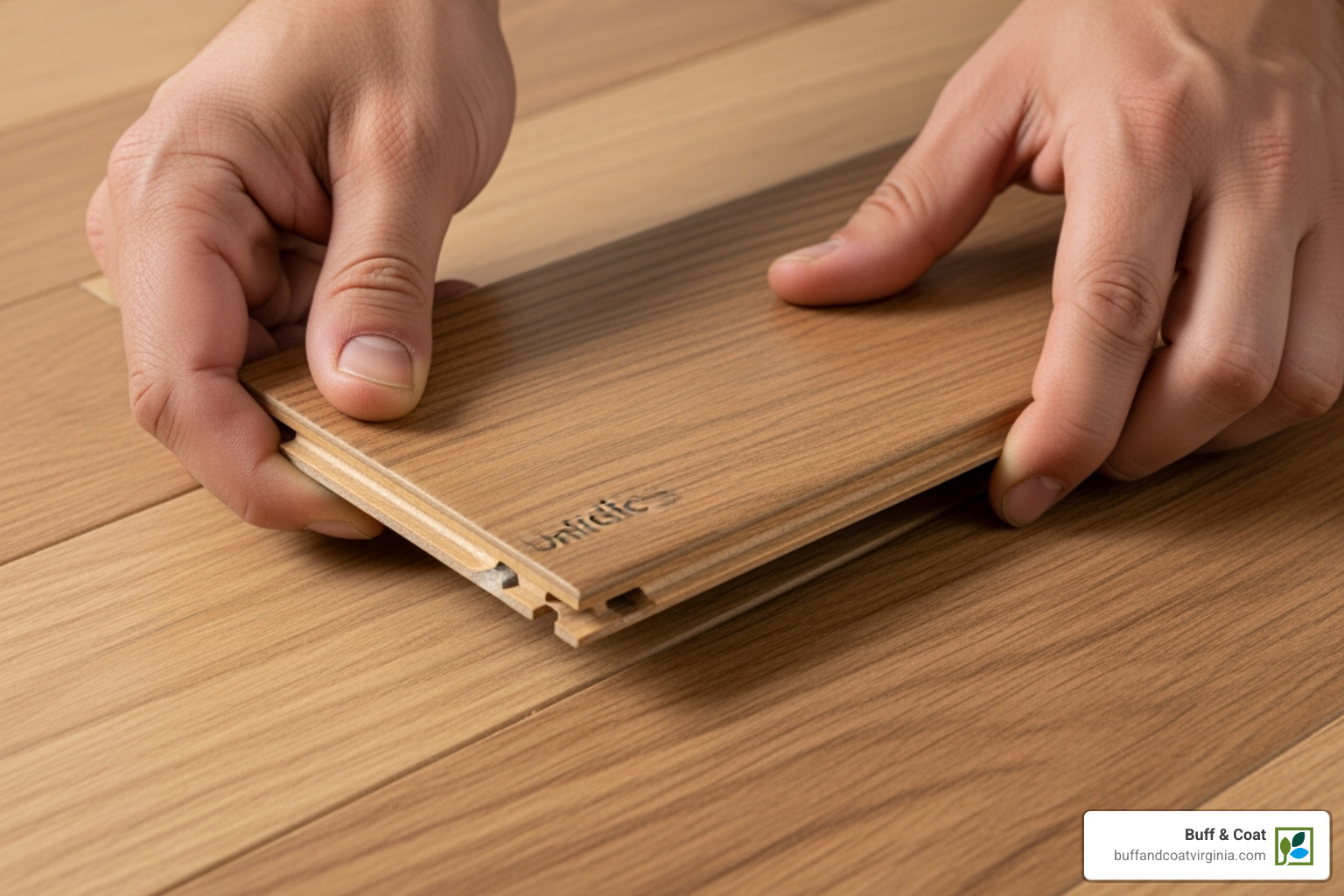
The Uniclic® system is pure genius in its simplicity. For the long sides, you’ll angle the new plank into the previously installed one, then gently lower it until you hear that satisfying click. For the short ends, line up your planks and use your tapping block with gentle hammer taps until they lock together. The key word here is “gentle” – you’re coaxing them together, not forcing them. Too much force can damage that clever locking mechanism.
When you reach the final row, you’ll likely need to rip those planks lengthwise to fit. Measure twice, cut once, and don’t forget to account for that expansion gap against the wall. Your pull bar becomes invaluable here for securing those last tricky pieces.
Method 2: The Glue-Down Mohawk Hardwood Flooring Installation
The glue-down method is like having a rock-solid handshake with your subfloor – it creates an incredibly stable, quiet floor that feels substantial underfoot. This technique works wonderfully for Mohawk engineered hardwood and, in specific situations, even some 3/8″ solid products over concrete when you’re using Mohawk’s approved adhesive system. It’s particularly popular for concrete installations where floating isn’t ideal.
Choosing the right adhesive is absolutely critical for warranty protection and long-term success. Mohawk has engineered specific adhesives for different conditions. M1000 is your heavy-duty option, handling high moisture concrete up to 95% RH and pH levels up to 11.0. M808 works beautifully for moderate conditions – concrete up to 85% RH and wood substrates with pH between 7.0 and 9.0. M92X falls somewhere in between, handling concrete up to 90% RH. Always check your specific product instructions because Mohawk knows their products best.
Getting your trowel technique down makes all the difference between a good installation and a great one. The notch size isn’t random – it’s precisely calculated to give you that crucial 95-100% adhesive coverage. For example, M1000 typically covers about 35 square feet per gallon with a clip-on trowel, while M808 stretches to cover 200-220 square feet per 4-gallon bucket. Replace your trowel every 3,000 square feet or when you notice the notches wearing down.
You’ve got two approaches with adhesive application: wet-lay and dry-lay methods. With wet-lay, you spread the adhesive and immediately press the flooring into it – think of it as working quickly while everything’s fresh. The dry-lay method gives you more working time by letting the adhesive flash off for 15-45 minutes until it becomes tacky, then pressing the planks into place. This tackier surface can actually make positioning easier, especially for beginners.
Rolling the floor with a 75-pound smooth roller isn’t optional – it’s essential for maximum adhesive transfer and eliminating air pockets. This step ensures every square inch of your flooring is properly bonded to the subfloor. Clean up any adhesive mishaps immediately with mineral spirits, and plan for light foot traffic after 12 hours and normal use after 24 hours.
For visual learners, Mohawk’s official installation video resources provide excellent step-by-step demonstrations that can really help clarify the process.
Method 3: Nail-Down/Staple-Down Mohawk Hardwood Flooring Installation
The nail-down method is the time-honored traditional approach – it’s been securing beautiful hardwood floors for generations, and there’s a reason it’s still going strong. This technique creates the most permanent, secure installation by mechanically fastening each plank directly to your wood subfloor. It’s the go-to method for solid hardwood and works great for many engineered products too.
Choosing the right fasteners matters more than you might think. Mohawk strongly recommends flooring cleats over staples because they’re less likely to cause splitting and provide superior holding power. It’s worth investing in quality fasteners – your floor will thank you for decades to come.
Your nailer or stapler needs to be specifically designed for hardwood flooring, and proper adjustment is crucial. Set it correctly for your Mohawk flooring thickness to avoid damaging the tongue or surface. A few test pieces in a corner can save you headaches later.
Fastener spacing follows specific patterns that Mohawk has tested extensively. For 3/4″ solid strip flooring under 3 inches wide, blind nail every 8-10 inches apart. When you’re working with 3/4″ strips that are 3 inches or wider, tighten that spacing to every 6-8 inches. Thinner products like 1/2″ strips need fasteners every 10 inches, while 3/8″ strips call for 8-inch spacing. The narrow crowned 5/16″ flooring gets staples every 3-4 inches or cleats every 4-6 inches.
Blind nailing technique is where the magic happens. You’re driving fasteners through the tongue at a 45-degree angle, hiding them completely when the next plank goes in. This creates that clean, seamless surface that makes hardwood so neat. Most of your installation will use this technique.
Face nailing the first and last rows is necessary because your nailer won’t fit in those tight spaces against the walls. Pre-drill these holes to prevent splitting, countersink the nails, and plan to fill them later with matching wood filler. It takes a little extra time, but the professional results are worth it.
Remember to maintain that expansion gap throughout the entire process – your floor needs room to move naturally with seasonal changes.
Finishing Touches and Common Challenges
You’ve made it this far – your Mohawk hardwood flooring installation is nearly complete! But here’s where we separate the amateurs from the pros. The difference between a good floor and a stunning floor that lasts decades often comes down to these final details. Think of it like baking a cake – you can have the perfect recipe and technique, but if you skip the frosting, it’s just not quite right.
Mastering Expansion Gaps and Transitions
Here’s something that might surprise you: wood is alive. Even after it becomes your beautiful Mohawk floor, it’s still breathing, expanding, and contracting with the seasons. Fighting this natural movement is like trying to hold back the tide – you’ll lose every time. That’s why expansion gaps aren’t just a suggestion; they’re your floor’s lifeline.
Expansion gap size is non-negotiable. Mohawk requires at least 3/8 inch around the entire perimeter of your room, or equal to your plank thickness, whichever is greater. This applies everywhere – walls, cabinets, fireplace hearths, even that awkward column in your living room. I know it looks like a lot of space, but trust me, come summer when the humidity rises, you’ll be grateful for every millimeter.
Now, let’s talk about wall irregularalities. If you’ve ever lived in a house built before 1980 (or honestly, any house), you know walls have character – and by character, I mean they’re rarely straight. When your first or last row meets one of these “charming” walls, you’ll need to scribe the planks. Use a compass or even a scrap piece of flooring to trace the wall’s contour onto your plank, then cut along that line. It’s like creating a custom puzzle piece that fits perfectly.
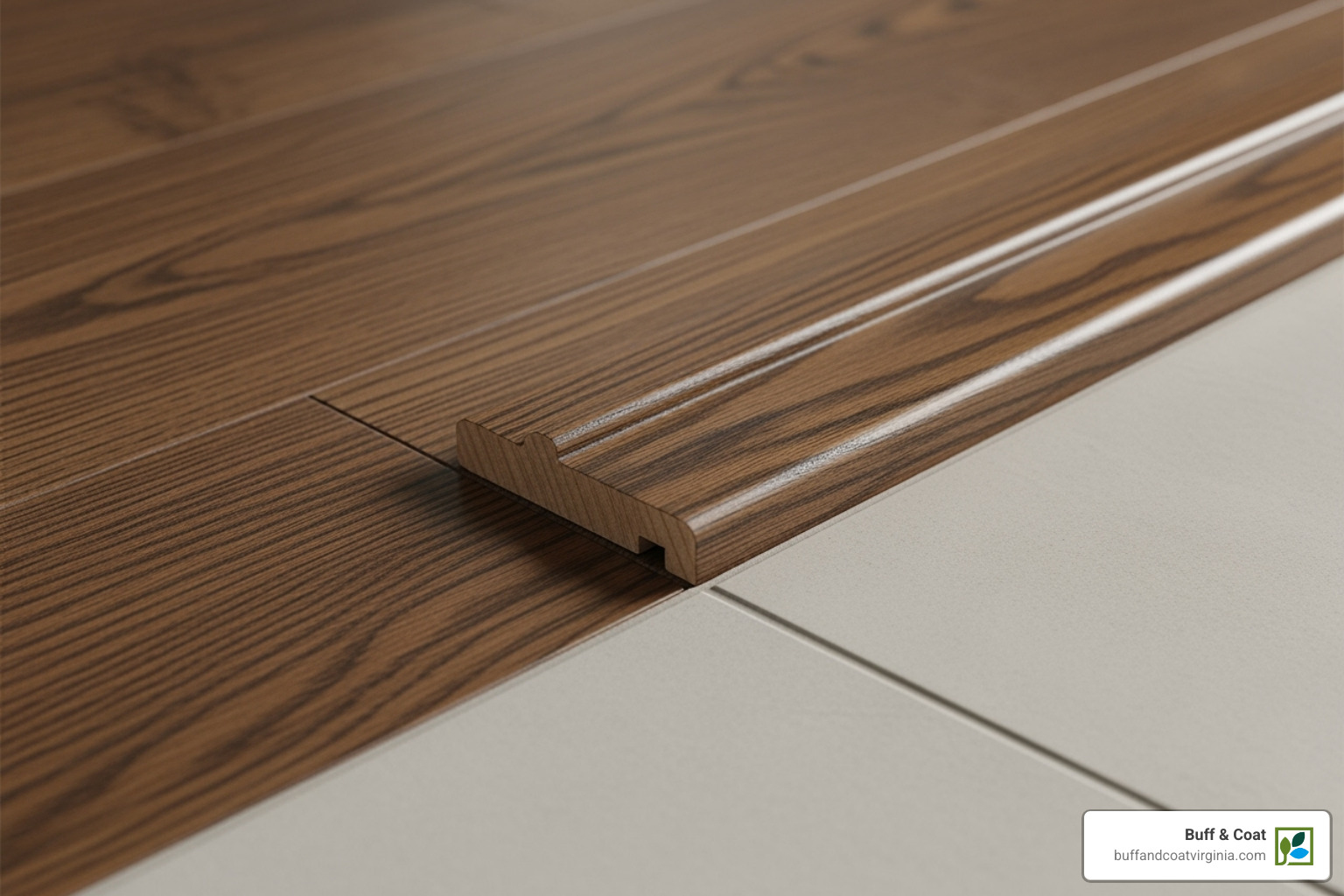
Transition pieces are where your Mohawk floor meets the rest of your home’s flooring story. T-molding creates smooth bridges between floors of similar height – think of doorways under 48 inches wide, or when Mohawk recommends breaking up large spaces (rooms bigger than 26′ x 33′ need transitions to allow proper expansion). Reducers step you down gracefully from your beautiful hardwood to lower surfaces like vinyl or tile. And stair nosing gives your steps that finished, safe edge they need.
Here’s a crucial tip: when installing any transition piece or molding, nail it to the subfloor or wall, never to the hardwood itself. Your floor needs to move independently, and restricting that movement is asking for trouble.
Installing baseboards and quarter round puts the cherry on top. After your floor is complete and transitions are in place, reinstall your baseboards. Then add quarter-round molding to cover that expansion gap – again, nailing it to the baseboard, not the floor. The result? A clean, finished look that respects your floor’s need to breathe.
Special Considerations and Problem-Solving
Every Mohawk hardwood flooring installation has its unique personality. Here are the curveballs I’ve learned to handle over the years, and how you can tackle them too.
Installing over radiant heat systems requires extra attention. Only Mohawk’s multi-layered engineered products are approved for this application, and the floor surface temperature must never exceed 85°F. Before installation, turn off the heat and let everything reach room temperature. After installation, gradually bring the heat back up – no shocking your new floor with sudden temperature changes. And here’s something that surprises homeowners: area rugs over radiant heat are generally not recommended because they can trap heat and damage your beautiful new floor.
Below-grade installations (like basements) are possible, but only with Mohawk engineered products – never solid hardwood. The key here is moisture management. Your basement needs proper ventilation, and you’ll want to be extra diligent about moisture testing and vapor barriers. Moisture is hardwood’s biggest enemy, especially in below-grade spaces.
Handling uneven subfloors is where preparation really pays off. We covered the importance of flatness earlier, but sometimes you find issues mid-installation. Minor high spots can be sanded down, but significant dips need Portland cement-based leveling compound. For really challenging subfloors, self-leveling compound might be your best friend. The key is addressing these issues immediately – an uneven subfloor today becomes a squeaky, damaged floor tomorrow.
For more comprehensive guidance on handling these challenges, our Hardwood Flooring Installation Complete Guide covers everything from start to finish.
These finishing touches aren’t just about aesthetics – they’re about protecting your investment and ensuring your Mohawk floor performs beautifully for decades to come.
Frequently Asked Questions about Mohawk Installation
After twenty years of mohawk hardwood flooring installation projects throughout Richmond, I’ve heard just about every question you can imagine. Some questions pop up so frequently that I thought it would be helpful to address them here. These are the real concerns homeowners have when they’re considering this investment.
Can I install Mohawk solid hardwood flooring on a concrete slab?
This question comes up in almost every consultation, and I understand why. You’ve got a beautiful concrete slab, and you’re dreaming of gorgeous solid hardwood floors. Unfortunately, it’s not that simple.
Generally, solid hardwood is not recommended for concrete. However, Mohawk allows some 3/8″ solid products to be installed using a specific glue-down method. For most concrete applications, Mohawk Engineered Hardwood is the superior and recommended choice.
Here’s the thing about concrete – it’s like a giant sponge that never fully dries out. Solid wood reacts dramatically to moisture changes, which can lead to cupping, warping, or gaps that would make you want to tear your hair out. Engineered hardwood, on the other hand, was designed specifically to handle these moisture fluctuations with much more grace.
If you’re absolutely set on solid wood over concrete, you’d typically need to install a plywood subfloor system with proper vapor barriers first. This adds significant cost and reduces your ceiling height, which is why most folks opt for engineered instead. For more details, explore our guide to installing solid wood on concrete.
What are the main health and safety concerns during installation?
Safety isn’t the most exciting topic, but it’s absolutely crucial during any mohawk hardwood flooring installation. The two primary concerns are wood dust and adhesive fumes.
Wood dust is classified as a carcinogen, so always wear a NIOSH-designated dust mask and use dust collection on your saws. I can’t stress this enough – your lungs will thank you years down the road. We always ensure proper ventilation and use tools with built-in dust collection systems whenever possible.
Adhesive fumes are the second major concern. When you’re doing glue-down installations, those urethane adhesives can pack quite a punch. Ensure proper ventilation, especially when using urethane adhesives, to minimize exposure to fumes. Open windows, use fans, and take breaks to get fresh air.
There’s also a special concern if you’re removing old flooring. Any resilient flooring or black cutback adhesive installed before 1980 could contain asbestos. If you encounter this, stop immediately and consult professionals. Never sand or scrape these materials – the health risks simply aren’t worth it.
How much extra Mohawk flooring should I buy?
This is where I see a lot of homeowners make a costly mistake. They measure their room, calculate the exact square footage, and order precisely that amount. Then they call me in a panic when they’re three boards short with two hours of work left.
It’s crucial to purchase more flooring than your room’s square footage to account for cutting and mistakes. A general rule is to add 5% for standard installations and 10% for diagonal layouts.
But here’s something most people don’t think about – what happens in five years when you accidentally damage a board and need a replacement? Flooring manufacturers change their color lots regularly, and matching your exact shade later can be nearly impossible. I always recommend keeping at least one full carton in your basement or garage for future repairs.
Trust me, it’s much better to have a few extra boards than to be scrambling to find matching flooring years later. Plus, if you’re working with a professional installer, that extra material gives everyone peace of mind to make the cuts needed for a perfect fit around obstacles and irregular walls.
Protect Your Investment with Professional Installation
Installing mohawk hardwood flooring installation is truly one of the most rewarding home improvement projects you can tackle. There’s something magical about watching a room transform as those beautiful planks come together, creating a foundation of natural beauty that will last for generations.
As we’ve explored throughout this guide, success really comes down to three critical elements: meticulous preparation, religiously following Mohawk’s manufacturer guidelines, and selecting the installation method that perfectly matches your specific flooring type and subfloor conditions. Get these right, and you’ll have floors that not only look stunning but also maintain their beauty for decades to come.
But let’s be honest here – while this comprehensive guide provides you with a solid roadmap for success, the real-world complexities can be pretty overwhelming. Subfloor preparation alone involves multiple steps that need to be executed flawlessly. Moisture testing requires specialized equipment and expertise to interpret results correctly. And achieving that perfect, seamless finish? That takes years of hands-on experience to master.
Here’s the thing about mohawk hardwood flooring installation: even small mistakes during the process can void your warranty or lead to costly problems down the road. Issues like improper acclimation, incorrect fastener spacing, or inadequate moisture barriers might not show up immediately, but they’ll definitely make themselves known later – usually at the worst possible time.
That’s where professional expertise becomes invaluable. When you work with experienced flooring contractors in Richmond, Virginia, you’re not just paying for installation – you’re investing in peace of mind. Professional installers have the specialized tools, proven techniques, and deep understanding of Mohawk’s specific requirements that ensure your investment is protected from day one.
For homeowners in the Richmond area who want a flawless mohawk hardwood flooring installation that protects your warranty and guarantees beautiful, long-lasting results, the team at Buff & Coat brings over 20 years of specialized hardwood flooring expertise to every project. We understand the nuances of working with Mohawk products, from their innovative Uniclic® technology to their specific adhesive requirements.
Ready to transform your home with stunning Mohawk hardwood floors? We’d love to discuss your project and provide expert guidance custom to your specific needs. We offer free estimates to help you get started. Schedule your free inspection today and let our experienced team bring your flooring vision to life with the precision and care it deserves.


