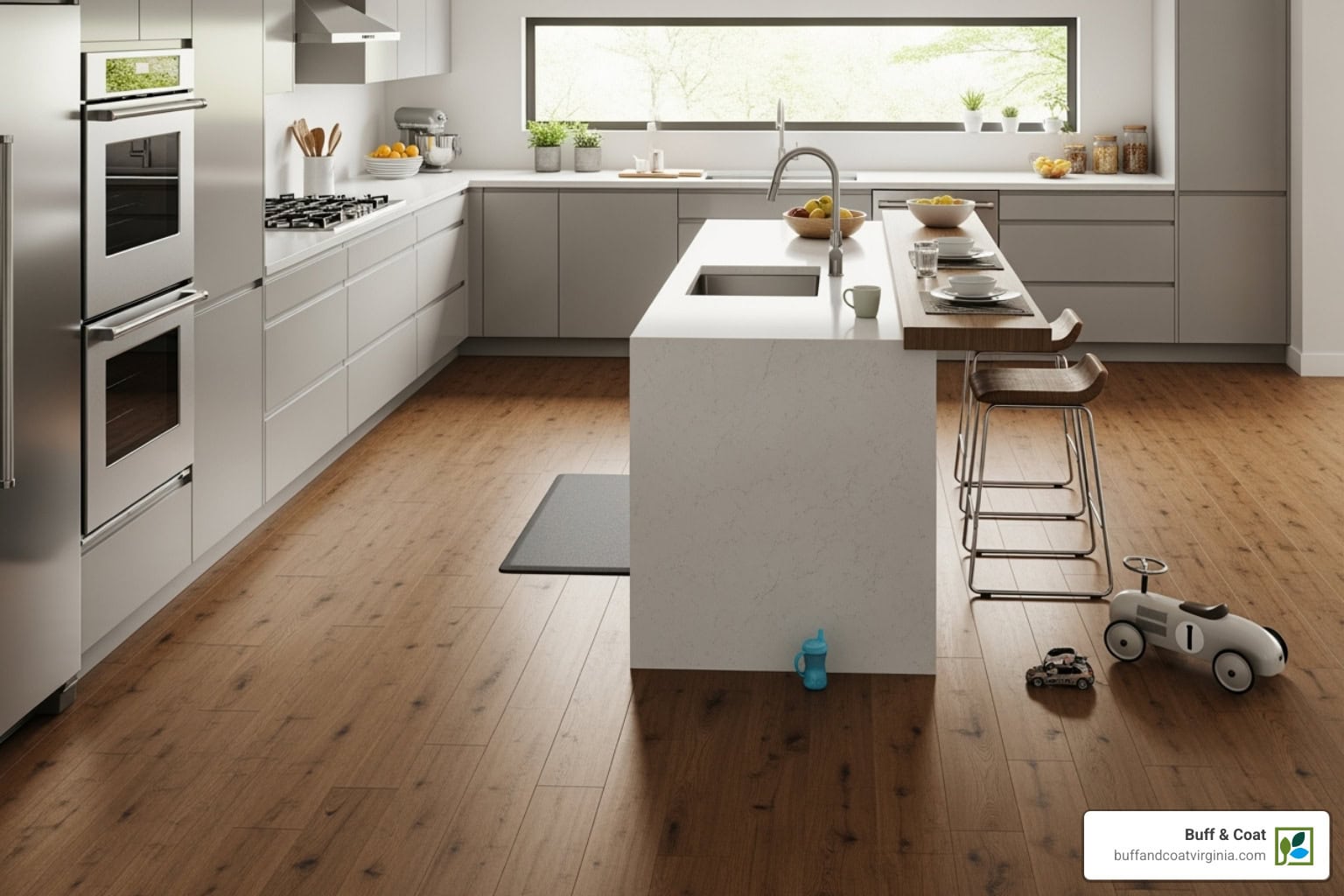
Why Kitchen Hardwood Flooring Deserves Serious Consideration
Choosing hardwood flooring for kitchens is a popular but debated topic. While kitchens face spills, moisture, and heavy traffic, modern hardwood can thrive in these spaces when chosen and installed correctly. With the right approach, you can enjoy the timeless beauty of wood in the heart of your home. For expert guidance on all your flooring needs, explore our hardwood flooring solutions.
Quick Answer for Kitchen Hardwood Suitability:
- YES, it works – with the right wood species (Janka rating 1290+), proper finish, and professional installation.
- Best options: Engineered hardwood or site-finished solid wood.
- Top species: Hickory, Maple, and White Oak for durability.
- Key requirement: Immediate spill cleanup and proper maintenance.
- Cost: $9-22 per sq ft installed, but adds significant home value.
The kitchen is the hub of the home, making the choice of flooring critical. While hardwood brings best warmth and value, kitchens present challenges like dropped pots and constant foot traffic. The good news? With proper hardwood floor installation and materials, these challenges are manageable.
I’m David Emmerling, President of Buff & Coat Hardwood Floor Refinishing. With over 20 years of experience helping Richmond-area homeowners, I’ve seen how the right approach makes kitchen hardwood both beautiful and practical.
Easy hardwood flooring for kitchens glossary:
- Hardwood Floor Installation
- Engineered wood flooring cost per square metre
- Replacing tile with hardwood
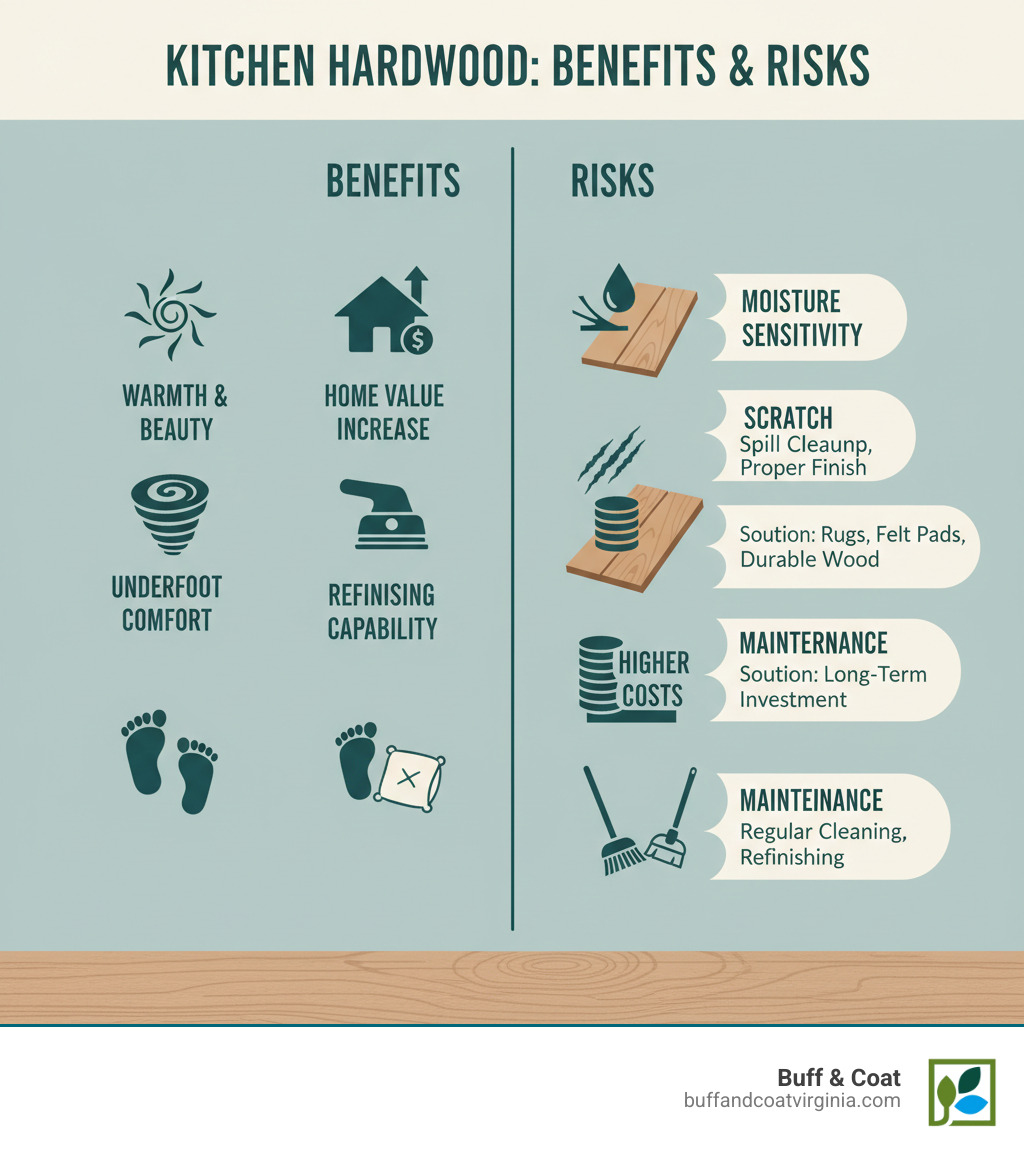
The Great Debate: Pros and Cons of Kitchen Hardwood
When considering hardwood flooring for kitchens, homeowners often weigh the desire for beauty against practical concerns. Kitchens are demanding spaces, but with quality hardwood and the right approach, these concerns become manageable challenges rather than deal-breakers.
The Allure: Why Homeowners Love Wood Floors in the Kitchen
Hardwood floors make a kitchen feel warmer, more inviting, and more home-like than other options.
- Timeless Aesthetic: Wood floors adapt beautifully to any style, from farmhouse to contemporary, bringing a natural elegance that can’t be replicated. As experts note, “The earthy genuineness and historical elegance of wood flooring is something tiles cannot reproduce.”
- Adds Home Value: Real estate data confirms that hardwood flooring is a strong selling point, especially in open-concept homes where it creates a seamless flow that buyers love.
- Warmth and Comfort: Hardwood is warmer and more comfortable underfoot than tile, reducing fatigue during long cooking sessions. It’s also softer, meaning a dropped mug has a better chance of survival.
- Visual Continuity: In open-concept spaces, continuing the same hardwood flooring from the living area into the kitchen makes the entire space feel larger and more cohesive.
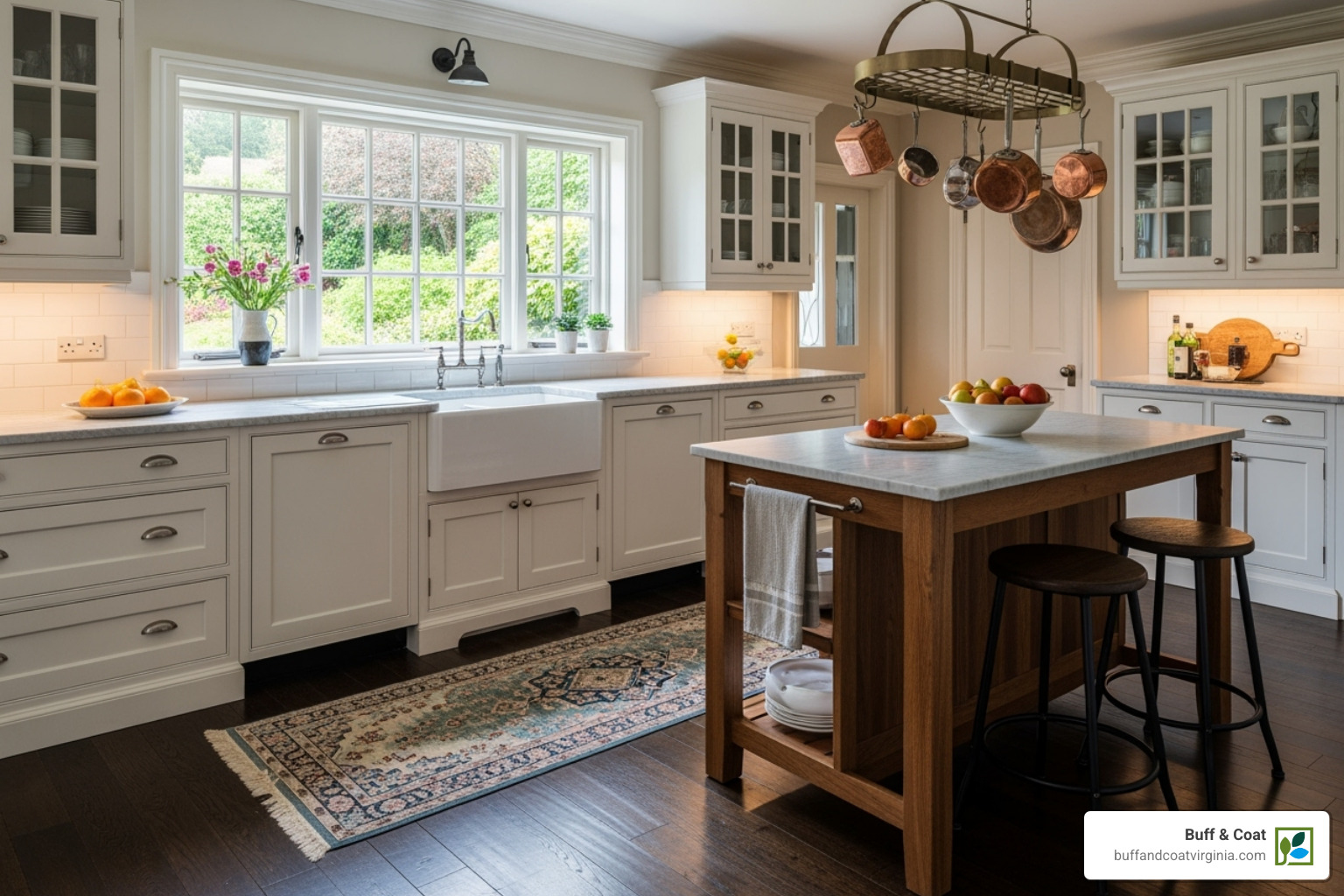
Perhaps most importantly, solid hardwood offers incredible longevity through refinishing. Unlike flooring that requires complete replacement, solid hardwood can be sanded and refinished multiple times, making it an investment that can last for generations.
The Reality Check: Potential Downsides to Consider
It’s important to have an honest conversation about the challenges of hardwood flooring for kitchens.
- Moisture Susceptibility: This is the top concern. If water from spills or appliance leaks sits on hardwood for too long, it can cause warping or swelling. As one expert notes, “Dishwasher or sink leaks can require repair or replacement of the affected floor section.”
- Vulnerability to Scratches and Dents: Dropped pots and dragged chairs can leave their mark, especially on softer woods. Choosing a harder species and a quality finish dramatically reduces this risk. When scratches do occur, there are solutions; learn how to handle scratches effectively.
- Higher Initial Cost: Hardwood typically has a higher upfront cost for materials and professional installation compared to vinyl or laminate. However, its longevity and added home value often make it a better long-term investment.
- Diligent Maintenance: Hardwood requires consistent care. Spills need immediate cleanup, and regular sweeping is essential. This routine is a simple ritual for some but may be a burden for others.
Choosing the Right Hardwood Flooring for Kitchens
Making the right choices upfront is critical for hardwood flooring for kitchens. The quality of your materials and installation will determine whether your floors last for decades. Your floors need to be tough enough for real life while still looking beautiful.
Solid vs. Engineered Hardwood
The first major decision is between solid and engineered hardwood. Both are excellent options, but they have key differences.
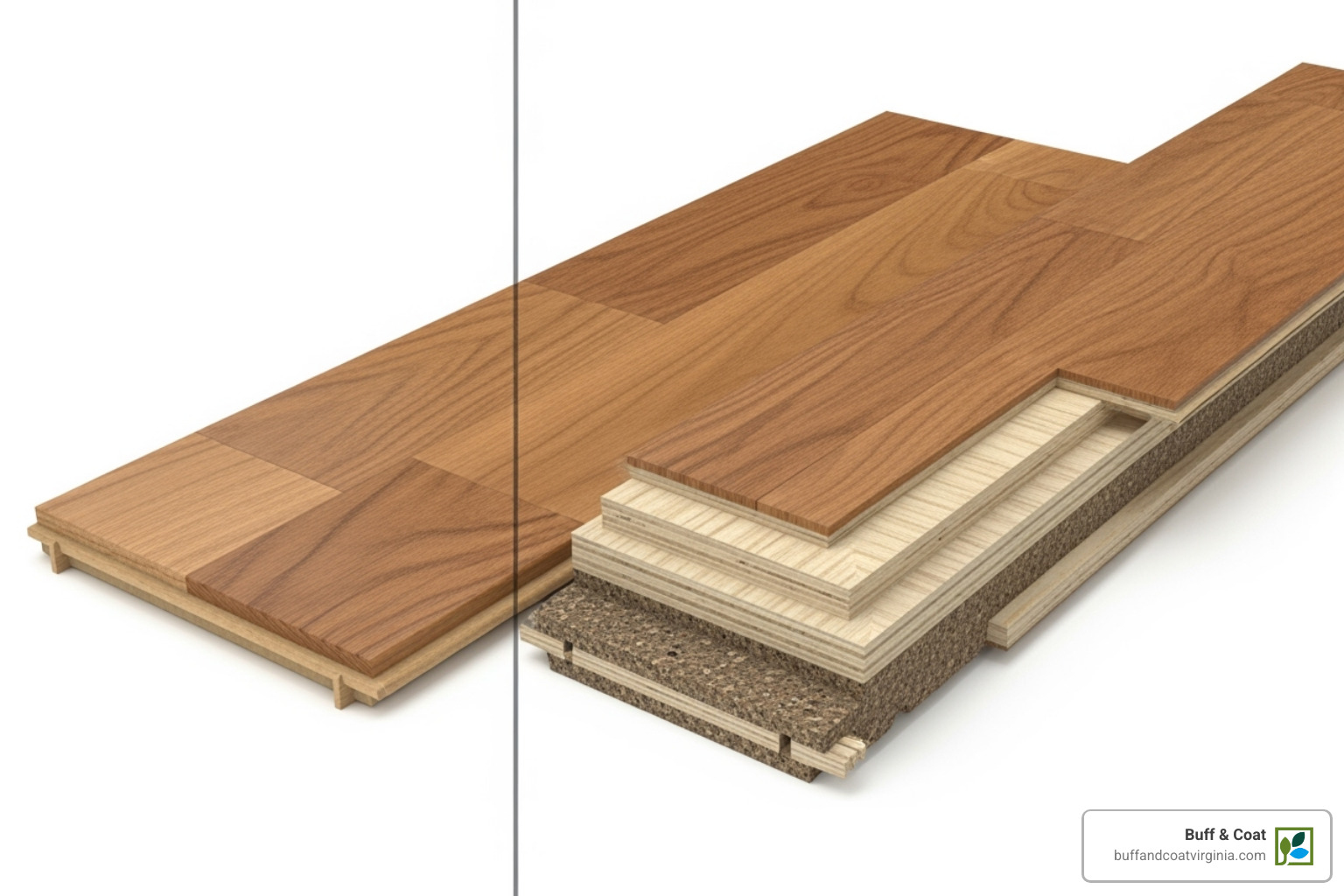
Solid hardwood is a single piece of wood, prized for its longevity. Its greatest advantage is that it can be sanded and refinished multiple times, often lasting over a century. However, it’s more sensitive to moisture, making it prone to expanding and contracting. For kitchens, it’s best to use unfinished planks that are finished on-site, creating a continuous seal that protects against moisture.
Engineered hardwood consists of a real hardwood veneer bonded to layers of plywood. This construction makes it far more stable and resistant to moisture and humidity changes, which is a major plus for kitchens. It can be installed in more ways and on more subfloors, including concrete. The tradeoff is a thinner top layer, which limits refinishing to only a few times. For most kitchens, engineered hardwood offers a great balance of beauty and practicality.
Best Wood Species for Your Hardwood Flooring for Kitchens
Not all woods are suitable for kitchens. The Janka Hardness Scale is a key tool for making your choice. The Janka rating measures wood hardness by testing the force needed to embed a steel ball into the wood. For kitchens, we recommend a species with a Janka rating of 1290 or higher.
- Hickory (Janka 1820): The hardest domestic wood, its strong grain helps hide minor scratches.
- Maple (Janka 1450): Offers excellent durability with a smoother, more uniform look for contemporary styles.
- White Oak (Janka 1360): A classic choice with natural moisture resistance and a prominent, appealing grain.
- Red Oak (Janka 1290): An affordable and widely available option with a warm, classic look that performs well with proper care.
Avoid softwoods like pine, fir, and cherry, as they will dent and scratch too easily for a high-traffic kitchen.
The Protective Shield: Finishes for Your Hardwood Flooring for Kitchens
Your floor’s finish is its armor. Polyurethane finishes are the industry standard. Water-based polyurethane dries clear with low VOCs, while oil-based polyurethane offers exceptional durability and a classic amber glow. For maximum protection, moisture-cured urethane creates an incredibly hard, moisture-resistant surface.
Many engineered floors come prefinished with aluminum oxide, one of the toughest coatings available. A practical tip on sheen: matte and satin finishes hide scratches much better than high-gloss ones, keeping your floors looking great with less stress. The right finish is crucial for performance; more on finishing hardwood floors can help you explore these options.
How Hardwood Compares to Other Kitchen Floors
When choosing hardwood flooring for kitchens, it’s helpful to see how it stacks up against other popular options. While every material has its pros and cons, hardwood offers a unique combination of advantages.
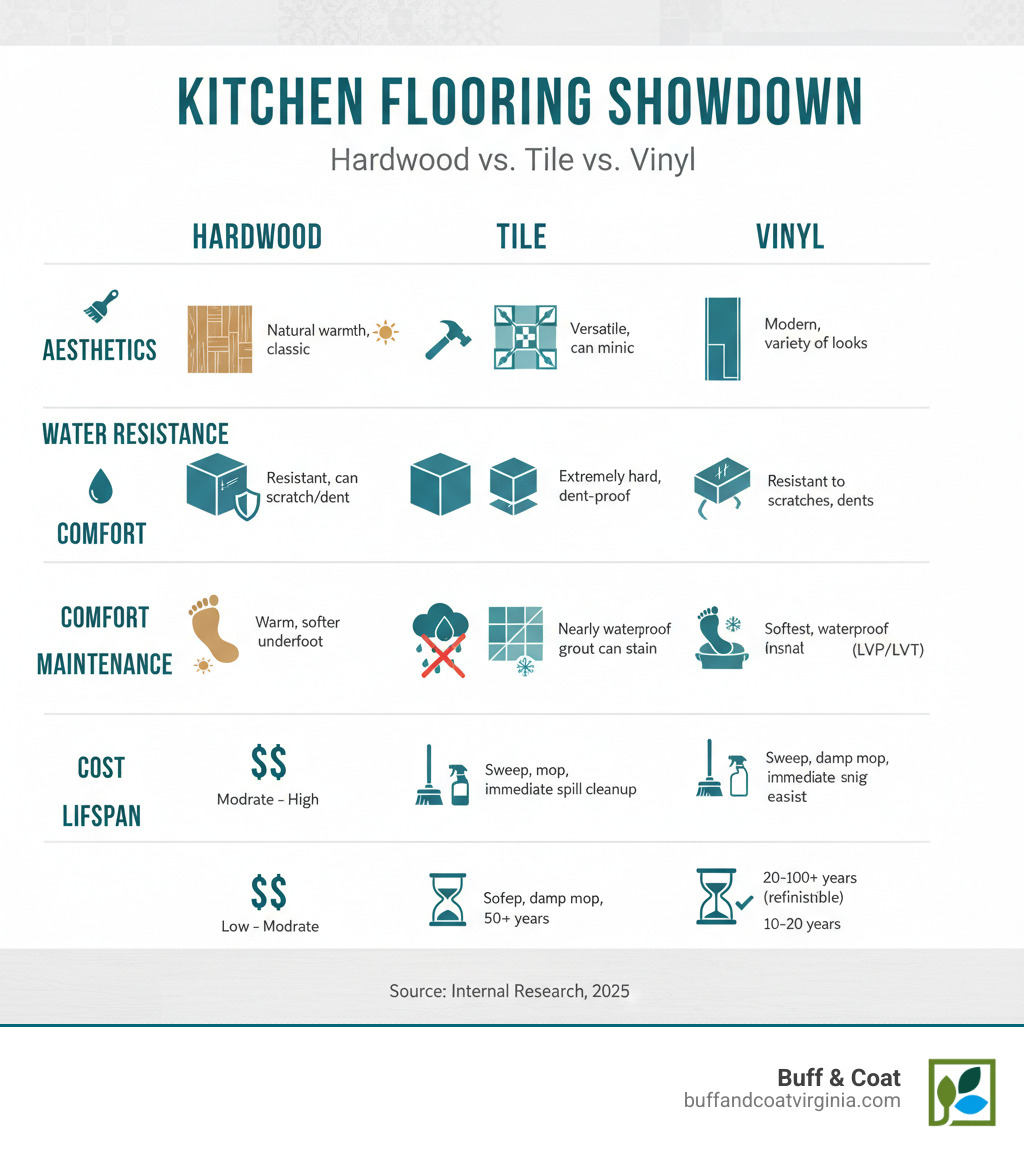
- Aesthetics: Hardwood’s natural warmth and beauty are best. It creates an inviting atmosphere and provides seamless visual flow in open-concept homes.
- Durability: A hard species like hickory or maple can handle decades of use. Its real superpower is its ability to be refinished to look brand new.
- Water Resistance: While traditional hardwood requires care, engineered hardwood offers much better moisture resistance. A quality finish is your first line of defense.
- Comfort: Wood is warmer and softer underfoot than tile, reducing fatigue during long hours spent in the kitchen.
- Maintenance: The golden rule is to clean up spills immediately. Regular sweeping and occasional cleaning with a wood-specific product are all that’s needed.
- Cost: Hardwood has a higher upfront cost (solid wood runs $5-$10/sq ft, engineered $4-$13, plus installation). However, it’s a long-term investment that adds significant value to your home.
- Lifespan: Solid hardwood floors can last over 100 years. This longevity, combined with the ability to be renewed, sets it apart. We’ve seen many projects where replacing tile with hardwood completely transforms a kitchen’s character.
Hardwood’s natural beauty and refinishing potential make it unique. While other materials may excel in one area, none can be renewed decades later to look brand new. Hardwood ages gracefully, developing a patina that tells your family’s story.
Protecting Your Investment: Cost, Installation, and Maintenance
Choosing hardwood flooring for kitchens is a smart investment in your home. Understanding the costs, ensuring proper installation, and committing to care will protect that investment for years to come.
Budgeting for Your Kitchen Hardwood Floors
While hardwood has a higher upfront cost, it often pays back in long-term value.
- Material Costs: Solid wood typically runs $5-$10 per square foot, while engineered wood ranges from $4-$13 per square foot, depending on the species and veneer thickness.
- Professional Installation Costs: Budget an additional $6-$12 per square foot. This is not the place to cut corners, as professional installation is key to a floor’s longevity. For a detailed breakdown, see a guide to flooring installation costs.
- Long-Term Value: Solid wood floors can last over 100 years. While neighbors replace their floors every 10-20 years, yours can be refinished to look new, making it a superior long-term investment.
Mitigating Risks: Proactive Care and Maintenance
The secret to successful hardwood flooring for kitchens is developing good habits.
- Immediate Spill Cleanup: This is the golden rule. Water, oil, or wine should be wiped up immediately to prevent it from seeping into the wood.
- Use Rugs in High-Risk Areas: Place washable rugs with breathable backings in front of the sink, dishwasher, and stove to catch splashes and drips.
- Proper Cleaning Methods: Never wet-mop hardwood. Sweep or vacuum regularly, and for deeper cleaning, use a barely damp mop with a wood-specific cleaner. Avoid harsh chemicals.
- Good Kitchen Ventilation: Use your range hood while cooking to help manage humidity and heat, which can cause wood to expand and contract.
- Regular Maintenance: A professional buff and coat service is your floor’s best friend. This service lightly abrades the old finish and applies a new topcoat, restoring shine and adding protection for a fraction of the cost of full refinishing.
The Importance of Professional Installation
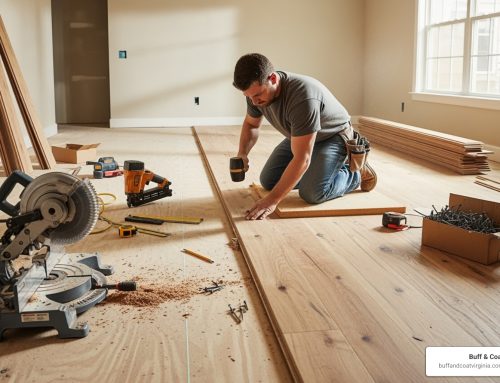
Professional installation for hardwood flooring for kitchens is not optional—it’s essential for a long-lasting, beautiful result.
- Tight Seams: Experts fit planks with minimal gaps, reducing the chance of moisture seeping through.
- Proper Sealing: Site-finished floors create a continuous, impermeable seal across the entire surface, offering the ultimate moisture protection.
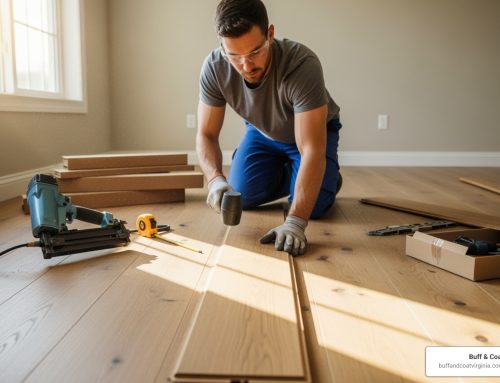
- Acclimation: Professionals let the wood acclimate to your home’s specific temperature and humidity for several days before installation, preventing future gapping or warping.
- Local Expertise: Hiring experienced flooring contractors in Richmond, VA is crucial. We understand the local climate and how it affects hardwood, ensuring your installation is done right the first time.
Frequently Asked Questions about Hardwood in Kitchens
When considering hardwood flooring for kitchens, homeowners often have the same key questions. Let’s tackle the most common concerns.
Can you put solid hardwood flooring in a kitchen?
Yes, solid hardwood can work beautifully in a kitchen, but the installation method is key. Site-finished solid hardwood often outperforms prefinished options in this space. When unfinished planks are installed, sanded, and finished in your kitchen, it creates a seamless, continuous protective coat over the entire floor, including the seams between boards. This method eliminates the tiny beveled edges of prefinished boards that can channel water. With a hard wood species (Janka 1290+) and a quality finish, solid hardwood can handle a busy kitchen, provided you are diligent about spills.
How do you protect hardwood kitchen floors from water damage?
Water damage prevention relies on a multi-layered approach.
- A Quality Finish: Your finish is the first line of defense. Keep it in good shape with proper cleaning and consider a professional buff and coat service every few years to refresh its protective qualities.
- Immediate Cleanup: Clean up all spills the moment they happen. Keeping towels handy makes this an easy habit.
- Strategic Mat Placement: Use mats in high-splash zones like in front of the sink, dishwasher, and refrigerator.
- Appliance Checks: Regularly check appliances for small, slow leaks, which can cause the most significant damage over time.
- Humidity Control: Maintain your home’s humidity between 30% and 55% to prevent wood from gapping or warping.
For extra peace of mind, you can also explore newer waterproof wood technologies that offer the look of real wood with improved moisture resistance.
How long do hardwood floors last in a kitchen?
This is where hardwood truly excels. Solid hardwood floors can last over 100 years with proper care, far outliving other flooring types like tile or vinyl. What makes hardwood special is its ability to be renewed. When the floor shows wear, the refinishing process sands away the old, worn layer to reveal fresh wood, which is then stained and sealed to look brand new. Most solid hardwood floors can be refinished multiple times, and even engineered hardwood can typically be refinished at least once. This renewability is an advantage no other flooring type can offer. Learn about the refinishing process to see how this change happens.
Conclusion: Is Kitchen Hardwood Right for You?
After exploring the pros and cons, is hardwood flooring for kitchens the right choice for you? The answer depends on your lifestyle and priorities. If you love the warmth and character of natural wood and don’t mind being diligent about spills, the reward is a beautiful floor that gets better with age.
Hardwood flooring for kitchens works best when you:
- Choose a durable species like hickory or white oak.
- Select the right construction, like engineered wood for stability or site-finished solid wood for refinishing potential.
- Protect it with a high-quality, moisture-resistant finish.
The maintenance is simple but necessary. Immediate spill cleanup and periodic professional buff and coat services will keep your floors protected and looking fresh. For Richmond area homeowners, professional installation is key to navigating Virginia’s climate, and the experts at Buff & Coat have the local knowledge to ensure your floors thrive.
The bottom line: hardwood flooring for kitchens is an investment in beauty, comfort, and long-term value that can last for generations. It creates a space that feels like the true heart of your home.
Ready to see if kitchen hardwood is right for your home? Contact us today for a free estimate and schedule your free inspection. We’ll help you create a kitchen floor that’s both practical and beautiful.