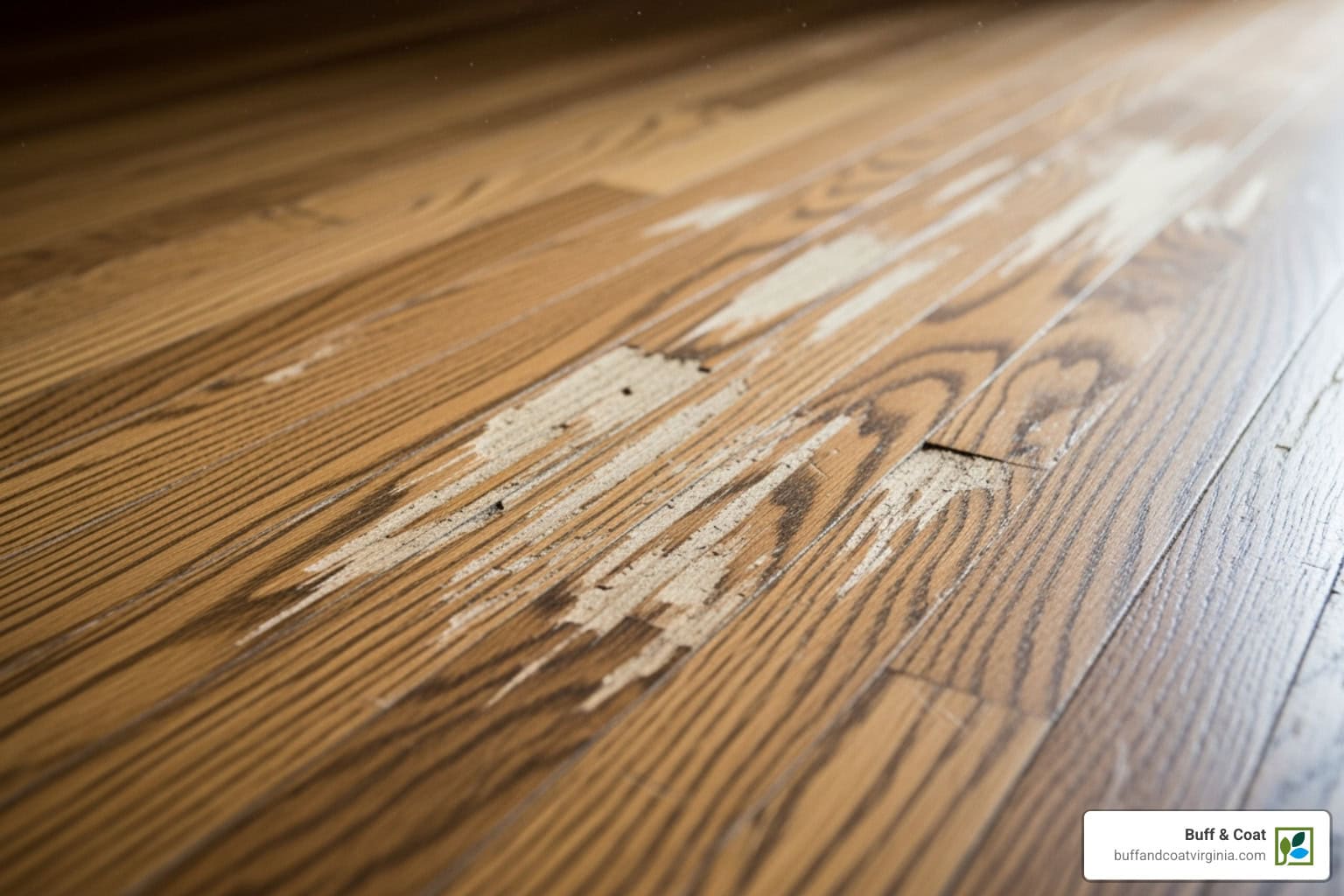
Why Hardwood Floor Damage Repair Matters
Hardwood floor damage repair is often necessary to keep your home looking its best. Even the most durable hardwood floors can get scratches, dents, or other issues over time, but with the right hardwood floor services, many common problems can be fixed. Knowing what kind of damage you have is the first step.
Here’s a quick guide to common hardwood floor damage:
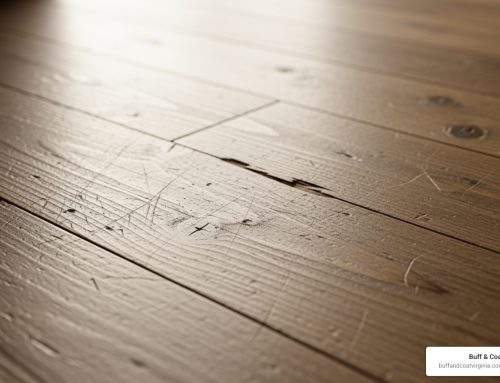
- Scratches & Scuffs: Minor marks often fixed with touch-up pens or light sanding.
- Dents: Small depressions that can sometimes be raised with moisture and heat or filled.
- Surface Stains: Discoloration that may be removed with special cleaners or light sanding.
- Gouges: Deeper cuts that usually require wood filler, sanding, and re-staining.
- Warping & Buckling: Boards lifting due to moisture, often needing professional attention to fix the cause and replace damaged boards.
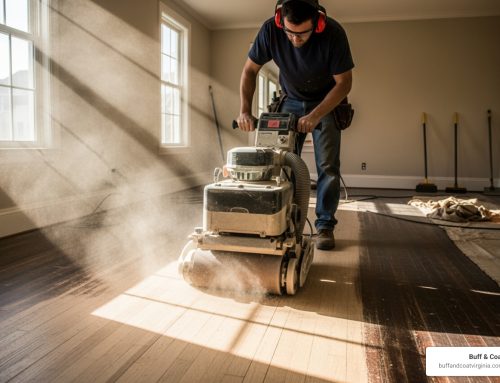
Timely repairs not only save money compared to full replacement but also protect your investment. Restoring the natural elegance of your floors can make a big difference in your home’s appearance and value. Explore our signature Buff & Coat refinishing process to see how we can help.
I’m David Emmerling, President and Owner of Buff & Coat Hardwood Floor Refinishing. With over 20 years of experience, I’ve built my business on providing high-quality, dustless hardwood floor damage repair, making restoration convenient for homeowners throughout Richmond and the surrounding region.
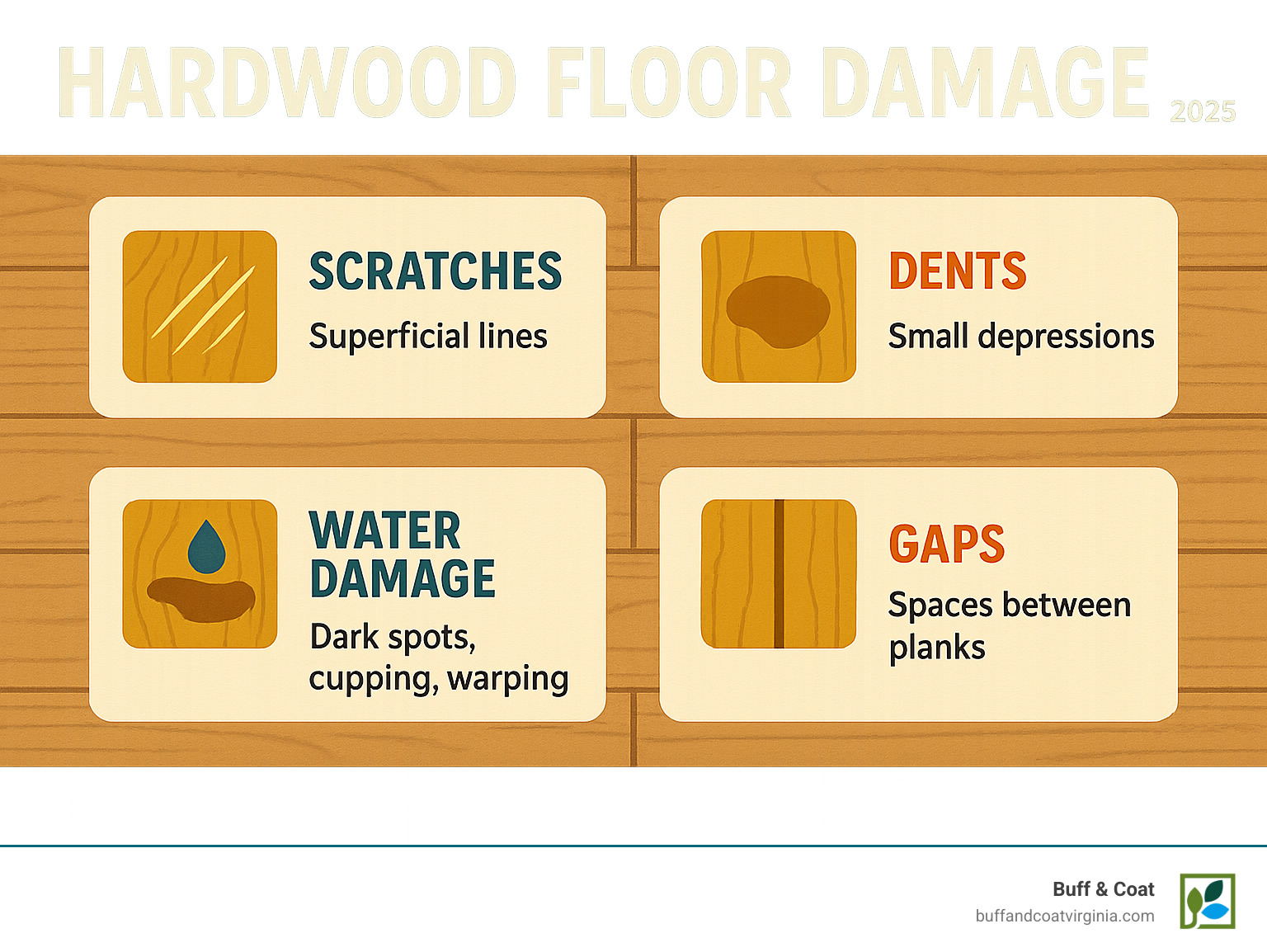
Key hardwood floor damage repair vocabulary:
First, Assess the Damage: Repair or Replace?
When you spot an issue with your hardwood floors, the first step in any hardwood floor damage repair project is to assess the type and severity of the damage. This crucial step helps determine if it’s a simple DIY fix or if it’s time to call in professionals like us at Buff & Coat to restore your floor’s elegance.
Identifying Common Types of Hardwood Floor Damage
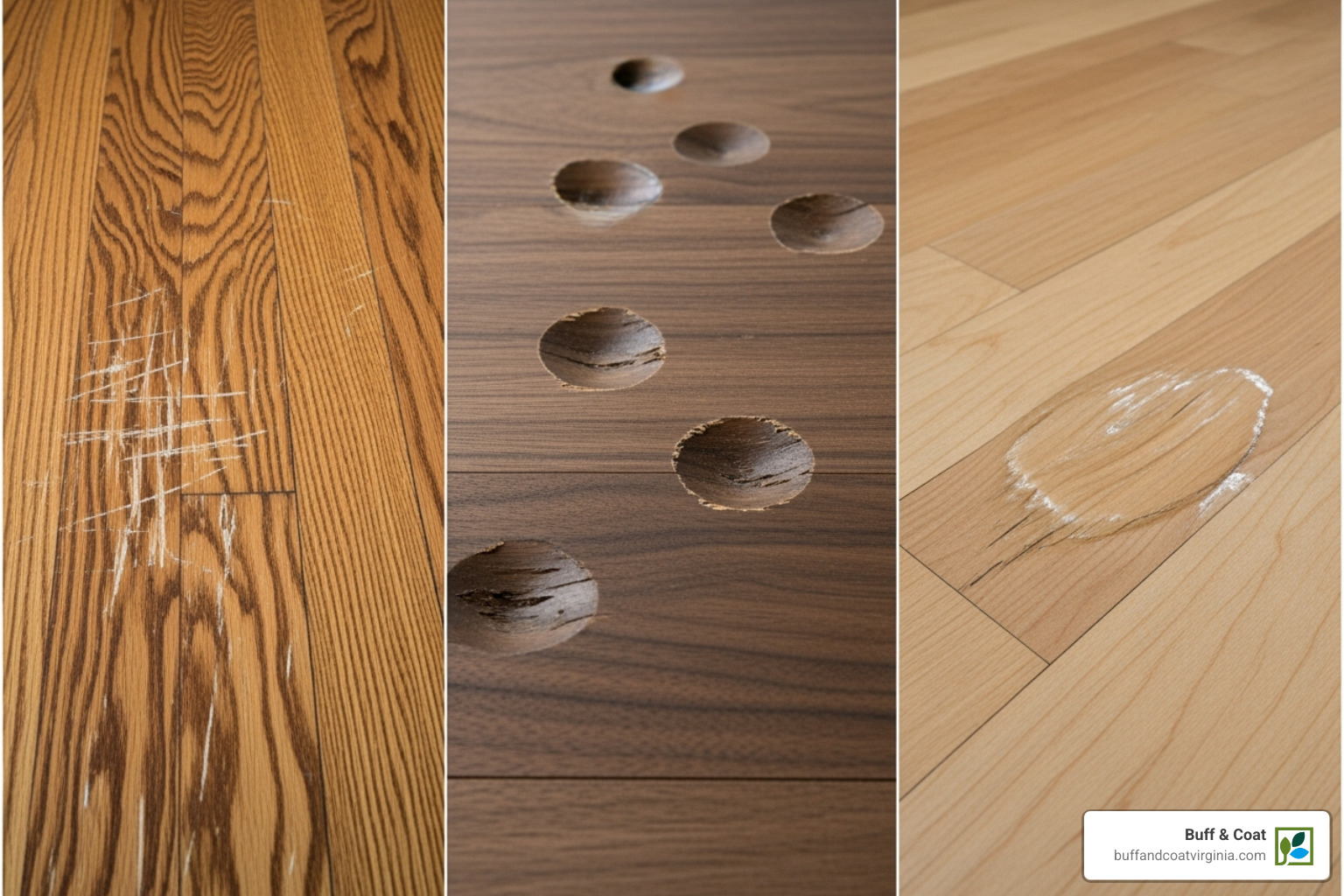
Here are the most common issues we see:
- Scratches, Dents, and Gouges: These range from light surface scuffs from pets and furniture to deeper depressions and cuts from dropped or sharp objects.
- Gaps: Spaces between floorboards that often appear due to seasonal changes in humidity as the wood expands and contracts.
- Warping (Cupping/Crowning): When boards bend or curve, it’s a clear sign of a moisture imbalance. Cupping is when the edges are higher than the center; crowning is the opposite.
- Buckling: The most severe warping, where boards lift entirely from the subfloor, indicating a major moisture problem.
- Water and Pet Stains: Discoloration, swelling, or dark marks caused by spills, leaks, or pet accidents that require quick attention.
Assessing the severity means looking beyond the surface. Is the damage cosmetic, or does it affect the structural integrity of the plank or subfloor? A subfloor inspection is crucial if you suspect water damage, as a wet subfloor can lead to mold and requires professional intervention.
When to Call a Professional for Hardwood Floor Damage Repair
While DIY fixes are great for minor issues, certain signs mean it’s time to call an expert. This can save you time, money, and future headaches.
Call a professional for:
- Severe Damage: If floors feel spongy, have extensive water damage, or boards are buckling significantly, it points to deeper problems.
- Mold or Mildew: A musty odor or visible mold is a health hazard that requires professional remediation.
- Large Damaged Areas: Attempting to repair a large section yourself can result in a mismatched, unprofessional finish.
- Structural Issues: Uneven, sagging, or excessively squeaky floors may indicate problems with the subfloor or joists.
For homeowners in Virginia, choosing certified hardwood floor repair contractors is paramount for significant damage. As your local hardwood floor company in Richmond, our team at Buff & Coat has the expertise to do the job right.
It’s typically much cheaper to repair hardwood floors than to replace them. The cost-effectiveness, however, depends on the extent of the damage.
| Damage Severity | Repair Cost (Average) | Replacement Cost (Average) |
|---|---|---|
| Minor (Scratches, dents, small stains) | $478 – $1,624 | N/A (Repair is almost always preferred) |
| Moderate (Warping, some board replacement) | $1,000 – $3,000 | $2,480 – $7,028 (for a room) |
| Severe (Extensive water damage, subfloor issues, widespread rot) | Often exceeds replacement cost or isn’t feasible | $2,480 – $7,028+ (for a room) |
Note: Costs are estimates and can vary. Superficial damage is repairable, but damage impacting the subfloor or structural integrity often requires replacement.

Your Guide to DIY Hardwood Floor Damage Repair
For minor damage, a little DIY spirit can work wonders. The key to successful hardwood floor damage repair is proper preparation. Start by thoroughly cleaning the damaged area to remove any dirt or debris. Protect surrounding furniture and flooring with drop cloths.
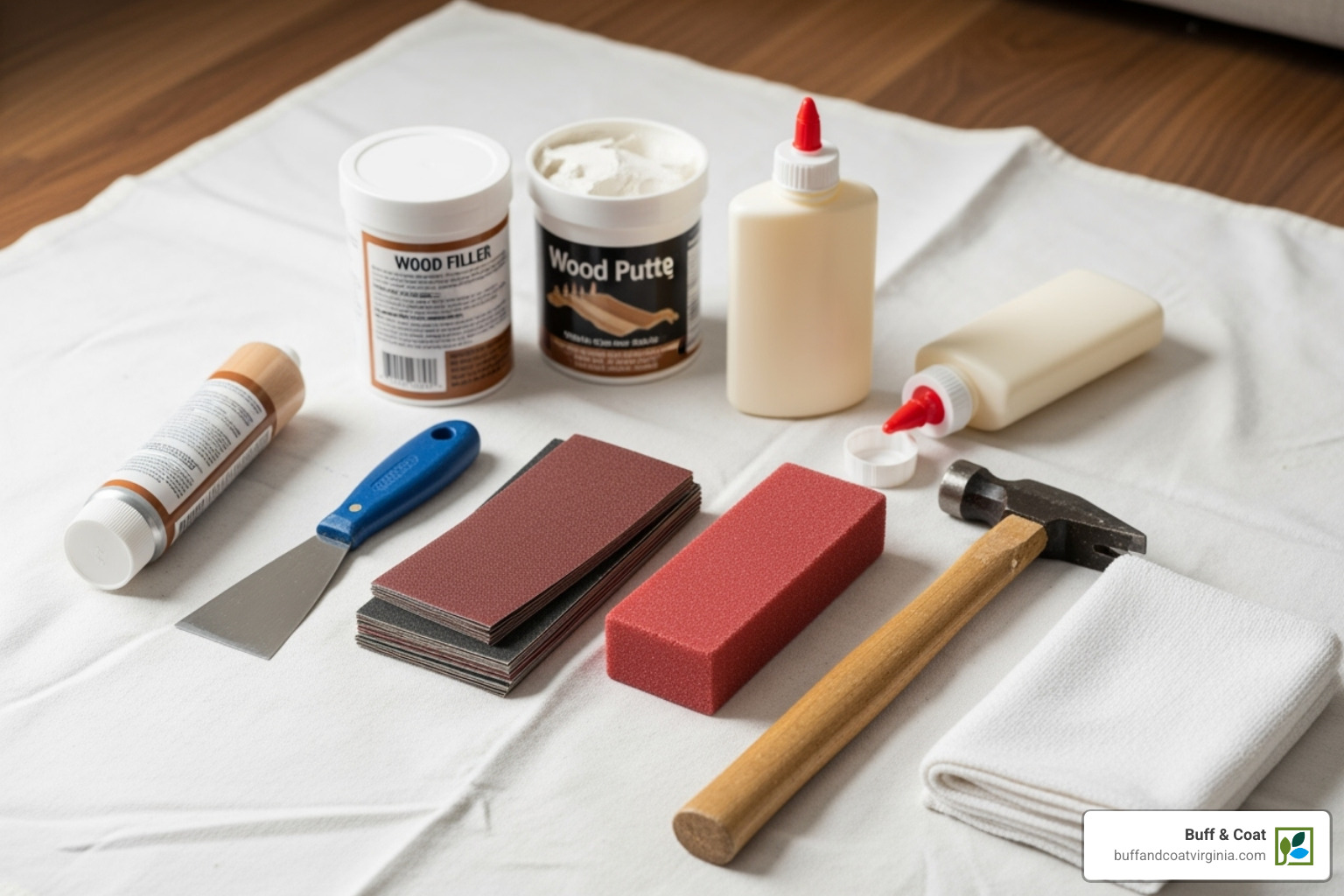
Your basic toolkit should include color-matched wood filler or putty, fine-grit sandpaper (180 or 220-grit), a plastic putty knife, mineral spirits, clean cloths, matching stain and finish, and blending pencils.
Fixing Minor Scratches, Dents, and Gouges
These common blemishes are manageable with the right approach.
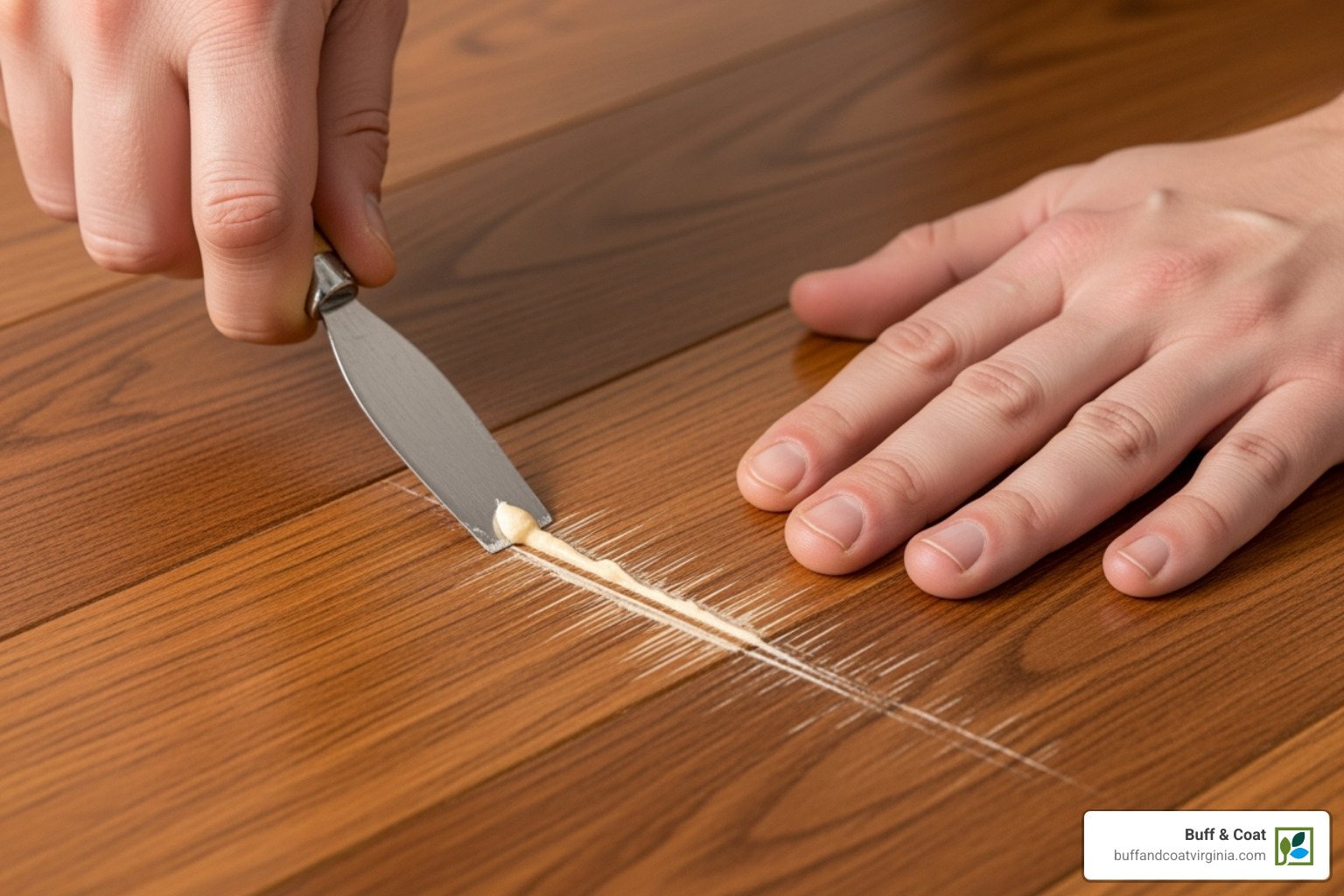
- Light Scratches: After cleaning, use a blending pencil or floor marker that matches your wood. Apply it along the scratch and gently buff with a soft cloth to blend.
- Small Dents: Place a few drops of water on the dent, cover it with a thick towel, and apply gentle heat with an iron on medium. This encourages the compressed wood fibers to swell back up. Check frequently to avoid scorching.
- Deeper Gouges: Clean the area and apply a quality wood filler with a plastic putty knife, pressing it firmly into the gouge. Once dry, sand the area flush, apply matching stain if needed, and finish with a protective coat.
For more tips, see our guide on hardwood floor scratch repair.
Filling Gaps and Cracks
Small gaps between floorboards are usually caused by natural wood contraction due to seasonal humidity changes. For these, a color-matched wood filler or flexible colored caulk works well. Clean the gap, apply the filler, level it, and let it dry before any finishing touches.
However, be cautious with larger gaps (over 1/8 inch) or growing cracks, as they may signal bigger structural or moisture problems. If you suspect underlying issues, it’s wise to consult experts from an organization like the National Wood Flooring Association (NWFA) to determine the best course of action.
Tackling Major Hardwood Floor Damage
Some hardwood floor damage repair goes beyond a simple DIY fix. When dealing with warped boards, significant water damage, or replacing entire sections, it’s crucial to address the root cause of the problem first. The most common culprits are moisture issues (leaks, high humidity) and structural problems (uneven subfloors, foundation issues). Fixing the underlying issue ensures a permanent solution, not just a temporary patch.
How to Address Water-Damaged Hardwood Floors
Quick action is essential when dealing with water damage to minimize its effects.
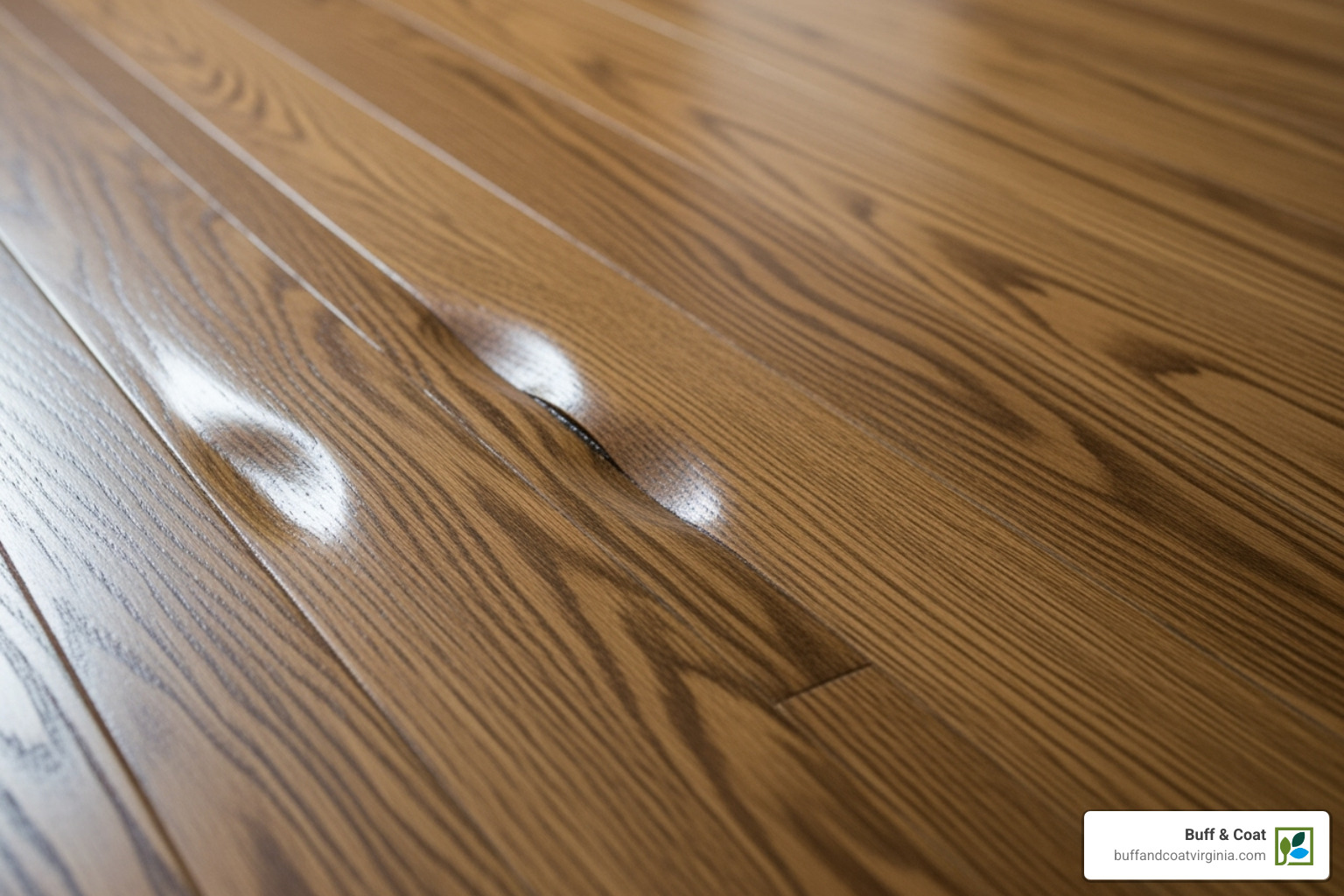
Here are the key steps:
- Stop the Water Source: Immediately find and fix the leak.
- Remove Standing Water: Use a wet/dry vacuum to remove all water from the surface.
- Dry the Area: Use fans and dehumidifiers to thoroughly dry the wood and subfloor. This can take days or weeks, and moisture meters should be used to confirm dryness.
- Assess for Mold: Check for any musty smells or visible growth. If found, professional mold remediation is necessary.
- Clean and Disinfect: Use a mild disinfectant to prevent future mold growth.
- Repair or Replace: If damage is light (minor discoloration or cupping), sanding and refinishing may suffice. For severely warped, buckled, or rotted boards, replacement is the only option.
For a deeper look, review our guide on hardwood floor water damage.
The Process for Replacing Damaged Hardwood Floorboards
When a board is stained, warped, or broken beyond repair, replacement is necessary. This is a precise job that restores the floor’s integrity.
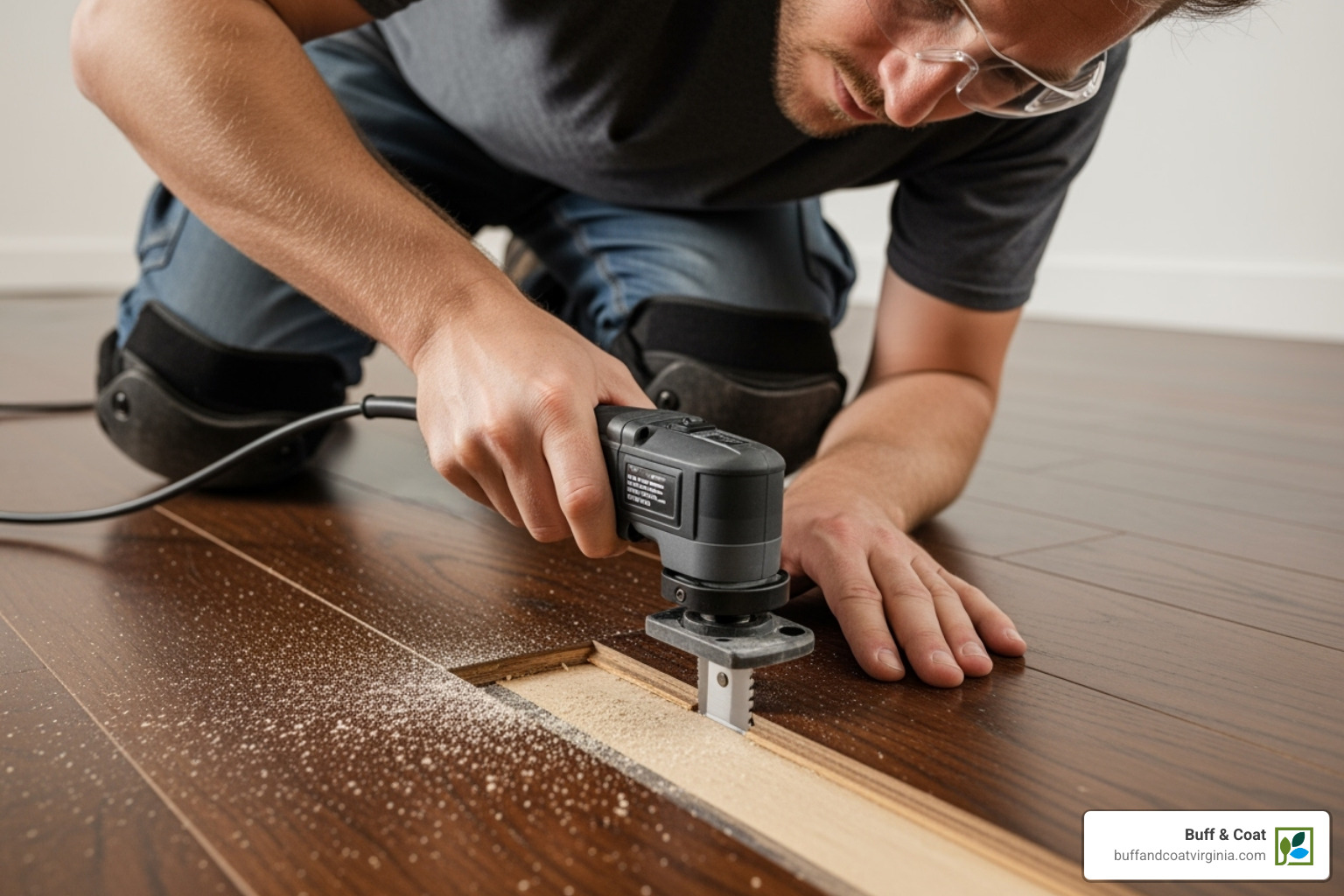
Here is a summary of the process:
- Gather Materials: You’ll need a matching replacement board, an oscillating multi-tool or circular saw, a chisel, wood glue, and finishing supplies.
- Cut Out the Damaged Board: Carefully make precise cuts to remove the damaged board without harming adjacent planks or the subfloor. An oscillating tool is ideal for this. Pry out the pieces with a chisel.
- Prepare the Space: Clean the exposed subfloor. You may need to modify the tongue or groove of adjacent boards to fit the new piece, a technique detailed in guides like those from This Old House.
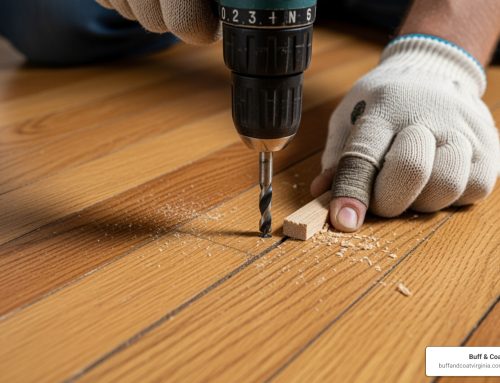
- Install the New Board: After cutting the new board to size and test-fitting it, apply wood glue to the tongues and grooves and slip it into place. Secure it with finishing nails driven into pilot holes, then sink the nail heads and fill the holes with putty.
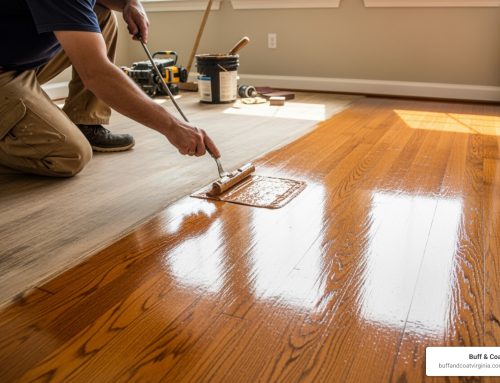
- Stain and Finish: The final step is to sand the new board lightly and apply stain and finish to match the existing floor, feathering the edges to create a seamless blend.
The Best Defense: Preventing Future Floor Damage
An ounce of prevention is worth a pound of cure, especially for hardwood floors. Proactive care can save you from costly hardwood floor damage repair and keep your floors looking beautiful for years.
Follow these simple tips to protect your investment:
- Use Felt Pads: Attach felt pads to the legs of all furniture to prevent scratches and dents.
- Place Area Rugs: Use rugs in high-traffic areas like entryways and hallways to catch dirt and grit.
- Clean Properly: Sweep or vacuum regularly with a soft-bristled attachment. Use only cleaners specifically designed for hardwood floors.
- Wipe Spills Immediately: Blot up any liquid spills as soon as they happen to prevent staining and water damage.
- Maintain Stable Humidity: Keep indoor humidity between 35-55% using a humidifier or dehumidifier to prevent gaps and warping.
- Trim Pet Nails: Regularly trim your pet’s nails to avoid scratches and gouges.
- Avoid High Heels: The sharp points of high heels can easily dent wood floors.
Frequently Asked Questions about Hardwood Floor Repair
It’s natural to have questions about hardwood floor damage repair. Here are answers to some of the most common ones we hear.
Is it cheaper to repair or replace hardwood floors?
Generally, repairing hardwood floors is significantly cheaper than a full replacement. For localized issues like scratches or a few damaged boards, repairs might cost between $478 and $1,624. In contrast, replacing an entire floor can cost $2,480 to $7,028 or more for an average-sized room. Replacement becomes necessary only when damage is widespread, structural, or the floors are too thin to be sanded again.
Can you repair just one section of a hardwood floor?
Yes, absolutely. Repairing or replacing boards in a specific section is a common and cost-effective solution. The main challenge is matching the color and finish of the new wood to your existing floor, which has aged over time. A skilled professional can blend the repair seamlessly so it’s virtually invisible.
How do you fix deep gouges in hardwood floors?
Deep gouges are best fixed with a multi-step process. First, the area is cleaned thoroughly. Then, a color-matched wood filler or putty is applied and smoothed flush with the surface. After the filler dries completely, it’s sanded smooth. Finally, a matching stain and protective finish are applied to blend the repair into the surrounding floor.
For a flawless finish on your next hardwood floor project, we invite you to schedule a free inspection with our experts today! Visit our contact page to get your free estimate.
Conclusion: Restore Your Floor’s Beauty
With the right approach to hardwood floor damage repair, your floors can continue to be a stunning feature of your home. We’ve covered everything from minor scuffs you can fix yourself to major issues like water damage that require a professional touch.
The key takeaway is that timely action prevents small problems from becoming large, expensive ones. While DIY methods are great for minor scratches, complex issues like warping, severe water damage, or board replacement benefit from professional expertise to ensure a seamless, lasting result.
At Buff & Coat, we specialize in bringing floors back to their original glory. Our signature dust-free techniques make the restoration process clean and convenient. Whether you need a full hardwood floor restoration project or targeted repairs, we understand your floors are the foundation of your home’s character.
Ready to give your floors the attention they deserve? We offer free estimates. Please visit our contact page to schedule a free inspection with our team. Let’s work together to restore the natural beauty of your hardwood floors.