Understanding What Drives Your Floor Restoration Budget
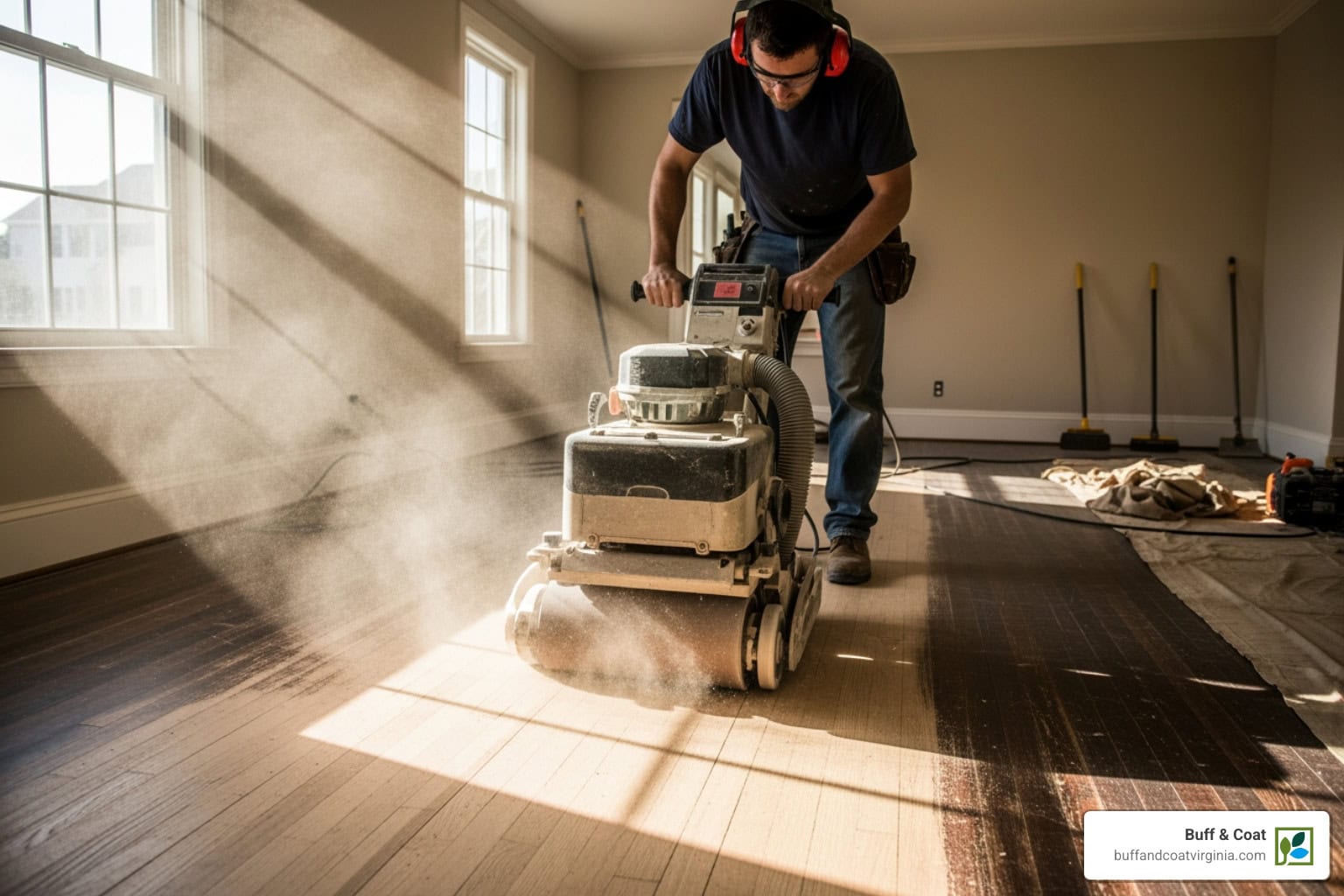
Floorboard restoration cost typically ranges from $3 to $8 per square foot for professional refinishing, with most homeowners spending between $1,500 and $4,000. The total price depends on key factors like area size, floor condition, wood type, and the specific restoration process. For homeowners looking for professional hardwood floor refinishing, understanding these costs is the first step. Our modern, dust-free techniques offer a faster, cleaner alternative to traditional methods, often completing projects in a single day.
Refinishing delivers exceptional value. Homeowners typically recover 147% of their investment upon selling, gaining an average of $5,000 in home value from a $3,400 project.
As the owner of Buff & Coat, I’ve spent over 20 years helping homeowners in the Richmond, VA area steer these decisions. Our specialized buff-and-coat process provides a cost-effective solution that revitalizes floors without the disruption of a full refinishing.
Floorboard restoration cost terms to know:
Key Factors That Influence Floor Restoration Costs
When planning to restore hardwood floors, understanding what drives the price helps you budget with confidence. The floorboard restoration cost is shaped by several interconnected factors, from room size to the specific wood species under your feet.
How Floor Condition and Wood Type Affect Price
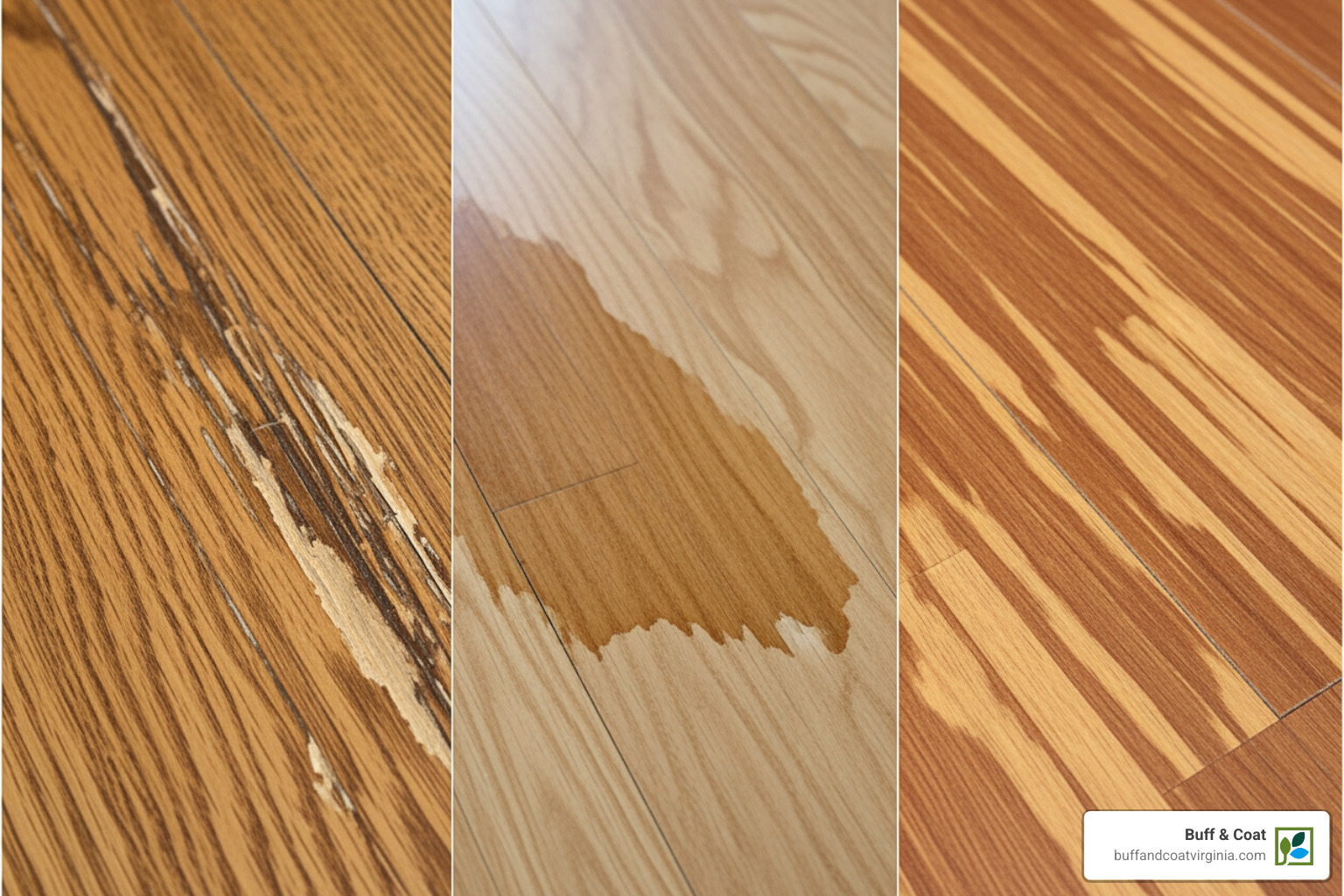
Your floor’s current condition is the biggest factor determining your floorboard restoration cost. Minor wear requires a touch-up, while serious damage needs more intensive work.
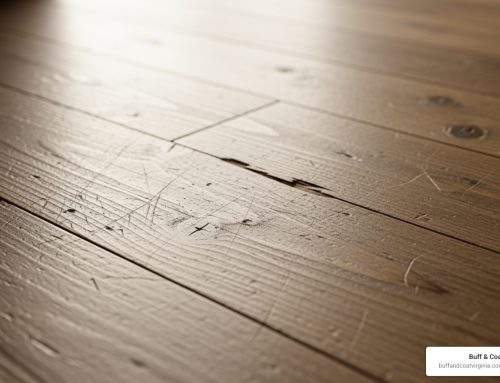
- Scratches: Light scuffs can often be fixed with a simple buff and recoat for $1 to $2.50 per square foot. Deeper gouges require full sanding, which costs $0.50 to $3 per square foot for that step alone.
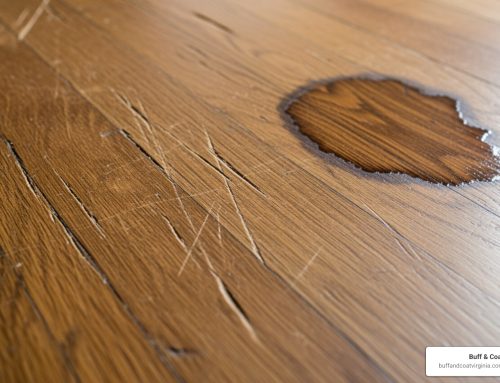
- Water Damage: This is where costs can escalate. Minor stains might sand out, but significant moisture can cause warping or rot, with repairs ranging from $8 to $100 per square foot. Our guide on Hardwood Floor Damage Repair can help you identify these issues.
- Cupping and Gaps: Cupping (upward curving of board edges) requires extensive sanding. Gaps between boards can usually be filled without major expense.
- Rot: This is the most serious issue, requiring board replacement and potential subfloor repair, costing $50 to $250 per square foot.
The wood species also influences pricing. Common woods like Oak ($3-$5/sq ft) and Cherry ($3-$5/sq ft) are straightforward to refinish. Harder-to-work-with species like Maple ($5-$8/sq ft), soft Pine ($4-$7/sq ft), and dense exotic woods like Mahogany ($5-$8/sq ft) command higher prices due to the specialized care they require.
Additional Factors Affecting Your Floorboard Restoration Cost
Several logistical considerations can add to your final bill:
- Furniture Moving: Expect to pay $20 to $50 per room if you need the contractor to handle it.
- Carpet Removal: Professional removal and disposal runs $1 to $5 per square foot.
- Subfloor Repairs: If the subfloor is damaged, repairs are non-negotiable and cost $3 to $10 per square foot. For more details, Angi’s guide on How Much Does It Cost to Replace Subflooring? [2025 Data] is a useful resource.
- Stair Refinishing: This is labor-intensive work, priced at $80 to $140 per step.
Geographic location, local labor rates, and project complexity also affect the total cost. Ready for a precise estimate? Schedule a free inspection for a detailed breakdown.
Understanding the Average Floorboard Restoration Cost
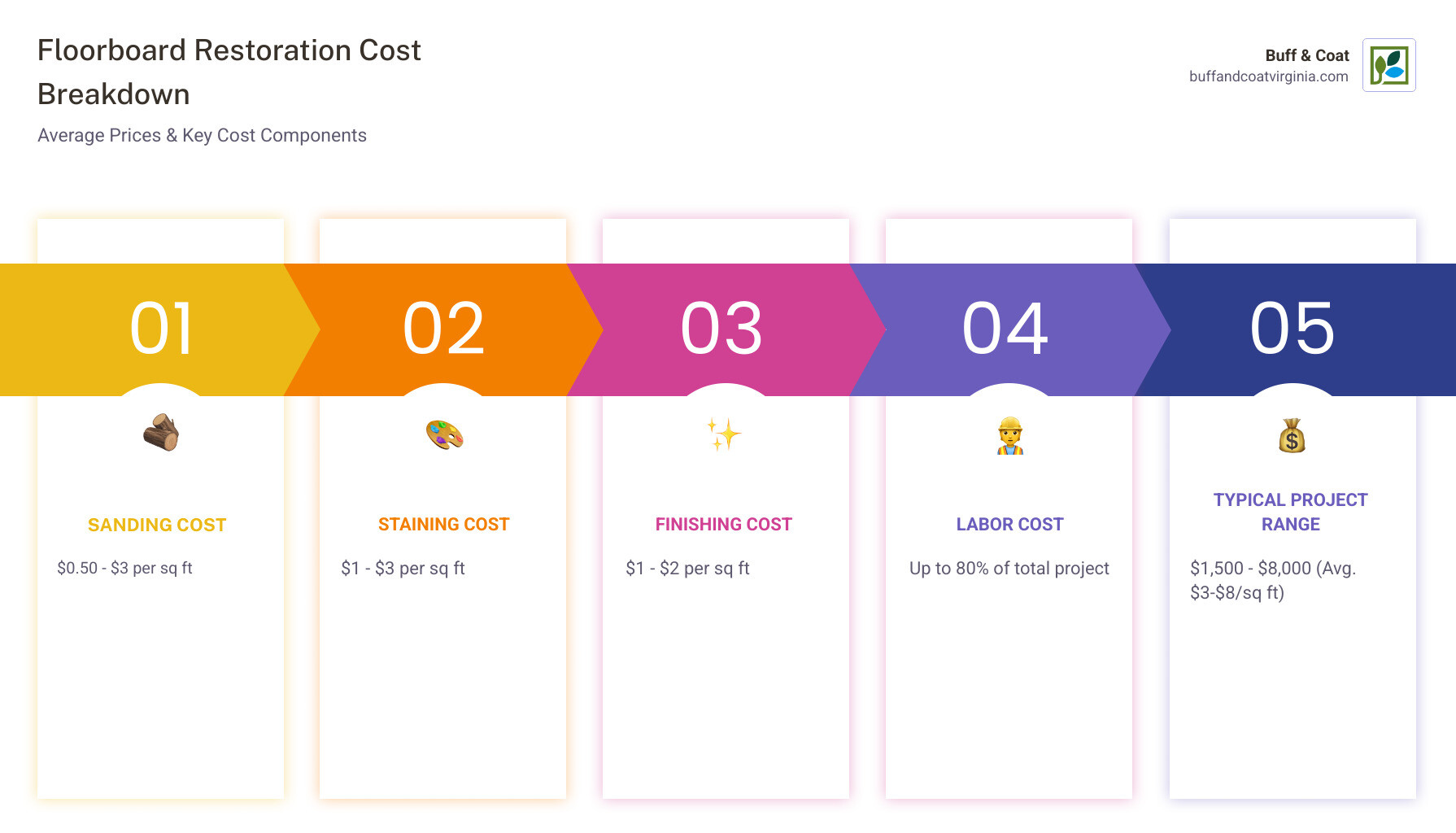
The floorboard restoration cost is a combination of services, with labor accounting for up to 80% of the total bill. The price depends on the processes your floors need, from aggressive sanding to a light buff and fresh coat.
Breaking Down the Process: Sanding, Staining, and Coating
A full restoration involves three main stages:
- Sanding: This first step strips away old finish and damage to reveal fresh wood. Sanding costs $0.50 to $3 per square foot.
- Staining (Optional): To change the floor’s color, staining adds $1 to $3 per square foot. You can skip this to save money if you like the natural wood color.
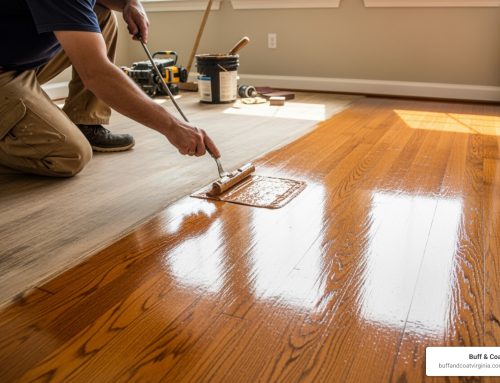
- Coating: Multiple coats of polyurethane protect the wood. This costs $1 to $2 per square foot. Oil-based polyurethane offers a warm amber glow and durability, while water-based options dry faster with less odor but cost slightly more.
Our Expert Floor Sanding Services use professional-grade equipment to ensure a perfect foundation for your new finish.
Traditional vs. Dustless Refinishing Methods
Modern dustless refinishing has revolutionized the process, eliminating the massive cleanup associated with traditional methods.
- Traditional Sanding: Creates fine wood dust that spreads throughout the home, requiring extensive cleaning.
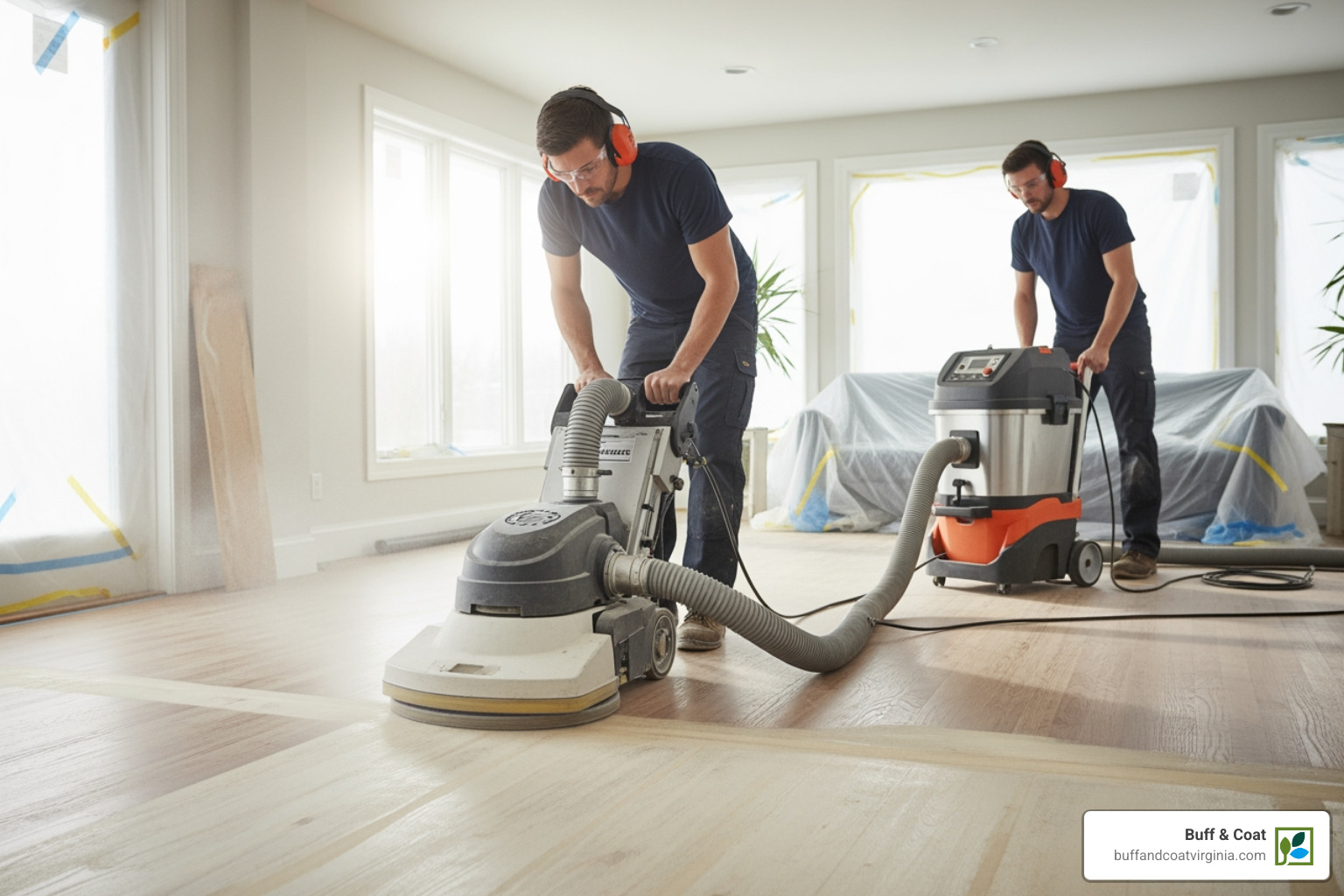
- Dustless Systems: Use powerful, sealed vacuums to capture 99% of dust at the source. This is a significant health benefit, especially for those with allergies or asthma.
While dustless refinishing may cost slightly more, landing in the $5 to $8 per square foot range, homeowners consistently find the cleaner, healthier process is worth the investment. At Buff & Coat, we exclusively use advanced, dust-free techniques. Our Dust-Free Floor Sanding Near Me guide explains how our process delivers professional results while keeping your home clean.
DIY vs. Professional Refinishing: A Cost and Effort Analysis
Deciding between DIY and professional refinishing involves weighing cost against time, effort, and the quality of the final result. While DIY can seem cheaper, professional services offer expertise and superior equipment.
DIY vs. Professional: A Floorboard Restoration Cost Comparison
A DIY project may cost $500 to $1,000 for equipment rental and materials. However, this doesn’t account for the significant time investment (days or even weeks) and the high risk of costly mistakes. Common DIY errors include gouging floors with a drum sander, uneven sanding, and improper finish application, which can lead to a result that’s worse than the original problem.
Professional refinishing typically costs $1,104 to $2,674 for an average project. While the upfront cost is higher, you are paying for expertise, efficiency (most projects are done in 2-7 days), professional-grade dust-containment systems, and a warranty. The peace of mind and guaranteed high-quality result often make professional services the more valuable choice.
Refinishing vs. Replacing Your Hardwood Floors
Before deciding on the floorboard restoration cost, determine if your floors can be saved. In most cases, they can.
- Cost-Effectiveness: Refinishing ($600 – $4,500) is almost always more affordable than replacement ($2,475 – $7,030+).
- Lifespan: Solid hardwood can be refinished up to 12 times, lasting over a century. Engineered hardwood can typically be refinished once or twice.
- Damage Severity: Most issues like scratches, stains, and dullness can be fixed. Replacement is usually only necessary for widespread, severe damage like rot, extensive warping, or structural subfloor failure. Our guide on Replacing Old Hardwood Floors can help you decide.
Most floors, even those that look severely damaged, can be restored to look brand new.
Maximizing Value: ROI and Cost-Saving Tips

Restoring hardwood floors is an investment in your home’s value. Understanding the return on investment (ROI) and using smart cost-saving strategies can make the project more affordable.
How Much Value Does Refinishing Hardwood Floors Add?
Refinishing hardwood floors is one of the highest-return home improvement projects. According to the National Association of REALTORS®, homeowners who spend an average of $3,400 on refinishing gain approximately $5,000 in home value, a 147% cost recovery. Beautifully restored hardwood floors create an immediate impression of quality, helping homes sell faster and for higher prices. The 2022 Remodeling Impact Report from the National Association of REALTORS® confirms this, showing refinishing has a higher cost recovery than most other interior renovations.
Tips for Saving Money on Your Project
While the floorboard restoration cost delivers great value, you can reduce expenses without sacrificing quality:
- Move Furniture Yourself: Since labor is a major cost, clearing rooms yourself provides direct savings.
- Handle Carpet Removal: If you have old carpet, removing it and the tack strips yourself can save hundreds.
- Schedule During the Off-Season: Booking your project in late fall or winter may lead to better pricing from some contractors.
- Bundle Services: Combining refinishing with minor repairs in a single visit is more cost-effective.
- Perform Post-Job Cleanup: Handling the final wipe-down after the finish has cured can sometimes reduce the final bill.
- Get Multiple Quotes: Contact at least three reputable contractors to compare pricing, services, and warranties. The cheapest bid isn’t always the best value; prioritize professionals with dust-free equipment and solid guarantees.
Frequently Asked Questions about Floorboard Restoration
What are the signs that my hardwood floors need refinishing?
Your floors need refinishing if you notice deep scratches that expose raw wood, a dull or cloudy finish, fading and discoloration, dark water stains, or splintering wood. These signs indicate the protective finish has worn away, leaving the wood vulnerable to damage. Catching these issues early can prevent more expensive repairs. For more detailed timing recommendations, see our guide on How Often Should Hardwood Floors Be Refinished.
How long does it take to refinish hardwood floors?
Professional refinishing typically takes two to seven days. The exact timeline depends on the project size, the number of finish coats applied, and the required drying time between coats (usually 24 hours). While floors are often ready for light foot traffic in a day or two, the finish needs up to two weeks to fully cure and harden. During this curing period, you should avoid placing heavy furniture or rugs on the floor.
Can you refinish engineered hardwood floors?
Yes, but it depends on the thickness of the top wood layer, known as the wear layer. Engineered floors with a wear layer of 3mm or more can typically be sanded and refinished once or twice. Floors with a thinner layer cannot be sanded without risking damage to the core. Because of this limitation, a professional assessment is essential before beginning any work. Our Refinish Engineered Wood Floors Guide provides a comprehensive overview of your options.
Get a Professional Estimate for Your Floor Restoration
Restoring your hardwood floors is a smart investment that revitalizes your home and delivers an exceptional return. As we’ve explored, the floorboard restoration cost depends on factors like your floor’s condition, wood type, and project size, but the value it adds is undeniable—homeowners often recover 147% of their investment.
While this guide provides a solid overview, every floor is unique. The best way to understand your specific costs and options is with a personalized assessment from an experienced professional.
At Buff & Coat, we have over 20 years of experience helping homeowners in the Richmond, Chesterfield, and Midlothian, VA areas. Our dust-free refinishing process minimizes mess and delivers beautiful results, often in a single day.
Ready to see what your project will cost? We offer free, no-obligation estimates. Our team will assess your floors and provide a transparent, detailed quote with no hidden surprises. Schedule a free inspection online at your convenience to learn how our restoration process can transform your worn floors into a stunning feature of your home.