
Why Learning to Fix Scratched Wood Floors Saves Money and Preserves Beauty
Fix scratched wood floors and you’ll protect one of your home’s most valuable assets. Hardwood floors can last up to 100 years with proper care, but daily life leaves its mark – kids, pets, furniture moves, and regular foot traffic all contribute to scratches that can detract from your floor’s natural beauty.
Quick Answer: How to Fix Scratched Wood Floors
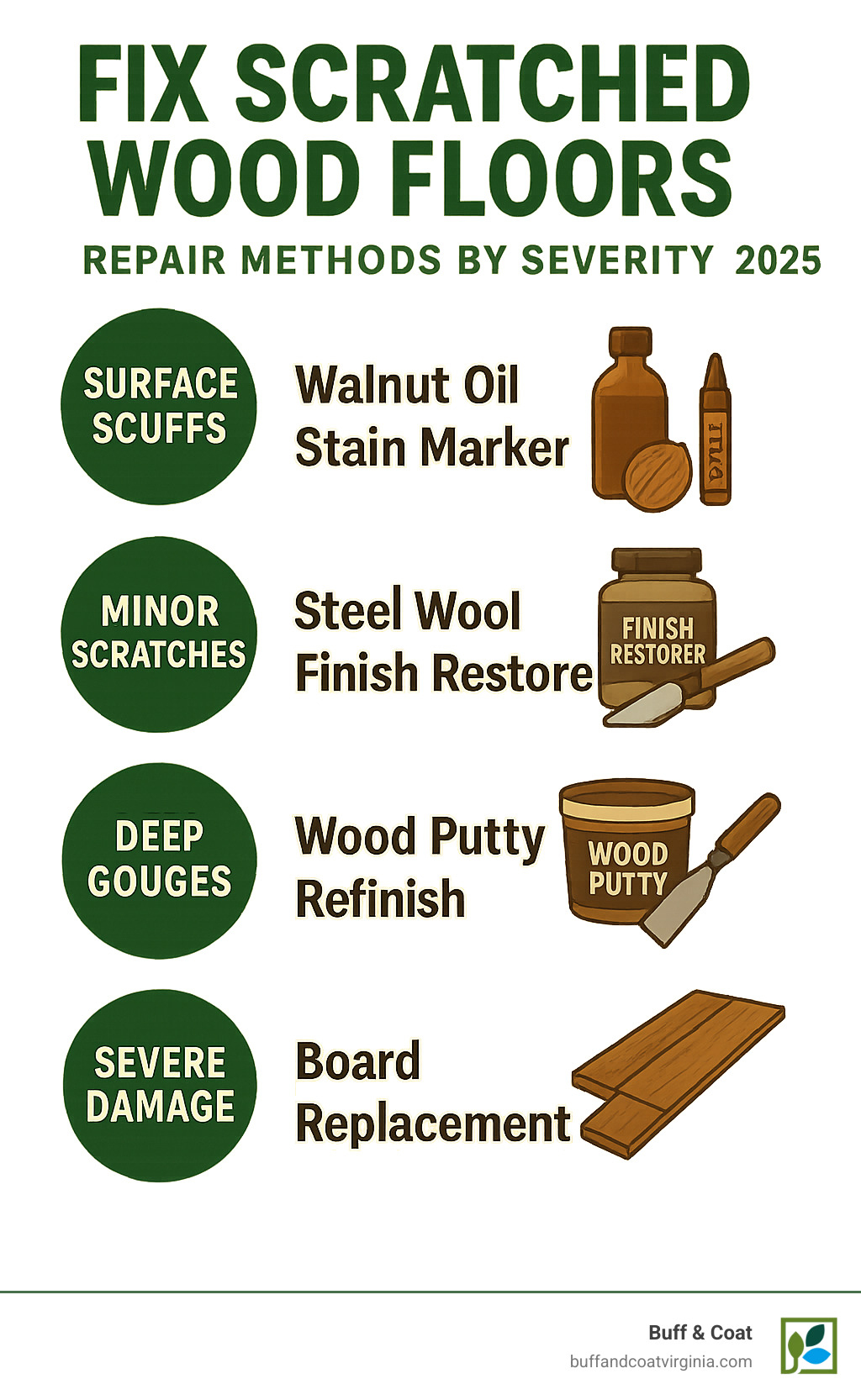
- Surface scratches – Use walnut oil, vinegar-olive oil mixture, or stain markers
- Minor scratches – Apply #0000 steel wool with the grain, then finish restorer
- Deep scratches – Fill with wood putty, sand smooth, stain to match, seal with polyurethane
- Severe damage – Replace individual boards or call professionals
The good news? Most scratches are fixable at home. Research shows that repairing hardwood floors typically costs $478 to $1,624, while full replacement can run $2,480 to $7,028 or more. With the right approach, you can restore your floors’ appearance without the expense of complete refinishing.
Modern engineered hardwood with densified wood cores offers four times more scratch resistance than traditional flooring. But even the toughest floors need occasional touch-ups. The key is matching your repair method to the scratch depth and your floor’s finish type.
I’m David Emmerling, and I’ve spent over 20 years helping Richmond-area homeowners fix scratched wood floors through my company Buff & Coat. My dustless refinishing process has restored thousands of floors, and I’ve learned that most scratches can be repaired with simple DIY techniques before they require professional intervention.
Step 1 – Assess the Damage Before You Fix Scratched Wood Floors
Before you grab any tools, take time to properly evaluate your floor’s condition. Not all scratches are created equal, and using the wrong repair method can actually make things worse. We’ve seen homeowners turn minor scuffs into major problems by applying the wrong technique.
Understanding your floor type is crucial. Site-finished floors (sanded and finished in your home) are generally easier to repair than prefinished floors, which have multiple layers of urethane and aluminum oxide that make sanding more difficult. Solid hardwood can handle more aggressive repairs than engineered wood, which has a thin veneer layer that limits your options.
Your floor’s finish also matters. Polyurethane-coated floors require different approaches than wax-finished floors. Never use wax products on polyurethane floors – it prevents future refinishing and can create a cloudy appearance.
How to Identify Scratch Severity
Here’s our field-tested method for assessing scratch depth:
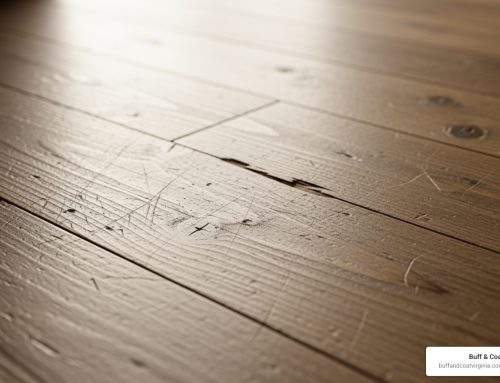
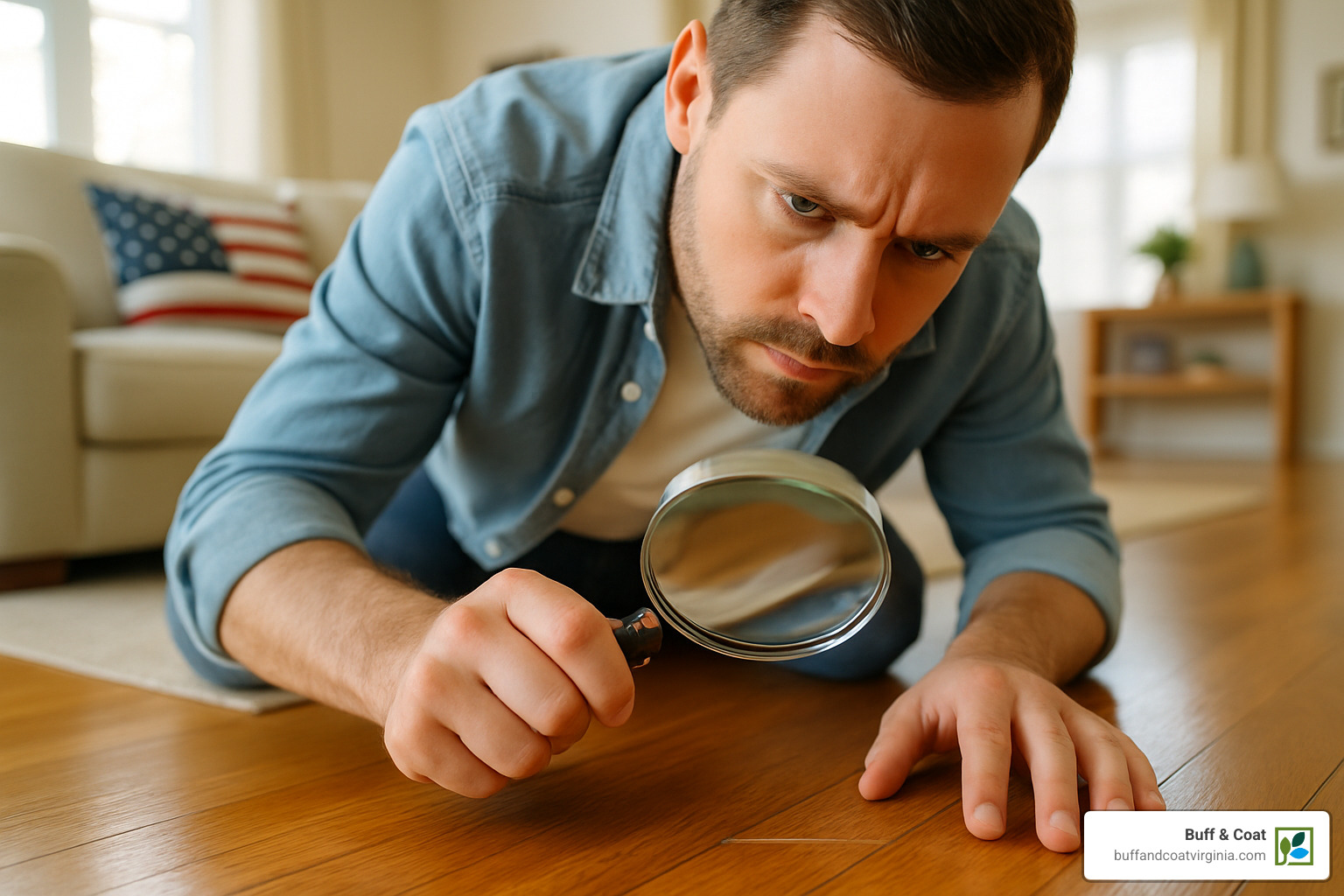
The Credit Card Test: Run a credit card perpendicular across the scratch. If it catches, you’re dealing with a deeper scratch that needs filling.
The Thumbnail Test: Gently run your thumbnail along the scratch. Surface scratches won’t catch your nail, while deeper ones will.
Visual Inspection: Look for exposed raw wood – this indicates the scratch has penetrated through the finish into the wood itself. These scratches need more intensive repair.
Check for Surrounding Dullness: Scratches often come with surrounding areas where the finish has been worn thin. This affects your repair strategy.
Assess the Spread: Are scratches localized to one area or widespread? Widespread damage might warrant professional refinishing rather than spot repairs.
Document & Map Problem Spots
Create a simple floor plan sketch marking scratch locations. We recommend using your phone to photograph each problem area – this helps you track progress and ensures you don’t miss any spots during repair.
Use sticky notes to mark priority areas, focusing on high-traffic zones first. This documentation also helps with budget planning and can be valuable for insurance claims if the damage resulted from an incident.
More info about Hardwood Floor Repair Contractors
Step 2 – Tools & Materials Checklist
Having the right tools makes all the difference between a professional-looking repair and an obvious patch job. Here’s what you’ll need based on scratch severity:
Basic Cleaning Supplies:
- Soft, lint-free cloths
- Hardwood floor cleaner (avoid wax-based products)
- Vacuum with brush attachment
Surface Scratch Repairs:
- White vinegar and olive oil (equal parts mixture)
- Raw walnut halves
- Magic Eraser (use cautiously on stained surfaces)
- Wood stain markers or blending pencils
- Floor finish restorer
Minor Scratch Repairs:
- #0000 grade steel wool (finest grade)
- Colored wax repair sticks
- Microfiber buffing cloths
Deep Scratch Repairs:
- Wood filler or putty (color-matched)
- 120-220 grit sandpaper
- Plastic putty knife
- Carpenter’s glue
- Painter’s tape
- Lambswool applicator or natural bristle brush
Finishing Supplies:
- Water-based or oil-based polyurethane (match your existing finish)
- Mineral spirits
- Dust mask and knee pads
Safety Note: Always wear a dust mask when sanding and ensure good ventilation when using finishes or solvents.
Step 3 – How to Fix Scratched Wood Floors (Hands-On Repairs)
Now for the main event – actually fixing those scratches. We’ll work from least invasive to most intensive repairs. Always test any method in an inconspicuous area first.
More info about Restoring Shine: Hardwood Floor Buff and Coat for Dull Floors
Fix Scratched Wood Floors – Light Surface Scuffs
Surface scuffs only affect the top finish layer and are the easiest to repair. These are your best candidates for DIY success.
The Walnut Method: This old-school trick actually works. Break a walnut in half and rub the meat directly into the scratch. The natural oils fill the scratch and blend with the wood’s color. Let it sit for 5-10 minutes, then buff with a soft cloth.
Vinegar-Olive Oil Treatment: Mix equal parts white vinegar and olive oil. Apply to the scratch, let sit for 24 hours, then wipe clean. This treatment nourishes the wood while masking the scratch.
Stain Marker Touch-Up: Choose a marker slightly darker than your floor – it hides imperfections better than an exact match. Color in the scratch, then immediately wipe excess with a damp cloth.
Finish Restorer: For multiple light scratches across a wider area, use a commercial finish restorer. Apply with a microfiber cloth, working in the direction of the wood grain.
Allow 24 hours for any treatment to fully cure before walking on the area.
Fix Scratched Wood Floors – Minor Finish Scratches
These scratches penetrate the finish but don’t reach the wood. They require slightly more aggressive treatment.
Steel Wool Method: Use #0000 grade steel wool – anything coarser will create more scratches. Gently rub along the wood grain, not across it. Work in 6-inch sections, applying light pressure.
Blending Pencil Technique: After cleaning the scratch, use a wood blending pencil that matches your floor color. Fill the scratch, then buff gently with a soft cloth to blend the edges.
Thin Polyurethane Coat: For scratches that affect a larger area, apply a thin coat of polyurethane using a lambswool applicator. Feather the edges to blend with the existing finish.
Deep Scratches, Gouges & Chips
Deep damage requires more intensive repair but is still manageable for most DIYers.
Preparation: Vacuum out any debris from the scratch. If there’s a wood splinter, don’t remove it – instead, apply carpenter’s glue with a toothpick and press the splinter back into place. Secure with painter’s tape until dry.
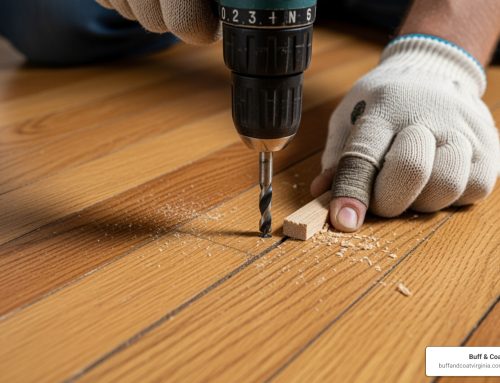
Wood Filler Application: Choose a wood filler that matches your floor color. Using a plastic putty knife, press filler into the scratch, overfilling slightly. Let dry according to manufacturer instructions (usually 2+ hours).
Sanding: Once dry, sand the filler level with 180-grit sandpaper, working with the grain. Remove all dust with a tack cloth.
Staining: If needed, apply matching stain to blend the repair with surrounding wood. Test stain color on a hidden area first.
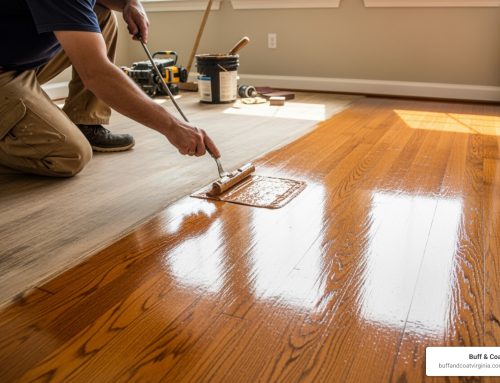
Finishing: Apply two thin coats of polyurethane, allowing proper drying time between coats. Use a high-quality brush or lambswool applicator to avoid bubbles.
When to Replace Boards: If a scratch is deeper than 1/8 inch or if there’s significant splintering, board replacement might be more cost-effective than repair.
More info about Wood Floor Repair Richmond VA
Step 4 – Nail the Match: Stain & Finish Blending
Getting the color and sheen right separates amateur repairs from professional-looking results. Here’s how we achieve seamless blends:
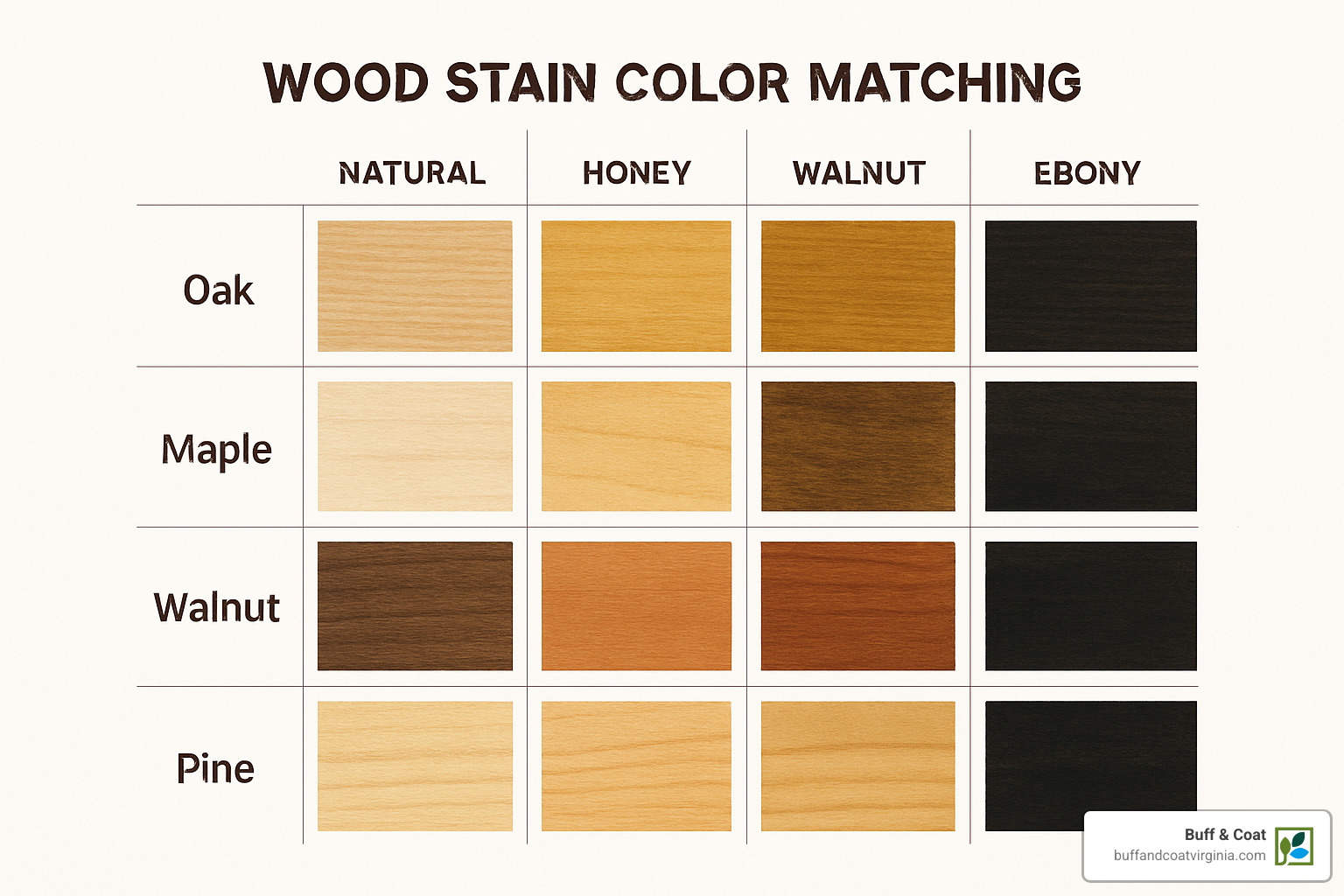
Understanding Wood Undertones: Oak has golden undertones, maple tends toward pink, and walnut has chocolate browns. Your repair materials need to complement these natural colors.
Test Block Method: Always test stain combinations on a scrap piece of matching wood or in a closet corner. What looks right in the bottle might not match your floor.
Mixing Stain Pens: Don’t be afraid to use multiple stain pen colors. Apply the lighter color first, then add darker accents to match your floor’s natural variation.
Finish Matching: Water-based polyurethanes dry clear, while oil-based versions add an amber tint. Match your existing finish type for consistent appearance.
Feathering Technique: When applying new finish, feather the edges by gradually reducing pressure as you move away from the repair area. This creates a smooth transition.
Gloss Level: Most floors use satin finish (40% gloss). Semi-gloss (70% gloss) shows scratches more readily but provides better protection in high-traffic areas.
Scientific research on varnish finishes
Step 5 – Prevention & Post-Repair Maintenance
The best scratch repair is the one you never have to make. Here’s how to protect your investment:
Immediate Protection:
- Place area rugs in high-traffic zones and entryways
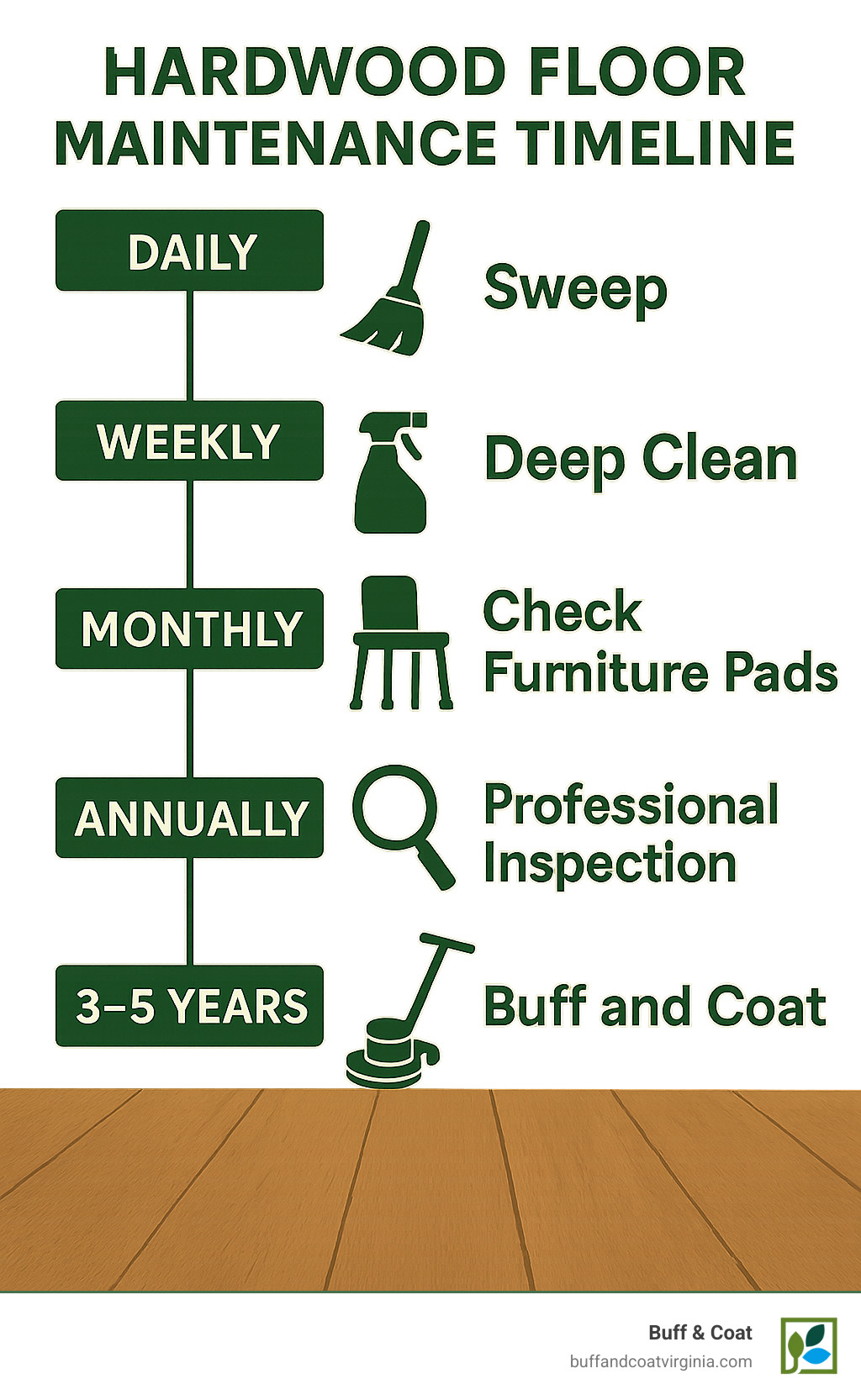
- Attach felt pads to all furniture legs (replace them regularly)
- Establish a no-shoes policy or provide shoe covers for guests
- Keep pet nails trimmed – a polyurethane finish is no match for Fido’s claws
Environmental Control:
- Maintain indoor humidity between 35-55% to prevent wood movement
- Use furniture lifters when moving heavy pieces
- Sweep or vacuum daily to remove abrasive dirt and sand
Long-term Strategy:
- Consider upgrading to engineered hardwood with densified wood cores for superior scratch resistance
- Schedule professional buff-and-coat services every 3-5 years to maintain the protective finish
- Address scratches promptly – small problems become big ones when ignored
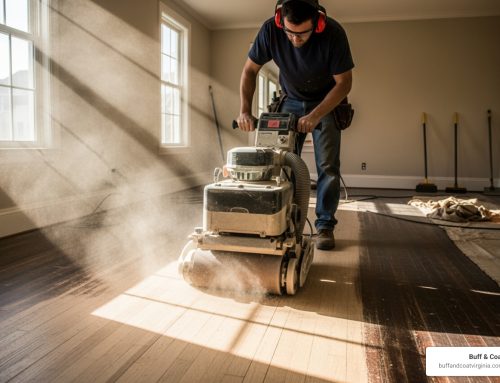
The Buff & Coat Advantage: Our signature dust-free buff-and-coat process adds a fresh protective layer without the mess and expense of full refinishing. It’s perfect for floors that need protection but aren’t ready for complete refinishing.
More info about Affordable Hardwood Floor Refinishing
Hardwood floors add value to any home – studies show they can increase home value by up to 2.5%. Protecting this investment with proper maintenance and timely repairs makes financial sense.
Frequently Asked Questions about Wood-Floor Scratch Repair
Do I need to refinish the whole floor or just spots?
Spot repairs work well for isolated scratches, but color matching can be challenging due to age and UV exposure. If your floor has widespread scratching or the existing finish is worn, full refinishing provides better results and value.
Our buff-and-coat process offers a middle ground – it refreshes the entire floor surface while being less invasive than full refinishing. This approach ensures consistent color and sheen across the entire floor.
Are DIY fixes safe on polyurethane-coated floors?
Yes, but avoid wax-based products. For polyurethane floors, use mineral spirits on a scouring pad for minor scratches, then recoat with matching polyurethane. Never use paste wax on polyurethane floors – it prevents future refinishing and creates adhesion problems.
When should I call a professional?
Call a professional when:
- Scratches expose raw wood across large areas
- You’re dealing with engineered wood that’s reached its sanding limit
- Multiple repair attempts haven’t achieved satisfactory results
- The floor shows signs of structural damage or warping
- You need to match exotic wood species or custom stain colors
At Buff & Coat, we often help homeowners who’ve attempted DIY repairs but need professional finishing to achieve a seamless look. There’s no shame in calling for help – sometimes professional tools and experience make the difference between acceptable and exceptional results.
Conclusion
Learning to fix scratched wood floors protects your home’s value and keeps your floors looking beautiful for decades. Start with the least invasive methods and work your way up to more intensive repairs only when necessary.
Prevention is always easier than repair. Simple steps like using area rugs, maintaining proper humidity, and keeping furniture pads fresh can prevent most scratches from occurring.
When your floors need more than spot repairs, consider our signature dust-free buff-and-coat process. It restores your floor’s protective finish, locks in your repair work, and extends the life of your flooring without the expense and disruption of full refinishing.
Whether you’re in Richmond, Glen Allen, or Midlothian, we’re here to help when DIY repairs aren’t enough. Our advanced techniques preserve your floor’s thickness while delivering professional results that last.
Ready to restore your floors’ original beauty? Contact us for a consultation and find how our dust-free process can transform your scratched floors into showroom-quality surfaces.
More info about Hardwood Floor Refinishing Richmond VA