Why Understanding Engineered Wood Flooring Costs Matters for Your Home
Engineered wood flooring cost per square metre typically ranges from £60 to £230+ installed, depending on material quality, installation complexity, and your location. Here’s what you need to know:
Quick Cost Breakdown:
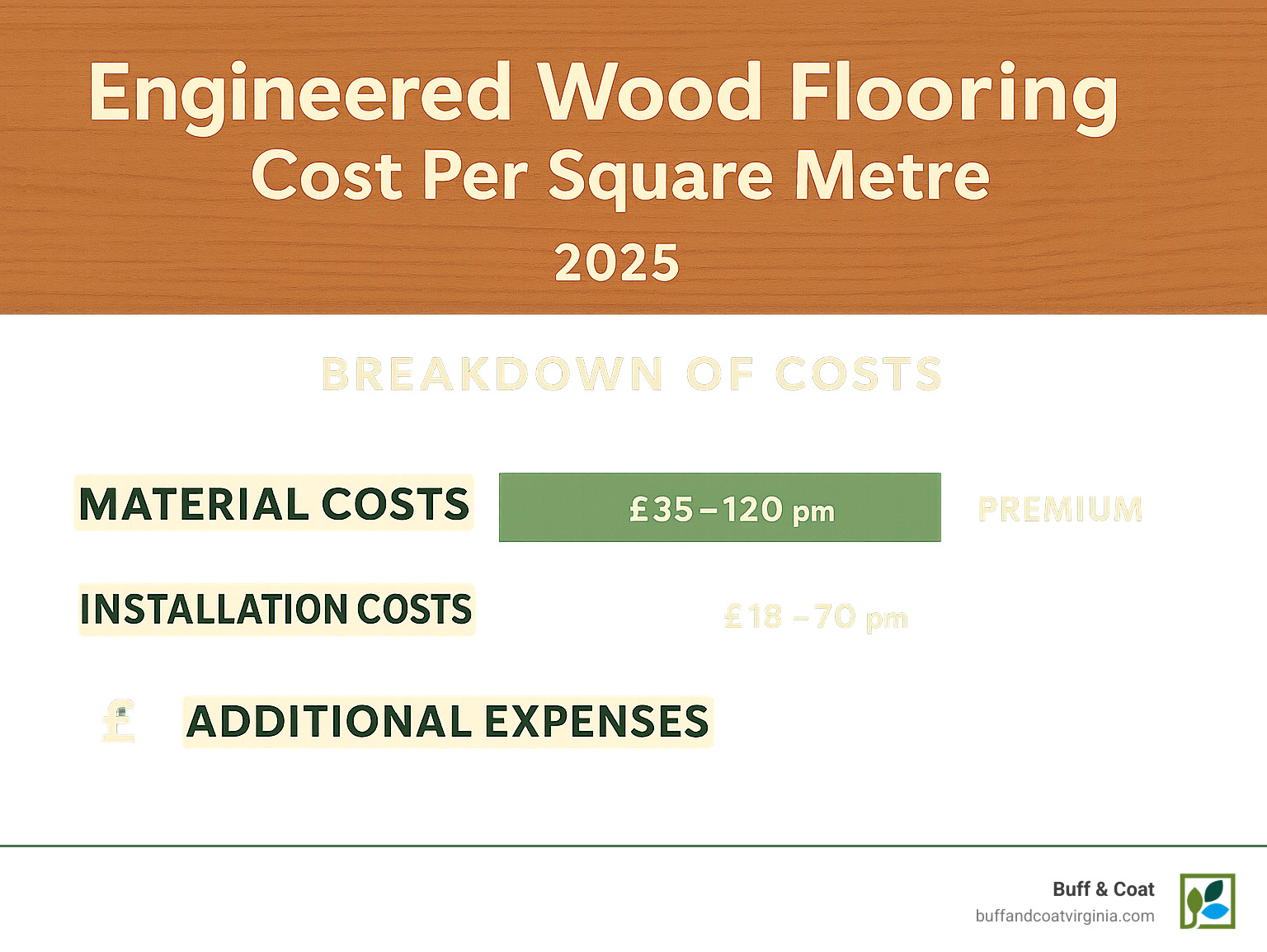
- Material costs: £35-£120 per m² (basic to premium grades)
- Installation costs: £18-£70 per m² (varies by method and complexity)
- Total installed cost: £60-£230+ per m²
Key factors affecting price:
- Veneer thickness (affects refinishing potential)
- Wood species (oak vs exotic woods)
- Installation method (floating vs glue-down)
- Room complexity and subfloor condition
Engineered wood offers the authentic look of solid hardwood at a more affordable price point. The layered construction provides better moisture resistance and dimensional stability than solid wood, making it ideal for areas where traditional hardwood might warp or crack.
The investment makes sense for most homeowners. Research shows that quality engineered flooring can increase home value by up to 30% while offering the durability to last decades with proper care.
I’m David Emmerling, President of Buff & Coat Hardwood Floor Refinishing, and I’ve helped Richmond-area homeowners steer engineered wood flooring cost per square metre decisions for over 20 years. My experience with hundreds of flooring projects has shown me exactly what factors drive costs and where homeowners can make smart choices without compromising quality.
The Average Engineered Wood Flooring Cost Per Square Metre
Let’s cut straight to the numbers you’re really looking for. After installing engineered wood floors in hundreds of Richmond homes, I can tell you exactly what you’ll pay for engineered wood flooring cost per square metre.
The total project typically breaks down into three clear price ranges. Budget-friendly installations run $60-$90 per square metre, mid-range quality projects cost $90-$150 per square metre, and luxury options can reach $150-$230+ per square metre installed.
These figures include both materials and professional installation. The wide range reflects the dramatic difference between basic 3-layer planks and premium 7-layer constructions with thick wear layers.
What surprises many homeowners is how much the material quality affects the final price. A basic oak floor might cost $40 per square metre in materials, while premium walnut with a 6mm wear layer can hit $160 per square metre before installation even begins.
Material Costs: What You’ll Pay for the Planks
The material portion of your engineered wood flooring cost per square metre depends heavily on three key factors: construction quality, veneer thickness, and wood species.
Basic grade planks with 3-layer construction typically cost $40-$60 per square metre. These have a thin 1-2mm veneer over a basic plywood or HDF core. They’re perfect for low-traffic areas like bedrooms, but don’t expect multiple refinishing cycles.
Mid-range options jump to $60-$90 per square metre for good reason. The 5-layer construction provides better stability, and the 2-4mm veneer means you can refinish once or twice over the floor’s lifetime. Most of our Richmond clients choose this grade for main living areas.
Premium grade planks cost $90-$120+ per square metre, but they’re built to last decades. The 7+ layer construction with 4-6mm veneer handles heavy traffic beautifully and can be refinished multiple times. If you’re installing in a forever home, this investment often pays off.
Wood species selection dramatically impacts your budget. Oak flooring remains the sweet spot at $50-$80 per square metre, offering excellent durability and timeless appeal. Maple runs slightly less at $45-$70 per square metre and works beautifully in modern homes with its light, consistent grain.
Walnut enters luxury territory at $80-$120 per square metre, but the rich chocolate tones justify the premium for many homeowners. Exotic species like Brazilian cherry or tigerwood can reach $100-$160+ per square metre, though availability and lead times can be challenging.
From our experience, domestic oak strikes the perfect balance. It’s currently our most popular choice because it offers premium appearance without the exotic wood price tag.
Installation and Labour Costs
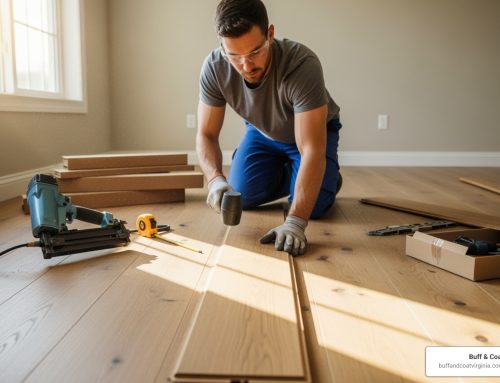
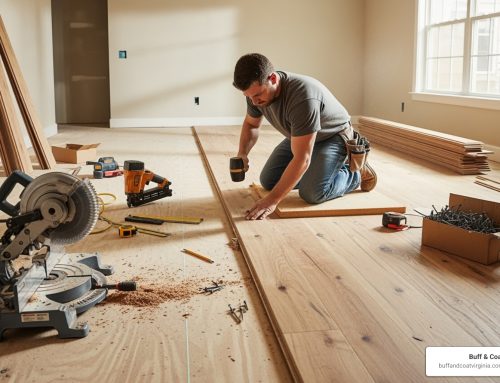
Professional installation adds $20-$70 per square metre to your engineered wood flooring cost per square metre, depending on the method and complexity involved.
Floating installation costs the least at $20-$35 per square metre. The click-lock planks install quickly over existing subfloors, making it perfect for DIY-friendly homeowners who still want professional results.
Glue-down installation runs $35-$50 per square metre and provides the most stable, quiet floor. We recommend this method for high-traffic areas or homes with radiant heating systems.
Nail-down installation costs $40-$60 per square metre but offers the most traditional feel and sound. It’s ideal for thicker planks and provides the longest-lasting installation.
Room complexity significantly affects labour costs. Simple rectangular rooms install efficiently, while irregular layouts with lots of cuts increase time and waste. Herringbone or chevron patterns add $25-$40 per square metre to labour costs, but the dramatic visual impact often justifies the premium.
Subfloor condition plays a huge role in final costs. Level, clean subfloors install smoothly at base rates. Uneven floors requiring leveling compound or extensive prep work can add $15-$30 per square metre to labour costs.
Stairs, tight spaces, or upper floors increase installation complexity and typically add 20-30% to labour costs due to material handling challenges and reduced installation efficiency.
Regional variations matter too. While we focus on Richmond pricing, installation costs in high-cost areas like California can run $45-$90 per square metre, while lower-cost regions might see $25-$45 per square metre.
For more detailed information about our installation process and what affects pricing, check out our flooring installation costs guide.
Key Factors That Drive the Overall Price
After two decades of helping Richmond homeowners steer flooring decisions, I’ve learned that understanding what drives engineered wood flooring cost per square metre is the key to making smart choices. It’s not just about finding the cheapest option – it’s about getting the best value for your specific situation.
The truth is, several factors can dramatically swing your final cost, sometimes by £50 or more per square metre. Let me walk you through the biggest cost drivers so you can budget accurately and avoid any unwelcome surprises.
How Material Quality Impacts the Engineered Wood Flooring Cost Per Square Metre
Think of engineered wood quality like buying a car – you can get from point A to point B in both a basic model and a luxury vehicle, but the experience and longevity are completely different.
The veneer thickness (that top layer of real wood) is probably the most important quality factor affecting your engineered wood flooring cost per square metre. With a 1-2mm veneer, you’re looking at £35-£60 per m², but you’ll likely never be able to refinish it. Step up to a 2-4mm veneer at £60-£90 per m², and you can refinish it once or twice. Go premium with a 4-6mm veneer at £90-£120+ per m², and you’re looking at multiple refinishing cycles over the floor’s lifetime.
Here’s where it gets interesting: that thicker veneer often pays for itself. I’ve seen homeowners save thousands by refinishing a quality floor instead of replacing a thin-veneer floor that couldn’t be sanded.
The core construction is equally important. Plywood cores cost £10-£20 more per m² than HDF cores, but they handle moisture like champions. In Richmond’s humid summers, this stability is worth every penny. Multi-layer cores with seven or more layers provide the ultimate stability but come with premium pricing.
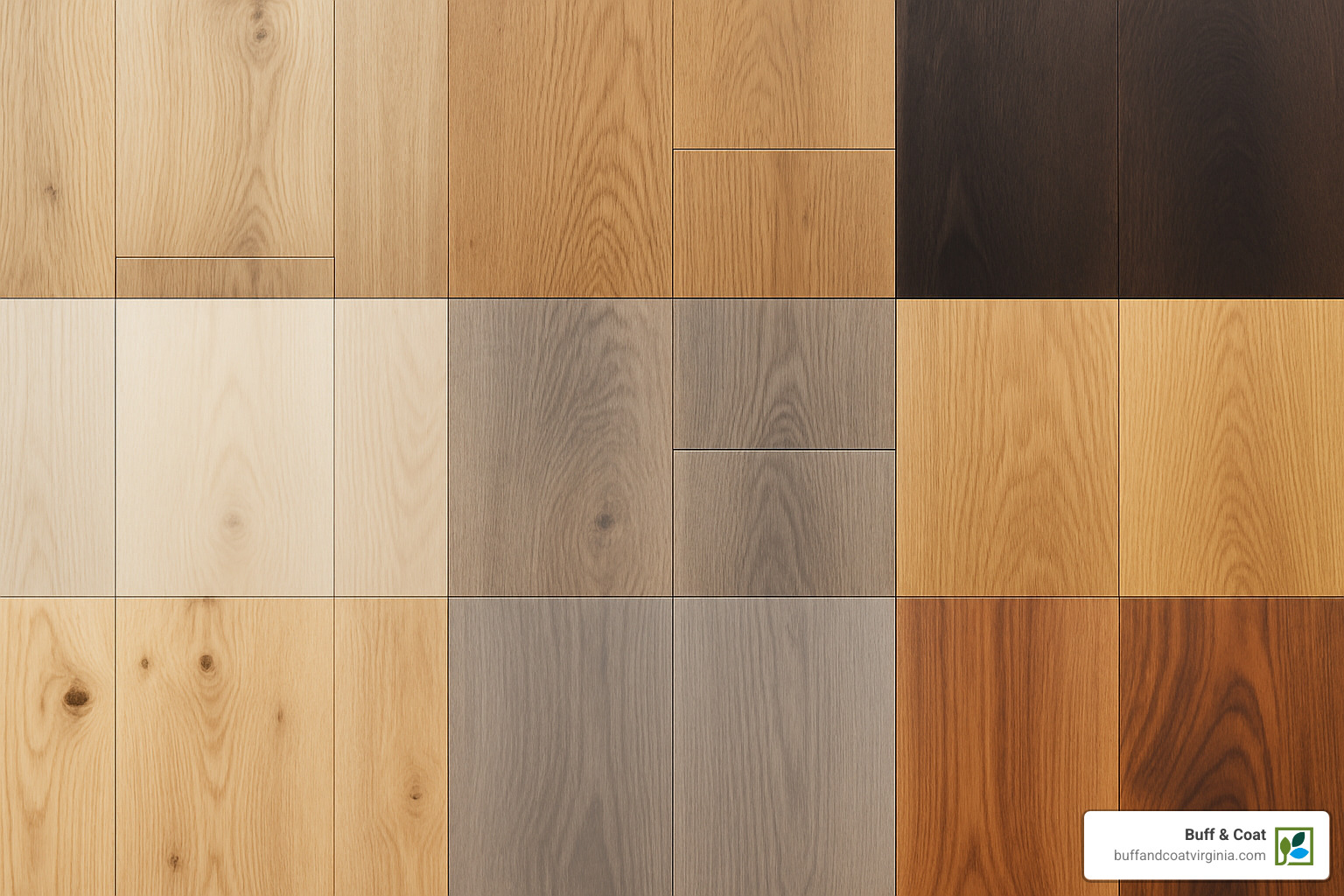
Wood species choice significantly impacts cost and durability. Oak remains our most popular choice at £50-£80 per m² because it hits that sweet spot of affordability and versatility. Maple runs slightly less at £45-£70 per m², while walnut jumps to £80-£120 per m² for its stunning appearance. Want something exotic? Brazilian tigerwood and similar species can push costs to £100-£160+ per m².
The Janka hardness rating tells you how well your floor will handle daily life. Maple scores 1,450, oak hits 1,290, but hickory reaches 1,820 for families with active kids and pets. The harder the wood, the higher the price – but also the better it stands up to wear.
Finish quality rounds out the material costs. Basic polyurethane is included in most base prices, but aluminum oxide finishes add £5-£10 per m² for superior scratch resistance. As Forbes explains, investing in quality materials typically delivers better long-term value.
Installation Complexity and Subfloor Preparation
Installation complexity is where many homeowners get caught off guard. A simple rectangular room with level subfloors installs quickly and affordably. But throw in some challenges, and your costs can climb fast.
Pattern installations are beautiful but demanding. Standard straight-lay installation comes at regular pricing, but herringbone patterns add £25-£40 per m² in labour costs. Chevron patterns are even more complex, adding £30-£45 per m² to your bill. These patterns require precise cuts and expert installation – there’s no room for error.
Stairs are another cost factor many forget to budget for. Each step typically adds £50-£100 to your project, depending on complexity. Irregular room shapes with lots of angles and corners can increase labour time by 10-15%, which translates directly to higher costs.
Subfloor condition is often the wild card in pricing. Level subfloors mean no additional costs, but minor levelling adds £5-£15 per m². Major levelling can tack on £15-£30 per m², and extensive subfloor repairs can range from £200 to £6,000 depending on the damage.
Moisture barriers are essential for concrete subfloors, adding £3-£8 per m². In Richmond’s climate, we rarely skip this step – it’s cheap insurance against future problems.
From our experience, subfloor issues are the most commonly underestimated cost. We always inspect thoroughly before quoting because finding problems mid-installation helps nobody.
For complex installations or detailed subfloor assessments, our floor installation services team provides comprehensive evaluations and transparent pricing. No surprises, no hidden costs – just honest assessments that help you budget accurately.
Budgeting for the Full Project: Hidden and Additional Costs
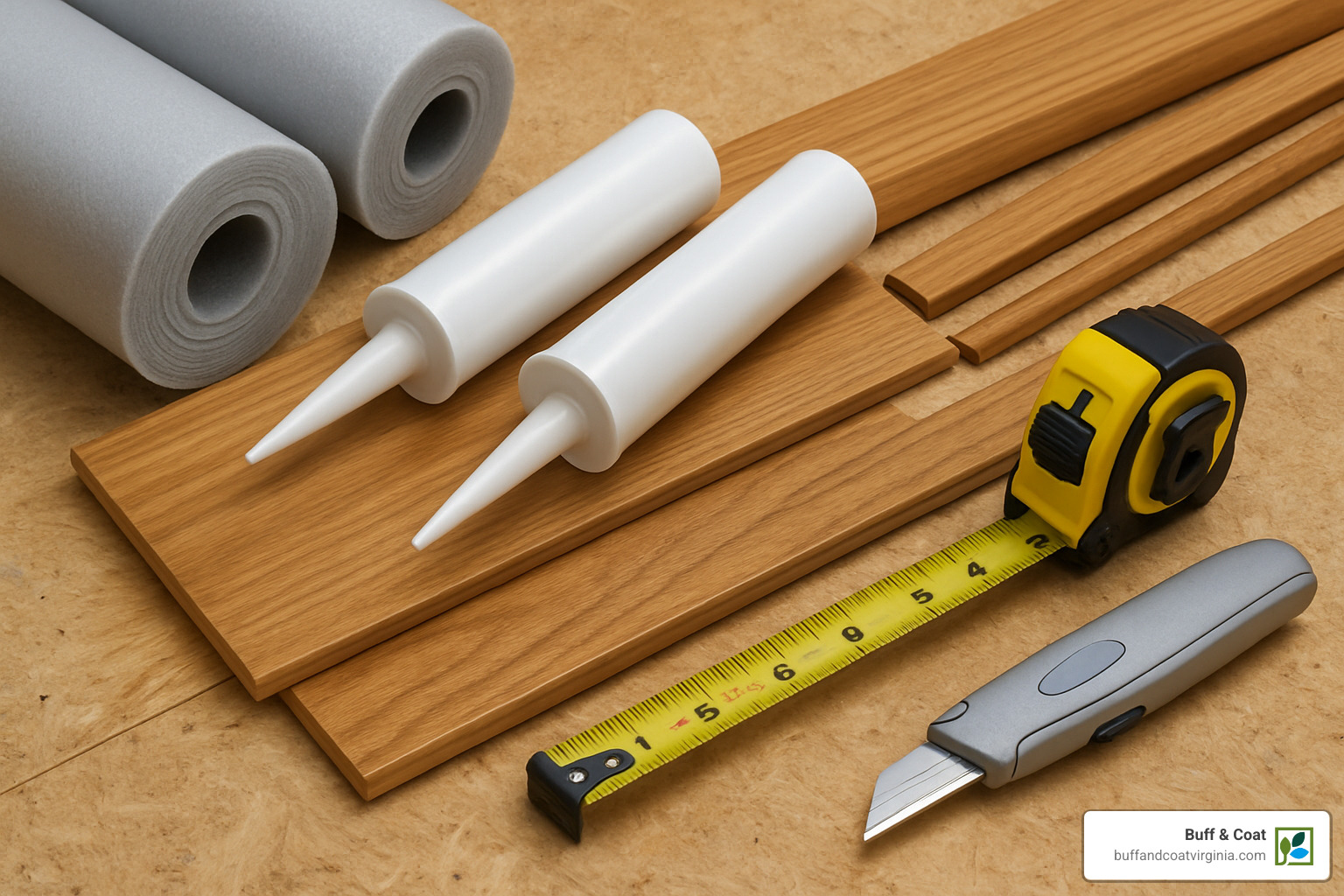
Here’s the thing about flooring projects – the sticker shock usually comes from the extras, not the flooring itself. I’ve watched too many homeowners get caught off guard when their engineered wood flooring cost per square metre jumps from £60 to £120 once all the necessary additions are factored in.
The reality is that those “hidden” costs aren’t really hidden at all. They’re just the unglamorous parts of the project that nobody talks about until it’s time to pay the bill. Let me walk you through what you actually need to budget for.
What to Include in Your Total Engineered Wood Flooring Cost Per Square Metre
After two decades of flooring installations, I can tell you that the additional costs typically add £15-£40 per square metre to your project. That’s not pocket change, but it’s completely manageable when you plan for it upfront.
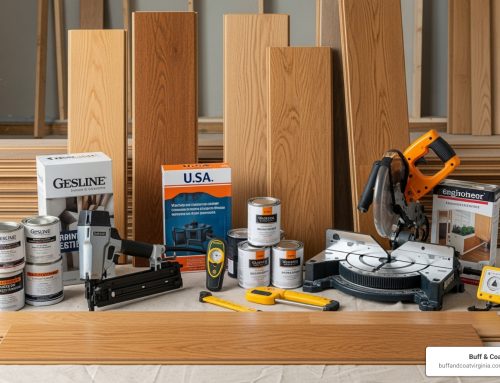
The essential underlayment is your first additional expense. Basic foam underlayment runs about £3-£8 per square metre, while premium cork options can hit £15-£22 per square metre. Don’t skip this – it’s like buying a mattress without a box spring.
Adhesives and fasteners add another £2-£5 per square metre for glue-down installations, or £1-£3 per square metre for nail-down methods. If you’re installing over concrete, you’ll need a moisture barrier at £3-£8 per square metre. Trust me, this small investment prevents major headaches later.
The preparation work is where costs can really add up. Old floor removal runs £8-£15 per square metre for carpet, but jumps to £15-£25 per square metre if you’re replacing existing hardwood. Waste disposal typically costs £50-£200 per project, depending on your local rates and the amount of material.
Skirting boards and trim work often surprise homeowners. New skirting boards cost £20-£35 per linear metre, while door trimming runs £25-£50 per door. You’ll also need transition strips where your new floor meets other surfaces, at £15-£30 per linear metre.
Don’t forget the waste factor – always order 10-15% extra material for cutting waste and future repairs. For complex patterns like herringbone, bump this up to 15-25%. It feels like you’re buying flooring you’ll never use, but you’ll be grateful for those extra planks when you need repairs down the road.
Here’s a real-world example from a recent Richmond project. A 20-square-metre living room with mid-range engineered oak broke down like this: materials at £1,200, installation at £600, underlayment at £120, skirting at £300, door trimming at £75, and waste allowance at £150. The total came to £2,445, or £122 per square metre all-in.
As The Spruce details, these additional costs are essential for a professional installation but often catch homeowners off guard.
The key is building these costs into your budget from day one. When someone asks about engineered wood flooring cost per square metre, I always give them the full picture. It’s better to be pleasantly surprised by a lower final bill than shocked by unexpected expenses.
Engineered Wood: Cost and Value Compared to Other Flooring Options
When you’re weighing your flooring options, understanding how engineered wood flooring cost per square metre stacks up against alternatives helps you make the smartest choice for your home and budget.
| Flooring Type | Cost per m² | Pros | Cons |
|---|---|---|---|
| Laminate | £30-£60 | Budget-friendly, easy DIY install | Not real wood, limited refinishing |
| Engineered Wood | £60-£230+ | Real wood surface, stable, refinishable | Higher cost than laminate |
| Solid Hardwood | £120-£300+ | Multiple refinishing cycles, premium feel | Expensive, moisture-sensitive |
| Luxury Vinyl | £40-£80 | Waterproof, durable, low maintenance | Synthetic appearance |
Engineered wood hits that sweet spot between affordability and authenticity. Yes, it costs more than laminate flooring, but you’re getting genuine wood character and significantly better long-term value. When compared to solid hardwood, engineered offers similar gorgeous aesthetics at a more accessible price point, plus it handles moisture changes much better.
From our experience in Richmond homes, engineered wood makes the most sense for families who want the warmth and beauty of real wood without the premium price tag or maintenance headaches of solid hardwood.
Professional Installation: Weighing the True Cost
The choice between DIY and professional installation dramatically affects your total engineered wood flooring cost per square metre. Let me give you the honest breakdown from someone who’s seen both approaches countless times.
DIY installation might seem tempting when you’re looking at material costs alone. You’ll need to budget £100-£300 for tool rental, and you’re looking at 2-3 days of solid work for an average room. The material costs stay the same at £35-£120 per m², but here’s the catch – mistakes can be expensive to fix, and you won’t have warranty coverage if something goes wrong.
Professional installation adds £20-£70 per m² to your project, but you get warranty coverage on both labour and materials. We complete most installations in 1-2 days instead of eating up your entire weekend, and we bring professional-grade tools that ensure a dust-free, precise installation.
DIY makes sense for simple rectangular rooms with click-lock floating systems over level subfloors. But when you’re dealing with complex patterns like herringbone, subfloor issues, or glue-down installations, professional help becomes essential.
We’ve rescued too many DIY projects where homeowners got in over their heads. For complex installations and guaranteed results, our wood floor installation team ensures your investment is protected from day one.
Long-Term Value and Return on Investment (ROI)
Here’s where engineered wood flooring cost per square metre really shines – it’s not just about what you spend today, but what you get back over time.
Quality engineered floors last 25-30 years with proper care, and depending on your veneer thickness, you can refinish them 1-3 times during that lifespan. That’s significantly longer than laminate, which needs complete replacement every 10-15 years.
The home value impact is immediate and substantial. Most homeowners see a 3-5% increase in home value right after installation, and when it’s time to sell, you typically recover 75-80% of your installation cost. More importantly, engineered wood floors significantly increase buyer interest – homes with hardwood floors simply sell faster.
Maintenance costs are surprisingly reasonable. You’re looking at £50-£100 per year for basic cleaning supplies and minor repairs. When refinishing time comes around (every 10-15 years), it costs £15-£25 per m² – much less than replacing carpet or laminate.
The total lifecycle cost often works out better than cheaper alternatives. While laminate might cost less upfront, you’ll replace it entirely at least twice during the lifespan of quality engineered wood.
For ongoing maintenance that extends your floor’s life and protects your investment, our comprehensive floor care services keep your engineered wood looking beautiful for decades.
Frequently Asked Questions about Engineered Wood Flooring
Is engineered wood flooring cheaper than solid hardwood?
Absolutely! Engineered wood is typically more affordable than solid hardwood, and this cost advantage shows up in both material costs and installation expenses. The engineered wood flooring cost per square metre ranges from £60 to £230+ installed, while solid hardwood often starts at £120 per square metre and can easily exceed £300 per square metre for premium installations.
The savings come from the clever layered construction. Instead of using expensive hardwood throughout the entire plank, engineered flooring uses less costly core materials while maintaining that authentic real wood surface you’re after. It’s like getting the best of both worlds – the beauty of hardwood without the premium price tag.
Installation costs are often lower too, especially if you’re installing over concrete subfloors. Engineered wood’s stability means it can be installed as a floating floor, which is typically faster and requires less specialized labour than traditional nail-down solid hardwood installation.
Can you refinish engineered wood flooring?
Yes, most engineered wood floors can be refinished, but here’s the key detail that matters: it all depends on the thickness of the real wood veneer (that top wear layer). A thicker veneer means more refinishing opportunities, which directly impacts the long-term value of your investment.
Here’s what we typically see in our Richmond-area refinishing projects:
1-2mm veneer floors can handle light screening and recoating only. Think of this as a refresh rather than a full refinishing. 2-4mm veneer floors can typically handle 1-2 full refinishing cycles, while 4-6mm veneer floors can be sanded and refinished 2-3 times over their lifetime.
The refinishing process costs £15-£25 per square metre, making it a cost-effective way to refresh your floors every 10-15 years. This is significantly cheaper than replacing the entire floor, and it’s one of the reasons why investing in thicker veneer engineered wood makes financial sense in the long run.
Is engineered wood flooring waterproof?
Here’s the honest answer: engineered wood is not waterproof, but it is highly water-resistant due to its stable, layered construction. It handles humidity changes and occasional spills much better than solid hardwood, but prolonged exposure to water can still cause damage.
The improved moisture resistance comes from the cross-grain construction, which reduces expansion and contraction as humidity levels change. The stable core materials move less with moisture fluctuations, and factory finishes typically provide a better moisture barrier than site-finished floors.
In practical terms, this means you can safely install engineered wood in areas where solid hardwood might be risky, like basements or rooms with concrete subfloors. It’s also more forgiving of everyday life – spilled drinks, tracked-in rain, or higher humidity levels won’t cause the immediate problems you might see with solid wood.
However, if you’re dealing with areas prone to standing water or high moisture exposure, like bathrooms or laundry rooms, you’d be better served with luxury vinyl or tile alternatives that offer true waterproof protection.
Conclusion: Is Engineered Wood Flooring Worth the Cost?
After two decades of installing and refinishing floors throughout Richmond, Glen Allen, and Midlothian, I can tell you that engineered wood flooring cost per square metre represents one of the smartest investments you can make in your home.
Here’s the honest truth: when homeowners call us five years after installation, they’re almost always thrilled with their decision. The combination of authentic wood beauty, improved stability, and reasonable pricing hits that sweet spot most families are looking for.
The numbers tell the story clearly. At £60-£230 per square metre installed, engineered wood gives you genuine hardwood character without the premium price tag of solid wood. More importantly, it handles our Virginia humidity changes better than traditional hardwood, which means fewer callbacks for us and fewer headaches for you.
Quality really does matter here. We’ve seen too many homeowners try to save £20 per square metre on materials, only to face problems within a few years. Invest in thicker veneers and better construction – your floors will thank you for decades. The ability to refinish quality engineered floors 2-3 times means you’re getting exceptional long-term value.
Professional installation makes a difference. While DIY might seem tempting, our dust-free installation process and proper subfloor preparation typically save homeowners money in the long run. We catch issues early and ensure your investment performs as expected.
The engineered wood flooring cost per square metre might seem significant upfront, but consider this: quality engineered floors typically last 25-30 years while adding 3-5% to your home’s value immediately. Compare that to replacing carpet every 8-10 years or dealing with the moisture sensitivity of solid hardwood.
At Buff & Coat, we’ve helped hundreds of Richmond-area families transform their homes with engineered wood flooring. Our signature dust-free techniques and attention to detail ensure your investment delivers maximum beauty and performance.
Ready to see what engineered wood can do for your home? Get a professional floor installation quote today and find how the right flooring choice can transform your space while staying within your budget.