
Richmond homeowners usually start this search the same way. The floors still have good bones, but the finish looks tired, scratches show in the afternoon light, and every article online claims there's one best answer for every house. There isn't. The best finish for wood floors depends on how worn the floor is, what's already on it, and whether you need hardwood floor refinishing or a simpler recoat in Richmond VA.
A lot of bad advice starts with the product and skips the floor itself. That's backwards. If you choose the right finish for the actual condition of the floor, you get better wear, fewer surprises, and a result that fits how your home is used every day.
Choosing the Right Protection for Your Hardwood Floors
A homeowner in Richmond VA might notice the problem slowly. The hallway turns dull first. Then the kitchen path loses sheen. Then a few scratches near the back door start catching your eye every time sunlight hits the floor. At that point, homeowners search for the best finish for wood floors and expect a simple winner.
A practical answer is more useful than that. Some floors need a full sand and refinish because the old coating is too worn, too damaged, or too unpredictable. Others are good candidates for wood floor recoating, where the existing finish gets cleaned up, abraded lightly, and protected with new coats before the wear reaches bare wood.
That distinction matters more than most homeowners realize in Richmond VA. If your floor is still structurally sound and the finish is only worn at the surface, a recoat can make sense. If the floor has deep scratches, peeling, gray traffic lanes, or finish failure, refinishing is usually the safer path.
For a closer look at how topcoats and protective systems differ, see this guide on the best hardwood floor sealant.
Practical rule: Don't ask which finish is strongest until you know whether your floor needs a recoat or a full sanding job.
Understanding the Main Wood Floor Finish Families
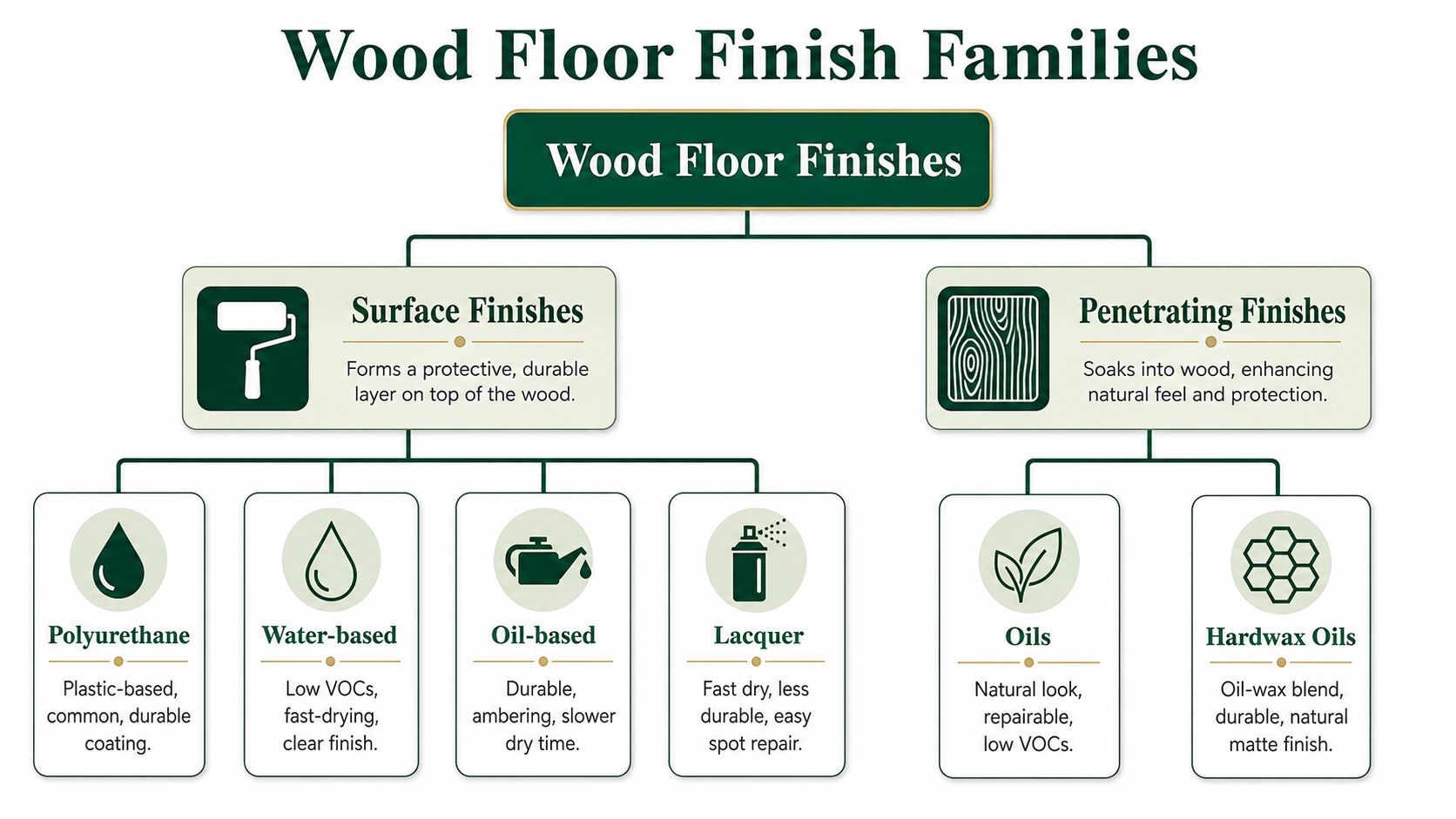
Before comparing brands or debating sheen, it helps to understand the two main finish families used on hardwood floors.
Surface finishes
Surface finishes sit on top of the wood and build a protective film. This is the category most homeowners know best because it includes polyurethane systems, which are widely used in hardwood floor refinishing.
The National Wood Flooring Association identifies penetrating finishes and surface-building finishes as the two primary categories, and notes that polyurethane surface finishes have dominated the market since the 1970s because of their stronger initial durability, while penetrating oils are easier to spot repair (NWFA finishes overview).
In plain terms, a surface finish acts like a wear layer. Foot traffic, pet nails, grit, and chair movement hit the coating first instead of the wood fibers. That's why surface systems are often the practical choice in active homes.
Common examples include:
- Water-based polyurethane that dries clear, keeps the wood's natural tone more intact, and is often chosen when homeowners want low-odor finishes.
- Oil-based polyurethane that adds a warmer amber tone and has a long track record on site-finished floors.
- Lacquer-style systems that show up less often in residential floor work because durability and long-term maintenance needs can be less forgiving.
For homeowners comparing modern options, this breakdown of water-based polyurethane finishes helps explain why they've become so common.
Penetrating finishes
Penetrating finishes soak into the wood rather than building the same kind of film on top. Oils and hardwax oils fall into this group.
They appeal to homeowners who want a more natural, close-to-the-wood look and feel. They can also make localized repairs easier because you're often refreshing the affected area rather than trying to blend a hard surface film perfectly across the room.
That said, the trade-off is important. Penetrating finishes generally need more routine maintenance than high-performance surface coatings. In a quiet study or a lower-wear bedroom, that may be fine. In a kitchen, entry, or a house with kids and dogs, maintenance can become the deciding factor.
Surface finishes usually win on upfront wear resistance. Penetrating finishes usually win on natural appearance and spot repair friendliness.
Why this distinction matters
Homeowners often compare products that don't belong in the same conversation. They'll weigh a hardwax oil against a commercial waterborne polyurethane as if one should beat the other in every category. That's not how it works.
You're really choosing between different priorities:
| Finish family | Best fit | Main trade-off |
|---|---|---|
| Surface finish | High-traffic rooms, easier wipe-clean living, stronger wear layer | Repairs can be less forgiving if damage goes through the film |
| Penetrating finish | Natural look, matte feel, easier spot maintenance | More regular upkeep and lower resistance to heavy wear |
If you understand that first, the product decision gets a lot clearer.
A Detailed Comparison of Popular Floor Finishes
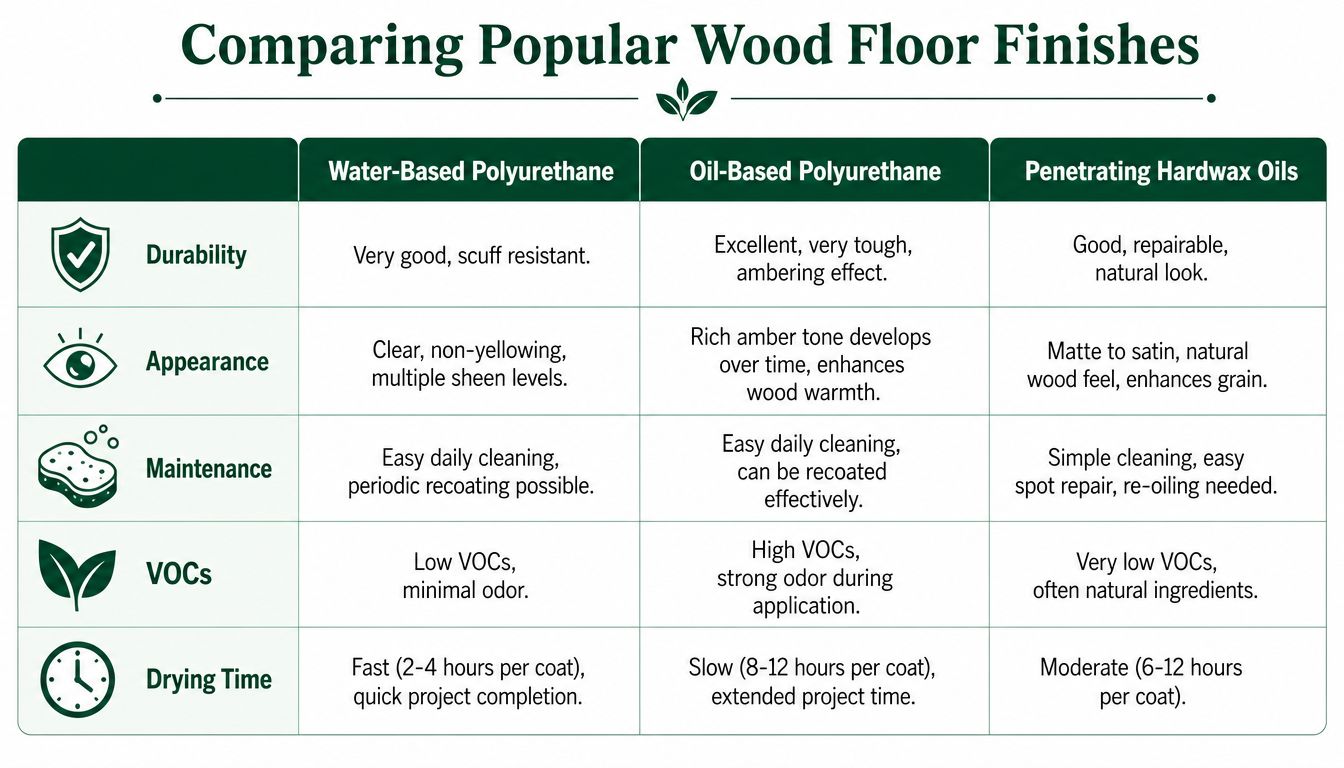
Most homeowners in Richmond VA narrow the choice down to three finish types. Water-based polyurethane, oil-based polyurethane, and penetrating hardwax oils. Each can be the best finish for wood floors in the right setting. Each can also be the wrong choice if the lifestyle, look, or maintenance expectations don't match.
Quick side-by-side view
| Finish type | Where it shines | What homeowners like | What to think through |
|---|---|---|---|
| Water-based polyurethane | Busy households, lighter natural color palettes, faster project turnover | Clear look, lower odor, strong wear resistance | Surface prep and product compatibility matter a lot |
| Oil-based polyurethane | Traditional homes, warmer wood tone preferences, homeowners who want a proven site-finished system | Rich amber tone, durable shell, familiar look on oak and pine | Stronger odor and longer cure window |
| Penetrating hardwax oils | Design-focused interiors, lower-sheen natural looks, owners comfortable with regular upkeep | Natural feel, matte appearance, easier spot touch-ups | More maintenance over time |
Water-based polyurethane
Modern water-based polyurethane has changed the conversation. It's no longer the weaker alternative many homeowners assume it is.
Lab testing summarized in this industry durability review found that modern two-component water-based polyurethanes and factory-applied aluminum-oxide coatings can show a 60 to 120 percent improvement in abrasion resistance compared to traditional oil-based varnishes, making them especially strong choices for high-traffic areas (wood finish durability test data).
That matters in real houses. Hallways, kitchens, family rooms, and stair landings don't fail because a finish looked bad in a brochure. They fail because grit and traffic grind through the protective layer.
Water-based systems also tend to preserve the wood's current color better. If you have white oak or a lighter floor and don't want the finish to add much ambering, this is usually where the conversation starts.
A few practical reasons homeowners choose it:
- Cleaner appearance with less yellowing over time
- Lower odor options that make the project easier to live around
- Strong wear performance in active homes
- Good fit for recoating when chemistry and adhesion are verified
This comparison of oil-based and water-based polyurethane is useful if you're deciding between those two systems specifically.
If the house has pets, kids, and a lot of daily traffic, water-based polyurethane often gives the best balance of durability, appearance, and practicality.
Oil-based polyurethane
Oil-based polyurethane still has a place. It's tough, proven, and many homeowners love the warmer tone it gives traditional wood floors.
It creates a hard, long-lasting surface and is known for minimal maintenance once fully cured. It also adds an amber cast that can make oak and pine look richer and more classic. The trade-off is time. Oil-based polyurethane can require up to 30 days to reach full hardness and adhesion stability according to this flooring reference on oil-based polyurethane (oil-based polyurethane overview).
That long cure window affects real life. Families want to know when shoes can go back on, when rugs can return, and how long the house will smell like finish. Oil-based systems ask for more patience.
Oil-based polyurethane is often a good fit when:
- You want warmth and don't mind ambering
- The home suits a traditional look better than a very clear finish
- Long-term toughness matters more than fast turnaround
- You're doing a full sand and refinish rather than trying to recoat an uncertain existing finish
Penetrating hardwax oils
Hardwax oils and similar penetrating systems appeal to a different homeowner. These finishes don't try to create the same sealed-shell look as polyurethane. They aim for texture, character, and a more natural visual result.
They can be a smart choice for people who care more about feel and repairability than maximum wear layer performance. A scratched area can often be addressed more locally than with a film-building finish. That's a real advantage in some homes.
But honest advice is especially valuable. In high-use family spaces, penetrating systems usually ask more from the homeowner. More maintenance. More awareness. More willingness to refresh the surface before wear gets away from you.
Which one works best in real homes
For many homeowners in Richmond VA, the decision comes down to lifestyle first, not marketing language.
- Busy family home: Water-based polyurethane is often the safest recommendation.
- Older home with a classic look: Oil-based polyurethane may suit the wood and style better.
- Design-forward room with a natural matte goal: Hardwax oil can be a strong aesthetic choice if you accept the upkeep.
If you're stuck between two finish types, that usually means the floor needs an in-person evaluation. Product labels don't tell you what's already on the floor, how much life is left in the current coating, or whether the floor is even a candidate for recoating.
If you're weighing options for floor refinishing in Richmond VA and want a recommendation based on the floor's condition instead of generic internet advice, call 804-392-1114 or request a free estimate today.
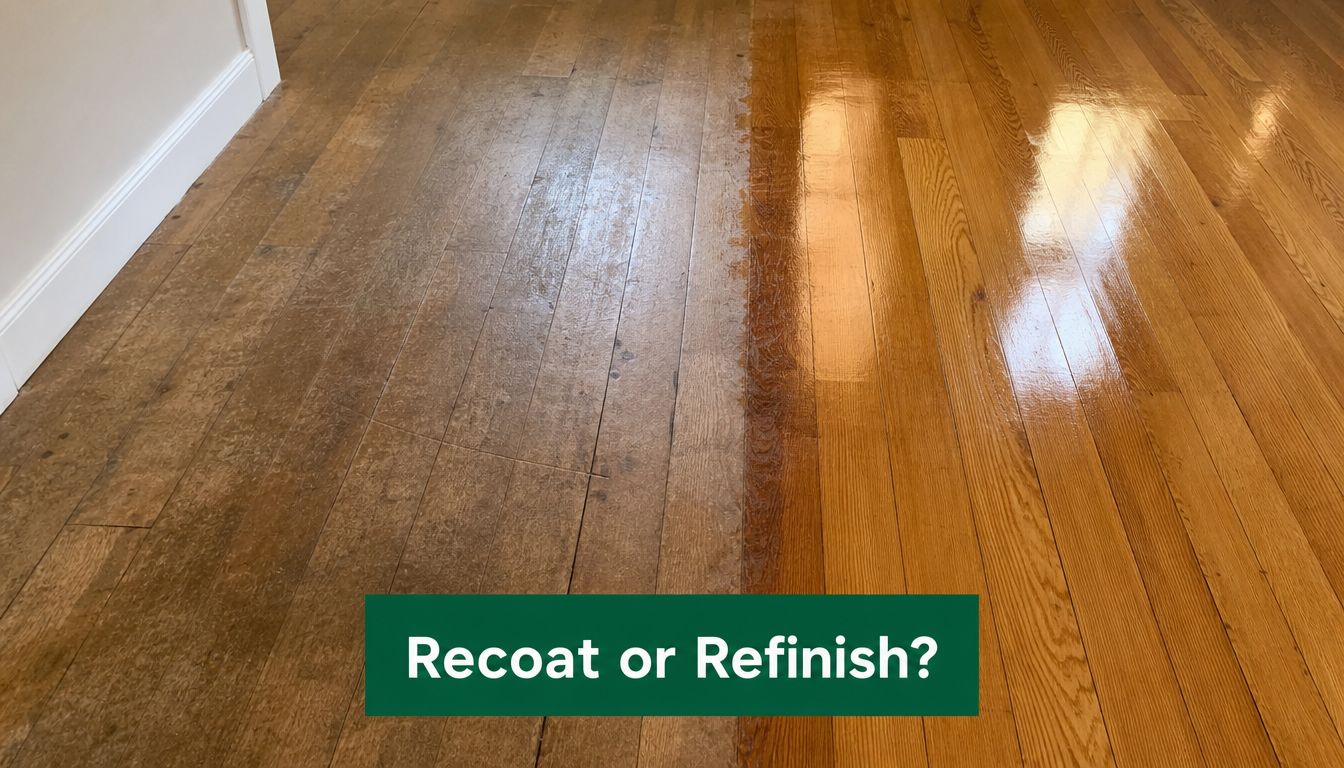
Recoat or Refinish Why Your Floor's History Is Key
This is the part most guides miss. The best finish for wood floors isn't just about which product performs best on a clean sample board. It's about whether your floor needs a buff and coat service or a full sand and refinish.
A recoat works only when the existing finish allows it
A buff and coat service is a maintenance move. The floor's existing finish gets cleaned, lightly abraded, and recoated before it wears through to bare wood. When it's the right candidate, this can be a smart way to restore sheen and add protection without the disruption of full sanding.
But a recoat is only as good as the layer underneath it.
A common mistake is applying oil-based polyurethane over an existing water-based or UV-cured finish during a recoat, which almost always leads to peeling and finish failure. Compatibility with the existing finish is the issue that most generic “best finish” articles skip entirely (compatibility warning for wood floor recoats).
Signs you probably need a full refinish
A recoat can't fix everything. Some floors need to be taken back to bare wood.
Look harder at refinishing if you see:
- Peeling or flaking because adhesion is already failing
- Gray traffic lanes where wear has gone through the finish
- Deep scratches or pet damage that a new topcoat won't hide
- Unknown finish history when there's a real risk of incompatibility
- Color change goals since recoating won't reset the wood tone the way sanding can
A floor with light surface wear is a maintenance project. A floor with finish failure is a reconstruction project.
Why this changes the finish decision
Homeowners often ask for the strongest finish available. Fair question. But if the floor only qualifies for one path safely, the “strongest” product may not be the right product at all.
That's why wood floor recoating and hardwood floor restoration aren't interchangeable terms. One protects a healthy existing system. The other rebuilds the system from scratch.
If you're unsure which category your floors fall into, Buff & Coat can take a look and give you honest recommendations. Call 804-392-1114 or request a free estimate today.
How We Find the Perfect Finish for Your Richmond Home
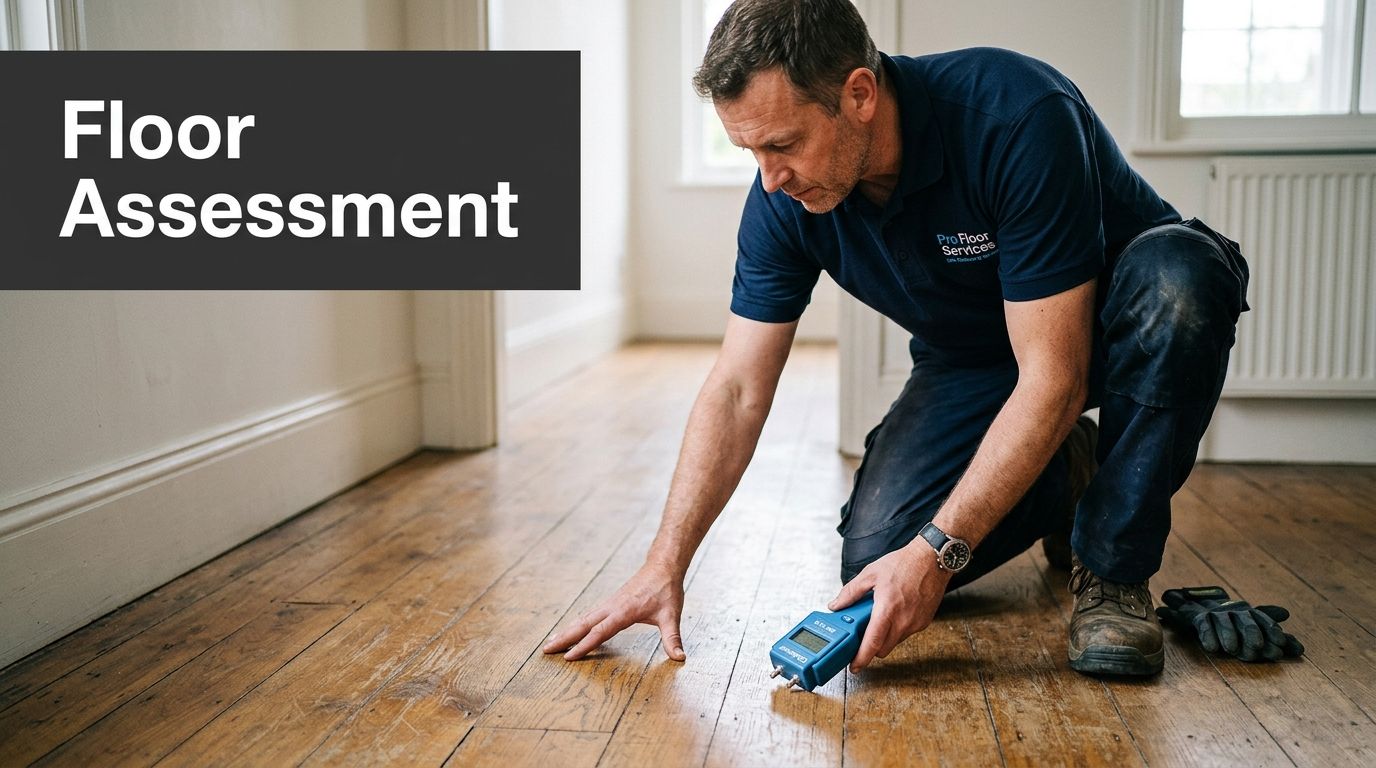
Every floor tells you something if you know what to look for. In older Richmond VA homes, you might be dealing with oak that has seen generations of foot traffic. In newer homes, the question may be whether the current finish still has enough integrity for a recoat or whether it's time for full hardwood floor refinishing.
What gets checked first
The first step isn't choosing sheen. It's evaluating condition.
That usually includes:
- Wear pattern review to see whether damage is surface-level or through the finish
- Finish identification so a recoat doesn't get paired with the wrong chemistry
- Board condition including scratches, cupping, gaps, and prior repairs
- Lifestyle fit because pets, children, entry traffic, and kitchen use change the recommendation
This is especially important for homeowners comparing hardwood floor repair, engineered hardwood refinishing, and full replacement. Some floors need restoration. Others need selective repair first. Others aren't good candidates for aggressive sanding at all.
Dustless sanding and what it actually means
If a full sand and refinish is the right path, cleanliness matters. A shop vacuum with a HEPA filter captures 99.97% of fine dust particles, which is the threshold associated with a true dustless refinishing setup according to this dustless sanding guide (HEPA dust capture for floor sanding).
The sanding itself is a staged process, not one aggressive pass. Standard dustless sanding progresses from coarse grit in the 36 to 60 range, then medium grit in the 80 to 100 range, then fine grit in the 120 to 150 range to leave the floor ready for finish (multi-stage grit sequence for dustless sanding).
That sequence matters. Coarse cuts through old finish and levels the floor. Medium removes the rough scratch pattern left behind. Fine sanding prepares the surface so the new finish lays down cleanly instead of highlighting defects.
A short look at the process helps if you've never seen it in action.
Timeline and what to expect
Homeowners usually ask the same practical questions. How long does refinishing take. When can we walk on it. When does the house feel normal again.
The exact refinishing timeline depends on whether the floor is being recoated or fully sanded, how much repair work is involved, and which finish system is used. What matters most after the final coat is respecting cure time. Rushing that part is how good work gets damaged.
If you're planning floor refinishing in Richmond VA, or you want an honest opinion on whether your floors need a recoat or a full restoration, call 804-392-1114 or request a free estimate today.
Frequently Asked Questions About Wood Floor Finishes
Can I change the color of my hardwood floors without sanding?
Usually, no. If you want a meaningful color change, the floor generally needs to be sanded to bare wood first. A recoat can refresh protection and sheen, but it won't reset the stain color underneath in the way a full refinishing process can.
What's the best finish for homes with dogs and kids?
In many active homes, a quality water-based polyurethane is the most practical answer because it balances strong wear resistance, easier day-to-day living, and lower odor during the job. If the floor already has a compatible finish and the wear is still surface-level, a well-timed recoat can also extend life before a full refinish becomes necessary.
Are low-odor finishes durable enough?
Yes, many are. Low-odor and low-VOC finishes aren't automatically “light duty.” Some modern water-based systems are built for serious wear. The key is matching the finish to the traffic level and making sure the prep work is right.
The finish only performs as well as the surface prep underneath it.
Can engineered hardwood be refinished?
Sometimes. It depends on the thickness of the wood wear layer and the current condition of the floor. Some engineered products can be sanded and refinished. Others are better suited to recoating, repair, or replacement. This is one area where a site visit matters because the wrong assumption can permanently damage the floor.
How soon can we walk on newly finished floors?
You can usually walk on newly finished floors with socks after 24 hours, but professionals recommend waiting 48 to 72 hours before wearing shoes or moving furniture back so the finish can cure properly and avoid damage (post-refinishing cure guidance).
Is a buff and coat service worth it?
Yes, when the floor is a true candidate. A buff and coat service is often worth it if the finish is dull or lightly scratched but still intact. It's not a shortcut for floors with peeling, deep gouges, or bare wood exposure.
How do I know whether I need hardwood floor scratch repair or full refinishing?
If the marks are isolated and the finish system is stable, localized repair may make sense. If scratches are widespread, the sheen is uneven across the room, or traffic lanes have worn through, full refinishing is usually the cleaner long-term answer.
What do Richmond homeowners usually overlook?
They focus on the new finish and forget the old one. In Richmond VA, the biggest avoidable mistake is choosing a product before confirming what's already on the floor and whether the floor should be recoated or fully sanded.
Why Richmond Homeowners Choose Buff & Coat
- 15 years in business serving homeowners who want practical guidance and solid workmanship
- Dustless sanding systems for a cleaner refinishing process
- Local, owner-operated service with real knowledge of homes in Richmond, Midlothian, Chesterfield, Henrico, Glen Allen, Short Pump, and Mechanicsville
- High-quality finishes selected for the floor's condition and the household's needs
- Clear pricing and honest advice about refinishing cost, compatibility, and timeline
- 5-star customer service with straightforward communication from estimate to completion
Buff & Coat Hardwood Floor Refinishing is a Richmond-based floor refinishing and installation company with 15+ years of experience. Services include dustless sanding, buffing and coating, hardwood floor installations, LVP/LVT installs, and repair work throughout Richmond, Midlothian, Chesterfield, Henrico, Glen Allen, Short Pump, Mechanicsville, plus occasional jobs in Charlottesville, Fredericksburg, and Virginia Beach.
If you're trying to decide between a recoat and full hardwood floor refinishing, Buff & Coat Hardwood Floor Refinishing can give you a clear recommendation based on the floor you have, not a one-size-fits-all answer. Ready to restore your hardwood floors? Buff & Coat makes the process fast, clean, and stress-free. Call 804-392-1114 or request your free estimate at buffandcoatvirginia.com.