
Floor Installation in Woodvale, VA
Woodvale Homes Deserve Floors Built for Virginia's Climate
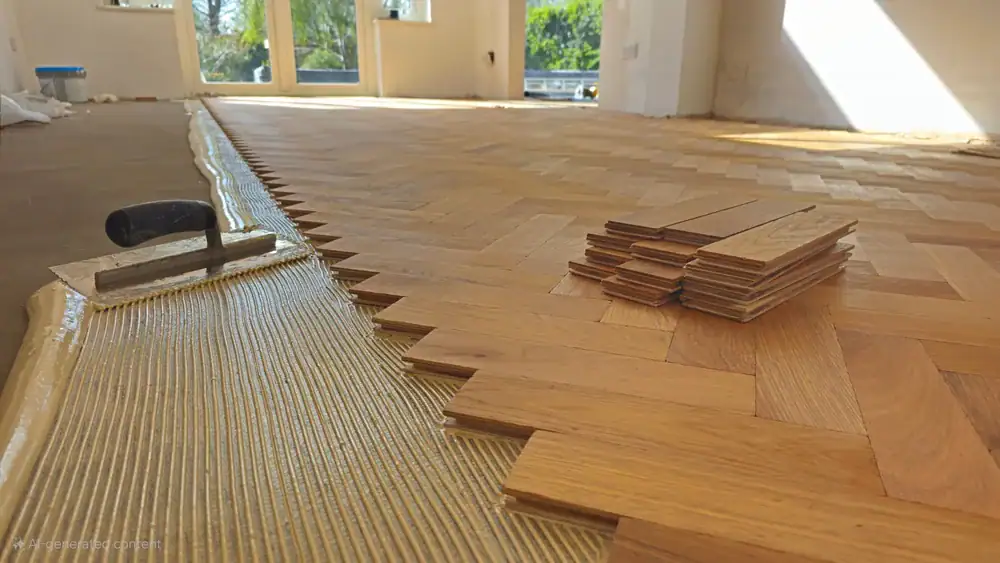
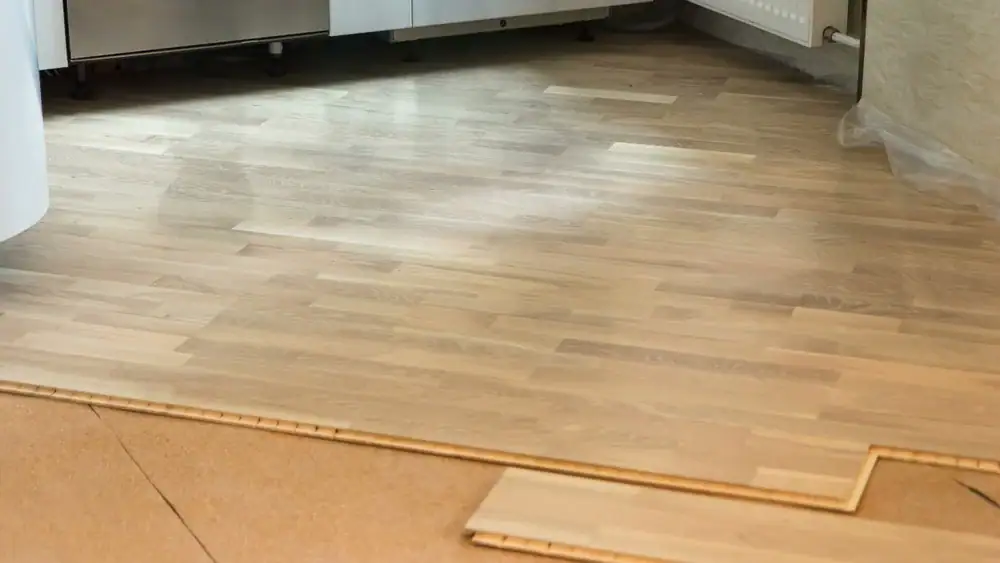
Hardwood Floor Installers Woodvale VA
Most floor problems don’t show up on installation day. They show up six months later a gap here, a soft spot there, a board that squeaks every time someone walks past the couch. By then, the installer is long gone and you’re left figuring out who to call. That’s an installation problem.
Woodvale sits in Chesterfield County, where summers get genuinely humid and winter heating dries everything out fast. That seasonal swing is hard on hardwood floors that weren’t installed with moisture management in mind. Engineered hardwood handles those shifts better than solid in most cases especially in Woodvale homes built in the late ’80s and early ’90s, many of which sit on crawl space foundations that bring ground moisture up through the subfloor year-round. Knowing which material fits your specific home isn’t guesswork. It comes from doing this work in homes like yours for over two decades.
When the installation is done right subfloor assessed, moisture tested, material matched to your actual conditions you get floors that stay flat in August and stay tight in February. No squeaks. No gaps. No callbacks.
Local Floor Installers Serving Chester VA
We’ve been installing and refinishing hardwood floors across the Greater Richmond area since 2012, and the work in Chesterfield County including Woodvale and the Chester community is some of the most familiar territory we cover. We know what the housing stock looks like here. We know what 1990s-era subfloors feel like under your feet and what they look like when we pull back the carpet. We’ve seen what crawl space moisture does to floors that were installed without proper testing, and we’ve fixed enough of those situations to know exactly how to prevent them from the start.
This is an owner-operated business. David Emmerling’s name is on every job, which means every job matters. You’re not dealing with a franchise call center or a rotating crew of subcontractors. You’re working with a Virginia-licensed, insured company that has hundreds of five-star reviews from homeowners across this region and a track record in Chesterfield County specifically.
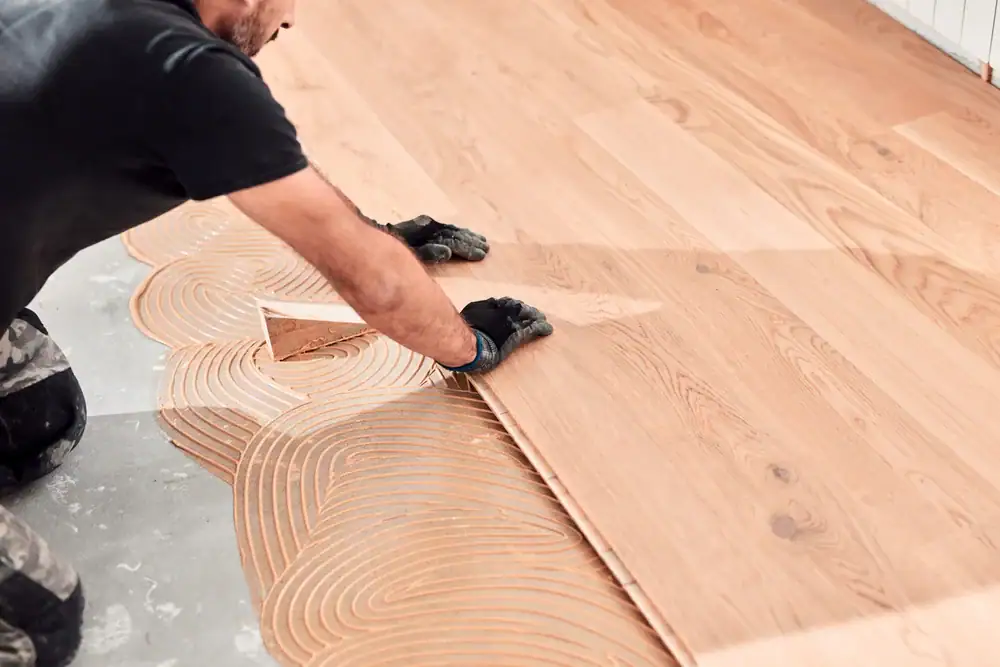
Hardwood Floor Installation Process Woodvale
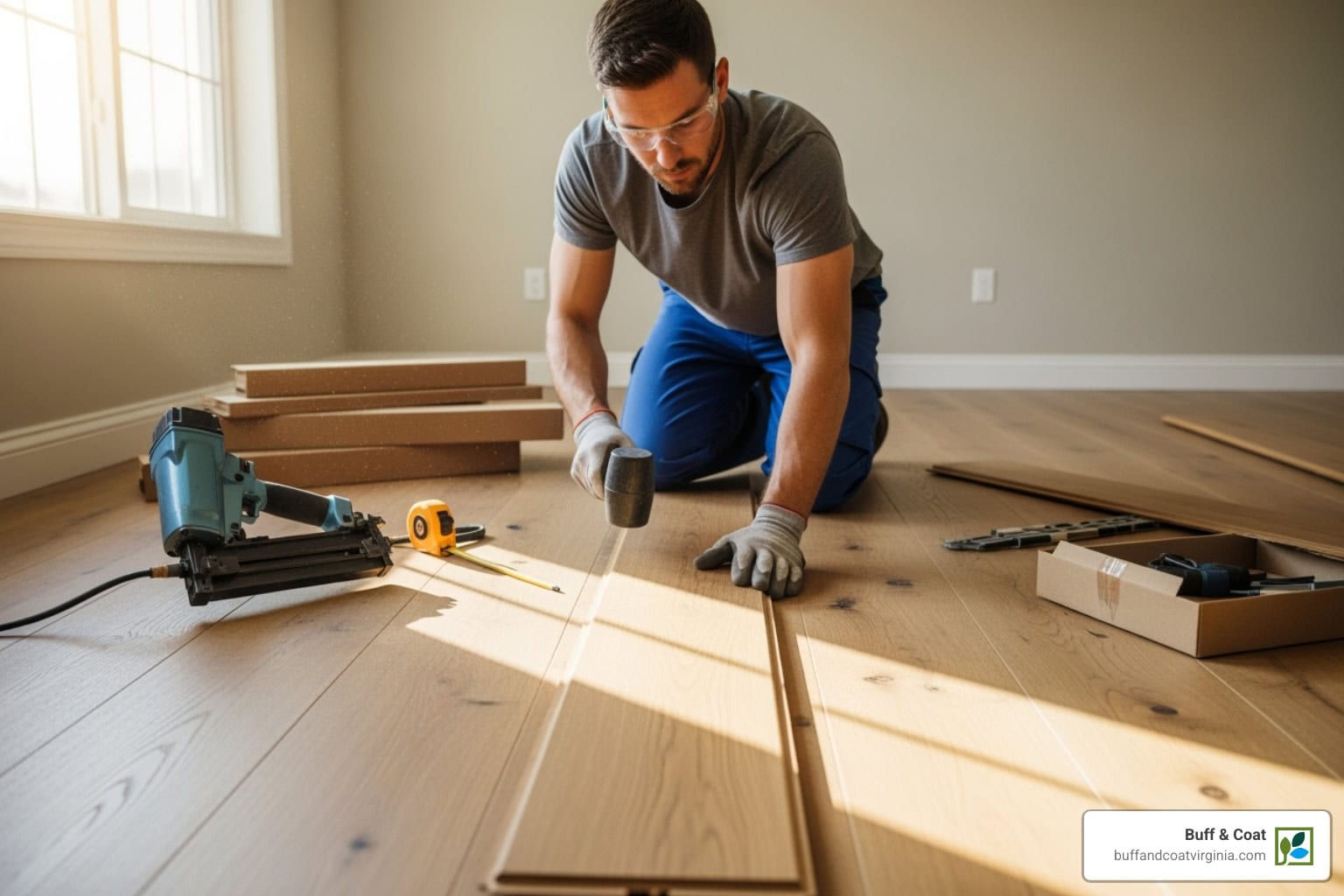
Before anything goes down, we look at what’s already there. That means assessing your subfloor for levelness, stability, and moisture content. In Woodvale, where a large portion of homes were built around 1990 and commonly have crawl space foundations, this step isn’t optional it’s where the whole project either starts right or doesn’t. If the subfloor needs correction, we tell you upfront, with a clear picture of what that adds to the scope and why it matters. No surprises mid-project.
Once the subfloor clears inspection, your new flooring acclimated to your home’s conditions typically five to fourteen days depending on the material and the time of year. Virginia’s humidity patterns make this step count. Wood that hasn’t acclimated properly will move after installation, and in Chesterfield County’s climate, it will move noticeably. We test moisture content in both the subfloor and the planks before the first board goes down, which is how we prevent the warping and cupping that show up months later when installers skip this step.
Installation itself typically runs three days. Most Woodvale homeowners can get on the schedule within a week. When we’re done, your floors are finished, clean, and ready not a construction zone waiting on a callback.
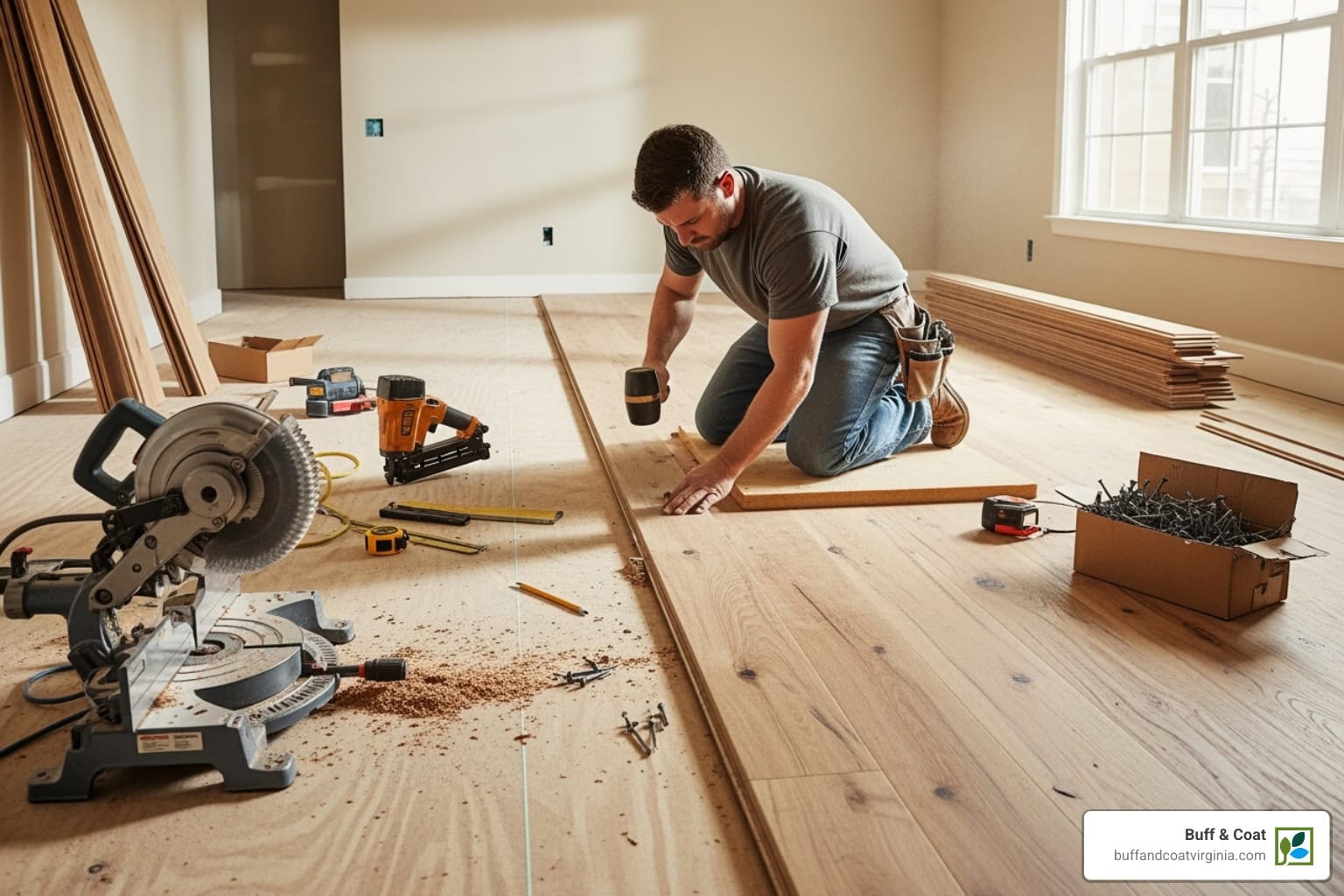
New Wood Floors Woodvale VA
Not every room in a Woodvale home needs the same solution. Solid hardwood is a great choice in the right conditions stable subfloor, controlled indoor humidity, above-grade installation. But in a Chester-area home with a crawl space underneath, solid hardwood in certain spaces is a gamble that engineered hardwood simply isn’t. We walk you through that decision based on your actual home your foundation type, your subfloor condition, your lifestyle not based on what’s easier to sell.
We install both solid and engineered hardwood, and we handle the full scope of what a real installation involves: subfloor prep and leveling, moisture testing, acclimation, installation, and finishing. If you’re replacing carpet and want to match new hardwood to existing floors in another room, that’s a specialty we’re known for. Customers specifically mention it in their reviews the ability to bring in new flooring that looks like it was always there, not like it was added later.
Flooring installation cost in the Chester area typically runs between $3,500 and $7,000 depending on square footage, material choice, and subfloor conditions. If subfloor repairs are needed, that can add to the total but you’ll know that before work begins, not after.
How much does hardwood floor installation cost in Woodvale, VA?
Most hardwood floor installation projects in Woodvale and the Chester area fall somewhere between $3,500 and $7,000, depending on the size of the space, the material you choose, and what the subfloor looks like once we get into it. The national average sits around $4,700, and Chesterfield County pricing tends to track close to that range.
The variable most homeowners don’t account for upfront is the subfloor. In a Woodvale home built around 1990 which describes a lot of properties here the original subfloor may need leveling or repair before new flooring can go down properly. That work typically adds $900 to $3,000 depending on the extent of the issue. We assess the subfloor before we quote the full project, so you know what you’re looking at before anything starts. There are no mid-project additions that weren’t discussed in advance.
What's the difference between solid and engineered hardwood for a home in Chester?
Solid hardwood is exactly what it sounds like a single piece of wood milled to thickness, typically three-quarters of an inch. It can be sanded and refinished multiple times over its life, which makes it a long-term investment when conditions are right. Engineered hardwood has a real wood surface layer bonded to multiple layers of plywood beneath it, which makes it significantly more stable when moisture and temperature fluctuate.
In Chesterfield County, that stability matters. Woodvale’s humid summers and dry winters create a seasonal moisture cycle that solid hardwood feels more acutely than engineered. If your home has a crawl space foundation common in Woodvale’s 1980s and 1990s housing stock engineered hardwood is often the more practical choice for main living areas. It handles the moisture variation better and is less likely to cup, crown, or gap over time. We’ll tell you which makes more sense for your specific home based on your foundation type and where the floors are going, not just which one costs more.
How long does hardwood floor installation take from start to finish?
The installation itself typically runs about three days for a standard project. Most Woodvale homeowners can get on the schedule within a week of reaching out. But the full timeline from “yes, let’s do this” to finished floors is a little longer than that, because the wood needs time to acclimate to your home’s conditions before a single board goes down.
Industry standards call for solid hardwood to acclimate for five to fourteen days under your home’s actual temperature and humidity levels. In Virginia, where seasonal humidity swings are real, skipping or rushing that window is one of the most common reasons floors fail months after installation. We build acclimation into the project timeline so it doesn’t get skipped. If you’re planning a renovation and working around a schedule school calendars, a remote work situation, a home sale we factor that in when we map out the timeline with you.
Do I need a permit for hardwood floor installation in Chesterfield County?
For most standard hardwood floor installations replacing existing flooring in a finished living space a permit is not required in Chesterfield County. Virginia’s building code generally doesn’t trigger a permit requirement for straightforward flooring replacement that doesn’t affect the structure of the home.
Where it gets more nuanced is if the project involves significant structural subfloor repairs, modifications to the floor system itself, or work that touches load-bearing elements. In those cases, it’s worth confirming with Chesterfield County’s Building Inspection Division before work begins. As a Virginia-licensed contractor, we operate within state and county requirements and will flag anything permit-related during the pre-installation assessment if it applies to your project. You won’t be left guessing on that front.
Can hardwood floors be installed in summer in Woodvale, or should I wait?
Summer installation is completely doable it just requires more attention to moisture management, which is something we build into every project regardless of season. The challenge in Virginia summers is that indoor humidity levels are elevated, and wood installed at peak humidity will want to contract as conditions normalize in fall and winter, sometimes leaving visible gaps between boards. That’s not a reason to wait. It’s a reason to test carefully and acclimate properly.
Spring and fall are the most forgiving seasons for hardwood installation in Chesterfield County because humidity levels are more moderate and the gap between indoor and outdoor conditions is smaller. But if summer is when your Woodvale project is ready to go, we work with that. We test subfloor and plank moisture content before installation regardless of the time of year, and we adjust acclimation time based on current conditions in your home. The process doesn’t change the diligence just matters a little more when the humidity is high.
How do I know if my Woodvale home's subfloor is ready for new hardwood floors?
Honestly, most homeowners don’t know and that’s not a criticism. Subfloor condition isn’t visible through carpet or existing flooring, and the issues that cause problems later (unevenness, soft spots, moisture accumulation) aren’t obvious until someone looks specifically for them. In Woodvale, where a lot of homes were built in the late ’80s to mid-’90s and sit on crawl space foundations, subfloor issues are common enough that we treat the assessment as a standard part of every project, not an optional add-on.
What we’re checking for is flatness industry standards call for no more than 3/16 of an inch of variation across a ten-foot span and moisture content relative to the flooring material going down. A subfloor that’s out of spec on either measure needs to be corrected before installation, because no amount of good technique on top of a bad subfloor produces floors that hold up. If we find something, we explain what it is, what fixing it involves, and what it costs. You make the call with full information.