
Wood Floor Refinishing in Ashland, VA
Restore Your Floors Without the Replacement Cost
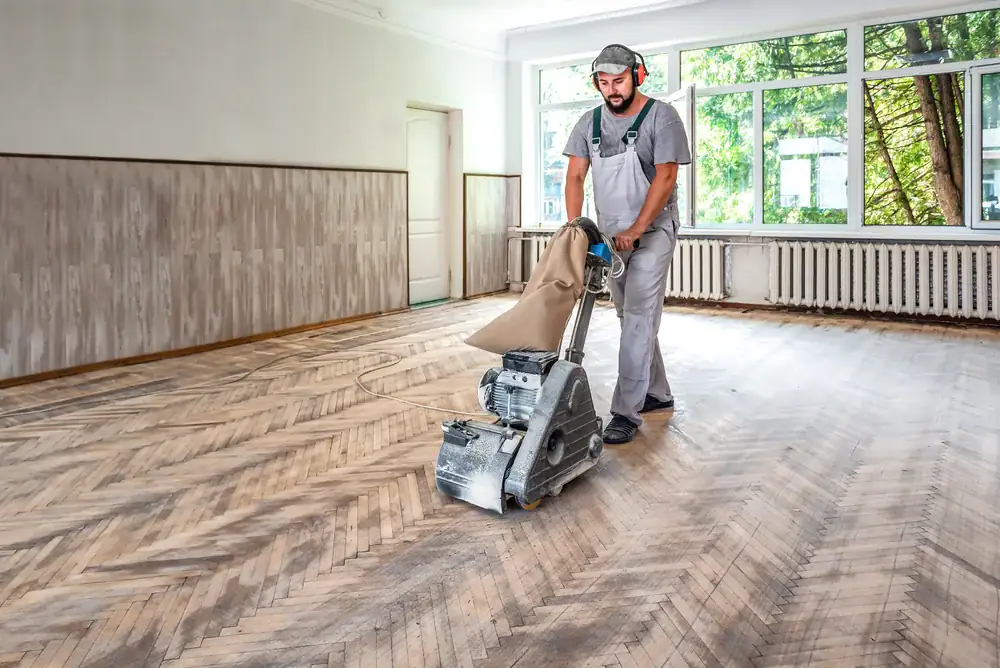
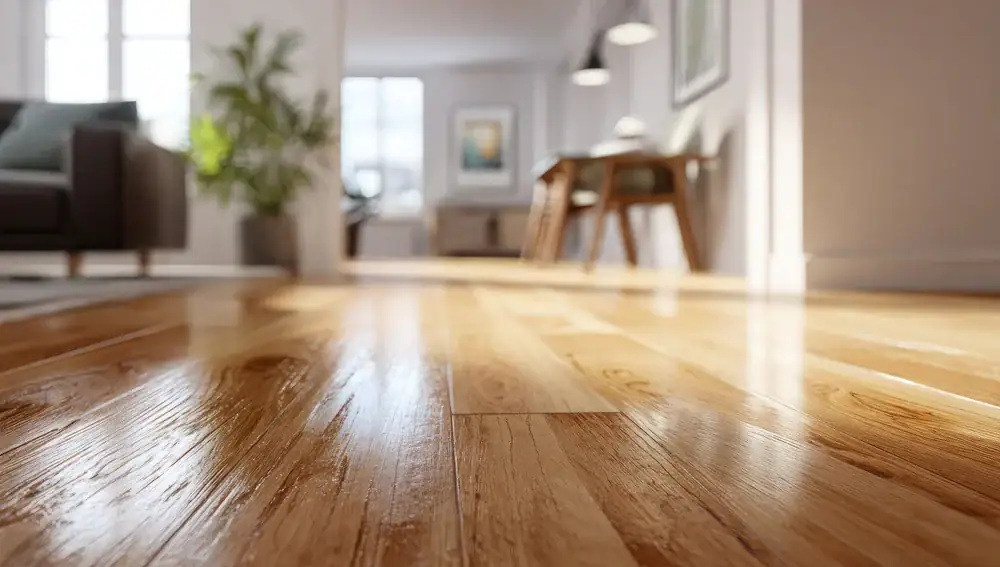
Hardwood Floor Refinishing Ashland VA
Your floors won’t just look cleaner. They’ll look like they did before years of foot traffic, furniture scrapes, and sun exposure took their toll.
Deep scratches disappear. Dull, faded areas regain their original color and depth. The finish protects against future wear while bringing out the grain you forgot was there.
And you’re not dealing with the mess traditional sanding creates. Our dustless wood floor sanding system captures up to 95% of dust at the source, so you’re not cleaning sawdust out of vents and cabinets for weeks. Most jobs finish in a single day, meaning you leave in the morning and come home to transformed floors by evening.
This isn’t a temporary fix. Solid hardwood can be refinished multiple times over its lifespan, and doing it right now extends the life of your floors by decades. You’re looking at a fraction of replacement costs while keeping the character and authenticity of your original wood intact.
Professional Floor Refinishing Ashland VA
We’ve been restoring hardwood floors across Ashland, VA and the surrounding areas for over 20 years. That’s thousands of homes, from historic properties near the railroad district to newer builds in subdivisions off Route 54.
More than 80% of our work comes from referrals. People who’ve seen the results in a neighbor’s home or heard about us from a friend who didn’t want to deal with the disruption and cost of full replacement.
Ashland’s housing market sits at a median value of $272,600, and homeowners here understand the value of maintaining what they have. Your floors are an investment, and refinishing them professionally can increase your home’s market value by up to 5% while preserving the warmth and character that made you choose hardwood in the first place.
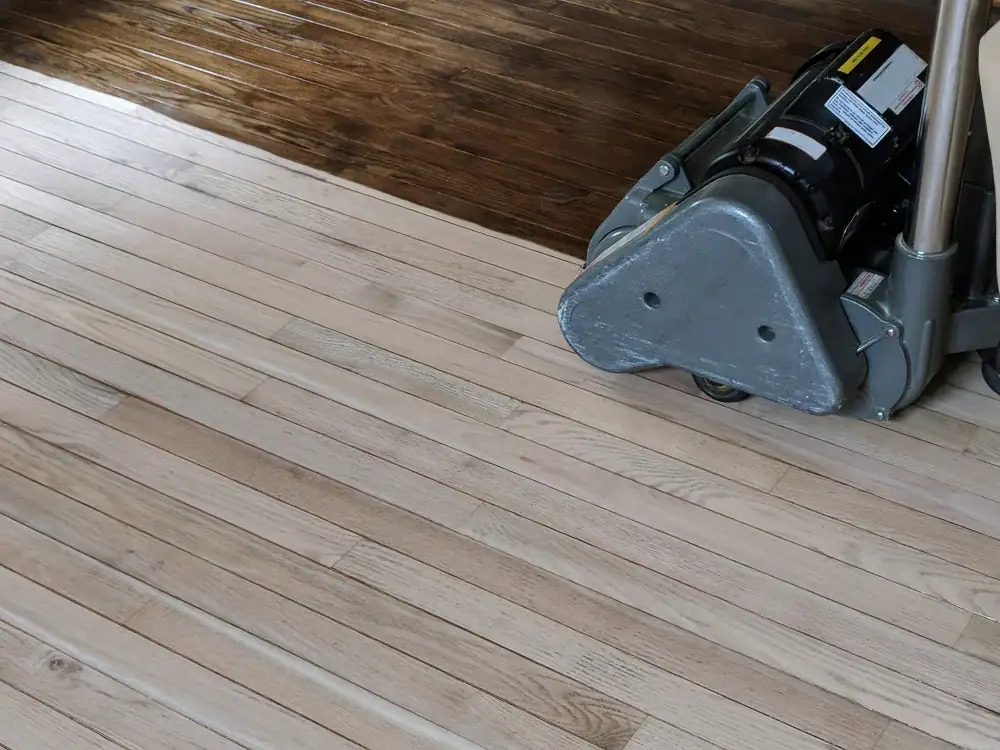
Wood Floor Sanding Process Ashland
We start by inspecting your floors to assess the wear layer thickness and identify any deep gouges, water damage, or structural issues. Not every floor is a candidate for refinishing, and we’ll tell you upfront if yours isn’t.
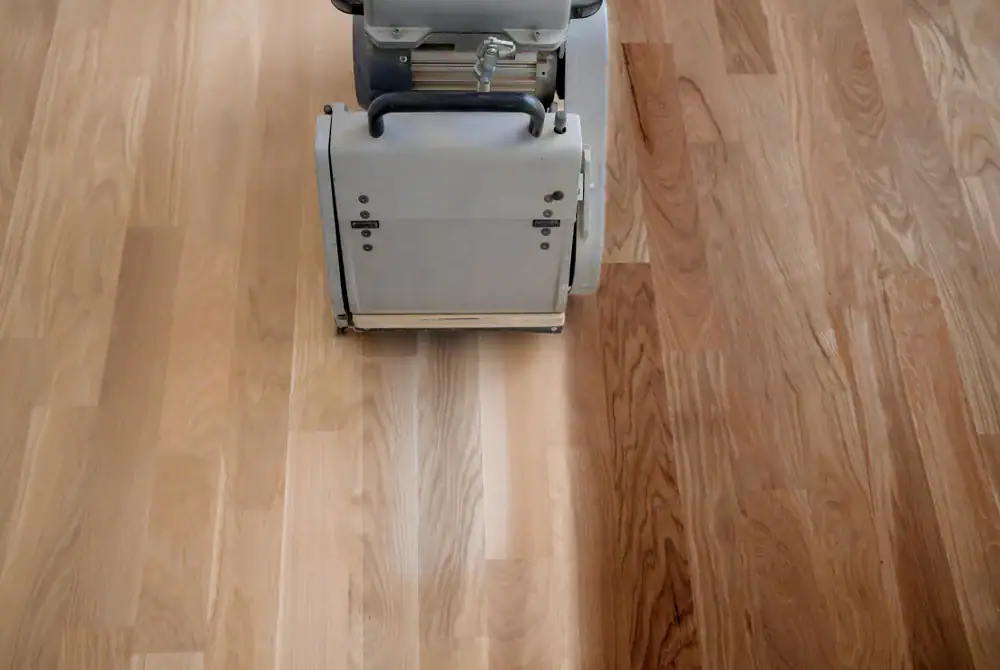
Once we confirm your floors can be refinished, we clear the space and begin the sanding process. Our dustless system uses specialized equipment that vacuums particles as we work, keeping your home clean throughout the job. We sand in stages, starting with coarser grits to remove the old finish and level the surface, then moving to finer grits for a smooth base.
After sanding, you have the option to change the stain color or keep the natural wood tone. We apply your chosen finish—typically polyurethane in your preferred sheen—and let it cure. Depending on the product and number of coats, you’re usually walking on your floors within 24 to 48 hours.
The whole process for an average-sized room takes one day. Larger homes or floors requiring repair work may take longer, but we’ll give you a clear timeline before we start.
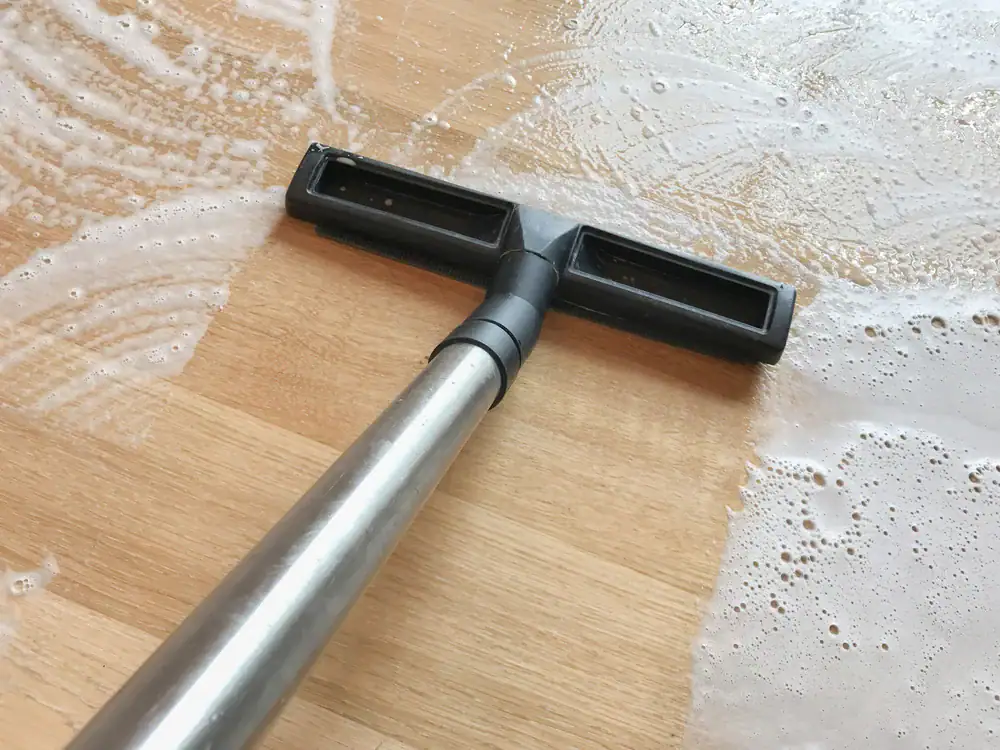
Hardwood Restoration Services Ashland VA
You’re getting a complete hardwood restoration, not just a surface buff. That means full sanding to remove the existing finish, staining if you want to change or refresh the color, and multiple coats of protective polyurethane.
We also handle minor repairs during the process. Small gaps, shallow scratches, and minor surface damage get addressed as part of the refinishing. If your floors have deeper structural issues—like broken boards or significant water damage—we’ll discuss repair options before moving forward.
Ashland homeowners often ask about engineered wood refinishing. Engineered floors can be refinished, but only if the wear layer is thick enough. We measure this during the inspection because once that top layer is gone, you’re into the plywood core and the floor is done. Solid hardwood gives you more flexibility since it can typically be sanded and refinished three to five times over its lifespan.
The 2025 trend is moving toward natural wood tones and matte finishes. People are moving away from the high-gloss, dark stains that were popular a decade ago and embracing lighter, organic hues that let the wood’s natural character show through. We can walk you through options that fit current design trends while matching your home’s style.
How much does wood floor refinishing cost compared to replacing my floors?
Refinishing costs a fraction of what you’d pay for full replacement. In the Richmond area, hardwood floor refinishing typically runs between $3 and $5 per square foot for common woods like oak. Pine costs slightly more, usually $4 to $7 per square foot because it’s softer and requires more careful handling.
Replacement involves tearing out your existing floors, hauling away the debris, prepping the subfloor, and installing new material. You’re looking at $8 to $15 per square foot or more depending on the wood species and installation complexity. That doesn’t include the time and disruption of a multi-day or multi-week project.
For a typical 500-square-foot living area, refinishing might cost $1,500 to $2,500. Replacement for that same space could easily run $4,000 to $7,500 or higher. If your floors have good bones and the wear layer is intact, refinishing gives you the same visual result at a third of the cost.
How long does the refinishing process take and when can I walk on my floors?
Most refinishing jobs are completed in a single day. You leave in the morning, we do the work, and you return to finished floors by evening. Larger homes or floors requiring extensive repair may take an additional day, but we’ll confirm the timeline during your consultation.
Walking on your floors is a different question than the job being done. The polyurethane needs time to cure. With oil-based finishes, you can walk on the floors in socks after 24 hours, but you should wait 48 to 72 hours before moving furniture back. Water-based polyurethane dries faster—often within 6 to 12 hours for light foot traffic.
Full curing takes longer. Even though the surface feels dry, the finish continues hardening for up to 30 days. During that time, avoid dragging heavy furniture, placing rugs down, or cleaning with anything beyond a dry mop. We’ll give you specific care instructions based on the product we use so you don’t damage the finish before it’s fully set.
Will refinishing my floors create a huge dust mess in my home?
Not with our dustless system. Traditional sanding creates clouds of fine sawdust that settle on every surface in your home and work their way into HVAC systems, cabinets, and upholstery. Our equipment captures up to 95% of dust at the source using specialized vacuums attached directly to the sanding machines.
You’ll still want to remove items from the room and cover doorways to adjacent spaces, but you’re not looking at a week of cleaning afterward. Most customers are surprised at how little dust they find once the job is done.
The small amount of dust that does escape is unavoidable—it’s the nature of sanding wood. But compared to older methods that left homes covered in a fine layer of grit, the difference is dramatic. If you’ve been putting off refinishing because you’re dreading the cleanup, the dustless process changes that equation entirely.
Can all hardwood floors be refinished, or are some too damaged?
Not every floor is a candidate for refinishing. The determining factor is the thickness of the wear layer—the solid wood on top that can be sanded down. Solid hardwood floors typically have enough thickness to be refinished three to five times over their lifespan. Each refinishing removes about 1/32 to 1/16 of an inch of wood.
Engineered hardwood is trickier. The top layer is real wood, but it’s thin—often just 1 to 3 millimeters. If it’s already been sanded once or twice, there may not be enough material left to sand again without hitting the plywood core underneath. We measure this during the inspection.
Floors with extensive water damage, large gaps, or structural issues may need repair work before refinishing makes sense. Deep gouges can often be addressed during the process, but if boards are cupped, warped, or rotting, those need to be replaced first. We’ll assess your floors honestly and tell you whether refinishing is the right move or if you’re better off replacing damaged sections.
Should I change the stain color or keep my floors natural?
That depends on what you’re trying to achieve and what’s trending in home design. Right now, lighter natural wood tones are dominating. Homeowners are moving away from the dark espresso and jacobean stains that were popular in the 2010s and embracing the organic look of unstained or lightly stained wood.
Natural finishes highlight the grain and character of the wood itself. Oak, maple, and hickory all have distinct grain patterns that get muted under heavy stain. If your goal is a bright, airy, modern look, keeping the wood natural or using a light stain works well.
Darker stains can still make sense depending on your home’s style and your personal preference. They add warmth and drama, and they can help unify mismatched wood tones if you’ve had repairs or additions over the years. The key is choosing a color that fits your space and won’t feel dated in five years. We can show you samples and discuss what works best for your specific floors and the overall design direction you’re going.
How do I maintain my floors after refinishing to make them last?
Maintenance is straightforward if you follow a few basic rules. For the first 30 days while the finish fully cures, avoid placing rugs down, dragging furniture, or using any wet cleaning products. Dry mop or vacuum only during that period.
After the finish has cured, regular sweeping or vacuuming removes the grit and dirt that causes scratches. Use a microfiber dust mop or a vacuum without a beater bar—those rotating brushes can damage the finish over time. For deeper cleaning, use a hardwood floor cleaner specifically designed for polyurethane finishes. Avoid water-heavy mopping or steam cleaners, which can penetrate the finish and damage the wood.
Place felt pads under furniture legs and use rugs in high-traffic areas to minimize wear. Trim your pets’ nails and clean up spills immediately to prevent water damage. Over time, you may notice light scratches or dullness in heavily used areas. A buff and coat service—which applies a fresh topcoat without full sanding—can refresh the finish and extend the time before you need another full refinishing. Most floors benefit from this every 5 to 10 years depending on traffic and care.