
Floor Installation in Ashland, VA
Ashland Homes Deserve Floors Built for What's Under Them
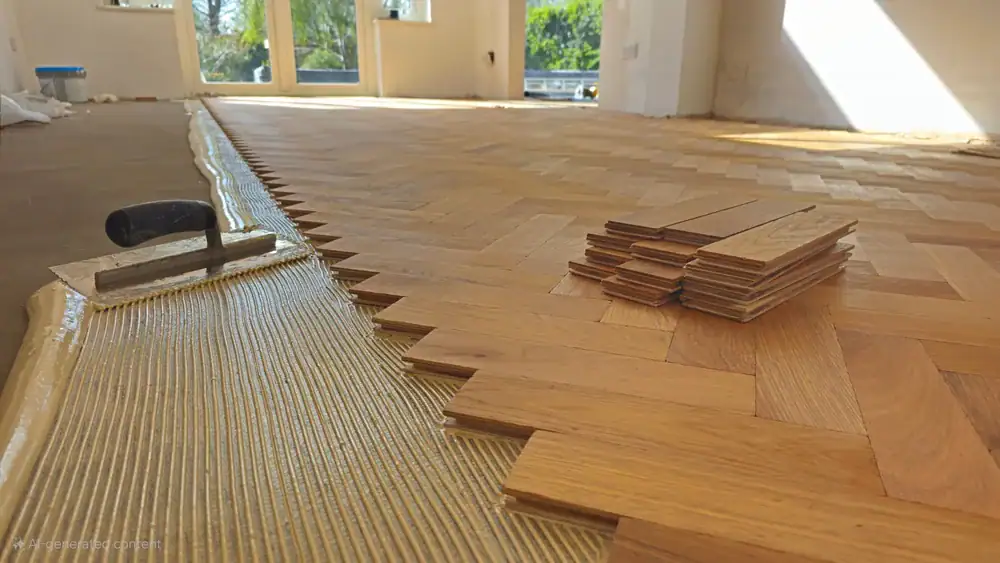
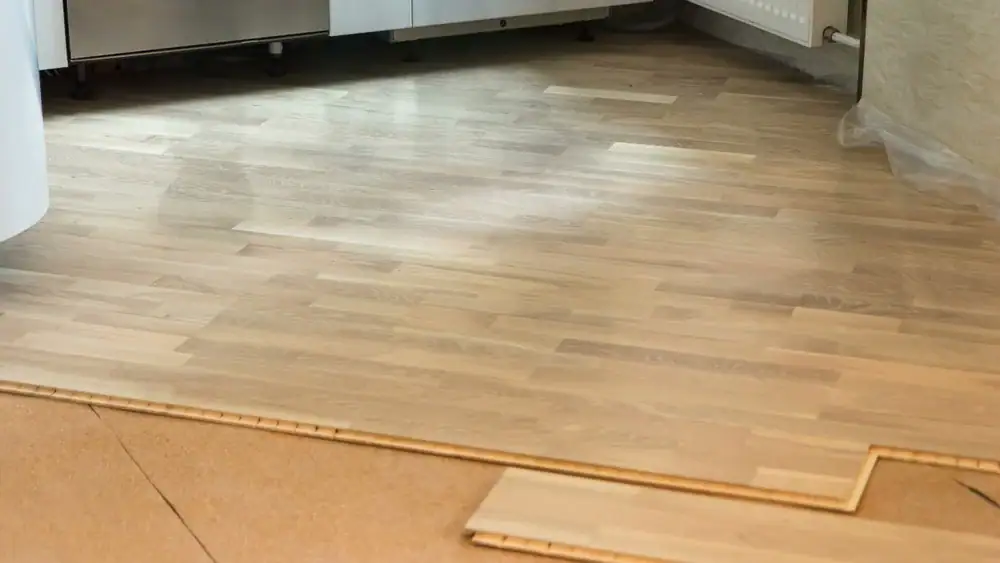
Hardwood Floor Installers Ashland, VA
Ashland’s summers are sticky. The humidity climbs into the 80s and 90s, and then your heat runs all winter and pulls the moisture right back out. That cycle expand, contract, expand again is exactly what causes hardwood floors to cup, gap, and creak when the installer didn’t account for it before laying a single plank. The result isn’t bad luck. It’s a skipped step.
When you get new wood floors installed correctly, you’re not just looking at something beautiful. You’re looking at something stable. Floors that don’t shift when July hits. Floors that don’t open up with visible gaps come January. That kind of performance starts before installation day with a subfloor that’s been assessed, leveled if needed, and confirmed moisture-compatible with the wood going on top of it.
For homeowners in Ashland’s older neighborhoods the Craftsman bungalows off College Avenue, the colonials near Henry Clay Road, the Victorians closer to the historic district this matters even more. Those homes sit on pier-and-beam foundations with crawl spaces, and ground moisture travels upward. If no one tests for it, you’ll know eventually. Just not in a good way.
Local Floor Installers Serving Ashland, VA
We’re a Glen Allen-based hardwood floor company owned and operated by David Emmerling, who has spent over two decades working in Virginia homes. That’s not a number used to impress you it’s context for why the process is what it is. You learn a lot about subfloors, humidity, and what actually causes floors to fail when you’ve been doing this long enough to see the problems come back.
Ashland is about 20 miles up I-95 from our shop, and it’s a market we know well. The housing stock here is genuinely diverse you’ve got homes from the 1850s in the historic district and brand-new construction in Lauradell going up at the same time. Those two types of homes need very different approaches, and the only way to get it right is to actually show up and assess what’s there before committing to a plan.
We hold an A+ BBB rating, are licensed through the Virginia Board for Contractors, and have hundreds of documented five-star Google reviews from homeowners across the Richmond metro the same climate, the same housing conditions, the same seasonal challenges you’re dealing with in Ashland.
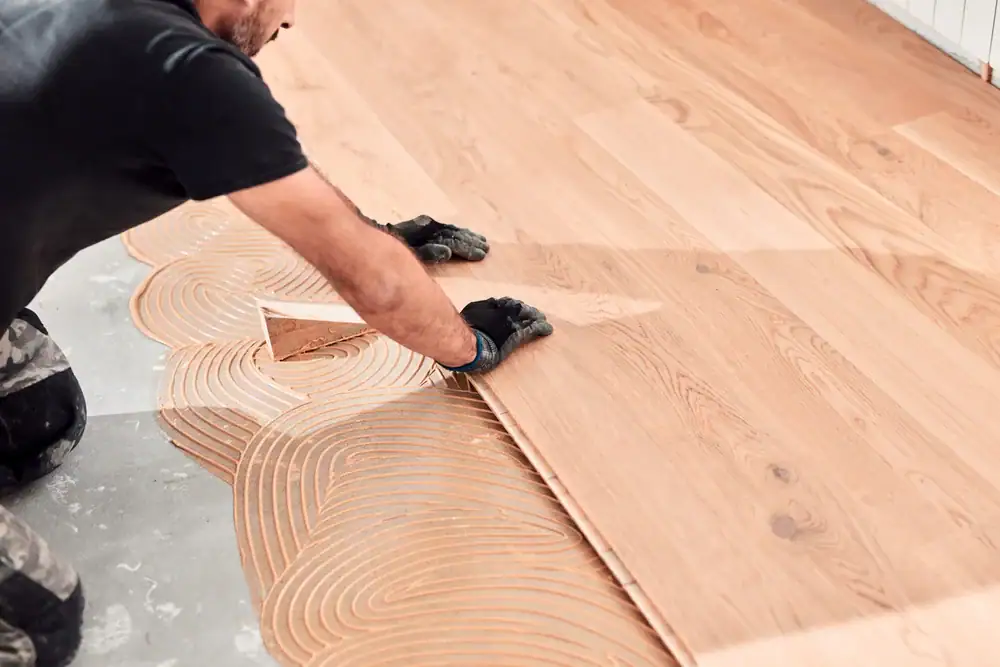
Hardwood Floor Installation Process Ashland, VA
It starts with the subfloor. Before any wood is ordered, cut, or laid, the subfloor gets assessed for levelness, structural integrity, and moisture content. This is the step most homeowners don’t know to ask about and the one that determines whether your floor holds up or gives you problems. If the subfloor needs leveling or repair, that gets addressed first and priced transparently upfront. No surprises after the work has already started.
Once the subfloor checks out, the wood gets acclimated to your home’s environment. This matters in Ashland because the gap between outdoor humidity in August and indoor air in February is significant. Hardwood needs time to stabilize to the conditions it’s going to live in typically several days in your space before it’s ready to install. Skipping this step is one of the most common reasons floors fail in Virginia’s climate.
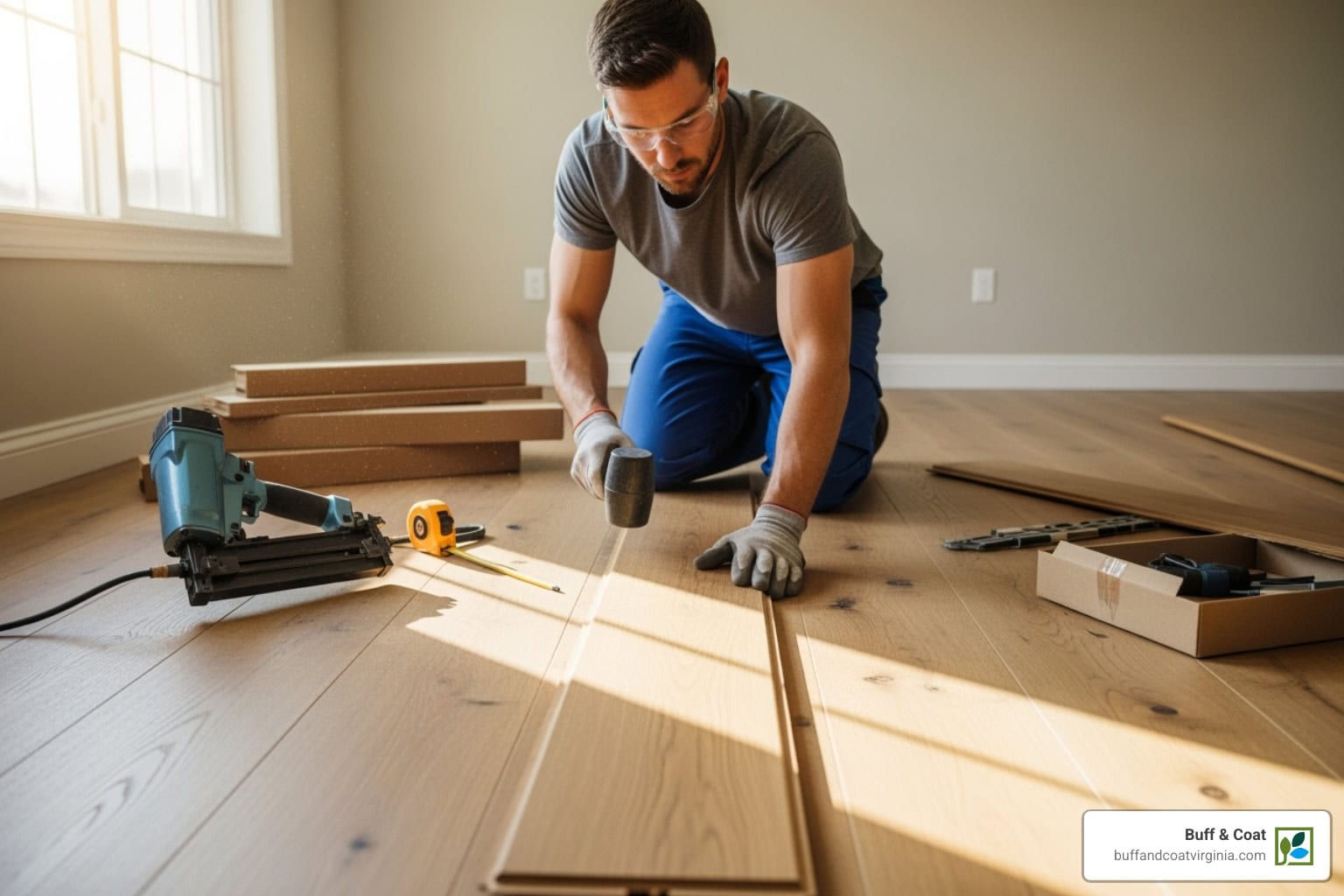
Installation itself is methodical: proper fastening, consistent spacing, and attention to grain direction and pattern. If you’re in a pre-1985 home and subfloor work is involved, there’s also an asbestos certification step required under Virginia renovation guidelines something worth knowing upfront if your Ashland home falls in that range. From start to finish, most jobs wrap up within a few days, and the process is designed to be as clean and minimally disruptive as possible.
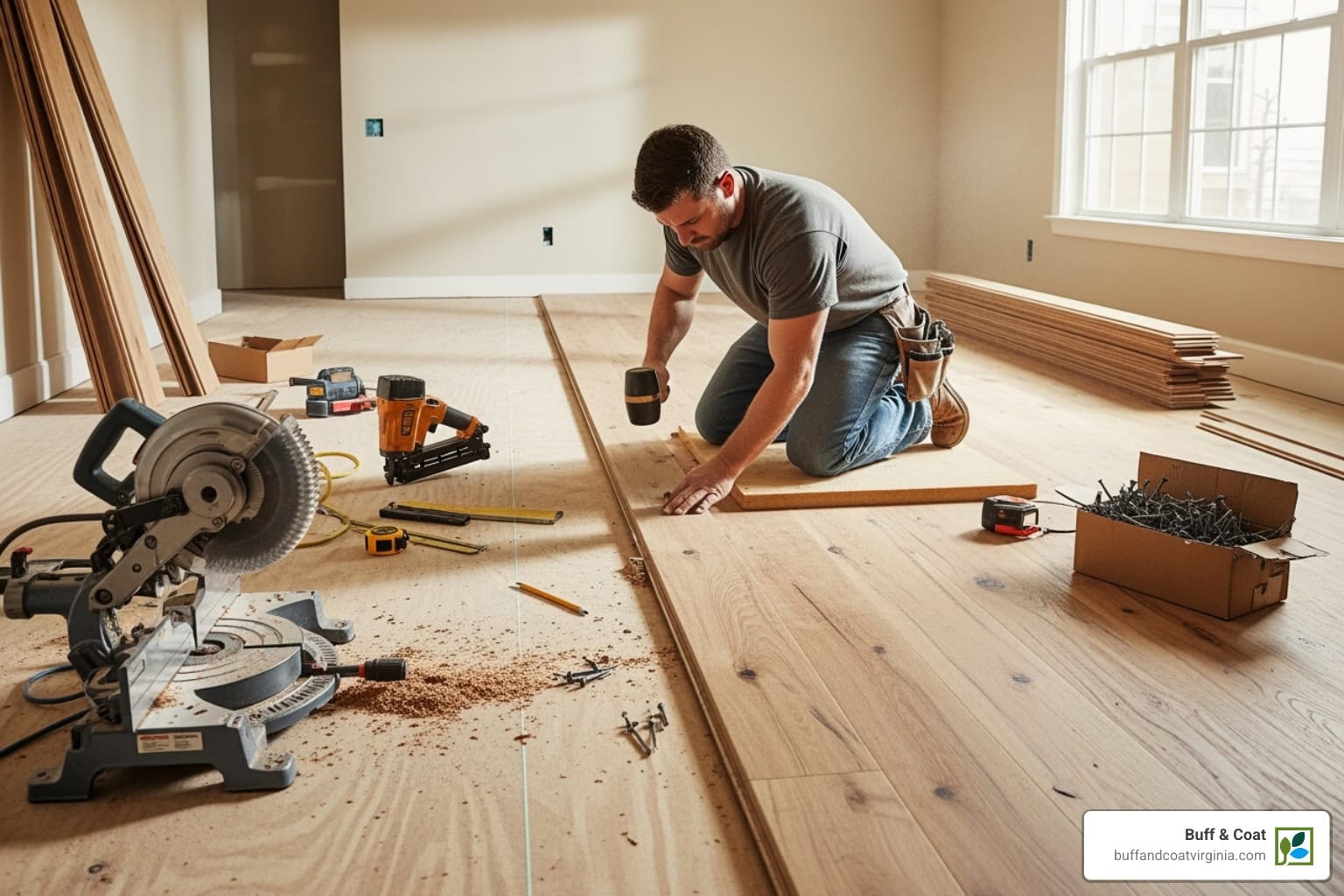
Solid Wood Flooring Installation Ashland, VA
Every installation starts with a real assessment not a quick glance and a quote. We evaluate your subfloor condition, test moisture levels in both the subfloor and the incoming wood, and identify anything that needs to be corrected before the job moves forward. In Ashland’s older homes, that often means addressing original pine subfloors that have shifted over decades or crawl space moisture that’s been quietly working its way upward. In newer builds like those going up in Lauradell, it means confirming whether the slab is suitable for solid hardwood or whether engineered hardwood is the better long-term call.
You also get honest guidance on material selection. Solid hardwood is a great choice for many Ashland homes, but it’s not the right answer for every situation and a good installer tells you that before you’ve already committed. If your foundation type, moisture readings, or room conditions point toward engineered hardwood or a floating floor system, that’s what we recommend. The goal is a floor that performs well in your specific home, not just a floor that gets installed.
The job wraps up with a thorough walkthrough, cleanup, and a clear explanation of how to care for your new floors through Ashland’s seasonal humidity swings. You’ll know what to expect in summer, what to watch for in winter, and who to call if anything ever comes up.
How much does hardwood floor installation cost in Ashland, VA?
The honest range for hardwood floor installation sits between roughly $2,500 and $7,000 for most residential jobs, with a national average around $4,700. Where your project lands depends on square footage, wood species, whether you’re going with solid or engineered hardwood, and what the subfloor looks like once it’s been assessed.
Subfloor repairs are where costs can shift unexpectedly and in Ashland’s older homes, especially those in the historic district or the pre-WWII neighborhoods near the college, subfloor issues are more common than in newer construction. Repairs can add anywhere from $900 to $3,000 depending on what’s there. We identify all of this during the initial assessment and price it transparently before any work begins, so you’re not looking at a number that changes halfway through the job.
What type of hardwood flooring holds up best in Ashland's climate?
Ashland sits in a humid subtropical climate, which means your floors will go through real seasonal stress high outdoor humidity in summer, dry heated air in winter. For most homes in the area, harder domestic species like white oak or hickory handle that movement better than softer options. White oak in particular is a popular choice in the Richmond metro area because it’s dimensionally stable and takes finish well.
The bigger question isn’t always species it’s solid versus engineered. Solid hardwood is a strong choice for homes with wood subfloors and good moisture control. But if your Ashland home has a concrete slab foundation, solid hardwood isn’t a viable option for direct installation. Engineered hardwood handles slab conditions much better and still gives you the look and feel of real wood. The right call depends on what’s actually under your feet, which is why the assessment step matters so much before any material gets ordered.
How do I know if my subfloor needs repair before new floors are installed?
Most homeowners don’t know until someone actually looks. The signs you can catch yourself include soft or springy spots when you walk, visible dips or high points in the floor, squeaking that seems to come from below the surface, or existing flooring that’s already cupped or gapped. Any of those is worth flagging before installation starts.
In Ashland specifically, homes built on pier-and-beam foundations which covers a significant portion of the historic district and the pre-WWII neighborhoods are more prone to subfloor moisture issues because of how crawl space vapor migrates upward over time. That moisture can compromise the wood subfloor itself, not just the flooring on top of it. A proper pre-installation assessment checks for all of this: levelness, structural integrity, and moisture content. If repairs are needed, they get identified and priced before anything else moves forward not discovered mid-job.
Can hardwood floors be installed in Ashland's older historic homes?
Yes and we do it regularly. But older homes do require more care and assessment upfront than newer construction. Homes in and around Ashland’s historic district, particularly those built before the mid-20th century, often have original subfloor boards that have settled unevenly over decades. Getting a new floor to sit flat and stable on top of that requires leveling work before installation begins, not after.
There’s also a regulatory detail worth knowing: any renovation work on structures built before January 1, 1985 in Virginia requires an asbestos certification form as part of the process. If subfloor work is involved in your historic Ashland home, this step applies. It’s not a barrier to getting the job done it’s just something to be aware of and account for in the project timeline. Our pre-installation assessment process is designed to surface these considerations early, so nothing catches you off guard.
How long does hardwood floor installation take from start to finish?
For most residential jobs, installation itself takes two to three days once the prep work is complete. The part that adds time is acclimation the wood needs to sit in your home’s environment before it’s ready to install. In Ashland, where the gap between summer humidity and winter dryness is significant, this step typically takes a few days and shouldn’t be rushed. Wood that goes down before it’s stabilized to your home’s conditions is wood that’s more likely to shift later.
The full timeline from first contact to finished floors is usually about one to two weeks, depending on scheduling and the scope of any subfloor work identified during the assessment. If your project involves subfloor repairs more common in Ashland’s older pier-and-beam homes than in newer slab construction that adds a step before installation begins but is accounted for in the original project plan. You’ll know the full scope before the job starts.
Is Buff and Coat licensed to do floor installation work in Ashland, VA?
Yes. We’re licensed through the Virginia Board for Contractors and carry full liability insurance. Ashland operates under a dual regulatory structure the Town of Ashland has its own contractor licensing requirements separate from Hanover County and working in this market requires meeting both. We’re set up to operate here correctly, which matters both for your legal protection and for the quality accountability it signals.
When you hire a contractor for work in Ashland, it’s worth asking for their Virginia contractor’s license number before signing anything. It’s a simple verification step that tells you the company has met the state’s legal threshold for operating as a contractor. It also gives you a clear avenue for recourse if something goes wrong which is a level of protection you don’t have with an unlicensed operator, regardless of how good their pitch sounds.