
After we've refinished your hardwood floors, one of the first questions we always get from Richmond homeowners is, "How long until we can really use our floors again?" It's a great question. While a new polyurethane finish might feel dry to the touch in just a few hours, a full, complete cure takes much longer—usually around 21 to 30 days.
Understanding the difference isn't just trivia; it's the key to protecting your investment and ensuring your beautiful new floors last for years.
The Critical Difference: A Dry Floor vs. a Cured Floor
When a freshly coated floor doesn't feel tacky anymore, it’s so tempting to think it's ready for normal life to resume. But there’s a massive difference between a floor that is dry and one that is fully cured. Getting this wrong is the fastest way to scuff, scratch, or dent a brand-new finish.
Think of it like baking a cake. When you pull it out of the oven, the top is firm and golden brown, but the inside is still molten and delicate. If you slice into it right away, you’ll have a gooey mess. Polyurethane works in a very similar way.
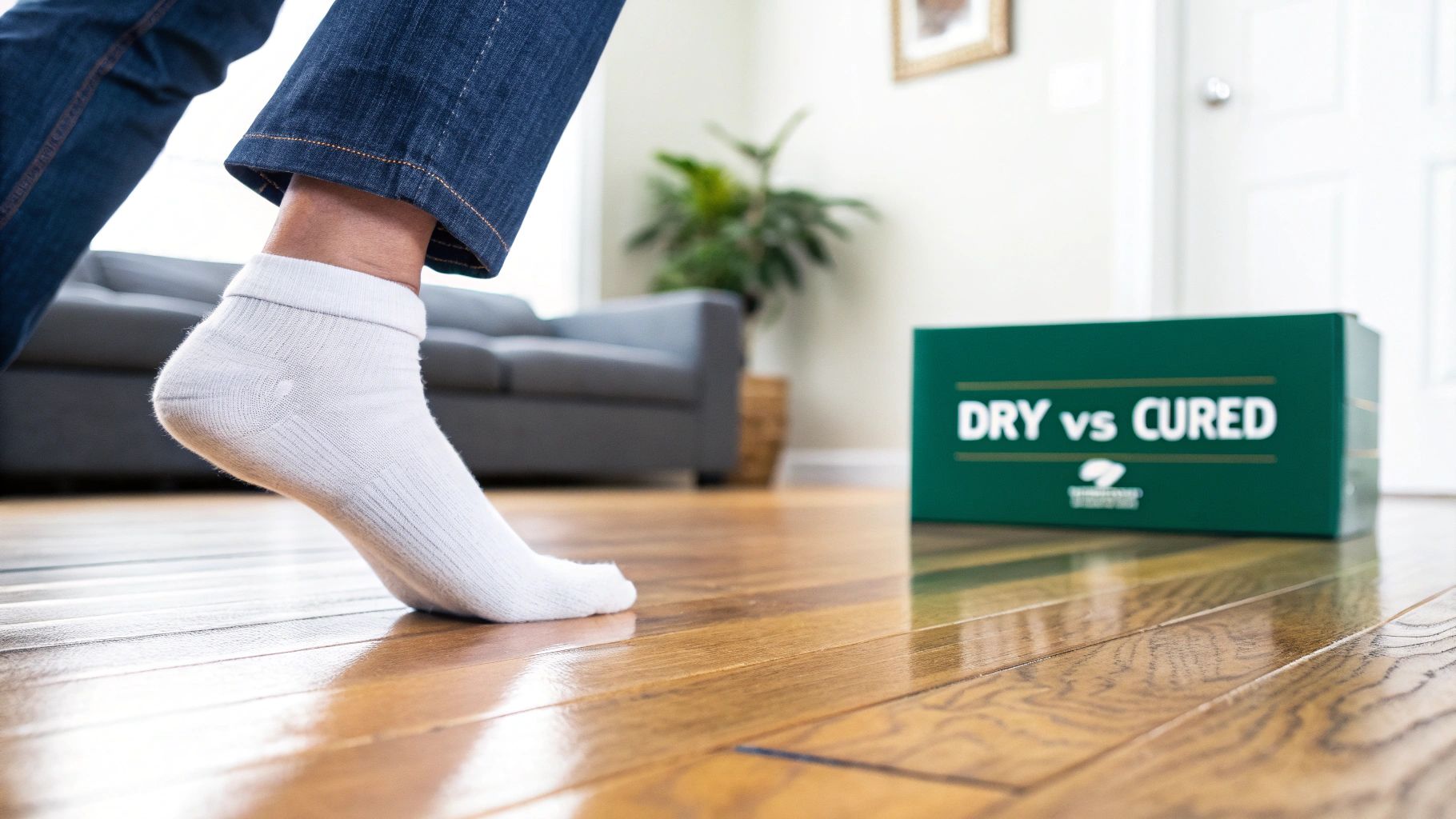
What Does It Mean for a Floor to Be Dry?
Drying is the first and fastest stage. It's an evaporation process where the liquid solvents (like water) in the polyurethane finish evaporate from the surface. This is what makes the floor stop feeling sticky, usually within about 24 hours for a water-based product.
- Surface-Level Change: The very top layer hardens as the liquid solvent turns into vapor.
- Initial Hardness: The finish becomes firm enough to walk on with clean socks without leaving footprints.
- Still Vulnerable: Don't be fooled! The layers underneath are still soft and can easily be damaged or indented.
What Does It Mean for a Floor to Be Cured?
Curing is a much deeper and longer chemical reaction. During this time, the individual polyurethane molecules link together (a process called cross-linking) to form a tough, solid, and protective shield. This is what gives your floors their lasting resistance to scratches, spills, and daily life.
The concept of a coating needing time to reach its full strength is common across different industries. For a neat comparison, check out how long ceramic coating takes to cure on cars—it's a similar principle of chemical hardening.
Patience is Key: Rushing to move furniture, lay down area rugs, or let pets back onto the floor before it has fully cured is the number one cause of preventable damage after a hardwood floor refinishing project.
Water-Based vs. Oil-Based Polyurethane Cure Times
When you’re refinishing hardwood floors, one of the biggest questions on your mind is probably, "How long until I can use my room again?" The answer almost always comes down to the type of polyurethane we use. The choice between a modern water-based formula and a traditional oil-based one completely changes the timeline for getting your life back to normal.
At Buff & Coat, we confidently recommend water-based polyurethane for the vast majority of our hardwood floor projects here in the Richmond area. Its advanced chemistry gives you a faster, more convenient, and healthier curing process without sacrificing durability.
Water-Based Polyurethane: The Modern Standard
Water-based finishes are the hands-down winner for homeowners who need to get back into their space quickly and care about indoor air quality. These products use water as the main solvent, which evaporates fast and releases far fewer of those smelly volatile organic compounds (VOCs).
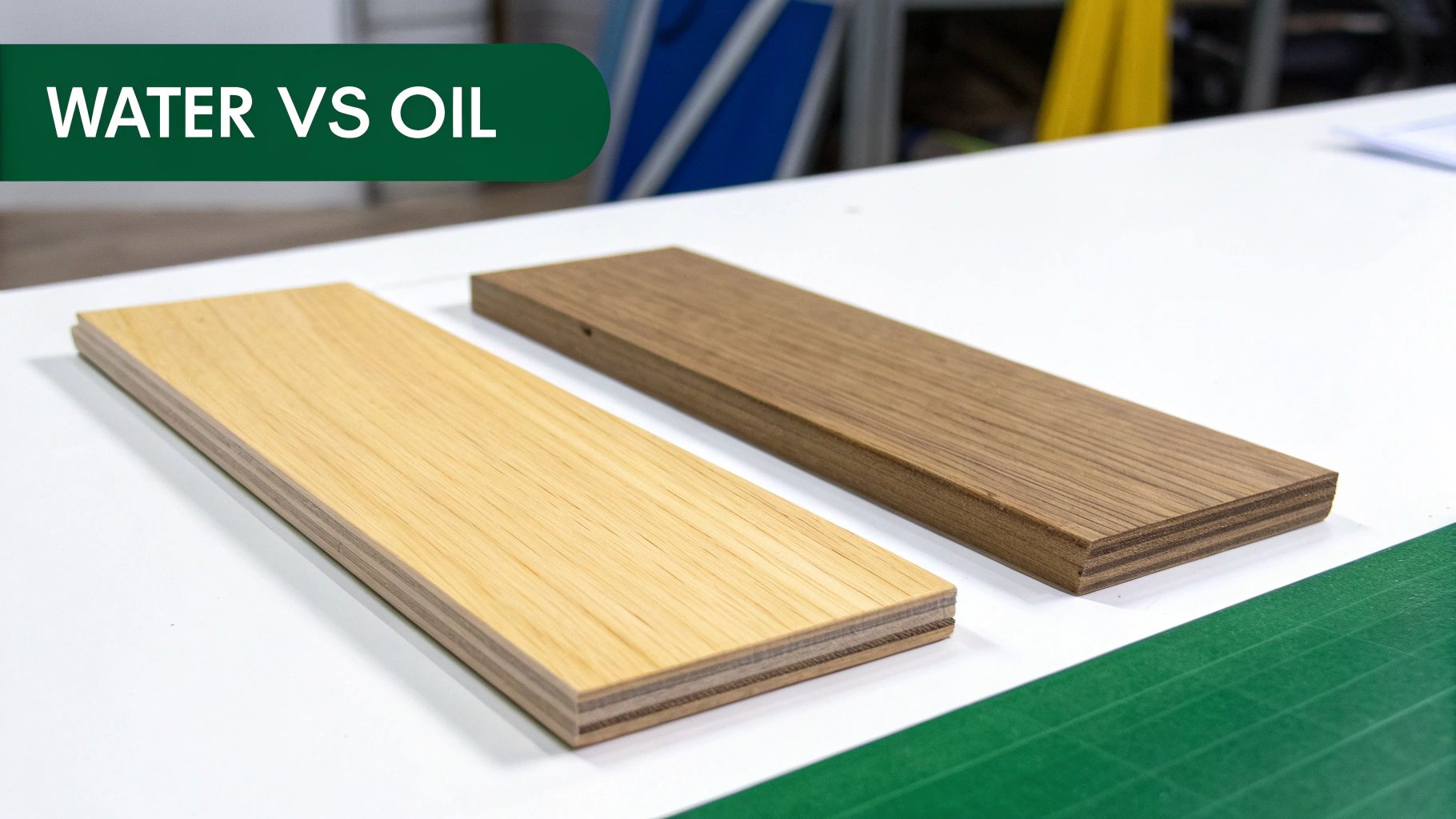
When the Buff & Coat team applies water-based poly in homes across Richmond, VA, it’s typically dry to the touch in just 2-4 hours. This speed allows us to apply the next coat the same day and means you can walk on the floors (in socks!) after 24 hours.
Modern formulas reach about 90% of their total hardness within 7 days, achieving full protective strength in around three weeks. This rapid timeline is a total game-changer for busy families in Henrico and Chesterfield. It’s no surprise that the majority of professional refinishers now prefer water-based poly for its speed and low VOCs.
Want to dive deeper? Check out our detailed guide on the differences between oil and water-based polyurethane.
Oil-Based Polyurethane: The Traditional Option
Oil-based polyurethane has been the old-school standard for decades, known for giving floors a warm, amber glow that deepens with age. The catch? It uses petroleum-based solvents that evaporate very slowly, leading to a much longer and more disruptive curing period.
A floor coated with oil-based poly will feel tacky for 8-10 hours and isn't ready for another coat for at least 24 hours. You often can't walk on it for 48-72 hours, which can be a major headache for any household.
The biggest difference is the full cure time. While a water-based finish is almost fully hardened in a week, an oil-based finish needs a full 30 days to reach maximum hardness. During that entire month, the floor is much more vulnerable to damage from furniture, rugs, and even your pet's claws.
A Quick Timeline Comparison
To make it simple, here’s a side-by-side look at what you can expect from each type of finish.
Water-Based vs. Oil-Based Polyurethane Cure Timeline
| Curing Stage | Water-Based Polyurethane | Oil-Based Polyurethane |
|---|---|---|
| Dry to Touch | 2-4 hours | 8-10 hours |
| Ready for Recoat | 4-6 hours | 24 hours |
| Light Foot Traffic (Socks Only) | 24 hours | 48-72 hours |
| Furniture & Rugs | 7 days | 14-21 days |
| Full Cure (Maximum Hardness) | 21 days | 30+ days |
As you can see, the timelines are worlds apart. The faster cure of water-based finishes means less disruption and a tougher floor, sooner.
Why the Difference Matters for Richmond Homeowners
At the end of the day, choosing a water-based finish means you can get back to living your life in days, not weeks. The low odor and minimal VOCs also create a much healthier environment for your family and pets. While oil-based finishes still have a place, the speed, clarity, and convenience of modern water-based polyurethane make it the superior choice for nearly every home we service in the Richmond area.
If you’re unsure whether your hardwood floors need refinishing, Buff & Coat can take a look and give you honest recommendations.
Richmond homeowners: get a fast quote for refinishing or recoating. Call 804-392-1114 or request a free estimate today.
Key Factors That Influence Curing in Your Home
You’ve picked out the perfect polyurethane finish for your floors, but that’s just the start of the story. The environment inside your home plays a huge role in how long it actually takes for the polyurethane to fully cure. Think of it like baking a cake: you can have the best ingredients in the world, but if the oven temperature is off, you’re not going to get the result you want.
At Buff & Coat, we’ve spent over 15 years mastering these variables on hardwood floor refinishing projects all over Richmond, VA. We know exactly how to manage your home's environment to ensure your floors cure correctly and efficiently. Understanding these factors will show you why having a pro handle the job is so critical for a finish that lasts.
Temperature: The Goldilocks Zone
Polyurethane curing is a chemical reaction at its core. And like most chemical reactions, it's incredibly sensitive to temperature. We're always aiming for the "Goldilocks zone"—not too hot, not too cold, but just right.
For the best results, polyurethane needs a consistent ambient temperature between 65°F and 75°F. A cold room can stall the curing process completely, while a room that's too hot can cause the surface to dry too fast, trapping wet solvents underneath.
Keeping the temperature stable is one of the single most important things you can do to get a smooth, even, and durable cure.
Humidity: A Major Challenge in Central Virginia
Anyone living in Richmond, Midlothian, or Chesterfield knows just how sticky our summers can get. All that moisture in the air is a big problem for a curing floor. The solvents in the polyurethane need to evaporate for it to harden, but when the air is already full of water vapor, there's nowhere for them to go.
High humidity can slow the curing process to a crawl, sometimes adding days to the project timeline. That’s why we always check the relative humidity (RH) on our job sites, aiming for that sweet spot between 40% and 50%.
Airflow: A Gentle Breeze Does the Trick
Proper ventilation is your best friend during the curing process. It helps carry away those evaporating solvents and lets the finish harden. But the key word here is gentle. You’re looking for good air exchange, not a wind tunnel.
- Good Airflow: Cracking a few windows or using fans on a low setting in nearby rooms creates the perfect circulation.
- Bad Airflow: Never point a fan directly at the wet floor. This will cause it to dry unevenly, creating ugly ripples or bubbles. It’s also a great way to blow dust and pet hair right onto your brand-new finish.
We carefully manage the airflow to speed things up without ever sacrificing the quality of the final coat.
Application Thickness: Less Is More
It might sound strange, but a thicker coat of polyurethane doesn’t equal a stronger floor—it just means a much, much longer cure time. When the finish is laid on too thick, the top layer forms a skin, trapping the wet solvents underneath. This prevents the lower layers from ever hardening properly, leaving you with a soft, gummy finish that gets damaged easily.
This is where professional technique makes all the difference. As an experienced hardwood floor contractor in Richmond, we apply thin, perfectly even coats, allowing each one to dry before the next is applied. This builds up a far more durable surface that cures the way it's supposed to.
Just how much do these factors matter? Raising the temperature from 65°F to 75°F can slash water-based cure times by 25%. On the flip side, humidity above 50%—a regular occurrence in a Virginia summer—can slow the process by a staggering 30-50%. For a deeper dive, you can explore the technical side of how temperature and humidity impact polyurethane curing.
Your Realistic Post-Refinishing Timeline
Alright, let's get to the question every homeowner asks: "When can I actually live on my new floors again?" This isn't just about curiosity—it's about protecting your investment. Getting this timeline right is the key to preventing those frustrating scuffs, dents, or imprints in a finish that's still finding its feet.
What follows is the practical, real-world timeline we give all our clients here in Richmond, VA. This is based on a high-quality, water-based polyurethane finish and following these simple rules will ensure your floors cure perfectly and look incredible for years.
The First 24 Hours: Socks Only
For the first 24 hours, your floors are at their most vulnerable. The surface might feel dry to the touch, but don't be fooled—the layers underneath are still quite soft and impressionable.
- Rule: Light walking is okay, but only in clean socks.
- Avoid: Absolutely no shoes (they track in grit), no bare feet (oils can interfere with the finish), and definitely no pet paws (their claws are like tiny daggers to a fresh coat).
- Goal: The aim here is simple: let that top layer harden without a single disturbance.
48 to 72 Hours: Light Furniture Returns
After two or three days, you'll notice the finish feels much harder. At this point, it’s strong enough to handle light items, and you can start making the room feel like home again.
This is a crucial moment. Always, always lift furniture into place—never, ever slide or drag it. Even a small drag can leave a permanent scratch. We strongly recommend sticking felt pads on the bottom of all furniture legs before they touch the floor.
- What you can do: Carefully place lighter pieces like end tables, lamps, and chairs.
- What to wait on: Hold off on the heavyweights. That means sofas, beds, refrigerators, and loaded bookshelves need to wait a bit longer.
7 to 14 Days: Area Rugs and Normal Life
Once you hit the one-week mark, your floors have gained some serious durability. The polyurethane has cured significantly, making it much more resilient to the rhythms of everyday life. Now, you can finally bring back your area rugs.
Waiting at least 7 days for rugs is non-negotiable. The finish needs to "breathe" to release its final solvents. If you put a rug down too soon, you risk trapping those vapors, which can discolor the finish or even leave a ghostly imprint of the rug's backing on your beautiful new floor.
The Full Cure Milestone: 21 to 30 Days
The final finish line is the full cure, which takes about three to four weeks. This is when the magic really happens. On a molecular level, the polyurethane has finished cross-linking, creating that tough, diamond-hard shield you paid for. Your floors have now reached their peak hardness and durability.
The infographic below highlights the ideal conditions to make sure this timeline doesn't get delayed.
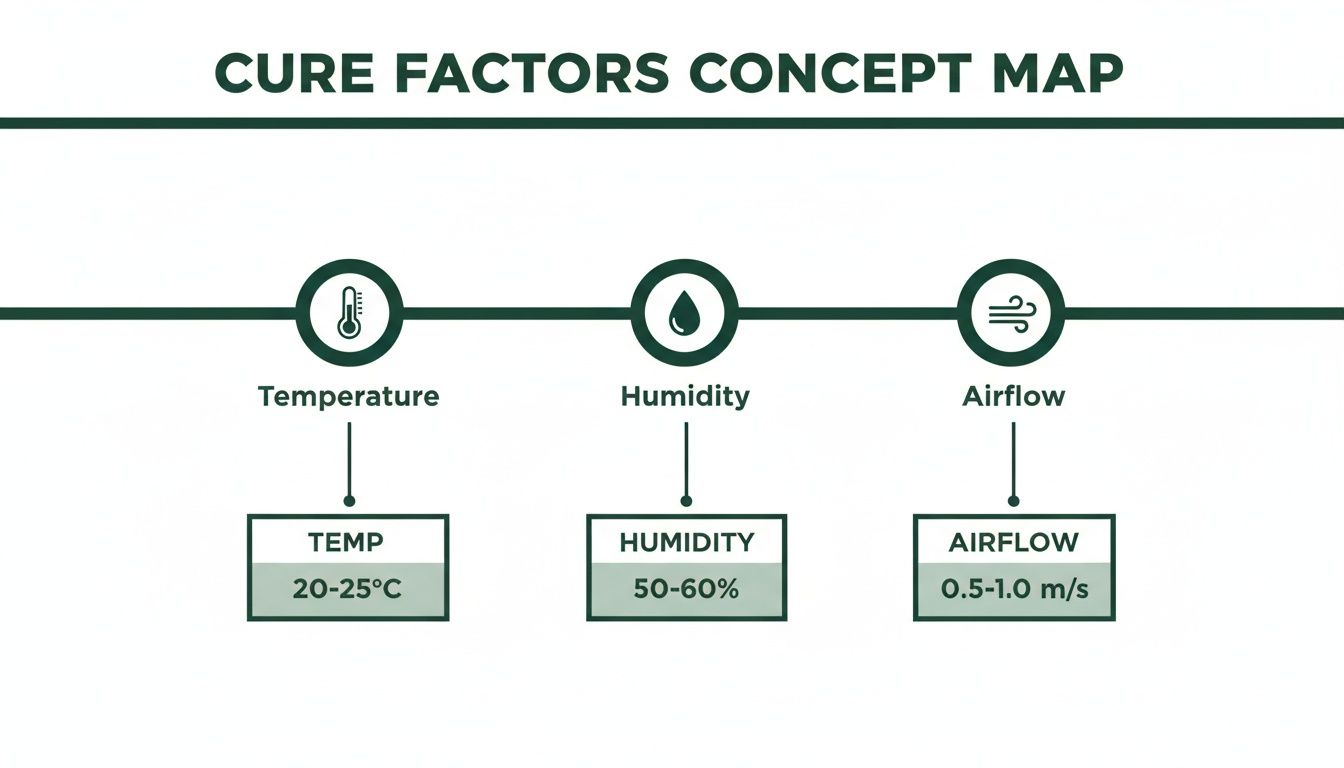
As you can see, keeping the temperature, humidity, and airflow in the sweet spot is what makes it all happen on schedule. After this full cure period, you're clear to move back the heavy furniture, resume normal heavy foot traffic, and clean the floors following our care guide. For the technically curious, the Safety Data Sheet for any given polyurethane varnish provides precise details. And for those who want to skip the wait entirely, you might want to read up on UV-cured floor finishes, which cure in seconds.
If you have questions about the curing process or need an expert eye on your floors, Buff & Coat is here to give you honest, clear answers.
Call 804-392-1114 or request a free estimate today.
How to Protect Your Floors During the Curing Process
Knowing the curing timeline is one thing, but actively protecting your floors during this fragile period is what truly guarantees a stunning, long-lasting result. Think of it like shielding a new car from dings and scratches in its first month. A few simple, mindful steps can prevent costly mistakes and ensure that beautiful finish you invested in stays flawless for years.
As Richmond's local hardwood floor pros, we make it our mission to arm clients with the right knowledge. It’s all about creating the right environment for the finish to harden and avoiding a handful of common—and totally preventable—blunders.
Best Practices for a Perfect Cure
That first month is everything. Your goal is simple: be gentle. Let the polyurethane work its chemical magic without any interference.
Here are the most important things you can do:
- Keep the Temperature Stable: Set your thermostat somewhere between 65°F and 75°F. A consistent temperature helps the polyurethane molecules link together evenly, which is critical for maximum durability.
- Create Gentle Airflow: You want to help the solvents evaporate, but gently. Open windows in other rooms or use fans pointed away from the floor to create subtle air movement. Never point a fan directly at the floor. This is a fast way to get ripples, waves, or blow dust right into your wet finish.
- Hold Off on Cleaning: For the first 30 days, your cleaning routine should be incredibly simple. No water, no floor cleaners, and definitely no damp mops. Just use a soft-bristle broom or a dry microfiber dust mop to handle any dust or debris.
Common Mistakes That Can Ruin a New Finish
It’s just as crucial to know what not to do. Many well-meaning homeowners accidentally sabotage their new floors, leading to frustrating scuffs, ugly imprints, or chemical damage that's hard to fix.
These are the biggest slip-ups we see:
- Letting Pets on Too Soon: Even after a day or two, a dog’s claws can easily leave permanent scratches in a finish that’s still soft. Keep your furry friends off the newly coated floors for at least the first week, if not longer.
- Using Tape on the Finish: This one’s a biggie. Never, ever apply painter's tape or any other adhesive to a floor that’s curing. When you pull it up, it can take a strip of polyurethane right along with it.
- Dragging Furniture Instead of Lifting: Even with felt pads, dragging a heavy sofa can create a deep gouge that goes right through the new finish. Always get help to lift furniture completely, carry it into place, and set it down gently.
- Putting Down Rugs Prematurely: This is like putting a plastic bag over a freshly painted wall. Rugs trap solvents and moisture, stopping the finish from breathing and fully hardening. Wait at least 7 to 14 days before rolling out any area rugs. To better understand how different backings can affect your floors, check out our guide on choosing the right wood floor coverings.
Following these simple rules will make all the difference as your floors reach their peak hardness. If you ever feel unsure about something during the curing process, a quick call to a professional is the best way to get peace of mind.
Unsure how to care for your new floors? Buff & Coat provides clear, honest advice. Call 804-392-1114 for a free consultation.
FAQ: Your Top Polyurethane Curing Questions Answered
Even with a solid timeline, it's natural to have a few questions. We get calls all the time from homeowners in Henrico, Chesterfield, and right here in Richmond with specific concerns about the curing process. Here are the most common questions we hear, answered directly.
Can I stay in my house while the floors are curing?
Yes, in most cases, you absolutely can. This is one of the biggest benefits of modern finishes. At Buff & Coat, we specialize in low-VOC (Volatile Organic Compound) water-based polyurethane, which is a world away from the harsh, lingering chemical smell of old-school oil-based products.
The odor is very mild and airs out quickly. That said, good ventilation is still your best friend. We always recommend cracking a few windows to create a gentle airflow, which helps the finish cure properly and keeps your indoor air quality fresh. If you or someone in your family is extra sensitive to smells, you might feel more comfortable staying elsewhere for the first 24 hours, but the vast majority of our clients stay home without any issue.
What happens if I put furniture back too early?
This is probably the single most common (and heartbreaking) mistake we see. A floor can feel dry to the touch in a few hours, but the finish underneath is still soft and vulnerable for days. Putting heavy furniture back too soon is a recipe for disaster.
The Risk of Imprints: Think of the uncured finish like memory foam. When you place a heavy sofa, bookcase, or fridge on it, the weight presses down and creates a permanent dent in those soft layers. These imprints perfectly mirror the footprint of your furniture and are often impossible to fix without a professional buff and coat service for the entire area.
This is why following the timeline is so critical. We recommend waiting 48-72 hours for light items on felt pads and a full week for any heavy furniture. A little patience now prevents a whole lot of regret later.
Does adding more coats of polyurethane make it take longer to cure?
That's a great question, and the short answer is yes. But it’s not really about the number of coats as much as it is about the total thickness of the finish.
Each layer of polyurethane adds to the overall film on your floor. A thicker film simply has more solvent to release and takes longer to harden all the way through. A pro team like ours at Buff & Coat avoids this problem by applying several thin, even coats, with proper drying time in between. This approach builds up tough, layered protection without creating one thick, slow-curing blanket of finish that can trap solvents and stall the whole process.
How does the Richmond climate affect curing in summer vs. winter?
The weather in Central Virginia definitely keeps us on our toes! Our sticky, humid summers and cool, dry winters create two very different environments for curing polyurethane.
Summer in Richmond: Humidity is the main challenge. When the air is already full of moisture, it slows down how quickly the solvents in the finish can evaporate. It’s like trying to dry a towel in a steam room. We manage this with dehumidifiers and carefully controlled airflow to keep the project on track.
Winter in Richmond: The dry winter air is actually great for evaporation. The catch is the cold. Low temperatures can slow the chemical cross-linking process to a crawl, preventing the finish from hardening correctly. The key is maintaining a consistent indoor temperature, right around 70°F, to let the finish do its job.
As a local floor refinishing Richmond VA contractor with over 15 years of experience, we’ve mastered working with our local climate to get flawless results, no matter the season.
Why Richmond Homeowners Choose Buff & Coat
When it comes to refinishing your hardwood floors, you need a partner you can trust. At Buff & Coat, we combine technical expertise with a commitment to quality and clear communication.
- 15+ Years in Business: We have decades of hands-on experience working on floors in homes just like yours across the Richmond area.
- Dustless Sanding Systems: Our advanced equipment captures over 99% of dust, keeping your home clean and your air healthy.
- Local, Owner-Operated: We’re a part of your community, not a faceless franchise. The owner is involved in every project to ensure quality.
- High-Quality Finishes: We only use premium, durable water-based polyurethanes that look great and stand up to daily life.
- Clear Pricing & Honest Advice: We provide detailed estimates with no hidden fees and give you straightforward recommendations you can count on.
- 5-Star Customer Service: Our reputation is built on making our clients happy, from the first call to the final walkthrough.
Ready to restore your hardwood floors? Buff & Coat makes the process fast, clean, and stress-free.
Call 804-392-1114 or request your free estimate online.