It feels like a never-ending battle, doesn’t it? You wipe down every surface in your Richmond home, and just hours later, a fresh layer of dust has already settled. If this sounds familiar, you’re not alone. The secret to winning this fight isn’t just about constant cleaning—it’s about understanding what you’re up against and tackling the problem at its source, which often starts with your floors.
Understanding Why Your Richmond Home Is So Dusty
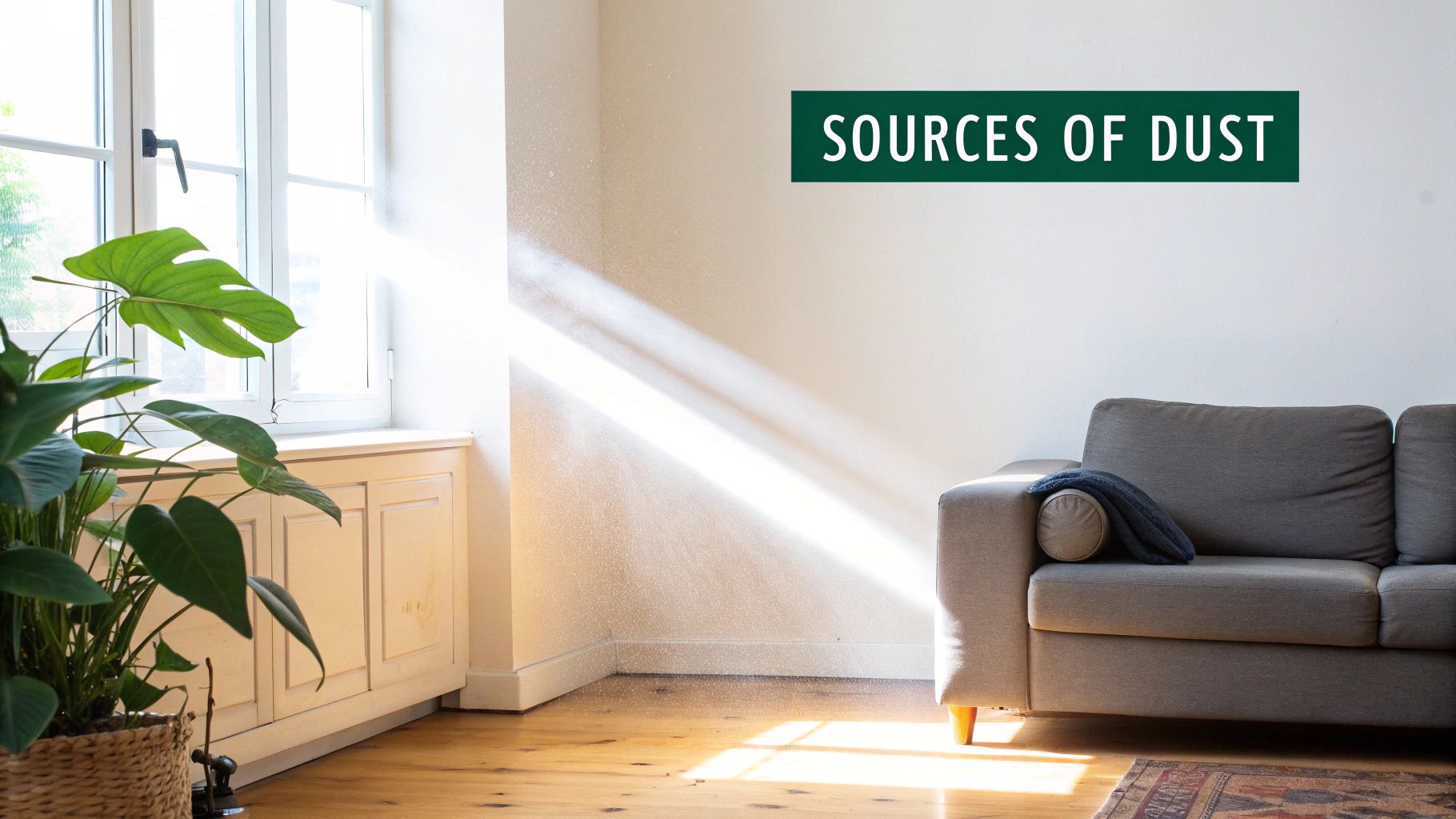
That pesky dust is a complex cocktail, with about two-thirds of it coming from the great outdoors. Think fine particles of soil, soot from traffic, and of course, pollen from Virginia’s beautiful greenery. The other third? That’s generated right inside your living space.
The Most Common Sources of Household Dust
Before you can launch an effective attack, you need to know the enemy. Household dust isn’t just one thing; it’s a collection of tiny particles from a surprising number of places.
- You (and Your Pets): We’re actually major dust contributors. Dead skin cells are a primary ingredient, along with hair and pet dander. It’s simple—the more people and furry friends you have, the more dust you can expect.
- Textiles and Fabrics: All those cozy things that make a house a home—carpets, rugs, upholstery, curtains, and bedding—are constantly shedding microscopic fibers. Older textiles, especially carpets with deteriorating backings, are even bigger culprits.
- The Outdoors: Pollen from Richmond’s trees, especially in the spring, gets in through open windows, doors, and even hitches a ride on your clothes. Add in the dirt and debris tracked in on shoes, and you’ve got a steady stream of outdoor dust coming in.
To make things easier, here’s a quick-glance table to help you pinpoint your home’s biggest dust magnets and what to do about them.
Top Household Dust Sources and Their Quick Fixes
| Dust Source | Where It’s Found | Quick Solution |
|---|---|---|
| Pet Dander & Fur | Carpets, upholstery, pet beds, air | Brush pets outdoors; wash their bedding weekly. |
| Human Skin & Hair | Bedding, bathrooms, sofas | Wash sheets and blankets in hot water weekly. |
| Fabric Fibers | Carpets, rugs, curtains, throw pillows | Vacuum with a HEPA filter; wash textiles regularly. |
| Outdoor Pollen & Soil | Entryways, window sills, floors | Use doormats; take shoes off at the door. |
| HVAC System | Air vents, circulating air | Change HVAC filters every 1-3 months. |
This table is just a starting point, but tackling these key areas can make a noticeable difference almost immediately.
Richmond’s Climate and Its Impact on Dust
Our local climate plays a surprisingly big role in how dusty our homes feel. Richmond’s distinct seasons each bring their own unique dust challenges.
Key Insight: Richmond’s humid summers can make dust particles clump together and feel grimy on surfaces. In contrast, the dry indoor air from winter heating creates static electricity, which turns electronics, baseboards, and furniture into dust magnets.
This seasonal cycle means your strategy has to adapt. Keeping windows shut on high-pollen days in April is a must, while running a humidifier in January can help prevent that static cling.
Understanding these universal strategies is key, but for a deeper dive, you might want to explore this comprehensive guide on reducing dust in your home. Once you know where the dust is coming from, you gain the power to stop it before it even settles. That means a cleaner, healthier home for your family.
A Practical Room-By-Room Dust Reduction Plan
Knowing where dust comes from is half the battle, but having a smart strategy is what really wins the war. If you’ve ever felt like you’re just chasing dust bunnies from one spot to another, you’re not alone. A random approach often just kicks particles into the air, creating a never-ending cleaning cycle.
The key is a targeted, room-by-room plan that focuses your efforts where they’ll have the biggest impact.
Before you start, there are two golden rules. First, always clean from top to bottom. Dust obeys gravity, so start with your ceiling fans, light fixtures, and the tops of bookshelves. Work your way down to the floors to make sure you’re actually capturing the dust, not just giving it a new place to land.
Second, ditch the classic feather duster. It looks the part, but it mostly just flings dust around. Your best friend in this fight is a damp microfiber cloth. It physically traps and holds onto dust particles, removing them for good.
Tackling the Bedroom Dust Factory
Bedrooms are often ground zero for dust, and it makes sense—we spend a huge chunk of our time there. The room is a constant source of shed skin cells, textile fibers, and dust mites that thrive on both.
Start with the biggest culprit: the bed. Your linens, blankets, and pillows are constantly shedding fibers and collecting dust.
- Wash Bedding Weekly: Make it a non-negotiable habit to wash all your sheets, pillowcases, and duvet covers in hot water at least once a week. This simple step zaps allergens and kills dust mites.
- Protect Your Mattress and Pillows: Encase your mattress and pillows in zippered, dust-proof covers. These create an impenetrable barrier, preventing dust mites and skin cells from burrowing deep inside.
- Clean Under the Bed: That hidden space is a notorious dust sanctuary. Make a point to vacuum or mop under there weekly. For a more permanent fix, use under-bed storage containers with tight lids to block dust from settling in the first place.
Get a handle on your bedding and the areas right around it, and you’ll drastically cut down on dust in the room where you breathe the most.
Conquering Living Room Dust Magnets
Your living room is filled with surfaces that practically beg for dust to settle on them. Upholstered furniture, area rugs, and all those electronics are the main offenders.
Think of your sofa and armchairs as giant air filters that trap dust, pet dander, and pollen. Vacuuming them weekly with an upholstery attachment is a must. Don’t forget to get into the seams and crevices where debris loves to hide.
Pro Tip: When it’s time for new furniture, think about materials like leather or tightly woven fabrics. They are far less prone to trapping dust compared to plush or heavily textured materials.
Electronics are another major dust magnet, thanks to the static electricity they generate. That fuzzy layer on your TV screen isn’t just an eyesore; it’s a flashing sign for a dust hotspot.
- Use Electrostatic Cloths: For TVs, speakers, and game consoles, a dry electrostatic cloth is perfect. It attracts and holds dust without using moisture that could damage sensitive components.
- Manage Cords and Cables: The tangled mess of cords behind the entertainment center is a prime habitat for dust bunnies. Use cable management sleeves or ties to bundle them, which makes the area a breeze to clean.
Finally, take a look at your decorative items. Knick-knacks, artificial plants, and stacks of books add personality, but they also create countless surfaces for dust to land. Wiping these down regularly—or better yet, doing a little decluttering—can significantly lighten your dusting load.
If you’ve tried all this and still feel like you’re fighting a losing battle, it might be time to look down at your home’s biggest surface—the floors. Buff & Coat can help you figure out how your flooring contributes to dust and offer clean, modern solutions.
Ready for an expert opinion? Call 804-392-1114 or request a free estimate today.
Improving Your Home’s Air Quality And Filtration
Even if you have the perfect dusting routine, you’re still missing a huge piece of the puzzle—all the dust that’s constantly floating in the air. Your home’s HVAC system is your single most powerful tool in this fight. With just a few smart upgrades, you can start capturing those pesky particles before they ever have a chance to settle.
Choosing The Right HVAC Filter For Your Home
Think of your HVAC air filter as the first line of defense. The problem is, not all filters are created equal. They’re rated on the MERV scale (Minimum Efficiency Reporting Value), which basically tells you how good they are at trapping different-sized particles.
A higher MERV rating means better filtration, but it’s a bit of a balancing act. A filter that’s too dense can actually strain your HVAC system, so you need to find that sweet spot.
- MERV 6-8: These are the standard, affordable filters you see everywhere. They do a decent job capturing larger things like pollen and basic dust.
- MERV 9-12: This is the ideal range for most Richmond homes, especially if you have pets or family members with mild allergies. They grab finer dust and pet dander without choking your system’s airflow.
- MERV 13+: These are the heavy hitters, capturing bacteria and even some virus carriers. They’re excellent for households with serious allergies or respiratory issues, but you absolutely must check your HVAC manufacturer’s recommendations first to make sure your system can handle the resistance.
No matter which one you pick, the golden rule is to change it regularly. We’re talking every 60-90 days. A clogged filter is useless and just makes your air quality worse.
The Role Of Air Purifiers And HEPA Filtration
While your HVAC system handles the whole house, a standalone air purifier can give you an extra layer of protection in key rooms. They make a huge difference in bedrooms and living rooms where you spend the most time.
When you’re shopping for one, look for purifiers with True HEPA filters. HEPA stands for High-Efficiency Particulate Air, and these filters are certified to capture a whopping 99.97% of airborne particles as small as 0.3 microns. That includes the tiny, invisible dust, dander, and allergens that trigger reactions and make a room feel stuffy. This focus on clean air is also a core benefit of modern, dustless sanding, which prevents harmful dust from ever entering your home’s environment in the first place.
Expert Takeaway: An air purifier doesn’t replace dusting or changing your HVAC filter, but it’s a fantastic supplement. It’s constantly “scrubbing” the air, catching particles that your other cleaning methods miss and significantly cutting down on the dust that settles on your furniture.
Is Professional Duct Cleaning Worth It?
Over the years, your air ducts become a collection point for dust, debris, and pet hair. If you’ve ever seen a little puff of dust shoot out of your vents when the system kicks on, it might be time to call in the pros. It’s also a smart move after any major home renovation.
Professional duct cleaning services use powerful, specialized vacuums to clear out years of buildup. This stops your HVAC system from just recirculating old dust all over your clean house. A clean system not only runs more efficiently but delivers cleaner air, helping you maintain a healthier, less dusty home. And if allergies are a big concern, it helps to know how to tackle every surface, including learning about the different types of carpet cleaning for allergies.
Thinking about how to improve your home’s air from the ground up? Let’s talk about dustless floor solutions. Call 804-392-1114 to get honest advice.
How Your Flooring Choices Affect Household Dust
While top-notch cleaning routines and air filters are your best friends in the fight against dust, one of the biggest players is right under your feet: your flooring. Different materials handle dust in completely different ways. Some trap it, while others make it incredibly easy to get rid of. For homeowners in Richmond, VA, understanding this difference is the first step toward a less dusty, healthier home.
Carpet, hands down, is the number one offender for trapping dust. Its dense fibers act like a massive, room-sized filter, grabbing and holding onto everything from pet dander and pollen to skin cells and dirt. It might look clean after a quick vacuum, but microscopic particles are still lurking deep in the padding. Every footstep kicks them right back into the air.
The Hardwood Floor Advantage
This is where properly sealed hardwood floors really shine. Dust and debris have nowhere to hide—they just sit on the surface, waiting to be swept, mopped, or vacuumed away. For Richmond homeowners battling seasonal pollen or dealing with family allergies, this simple difference is a game-changer.
Well-maintained wood floors don’t just look cleaner; they actively improve your indoor air quality. Unlike old carpet that can shed fibers and release trapped pollutants over time, a sealed wood floor provides a solid, non-porous surface. If you’re thinking about making a switch, our Richmond hardwood floors guide has some great insights into the types of wood and finishes that hold up best in our local climate.
The Bottom Line: Carpet traps dust and allergens deep within its fibers, creating a hidden reservoir. Hardwood floors keep all that mess on the surface where you can actually clean it. That alone makes hardwood a far better choice for anyone serious about reducing dust and improving their home’s air quality.
The Hidden Dust Source: Traditional Floor Sanding
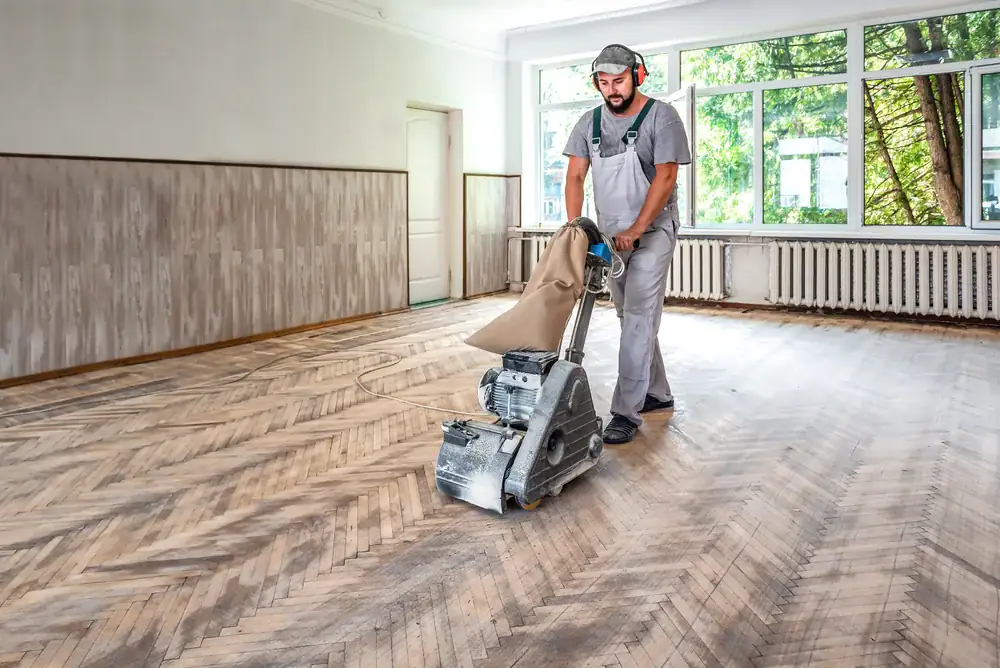
But there’s a catch. Many homeowners don’t realize that one of the biggest dust bombs you can set off in your house is traditional hardwood floor sanding. The process of refinishing old floors by sanding them down creates an unbelievable amount of fine, invasive wood dust. This isn’t just a small mess; it’s a major air quality problem.
That fine dust gets everywhere. It coats every surface, finds its way into your HVAC system, and can linger in the air for weeks after the job is supposedly done. In fact, studies show traditional floor sanding can spike wood dust levels up to a shocking 83 mg/m³—a massive leap from the recommended safe exposure limit of just 1 mg/m³. A modern, cleaner approach isn’t just a luxury; it’s critical for your family’s health.
If you’re tired of the endless cycle of dust that worn floors and carpets create, Buff & Coat can provide an honest assessment of your flooring.
Call 804-392-1114 or request a free estimate today.
The Modern Solution: Dustless Floor Refinishing
You’ve tackled the dust on your shelves, in the air, and even in your bedding. So what’s left? It might be time to look down at the single largest surface in your home—your floors.
For years, traditional floor refinishing was a homeowner’s nightmare. It meant dealing with a massive, unavoidable dust storm that settled on every surface and lingered for weeks. Fortunately, that’s no longer the case. Modern technology has given us a cleaner, healthier, and far more efficient alternative.
At Buff & Coat, we specialize in dustless floor refinishing. This process completely changes the game for homeowners in Richmond. Instead of letting fine wood dust coat your furniture and infiltrate your HVAC system, we capture it the moment it’s created. It’s not just about convenience; it’s about protecting your home and your family’s health.
The flooring you choose can make a huge difference in your home’s overall dust levels.
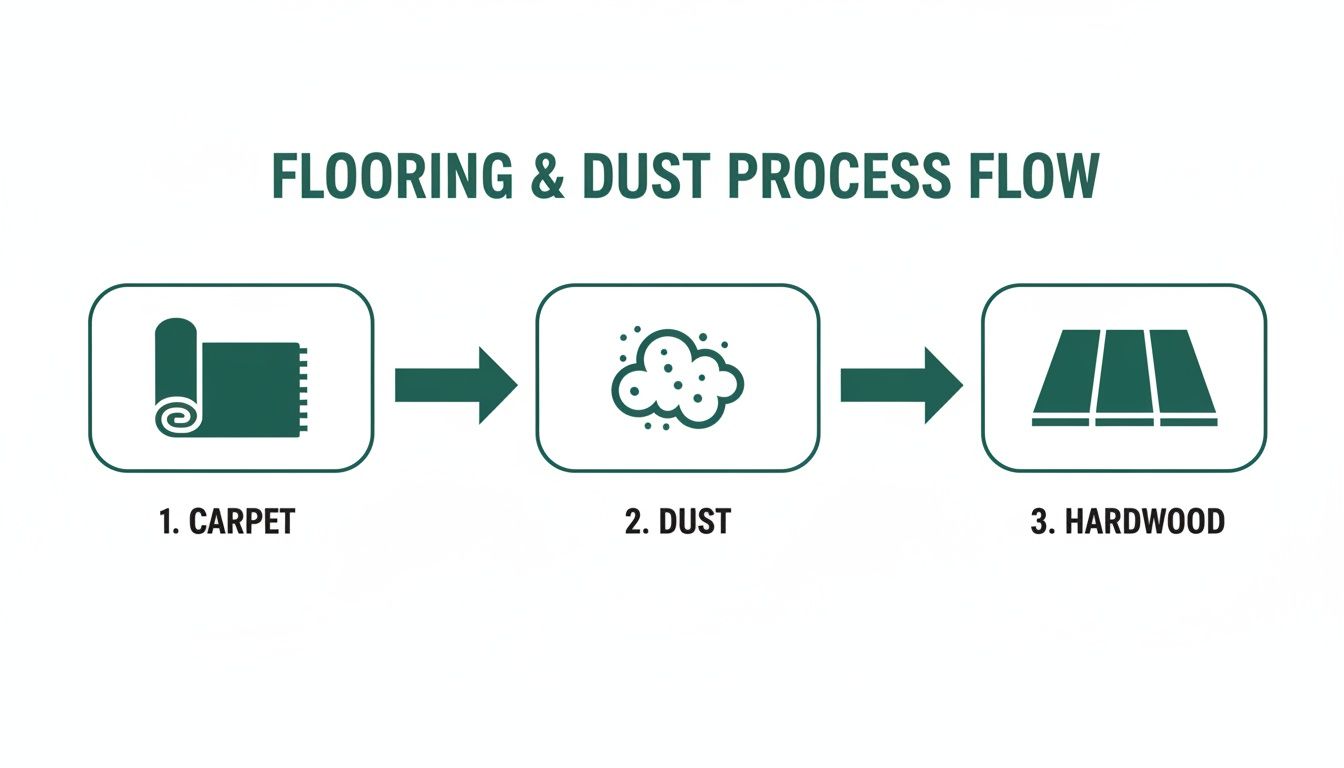
As you can see, old carpets are notorious dust traps. Making the switch to hardwood floors is one of the best ways to break the cycle of dust accumulation for good.
How Our Dust Containment System Works
The old way of sanding floors was messy. Plain and simple. It involved hanging plastic sheets that never quite worked, followed by weeks of finding a fine layer of dust on everything you own. Our approach is built around a powerful, state-of-the-art dust containment system that makes that mess a thing of the past.
Here’s a quick look at how we keep your home clean:
- Direct Connection: Our professional-grade sanding equipment is hooked directly to high-powered vacuum systems with secure hoses. There’s simply no opportunity for dust to become airborne.
- Immediate Suction: As the sander removes the old finish from your floors, the vacuum instantly pulls the wood dust away from the surface and out of the room.
- Advanced Filtration: The dust is then drawn into a sealed containment unit, often located outside in our work vehicle, which uses HEPA filters to trap even the finest particles.
This closed-loop system is incredibly effective, capturing over 99% of the dust generated right at the source. For homeowners in Richmond, VA, this means a totally stress-free refinishing experience. You won’t come home to a house covered in grime, and you won’t have to worry about lingering particles trashing your air quality.
Want to learn more? Check out our complete guide to dustless floor refinishing to see how it transforms the entire process.
The Clear Benefits for Your Home and Health
The difference between traditional and dustless methods is staggering. It’s not just a minor improvement; it’s a completely different experience. Let’s look at the side-by-side comparison.
Traditional Sanding vs Dustless Refinishing
| Feature | Traditional Sanding | Buff & Coat Dustless System |
|---|---|---|
| Airborne Dust | Extreme levels of dust coat everything. | Over 99% of dust is captured at the source. |
| Cleanup Required | Extensive. Days or weeks of wiping surfaces. | Minimal to none. Your home stays clean. |
| Air Quality | Poor. Lingering dust particles for weeks. | Excellent. No airborne contaminants left behind. |
| Convenience | Must vacate the home and seal off rooms. | You can often stay in your home during the process. |
| Health Impact | Can trigger allergies, asthma, and respiratory issues. | Protects your family from harmful wood dust. |
A properly sealed hardwood floor is one of the easiest surfaces to keep clean. It doesn’t harbor the dust mites, pet dander, and other allergens that get trapped deep within carpet fibers. Our dustless refinishing process ensures you get all the benefits of clean, beautiful hardwood without the massive headache.
A fresh, durable finish not only looks fantastic but also seals the wood’s pores. This creates a smooth, non-porous barrier that prevents dust from settling into the grain, making your weekly cleaning routine faster and much more effective. Think of it as a long-term investment in a cleaner, healthier home.
Why Richmond Homeowners Choose Buff & Coat
For over 15 years, we’ve been helping homeowners across the Greater Richmond area finally put an end to dusty, worn-out floors. When our clients call us, they’re not just getting a refinished floor; they’re getting a cleaner, healthier home and the kind of peace of mind that only comes from working with a local team you can trust.
When you’re ready to solve your flooring problems for good, you need a partner who understands Richmond homes inside and out. We built our reputation on quality workmanship and doing things the right way, every single time.
Here’s why your neighbors in Richmond, Midlothian, and Chesterfield choose us:
- 15+ Years in Business: We aren’t a big, faceless franchise. We’re a local, owner-operated business that understands the unique needs of Central Virginia homes.
- Dustless Sanding Systems: Keeping your home clean is our top priority. We use powerful, state-of-the-art vacuum systems that capture over 99% of dust at the source, protecting your family and your air quality.
- High-Quality Finishes: We only work with professional-grade, low-odor finishes that are tough enough for daily life. Your floors won’t just look great—they’ll stay that way for years.
- Clear Pricing and Honest Advice: No games, no hidden fees. You’ll get a straightforward estimate and expert recommendations you can actually rely on.
- 5-Star Customer Service: We treat your home like it’s our own, with clear communication and respect from start to finish.
Common Questions About Dust and Floor Refinishing
When homeowners start connecting the dots between household dust and their hardwood floors, a lot of the same questions pop up. As a team that’s been in hundreds of Richmond-area homes, we’ve heard them all. Here are the clear, straightforward answers you’re looking for.
How effective is dustless sanding at controlling dust?
It’s not just a marketing gimmick—it’s a completely different experience. Our dustless sanding system is a true game-changer, capturing over 99% of the fine wood dust that sanding creates.
Traditional sanding is notorious for leaving a layer of gritty dust on every single surface in your home. Our system avoids that mess entirely by connecting high-powered, HEPA-filtered vacuums directly to the sanding equipment. The dust is captured the instant it’s created, never even getting a chance to go airborne.
What you get is a clean worksite during the project and, more importantly, no lingering mess for you to clean up for weeks afterward.
Can refinishing my hardwood floors actually help with my allergies?
Yes, absolutely. It can make a huge difference. Over time, hardwood floors develop tiny scratches, grooves, and gaps between the boards. Even a worn-out finish becomes porous. All of these imperfections are perfect little traps for dust, pollen, pet dander, and other allergens that make you sneeze and sniffle.
When we refinish your floors, we sand away that old, compromised surface and lay down a fresh, durable, and seamless seal.
Key Takeaway: A properly sealed hardwood floor is smooth and non-porous. Allergens have nowhere to hide, making them easy to remove with a simple dust mop or vacuum. This can dramatically improve your home’s indoor air quality.
This is why sealed hardwood is always a superior choice for allergy sufferers compared to carpet, which can trap allergens for years, no matter how much you vacuum.
Is a buff and coat service enough to reduce dust from worn floors?
A buff and coat service is a fantastic maintenance option for floors that are looking a bit dull and tired but aren’t deeply damaged. The process involves lightly abrading (or “screening”) the top layer of the existing finish to rough it up just enough for a new topcoat to adhere properly.
It absolutely helps. By resealing the floor, it closes up those microscopic pores in the old finish and makes the surface smooth and easy to clean again. However, a buff and coat won’t fix deep scratches, gouges, or gaps where dust and dirt love to collect.
If your floor’s issues are purely superficial, a buff and coat is a great, cost-effective solution. For anything more significant, a full dustless sanding is the right long-term fix.
How should I prepare my home for a dustless refinishing service?
Our system is designed to minimize disruption, but a little prep work on your end helps everything go off without a hitch. We just ask homeowners to take care of a few things before our crew arrives:
- Clear the Room: All furniture, rugs, and other items need to be moved out of the rooms we’ll be working in.
- Secure Wall Hangings: It’s a good idea to take down pictures, mirrors, and fragile décor from the walls in the work area and adjacent rooms. The sanding equipment can create subtle vibrations.
- Plan for Pets and People: Please make sure pets are secured in a separate area of the home. You’ll also need to plan to stay off the floors while the finish is being applied and cured, so think about foot traffic patterns ahead of time.
That’s it. We handle the rest. You won’t need to spend hours draping plastic over your cabinets or furniture—our dustless system makes the whole process that clean and simple.
Ready to restore your hardwood floors? Buff & Coat makes the process fast, clean, and stress-free.
Call 804-392-1114 or request your free estimate today.