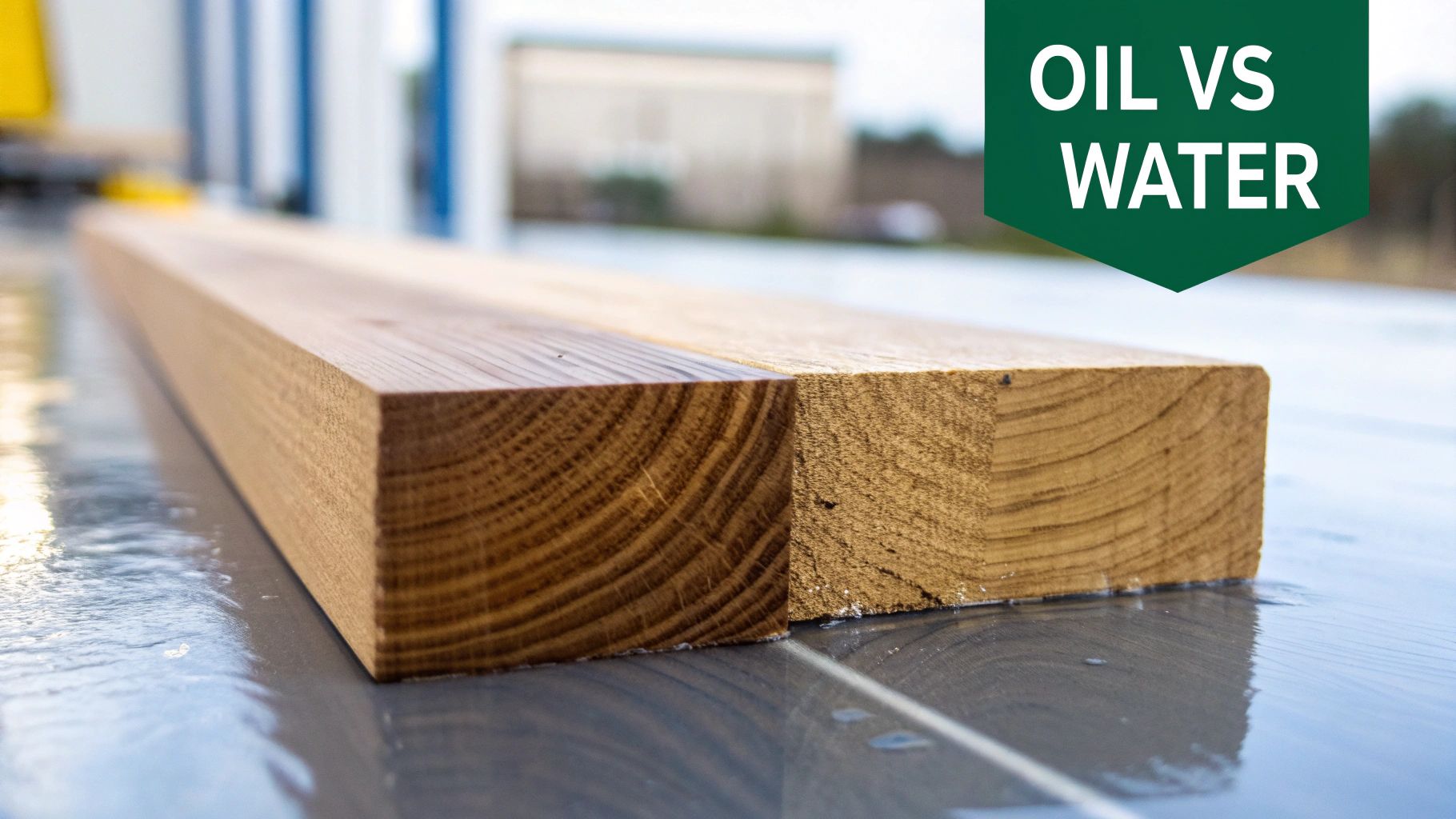
When you’re refinishing hardwood floors, one of the biggest choices you’ll make is the polyurethane finish. It’s a classic showdown: oil-based versus water-based. For Richmond homeowners, understanding the difference between oil and water based polyurethane is key to getting floors that not only look great but also fit your lifestyle. Oil-based polyurethane gives floors that classic, rich, amber glow that deepens over time, but it comes with strong fumes and a long cure time. On the other hand, water-based polyurethane dries crystal clear, keeping your wood’s natural color intact, and it cures quickly with very little odor.
Choosing Your Hardwood Floor Finish: A Crucial Decision
For homeowners here in Richmond, picking the right finish for a hardwood floor refinishing project is a major decision. It’s not just technical jargon—it directly impacts your floor’s final color, how it holds up to daily life, and the air quality in your home during the process.
This guide is here to cut through the confusion. We’ll start with a simple comparison to lay out the main distinctions, making it easier to match the right finish to your home and your priorities.
Quick Comparison: Oil-Based vs. Water-Based Polyurethane
Here’s a quick look at how these two finishes stack up. Think of it as your cheat sheet for making an informed decision.
| Characteristic | Oil-Based Polyurethane | Water-Based Polyurethane |
|---|---|---|
| Final Color | Imparts a warm, amber tone; yellows with age. | Dries crystal clear; non-yellowing. |
| Dry/Cure Time | Slow: 24 hours to walk, 30 days to fully cure. | Fast: 4-6 hours to walk, 7 days to fully cure. |
| Odor/VOCs | High; strong solvent smell that lingers. | Low; minimal odor that dissipates quickly. |
| Durability | Excellent scratch resistance; slightly softer and more flexible. | Excellent scratch resistance; harder and more brittle. |
| Sheen Levels | Typically available in fewer sheen options. | Wide range of sheens, including popular matte and satin. Learn more about the different looks you can achieve with a high gloss floor finish. |
| Cost | Lower material cost per gallon. | Higher material cost per gallon. |
This simple chart makes it clear that your priorities—be it speed, color, or cost—will steer you toward one or the other.
This simple decision tree can help you quickly identify which finish might be right for you based on your primary aesthetic goal.
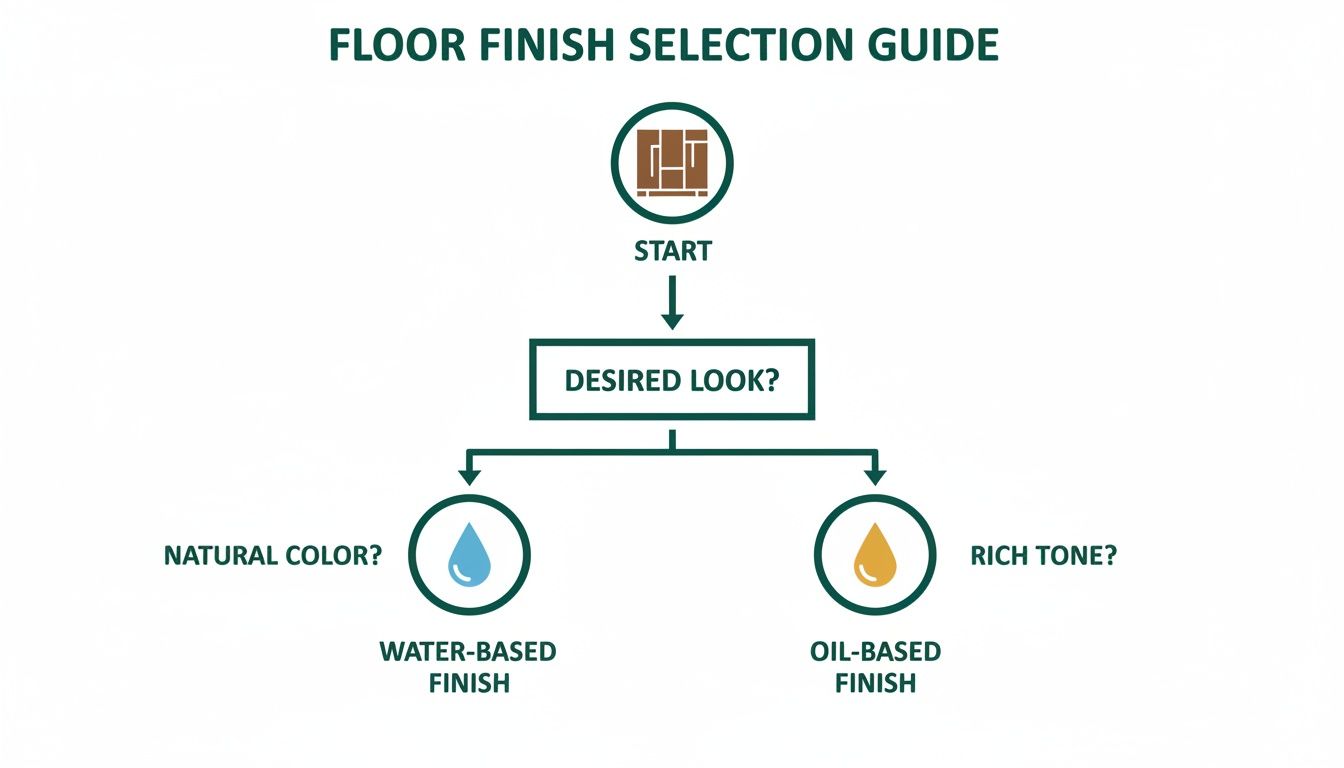
Ultimately, the choice hinges on whether you prefer the traditional, rich warmth of an oil-based finish or the clean, modern look of a water-based product that lets the wood’s true character shine through.
How Each Polyurethane Actually Protects Your Wood
To truly understand the difference between oil- and water-based polyurethane, you have to look at how they work on a chemical level. It’s not just about the smell or the dry time; the core chemistry of each finish is what dictates how it defends your hardwood floors from daily life.
Oil-based polyurethane is the old-school classic for a reason. It uses petroleum-based solvents, which makes the liquid thicker. When our team at Buff & Coat applies it, this finish doesn’t just sit on top of the wood—it sinks right in.
That deep penetration is its secret weapon. Oil-based poly seeps into the wood grain and hardens from the inside out, creating a tough, resilient, and surprisingly flexible shell. Think of it as a deep conditioner that solidifies, making the wood itself more resistant to dings, dents, and scratches.
How Water-Based Polyurethane Creates a Surface Shield
Water-based polyurethane is the modern answer. It uses water as its main solvent, resulting in a much thinner formula. Unlike its oil-based cousin, it doesn’t soak deep into the wood fibers.
Instead, it forms a crystal-clear, hard protective layer right on the surface. This creates an incredibly durable topcoat that acts like a shield against wear. While it was once seen as the weaker option, today’s professional-grade, two-component water-based finishes have essentially closed the durability gap. Many homeowners in Richmond also love how this clear layer preserves the natural, unstained look of woods like maple or ash. In fact, some modern finishes offer extreme durability, as seen in options like UV-cured coatings for wood floors.
Key Takeaway: Oil-based protects by penetrating and hardening the wood itself. Water-based protects by forming a hard, clear film on top. This one difference is the reason for all the others, from durability to final appearance.
The proven performance of oil-based finishes has kept them relevant, especially for demanding jobs like hardwood floor refinishing. The global oil-based polyurethane market was valued at USD 2.5 billion and is expected to climb to USD 4.5 billion by 2034. Pros have long trusted it for its amazing adhesion, chemical resistance, and sheer toughness, making it a traditional choice for high-traffic floors.
The Real Secret to a Lasting Finish: Surface Prep
Here’s the thing, though: it doesn’t matter which chemistry you choose if the floor isn’t prepped right. The success of any hardwood floor repair or refinishing project in Richmond, VA, comes down to creating the perfect canvas for the polyurethane to grab onto.
Meticulous surface prep is non-negotiable. When our team at Buff & Coat brings in our dustless sanding systems, we’re not just stripping off the old finish. We are creating a smooth, clean, and perfectly profiled surface that allows either type of polyurethane to form a powerful, lasting bond. This is what prevents peeling, bubbling, and premature failure down the road. If you want to dive deeper into the basics, this is a great guide on how to properly prep surfaces for finishing.
Comparing Durability for Real-World Scenarios
How your newly refinished floors stand up to daily life is, without a doubt, the most critical factor. For any homeowner, durability isn’t just a buzzword—it’s about how the floor survives dog claws, dropped toys, and the tracked-in grit from a rainy Richmond day. This is where the choice between oil- and water-based polyurethane becomes a very practical, everyday concern.
For decades, oil-based polyurethane was the undisputed champion of durability. Its softer, more flexible film is fantastic at absorbing impacts, making it incredibly resistant to scratches and scuffs. This quality made it the go-to finish for high-traffic areas for a long time.
But let’s be clear: the game has changed. Modern, professional-grade water-based formulas have all but closed that performance gap.
Scratch Resistance and Hardness
The real difference in durability comes down to a classic trade-off: hardness versus flexibility. Oil-based finishes are softer and more pliable, while water-based finishes cure to a much harder shell.
- Oil-Based Flexibility: Think of it like a tough leather work boot. It can take a lot of scuffs and abuse without tearing because it has some give. This makes it excellent at hiding minor scratches from pets or furniture.
- Water-Based Hardness: This is more like a sheet of tempered glass. It’s incredibly hard and tough to scratch on the surface, but a really sharp, direct impact could potentially leave a more noticeable mark.
For most Richmond homes, especially those with big dogs or active kids, a high-quality, two-component water-based finish often provides better scratch resistance for day-to-day wear and tear.
Real-World Scenarios in Richmond Homes
Let’s put this into practice with situations we see constantly in neighborhoods from Midlothian to Mechanicsville.
Scenario 1: The Busy Family Kitchen
A kitchen floor has to endure non-stop foot traffic, scraping chair legs, and plenty of spills. In this environment, a modern water-based finish shines. Its hard surface resists micro-scratches and is less vulnerable to chemical damage from common household cleaners.
Scenario 2: The Entryway with Pets
Your front door is the frontline against dirt, gravel, and wet paws. While an oil-based finish is great at resisting deep gouges, the superior surface hardness of a professional water-based product can better handle the abrasive grit and frantic scratching from an excited pet. You can dig deeper into strategies for protecting floors in high-traffic areas in our detailed guide.
Our Expert Take: For the vast majority of homes, a premium two-component water-based polyurethane offers the best all-around package of scratch resistance, clarity, and convenience. The technology has come so far that the old belief of “oil is always tougher” just isn’t the full story anymore.
Protection Against Spills and Stains
Once fully cured, both finishes do an excellent job protecting against water and household spills. The differences are subtle but important. Oil-based polyurethane can sometimes be more prone to staining from certain liquids if they aren’t wiped up quickly.
Water-based finishes create a non-porous top layer that’s generally easier to clean and more resistant to chemical etching from spills. This makes it a very strong contender for dining rooms and kitchens, where accidents are bound to happen.
If you’re unsure whether your hardwood floors need refinishing, Buff & Coat can take a look and give you honest recommendations. Call 804-392-1114 or request a free estimate today.
Color, Sheen, and the Final Look of Your Floors
Beyond durability, the finish you choose is the final word on your floor’s appearance. For many Richmond homeowners, this is the most important part of the decision, as it sets the entire mood for a room. The biggest difference between oil- and water-based polyurethane is how each one interacts with the natural color of your wood.
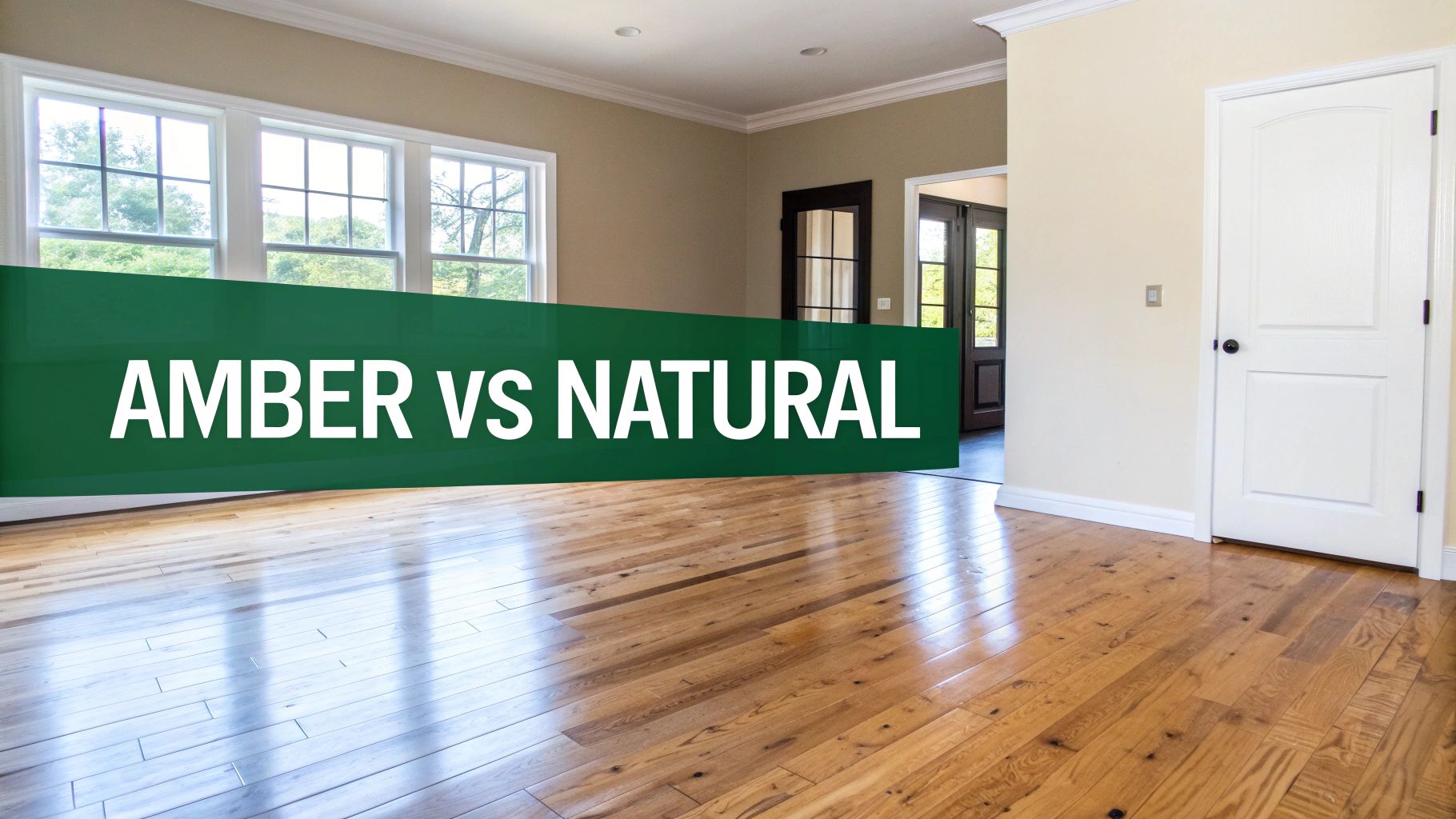
Oil-based polyurethane is famous for the warm, amber glow it gives to wood. This isn’t a minor tint; it’s a rich, deep effect that enhances the wood’s natural tones. If you have a classic Richmond home with traditional red oak or cherry floors, this can be a beautiful choice, adding a layer of visual warmth that gets even richer with age.
The Clear Choice for Natural Wood Tones
On the other hand, water-based polyurethane is designed to be crystal clear. Its biggest selling point is its neutrality—it won’t change the color of the wood at all. This is a huge advantage for homeowners who want to preserve the true, unaltered beauty of their hardwood.
If you have light-colored woods like maple or birch, or if you’ve picked out a custom gray or whitewashed stain, water-based polyurethane is the only finish that will keep that color true. It’s a non-yellowing finish, which means your floors will look the same in five years as they do the day they’re finished. This makes it the perfect partner for modern, Scandinavian, or minimalist designs you see in renovated homes from Short Pump to the Fan.
Expert Insight: Think of it this way—oil-based polyurethane is like looking at your floors through a warm, slightly tinted lens. Water-based is like looking through a perfectly clean pane of glass. One adds character, the other preserves it.
Sheen Levels and How They Shape a Room’s Vibe
Both finishes come in a range of sheen levels, which just means how much light the floor reflects. The sheen you pick works together with the finish type to create the final look.
- Matte & Satin: These low-reflection sheens are incredibly popular because they’re great at hiding minor flaws, dust, and pet hair. A satin water-based finish on white oak creates a soft, organic, and modern feel. An oil-based satin finish gives you that same amber warmth but with a more subdued, less glossy look.
- Semi-Gloss: This is your classic, middle-of-the-road option. It offers a noticeable shine without being too reflective, making it a solid choice for just about any room or wood type.
- High Gloss: A high-gloss finish creates a mirror-like surface that bounces a ton of light around. While it can make a dramatic statement, it also puts every speck of dust and tiny imperfection on full display.
The combination of color and sheen really matters. An oil-based, high-gloss finish will make a room feel traditional and radiant, while a water-based matte finish gives it an airy, contemporary vibe. When we do consultations in the Richmond area, we always talk about how the natural light in a specific room will play with these choices to make sure the end result is exactly what the homeowner envisioned.
If you’re not sure how these finishes will look in your home, Buff & Coat can give you honest, expert recommendations based on your wood type and lighting. Request a free estimate and let’s talk about your options.
Evaluating Practical Factors Like Fumes and Downtime
The final look of your floors is a huge deal, but let’s be honest—what your family has to live through during the refinishing process is just as important. This is where the practical differences between oil and water-based polyurethane really hit home, especially when it comes to fumes, health, and how long your life gets turned upside down. For many Richmond homeowners, these factors are the real tiebreaker.
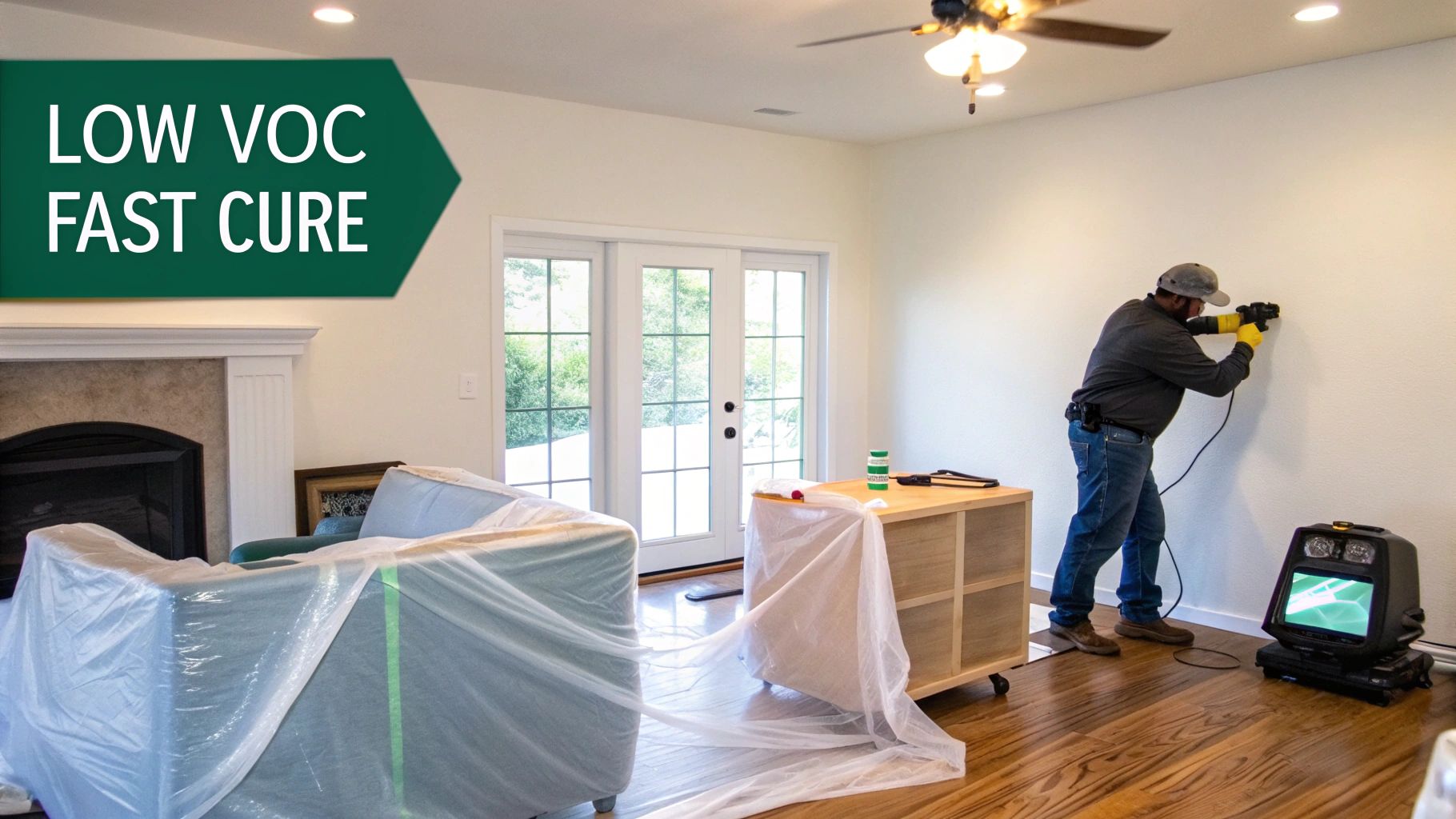
Oil-based finishes are loaded with Volatile Organic Compounds (VOCs). These are the solvents responsible for that intense, chemical smell that seems to linger for days. It’s more than just an unpleasant odor; it demands serious ventilation and often means your family—especially kids, pets, or anyone with respiratory issues—will need to find another place to stay for a while.
Water-based polyurethane, on the other hand, is a low-odor or VOC-free product. The smell is minimal, often compared to a fresh coat of paint, and it disappears quickly. This makes it a much healthier choice for your home’s indoor air quality and is far less disruptive for day-to-day life.
Understanding Project Timelines and Cure Rates
If there’s one practical advantage that stands out, it’s speed. Water-based polyurethane dramatically shortens the timeline for a floor refinishing project in Richmond VA, getting you back to your normal routine much, much faster.
Let’s break down a typical refinishing timeline comparison:
- Recoat Time: Water-based finishes are ready for another coat in just 2-4 hours. Oil-based poly needs a full 12-24 hours between coats, easily adding extra days to the project.
- Foot Traffic: You can walk on water-based floors (with socks on!) in about 4-6 hours. With oil-based, you’ll need to wait at least 24 hours before anyone can set foot on it.
- Full Cure: This is the big one—when you can finally move furniture back and unroll your rugs. Water-based poly is typically fully hardened and ready for normal life in about 7 days. Oil-based can take up to 30 days to completely cure.
For a busy family in Chesterfield or Midlothian, that’s a night-and-day difference. A water-based project means getting your living room back in a week. An oil-based project could mean a full month of carefully tiptoeing around your new floors.
The Buff & Coat Advantage: We pair low-odor, water-based finishes with our advanced dustless sanding systems. This combination creates the cleanest, healthiest, and least intrusive refinishing experience possible, minimizing both airborne dust and chemical fumes.
The Shift Toward Healthier Finishes
The industry is moving decisively toward healthier, faster-curing options. Water-based polyurethane coatings are the fastest-growing segment in the market, a trend fueled by environmental regulations and homeowners who are demanding better indoor air quality.
This market is projected to grow from just under US$ 2 billion to over US$ 3 billion by 2032, which shows a clear preference for safer, more convenient products. You can find more details about this market trend and its drivers in recent industry analysis. For homeowners who want a quick, low-impact project without sacrificing durability, the choice is becoming obvious.
If you’re concerned about downtime and fumes, Buff & Coat can walk you through the benefits of a low-VOC, water-based refinishing system. Call 804-392-1114 or request a free estimate today.
Breaking Down the Costs and Professional Application
When you’re planning your hardwood floor restoration, the budget is always front and center. Homeowners often get tripped up on the refinishing cost difference between oil and water-based polyurethane because it’s not as simple as the price per gallon. Let’s break down the real costs so you can make a smart financial decision for your home.
On paper, oil-based polyurethane looks like the clear winner for anyone trying to save a buck. A gallon of oil-based finish is almost always cheaper than its water-based cousin. But that’s just the sticker price, not the total project cost.
A Deeper Look at Project Costs
Here’s the twist: water-based polyurethane, despite its higher material cost, often ends up costing the same or even less for the entire job. Why? It all comes down to one thing: time is money.
- Faster Application: Water-based finishes dry in a couple of hours, not a full day. This lets a professional crew apply multiple coats in a single visit.
- Reduced Labor: Fewer days on the job means fewer labor hours on your invoice. That efficiency can easily wipe out the higher cost of the materials.
- Quicker Return to Home: Because the floors cure so much faster, you get your space back sooner. That means less disruption and fewer of those indirect costs, like eating out or staying in a hotel.
For any floor refinishing Richmond VA project, we give you a clear, itemized quote that shows exactly how these factors play into the final price. No surprises.
Why Professional Application is Essential
I know the temptation to DIY is strong, but applying polyurethane is one of those jobs best left to the pros, especially with today’s advanced formulas. Water-based finishes, in particular, are famously unforgiving. They dry so fast that there’s zero room for error. An inexperienced hand can easily leave behind bubbles, streaks, and an uneven sheen that kills the look of your floors and compromises their durability.
A professional application isn’t just about making the floor look good; it’s about ensuring the protective layer is applied evenly and at the correct thickness to provide maximum longevity. This is what protects your investment.
The demand for high-quality coatings is only getting bigger. The global polyurethane coating market, currently valued at USD 21.13 billion, is expected to hit USD 32.43 billion by 2032. This growth means professional contractors like Buff & Coat have access to the absolute best products, which helps us deliver superior results that actually last. You can find more info on the global polyurethane coating market and its trends.
Hiring the best hardwood floor contractor Richmond has to offer is the only way to guarantee that flawless, durable finish that adds real value to your home.
If you’re ready to see how a professional refinishing can transform your floors, Buff & Coat is here to help. Richmond homeowners: get a fast quote for refinishing or recoating.
Why Richmond Homeowners Choose Buff & Coat
Choosing the right finish for your hardwood floors is a big decision, and it’s one that requires real expertise. At Buff & Coat, we bring over 15 years of hands-on experience to every single project here in the Richmond area—from the historic homes in The Fan to the newer builds out in Short Pump. We don’t just sell you a service; we give you honest, straightforward advice to help you pick the finish that truly fits your home, your lifestyle, and your budget.
- 15+ Years in Business: We are a trusted, established presence in the Richmond community.
- Dustless Sanding Systems: Our advanced equipment keeps your home clean and minimizes airborne particulates for a healthier process.
- Local, Owner-Operated: You work directly with a dedicated team that cares about our local reputation and your satisfaction.
- High-Quality Finishes: We use only professional-grade, durable products that stand the test of time.
- Clear Pricing and Honest Advice: We provide transparent estimates and recommendations you can trust.
- 5-Star Customer Service: Our commitment to quality workmanship and a positive customer experience is our top priority.
Ready to restore your hardwood floors? Buff & Coat makes the process fast, clean, and stress-free. Call 804-392-1114 or request your free estimate today.
FAQ: Your Top Questions About Polyurethane Finishes
Here are the clear, straightforward answers to the questions we hear most often from Richmond homeowners about the difference between oil and water based polyurethane.
Which Polyurethane Is Tougher for Pets and Kids?
While oil-based polyurethane has a long-standing reputation for being tough, modern water-based finishes have seriously closed the gap. For a busy household with pets and kids, a professionally applied, two-component water-based finish is an exceptional choice. These advanced formulas offer outstanding hardwood floor scratch repair qualities that often meet or even exceed their oil-based counterparts—all without the harsh fumes and long refinishing timeline.
Can You Put a Water-Based Finish Over an Old Oil-Based One?
Yes, this is a very common part of our wood floor recoating service, but the success of the project hangs on proper surface prep. This is not a step you can rush or skip. The existing oil-based finish must be thoroughly cleaned and then lightly abraded (scuff-sanded). This creates a critical mechanical bond that allows the new water-based topcoat to grab on securely. Without this step, the new finish will inevitably start to peel. It’s important to know, however, that we do not recommend applying oil-based polyurethane over a water-based finish.
How Long Does Refinishing Take?
This is one of the biggest practical differences and a huge factor for families. The downtime is night and day. With a water-based finish, you can typically walk on the floors with socks in about 4-6 hours. In contrast, an oil-based finish requires a minimum of 24 hours before light foot traffic. The full cure time—when you can safely bring back furniture and rugs—is also much shorter for water-based (around 7 days) compared to oil-based (up to 30 days).
Does Richmond’s Humidity Affect the Finishing Process?
Absolutely. High humidity can slow down the drying and curing times for any finish, which can compromise the final result if not managed correctly. As experienced local contractors, we know how to adjust our application process to account for Richmond’s climate, ensuring a perfect bond and a flawless surface. The faster initial drying of water-based polyurethane is a major advantage during our humid summers, as it shrinks the window of time for dust and debris to settle onto the wet finish.
If you’re still not sure which finish is right for your home, Buff & Coat Hardwood Floor Refinishing can give you an expert assessment and an honest recommendation. Give us a call or visit us online. https://buffandcoatvirginia.com