For landlords in Richmond, the best flooring for a rental property is almost always Luxury Vinyl Plank (LVP). It hits the perfect balance of durability, water resistance, and cost-effectiveness. LVP stands up to heavy foot traffic, pets, and Virginia’s humidity, making it a smart, low-maintenance investment that minimizes turnover costs and boosts tenant appeal.
Choosing the Right Flooring for Your Richmond Rental
As a landlord in Richmond, VA, selecting the right flooring is a critical business decision that directly impacts your bottom line, maintenance calls, and how quickly you can fill a vacancy. The ideal choice must be tough enough for frequent move-ins, resilient against our humid climate, and ultimately, deliver a strong return on your investment. This guide offers a real-world analysis of the top contenders.
We’ll examine how materials like LVP, hardwood, and laminate perform in actual rental situations. Our goal is to help you make a strategic choice that reduces vacancy time and adds long-term value to your property.
Key Factors for Landlord Decision-Making
Before diving into specific materials, let’s establish what truly matters for a rental property. While a homeowner might prioritize unique aesthetics, a landlord’s focus is on practicality and profitability.
- Durability and Longevity: How well will the floor handle scratches from moving furniture, pet claws, and multiple tenants over the years?
- Cost vs. ROI: What is the total cost of ownership? Look beyond the initial price to include installation, repairs, and whether the upgrade can justify a rent increase.
- Maintenance and Repairs: How easy is it to clean between tenants? Crucially, can you repair a small damaged section, or are you forced to replace the entire floor?
- Tenant Appeal: Does the flooring look modern, clean, and inviting? High-quality flooring helps attract desirable, long-term tenants.
Ultimately, choosing the best flooring is a core part of your tenant attraction and retention strategy. You can learn more about how to market rental properties effectively to make sure your investment pays off.
Quick Comparison of Top Rental Flooring Options
Here’s a quick-glance table to help you compare the most popular flooring options for rental properties in the Richmond area. This is a starting point to help you narrow down your choices before we explore the specifics of each material below.
| Flooring Type | Durability Rating (1-5) | Average Cost/Sq. Ft. (Installed) | Moisture Resistance | Best For |
|---|---|---|---|---|
| Luxury Vinyl Plank (LVP) | 5 | $3 – $7 | Excellent | High-traffic areas, kitchens, basements |
| Solid Hardwood | 4 | $8 – $15 | Low | Higher-end rentals, historic homes |
| Engineered Hardwood | 4 | $6 – $12 | Moderate | Living areas, bedrooms, basements |
| Laminate | 3 | $3 – $6 | Moderate | Low-traffic areas, budget properties |
| Tile (Ceramic/Porcelain) | 5 | $7 – $20 | Excellent | Bathrooms, kitchens, entryways |
This table clearly shows why LVP has become the go-to choice for so many property owners. It offers the best all-around performance for its price point. The market trend reflects this, with resilient flooring like LVP being the fastest-growing segment, driven by property managers who need scratch-resistant floors that are inexpensive to repair one plank at a time.
Analyzing Top Rental Flooring Materials
Choosing the right flooring isn’t just about aesthetics—it’s about making a smart business decision that pays off for years. As a landlord in Richmond, you need a material that can withstand tenant turnover, pets, and Virginia’s notorious humidity. Let’s break down the most popular options and see how they truly perform in a real-world rental environment.
This chart shows what property managers are actually installing in their units right now.
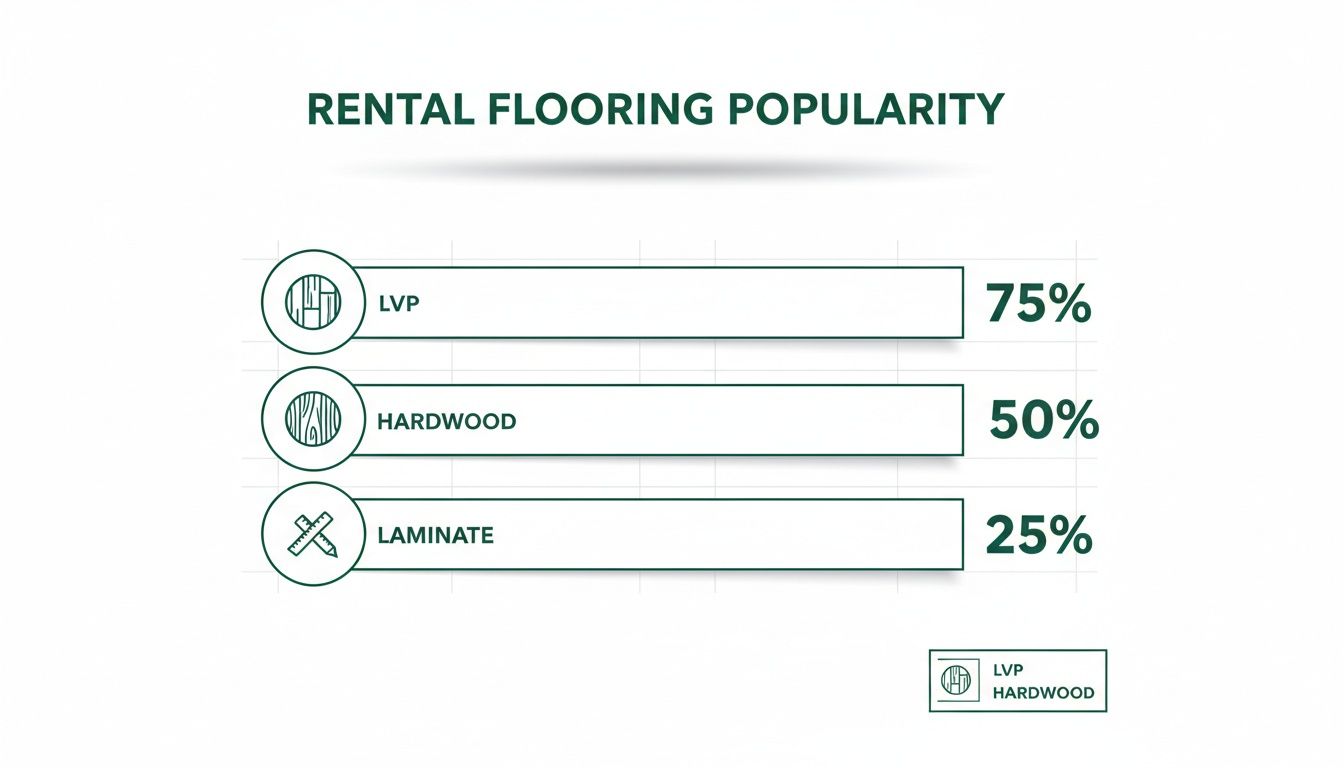
As you can see, Luxury Vinyl Plank (LVP) is the clear front-runner. The majority of landlords choose it for its unbeatable combination of performance and durability.
Luxury Vinyl Plank (LVP): The Landlord’s Favorite
There’s a good reason LVP is the undisputed king of rental flooring. It’s a synthetic material engineered to mimic the look of real wood or stone but with practical benefits that hardwood can’t match in a high-turnover setting.
Modern LVP is impressively realistic, providing a clean, updated look that appeals to a wide range of potential tenants. Its real strength, however, lies in its construction.
Key Performance Factors:
- 100% Waterproof: Unlike any wood-based product, LVP is made from PVC, making it completely impervious to water. This makes it the ideal choice for kitchens, bathrooms, and even basements in older Richmond homes.
- Exceptional Durability: The secret is LVP’s wear layer, a clear topcoat that resists scratches, scuffs, and stains. For a rental, a wear layer of 12 mil or higher is essential for long-term performance.
- Easy Repairs: If a tenant damages a plank, you can often pop it out and replace just that single piece without redoing the entire floor. For a landlord, this is a massive cost-saver.
Expert Insight: When shopping for LVP, focus on the wear layer thickness, not the overall plank thickness. A thicker wear layer provides more protection against the kind of damage that happens during move-ins and move-outs, which is far more important for a rental property’s longevity.
The durability and low-maintenance nature of LVP make it a top choice not just for residential rentals but also in busy commercial settings. You can learn more in our guide to the best commercial flooring options.
Solid and Engineered Hardwood: Classic Appeal with Caveats
Nothing quite matches the timeless appeal of real hardwood floors, especially in Richmond’s historic neighborhoods like The Fan or Church Hill. Hardwood can command higher rent and attract discerning tenants who appreciate quality.
However, as a landlord, you must weigh that appeal against its vulnerabilities in a rental context. Solid hardwood is milled from a single piece of lumber, while engineered hardwood has a real wood veneer over a core of plywood or high-density fiberboard.
Durability and Scratch Resistance:
- Solid Hardwood: Its toughness depends heavily on the wood species (oak is much harder than pine) and the quality of the finish. While it can be sanded and refinished multiple times, it scratches more easily than LVP.
- Engineered Hardwood: Its top veneer is just as susceptible to scratches as solid wood. Critically, most engineered products can only be sanded once or twice in their lifetime, if at all.
For both types of hardwood, water is the primary enemy. Spills, pet accidents, or even high humidity can cause warping, cupping, and permanent staining. While engineered hardwood’s core offers slightly better stability against moisture, neither is a good fit for bathrooms or damp basements.
Laminate: The Budget-Friendly Alternative
Laminate flooring was one of the original wood-look alternatives, and it remains a popular choice for landlords on a tight budget. It’s constructed with a fiberboard core, a high-resolution image layer, and a clear protective coat.
While modern laminate looks much better than it used to, it has a critical flaw in a rental setting that every landlord should understand. Its primary weakness is its core. If water seeps between the planks—which can happen from spills or mopping—the fiberboard core will absorb it, swell, and bubble. This damage is irreversible; the affected planks are ruined and must be replaced.
Key Considerations for Laminate:
- Water-Resistant vs. Waterproof: Most laminate is labeled “water-resistant,” meaning it can handle a small spill if wiped up immediately. It is not waterproof like LVP.
- Scratch Resistance: The top layer is generally tough and holds up well against pet claws and furniture.
- Repairability: Like LVP, individual planks can be replaced, but finding a perfect match can be difficult since product lines are frequently discontinued.
Laminate can be a decent option for bedrooms or living rooms in a budget-friendly property, but its vulnerability to water makes it a risky choice for kitchens or entryways. For most landlords, spending a little more for the peace of mind that comes with waterproof LVP is a worthwhile investment.
Calculating Your Flooring Return on Investment
Choosing new flooring for your Richmond rental property goes beyond aesthetics—it’s a serious financial decision. To find the best flooring, you have to look past the initial price tag and calculate the true return on investment (ROI) over the long term. This means getting real about the total cost of ownership, including installation, repairs, and eventual replacement.
A smart upfront investment can save you thousands in maintenance headaches, unexpected repair bills, and lost rent while you prepare the unit for the next tenant. It’s about striking the right balance between what you pay today and what you get back in durability and tenant appeal tomorrow.
Beyond the Upfront Cost
The initial quote for materials and labor is just the beginning. The hidden costs that emerge over a 10-year period can completely change the ROI calculation.
Let’s break down where those hidden expenses come from for different flooring types:
- Luxury Vinyl Plank (LVP): In terms of total cost of ownership, LVP is tough to beat. Beyond occasional deep cleaning, its biggest financial advantage is its ease of repair. If a tenant damages a plank, you can replace just that single piece, which costs next to nothing compared to a full floor replacement.
- Hardwood: The initial investment is higher, but hardwood can pay dividends for decades. The main long-term expense is refinishing, which a rental property will likely need every 7-10 years. While a real cost, it’s a fraction of what it would take to tear out and replace the entire floor.
- Laminate: Laminate looks appealing on the initial invoice, but it can become a money pit. A single incident—a leaky dishwasher, a pet accident, an overflowing tub—can cause the boards to swell and buckle, forcing a costly and premature replacement of the entire floor.
By factoring in these future expenses, you get a much clearer picture of your investment. LVP often wins for its low-maintenance durability, but well-kept hardwood can deliver an excellent return in the right type of property.
Matching Your Flooring to Your Rental Strategy
Your flooring choice should directly reflect your rental strategy and the tenants you want to attract. What works for a student rental near VCU is vastly different from what’s expected in a historic single-family home in The Fan.
High-Turnover vs. High-End Rentals
- For high-turnover properties (e.g., student housing, apartments): The priorities are durability and cheap, fast repairs. LVP is the undisputed champion here. It can handle constant move-ins and move-outs, and the ability to replace a single plank keeps your maintenance budget predictable and your turnover times short.
- For high-end or historic properties (e.g., single-family homes in Midlothian or Glen Allen): Tenant expectations are different. In these homes, authentic hardwood floors can command premium rent and attract tenants more likely to stay long-term. The character and perceived value of real wood can boost your ROI, justifying the higher maintenance costs.
Calculating the Value of Refinishing
If your property already has hardwood floors, refinishing is one of the highest-ROI improvements a landlord can make. It restores the floor to a like-new condition for a fraction of the cost of replacement, preserving the home’s value and character.
A professional refinishing erases years of scuffs and scratches, allows you to update the stain color to match modern trends, and seals it with a tough protective finish ready for the next tenant. Understanding the numbers is key, and you can get a detailed breakdown by reading our complete guide to hardwood refinishing costs in Richmond. For landlords with existing wood floors, this service is almost always the smartest financial move.
Thinking about the long-term financial health of your rental property means making informed decisions today. If you need help evaluating your current floors or choosing a new installation, Buff & Coat can provide an honest assessment and a clear quote.
Ready to discuss your rental property’s flooring? Call 804-392-1114 or request a free estimate today.
When to Refinish or Replace Existing Floors
If you own an older rental property in Richmond, VA, especially in historic areas like The Fan or Church Hill, you might have a hidden gem: original solid hardwood floors. Before considering ripping them out for a modern alternative, you need to determine if they can be saved. For landlords, this is a significant financial decision, but the right call can save you thousands and preserve the classic Richmond character that tenants value.
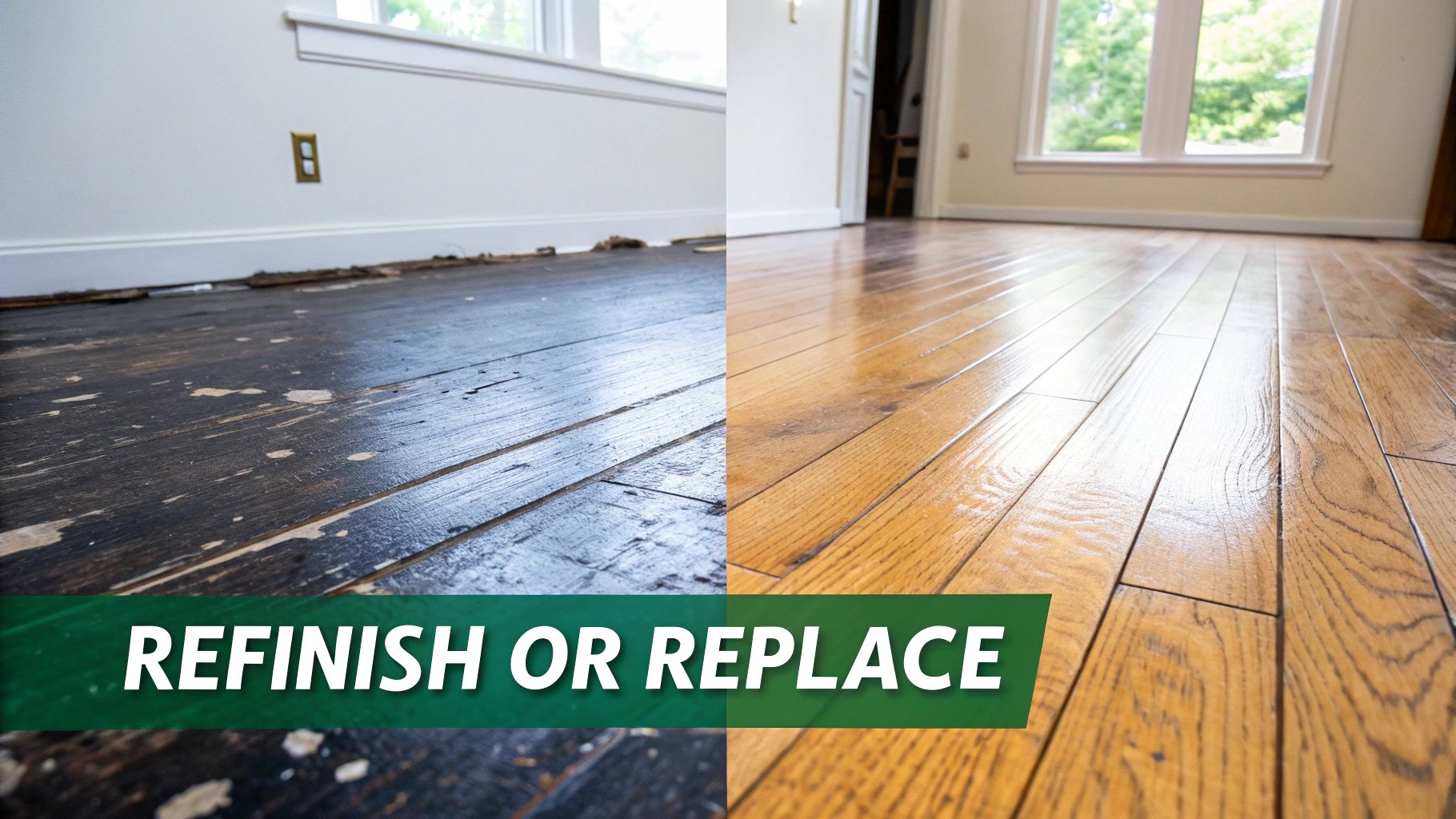
Often, what appears to be a ruined floor is just years of surface-level wear. A professional refinishing can wipe that slate clean. But making the wrong choice—like replacing a perfectly restorable floor—means spending more than necessary for a result that might not be as durable or valuable.
Signs a Floor Can Be Saved with Refinishing
Refinishing is essentially a reset button for your floors. We sand down the tired top layer, removing the old finish and cosmetic damage, then apply a fresh stain and several protective coats. Most solid hardwood can handle this process multiple times, making it an incredible long-term value.
Your floors are almost certainly a candidate for refinishing if the issues are only on the surface.
Look for these common signs:
- Widespread Surface Scratches: The light scuffs and minor scratches from furniture, pets, and daily life almost never penetrate deep into the wood.
- Dull or Worn Finish: If the floor has lost its shine and looks flat, especially in high-traffic areas, the protective topcoat is simply worn away. Refinishing restores that protective barrier and luster.
- Minor Discoloration or Sun Fading: Areas faded by sunlight or previously hidden under rugs can be blended seamlessly with a full sanding and a new, uniform stain.
- Light Water Stains: Minor, pale water marks that haven’t turned the wood black can usually be sanded out completely.
A professional assessment is key. A floor that looks ruined to an untrained eye might just need an expert touch to look brand new again, saving you the massive expense and hassle of a full tear-out.
Red Flags That Point Toward Replacement
While refinishing works wonders, it’s not a magical fix for every problem. Some floors are too far gone to be salvaged. Attempting to refinish a floor with serious structural issues is a poor investment that will only cause headaches for you and your next tenant.
When the damage is deep and irreversible, replacement becomes the only viable option.
Here are the definitive signs that you need to replace:
- Deep Gouges or Missing Planks: Damage that goes far into the wood itself, well beyond what sanding could ever remove.
- Warping, Cupping, or Buckling: When the boards are bent, bowed, or lifted, it’s a clear sign of major, long-term moisture damage, often from the subfloor. This is a structural failure that sanding cannot fix.
- Extensive Pet Stains: Deep, black stains from pet urine are notorious for seeping far into the wood grain. Even aggressive sanding often can’t remove the discoloration and odor completely.
- Previous Aggressive Sanding: If the floors have been refinished too many times, the wood plank itself can become too thin. A telltale sign is seeing the tops of nail heads on the surface of the boards.
How Buff & Coat Helps Landlords Decide
As a landlord, your bottom line is getting a durable, attractive floor for the best possible price. At Buff & Coat, every project begins with an honest, expert assessment. We understand the unique demands of rental properties in the Richmond area and will never push for a costly replacement when a high-quality refinishing is the smarter move.
Our team will carefully inspect the depth of scratches, check for moisture damage, and measure the remaining wood thickness. We’ll provide a clear, straightforward recommendation based on what delivers the most value and longevity for your investment. By learning how to properly refinish hardwood floors, you can see the incredible value this process offers.
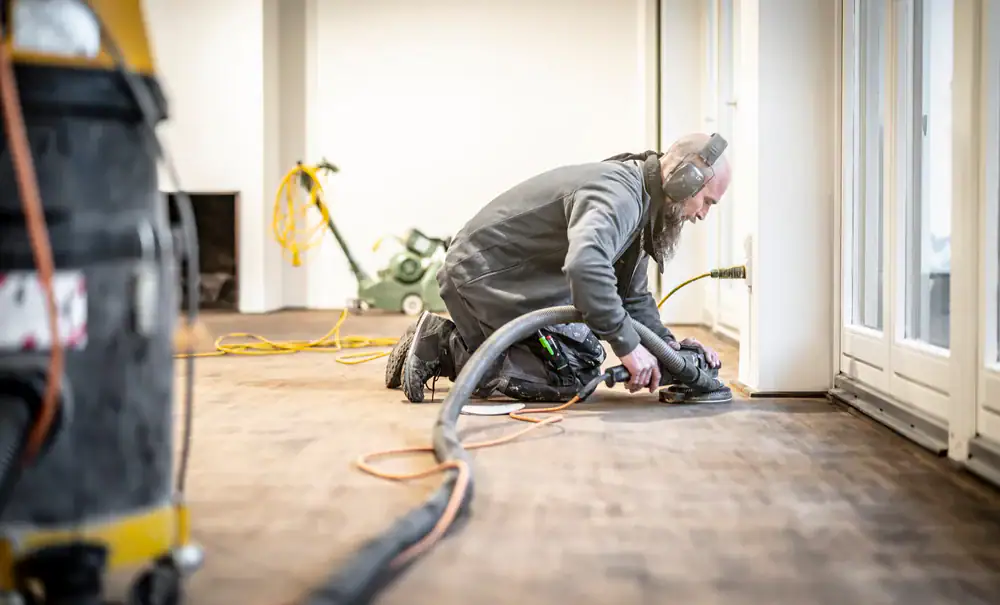
For countless Richmond landlords, our dustless sanding and refinishing service is the most cost-effective way to restore a unit’s appeal and get it back on the market fast.
Unsure if your rental’s floors can be saved? Buff & Coat can take a look and give you an honest recommendation. Call 804-392-1114 for a free, no-obligation estimate.
A Landlord’s Guide to Installation and Maintenance
Selecting the perfect flooring is just the first step. A flawless, tenant-proof floor that lasts depends entirely on two things: a solid installation and a simple maintenance plan. Even the most durable LVP or beautiful hardwood will peel, buckle, or gap if not installed correctly—which will also void the manufacturer’s warranty.
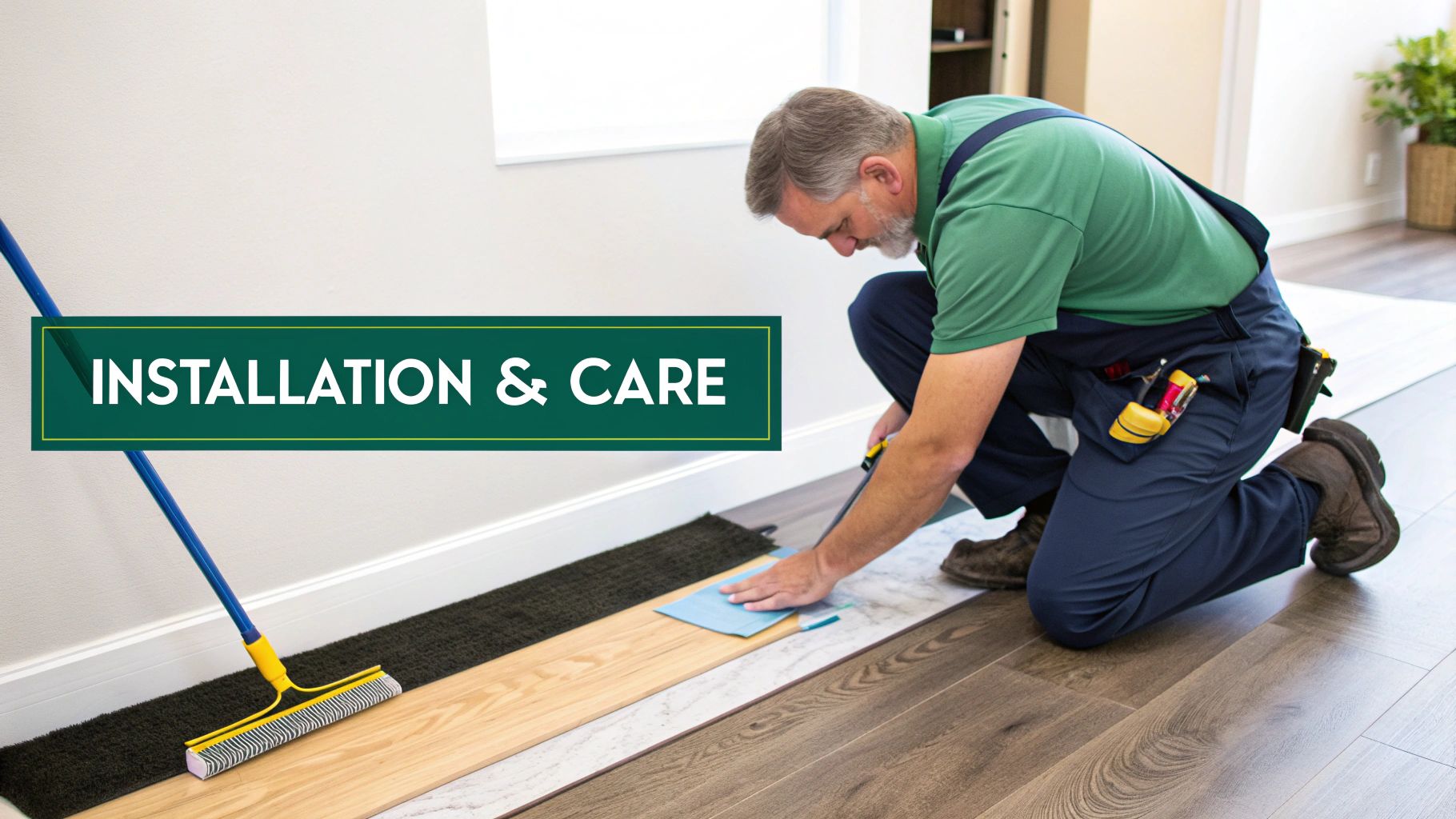
For landlords in the Richmond area, professional installation isn’t a luxury; it’s an investment protection plan. An expert installer ensures the subfloor is perfectly flat, leaves the right expansion gaps for our humid climate, and locks every plank securely. Cutting corners here is a recipe for future problems that will cost far more in repairs.
Why Professional Installation Matters for Rentals
It’s tempting to think a DIY install will save money, but for a rental property, it’s a significant gamble. The constant stress from tenant turnover, moving heavy furniture, and daily foot traffic will quickly expose any installation mistakes.
- Warranty Protection: Most flooring warranties are only valid if the material is installed by a certified professional. If a DIY job fails, you’re on your own.
- Long-Term Performance: A professional has the tools and expertise to handle the unique challenges of Richmond homes, like leveling an old, uneven subfloor. They ensure the floor can expand and contract naturally without damage.
- Speed and Efficiency: A professional crew gets the job done right and fast, minimizing vacancy time and allowing you to resume collecting rent sooner.
At Buff & Coat, we handle both hardwood and LVP installations with the precision your investment deserves. Our focus on quality workmanship means your new floor will perform reliably for years to come, tenant after tenant.
Creating a Simple Maintenance Plan for Tenants
You can’t watch over your tenants, but you can empower them to prevent accidental damage. A simple one-page “Floor Care Guide” provided at move-in can make a significant difference. Planning ahead by understanding typical rental property maintenance costs also helps you budget effectively for the long term.
Your Tenant Checklist Should Include:
- Use the Right Cleaners: Specify a pH-neutral cleaner for LVP and polyurethane-finished hardwood. Be clear: “Do NOT use vinegar, ammonia, or steam mops,” as they will damage the finish.
- Wipe Up Spills Immediately: Even waterproof floors aren’t meant to have liquids sitting on them. Quick cleanups prevent problems.
- Felt Pads are Mandatory: Insist on felt pads for all furniture legs. This is the single easiest and cheapest way to prevent scratches.
- Lift, Don’t Drag: A simple reminder for tenants to lift furniture when moving it can save the floor from deep gouges.
By setting clear, reasonable expectations, you make your tenants partners in protecting your property. A well-maintained floor keeps your repair costs down and ensures the unit remains desirable for the next renter.
If you’re considering a new floor installation for your Richmond-area rental, trust the experts at Buff & Coat to get it done right.
Call 804-392-1114 or request a fast, free estimate.
Why Richmond Landlords Trust Buff & Coat
For over 15 years, landlords across the Richmond area—from Chesterfield to Glen Allen—have relied on Buff & Coat for flooring solutions that make sense for rental properties. We’ve built our reputation on quality workmanship, honest advice, and understanding that for a property owner, flooring is an investment.
Whether it’s a durable LVP installation for a multi-family building or a careful hardwood floor refinishing for a historic rental, our team delivers. As an owner-operated business, we are present on every job, ensuring the work meets our high standards—and yours.
- 15+ Years of Local Experience: We know what works for Richmond’s unique housing stock and climate.
- Dustless Sanding Systems: Our advanced equipment keeps properties clean, enabling faster turnarounds between tenants.
- Owner-Operated: We are personally invested in the quality of every project, big or small.
- High-Quality, Durable Finishes: We use products designed to withstand the wear and tear of rental life.
- Clear Pricing & Honest Advice: We provide straightforward recommendations focused on the best ROI for your property.
- 5-Star Customer Service: We show up on time, communicate clearly, and stand behind our work.
We see ourselves as partners in protecting your investment. Our goal is to give you an honest assessment and deliver high-quality work that helps you attract and retain great tenants. From Midlothian to Mechanicsville, landlords choose us because we make their lives easier.
Ready to restore your rental’s floors? Buff & Coat makes the process fast, clean, and stress-free. Call 804-392-1114 or request your free estimate online.
Your Top Flooring Questions Answered
As flooring experts who work with countless Richmond-area landlords, we hear the same questions time and again. Here are the straightforward answers you need.
What is the most durable and cost-effective flooring for a rental property?
Hands down, for most rental properties in and around Richmond, Luxury Vinyl Plank (LVP) is the best choice. It delivers the ideal combination of durability, 100% water resistance, and overall value that landlords need. LVP is tough enough to handle heavy foot traffic, pets, and spills. Plus, if a tenant damages a plank, you can often replace just that one piece instead of the entire floor—a huge advantage for properties with frequent turnover.
Is putting hardwood floors in a rental property a good investment?
It absolutely can be, but it depends on your specific market. For higher-end Richmond neighborhoods like The Fan or parts of Midlothian, genuine hardwood floors are a major draw that can attract premium tenants and justify higher rent. However, if your rental already has hardwood, refinishing is almost always a smarter financial move than tearing it out. A professional dustless sanding and refinishing can restore it to like-new condition with a durable topcoat that protects it for the next tenant.
How can I protect my rental property’s floors between tenants?
Proactive care is key. Start by providing tenants with clear cleaning instructions and requiring furniture pads in your lease. After move-out, conduct a thorough inspection. For hardwood, a professional buff and coat service is a fantastic, budget-friendly option to quickly erase minor surface scuffs and restore the protective finish without the time and expense of a full sanding. For LVP or tile, a deep cleaning is crucial to make the property look its best for the next showing.
If you’re a landlord in the Richmond area who needs flooring that lasts, Buff & Coat Hardwood Floor Refinishing is here to help you make a smart, profitable decision. Whether that means installing durable LVP or restoring the classic beauty of existing hardwood, we provide honest advice and quality work you can count on.
Richmond landlords: get a fast, no-obligation quote by calling 804-392-1114 or requesting your free estimate online.