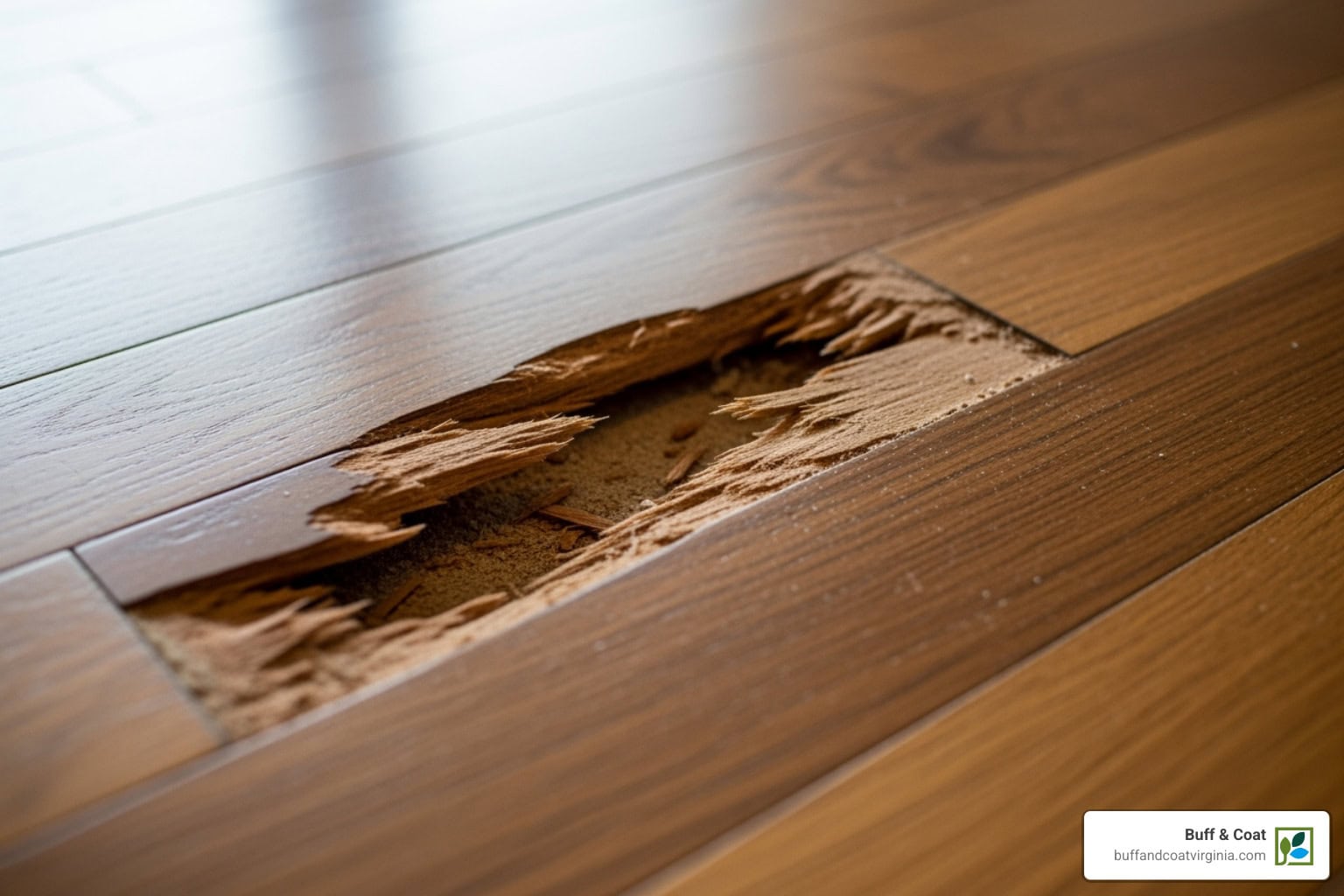
Why Knowing How to Fix a Gash in Hardwood Floor Saves Your Investment
Learning how to fix a gash in hardwood floor damage doesn’t have to mean expensive replacement. Whether from dropped furniture or pet claws, gashes in your beautiful hardwood can be repaired with the right approach. The key is using the right materials for the job, as minor scratches need different treatment than deep gouges. While most homeowners can handle shallow gashes, deeper damage may require professional help for seamless results, an essential part of maintaining your beautiful hardwood floors. If you’d prefer expert help, explore our professional hardwood floor refinishing and repair services.
Quick Answer: How to Fix a Gash in Hardwood Floor
- Clean the damaged area and remove loose wood fibers.
- Choose your filler: Wood putty for minor gashes, epoxy for deep gouges.
- Apply filler with a putty knife, slightly overfilling the gash.
- Let dry completely, then sand flush with the surrounding floor.
- Match the stain using stain pens or a cloth.
- Seal with polyurethane to protect the repair.
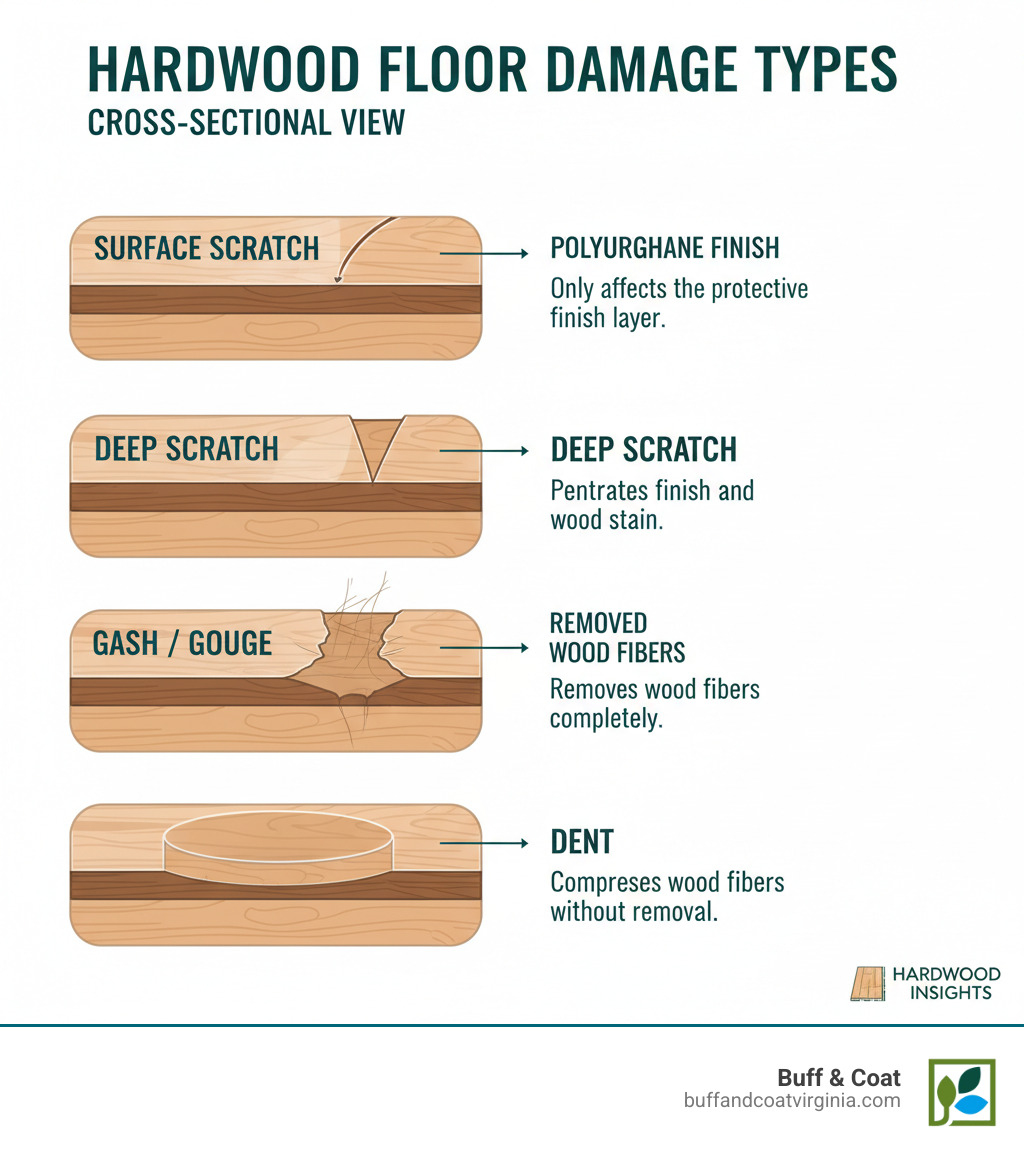
Understanding the difference between damage types helps you choose the right method. A surface scratch only affects the finish, while a gash or gouge removes wood fibers. This distinction determines if you need a simple touch-up or more involved filling and refinishing.
I’m David Emmerling. With 20 years of restoring hardwood floors in Virginia, I’ve seen and repaired every type of damage. My experience shows that while many repairs are manageable DIY projects, knowing when to call professionals can save you time and ensure flawless results.
How to fix a gash in hardwood floor terms at a glance:
First, Assess the Damage and Gather Your Tools
Before you learn how to fix a gash in hardwood floor damage, you must correctly assess the problem. Getting this right saves time and ensures you use the proper repair method.
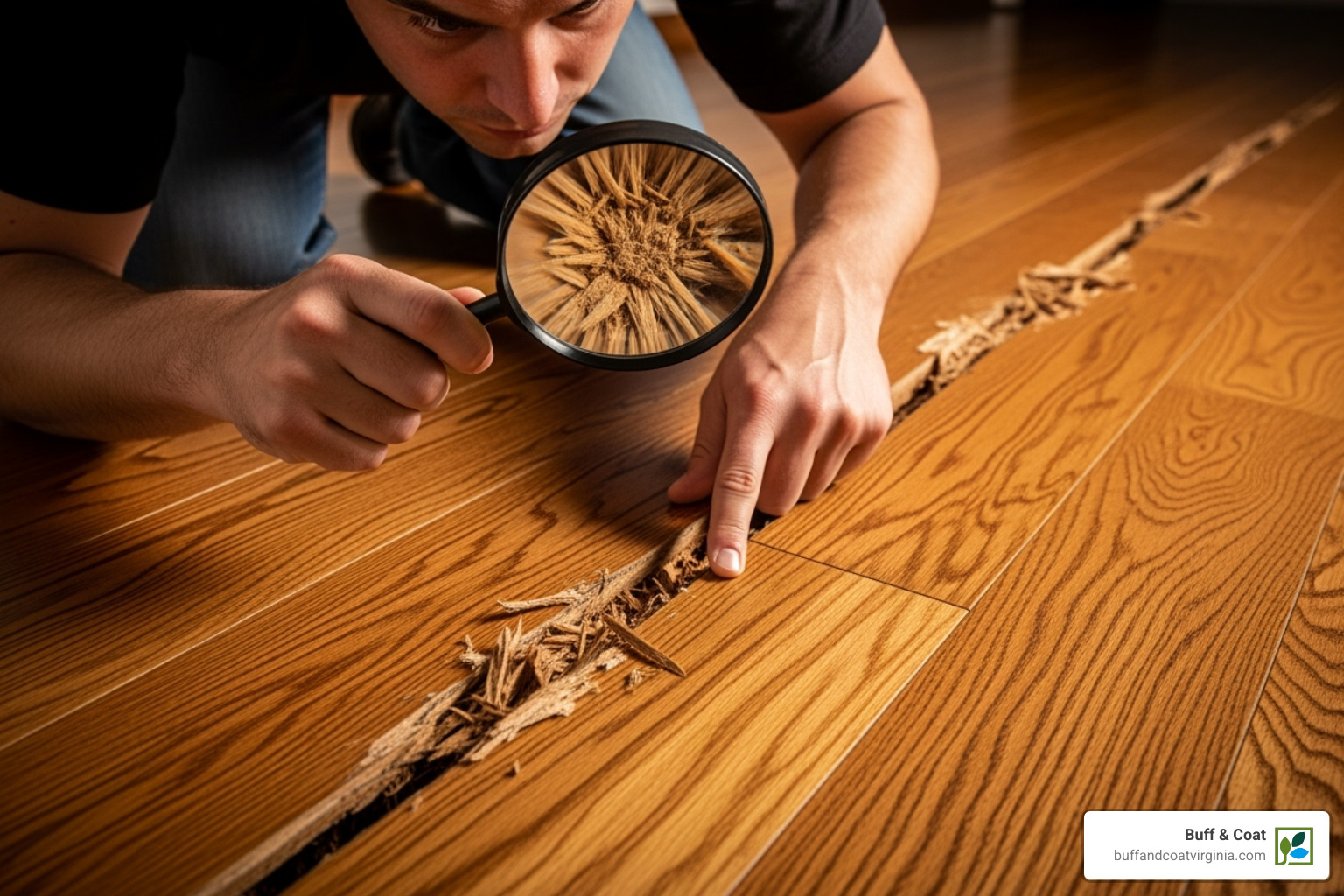
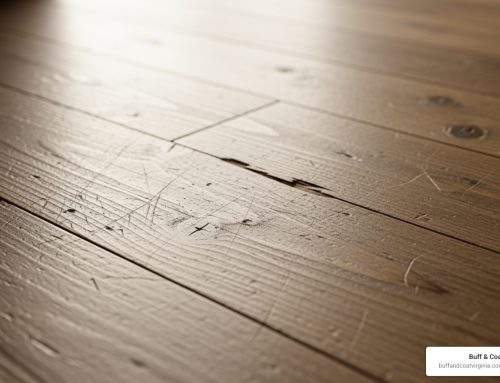
Surface scratches only affect the protective finish. Deep scratches cut through the finish into the wood. Gashes or gouges are more severe, removing chunks of wood fiber. Dents compress the wood without removing material.
Common culprits include moving furniture without pads, pet nails, high heels, and dropped objects. Even dirt tracked in from outside can act like sandpaper underfoot. For a deeper look at damage types, see our guide on Hardwood Floor Damage Repair.
Your wood type and finish also matter. Pre-finished floors have tough coatings that are hard to repair seamlessly. Site-finished floors are more forgiving for blending repairs.
Tools and Materials You’ll Need
Gathering your supplies first makes the process smoother.
- Wood putty is great for minor gashes and comes in various colors.
- Epoxy filler provides a rock-solid solution for deeper damage.
- Putty knife for even application.
- Fine-grit sandpaper (120-220 grit) to smooth the repair.
- Painter’s tape to protect the surrounding floor.
- Color-matching materials like wood stain or stain pens.
- Clean cloths for application and cleanup.
- Polyurethane sealant to protect the finished work.
- Safety gear like gloves and safety glasses.
- Razor blade to trim raised wood fibers.
- Wood glue to secure loose pieces before filling.
Solid vs. Engineered Hardwood: Does it Matter?
Yes, it matters significantly.
Solid hardwood floors are forgiving. Since they’re solid wood, you can sand down gashes and scratches multiple times over the floor’s life.
Engineered hardwood requires a more delicate touch. It has a thin top veneer of real wood over a plywood core. If a gash penetrates this veneer, you’ll see the core material, which can’t be stained to match. The veneer’s thickness dictates your repair options; a thin veneer may only allow for light buffing. With engineered floors, the focus is on filling and color-matching rather than aggressive sanding.
How to Fix a Gash in a Hardwood Floor: A Step-by-Step Guide
With the damage assessed and tools gathered, it’s time to repair the gash. Follow these steps for a professional-looking result.
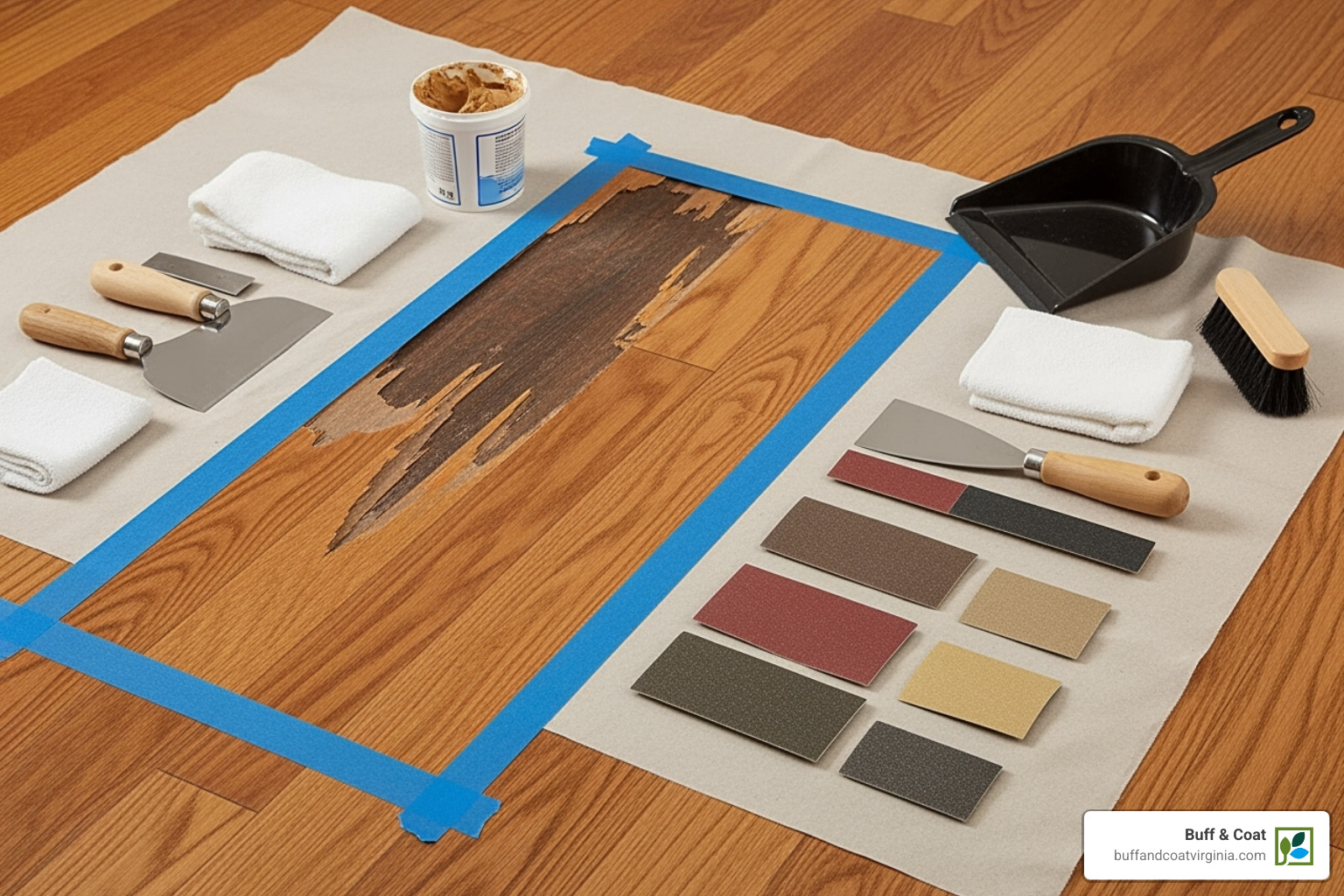
First, clean the area thoroughly. Vacuum any loose debris, then use a hardwood floor cleaner to ensure the gash is free of dirt and oils. Next, remove loose fibers and splinters with a sharp utility knife to create clean edges. Finally, tape off the surrounding area with painter’s tape to protect the undamaged floor from excess filler and make cleanup easier.
For Minor Gashes: The Wood Filler Method
For smaller gashes, wood putty is an excellent choice.
- Choose the right wood putty. Select a color that closely matches your floor. When in doubt, choose a lighter shade, as it’s easier to darken with stain later. Natural or oak-colored filler is a good starting point as it accepts stain well.
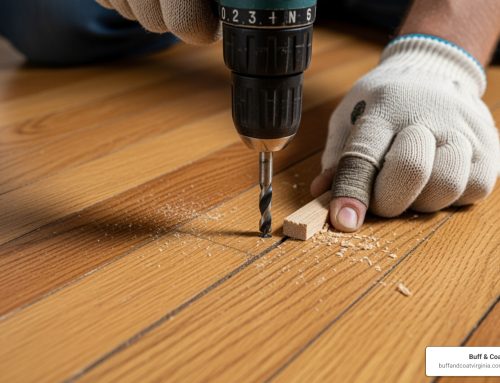
- Apply the putty. Using a putty knife, press the filler firmly into the gash. Slightly overfill the area to account for shrinkage as it dries.
- Clean and dry. Immediately wipe away excess putty from the surrounding area with a damp cloth. Allow the putty to dry completely according to the manufacturer’s instructions.
- Sand the repair. Once cured, gently sand the area with fine-grit sandpaper (120-220 grit), always working in the direction of the wood grain until the repair is smooth and flush.
Clean away all sanding dust before finishing. For more tips, see our guide on using wood filler for scratches.
For Deep Gashes: The Epoxy Filler Method
For deep gouges, two-part epoxy provides the necessary strength and durability.
- Prepare the epoxy. Mix the two parts according to the manufacturer’s precise instructions. For better color matching, you can mix fine sawdust from your floor into the epoxy.
- Apply the epoxy. Use a putty knife to work the mixed epoxy into the gash, pressing firmly to eliminate air bubbles. As with putty, slightly overfill the void.
- Cure and sand. Allow the epoxy to cure completely, which may take several hours or overnight. Once hardened, sand the area with fine-grit sandpaper in the direction of the wood grain until it’s perfectly flush.
For extensive repairs, professional floor sanding services can ensure a perfectly smooth result.
Finishing Touches: How to fix a gash in a hardwood floor and make it disappear
This final step makes the repair blend in seamlessly.
- Stain Matching: Always test your stain on an inconspicuous area first. Start with a lighter application, as you can always add more. For small touch-ups, stain pens are effective. For larger areas, apply liquid stain with a fine brush or cloth, wiping away excess immediately.
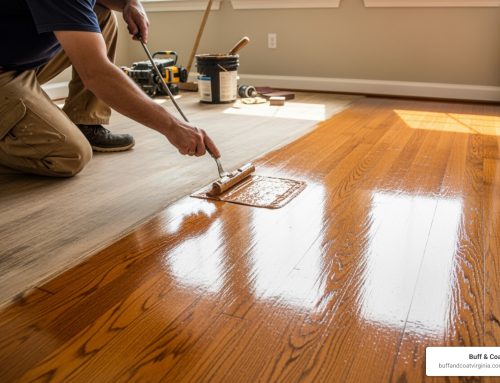
- Sealing the Repair: Apply a thin coat of a compatible polyurethane finish over the repaired area with a small brush. Feather the edges into the surrounding finish for a smooth transition.
- Buffing: Once the sealant is dry, gently buff the area with a soft cloth to match the sheen of the surrounding floor.
When DIY Isn’t Enough: Knowing When to Call a Professional
While DIY repairs are satisfying, some jobs are best left to professionals to avoid bigger problems and ensure the longevity of your floors. Knowing your limits is key.
Call a professional when you see:
- Severe or Widespread Damage: If you have widespread scratches across multiple rooms, or if water damage has caused boards to cup, crown, or buckle, you’re dealing with issues that spot repairs can’t fix.
- Structural Issues or Warped Boards: Spongy boards, large gaps between planks, or warping can signal underlying moisture or structural problems that require expert diagnosis.
- Board Replacement: Replacing a single board might seem simple, but matching the grain, ensuring a tight fit, and blending the finish seamlessly requires specialized tools and experience.
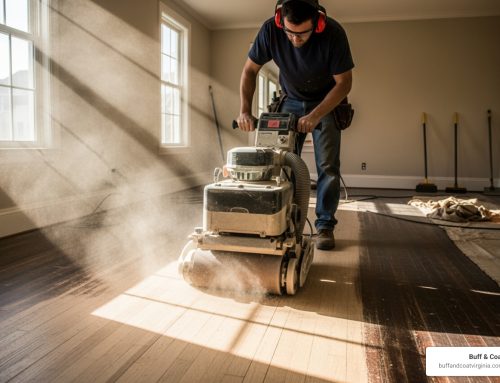
- Full Refinishing is Needed: If the damage is too extensive for spot repairs or the floor’s finish is worn and dull, a full refinishing is the best solution. This process involves heavy-duty sanding equipment and expertise to achieve a uniform, durable finish.
For more complex repairs, This Old House offers a helpful guide: How To Patch Damaged Wood Floors: A Comprehensive Guide.
If you’re in our service area and facing these challenges, our team specializes in bringing damaged floors back to life. We handle everything from board replacement to complete refinishing. Learn more about professional hardwood floor repair in Richmond, VA.
Prevention: The Best Way to Keep Your Floors Flawless
Preventing damage is always better than repairing it. While we’re experts in how to fix a gash in hardwood floor, we’d rather help you avoid them. These simple habits can significantly extend the life and beauty of your flooring.
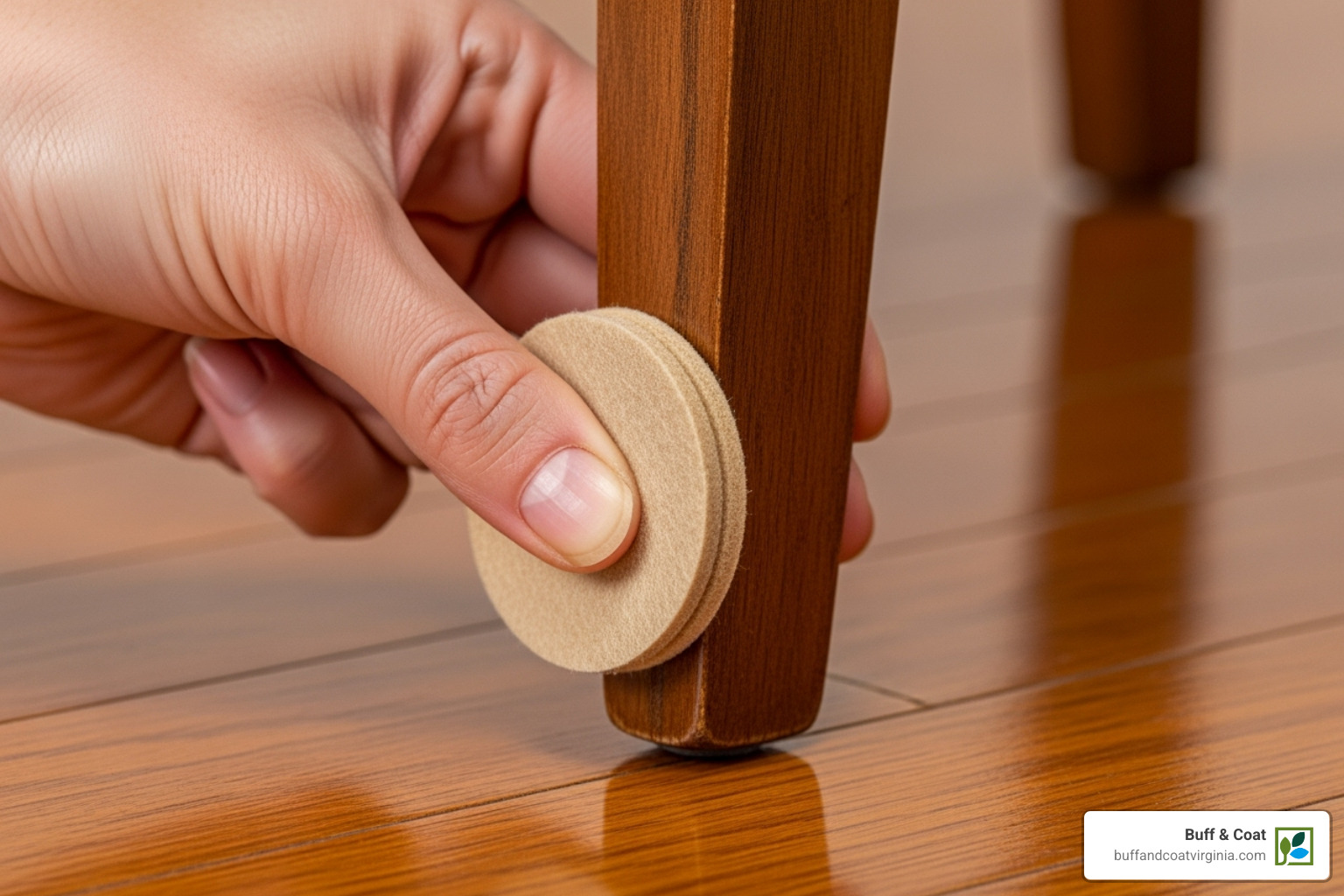
Long-Term Care and Maintenance Tips
- Use Furniture Pads: Install felt or rubber pads under all furniture legs and replace them when they wear out. This is the single most effective way to prevent scratches.
- Place Area Rugs: Use rugs in high-traffic areas like entryways and hallways to protect the floor and add style.
- Clean Regularly: Sweep with a soft-bristle broom or vacuum (without a beater bar) frequently. Dust and grit act like sandpaper, dulling the finish over time. For deeper cleaning, use a pH-neutral hardwood cleaner with a damp mop.
- Trim Pet Nails: Keep your pets’ nails trimmed to prevent them from scratching the floor.
- Control Humidity: Wood expands and contracts with moisture. Maintain indoor humidity between 35-55% to prevent gaps and cracks. As noted by Forbes, consistent humidity is crucial for wood floor health.
- Use Doormats: Place sturdy doormats at all entrances to trap dirt before it’s tracked inside.
- Clean Spills Immediately: Water is wood’s enemy. Wipe up any spills right away with a dry, absorbent cloth to prevent staining and water damage.
- Perform Seasonal Inspections: Check your floors monthly to catch minor damage before it becomes a major project.
Frequently Asked Questions about Hardwood Floor Repair
Here are answers to common questions homeowners have about repairing hardwood floors.
How do I ensure the repaired area matches my existing floor color?
Achieving a perfect color match is the most challenging part of the repair.
- Always Test First: Use an inconspicuous spot (like under furniture) or a scrap piece of flooring to test your stain before applying it to the repair.
- Start Lighter: It’s much easier to darken a repair with additional coats of stain than to lighten one that’s too dark.
- Use a Sealer with Stain Pens: Raw filler absorbs stain heavily. To prevent the repair from getting too dark, apply a thin coat of polyurethane over the dried filler, let it cure, and then use the stain pen for a more accurate color.
- Mix in Sawdust: For a custom match, mix fine sawdust from your actual floor into clear epoxy or wood glue. This integrates the wood’s natural color directly into the filler.
- Layer Liquid Stain: When using liquid stain, apply it in thin layers with a clean cloth, wiping away excess immediately. Build the color gradually.
Can a very deep gouge be completely repaired with DIY methods?
While DIY methods can work for many deep gashes, there are limitations. Epoxy filler is incredibly strong and can structurally repair deep gouges. However, the main challenges are sanding the hardened epoxy perfectly flush and then blending the stain and finish seamlessly with the surrounding floor.
Filler materials absorb light and stain differently than natural wood, so even with a perfect color match, the repair might have a slightly different texture or sheen. For truly deep gashes where a flawless, invisible repair is desired, professional service often yields superior results due to specialized equipment and experience.
How often should I refinish my hardwood floors instead of making spot repairs?
Spot repairs become impractical when damage is widespread. Consider a full refinishing every 7-10 years, or sooner if you notice:
- Widespread Wear and Scratches: If high-traffic areas are faded or there are numerous scratches and gouges across the floor, refinishing is more effective than countless spot repairs.
- Dull or Faded Finish: If the floor looks lifeless and cleaning doesn’t restore its luster, the protective finish has likely worn down.
- Exposed Wood: The biggest red flag is when the polyurethane layer has worn off completely, leaving wood looking gray or splintered. At this point, the wood is vulnerable to moisture and damage, and a full refinish is necessary to protect it.
Our Hardwood Floor Refinishing Complete Guide provides more detail on when it’s time to refinish.
Conclusion
Repairing a gash in your hardwood floor is a rewarding project that can save you money and restore your floor’s beauty. We’ve covered how to assess the damage, choose the right method—wood filler for minor gashes and epoxy for deep ones—and apply the finishing touches to make the repair disappear. With these skills and good prevention habits, you can keep your floors looking great for years.
However, some jobs require a professional touch. For widespread damage, water stains, or if you simply want a guaranteed flawless finish, it’s best to call in experts.
At Buff & Coat, we’ve spent years perfecting our craft in Richmond, VA, and the surrounding areas. Our signature dust-free techniques and comprehensive refinishing services can transform even the most worn floors. We bring the professional tools and expertise to make the difference between a “good enough” repair and a stunning restoration.
When you need peace of mind and professional results, we’re here to help. Ready to see your floors restored to their original glory? We offer free estimates. Schedule a free inspection with our team today and see the Buff & Coat difference for yourself.