Why Hardwood Floor Chips Happen and How to Fix Them
Learning how to fix a chip in a hardwood floor is a valuable skill that can save you from costly professional repairs. While our team offers expert hardwood floor restoration, many minor chips from dropped objects or daily wear can be fixed with simple DIY methods. Maintaining the pristine look of your hardwood floors in Richmond is much easier when you know how to address damage quickly.
Quick Answer: How to Fix a Chip in a Hardwood Floor
- Clean the damaged area thoroughly.
- Choose your repair method: a hard wax repair kit for small chips or wood filler for deeper ones.
- Apply the repair material, slightly overfilling the chip.
- Sand smooth once dry (for wood filler only).
- Match the stain color and apply.
- Seal with a polyurethane finish.
With over 20 years of experience restoring hardwood floors, we’ve seen every type of chip imaginable. The right approach depends on the type and depth of the damage, and this guide will walk you through everything you need to know.
Step 1: Assessing the Damage and Preparing for Repair
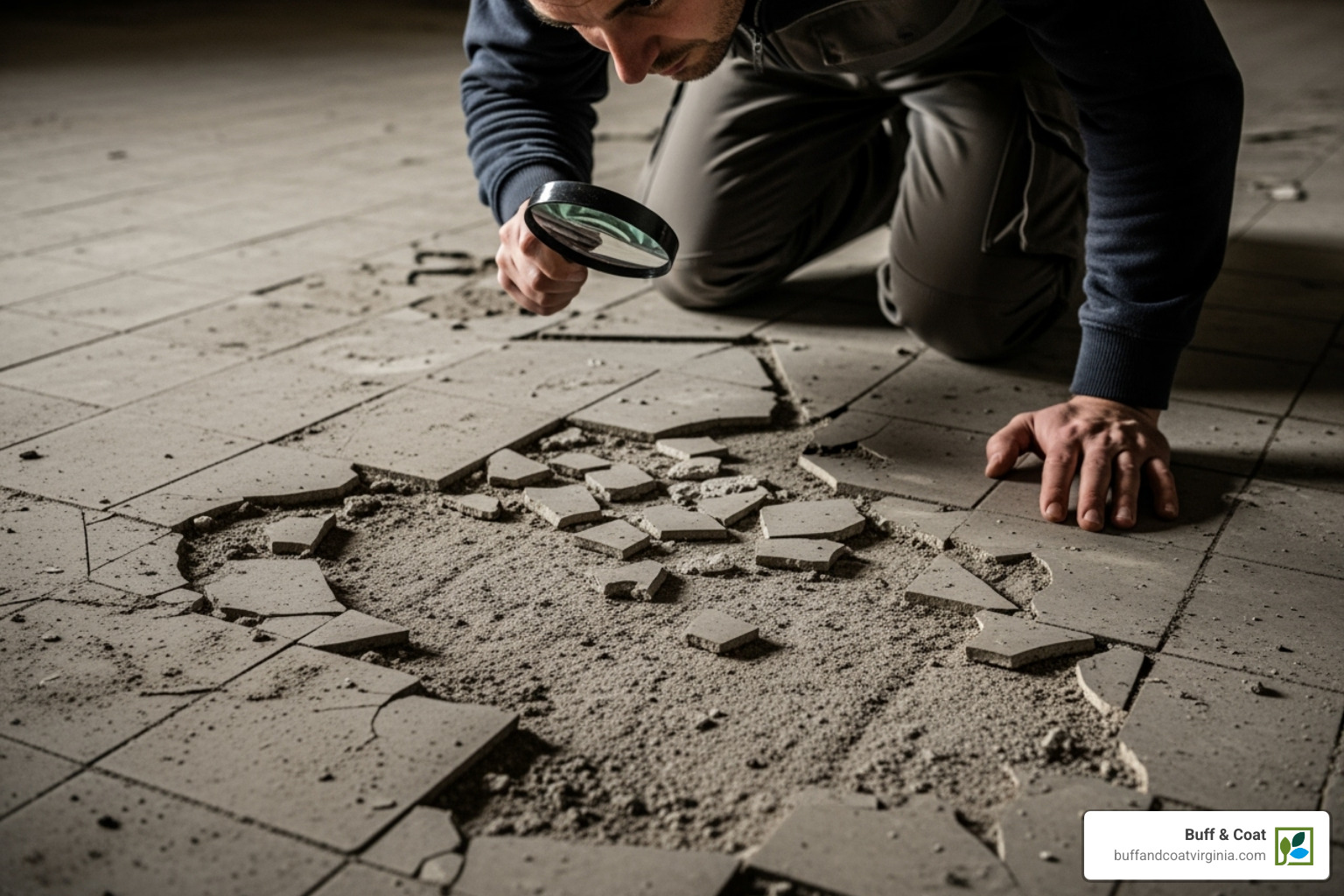
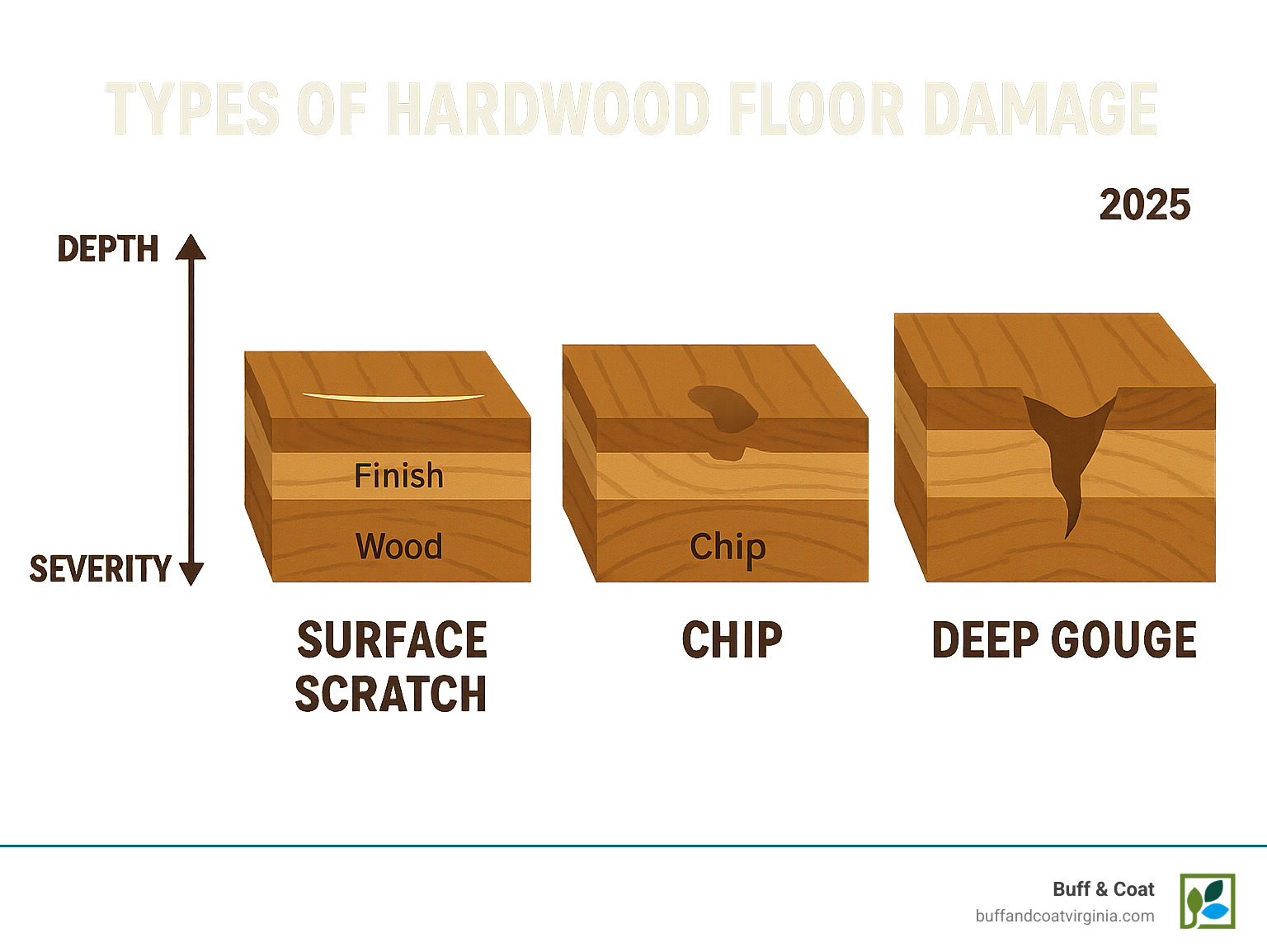
Before you can fix a chip in a hardwood floor, you need to understand the type of damage you’re dealing with. Is it a shallow chip that only affects the surface, or a deep gouge where wood is missing? This assessment determines your repair method.
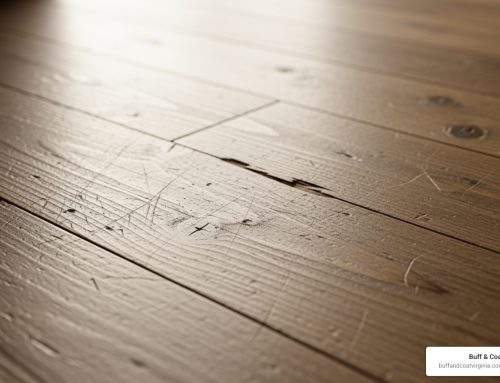
- Scratches: Surface-level marks, often just in the finish. Our Hardwood Floor Scratch Repair guide can help.
- Dents: Compressions in the wood fibers where no wood is lost.
- Chips: Small pieces of wood are missing from the surface.
- Gouges: Deeper and wider than chips, requiring more intensive repair.
Gathering Your Tools and Materials
Having the right tools makes the job much smoother. A basic repair kit costs between $20 and $50. Here’s what you’ll need:
- Cleaning Supplies: Mild detergent and soft cloths.
- Repair Material: A hardwood floor scratch filler or a hard wax repair kit.
- Application Tools: Putty knife and fine-grit sandpaper (180-220 grit).
- Finishing Supplies: Color-matching stain markers and polyurethane finish.
- Safety: Gloves and eye protection.
For a complete list, you can Download our PDF checklist.
How to Properly Clean and Prep the Damaged Area
Proper prep is crucial for a lasting repair. Skipping this step can cause the repair to fail or look uneven.
- Clean the Area: Vacuum or sweep away all loose debris. Clean the chip and the surrounding area with a soft cloth and a mild detergent solution. Ensure the area is completely dry before you begin.
- Protect Your Surroundings: Use painter’s tape to mask off the area around the chip. This protects the undamaged floor from filler or stain. For larger repairs, use drop cloths to protect the surrounding floor and furniture.
Taking a few extra minutes to prepare will save you a lot of cleanup time later. For more tips on keeping your floors in top shape, see our guide on proper hardwood floor maintenance.
Step 2: How to Fix a Chip in a Hardwood Floor: Step-by-Step Methods
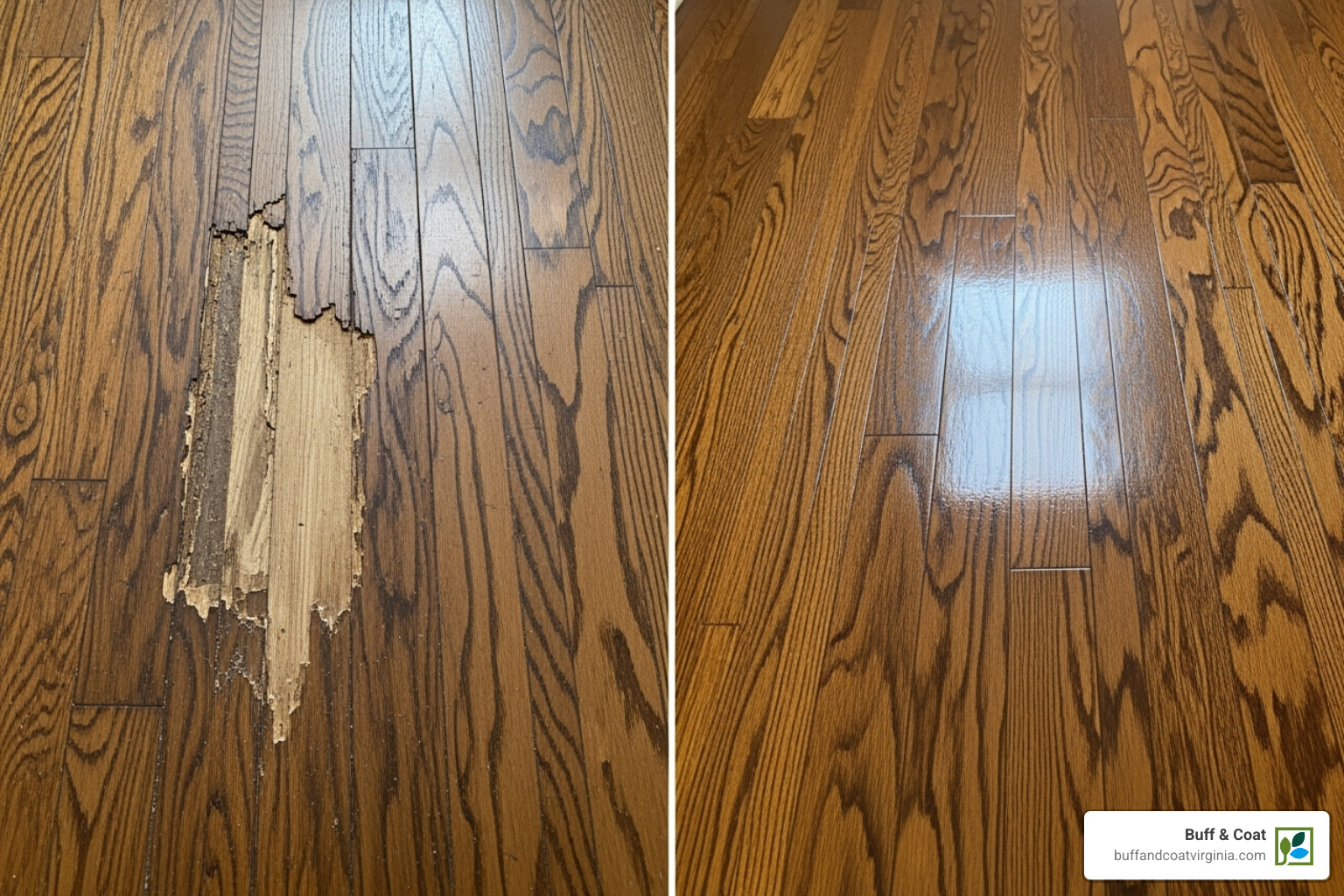
Now that you’re prepped, it’s time to fix the chip in your hardwood floor. The method you choose depends on the damage. Wood filler is best for deeper chips and gouges, while a hard wax kit is ideal for smaller surface chips.
Method 1: Using Wood Filler for Deeper Chips
Wood filler creates a durable, sandable patch that can be stained to match your floor.
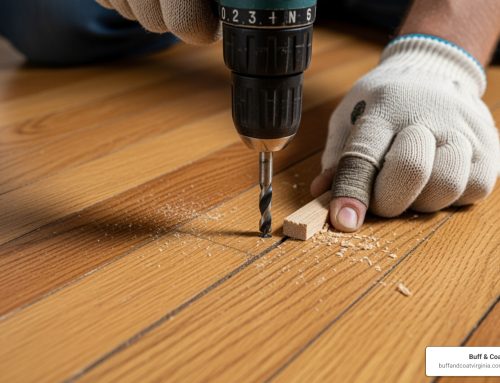
- Apply Filler: Using a putty knife, press a high-quality wood filler into the chip. Overfill it slightly to account for shrinkage as it dries.
- Dry: Let the filler dry completely according to the product’s instructions. Deeper repairs may need to dry overnight. Be patient; a rushed job won’t last.
- Sand: Once dry, use fine-grit sandpaper (180-220 grit) to sand the patch until it’s perfectly flush with the floor. Always sand with the grain. Wipe away dust with a tack cloth. Our guide on using fillers has more detailed tips.
Method 2: Using a Hard Wax Repair Kit
Hard wax kits are excellent for minor chips and allow for precise color matching.
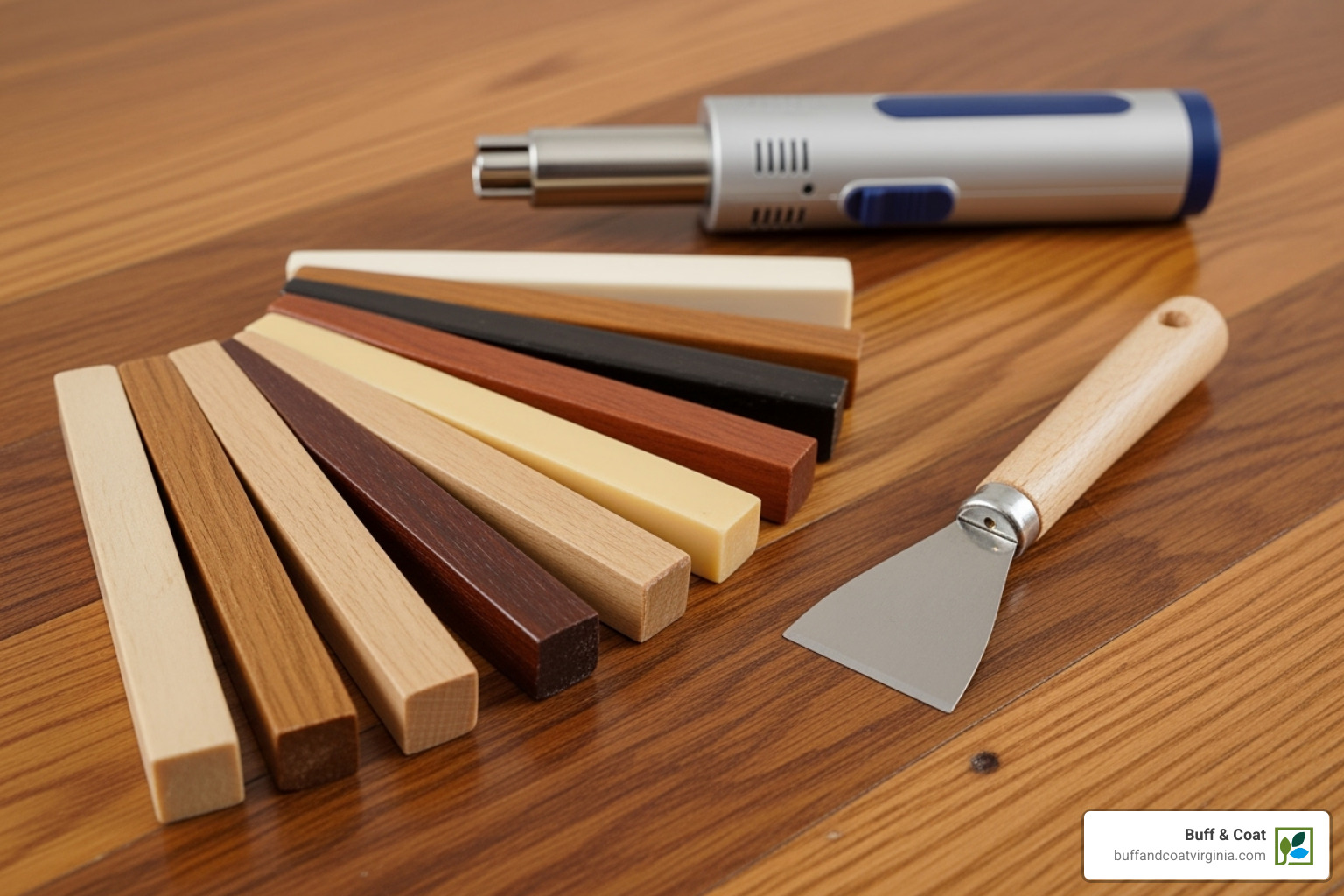
- Melt and Mix: Use the kit’s melting tool to blend wax colors to match your floor’s unique tones. Test your color on a discreet spot first.
- Fill the Chip: Drip the melted wax into the chip, overfilling it slightly. Let it cool and harden.
- Scrape and Buff: Use the kit’s scraper to carefully level the excess wax. If your floor has beveled edges, use the scraper to recreate the groove for a seamless look. Buff the area with a soft cloth to match the floor’s sheen. This guide on fixing a chipped edge offers more detail on this technique.
Finishing Touches: Staining and Sealing
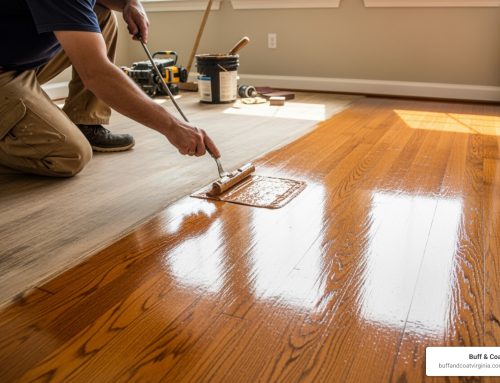
This final step makes your repair disappear. If you used wood filler, you’ll need to stain it. Test stain colors on scrap wood to find the perfect match. Apply the stain with a cloth, wipe away the excess, and let it dry. Finally, apply a thin coat of polyurethane over the repair, feathering the edges to blend with the existing finish. This protects the patch and matches the sheen. For an overall refresh, consider a professional service like our Hardwood Floor Buff and Coat for Dull Floors.
Step 3: Advanced Repairs & When to Call a Professional
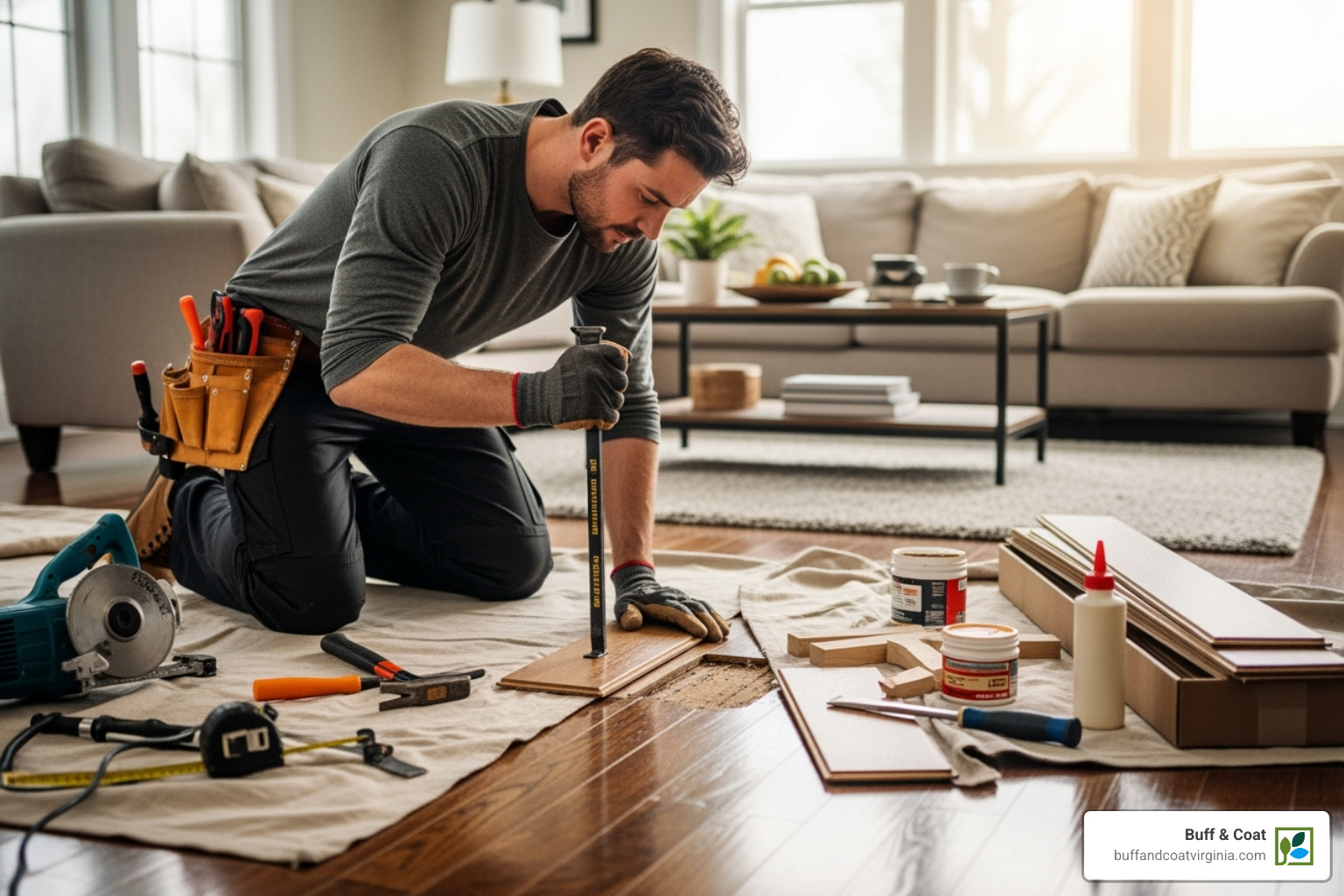
Sometimes, a chip is too large or deep for a simple DIY fix. When you’re facing a massive gouge, extensive chipping across multiple boards, or damage that affects the floor’s stability, it’s time to consider more advanced techniques or call a professional for hardwood floor damage repair.
For Severe Damage: The Dutchman Patch or Board Replacement
When a chip is too large for filler, two professional solutions are the Dutchman patch or full board replacement. A Dutchman patch is like surgery for your floor, where the damaged section is precisely cut out and replaced with a perfectly matched piece of wood, as demonstrated by experts at This Old House.
Full board replacement is necessary when the damage is too extensive for a patch. This involves removing the entire damaged board and installing a new one. While it sounds straightforward, matching the new board to an existing floor requires a professional touch. You can learn more in our guide on how to replace a hardwood floor board.
Signs It’s Time to Call a Professional
Knowing when to hand the tools over to a pro can save you time, money, and frustration. Call for help if you see:
- Extensive Damage: Chips and scratches spanning multiple boards.
- Deep or Structural Damage: The board feels spongy, weak, or the damage is very deep.
- Signs of Water Damage: Any warping, cupping, or discoloration is a red flag that needs immediate attention.
- You’re Not Confident: If the job feels overwhelming, it’s best to rely on an expert. A botched DIY repair can be more costly to fix.
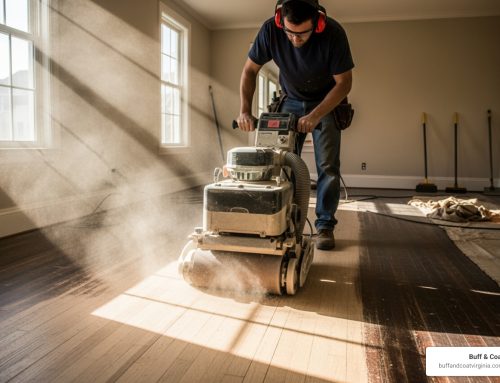
If your floor’s damage is beyond a simple patch, our professional floor sanding and refinishing services can restore its beauty and ensure a durable, long-lasting finish.
Introduction
Learning how to fix chip in hardwood floor can save you money and keep your space looking its best. Most small chips can be handled with either wood filler (for deeper voids) or a hard wax repair kit (for minor surface damage). This guide gives you quick steps, the shortest path to solid results, and clear signs of when to call a pro.
Use the quick steps above to get oriented, then follow the streamlined methods below for filling, smoothing, color-matching, and sealing so your repair blends in with the surrounding boards.
First Step: Assessing the Damage and Preparing for Repair
Start by confirming what you’re dealing with:
- Scratches: Often only in the finish. See our guide on Hardwood Floor Scratch Repair.
- Dents: Compressed fibers with no missing wood.
- Chips: Small pieces of wood missing from the surface or edge.
- Gouges: Deeper/wider material loss that may need stronger methods.
Gathering Your Tools and Materials
Keep it simple and ready:
- Cleaning: Hardwood floor cleaner or mild detergent, soft cloths, vacuum/broom.
- Repair materials: Quality wood filler (see our Hardwood Floor Scratch Filler: The Ultimate Guide) or a hard wax repair kit.
- Application and finishing: Putty knife, fine-grit sandpaper (180–220), tack cloth, color-matching stain markers, polyurethane.
- Safety: Gloves, eye protection.
- Optional for advanced fixes: Utility knife, chisel, combination square, bar clamp, wood glue/polyurethane glue (like Gorilla Glue), and scrap wood.
Download the full checklist here: Download our PDF checklist.
How to Properly Clean and Prep the Damaged Area
- Clean: Sweep/vacuum, then wipe with mild detergent. Let fully dry. For stubborn grime, a light wipe with mineral spirits helps.
- Protect: Mask around the chip with painter’s tape; use drop cloths for larger work areas. Smart prep prevents cleanup headaches (see tips from ForemanSnags). For care beyond repairs, see More on proper floor maintenance.
How to Fix a Chip in a Hardwood Floor: Step-by-Step Methods
Choose wood filler for deeper chips/gouges and hard wax for small surface voids and edges.
Method 1: Using Wood Filler for Chips and Gouges
- Choose the right filler: Match your floor color closely. As The Spruce notes, Wood filler selection and color are key. See More on using fillers.
- Apply: Press filler firmly into the chip and slightly overfill.
- Dry: Follow the label; deeper fills may need overnight.
- Sand: Use 180–220 grit until flush; sand with the grain and tack off dust.
Method 2: Using a Hard Wax Repair Kit
- Melt/mix: Warm the tool and blend wax colors to match your floor.
- Fill: Overfill the chip slightly and let the wax harden.
- Level and detail: Scrape flush; recreate bevels/texture as needed. See How To Fix A Chipped Edge On Wood Flooring.
Finishing Touches: Staining and Sealing Your Repair
- Stain (for filler repairs): Test first; apply lightly and let dry.
- Seal: Feather on a thin coat of polyurethane to protect and match sheen. For broader sheen refresh, see Restoring Shine: Hardwood Floor Buff and Coat for Dull Floors.
Advanced Repairs & When to Call a Professional
When DIY isn’t enough—large gouges, widespread damage, or compromised boards—consider professional help. For a deeper overview, see our article on Hardwood Floor Damage Repair.
- Dutchman patch: Cut out the damaged section and inlay a precisely fit piece.
- Board replacement: Best when damage spans most of a plank or affects stability.
- Call a pro if: Multiple boards are affected, the subfloor feels spongy, there are signs of water damage, or you’re not confident in the repair.
Step 1: Defining Your Target Audience
Editor’s note: Non-repair planning content removed for brevity. Continue below for practical, step-by-step chip repair methods and when to bring in a pro.
Step 2: Conducting Keyword Research
Editor’s note: Section condensed to keep this guide focused on the actual chip repair process homeowners need right now.
Step 3: Developing a Content Strategy
Editor’s note: We’ve streamlined the article to highlight only the essential steps for assessing damage, repairing chips, and finishing for a seamless blend.
Step 4: Creating High-Quality Content
Editor’s note: This non-repair section has been shortened so you can quickly find the tools, methods, and finishing tips to fix floor chips with confidence.
Step 5: Distributing and Promoting Your Content
Editor’s note: Removed marketing guidance to keep this guide concise and action-oriented for hardwood floor chip repairs.
Step 6: Measuring and Analyzing Performance
Editor’s note: Condensed to maintain a practical, homeowner-focused resource on repairing chips and knowing when to call a professional.
Conclusion: Restoring Your Floor’s Beauty and Durability
Learning how to fix a chip in a hardwood floor is a rewarding, cost-effective skill. With wood filler for deep gouges or a hard wax kit for minor chips, you can handle most small repairs and keep your floors looking beautiful. Regular maintenance, like using furniture pads and cleaning spills quickly, is the best way to prevent future damage.
However, it’s crucial to know your limits. DIY repairs are great for small issues, but extensive damage, deep gouges across multiple boards, or any signs of water damage require professional expertise to avoid bigger problems down the road.
When you want a flawless, professional finish or are facing damage that’s beyond a simple DIY fix, our team at Buff & Coat is here to help. We have the experience and specialized equipment to restore your floors to their original beauty. Our dust-free sanding and refinishing process can handle even the most challenging repairs, bringing new life to your hardwood.
We offer free estimates. Schedule a free inspection with us today and we’ll help you determine the best solution for your floor’s long-term value and beauty.