
Why Wood Scratches Happen and How to Fix Them
How to restore scratched wood is a common concern for homeowners with unsightly marks on their floors and furniture. Scratches from pet claws, moving furniture, or daily wear can diminish the beauty of your wood surfaces. Fortunately, many scratches can be fixed at home. For extensive damage, it’s often best to consider professional hardwood floor restoration for guaranteed results.
Quick Answer: How to Restore Scratched Wood
- Light scratches – Use walnuts, olive oil/vinegar mix, or commercial scratch remover
- Medium scratches – Apply wood stain markers or repair crayons
- Deep scratches – Fill with wood putty, sand smooth, then stain and finish
- Extensive damage – Consider professional refinishing for the best results
Many scratches can be repaired using simple household items or readily available products. Light surface scratches often respond to natural remedies like rubbing a walnut over the area; the nut’s oils help mask the mark. Deeper damage that penetrates the finish requires more intensive methods involving fillers, stains, and refinishing.
Successful repair lies in assessing the damage depth and choosing the right method. Surface-level scratches require different treatment than deep gouges that expose raw wood.
I’m David Emmerling, President of Buff & Coat Hardwood Floor Refinishing. With over 20 years of experience, I’ve helped countless Richmond-area homeowners learn how to restore scratched wood and determine when professional help delivers the best results.
If you’re dealing with extensive scratch damage, we offer free estimates and inspections. Contact us today to schedule your free consultation.
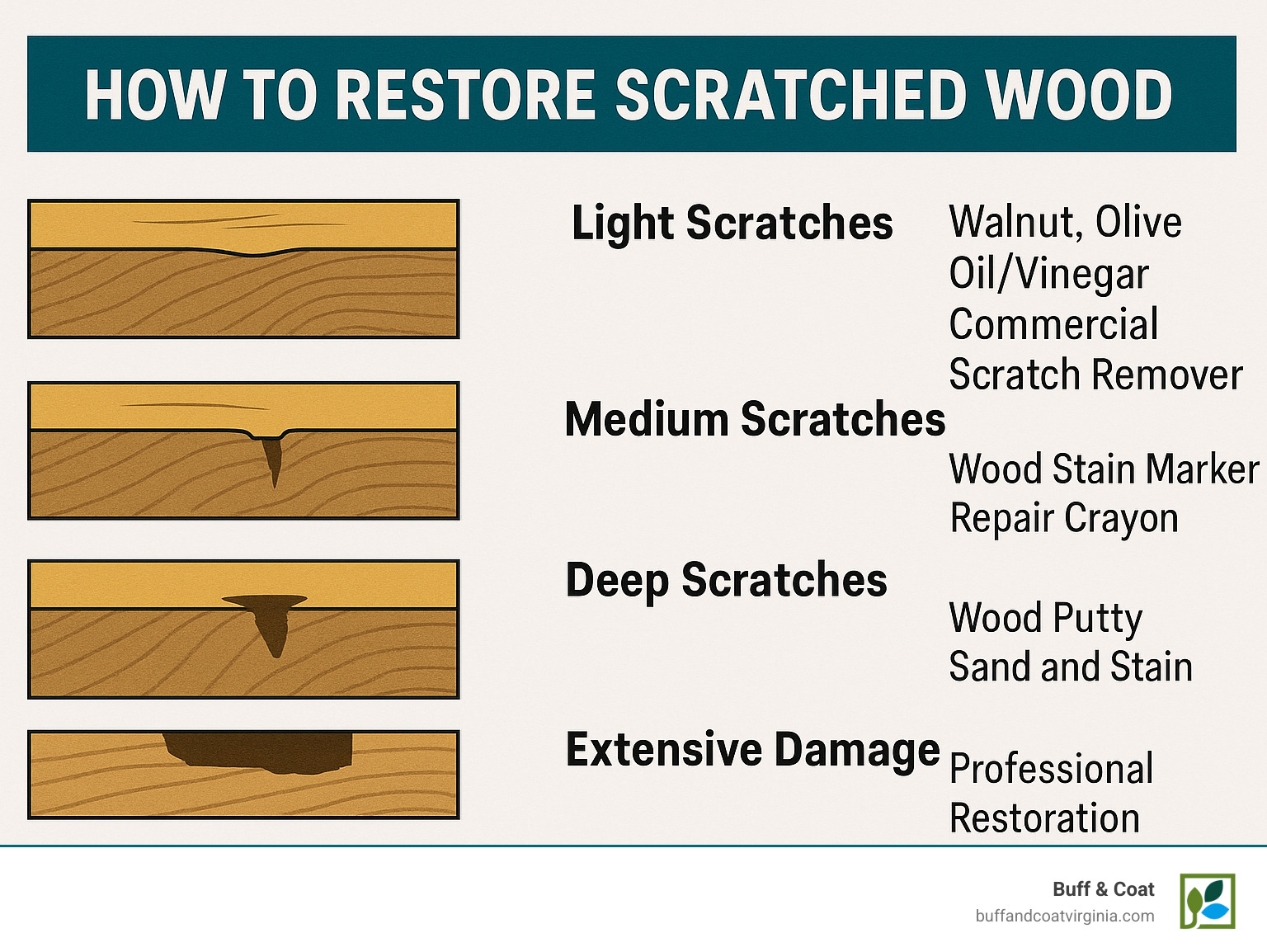
How to Restore Scratched Wood: Assessing the Damage
Before starting any repair, understand the damage. How to restore scratched wood successfully begins with identifying the scratch type and the wood’s finish. This is crucial because the repair method depends on these factors. Using the wrong method can worsen the damage, potentially requiring professional floor sanding or complete refinishing. A quick observation can save you time, effort, and costly mistakes. For more insights, see our guide on professional scratch repair.
Understanding Scratch Types
Different scratches require different repair approaches.
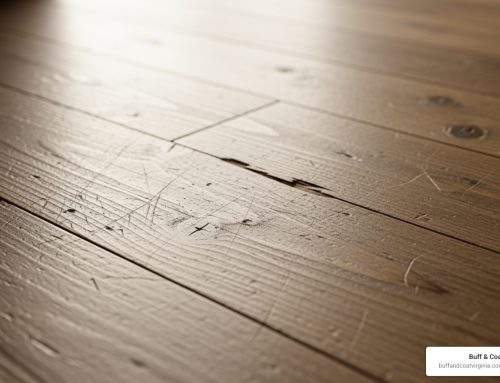
- Light scratches and surface abrasions are white or cloudy marks, often only visible in certain light. Your fingernail won’t catch in the groove because they are finish-only damage.
- Deep scratches and gouges break through the finish, exposing lighter wood underneath. Your fingernail will catch in the groove, indicating wood fiber damage.
- The most serious damage involves missing wood, where chips or pieces are gone, leaving a clear void and color change from exposed raw wood.
Here’s how to match your damage to the best repair approach:
| Type of Scratch | Appearance | Feels Like | Best Repair Approach |
|---|---|---|---|
| Light Scratches | White or cloudy marks, visible in certain light | Smooth, fingernail doesn’t catch | Natural oils, scratch removers, light buffing |
| Deep Scratches | Visible lines exposing lighter wood underneath | Fingernail catches in the groove | Wood fillers, stain markers, color matching |
| Gouges | Clear holes or significant wood missing | Deep indentation you can feel | Wood filler, sanding, staining, refinishing |
Identifying Your Wood’s Finish
Knowing your wood’s finish is critical for choosing the right products, as different finishes react differently to solvents. Using the wrong product can cause cloudy spots or more damage. Common finishes include polyurethane, lacquer, varnish, shellac, and oil finishes.
To identify the finish, test a small, inconspicuous spot (like the underside of a table) with a cotton swab.
- Denatured alcohol: If the finish gets sticky or dissolves, it’s shellac. If it softens, it’s likely lacquer. If nothing happens, it’s probably polyurethane or varnish.
- Lacquer thinner: If this softens a finish that alcohol didn’t affect, you’ve confirmed it’s lacquer.
Polyurethane and varnish are durable and forgiving for DIY repairs. Lacquer and shellac are more delicate. Oil finishes penetrate the wood rather than coating it. Knowing the finish helps you choose safe, effective products for the job.
Methods for Fixing Light Scratches and Scuffs
Light scratches and scuffs are the easiest problems to solve when learning how to restore scratched wood. Since these surface-level blemishes haven’t broken through the protective finish, you can often fix them with simple DIY solutions and household items. These quick fixes work on minimal damage without requiring special tools.
The Walnut Trick and Other Natural Fixes
The humble walnut is a fantastic secret for wood repair.
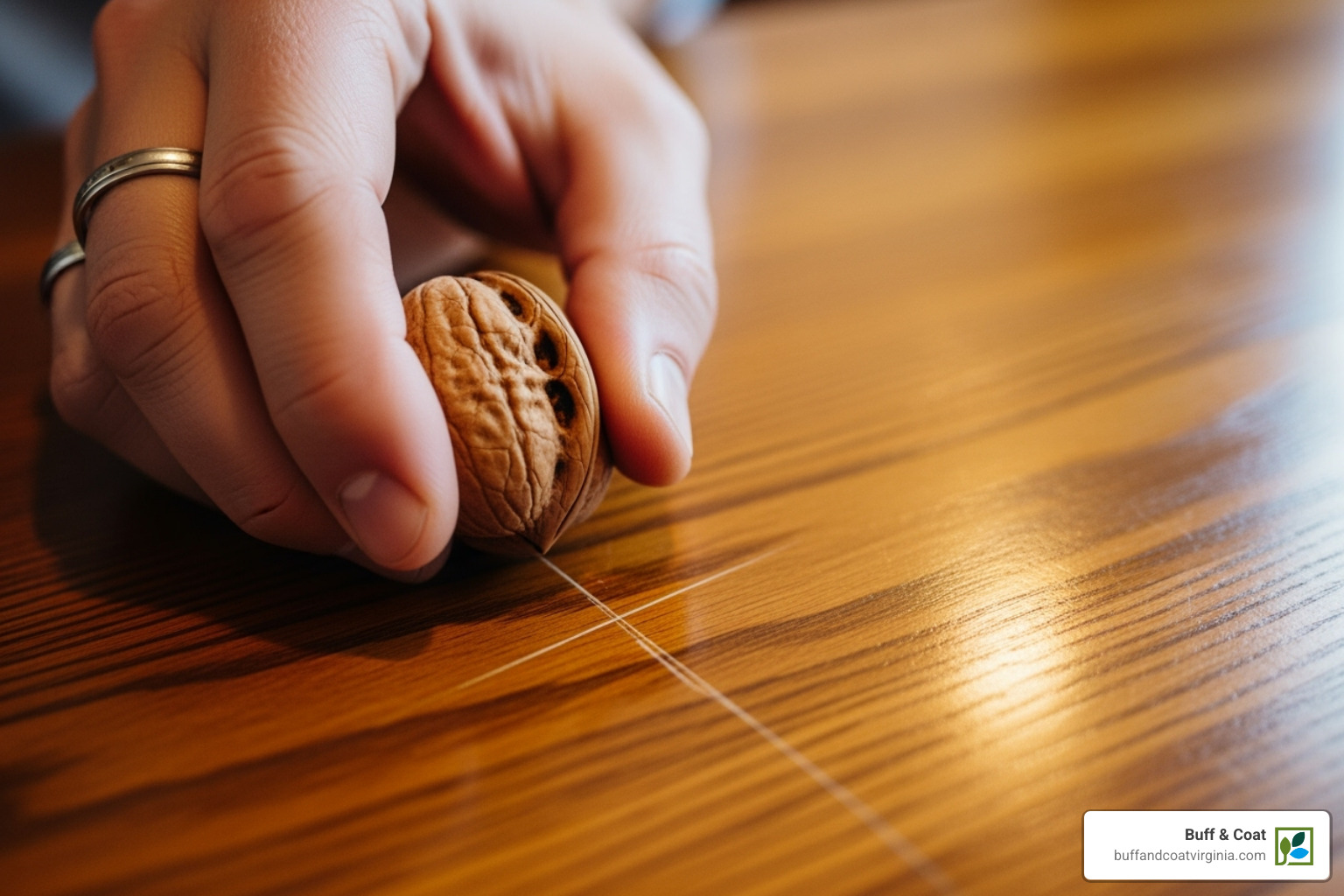
- Walnuts: Crack open a walnut and rub the meat along the scratch. The natural oils and brown pigments seep into the damaged area, camouflaging the mark. Buff with a soft cloth after 30 seconds.
- Olive Oil and Vinegar: Mix one part olive oil with three parts white vinegar. Apply with a soft cloth, let it sit for an hour, then wipe away the excess. The vinegar cleans while the oil moisturizes.
- Tea Bags or Coffee Grounds: For darker woods, a steeped black tea bag or damp coffee grounds can stain the scratch to match the surrounding area. Apply with a cotton swab or soft cloth.
These household items can effectively mask minor imperfections at no cost.
Using Commercial Scratch Repair Products
For a more targeted approach, commercial products designed for wood finishes can deliver consistent results.
- Scratch remover polish: Products like Howard Restore-A-Finish in Walnut contain fine abrasives and colorants to buff away and fill minor scratches while revitalizing the finish.
- Hemp oil: This natural oil penetrates deeply to nourish wood and make scratches less visible on both light and dark woods without needing a perfect color match.
- Buffing: For very light abrasions, a soft cloth, quality wood polish, and gentle pressure with the grain can work wonders.
Golden rule: Always test products on an inconspicuous area first, as wood surfaces can react differently. For more tips, the Minwax® wood maintenance guide is a great resource. With patience, you can achieve professional-looking results.
Repairing Deeper Scratches and Gouges
Deeper scratches have broken through the finish and into the wood fibers. This damage requires more effort, as you’ll need to fill the void and match the color. While it’s a manageable DIY project, the results of making a deep scratch disappear are very rewarding.
How to restore scratched wood with Fillers and Crayons
When a scratch is deep enough to catch your fingernail or a small chunk of wood is missing, you must fill the void.
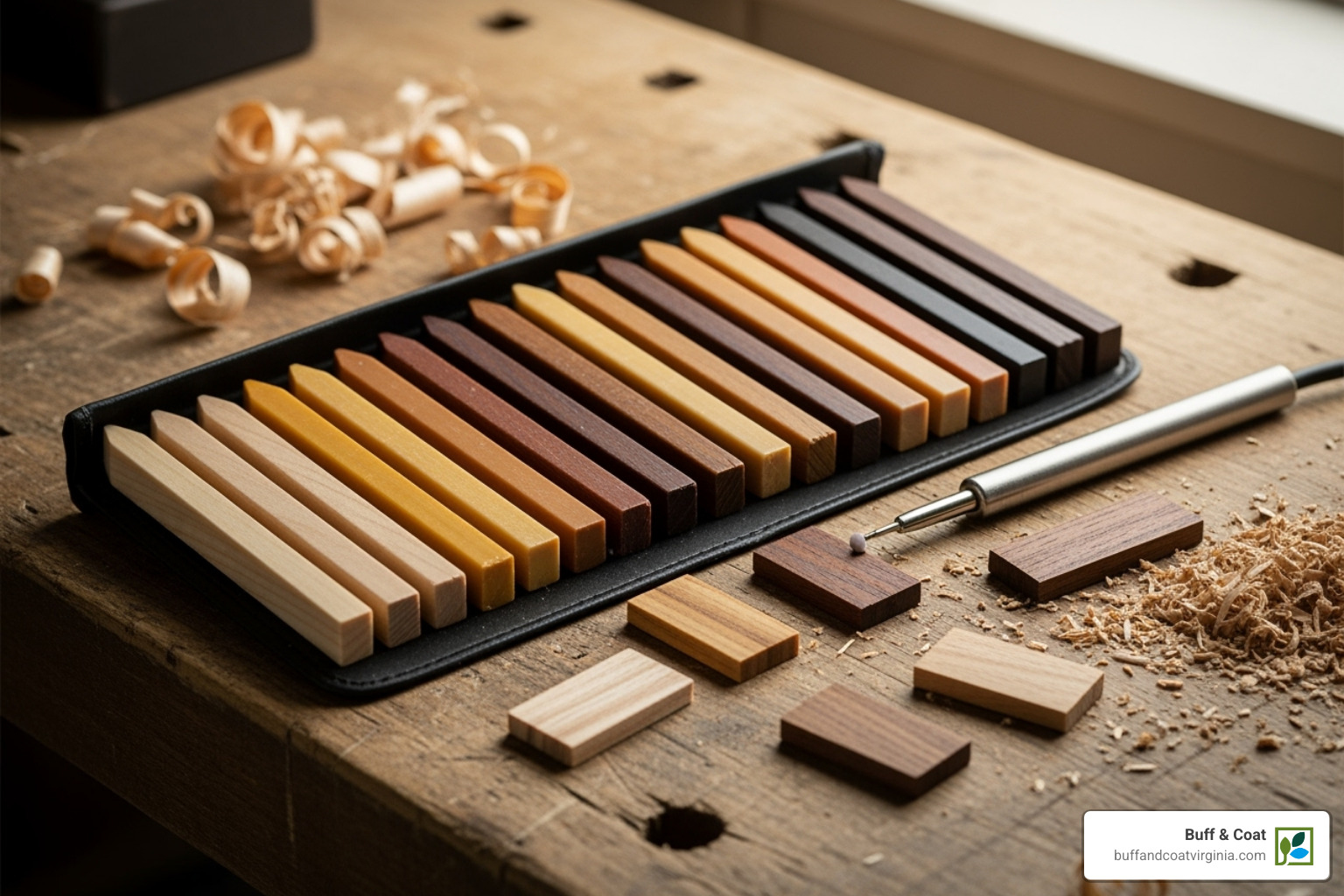
- Stain Repair Crayons and Wax Filler Sticks: Ideal for deeper, narrow scratches, these colored wax sticks, like these stain repair crayons, are rubbed into the scratch until full. Choose a color slightly darker than your wood for a seamless blend. Scrape off excess wax with a plastic card and buff with a clean rag.
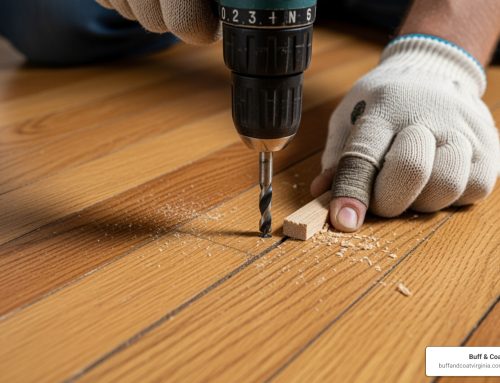
- Stainable Wood Filler: For wider gouges, apply a thin layer of stainable wood filler with a putty knife. Smooth it level with the surface and let it dry completely. Once dry, sand the area with fine-grit sandpaper (180-220 grit) until smooth. Wipe away dust, then apply a matching wood stain. Ensure the filler is designed to accept stain to avoid a mismatched repair.
How to restore scratched wood using Stain Markers and Pens
For scratches needing color but not significant filling, stain repair pens are a quick tool. These markers contain wood stain to touch up deep gouges. Apply the marker directly to the scratch, matching the color as closely as possible. For wood with grain variations, match the darkest color. Wipe away excess stain immediately to avoid staining the surrounding wood.
Sanding and Refinishing for Serious Damage
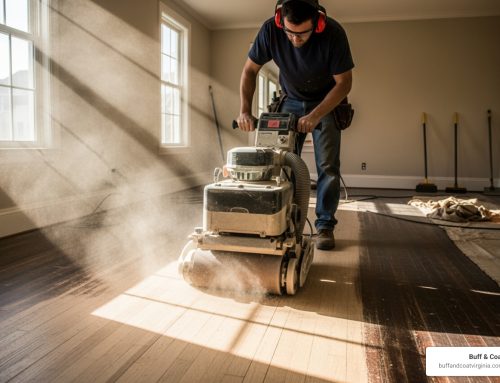
For extensive damage like multiple deep scratches or wide abrasions, a more intensive approach is needed, especially for hardwood floors.
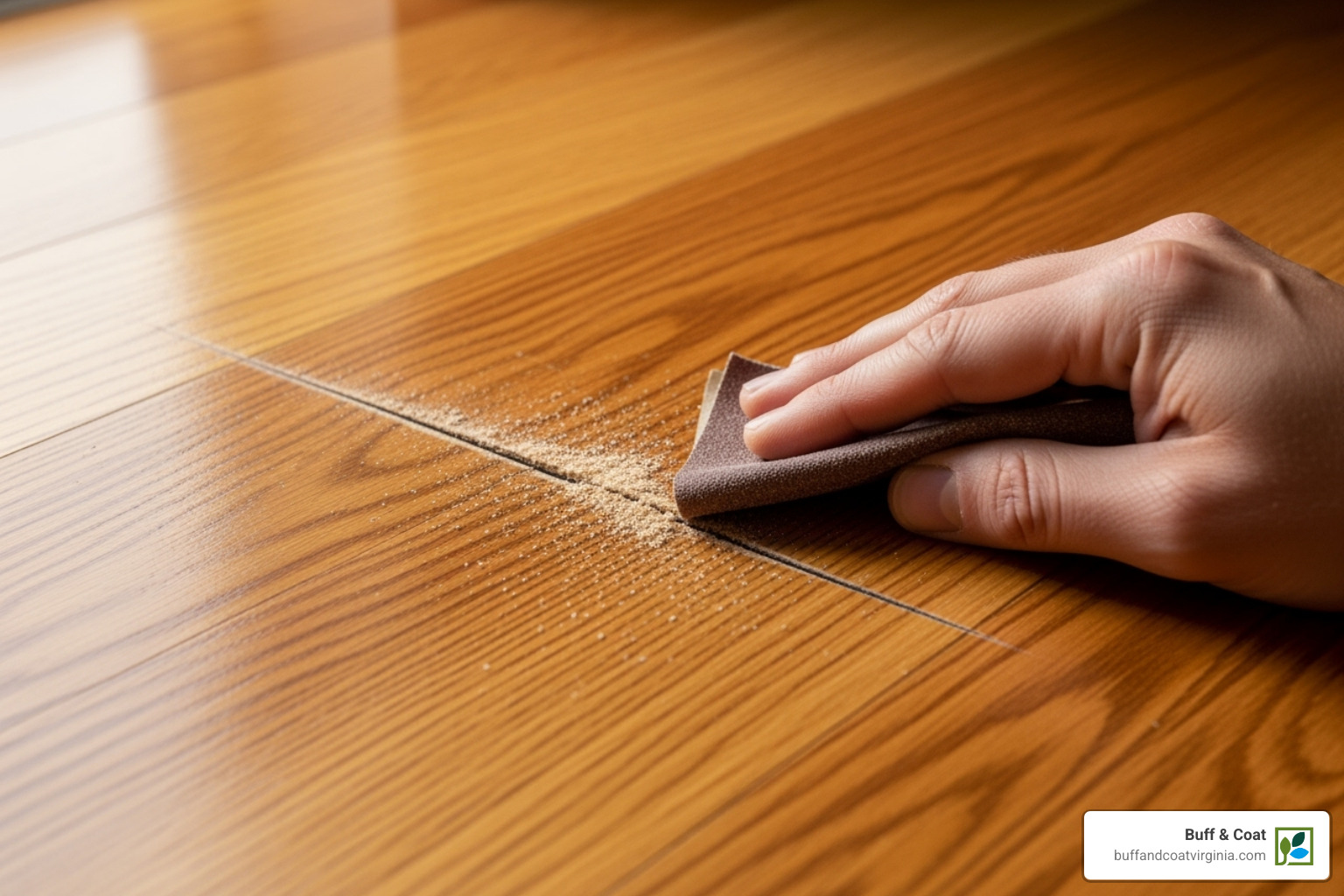
- Sanding: For isolated deep scratches, clean the area with mineral spirits. Lightly sand the damaged area with the grain, starting with 120-grit sandpaper and progressing to 180- and 220-grit for a smooth finish. Buffing with 0000 steel wool can help flatten high points. After sanding, wipe away all dust with a tack cloth.
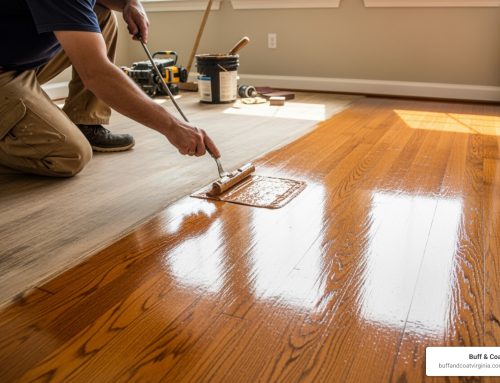
- Matching Stain and Finish: Once smooth, apply a matching wood stain, wiping away any excess. After the stain dries, apply a light layer of finish (polyurethane or lacquer) to protect the repair and blend it with the surface. This can be a meticulous process. If you’re tackling a larger area, learning about professional floor sanding might be your next step.
Preventing Future Scratches on Wood Surfaces
The best way to handle scratches is to prevent them from happening. An ounce of prevention is worth a pound of cure, especially for preserving the elegance of hardwood. Simple preventative measures now can save you countless hours of repair work later.
Protective Furniture and Floor Care
Daily life doesn’t have to mean daily damage. With a little foresight, you can dramatically reduce the risk of scratches.
- Felt pads: Place these on the bottom of all movable furniture—chairs, tables, sofas—to create a soft buffer between furniture legs and your wood floors.
- Coasters and placemats: These are essential for protecting wood tables from water rings, heat marks, and scratches from dinnerware.
- Area rugs: Use rugs in high-traffic areas and under dining tables to absorb impact and catch debris before it can scratch your floors.
- Pet nail trimming: Keep your pets’ nails trimmed and blunt to reduce the risk of scratches from playful moments.
- Regular cleaning: Dust and dirt act like sandpaper underfoot. Use a soft microfiber cloth for dusting and gentle products like Murphy Oil Soap for cleaning. Avoid harsh, abrasive, or ammonia-based cleaners that can strip the finish.
Regular Maintenance Routine
Consistency is key to wood care. A simple weekly routine keeps surfaces looking their best and helps you catch small issues early.
- Dusting: Regular dusting removes tiny abrasive particles that cause micro-scratches.
- Cleaning spills: Clean spills immediately to prevent stains and warping.
- Polishing: Every few months, polish your wood to add a protective barrier against scuffs and moisture.
- Inspecting for damage: During your cleaning routine, check for new scratches so you can fix them while they’re small.
Here’s your simple weekly wood care checklist:
- Dust all wood surfaces with a soft cloth
- Clean up any spills immediately
- Apply polish monthly or as needed
- Do a quick damage inspection during cleaning
- Ensure felt pads are still in place on furniture
By making these practices part of your routine, your wood surfaces will maintain their beauty much longer. For help with extensive damage, we offer free estimates and inspections to determine the best approach.
When to Call a Professional for Wood Scratch Repair
While many DIY repairs are successful, some situations require professional help. Knowing when to call in the pros can save you money in the long run and ensure your wood gets the expert care it deserves.
Consider professional help for the following issues:
- Extensive damage: If your floor has multiple deep gouges scattered across a large area, a DIY approach can result in a noticeable patchwork. Professional hardwood floor refinishing specialists can sand and refinish entire sections for a seamless, like-new appearance.
- Water damage: Scratches accompanied by dark water stains, warping, or swelling require specialized drying techniques and potential board replacement that go beyond typical DIY capabilities.
- Engineered hardwood or veneer: These surfaces have a thin top layer of real wood. Aggressive sanding can easily break through to the core, causing irreparable damage. Professionals have the delicate touch needed for these materials.
- Historic or antique furniture: To preserve the value and integrity of antique pieces, it’s best to consult a professional furniture restorer rather than risk DIY methods.
- Lack of time or confidence: How to restore scratched wood successfully requires patience and a steady hand. If you feel overwhelmed or worried about making things worse, calling for backup is a smart choice.
When DIY fixes aren’t enough, consult an expert. If you’re in the Richmond area, our team specializes in comprehensive wood floor repair in Richmond VA and can assess whether targeted repairs or full refinishing will yield the best results. Professionals have access to commercial-grade equipment and the knowledge to match finishes perfectly, offering peace of mind with a guaranteed result.
Conclusion
You now have the knowledge to tackle how to restore scratched wood, from a simple walnut rub for light scuffs to sanding and refinishing for deep gouges. We’ve covered assessing the damage, exploring various solutions, and the importance of prevention. The key to successful restoration is matching the right method to the type of damage. A little care with felt pads, coasters, and regular maintenance goes a long way in keeping your wood looking its best.
While many issues can be fixed at home, some damage requires a professional touch. When dealing with extensive scratches, multiple deep gouges, or water damage, it’s time to call in the experts.
For a guaranteed perfect finish, consider the expert services of professional floor refinishing. Our dust-free techniques ensure a beautiful, durable restoration without the mess of traditional sanding. We’ve seen it all, and sometimes a simple scratch repair can reveal underlying issues needing specialized attention. We offer free inspections to provide a professional assessment without commitment. Let us bring the shine back to your floors. Contact us for a free estimate and schedule your inspection today.