Why Wood Filler for Scratches is Every Homeowner’s Best Friend
Wood filler for scratches is a simple, affordable solution that can make unsightly marks on your wood surfaces disappear in minutes. Whether you’re dealing with pet scratches on your dining table or scuffs on your hardwood floors, the right wood filler can restore your wood’s beauty. While this guide focuses on DIY fixes, professional hardwood floor restoration can bring your floors back to their original beauty without the need for expensive, full-scale refinishing.
Quick Answer for Wood Filler Selection:
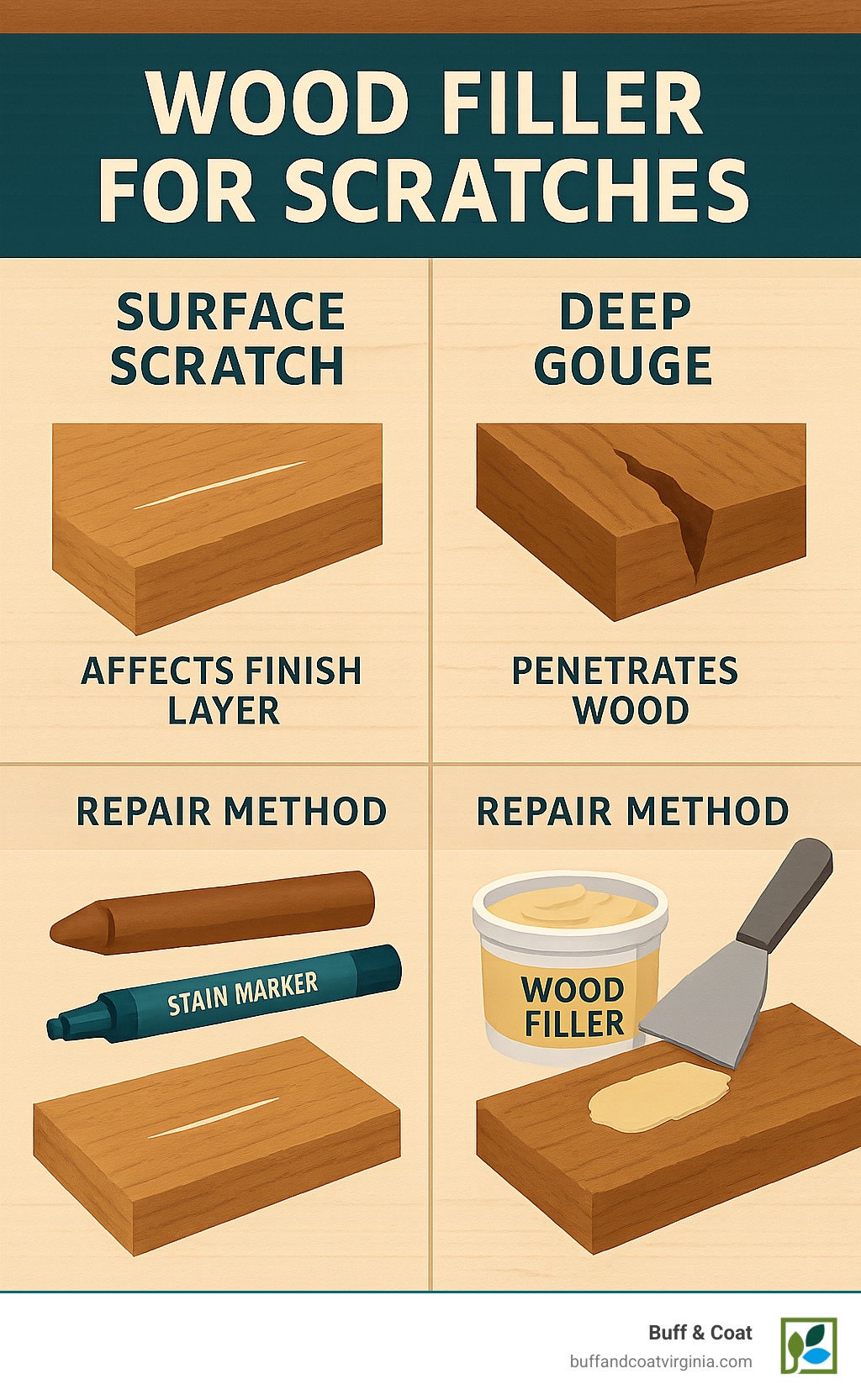
- Surface scratches: Use wax filler sticks or stain markers
- Deep scratches: Use wax filler sticks with multiple applications
- Gouges with missing wood: Use traditional wood filler paste
- Finished wood surfaces: Wood putty works best
- Unfinished wood: Standard wood filler is ideal
Wood scratches happen to everyone. Your cat’s claws leave marks on furniture legs. Moving day creates scuffs on door frames. Daily life leaves its mark on the wood surfaces you love most.
The good news? Most scratches are purely cosmetic and much easier to fix than you think.
Modern wood filler products come in convenient stick form – like crayons for your furniture. You simply rub them over the scratch, wipe away the excess, and you’re done. No mixing, no waiting for drying time, no sanding required.
For homeowners dealing with extensive floor damage, professional hardwood floor restoration can bring your floors back to their original beauty.
As David Emmerling, owner of Buff & Coat Hardwood Floor Refinishing with over 20 years of experience, I’ve seen countless homeowners successfully use wood filler for scratches on furniture and trim before calling professionals for more complex floor repairs. This guide will show you exactly how to achieve professional-looking results on your own.
Understanding Wood Filler Sticks and Their Uses
Before we jump into the repair process, let’s get familiar with what wood filler for scratches actually is and how it works its magic. Think of this as your crash course in wood repair basics – understanding these fundamentals will help you choose the right product and get professional-looking results.
What Are Wood Filler Sticks?
Picture a crayon, but instead of coloring on paper, it’s designed to fix scratches on your favorite wooden furniture. That’s essentially what a wood filler stick is! These handy little tools are made from a wax-based composition that comes in a convenient crayon-like form.
The beauty of these sticks lies in their simplicity. When you rub them across a scratch, the wax material fills the void and blends with the surrounding wood. Unlike traditional wood fillers that turn rock-hard, these wax sticks don’t harden completely. This means you won’t need to wait around for drying time or break out the sandpaper afterward.
The filling and concealing mechanism works by physically filling the scratch while matching the color of your wood. It’s not technically “healing” the wood, but it’s doing something even better – making that annoying scratch virtually disappear by reflecting light just like the undamaged wood around it.
Wood Filler vs. Wood Putty: What’s the Difference?
Here’s where things get a bit confusing, and honestly, even some hardware store employees mix these up! The terms “wood filler” and “wood putty” are often used interchangeably, but they’re actually different products designed for different jobs.
| Feature | Wood Filler | Wood Putty |
|---|---|---|
| Best for | Unfinished wood projects | Finished wood surfaces |
| When to apply | Before staining or finishing | After finishing is complete |
| Hardening | Dries rock-hard, needs sanding | Stays somewhat flexible |
| Stainability | Absorbs stain like real wood | Pre-colored to match existing finishes |
| Composition | Water or solvent-based with wood fibers | Oil-based with plasticizers |
For most scratch repairs on finished furniture, cabinets, and floors, you’ll want wood putty (which often comes in those convenient stick forms we’re talking about). Wood filler is more for filling big holes in raw wood before you apply stain or paint.
The stick-form products we’re focusing on for scratch repair fall into the wood putty category, even though they’re often marketed as “wood filler sticks.” Don’t let the naming confusion throw you off – what matters is getting the right product for your specific repair job.
For more detailed information on various wood repair techniques, check out more on repairing wood floors from Bob Vila.
What Types of Damage and Surfaces Can Filler Sticks Repair?
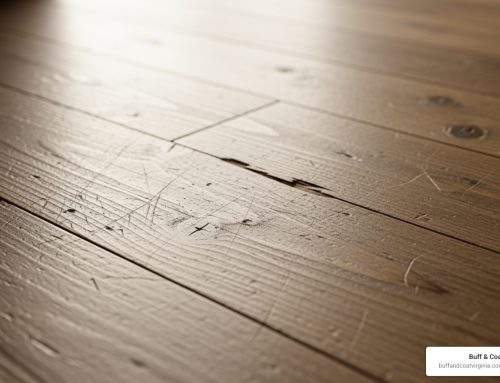
Wood filler for scratches is fantastic for superficial issues – the kind of everyday damage that makes you cringe but doesn’t actually compromise the structural integrity of your wood. We’re talking about those frustrating scratches from pet claws, gouges from dropped objects, and nicks from general wear and tear.
These versatile sticks work wonderfully on finished wood surfaces throughout your home. Your furniture – dining tables, coffee tables, dressers, and nightstands – can all benefit from this simple repair method. Cabinets in kitchens and bathrooms are prime candidates too, especially around handles where scratches tend to accumulate.
Don’t overlook your moldings and trim work either. Baseboards, door frames, and crown molding often get dinged during moves or daily life, and filler sticks can make these repairs nearly invisible. Doors themselves, both interior and exterior, frequently develop scratches that respond well to this treatment.
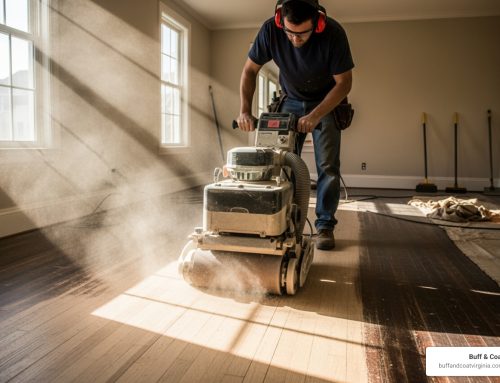
And yes, you can use them on hardwood floors for minor scratches and scuffs. However, for extensive floor damage or deep gouges, professional floor refinishing services will give you much better long-term results than any DIY approach.
The key is understanding that these products excel at cosmetic fixes. They’re not meant for structural repairs, large holes, or rotted wood – those situations call for more heavy-duty solutions or professional intervention.
How to Use Wood Filler for Scratches: A Step-by-Step Guide
Ready to make those scratches disappear? Using wood filler for scratches is surprisingly straightforward – think of it as giving your wood surfaces a quick touch-up rather than a complete makeover. With the right approach and a few simple tools, you’ll have professional-looking results in just minutes.
The beauty of this repair method lies in its simplicity. Unlike traditional wood repairs that require mixing compounds, waiting for things to dry, and sanding everything smooth, wood filler sticks work more like makeup for your furniture. You apply them, blend them in, and you’re done.
Step 1: Choosing the Right Color and Product
Getting the color right makes all the difference between a repair that disappears and one that sticks out like a sore thumb. This step is worth taking your time with.
Start by examining your wood surface in good natural light. Most wood has subtle color variations – some boards might be lighter, others darker, with grain patterns that shift from honey tones to deep browns. Don’t just look at one spot; walk around and see how the color changes in different lighting.
When selecting your filler stick, it’s usually better to go slightly darker than lighter. A repair that’s a shade too dark tends to blend into the wood’s natural shadow lines, while one that’s too light will catch your eye every time you walk by.
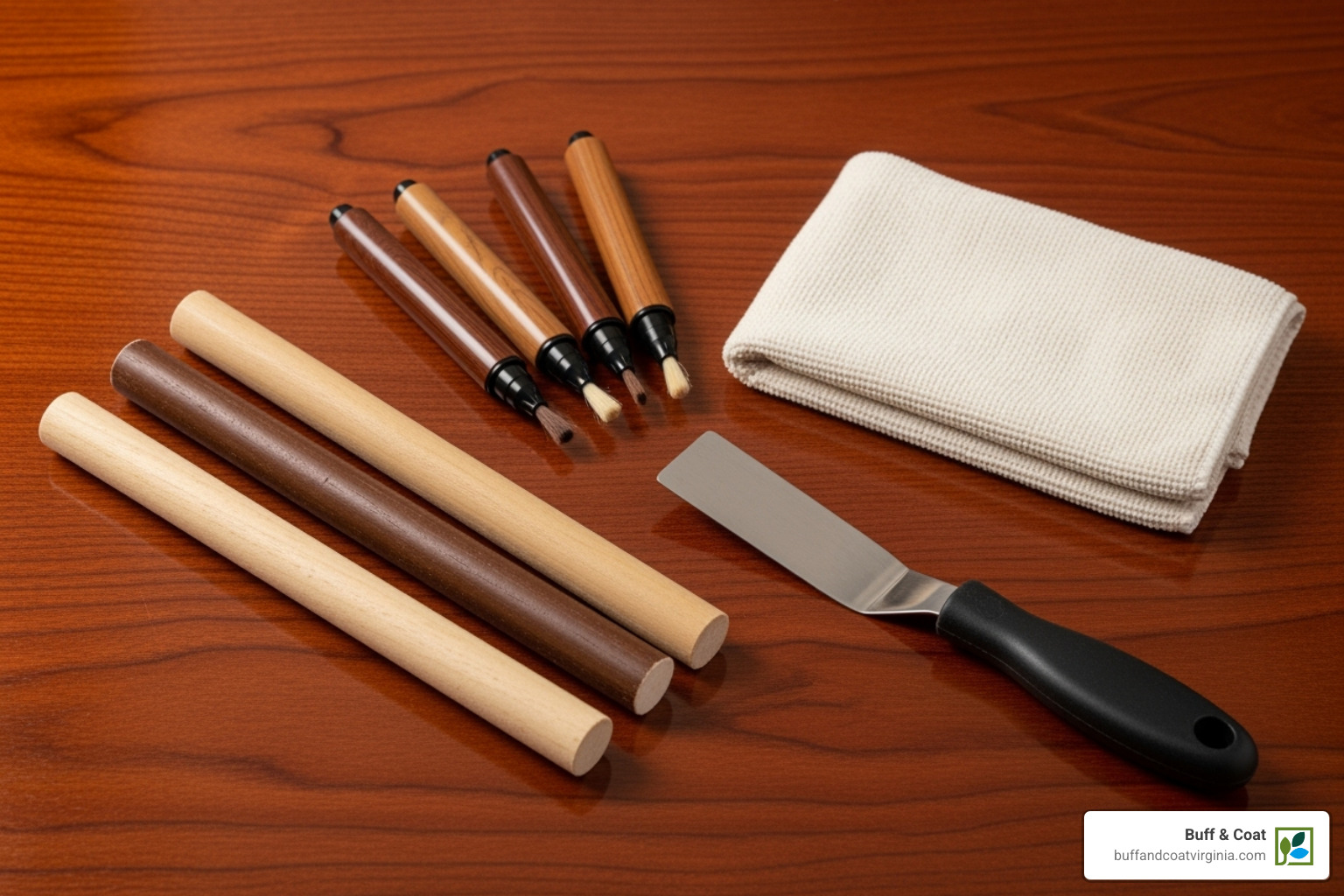
Popular repair kits like the Weiman Wood Furniture Repair Kit come with multiple colors and markers, giving you plenty of options to find the perfect match. The Guardsman Wood Repair Filler Sticks are another excellent choice, offering five different wood tones that cover most common finishes.
Here’s a pro tip: don’t be afraid to blend colors. If your wood has complex tones, you can layer different shades to create a custom match. Apply a base color first, then add highlights or deeper tones as needed.
Always test your chosen color in an inconspicuous area first – maybe under a table edge or inside a cabinet door. This gives you a preview of how the repair will look without committing to the visible area.
Step 2: Preparing the Scratched Area
A clean surface is crucial for a repair that will last. Think of this step as creating the perfect canvas for your work.
Start by wiping down the scratched area with a clean, slightly damp cloth to remove any surface dirt, dust, or fingerprints. For particularly dusty areas, a tack cloth works wonderfully to pick up fine particles without leaving lint behind. Make sure the area is completely dry before moving to the next step.
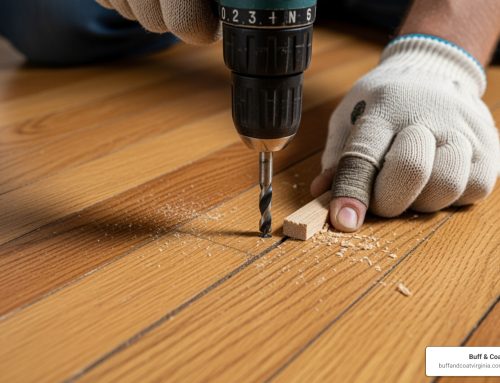
For deeper scratches, take a moment to inspect the damage. Sometimes you’ll find tiny splinters or loose wood fibers hanging into the scratch. These need to go – they’ll prevent the filler from adhering properly and can make your repair look messy. Use a plastic putty knife or even an old credit card to gently remove any loose material.
The goal is to create a clean, stable void that the filler can completely fill. Don’t worry about making the scratch look perfect at this stage – just remove anything that’s loose or hanging.
Step 3: Applying the wood filler for scratches
Now comes the satisfying part – watching those scratches disappear before your eyes. The technique varies slightly depending on how deep your scratch goes, but both approaches are surprisingly simple.
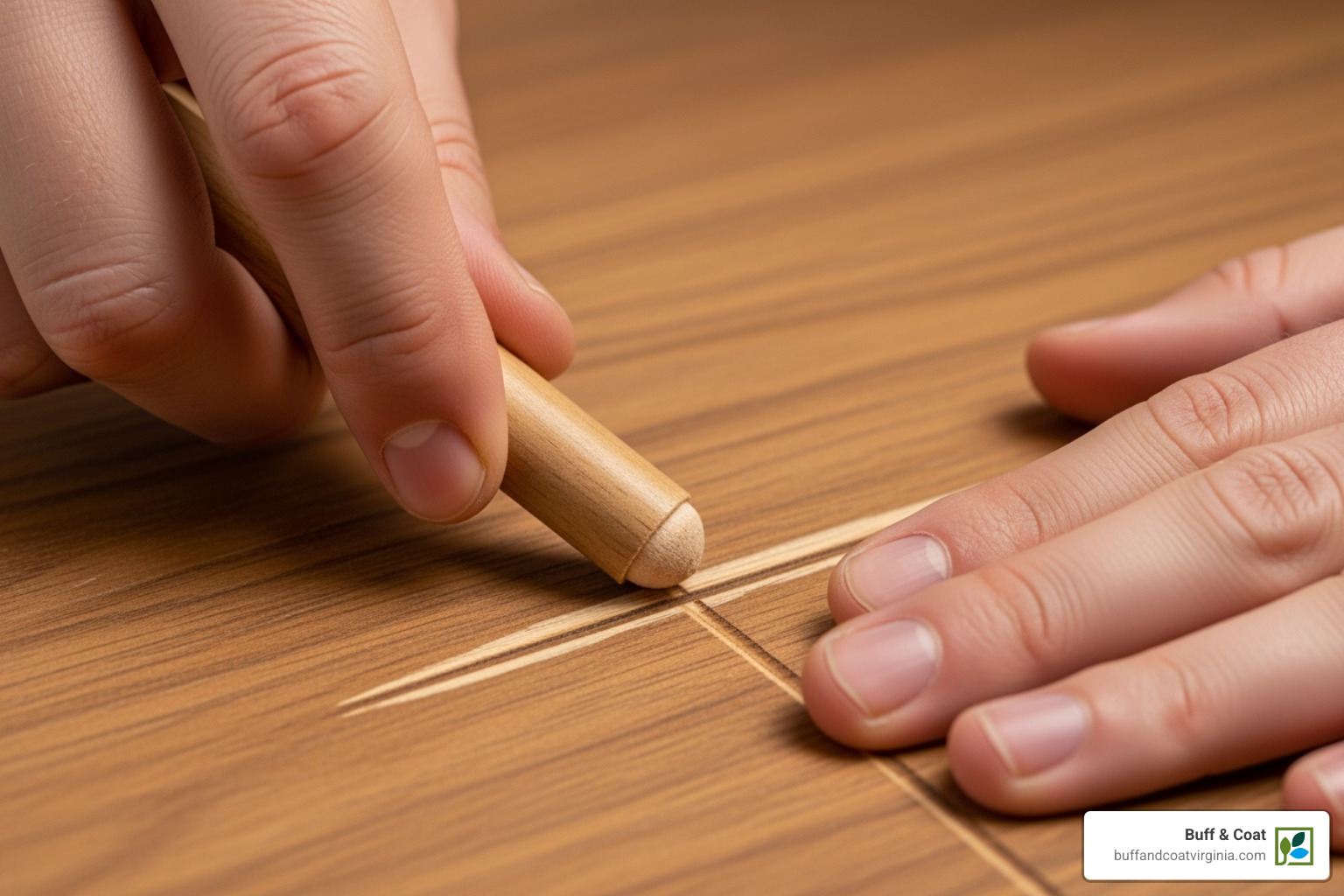
For surface scratches that haven’t gone too deep, hold your filler stick like a crayon and rub it firmly across the scratch. Move perpendicular to the scratch direction – this ensures the wax gets pushed down into the groove rather than just sliding along the surface. Apply steady, moderate pressure, as if you’re trying to color in a coloring book with a stubborn crayon.
Keep rubbing until the scratch is completely filled and you have a little extra filler sitting proud of the surface. Don’t worry about this excess – we’ll remove it in the next step. The key is making sure the scratch itself is completely packed with filler.
For deeper scratches and gouges, you’ll need to be a bit more aggressive. Press the end of the filler stick directly into the deepest part of the damage and work it back and forth with firm pressure. Think of it like filling a pothole – you want to make sure every bit of the void is packed solid.
Very deep scratches might need multiple applications. Build up the filler in layers, pressing each layer down firmly before adding the next. The wax-based formula makes this easy since there’s no drying time between coats.
Step 4: Finishing the Repair for a Seamless Look
This final step transforms your repair from “obviously fixed” to “I can’t even tell where the scratch was.” It’s all about removing the excess filler and blending everything together seamlessly.
Immediately after applying the filler, use a plastic straightedge to scrape away any excess material. An old credit card works perfectly for this, or you can use the plastic leveling tool that comes with many repair kits. Hold your scraper at a slight angle and work in the direction of the wood grain, not against it.
The goal is to make the filler level with the surrounding wood surface. Don’t press too hard – you want to remove the excess without pulling the filler out of the scratch itself. Take your time with this step; it makes all the difference in the final appearance.
Once you’ve scraped away the excess, take a soft, clean cloth and gently buff the entire repaired area. Work along the wood grain with light, smooth strokes. This removes any thin film of wax that might be left on the surface and helps blend the repair edges into the surrounding finish.
Step back and examine your work from different angles and lighting conditions. The repair should be nearly invisible. If you can still see the scratch, simply repeat the application process – the beauty of wax filler sticks is that you can layer them as many times as needed to get perfect results.
The best part? There’s no waiting around for anything to dry or cure. Your repair is complete and ready to withstand normal use immediately.
Advanced Tips and Alternative Scratch Repair Methods
While wax filler sticks are fantastic for many common scratches, understanding their strengths, avoiding common pitfalls, and knowing when to consider other solutions will help you achieve the best possible results for your wood surfaces.
Advantages of Wax Filler Sticks
There’s a reason we recommend wood filler for scratches in stick form to so many homeowners – they’re genuinely game-changers for quick wood repairs. The instant results are perhaps their biggest advantage. Unlike traditional wood fillers that leave you waiting hours or even days for drying, wax sticks work immediately. You can see your repair the moment you finish buffing.
The no-sanding requirement makes these sticks perfect for finished surfaces where sanding could damage the surrounding area. I’ve seen too many DIY projects go wrong when someone tried to sand a small repair on a beautiful dining table, only to create a larger problem with the existing finish.
Beginners love these sticks because they’re so forgiving. The crayon-like application feels natural, and if you make a mistake, you can often warm the area gently with a hairdryer and wipe the wax away to start over. This reversible nature takes the pressure off getting it perfect on the first try.
What many people don’t realize is that quality products like Guardsman Wood Repair Filler Sticks are waterproof, actually protecting your wood against future moisture damage. This means your repair isn’t just cosmetic – it’s adding a layer of protection to a vulnerable spot.
Common Mistakes to Avoid When Using wood filler for scratches
Even with such a user-friendly product, I’ve seen homeowners make a few key mistakes that can turn a simple repair into a visible patch job.
Color matching troubles top the list. I always tell people to test in a hidden spot first, and when you’re torn between two colors, go slightly darker. A too-light repair stands out like a sore thumb, while a slightly darker one tends to blend naturally with wood’s natural variation.
Skipping the cleaning step might seem minor, but it’s crucial. That thin layer of dust or furniture polish will prevent the wax from adhering properly. A quick wipe with a clean, damp cloth makes all the difference in how well your repair holds up.
Heavy-handed application can actually create new problems. While you want to fill the scratch completely, pressing too hard can damage the surrounding finish or even create new scratches. Think gentle but firm pressure, like you’re coloring carefully with a crayon.
The excess removal step is where many repairs go from invisible to obvious. If you leave a waxy film around the scratch, it’ll catch light differently and draw attention to the repair. Take your time with the scraping and buffing – it’s what makes the repair disappear.
Most importantly, these sticks are for cosmetic fixes only. Don’t try to use them on broken furniture legs or large holes. They’re not structural adhesives and won’t hold up to that kind of stress.
Alternative Products for Wood Scratch Repair
Sometimes a wax filler stick isn’t the perfect solution, and knowing your alternatives can save you time and frustration.
Stain markers work beautifully for those whisper-light scratches where only the finish is affected. The markers in kits like the Weiman Wood Furniture Repair Kit simply recolor the exposed wood without adding bulk. They’re perfect for those hairline scratches that are more about color than actual depth.
When you’re dealing with larger holes or deep gouges in unfinished wood, traditional wood filler paste becomes your best friend. These products dry hard, can be sanded smooth, and many are stainable so they’ll take on color just like the surrounding wood. You’ll need a putty knife for application, and patience for drying time, but the results are structurally sound.
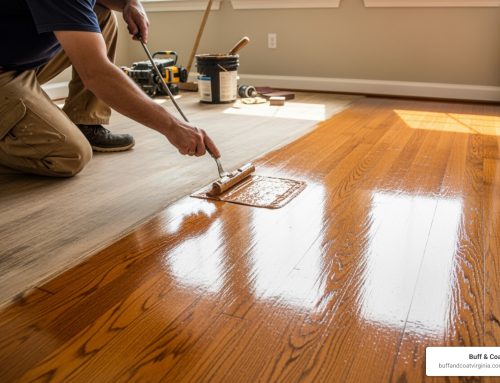
For deeper repairs that need to match an existing finish perfectly, you might need to follow up with matching wood stain and a protective sealer. This is more involved but necessary for a truly invisible, long-lasting repair.
Here’s a fun trick many people don’t know: a walnut can actually fix very light scratches! The natural oils and color in a walnut meat can fill and camouflage the shallowest marks. It’s worth trying before reaching for any products.
When you’re looking at extensive floor damage – multiple deep scratches, worn areas, or damage across large sections – professional hardwood floor sanding often proves more cost-effective than trying to patch numerous individual spots. We’ve helped many Richmond area homeowners who started with DIY repairs only to realize the scope was bigger than they initially thought.
Frequently Asked Questions about Wood Filler
Even after walking through the repair process together, I know you might still have some lingering questions about using wood filler for scratches. Let’s address the most common concerns I hear from homeowners who are considering this DIY approach.

Can wood filler sticks be used on laminate or engineered wood?
This is a great question, especially since so many homes today have these modern flooring options. The short answer is yes, wood filler sticks can work on laminate or engineered wood for minor surface scratches, but there are some important caveats to keep in mind.
The key is understanding what you’re working with. If the scratch only affects the top decorative layer and isn’t too deep, a filler stick can help camouflage it effectively. However, I always recommend testing in a hidden spot first – maybe under a cabinet toe kick or behind a door.
Here’s the thing: wood filler for scratches works best on solid wood because the wax naturally blends with genuine wood fibers and finishes. Laminate and engineered wood often have synthetic top layers or very thin veneers that don’t absorb or blend with the wax quite as seamlessly. Think of it like trying to color on plastic versus paper – it can work, but the results might not be as smooth or long-lasting.
How durable is a repair made with a wax filler stick?
Let’s be honest about what we’re dealing with here – a wax filler stick creates a cosmetic fix, not a structural repair. But that doesn’t mean it’s not effective!
For furniture, cabinets, moldings, and doors, these repairs can be surprisingly durable. Many homeowners tell me their repairs have lasted years without any issues. The wax stays put and continues to protect the wood underneath from moisture and further damage.
Floor repairs are a different story, though. High-traffic areas where people walk frequently, or spots where furniture gets moved around, can cause the wax to wear down over time. You might find yourself reapplying the filler every six months to a year in these areas.
If you’re dealing with extensive floor scratches or want a truly permanent solution, that’s where professional refinishing really shines. The repair will be invisible and last for decades.
Do I need to apply a sealer over the filler stick repair?
Generally speaking, no – you don’t need to add a sealer over your wax filler repair. The wax itself provides moisture protection, especially if you’re using quality products like Guardsman Wood Repair Filler Sticks, which are waterproof.
Actually, trying to apply a traditional polyurethane or varnish over wax can create problems. Wax acts as a release agent, which means water-based sealers often won’t stick to it properly. You could end up with peeling or an uneven finish that looks worse than the original scratch.
If you feel like you absolutely need extra protection, make sure to buff the area thoroughly first to remove any excess wax residue. But honestly, for most furniture and trim repairs, the wax protection is perfectly adequate.
For floors, if you’re considering applying a topcoat over the entire surface, it’s usually better to use a different type of filler that’s specifically designed to accept a sealer. This is another situation where professional advice can save you from costly mistakes.
Conclusion: Restoring Your Wood’s Beauty
There’s something deeply satisfying about making an ugly scratch disappear with just a few simple strokes of a wood filler for scratches stick. Throughout this guide, we’ve walked you through everything you need to know to tackle those pesky marks that life inevitably leaves on your beautiful wood surfaces.
Wood filler for scratches truly is every homeowner’s secret weapon for quick cosmetic repairs. Whether it’s your dining table bearing the battle scars of family dinners, cabinet doors showing wear from daily use, or baseboards marked up from moving furniture, these wax-based sticks offer an incredibly fast and effective DIY solution that requires no special skills or expensive tools.
The beauty of this approach lies in its simplicity. No mixing compounds, no waiting for things to dry, no sanding required. Just choose your color, rub it in, wipe away the excess, and you’re done. It’s the kind of repair that makes you feel like a home improvement hero in under five minutes.
But let’s be realistic about when DIY reaches its limits. While wood filler for scratches works wonderfully for minor cosmetic repairs on furniture, cabinets, moldings, and doors, extensive floor damage tells a different story. When you’re dealing with deep gouges across multiple floorboards, widespread scratching, or floors that have lost their protective finish entirely, that’s when it’s time to call in the professionals.
At Buff & Coat, we’ve spent over two decades helping Richmond-area homeowners transform tired, scratched floors back into the stunning surfaces they once were. Our advanced, dust-free techniques don’t just hide damage – they eliminate it completely while adding layers of protection against future wear.
If your floors need more than a quick touch-up, we’re here to help. For a professional assessment and a free estimate on bringing your hardwood floors back to life, contact Buff & Coat today and schedule a free inspection. Sometimes the most beautiful changes require a professional touch, and we’d love to show you what’s possible for your home.