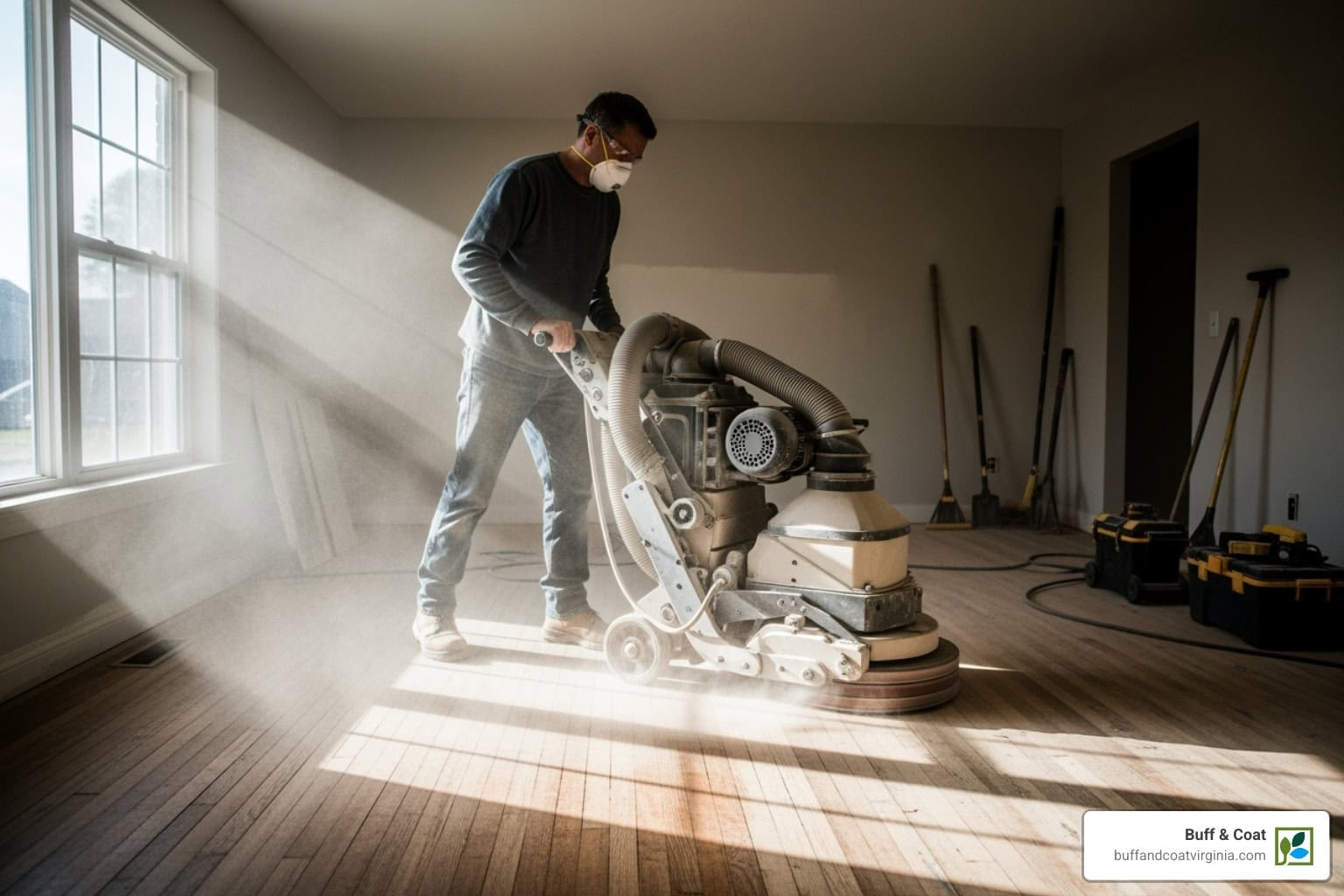
Why Choosing the Right Floor Sanding Contractor Matters
Finding reliable floor sanding contractors can transform your worn hardwood floors into stunning focal points and boost your home’s value. If you’re ready to start the process, consider partnering with experts in professional floor sanding who’ve spent decades perfecting beautiful, long-lasting finishes throughout Central Virginia. Here’s what to look for when evaluating contractors:
Key Contractor Qualifications:
- Licensed and insured with current credentials
- 5+ years of experience in floor sanding and refinishing
- Dust-free sanding equipment (95%+ dust containment)
- Written estimates and contracts with detailed scope
- Recent references from satisfied customers
- Industry certifications (NWFA standards preferred)
The difference between a mediocre and exceptional floor refinishing job often comes down to the contractor you choose. With refinishing costs averaging $3 to $8 per square foot compared to $6 to $12 for new installation, selecting the right professional protects both your investment and your home’s beauty.
Whether you need professional floor sanding in Richmond, VA or surrounding areas, asking the right questions upfront prevents costly mistakes and ensures stunning results. A quality contractor will use advanced dust containment systems, offer multiple finish options, and provide transparent pricing with detailed timelines.
I’m David Emmerling, President of Buff & Coat Hardwood Floor Refinishing, and I’ve worked with floor sanding contractors throughout Richmond for over 20 years. My experience has shown me exactly what separates exceptional professionals from those who cut corners and disappoint homeowners.
Common floor sanding contractors vocab:
- Book Dust-Free Floor Sanding Service
- Cost of Professional Floor Sanding Services
- Dust Free Floor Sanding Near Me
Why Refinish? The Value of Restoring Your Hardwood Floors
Hardwood floors are a prized asset in any home, but like any beautiful feature, they require care. Over time, daily life takes its toll, leaving floors looking dull, scratched, and discolored. Recognizing the signs that your floors need attention is the first step toward restoring their natural beauty.
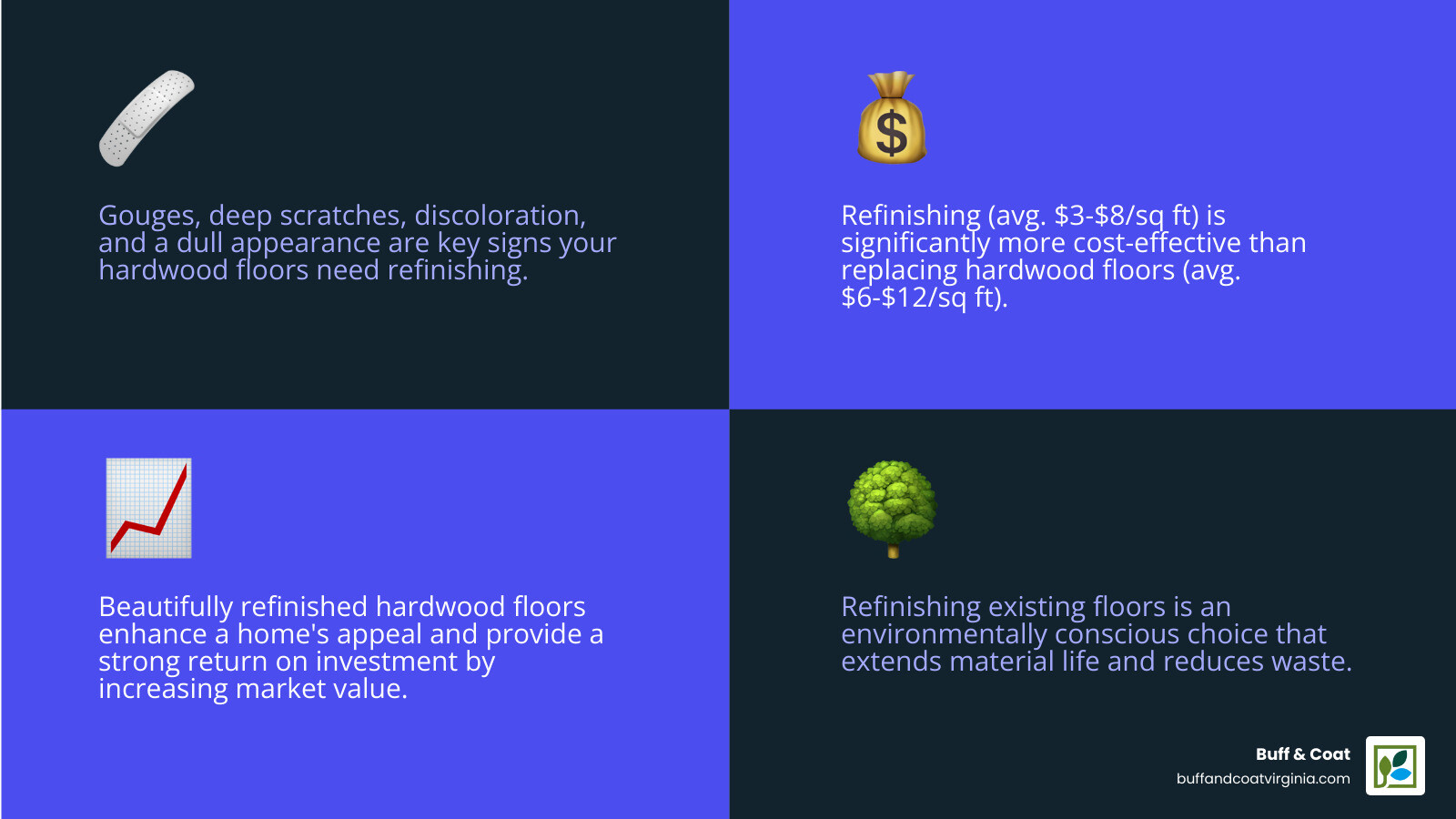
Signs Your Hardwood Floors Need Refinishing:
- Gouges, scrapes, and deep scratches: These go beyond the surface finish and into the wood itself, often appearing in high-traffic areas.
- Discoloration: Sun exposure can fade wood, while spills or pet accidents can cause dark stains that penetrate the finish.
- Water damage: Warping, bowing, or rotting spots indicate severe moisture issues that require immediate attention.
- Weak, spongy, or soft spots: These can suggest underlying subflooring damage, which a professional can assess during the refinishing process.
- Dull and worn appearance: If your floors lack their original luster and appear lifeless across most of the surface, it’s a clear signal.
Beyond aesthetics, refinishing hardwood floors offers significant benefits, especially when compared to the alternative of replacement.
Cost-Effectiveness:
Refinishing is almost always more budget-friendly than installing brand new hardwood floors. On average, the cost to refinish hardwood floors is $1,900, with a typical range of $600 to $4,500. Traditional refinishing costs about $3 to $8 per square foot, while dustless refinishing is around $5 to $8 per square foot. In contrast, installing new hardwood floors averages about $4,800, ranging from $1,000 to $12,000, or $6 to $12 per square foot for labor and materials.
Increasing Home Value:
Beautifully refinished hardwood floors significantly boost a home’s appeal and market value. Homebuyers consistently prioritize updated kitchens, bathrooms, and flooring. Restoring your hardwood can transform a property, making it more attractive to potential buyers and yielding a strong return on investment.
Sustainability:
Choosing to refinish your floors is an environmentally conscious decision. It extends the life of existing materials, reducing waste and the demand for new timber.
| Feature | Refinishing Hardwood Floors | Installing New Hardwood Floors |
|---|---|---|
| Average cost per sq. ft. | $3 – $8 (dustless: $5 – $8) | $6 – $12 |
| Typical total project cost | $600 – $4,500 | $1,000 – $12,000 |
| Timeline | 2 – 5 days | 1 – 2 weeks |
| Disruption to household | Minimal dust, furniture moved once | Demo noise, debris, longer downtime |
| Environmental impact | Re-uses existing wood | Requires new lumber |
The Hardwood Floor Rebirth Cycle: A Quick Look at the Refinishing Process
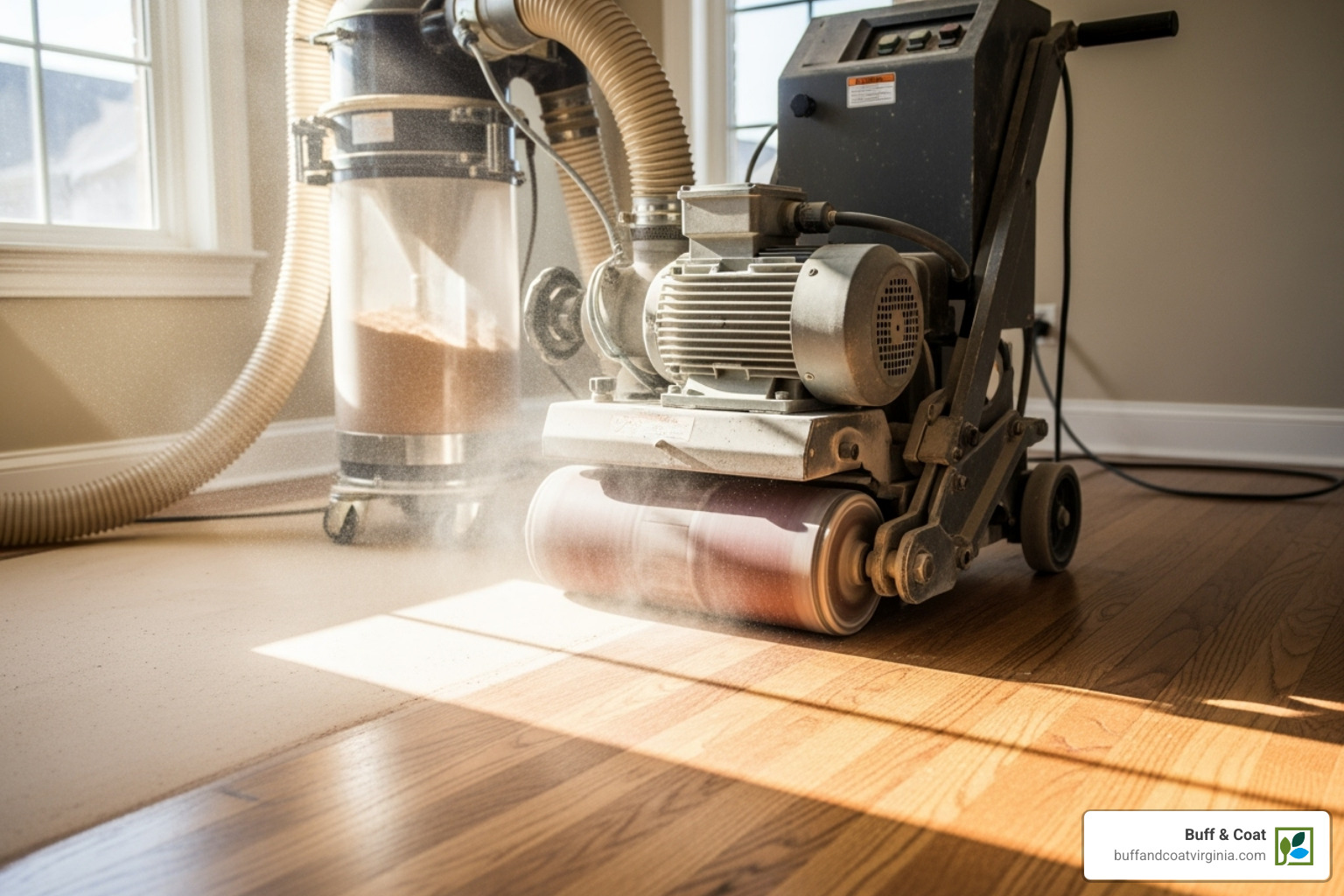
When we undertake a full hardwood floor refinishing project, we’re essentially giving your floors a new lease on life. The process is meticulous and requires expertise, but the results are truly transformative. Here’s a general overview of the main stages:
- Preparation is Key: Before any sanding begins, the room must be completely cleared. This means removing all furniture, drapes, pictures, and even register covers. We’ll also address any necessary repairs during this phase. Loose boards are secured, and severely damaged planks are replaced with matching material.
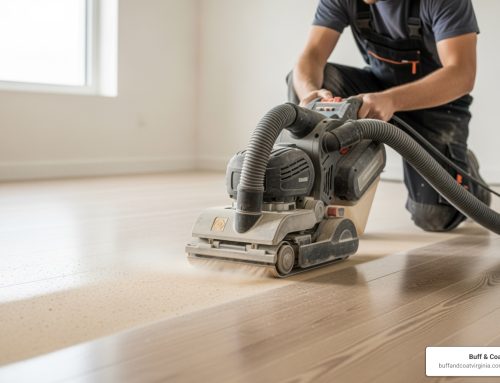
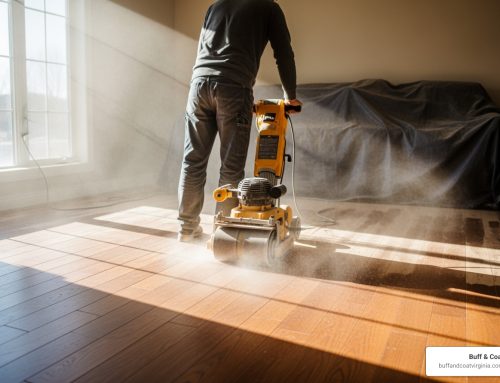
- The Sanding Process – Down to Bare Wood: This is the core of refinishing. We use professional-grade sanding equipment designed to remove the old finish, stains, and imperfections, taking the floor down to bare wood. This involves multiple passes with progressively finer sandpaper grits. We start with a coarse grit to remove the bulk of the old finish and any deep scratches. Subsequent passes use medium and then fine grits to smooth the wood and prepare it for staining and finishing.
- Filling Gaps and Minor Repairs: Once the floor is sanded, we inspect it for any remaining imperfections like small cracks or gaps between floorboards. These can be filled with wood filler if desired, creating a more uniform look.
- Staining (Optional, but Popular!): This is where you can truly customize the look of your floors. If you want to change the color of your hardwood, a stain is applied evenly across the bare wood. We work with popular stain manufacturers like Minwax and can offer a wide selection of stain colors, from light and airy to dark and dramatic.
- Applying the Finish – Protection and Beauty: Once the stain is dry (or directly after sanding if no stain is applied), multiple coats of protective finish are applied. Typically, we apply three coats to ensure maximum durability and a rich appearance. This finish is what protects your floors from daily wear and tear, moisture, and UV damage.
- Curing Time – Patience is a Virtue: After the final coat of finish is applied, the floors need time to cure. Light foot traffic is usually allowed 24 – 48 hours after the final coat. However, we strongly recommend waiting at least 7 days before moving furniture back onto the floors and placing rugs.
A typical timeline for a professional hardwood floor refinishing project depends on the size and condition of your space. Small to medium rooms (200 – 500 sq. ft.) usually take 2 – 3 days. Larger areas (500+ sq. ft.) typically take 4 – 5 days or more.
The Dust-Free Advantage and Climate Considerations
One of the biggest concerns homeowners have about floor refinishing is the mess. Traditionally, sanding created a massive amount of dust that infiltrated every corner of the house. Thankfully, technology has advanced significantly!
Dust-Free Sanding: We use advanced, dust-free sanding techniques that capture over 95% of the dust produced instantly. Our machines are connected to powerful HEPA-filtered vacuums, and we take extra precautions like sealing off rooms with plastic coverings and plugging HVAC vents. While no process is 100% dust-free, this dramatically minimizes airborne particles, resulting in a cleaner home, better air quality, and significantly less post-project cleanup for you. To learn more about how we achieve a clean and healthy refinishing process, explore our services for Book Dust-Free Floor Sanding Service.
Regional Climate Impact: The climate where you live plays a significant role in how hardwood floors behave and how the refinishing process needs to be handled. For us, operating in Richmond, VA, we understand the unique challenges posed by our local climate. Virginia experiences distinct seasons, with humid summers and dry winters.
Wood is a hygroscopic material, meaning it naturally expands and contracts with changes in humidity. High humidity can cause wood to swell, while dry conditions can cause it to shrink, leading to gaps or even cupping. Our experienced floor sanding contractors take these factors into account during the refinishing process. Understanding how wood and water interact is crucial for a lasting finish. We also advise on maintaining optimal indoor humidity levels after refinishing to preserve your floors’ integrity and beauty for years to come.
Key Questions to Ask Potential Floor Sanding Contractors
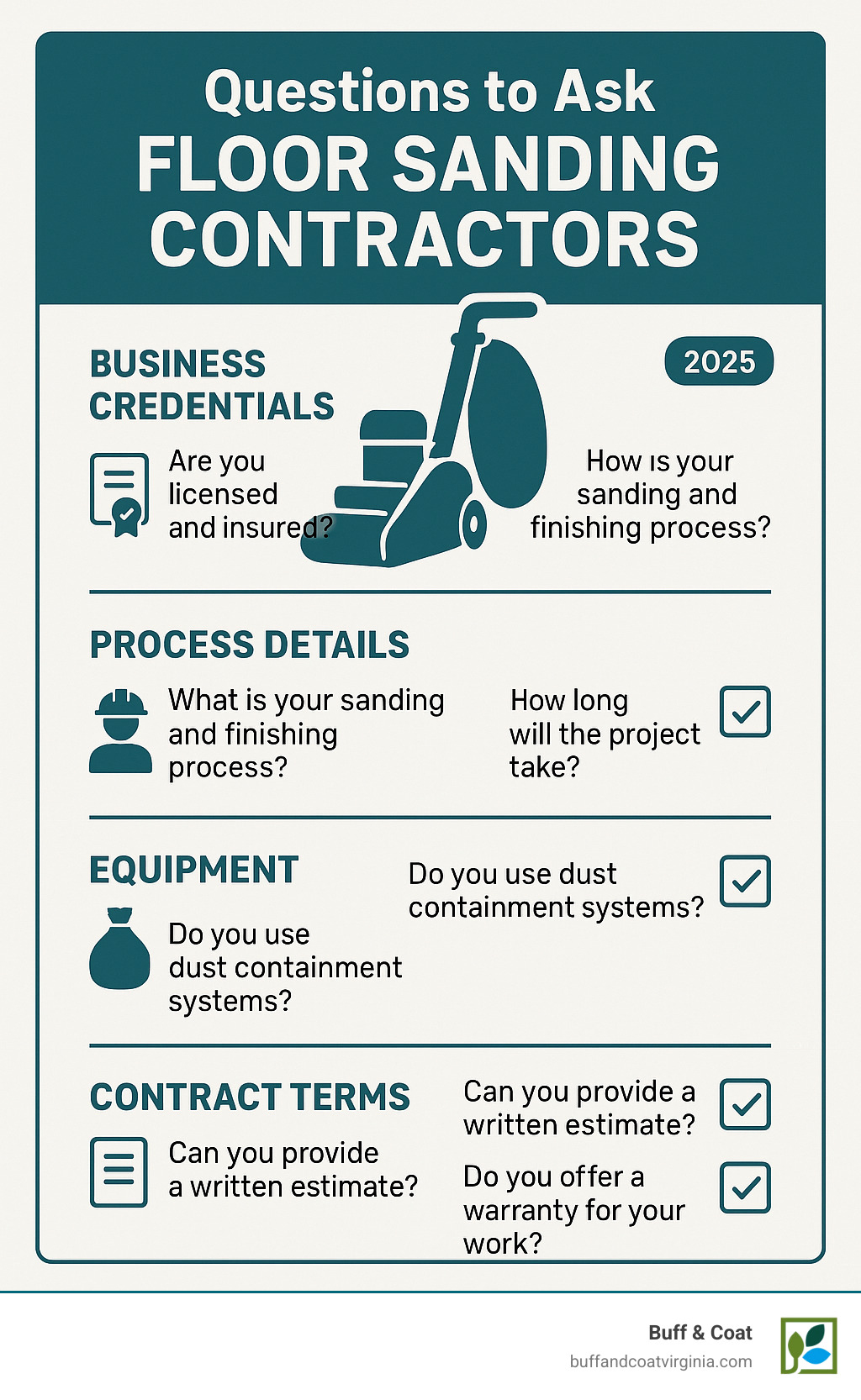
Finding the right floor sanding contractors is probably the most important decision you’ll make during your floor refinishing project. Think of it this way: you’re not just hiring someone to sand wood – you’re inviting professionals into your home to transform one of its most valuable features. The right contractor will make the process smooth and stress-free, while the wrong choice can lead to headaches, delays, and disappointing results.
When I meet with homeowners, I always encourage them to ask lots of questions. In fact, if a contractor seems annoyed by your questions or gives vague answers, that’s a red flag. A professional who takes pride in their work will welcome your curiosity and provide clear, detailed responses. After all, professional floor sanding requires expertise, and you deserve to understand exactly what you’re getting for your investment.
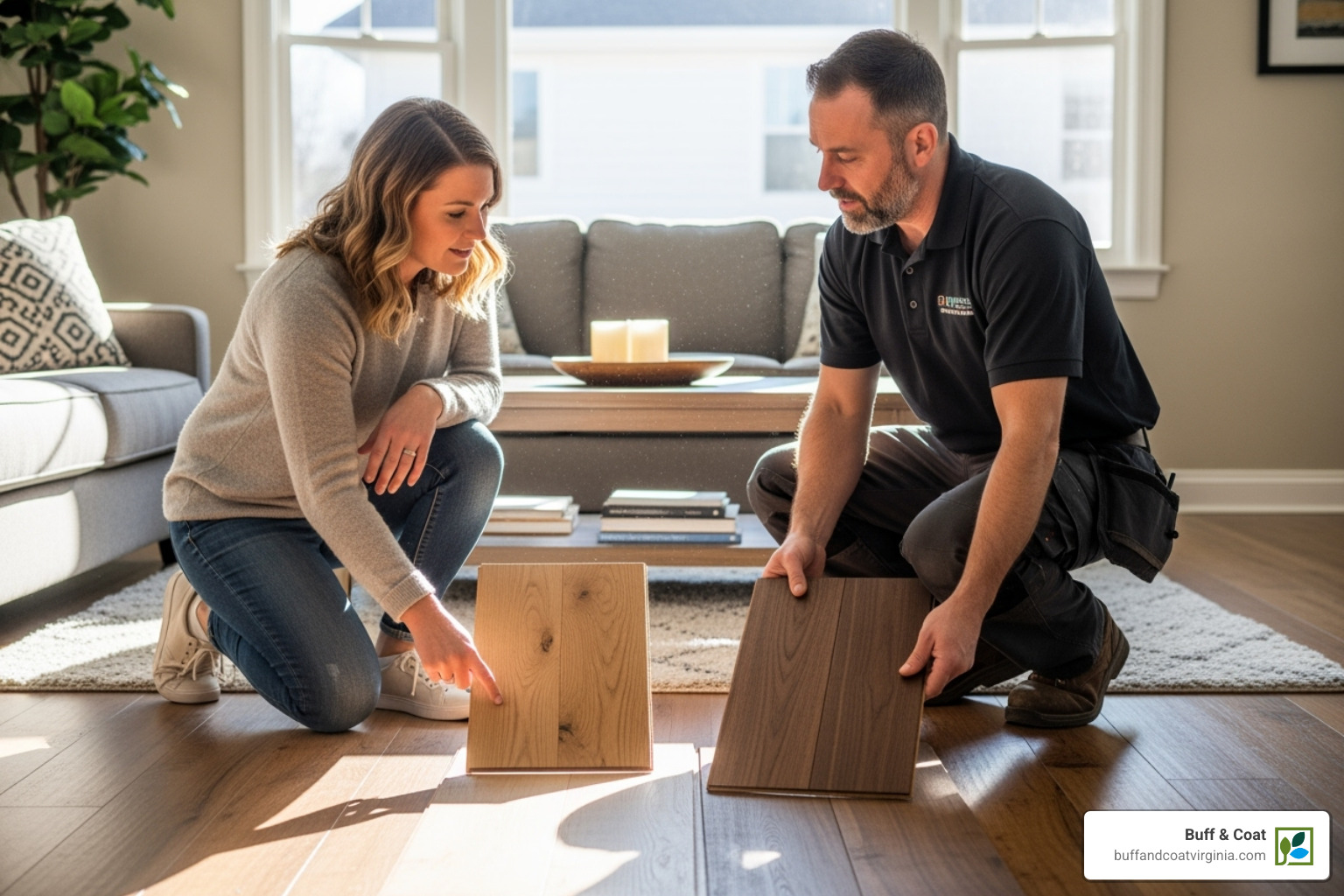
The key is knowing what questions to ask. I’ve broken these down into three main categories that will give you a complete picture of any contractor you’re considering.
Questions About Their Business and Experience
Start with the basics – you want to know you’re dealing with legitimate professionals who will be around if something goes wrong.
How long have you been in business? Experience matters tremendously in floor refinishing. A company that’s been around for years has likely seen every type of floor challenge imaginable. At Buff & Coat, our 20+ years in Richmond means we’ve worked with everything from century-old heart pine to modern engineered floors. We’ve learned from our mistakes and perfected our techniques over time.
Are you licensed and insured? This isn’t just a nice-to-have – it’s absolutely essential. Licensing shows they meet state and local requirements, while insurance protects you if something goes wrong. Always ask to see proof of both liability insurance and worker’s compensation coverage. If they hesitate or make excuses, walk away.
Can you provide recent references? Past customers are your best source of honest feedback. Ask for references from jobs completed in the last six months, and don’t be shy about actually calling them. Ask about work quality, cleanliness, timeliness, and whether they’d hire the contractor again.
Do you have a portfolio of completed work? Before-and-after photos tell the real story. Look for projects similar to yours in terms of wood type and condition. A contractor with a strong portfolio isn’t afraid to show off their craftsmanship.
What industry certifications do you hold? Certifications from organizations like the National Wood Flooring Association (NWFA) show a commitment to staying current with best practices and industry standards. It’s not required, but it’s definitely a plus.
Questions About the Process and Materials
Now dive into the technical details. This is where you’ll learn how they plan to transform your floors and what materials they’ll use.
What type of sanding equipment do you use? Professional-grade equipment makes all the difference. They should have drum sanders for the main floor area, edgers for perimeters, and orbital sanders for final smoothing. The equipment should be well-maintained and relatively current – old, worn machines can leave marks or create uneven surfaces.
Do you offer dustless floor sanding? This is a game-changer for your comfort and home cleanliness. Advanced dust containment systems capture over 95% of sanding dust, making the process much more pleasant for everyone involved.
What types of finishes do you recommend? This is where the conversation gets interesting. Oil-based polyurethane offers that classic amber glow and excellent durability, but it takes longer to dry and has a stronger odor. Water-based polyurethane dries faster, has less odor, and won’t yellow over time, but it can be more expensive. A knowledgeable contractor will explain the pros and cons of each based on your specific needs and lifestyle. Resources like Bona’s professional finishes offer excellent options for both types.
What stain and sheen options are available? You’ll want to see actual samples, preferably on a piece of your floor if possible. Stain colors can look dramatically different on various wood species. For sheen levels, satin is the most popular choice because it offers a subtle glow without showing every footprint, while semi-gloss provides more shine and durability for high-traffic areas.
How many coats of finish will you apply? Three coats is the standard for optimal protection and appearance. Some contractors might try to save time with fewer coats, but this compromises the longevity of your investment.
Questions About the Quote and Logistics from Floor Sanding Contractors
Finally, nail down the practical details to avoid surprises later.
Is your estimate a fixed price or hourly? Fixed pricing gives you peace of mind and helps you budget accurately. Hourly rates can spiral out of control if unexpected issues arise.
What exactly is included in the quote? Make sure everything is itemized: sanding, repairs, stain, finish coats, dust containment, and cleanup. Ask about potential extras like moving furniture, removing quarter round molding, or addressing subfloor issues.
Can I get a detailed, written contract? Never proceed without a comprehensive written agreement. It should spell out the scope of work, materials, timeline, payment schedule, and any warranties. This protects both of you.
What is the payment schedule? Most reputable contractors require a reasonable deposit with progress payments tied to completion milestones. Be wary of anyone demanding large upfront payments or full payment before starting work.
Who is responsible for moving furniture? Some floor sanding contractors include this service, while others expect you to clear the space. Knowing upfront prevents last-minute scrambling.
What is your cleanup process? Even with dust-free sanding, there will be some cleanup needed. Understand what they’ll handle and what you might need to do afterward.
What is the estimated timeline? Get specific dates for start, completion, and when you can resume normal use of the space. Curing time is crucial – you might be able to walk on the floors after 24-48 hours, but furniture should wait at least a week.
The right contractor will answer all these questions thoroughly and patiently. They’ll make you feel confident in your choice and excited about your beautiful new floors.
Frequently Asked Questions about Floor Refinishing
We often hear similar questions from homeowners considering floor refinishing. Here are some of the most common ones, answered in detail.
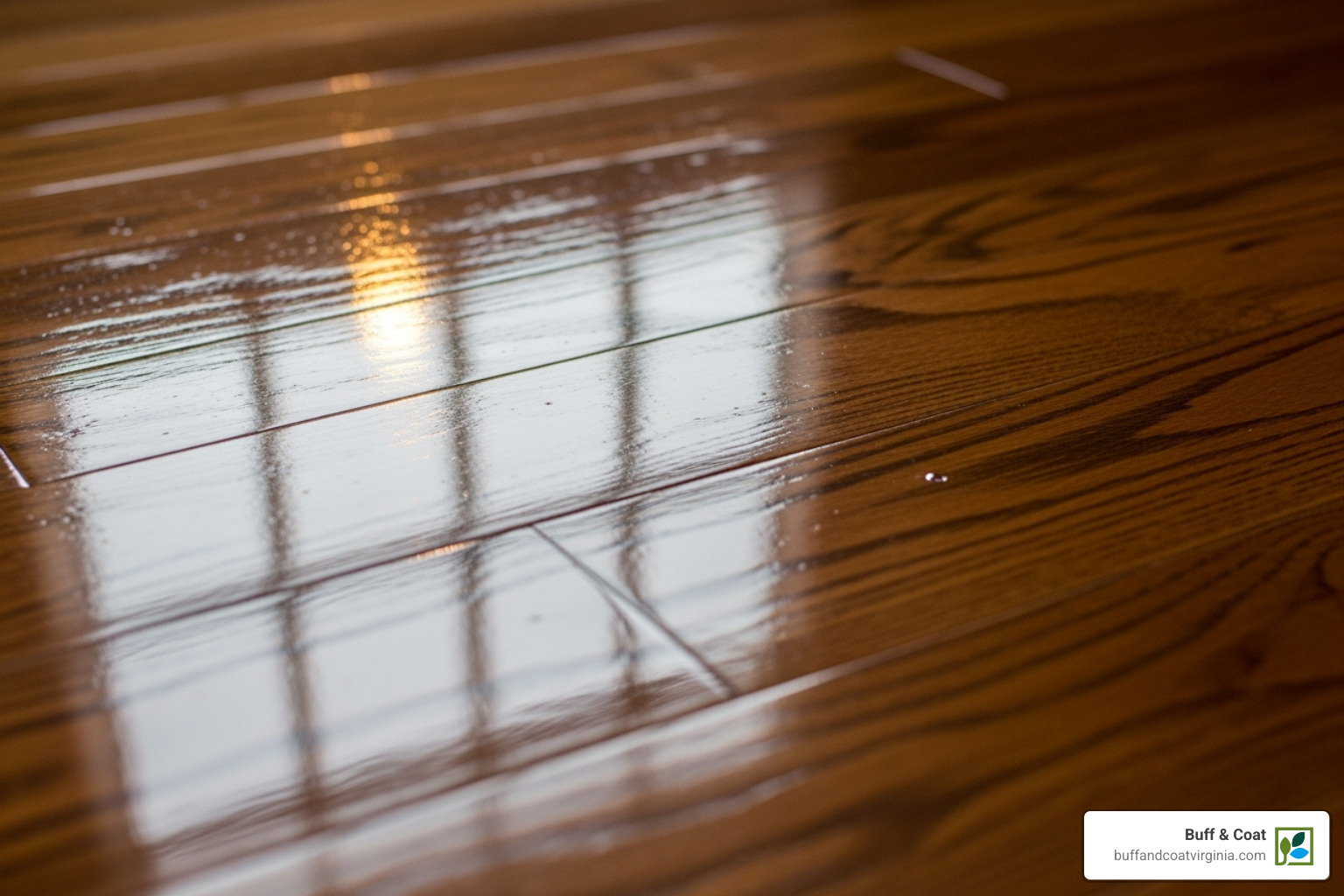
How much does it cost to refinish hardwood floors?
The cost to refinish hardwood floors varies based on several key factors, but nationally, the average is around $1,900, with projects typically ranging from $600 to $4,500. Understanding what drives these costs helps you budget appropriately and avoid surprises.
Size is your biggest cost factor. Most floor sanding contractors quote per square foot, making room size the primary price determinant. A small bedroom around 200 square feet might run $600 to $900, while a mid-size living area of 500 square feet typically costs $1,500 to $2,500. Larger spaces over 1,000 square feet can reach $3,000 to $6,000 or more.
Your floor’s current condition significantly impacts pricing. Floors with deep gouges, extensive water damage, or needing board replacement require more prep work and materials. Sometimes subfloor repairs are necessary, which adds to the project scope. The more challenging your floors are to restore, the higher the investment.
Wood species and finish choices affect your final cost. Some hardwoods are tougher to sand or need specialized techniques. Water-based finishes offer faster drying and lower VOCs but typically cost more than traditional oil-based polyurethanes. Custom stain colors or complex patterns also add to the baseline price compared to clear finishes or standard stains.
Traditional versus dustless sanding creates a price difference. Standard refinishing runs $3 to $8 per square foot, while dustless refinishing ranges from $5 to $8 per square foot. The slightly higher cost of dustless methods often pays for itself through reduced cleanup time and better air quality during the project.
Refinishing costs significantly less than installing new hardwood flooring, making it one of the most cost-effective home improvements you can make. We always recommend getting a free in-home estimate for an accurate quote custom to your specific project.
How long until I can walk on my newly refinished floors?
Patience becomes your best friend after refinishing! The finish needs proper curing time to harden completely and deliver maximum durability for years to come.
Light foot traffic is possible after 24 to 48 hours following the final coat application. However, we strongly recommend walking only in socks during this period and keeping foot traffic to an absolute minimum. No shoes, no pets, no exceptions during these critical first days.
Moving furniture and rugs requires waiting at least 7 days. While your floors might feel dry to the touch earlier, the finish continues hardening beneath the surface. Moving heavy items, placing rugs, or dragging furniture too soon can cause permanent indentations, scratches, or other damage that defeats the purpose of your beautiful refinishing investment.
Full cure time reaches completion around 30 days. During this month-long period, your finish gradually reaches its maximum hardness and chemical resistance. We recommend being extra cautious throughout this time – avoid dragging furniture across the surface, skip harsh cleaning products, and use protective pads under any heavy objects.
The specific timing can vary depending on your chosen finish type and environmental conditions. Water-based finishes dry much faster than oil-based options, while humidity and temperature affect curing speed. Your contractor will provide specific instructions custom to your project and local climate conditions.
Can you match the new finish to my existing hardwood floors?
Matching refinished floors to existing sections is a common request, and while we work hard to achieve seamless results, it’s important to understand the challenges involved. A perfect match isn’t always possible, but experienced floor sanding contractors can usually get remarkably close.
Wood age and species create natural variations. Different wood types absorb stain uniquely, and even identical species change color over decades through oxidation and sun exposure. That beautiful oak floor from 1950 will naturally look different from newly installed boards, regardless of staining techniques.
Previous finishes and sun exposure add complexity. Old finishes can affect how new stain penetrates the wood grain, while areas exposed to sunlight often fade or darken unevenly over time. These factors create subtle but noticeable differences that skilled professionals must work around.
Our matching process involves careful sampling and custom work. We apply test stains directly onto inconspicuous areas of your actual flooring to show you exactly how different colors will appear on your specific wood. Sometimes we create custom stain blends to achieve the closest possible match to existing sections.
Grain patterns and wood cuts influence final appearance. The way lumber was originally cut – whether plain-sawn, quarter-sawn, or rift-sawn – affects how stain appears across the surface. Natural grain variations mean even perfectly matched stains can look slightly different from board to board.
For recently site-finished floors, matching becomes much easier and more predictable. With older floors, we focus on creating a cohesive, aesthetically pleasing result where transitions between old and new sections feel natural rather than jarring. Our goal is always achieving the best possible match while setting realistic expectations about what’s achievable given your floor’s unique characteristics.
Conclusion: Choosing Your Contractor with Confidence
Refinishing your hardwood floors is more than just a home improvement project—it’s an investment in your family’s daily comfort and your home’s future value. The difference between a floor that looks stunning for decades and one that disappoints often comes down to choosing the right floor sanding contractors.
Throughout this guide, we’ve walked through the essential questions that separate exceptional professionals from those who might cut corners. Experience matters immensely in this field. A contractor who’s been perfecting their craft for years understands the subtle nuances of different wood species, how Richmond’s humidity affects the process, and which finishes will stand the test of time.
Transparency should be your north star when evaluating potential contractors. The right professional will eagerly answer your questions about their dust containment systems, explain the pros and cons of different finishes, and provide detailed written estimates. They won’t rush you through the decision or pressure you with limited-time offers.
Clear communication throughout the process sets great contractors apart. From that first phone call through project completion, you should feel heard, informed, and confident. The best floor sanding contractors treat your home with the same care they’d give their own, protecting your belongings and minimizing disruption to your daily life.
Value extends far beyond the lowest price. While budget matters, the cheapest quote often leads to the most expensive mistakes. Quality materials, advanced dust-free equipment, and skilled craftsmanship cost more upfront but save you money and headaches in the long run.
At Buff & Coat, we’ve spent over 20 years earning the trust of Richmond-area homeowners through honest communication, meticulous craftsmanship, and our signature dust-free process. We believe every homeowner deserves floors they’ll love coming home to, and we’re committed to making that vision a reality.
Ready to transform your hardwood floors? We’d love to show you exactly what’s possible in your home. We provide free estimates to help you make an informed decision. Schedule a free inspection on our contact page and let our experienced team provide you with a detailed, transparent quote. Your beautiful floors are just a conversation away.